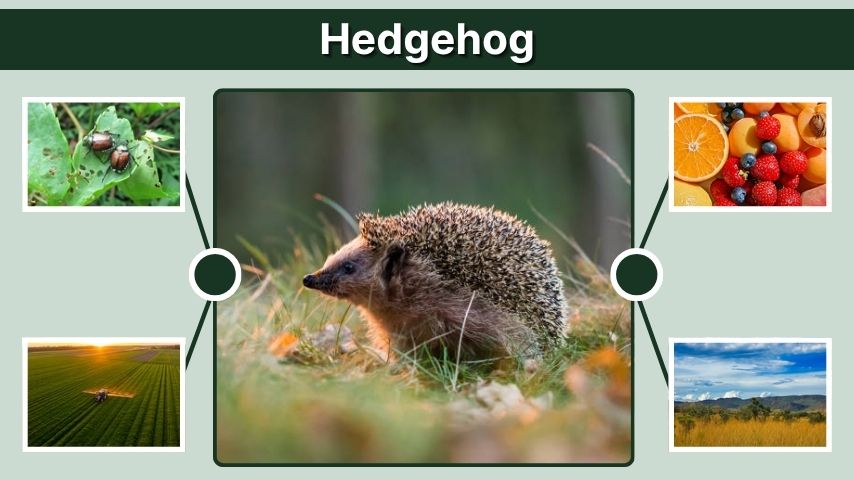
Hedgehogs are small spiny mammals known for their adorable appearance and unique defense behavior. These nocturnal animals are found in parts of Europe, Asia, and Africa, where they live in grasslands, forests, gardens, and farmlands. Many people recognize hedgehogs for their sharp protective spines and ability to roll into a tight ball when threatened. In recent years, hedgehogs have also become popular exotic pets because of their quiet nature and manageable size. Learning about their habitat, diet, lifespan, and behavior helps people better understand these fascinating animals.
What Is a Hedgehog?
The hedgehog is a small mammal covered with stiff protective spines instead of soft fur on most of its body. It belongs to a group of insect-eating mammals and is mainly active at night. Hedgehogs are solitary animals that spend much of their time searching for food among leaves and grass. Their strong sense of smell and hearing helps them survive in both wild and human-modified environments.
Scientific Classification
- Family: Erinaceidae
- Animal group: Mammal
- More than 15 species worldwide
- Related to shrews and moles
- Found across Europe, Asia, and Africa
Hedgehog Pronunciation
The word “hedgehog” is commonly pronounced as “hej-hog.” The name comes from the animal’s habit of moving through hedges while making pig-like snorting sounds. Some people mispronounce the first part of the word, but the pronunciation remains simple and easy to remember.
Why Hedgehogs Have Spines
Hedgehog spines are modified hairs made from keratin, the same material found in human nails and hair. These spines protect the animal from predators. When threatened, a hedgehog curls into a ball so the sharp spines face outward. This defense makes it difficult for many predators to attack successfully.
Hedgehog Identification
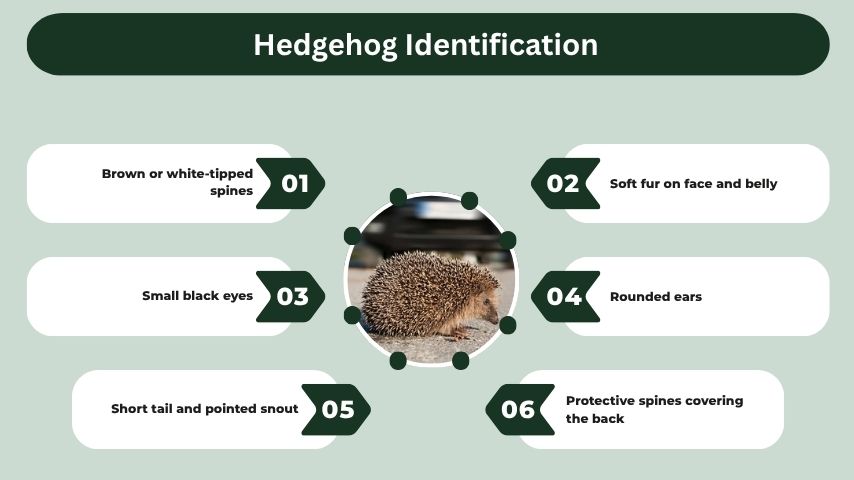
Hedgehogs have a unique appearance that makes them easy to recognize. Their round bodies, pointed snouts, and sharp spines separate them from most other small mammals. They also have tiny ears, short tails, and dark eyes adapted for nighttime activity. Although species vary slightly in color and size, most hedgehogs share similar body structures and defensive behaviors.
Size and Body Shape
Adult hedgehogs usually measure between 15 and 30 centimeters long depending on the species. They have compact, rounded bodies supported by short legs. Their pointed noses help them search for insects hidden beneath leaves and soil. Despite their small size, hedgehogs can travel surprisingly long distances during nighttime feeding activities.
Color and Appearance
- Brown or white-tipped spines
- Soft fur on face and belly
- Small black eyes
- Rounded ears
- Short tail and pointed snout
Key Identification Features
- Protective spines covering the back
- Ability to roll into a ball
- Strong sense of smell
- Nocturnal behavior
- Small but powerful legs
- Short sharp claws for digging
Hedgehog Habitat and Distribution
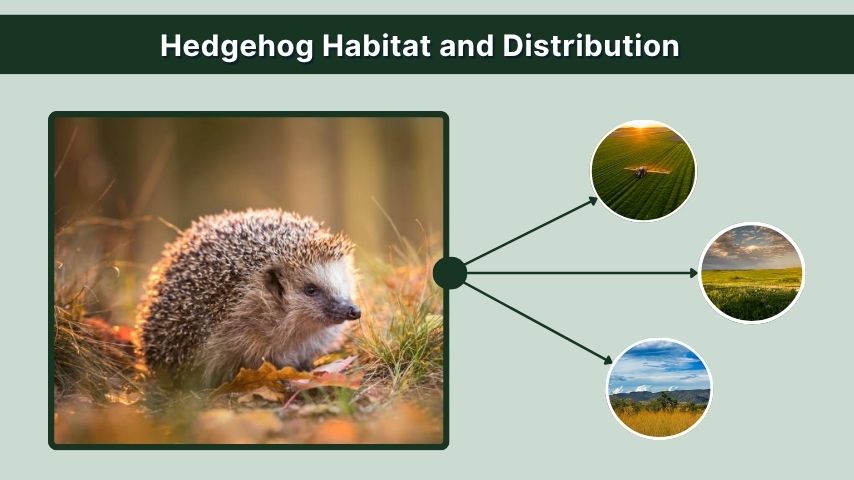
Hedgehogs live in a variety of environments with enough food, shelter, and vegetation. They are commonly found in grasslands, gardens, forest edges, and farmlands where insects are abundant. Because they are adaptable animals, some species survive near towns and suburban areas. During the day, hedgehogs hide beneath bushes, logs, leaves, or underground shelters to avoid predators and conserve energy.
Natural Habitat
- Grasslands
- Forest edges
- Gardens
- Bushy areas
- Farmlands
- Woodland habitats
Geographic Distribution
Hedgehogs naturally occur across Europe, Asia, and Africa. Different species occupy different climate zones ranging from dry grasslands to temperate forests. Some hedgehogs have also been introduced into regions outside their native range. European hedgehogs are among the most recognized species because they are commonly seen in gardens and rural landscapes.
Wild Hedgehog Behavior
Wild hedgehogs are mostly active at night and spend evenings searching for insects, worms, and other food sources. They usually live alone except during breeding season. In colder regions, some species hibernate during winter to conserve energy when food becomes scarce. Hedgehogs build nests using leaves and grass to stay warm and protected.
What Does a Hedgehog Eat?
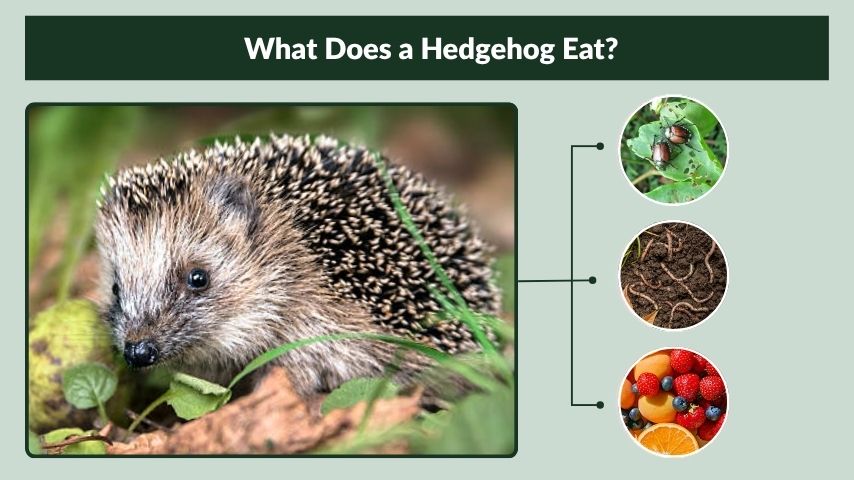
Hedgehogs are omnivorous animals with diets that include insects, small animals, and some plant matter. In the wild, they help control insect populations by feeding on pests found in gardens and grassy habitats. Their strong sense of smell allows them to locate food hidden beneath leaves, soil, and vegetation during nighttime activity.
Main Diet
- Beetles
- Worms
- Snails
- Caterpillars
- Fruits
- Small insects
- Occasionally small frogs or eggs
Hunting and Feeding Behavior
Hedgehogs usually search for food after sunset when insects become active. They move slowly through vegetation while sniffing the ground for prey. Once food is detected, they use their sharp teeth and strong jaws to eat insects and other small animals. Their nighttime feeding habits help reduce competition with many daytime predators and insect-eating animals.
Foods Hedgehogs Should Avoid
- Milk and dairy products
- Salty or sugary foods
- Processed snacks
- Chocolate
- Raw meat with seasoning
- Toxic plants and chemicals
Hedgehog Behavior and Sounds
Hedgehogs display many interesting behaviors that help them survive in the wild. They are mainly nocturnal and spend most of the daytime sleeping in nests hidden beneath vegetation. At night, they become active and search for food over large areas. Hedgehogs are generally quiet animals, but they can produce several sounds when excited, stressed, or communicating with other hedgehogs.
Common Hedgehog Sounds
- Snuffling while searching for food
- Hissing when frightened
- Clicking noises during stress
- Soft squeaking sounds
- Snorting during movement
Why Hedgehogs Roll Into a Ball
Rolling into a ball is the hedgehog’s main defense strategy. Special muscles beneath the skin allow the animal to curl tightly so that only sharp spines remain visible. This behavior protects soft body parts from predators such as foxes, owls, and large birds. The defense is highly effective because many predators struggle to bite through the protective spines.
Social and Nocturnal Behavior
Hedgehogs prefer living alone and usually interact with others only during breeding season. They are most active after sunset when temperatures become cooler and insects are easier to find. During nighttime exploration, hedgehogs may travel long distances while searching for food, shelter, and mates. Their excellent hearing and sense of smell help them navigate safely through dark environments.
Hedgehog Lifespan and Life Cycle
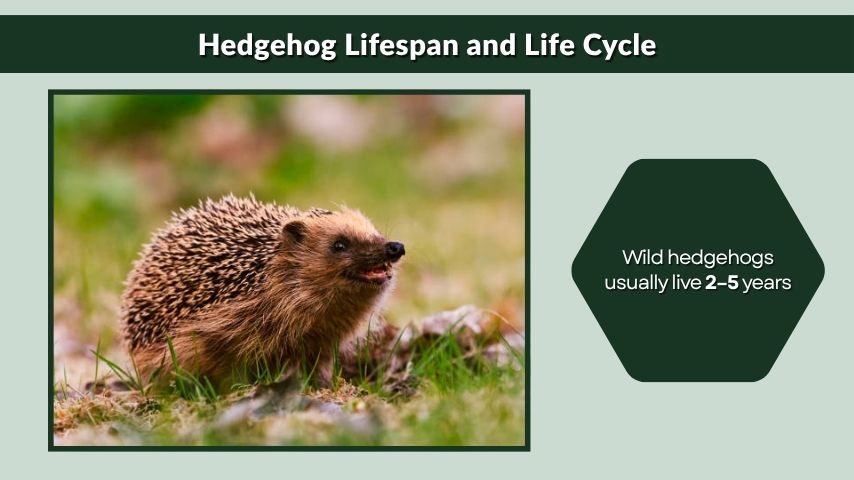
The lifespan of a hedgehog depends on habitat quality, food availability, climate, and predator threats. Wild hedgehogs often face challenges such as road traffic, habitat destruction, and predators. Captive hedgehogs usually live longer because they receive stable food, veterinary care, and protection from environmental dangers.
Average Lifespan
- Wild hedgehogs usually live 2–5 years
- Captive hedgehogs may live 5–8 years
- Proper diet improves longevity
- Disease and predators reduce survival rates
- Habitat quality affects lifespan
Breeding and Baby Hedgehogs
Female hedgehogs usually give birth during warmer months after a pregnancy lasting several weeks. A litter may contain several babies known as hoglets. Newborn hedgehogs are born with soft white spines hidden beneath the skin, which harden shortly after birth. Mothers care for the young in protected nests until they are old enough to survive independently.
Growth and Development
Young hedgehogs grow quickly during the first few weeks of life. Their spines become stronger, and they begin exploring outside the nest as they mature. After weaning, young hedgehogs start searching for insects and other foods independently. Full maturity is usually reached within the first year depending on the species and environmental conditions.
Are Hedgehogs Good Pets?
Hedgehogs have become popular exotic pets because of their quiet behavior and manageable size. Many owners enjoy their unique appearance and nighttime activity. However, caring for a hedgehog requires proper temperature control, a healthy diet, and patience during handling. Understanding their nocturnal nature is important before choosing one as a pet.
Benefits of Keeping a Hedgehog
- Quiet compared to many pets
- Requires relatively small living space
- Interesting nighttime behavior
- Unique and attractive appearance
- Generally independent animals
Challenges of Hedgehog Ownership
Hedgehogs can be shy and may take time to trust people. Because they are nocturnal, they are often active while owners are sleeping. They also require warm temperatures since cold environments can cause serious health problems. Regular cleaning and proper feeding are important for maintaining their health in captivity.
Basic Hedgehog Care
- Provide a warm enclosure
- Use soft bedding material
- Include an exercise wheel
- Supply fresh water daily
- Feed high-quality insect-based food
- Clean the habitat regularly
Hedgehog vs Porcupine
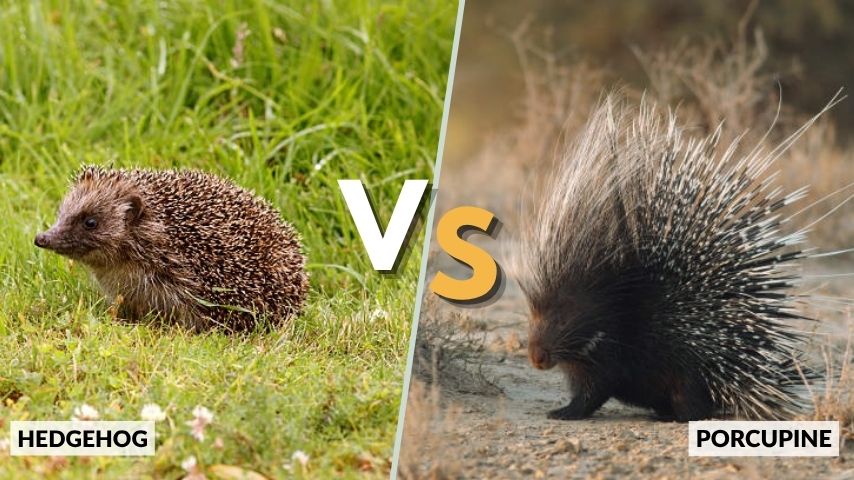
Although hedgehogs and porcupines both have spines, they are very different animals. Hedgehogs are much smaller and belong to a completely different mammal family. Porcupines have larger quills and stronger defensive abilities, while hedgehogs mainly rely on curling into a ball for protection.
Appearance Differences
| Feature | Hedgehog | Porcupine |
| Size | Small | Much larger |
| Spine Type | Short spines | Long sharp quills |
| Tail | Very short | Longer tail |
| Weight | Lightweight | Heavy-bodied |
Behavior Differences
| Feature | Hedgehog | Porcupine |
| Activity Time | Mostly nocturnal | Often nocturnal |
| Defense Method | Rolls into a ball | Raises sharp quills |
| Diet | Insects and small foods | Mostly plants |
| Habitat | Gardens and grasslands | Forests and rocky areas |
FAQs
Are hedgehogs good pets?
Yes, hedgehogs can make good pets for people who understand their needs. They are quiet, relatively independent, and require limited space. However, they are nocturnal animals and need proper heating, a healthy diet, and regular enclosure cleaning to stay healthy.
Is a hedgehog a porcupine?
No, hedgehogs and porcupines are different animals. Hedgehogs are much smaller and have short protective spines, while porcupines are larger rodents with long quills. Hedgehogs defend themselves mainly by curling into a tight ball.
Is a hedgehog harmless?
Hedgehogs are generally harmless and shy around humans. They rarely bite unless frightened or stressed. Their spines may feel sharp when touched, but they are mainly used for defense against predators rather than aggression toward people.
What do hedgehogs eat?
Hedgehogs mainly eat insects such as beetles, worms, caterpillars, and snails. They may also consume fruits, eggs, and small animals. Pet hedgehogs are often fed insect-based commercial food along with safe fruits and protein sources.
How long do hedgehogs live?
Wild hedgehogs usually live between 2 and 5 years because of predators and environmental dangers. Captive hedgehogs often live longer, around 5 to 8 years, when they receive proper care, nutrition, and protection from disease and injuries.