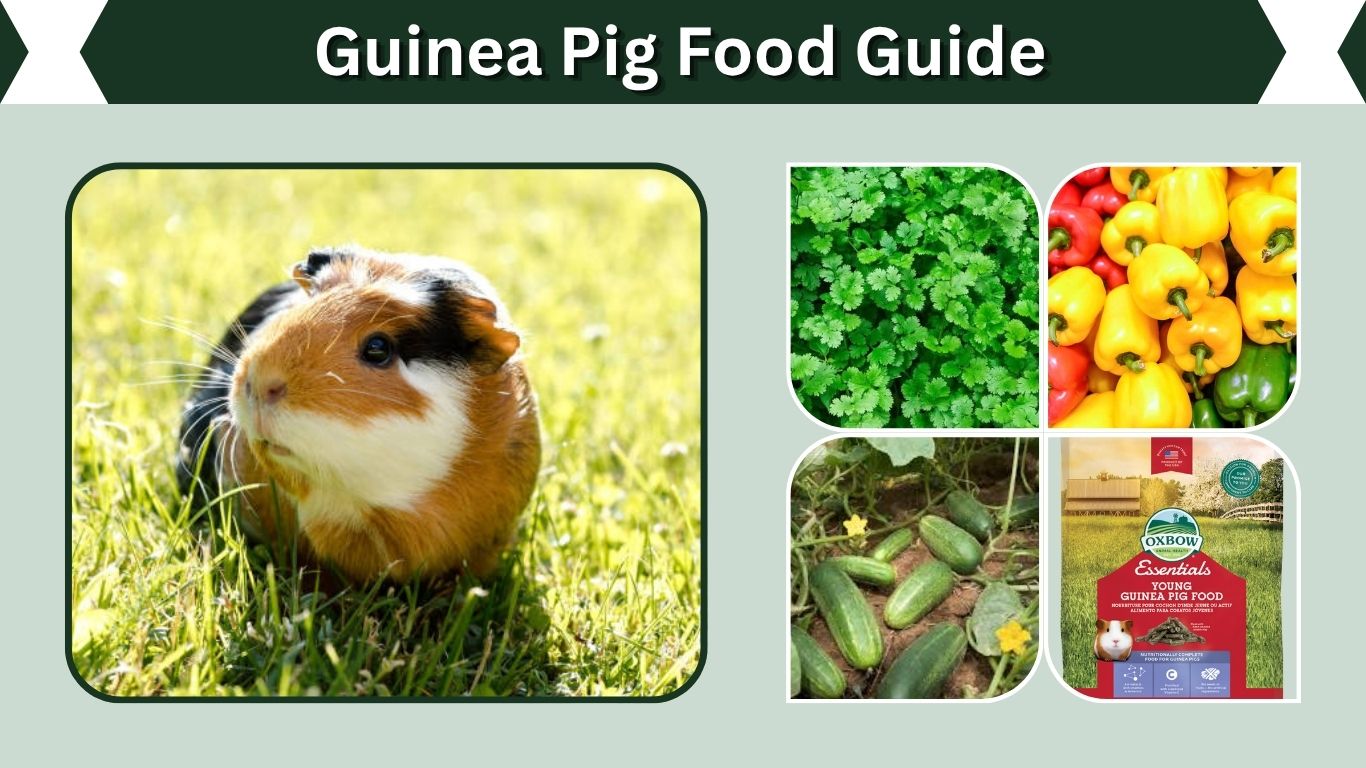
Guinea pig food should be simple, fresh, and high in fiber. A healthy guinea pig diet is based mostly on unlimited grass hay, with daily vegetables, a small amount of guinea pig pellets, clean water, and enough vitamin C. Guinea pigs cannot make their own vitamin C, so they must get it from food every day. This guide explains what foods guinea pigs can eat, what they should not eat, and why rabbit, hamster, dog, and cat food are not safe substitutes.
What Food Do Guinea Pigs Eat?
Guinea pigs are herbivores, so their diet should come from plants. The most important food is grass hay, such as timothy, orchard grass, meadow hay, or oat hay. Hay helps digestion and wears down their constantly growing teeth. Veterinary sources recommend good-quality grass hay as the main part of a guinea pig’s diet.
A balanced guinea pig diet usually includes:
- Unlimited grass hay
- Fresh water every day
- 1 cup of fresh vegetables daily
- A small amount of guinea pig pellets
- Vitamin C-rich foods
- Fruit only as an occasional treat
Guinea Pig Food Chart
Use this simple chart as a daily feeding guide for a healthy adult guinea pig.
| Food Type | How Often | Notes |
| Grass hay | Unlimited daily | Main food; supports teeth and digestion |
| Fresh water | Always available | Change daily |
| Leafy greens | Daily | Romaine, green leaf lettuce, cilantro, parsley |
| Vitamin C vegetables | Daily | Bell pepper is one of the best choices |
| Guinea pig pellets | Small daily amount | Use plain guinea pig pellets with vitamin C |
| Fruit | 1–2 times weekly | Small pieces only |
| Treat mixes | Avoid or rare | Often too sugary or low in fiber |
VCA says hay and pellets should be supplemented with fresh, well-washed leafy greens and colored vegetables, especially those high in vitamin C.
Best Foods for Guinea Pigs
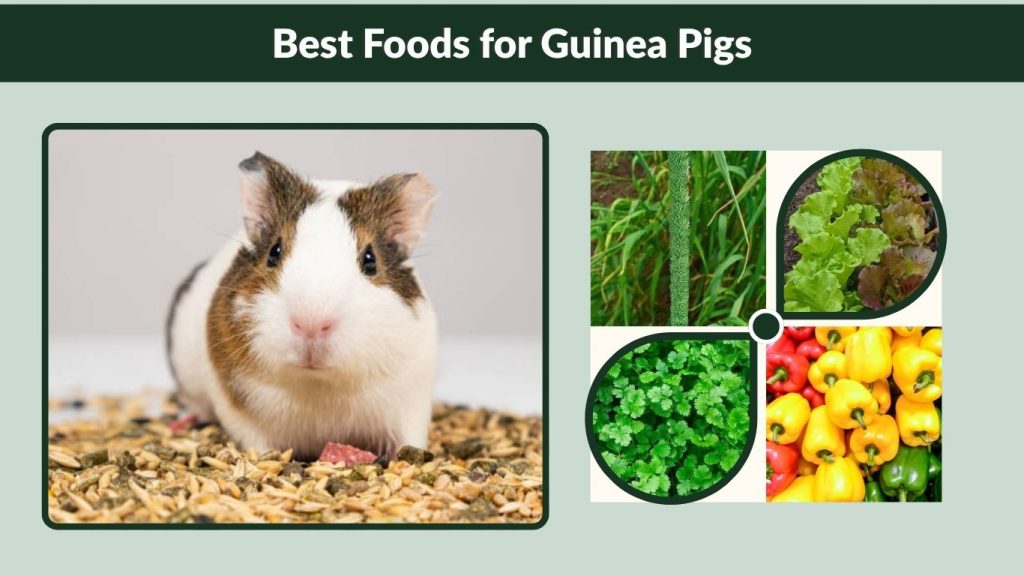
The best foods for guinea pigs are high-fiber, low-sugar, and rich in vitamin C. Fresh vegetables should be introduced slowly so the guinea pig’s digestive system can adjust.
Safe Foods Guinea Pigs Can Eat
Good daily or frequent foods include:
- Timothy hay
- Orchard grass hay
- Romaine lettuce
- Green leaf lettuce
- Red leaf lettuce
- Bell pepper
- Cilantro
- Parsley
- Cucumber
- Celery
- Zucchini
- Carrot tops
- Dandelion greens
- Small amounts of carrot
- Small amounts of apple
- Small amounts of strawberry
The RSPCA lists vegetables and herbs such as parsley, celery, peppers, cucumber, gem lettuce, and romaine lettuce as examples of fresh foods guinea pigs can eat.
Vitamin C Foods for Guinea Pigs
Vitamin C is one of the most important parts of guinea pig nutrition. Without enough vitamin C, guinea pigs can develop scurvy, weakness, poor appetite, swollen joints, and other health problems. MSD Veterinary Manual says guinea pigs need at least 10 mg of vitamin C per kg of body weight per day, while pregnant females need more.
Foods High in Vitamin C for Guinea Pigs
Good vitamin C foods include:
- Bell pepper
- Parsley
- Cilantro
- Kale in small amounts
- Broccoli in small amounts
- Strawberry as a treat
- Orange as a small treat
- Kiwi as a small treat
Bell pepper is one of the best choices because it is rich in vitamin C and lower in sugar than fruit. Fruits can help add vitamin C, but they should not become the main source because they contain sugar.
Guinea Pig Pellets
Guinea pig pellets should be plain, hay-based, and made specifically for guinea pigs. Choose pellets with added vitamin C and avoid colorful mixes with seeds, dried fruit, corn, or sugary pieces.
Popular guinea pig pellet brands include Oxbow, Kaytee, Mazuri, and Vita Prima, but the brand matters less than the formula. Look for:
- Made for guinea pigs
- Added vitamin C
- Timothy-hay based for adults
- No seeds or colorful treats
- Fresh bag, not expired
- Stored away from heat, light, and moisture
The Merck Veterinary Manual warns that vitamin C in pellets breaks down over time, so pellets should be bought fresh and supported with vitamin C-rich vegetables.
Oxbow Guinea Pig Food
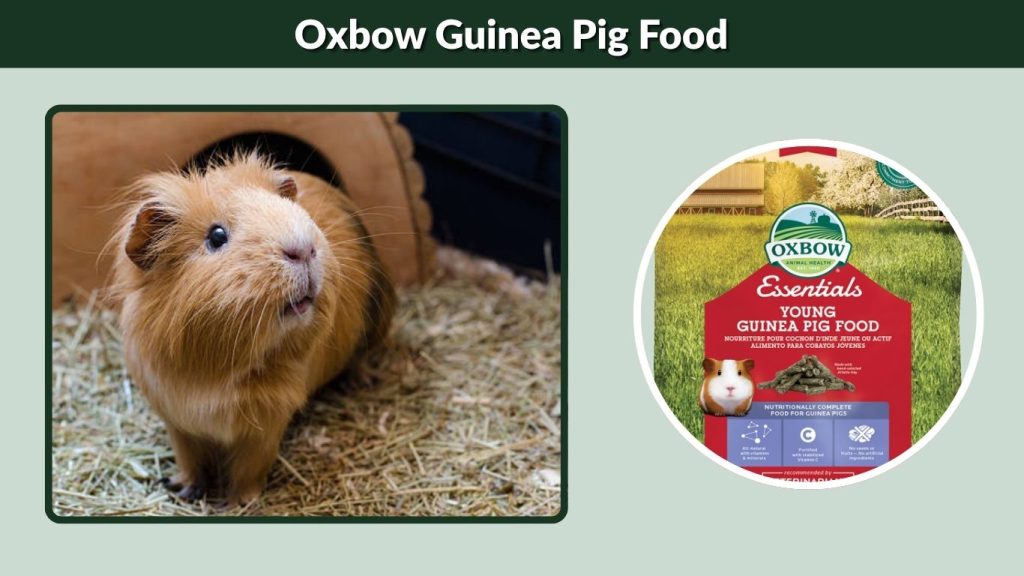
Oxbow guinea pig food is a common option because it has adult and young guinea pig formulas. Oxbow Essentials Adult Guinea Pig Food is timothy-based for adult guinea pigs, while Oxbow Young Guinea Pig Food is designed for growing, pregnant, or nursing guinea pigs.
Do not choose pellets only by brand. Check the label, age stage, ingredients, and expiration date.
Can Guinea Pigs Eat Rabbit Food?
No, guinea pigs should not eat rabbit food as a regular diet. Rabbit pellets are made for rabbits and usually do not provide enough vitamin C for guinea pigs. Merck Veterinary Manual specifically says not to substitute rabbit pellets because they do not have enough vitamin C for guinea pigs.
A tiny accidental nibble is usually not an emergency, but rabbit food should not be used as guinea pig food. Long-term feeding can lead to vitamin C deficiency and poor nutrition.
Can Guinea Pigs Eat Bunny Food?
“Bunny food” means rabbit food, so the answer is the same: no, not as a regular diet. Guinea pigs need guinea pig-specific pellets.
Can Rabbits Eat Guinea Pig Food?
Rabbits should not regularly eat guinea pig food either. Rabbit and guinea pig diets look similar, but their nutritional needs are not the same. Rabbits do not need added vitamin C in the same way guinea pigs do, and guinea pig pellets may not have the right balance for rabbits.
If you keep rabbits and guinea pigs in the same home, feed them separately and do not rely on one pellet for both animals.
Can Guinea Pigs Eat Hamster, Gerbil, Rat or Chinchilla Food?
No. Guinea pigs should not eat hamster food, gerbil food, rat food, or chinchilla food as their main diet. These animals have different nutritional needs.
Hamster and gerbil foods often contain seeds, grains, nuts, or fatty ingredients that are not right for guinea pigs. Rat food is made for omnivores, not strict herbivores. Chinchilla pellets may look similar but are not formulated for guinea pigs’ vitamin C needs.
Can Guinea Pigs Eat Dog or Cat Food?
No, guinea pigs should never eat dog food or cat food. Dogs and cats need very different diets, and cat food is especially high in animal protein. Guinea pigs are herbivores and need fiber-rich plant foods.
Dog or cat food can cause digestive upset and does not provide the right nutrients for guinea pigs.
Fresh Food for Guinea Pigs
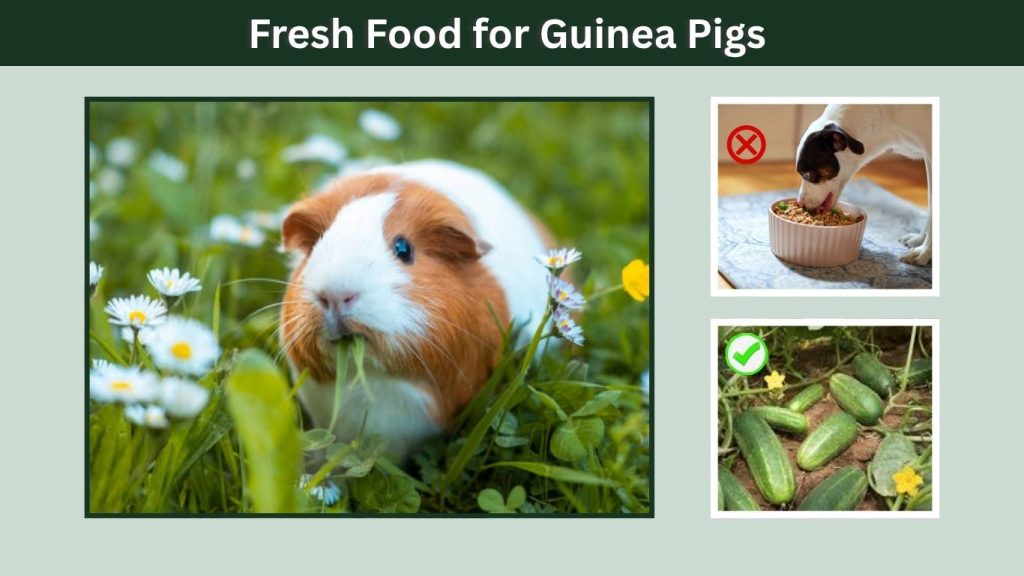
Fresh food should be washed and served in small amounts. Remove uneaten vegetables before they spoil. A good daily bowl may include leafy greens plus a vitamin C vegetable such as bell pepper.
Simple Daily Fresh Food Example
- Romaine lettuce
- Bell pepper
- Cucumber
- Cilantro
- A small piece of carrot once in a while
Do not suddenly give a large amount of new vegetables. Add one new food at a time and watch for soft stool, bloating, or reduced appetite.
Low-Calcium Foods for Guinea Pigs
Some guinea pigs may need lower-calcium foods, especially if they have a history of bladder sludge or stones. Always ask a vet if your guinea pig has urinary problems.
Lower-calcium options often include:
- Bell pepper
- Cucumber
- Zucchini
- Green leaf lettuce
- Romaine lettuce
- Cilantro in moderate amounts
Higher-calcium foods such as parsley, kale, spinach, and alfalfa should be limited for many adult guinea pigs.
What Foods Should Guinea Pigs Not Eat?
Some foods are unsafe or unsuitable for guinea pigs. Avoid anything high in sugar, fat, salt, starch, or animal protein.
Foods Guinea Pigs Should Not Eat
- Rabbit food as a regular diet
- Hamster or gerbil food
- Dog food
- Cat food
- Meat
- Dairy
- Bread
- Cookies
- Chocolate
- Seeds and nuts
- Onion
- Garlic
- Potato
- Avocado
- Iceberg lettuce
- Rhubarb
- Processed human snacks
- Sugary cereal
- Cooked foods
Guinea pigs should eat raw plant foods, hay, and guinea pig pellets, not processed human food.
How Much Food for Guinea Pigs?
An adult guinea pig should have unlimited hay at all times. Fresh vegetables are usually given once or twice daily. Pellets should be limited because too many pellets can reduce hay intake and lead to weight gain.
| Food | Adult Guinea Pig Amount |
| Hay | Unlimited |
| Vegetables | About 1 cup daily |
| Pellets | Small measured portion, often about 1/8 cup daily |
| Fruit | Tiny treat, 1–2 times weekly |
| Water | Always available |
Exact pellet amounts depend on the product label, age, weight, and health of the guinea pig.
How Long Can Guinea Pigs Go Without Food?
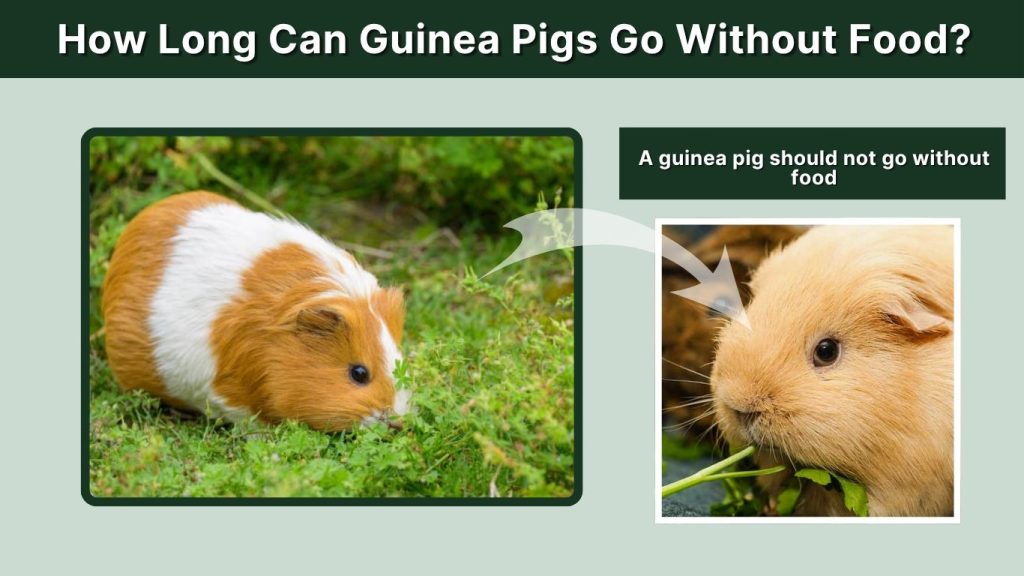
A guinea pig should not go without food. Their digestive system needs constant fiber movement. If a guinea pig stops eating, it can become a serious emergency.
If your guinea pig has not eaten or pooped for several hours, especially with weakness, bloating, pain, or hiding, contact an exotic pet veterinarian urgently. Do not wait a full day to see what happens.
Critical care food for guinea pigs is often used when a sick guinea pig cannot eat normally, but it should be used with veterinary guidance.
Guinea Pigs as Food in Peru
In Peru and parts of the Andes, guinea pigs are traditionally raised as food and are known as cuy. This is different from how guinea pigs are kept as pets in many countries. Searches like “guinea pigs Peru food,” “Peruvian food guinea pig,” and “guinea pig as food” usually refer to this traditional dish.
For pet owners, the important point is that domestic guinea pigs still need a species-appropriate herbivore diet: hay, vegetables, water, vitamin C, and guinea pig pellets.
Guinea Pig Favorite Food
Many guinea pigs love sweet or crunchy foods, but favorite food is not always the healthiest food. Common favorites include bell pepper, parsley, cilantro, carrot, cucumber, apple, and leafy greens.
Use favorites for bonding and training, but keep sugary foods small.
FAQs
What is the best food for guinea pigs?
The best food for guinea pigs is unlimited grass hay, especially timothy or orchard grass hay, plus daily fresh vegetables, clean water, vitamin C-rich foods, and a small amount of guinea pig-specific pellets.
Can guinea pigs eat rabbit food?
No, guinea pigs should not eat rabbit food as their regular diet. Rabbit pellets usually do not contain enough vitamin C for guinea pigs, and long-term feeding can cause nutritional problems.
What human food can guinea pigs eat?
Guinea pigs can eat some raw vegetables and small fruit pieces, such as bell pepper, romaine lettuce, cucumber, cilantro, parsley, carrot, apple, and strawberry. They should not eat cooked, salty, sugary, dairy, or meat-based human foods.
What foods can guinea pigs not eat?
Guinea pigs should not eat dog food, cat food, hamster food, rabbit food as a main diet, seeds, nuts, chocolate, bread, dairy, meat, onion, garlic, avocado, potato, rhubarb, or processed snacks.
How long can a guinea pig go without food?
A guinea pig should not go without food. If it stops eating or pooping, it may be a medical emergency. Contact an exotic pet veterinarian quickly, especially if the guinea pig seems weak, bloated, painful, or inactive.