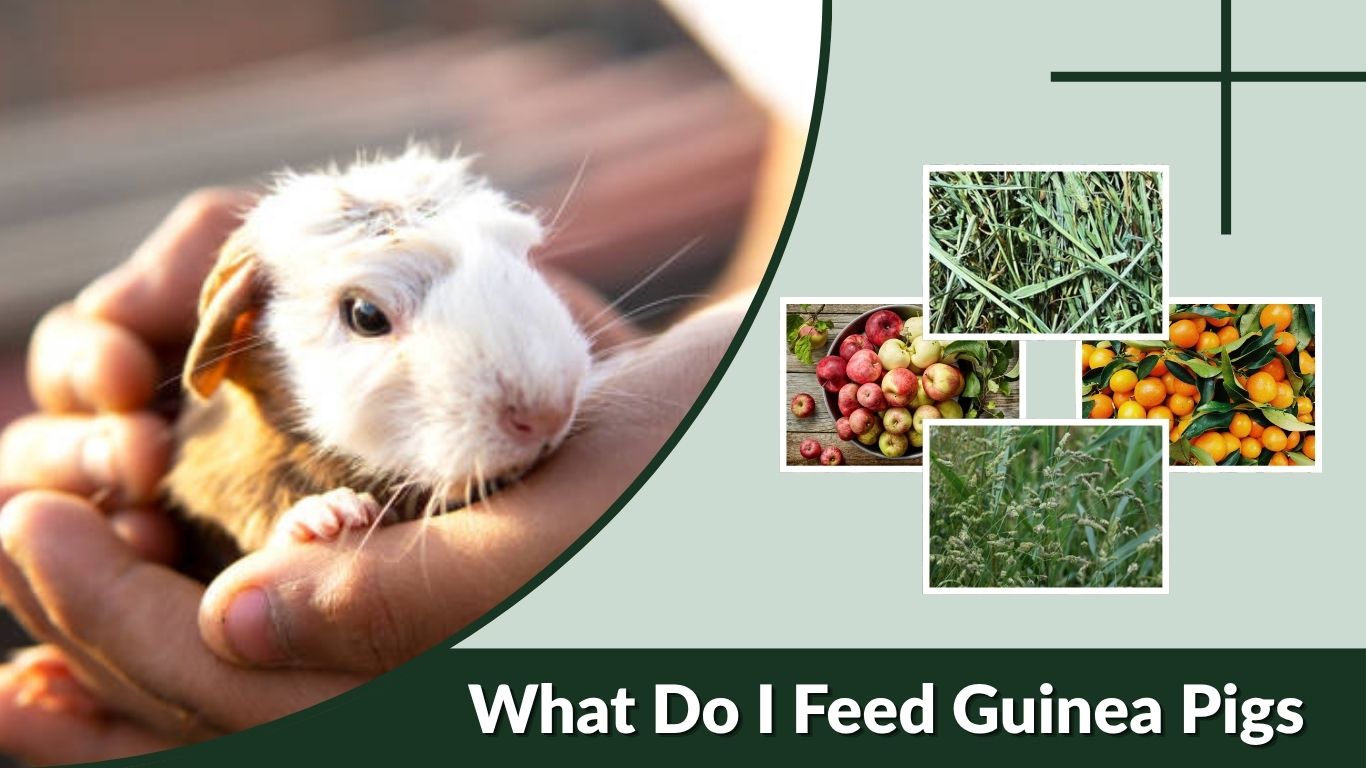
Guinea pigs need a simple but balanced diet built around hay, fresh water, guinea pig pellets, and daily vegetables. The right food helps their digestion, supports tooth wear, and gives them enough vitamin C, which guinea pigs cannot make on their own. A poor diet can lead to dental trouble, digestive upset, weight problems, or vitamin C deficiency. Here is a clear guide to what guinea pigs should eat every day.
The Best Daily Diet for Guinea Pigs
A healthy guinea pig diet should be mostly hay, with smaller amounts of pellets and fresh vegetables. Hay is the most important food because guinea pigs graze often and need fiber throughout the day. The RSPCA recommends constant access to hay or grass and continuous fresh drinking water.
Daily Feeding Basics
- Unlimited grass hay
- Fresh water at all times
- Guinea pig pellets once daily
- Fresh vegetables every day
- Fruit only as a small treat
- No rabbit, hamster, or human snack food as a main diet
| Food Type | How Often | Notes |
| Grass hay | All day | Main food for digestion and teeth |
| Fresh water | Always | Check bottles or bowls daily |
| Guinea pig pellets | Daily | Choose vitamin C-fortified pellets |
| Vegetables | Daily | Offer safe leafy greens and vitamin C foods |
| Fruit | Occasionally | Small treat only because of sugar |
Hay: The Most Important Food
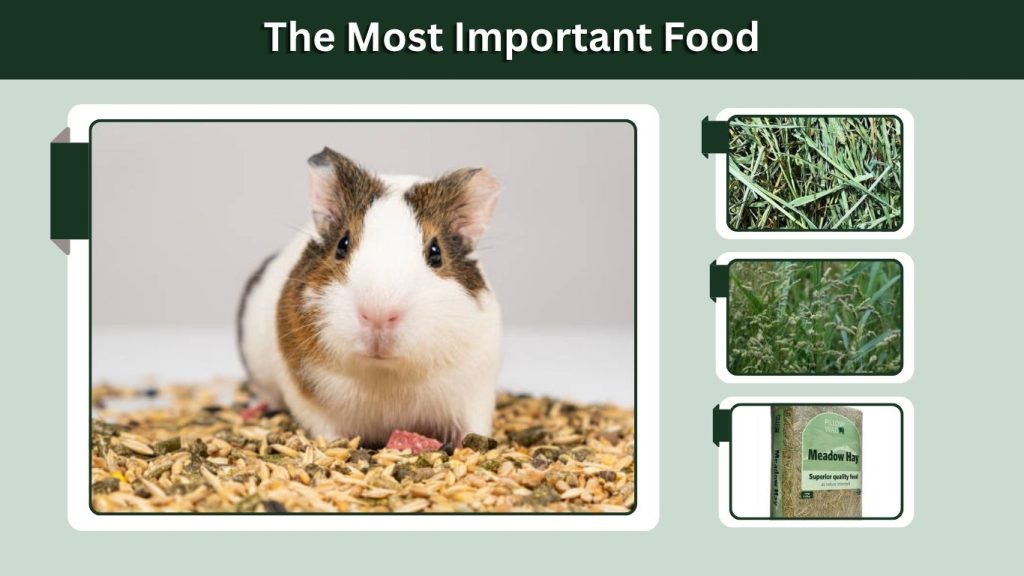
Hay should make up most of a guinea pig’s diet. Timothy hay, orchard grass, and meadow hay are common choices for adult guinea pigs. Hay helps keep the gut moving and supports natural tooth wear, which is important because guinea pig teeth keep growing.
Best Hay for Guinea Pigs
- Timothy hay
- Orchard grass
- Meadow hay
- Oat hay in moderation
- Alfalfa hay only for young, pregnant, nursing, or underweight guinea pigs unless a vet says otherwise
Adult guinea pigs usually do better with grass hay, while alfalfa is richer in calcium and protein. Too much calcium-rich food may not be ideal for many adult guinea pigs.
Guinea Pig Pellets
Pellets should support the diet, not replace hay. Choose plain guinea pig pellets with added vitamin C. Avoid mixes with seeds, colored pieces, dried fruit, or sugary extras because guinea pigs may pick out their favorite parts and leave the balanced pieces behind.
Humane World recommends timothy-based, vitamin C-fortified pellets without seeds or dried fruit, with about 1/8 cup of pellets once daily for many guinea pigs.
Pellet Feeding Tips
- Use guinea pig-specific pellets.
- Do not use rabbit pellets as a main food.
- Store pellets in a cool, dry place.
- Buy smaller bags so vitamin C stays fresher.
- Do not overfeed pellets, because hay should remain the main food.
Fresh Vegetables for Guinea Pigs
Vegetables give guinea pigs extra nutrients and variety. Many owners feed about one cup of vegetables per guinea pig per day, depending on age, health, and vet advice. A guinea pig feeding guide from the City of Irvine also recommends about one cup of vegetables daily per pig.
Good Vegetables to Feed
- Romaine lettuce
- Green leaf lettuce
- Bell pepper
- Cilantro
- Parsley in small amounts
- Cucumber
- Zucchini
- Celery cut into small pieces
- Carrot in small amounts
- Tomato in small amounts
Bell peppers are especially useful because they are rich in vitamin C and are lower in sugar than many fruits.
Can Guinea Pigs Eat Celery?
Yes, guinea pigs can eat celery, but it should be washed and cut into small pieces. The stringy parts can be difficult to chew, so chopping celery helps reduce choking risk. Celery should be part of a mixed vegetable diet, not the only vegetable.
Fruits Guinea Pigs Can Eat
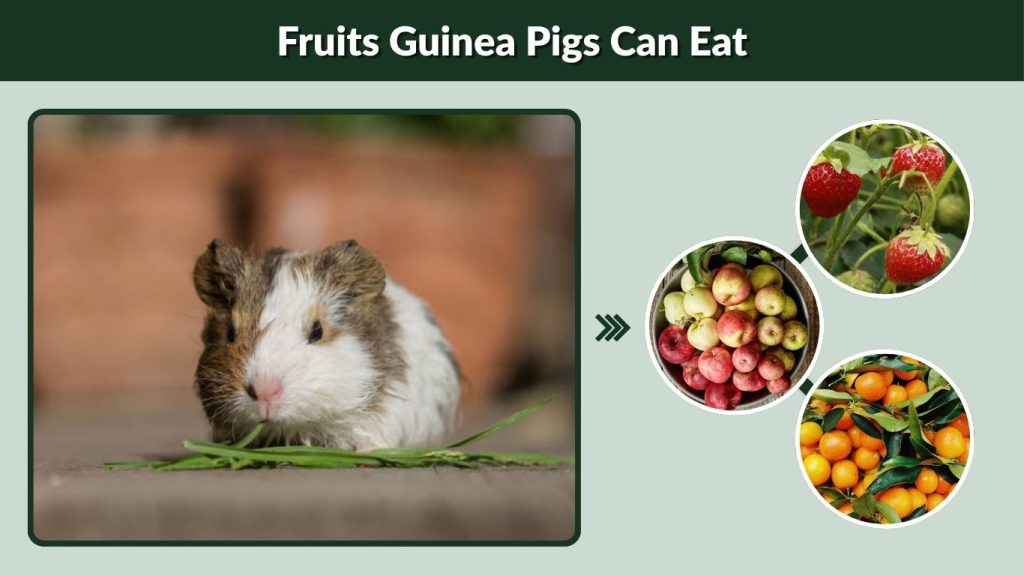
Fruit should be limited because it contains natural sugar. Small pieces can be offered as treats, but not every day for every guinea pig.
| Fruit | Feeding Advice |
| Apple | Small piece, no seeds |
| Strawberry | Small piece occasionally |
| Blueberry | 1–2 berries as a treat |
| Orange | Small amount, watch acidity |
| Watermelon | Small piece, remove rind if needed |
| Banana | Very tiny piece, rare treat |
Vitamin C for Guinea Pigs
Guinea pigs need vitamin C from their diet because they cannot produce it themselves. VCA Animal Hospitals notes that vitamin C is important for skin, joints, gums, healing, and disease resistance. Deficiency can lead to scurvy signs such as swollen joints, poor movement, rough coat, diarrhea, and gum or skin problems.
Vitamin C-Rich Foods
- Bell pepper
- Romaine lettuce
- Parsley
- Cilantro
- Small pieces of orange
- Guinea pig pellets with added vitamin C
Do not rely only on vitamin drops in water unless your vet recommends them, because some guinea pigs may drink less if the taste changes.
What Not to Feed Guinea Pigs
Some foods are unsafe or unsuitable for guinea pigs. Others may cause gas, obesity, or digestive upset if overfed.
Foods to Avoid
- Rabbit food
- Hamster food
- Bread
- Cheese
- Meat
- Chocolate
- Candy
- Onions
- Garlic
- Potatoes
- Avocado
- Iceberg lettuce
- Seeds and nuts
- Processed human snacks
- Grass treated with chemicals
Rabbit and hamster foods are not proper replacements because guinea pigs need guinea pig-specific nutrition and daily vitamin C support.
How Often Should You Feed Guinea Pigs?
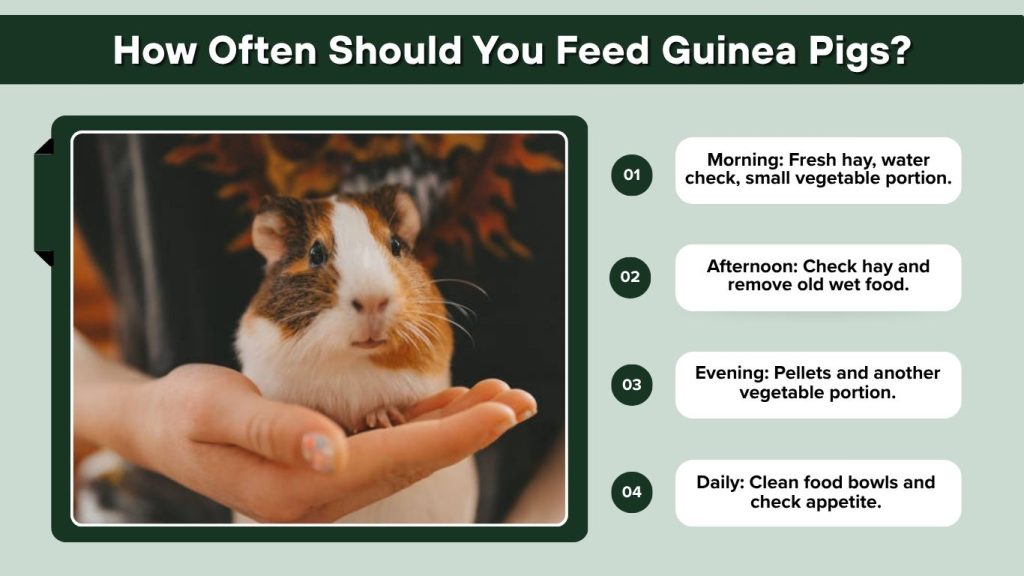
Guinea pigs should have hay and water available all the time. Pellets are usually given once daily, while vegetables can be offered once or split into two smaller meals. Splitting vegetables into morning and evening feedings can help keep food fresh and encourage natural grazing behavior.
Simple Feeding Schedule
- Morning: Fresh hay, water check, small vegetable portion
- Afternoon: Check hay and remove old wet food
- Evening: Pellets and another vegetable portion
- Daily: Clean food bowls and check appetite
Feeding Young Guinea Pigs
Young guinea pigs can eat hay, pellets, and vegetables, but they may need more growth support than adults. Alfalfa hay or young guinea pig pellets may be useful during growth, but diet changes should be gradual. Newborns and very young pups also nurse from their mother while learning to eat solid foods.
FAQs
What do I feed guinea pigs every day?
Feed guinea pigs unlimited grass hay, fresh water, guinea pig pellets, and safe vegetables every day. Hay should be the main food. Pellets and vegetables support the diet, while fruits should only be occasional treats.
Can guinea pigs eat rabbit food?
No, rabbit food should not be used as a main diet for guinea pigs. Guinea pigs need vitamin C in their daily diet, and rabbit pellets are not designed for their nutritional needs. Use guinea pig-specific pellets instead.
How much should I feed guinea pigs?
Give unlimited hay and fresh water. Many guinea pigs get about 1/8 cup of pellets daily and about one cup of vegetables per day. Exact amounts can vary based on age, weight, health, and your vet’s advice.
Can guinea pigs eat carrots?
Yes, guinea pigs can eat carrots, but only in small amounts. Carrots are higher in sugar than leafy greens, so they are better as a small treat rather than a daily main vegetable.
What is the best hay for guinea pigs?
Timothy hay is one of the best choices for adult guinea pigs. Orchard grass and meadow hay are also good options. Young, pregnant, or nursing guinea pigs may benefit from alfalfa, but adult guinea pigs usually need grass hay as their main hay.