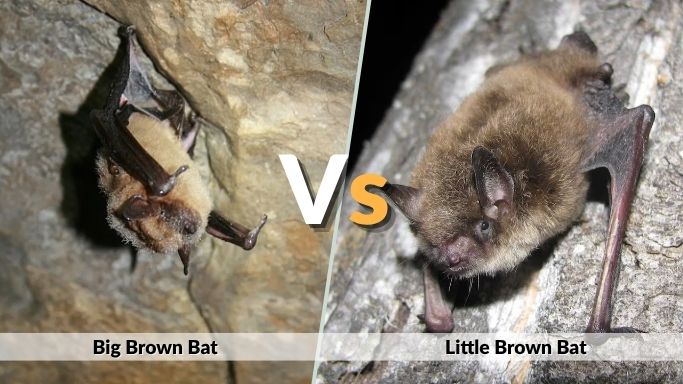
Big brown bats and little brown bats look similar at first because both are small, brown, nighttime insect hunters. However, they are different species with clear differences in size, face shape, ears, roosting habits, and identification clues. Big brown bats are larger and more robust, while little brown bats are smaller, slimmer, and often harder to separate from other small Myotis bats.
Big Brown Bat vs Little Brown Bat Overview
Big brown bats and little brown bats are two of the most familiar bats in North America. Both may roost in buildings, hunt insects at night, and appear around yards, farms, forests, and water. The easiest difference is size, but body shape, ears, wings, and roosting behavior also help.
| Feature | Big Brown Bat | Little Brown Bat |
| Scientific name | Eptesicus fuscus | Myotis lucifugus |
| Body size | Larger and heavier | Smaller and lighter |
| Weight | About 13–18 g | About 5–14 g |
| Wingspan | About 13–16 in | About 8.7–10.6 in |
| Face | Broad, heavier-looking | Smaller, more delicate |
| Ears | Shorter and rounder | Longer-looking, narrow |
| Color | Brown to dark brown | Glossy brown to olive-brown |
| Common building use | Very common in attics and walls | Also uses buildings, but often linked with colonies near water |
| Main diet | Insects, especially beetles and other night insects | Insects, including mosquitoes, midges, moths, and aquatic insects |
Quick Identification
The big brown bat looks stronger, bulkier, and broader. It has a larger head, shorter rounded ears, dark wings, and a heavier body. If a bat appears chunky and large compared with other house bats, it may be a big brown bat.
The little brown bat is smaller, lighter, and more delicate. It has a narrow face and belongs to the mouse-eared bat group. It can be difficult to identify without close observation because it resembles several other Myotis species.
Why They Are Confused
People often confuse these two bats because both can be brown, both may live near humans, and both fly at night. Their common names also make the comparison seem simple, but color alone is not enough. A small big brown bat and a large little brown bat can look closer in size than expected.
In real life, identification is hardest when the bat is flying quickly, hanging high in an attic, or seen only briefly. Size, shape, and roosting clues should be used together.
Size and Appearance Differences
Size is the most helpful difference between these bats. Big brown bats are usually much larger, with broader wings and a more powerful body. Little brown bats are smaller and slimmer. When seen side by side, the difference is obvious, but a single bat can still be hard to judge.
| Measurement | Big Brown Bat | Little Brown Bat |
| Weight | About 13–18 g | About 5–14 g |
| Body length | About 4–5.1 in | About 2.4–4 in |
| Wingspan | About 13–16 in | About 8.7–10.6 in |
| Build | Stocky and robust | Small and slender |
| Face shape | Large, broad muzzle | Smaller, narrower muzzle |
| Ear shape | Short and rounded | Longer and more pointed-looking |
Big Brown Bat Size
The big brown bat is one of the easier brown bats to recognize because of its larger size. Its body is sturdy, and its head looks broad compared with smaller bat species. The wings are dark, and the fur is usually medium to dark brown, sometimes with a slightly glossy appearance.
Its larger body gives it a more powerful look in flight. It may appear slower and more direct than smaller bats, although flight style can change depending on feeding conditions.
Little Brown Bat Size
The little brown bat is much smaller and lighter. It has a delicate body and a more compact appearance. Its fur can be brown, dark brown, or slightly glossy. The ears are not huge, but they can look longer and narrower than the big brown bat’s ears.
Because little brown bats are small, they can be mistaken for other Myotis bats, including Indiana bats and northern long-eared bats. Proper identification may require expert help, especially where protected bat species occur.
Face, Ears, and Wings
The big brown bat has a wider face and shorter, rounded ears. Its muzzle looks heavier, and the whole head appears more solid. The little brown bat has a narrower face and a smaller head, giving it a more refined look.
Wing shape also differs slightly. Big brown bats have broader wings suited for steady flight in open spaces and around buildings. Little brown bats are agile and often hunt over water, forest edges, and open areas where small insects are active.
Habitat and Roosting Habits
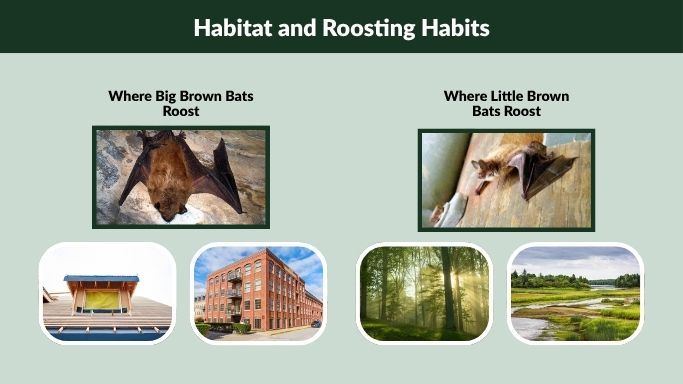
Both bats use natural and human-made roosts. They may live in tree cavities, buildings, barns, bridges, bat houses, caves, and other sheltered places. During warmer months, females often form maternity colonies where they raise young.
Where Big Brown Bats Roost
Big brown bats commonly use buildings, especially attics, wall spaces, barns, and roof gaps. They are one of the species most often found in homes. They may use buildings from spring through fall, and in some areas they may remain in structures during colder months if conditions are suitable.
They also roost in tree hollows, rock crevices, and other sheltered spaces. Their ability to use human structures helps explain why people often encounter them in towns and suburbs.
Where Little Brown Bats Roost
Little brown bats also use buildings, but they are strongly associated with areas near water, forests, and wetlands. They may roost in attics, barns, tree cavities, caves, mines, and bat houses. During summer, maternity colonies may form in warm sheltered roosts.
In winter, little brown bats often hibernate in caves or mines where temperatures remain cool and stable. This hibernation habit has made them vulnerable to white-nose syndrome in many parts of their range.
Attic and House Clues
If bats are found in an attic, either species is possible in many regions. Big brown bats are often more likely in buildings, especially when the bats appear large and chunky. Little brown bats may also use attics, especially as maternity roosts.
Signs of bats in an attic can include scratching sounds at dusk or dawn, droppings below entry points, dark staining near gaps, and bats exiting at sunset. Never seal an opening while bats are inside, especially during maternity season, because young bats may be trapped.
Diet and Feeding Behavior
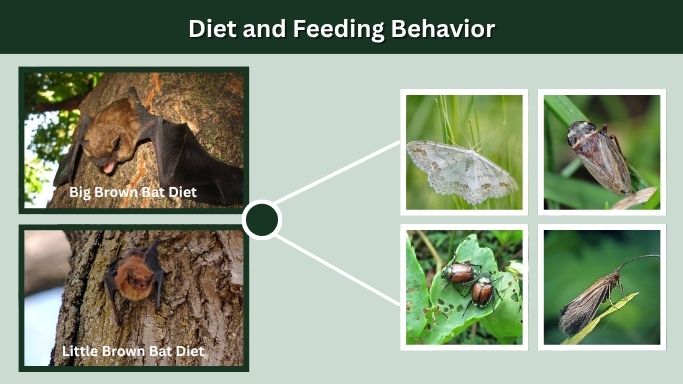
Both big brown bats and little brown bats are insectivores. They hunt at night and catch insects in the air using echolocation. Their diets overlap, but they often focus on different prey depending on habitat, insect availability, and body size.
| Food or Feeding Feature | Big Brown Bat | Little Brown Bat |
| Main food | Night-flying insects | Night-flying insects |
| Common prey | Beetles, moths, flies, wasps | Mosquitoes, midges, moths, caddisflies, mayflies |
| Feeding area | Yards, farms, streets, forests, open spaces | Water, wetlands, forest edges, fields |
| Hunting style | Strong, steady flight | Agile flight, often near water |
| Pest control value | Eats many larger insects | Eats many small flying insects |
Big Brown Bat Diet
Big brown bats eat many insects, but beetles are especially important in their diet. They also eat moths, flies, wasps, leafhoppers, and other night-flying insects. Their larger size allows them to handle harder or larger prey better than many smaller bats.
They often hunt around farms, fields, streetlights, forest edges, and open spaces. Because they eat many agricultural and yard insects, they are valuable natural pest controllers.
Little Brown Bat Diet
Little brown bats eat smaller flying insects, especially those found near water. Their food can include mosquitoes, midges, moths, caddisflies, mayflies, gnats, flies, beetles, and other tiny prey. They often feed over ponds, streams, lakes, wetlands, and forest openings.
They are fast, agile hunters. Their smaller size helps them turn quickly while catching small insects in the air.
Do They Eat Mosquitoes?
Both species may eat mosquitoes, but little brown bats are more strongly associated with small aquatic insects such as mosquitoes, midges, mayflies, and caddisflies. Big brown bats may eat mosquitoes too, but they often take larger prey such as beetles and moths when available.
Bats help reduce insect numbers, but they do not eat only mosquitoes. Their diet is broad and changes with the insects active on a given night.
Flight and Behavior Differences
Watching flight style can help, but it is not always reliable. Weather, light, prey type, and space can change how a bat flies. Still, big brown bats often look heavier and more direct, while little brown bats may look quicker and more fluttering.
Big Brown Bat Flight
Big brown bats have strong, steady flight. They may fly along streets, over yards, around buildings, and near woodland edges. Their flight can look more direct than smaller bats, with broad wingbeats and a sturdy silhouette.
They may begin feeding shortly after sunset. Around buildings, they may exit through roof gaps, vents, soffits, or cracks, then fly to nearby feeding areas.
Little Brown Bat Flight
Little brown bats often fly with quick turns and agile movements. They commonly hunt over water, where insects gather at the surface or fly near the shore. Their flight may look lighter and more fluttering than a big brown bat’s flight.
Because they are smaller, they can be difficult to identify in motion. Their small size and quick movements can resemble other small bat species.
Social Behavior
Both species can form colonies, especially maternity colonies made up mostly of females and young. Big brown bat colonies in buildings can vary in size. Little brown bat maternity colonies can also occur in warm buildings, barns, or other sheltered spaces.
During winter, both species hibernate, but their winter habits can differ by region. Big brown bats may sometimes overwinter in buildings, while little brown bats more often use caves and mines.
Big Brown Bat vs Little Brown Bat in the Attic
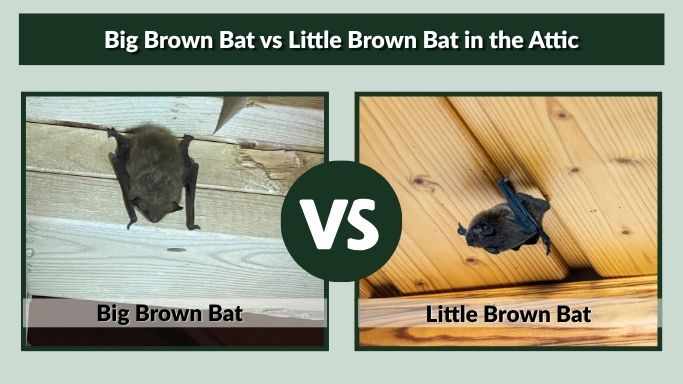
Bats in an attic are often noticed by sounds, droppings, smell, or sightings at sunset. Big brown bats and little brown bats can both use houses, so identification should not be based on the building alone. Size and shape are still the best clues.
Which One Is More Likely?
In many homes, big brown bats are a common attic species because they tolerate human structures well. Their larger size may make them more noticeable when seen flying indoors or hanging in an attic. Little brown bats can also use attics, especially for maternity colonies, but they are smaller and may be harder to spot.
Location matters. Near lakes, rivers, wetlands, or forested areas, little brown bats may be more likely. In cities, suburbs, farms, and older houses, big brown bats are often encountered.
What to Do If Bats Are Inside
Do not touch bats with bare hands. Bats can bite in self-defense if handled, and any direct contact should be taken seriously. If a bat is flying in a living space, close interior doors, open an outside exit if safe, and contact local wildlife or public health guidance if there was possible contact with people or pets.
For attic colonies, humane exclusion is the correct approach. This means allowing bats to leave through one-way devices and then sealing entry points after they are gone. Exclusion should not be done when flightless young are present.
Similar Bats Often Confused With Them
Big brown bats and little brown bats are not the only brown bats people may see. Several species can look similar, especially in dim light. This is why size, ear shape, habitat, and expert confirmation can be important.
Evening Bat vs Little Brown Bat
Evening bats can resemble small brown bats, but they are not the same as little brown bats. Evening bats are generally found in the eastern and southern United States and may use buildings as roosts. They can be confused with little brown bats because both are small and brown.
The little brown bat belongs to the Myotis group, while the evening bat belongs to a different genus. Careful identification may require close examination of physical features.
Indiana Bat vs Little Brown Bat
Indiana bats are very similar to little brown bats and can be difficult to identify without expert knowledge. This matters because Indiana bats are protected in the United States. If a small brown bat is found in an area where Indiana bats occur, it should not be casually identified without proper expertise.
Little brown bats are also affected by conservation concerns, especially because of white-nose syndrome. Handling or disturbing bats can create risks for both people and wildlife.
Serotine Bat vs Big Brown Bat
The serotine bat is found in Europe and parts of Asia, while the big brown bat is a North American species. They can look similar because both are larger brown bats in the same general family group. However, they live in different regions, so location is a major clue.
FAQs
What is the main difference between a big brown bat and a little brown bat?
The main difference is size. Big brown bats are larger, heavier, and broader-faced, while little brown bats are smaller and more delicate. Big brown bats also have shorter rounded ears and a stockier body. Little brown bats have a slimmer shape and are often harder to separate from other small brown bats.
Is a big brown bat twice the size of a little brown bat?
A big brown bat can look much larger than a little brown bat, especially by weight and wingspan. Big brown bats often weigh about 13–18 g, while little brown bats are usually about 5–14 g. The size difference is easiest to see when both species are compared side by side.
Which bat is more common in attics?
Big brown bats are commonly found in attics, wall spaces, barns, and other buildings. Little brown bats can also roost in buildings, especially in warm maternity colonies. If bats are in an attic, size, shape, location, and professional inspection are better clues than the roost alone.
Do big brown bats and little brown bats eat the same food?
Both species eat night-flying insects, but their diets are not exactly the same. Big brown bats often eat beetles, moths, flies, and other larger insects. Little brown bats commonly eat mosquitoes, midges, caddisflies, mayflies, moths, gnats, and other small insects, especially near water.
Can I identify a bat just by its brown color?
No, brown color alone is not enough. Many bats are brown, and several species look similar in poor light. Use size, face shape, ear shape, wingspan, roosting behavior, habitat, and region together. If the bat may be a protected species, expert identification is the safest choice.