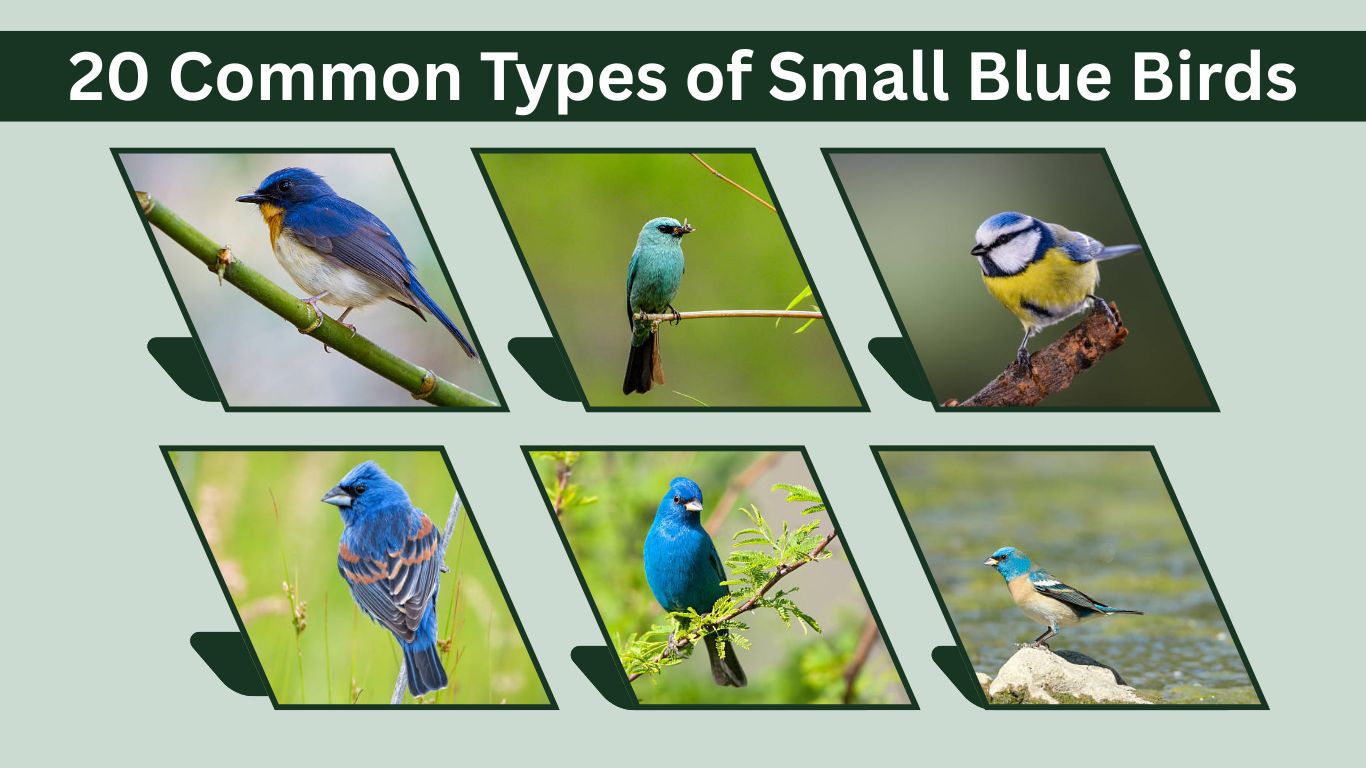
Small blue birds are among the most attractive and fascinating birds found in forests, gardens, grasslands, mountains, and wetlands worldwide. Their colorful feathers range from pale sky blue and turquoise to deep indigo and navy. Some species, such as bluebirds and buntings, are easy to recognize, while small flycatchers and warblers can be more difficult to identify. This guide covers 21 common types of small blue birds, including their appearance, habitat, diet, range, and nesting behavior. Whether you are a beginner birdwatcher or a nature lover, these descriptions will help you identify beautiful blue birds more confidently.
1. Eastern Bluebird
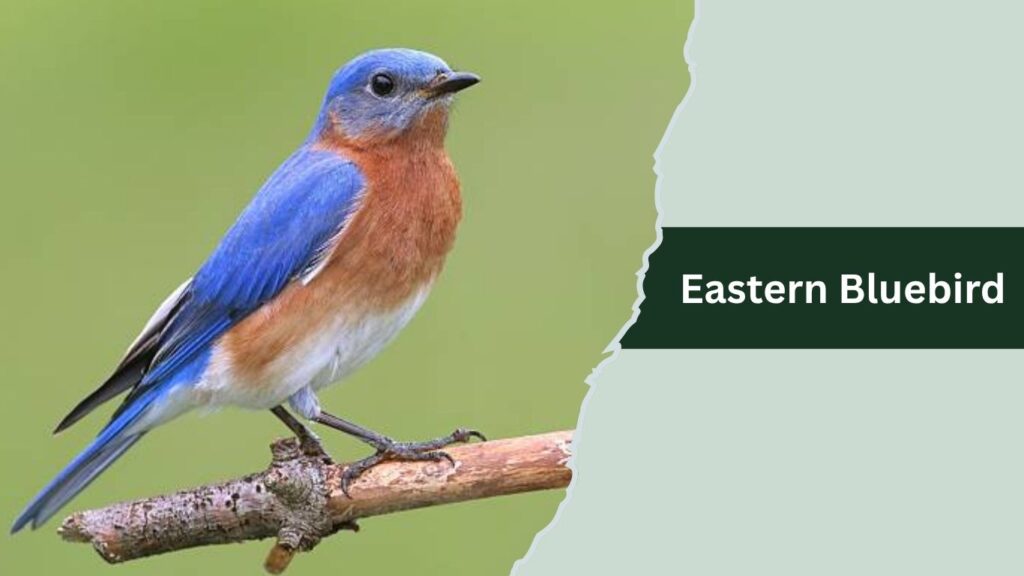
The Eastern Bluebird is a small, colorful songbird commonly found across eastern and central North America. It prefers open woodlands, farms, meadows, orchards, and suburban areas with scattered trees. Its bright blue feathers and warm orange chest make it one of the easiest small blue birds to recognize.
Identification
- Males have vivid blue upperparts and a rusty-orange chest.
- Females are grayish-blue with softer orange coloring.
- The belly is usually white or pale.
- Adults measure about 6.3–8.3 inches long.
- They have a rounded head, short bill, and relatively large eyes.
Habitat and Distribution
Eastern Bluebirds live in open areas with low grass and nearby trees or fence posts. They are widespread throughout the eastern United States, southern Canada, Mexico, and parts of Central America. Many remain in their range year-round, while northern populations may migrate south during winter.
Diet and Feeding
These birds mainly eat insects, including beetles, grasshoppers, caterpillars, spiders, and crickets. They often perch on branches or fences before dropping to the ground to catch prey. During colder months, they also eat berries and small fruits.
Nesting Behavior
Eastern Bluebirds are cavity nesters. They use abandoned woodpecker holes, natural tree cavities, and specially designed nest boxes. The female builds a cup-shaped nest from grasses and pine needles and usually lays three to seven pale blue eggs.
2. Western Bluebird
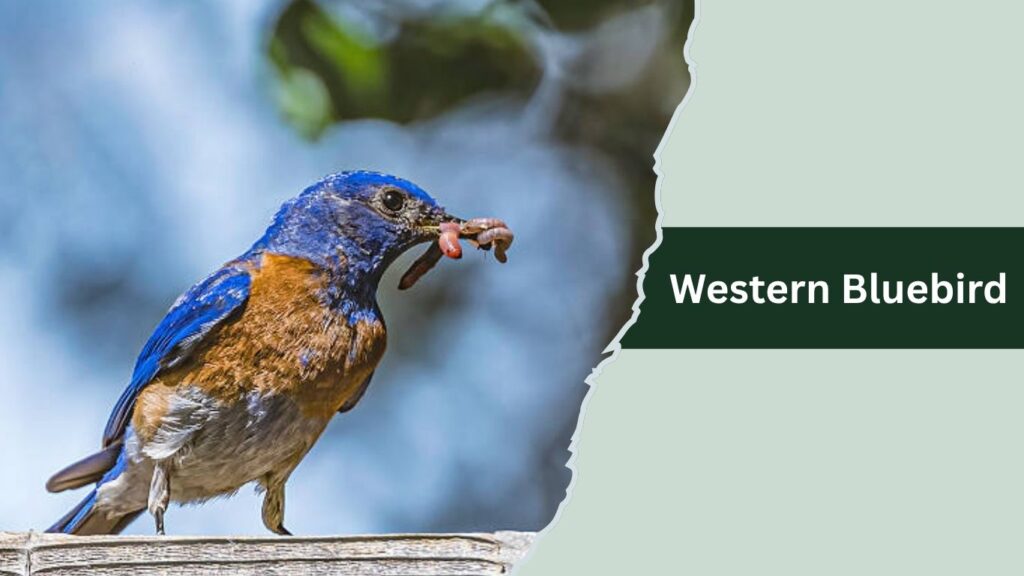
The Western Bluebird is a small, brightly colored songbird found mainly in western North America. It lives in open forests, grasslands, farms, mountain meadows, and suburban areas with scattered trees. Males are especially striking because of their deep blue feathers and rusty-orange breast.
Identification
- Adult males have bright blue heads, backs, wings, and tails.
- The chest and upper belly are rusty orange.
- Females are grayish-brown with blue wings and tails.
- The lower belly is pale or whitish.
- Adults usually measure about 6.3–7.5 inches long.
Habitat and Range
Western Bluebirds are common from southern Canada through the western United States and into Mexico. They prefer open habitats with short vegetation and nearby trees. Some populations remain in one area throughout the year, while others move to lower elevations or warmer regions during winter.
Diet and Feeding
Their diet includes beetles, caterpillars, grasshoppers, ants, spiders, and other small invertebrates. Western Bluebirds often watch the ground from a low perch before flying down to capture prey. In fall and winter, they also eat berries and small fruits.
Nesting Behavior
Western Bluebirds nest in natural tree cavities, old woodpecker holes, and birdhouses. The female builds the nest using dry grass, plant fibers, and pine needles. She normally lays two to eight pale blue eggs and handles most of the incubation.
3. Mountain Bluebird
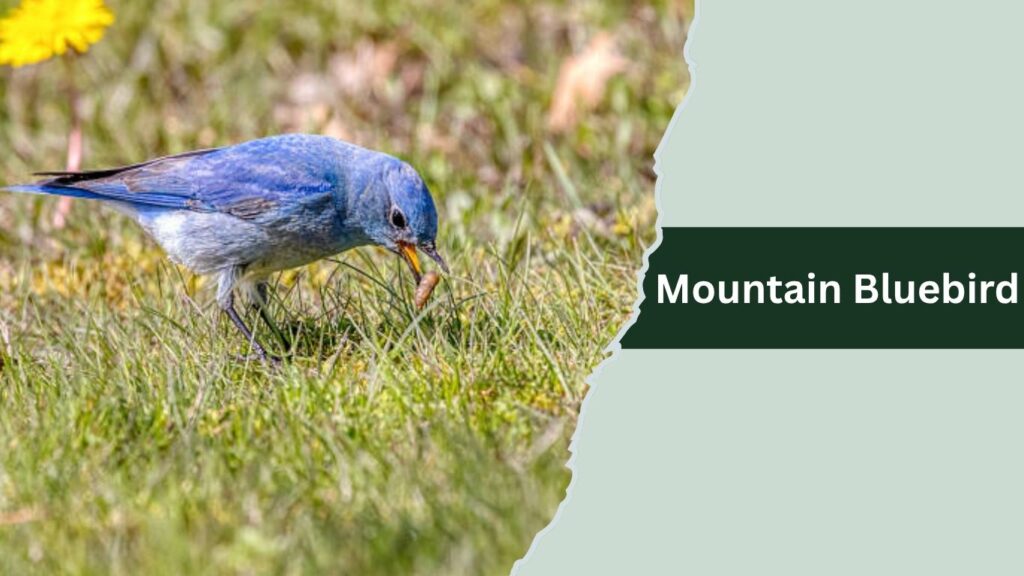
The Mountain Bluebird is a small, graceful songbird known for its brilliant sky-blue plumage. It is commonly found in open country across western North America, especially in mountain meadows, grasslands, sagebrush areas, and farmland. Unlike the Eastern and Western Bluebirds, the male Mountain Bluebird has little or no orange on its chest.
Identification
- Adult males are bright turquoise or sky blue over most of the body.
- Females are mostly gray-brown with blue wings and tails.
- The belly is pale or whitish.
- Adults measure about 6.3–7.9 inches long.
- They have a thin bill, rounded head, and relatively long wings.
Habitat and Range
Mountain Bluebirds breed from Alaska and western Canada through the western United States. They favor open landscapes with scattered trees, fence posts, or nest boxes. During winter, many move south or descend to lower elevations, sometimes reaching Mexico.
Diet and Feeding
These birds mainly eat insects such as beetles, grasshoppers, caterpillars, and crickets. They often hover briefly above the ground before dropping onto prey. In colder seasons, they also feed on berries and small fruits.
Nesting Behavior
Mountain Bluebirds are cavity nesters. They use natural tree holes, abandoned woodpecker cavities, and artificial nest boxes. The female builds the nest from dry grass and plant material, then lays four to eight pale blue eggs.
4. Indigo Bunting
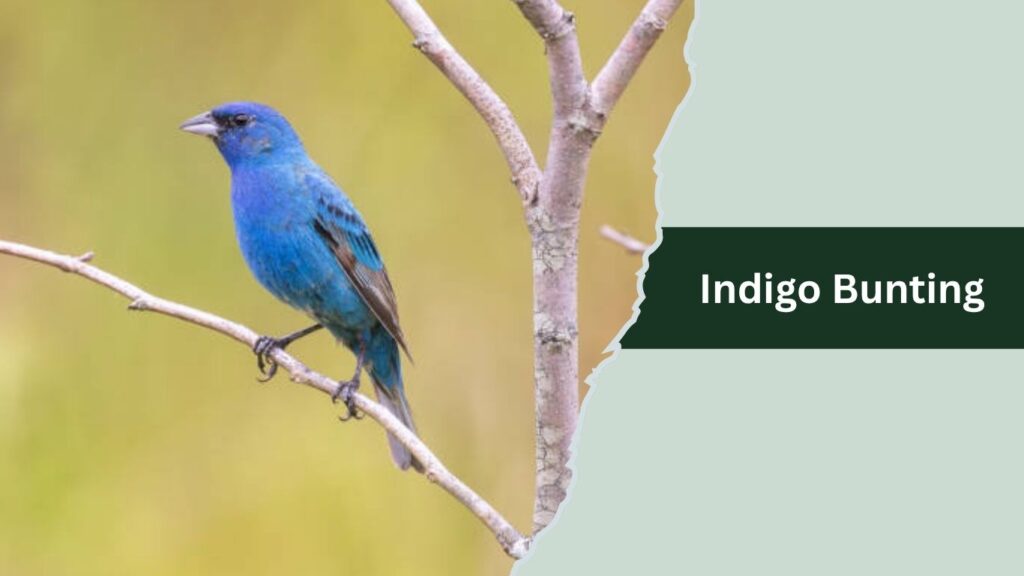
The Indigo Bunting is a small songbird famous for the male’s brilliant blue plumage. It is commonly found in brushy fields, woodland edges, roadsides, and overgrown farmland across eastern and central North America. Although males appear intensely blue in sunlight, their feathers contain no true blue pigment and create the color by reflecting light.
Identification
- Adult males are bright indigo blue during the breeding season.
- Females are mostly warm brown with faint streaking underneath.
- Young males may show a mixture of blue and brown feathers.
- Adults measure about 4.5–5.1 inches long.
- They have a short, thick, cone-shaped bill.
Habitat and Range
Indigo Buntings prefer open areas with shrubs, weeds, and scattered trees. They breed across much of the eastern United States and southern Canada. During winter, they migrate to Mexico, Central America, the Caribbean, and northern South America.
Diet and Feeding
These birds eat seeds, berries, insects, and small spiders. During summer, insects provide important protein for adults and chicks. Indigo Buntings often forage close to the ground or among low vegetation, picking seeds from grasses and weeds.
Nesting Behavior
The female builds a small cup-shaped nest in dense shrubs or low trees. She uses grasses, leaves, bark strips, and spider silk. A typical clutch contains three or four pale blue or whitish eggs, and the female performs most nesting duties.
5. Lazuli Bunting
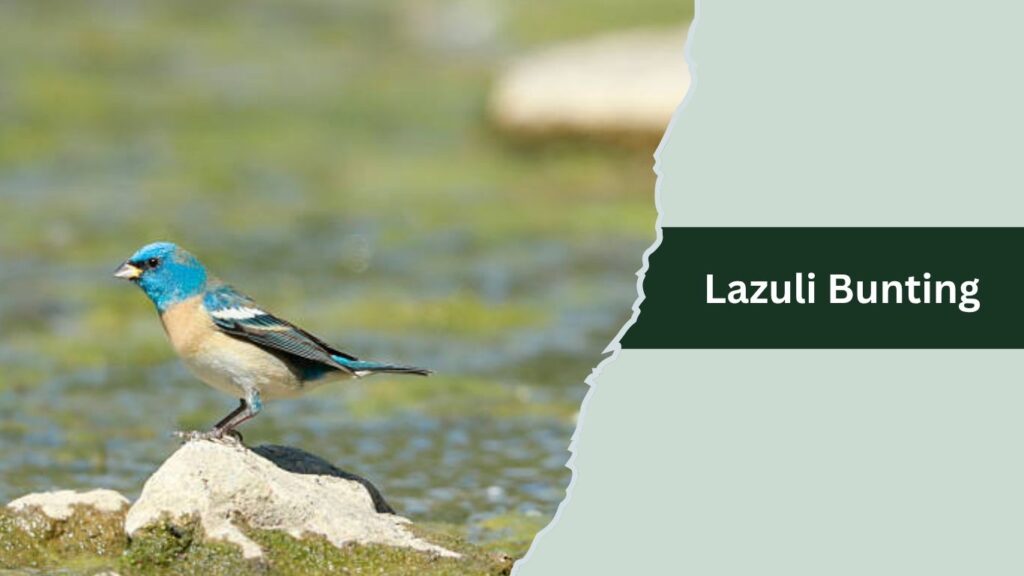
The Lazuli Bunting is a small, colorful songbird found mainly in western North America. Adult males are especially attractive, with bright blue heads, orange breasts, and pale bellies. These birds usually live in brushy fields, woodland edges, mountain valleys, and areas with dense shrubs.
Identification
- Adult males have a turquoise-blue head and back.
- The breast is warm orange or cinnamon-colored.
- The belly is white or pale gray.
- Females are mostly brown with faint blue on the wings and tail.
- Adults measure about 5.1–5.9 inches long.
Habitat and Range
Lazuli Buntings breed across western Canada and the western United States. They prefer open habitats with shrubs, low trees, and nearby grasslands. During winter, they migrate south to Mexico and sometimes reach parts of Central America.
Diet and Feeding
These birds eat seeds, berries, insects, and small spiders. During the breeding season, insects become especially important because they provide protein for growing chicks. Lazuli Buntings usually forage on the ground or among low plants.
Nesting Behavior
The female builds a compact cup-shaped nest in a shrub or low tree. She uses grass, bark, leaves, and plant fibers. A typical clutch contains three or four pale blue eggs, and the female handles most of the incubation.
6. Blue Grosbeak
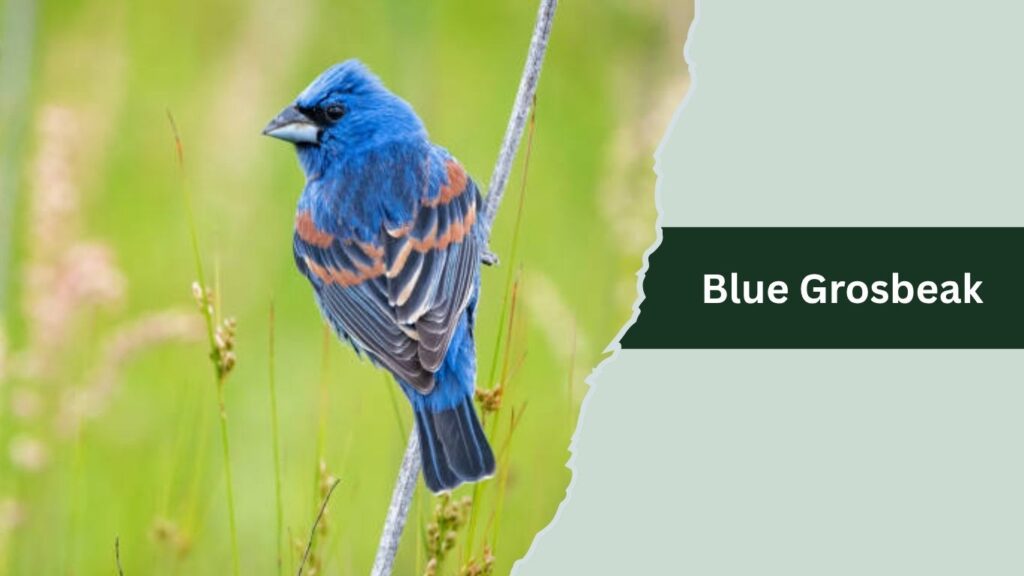
The Blue Grosbeak is a small but sturdy songbird found across the southern and central United States. It is known for its rich blue plumage, thick silver-colored bill, and chestnut wing bars. These birds usually inhabit open fields, brushy roadsides, woodland edges, and areas with scattered shrubs.
Identification
- Adult males are deep blue with reddish-brown wing bars.
- Females are mostly warm brown with faint blue on the tail.
- Both sexes have a large, thick, cone-shaped bill.
- Adults measure about 5.9–6.3 inches long.
- Young males may display a mixture of brown and blue feathers.
Habitat and Range
Blue Grosbeaks prefer open habitats with dense shrubs and low vegetation. They breed throughout the southern United States and parts of the central and western regions. During winter, they migrate to Mexico, Central America, and the Caribbean.
Diet and Feeding
Their diet includes grass seeds, grains, beetles, caterpillars, grasshoppers, spiders, and other small insects. Blue Grosbeaks usually search for food on the ground or among low plants. Insects become especially important during the breeding season.
Nesting Behavior
The female builds a cup-shaped nest in a shrub, vine, or small tree. She uses grass, leaves, bark, and plant fibers. A typical clutch contains three to five pale blue eggs, which the female incubates.
7. Cerulean Warbler
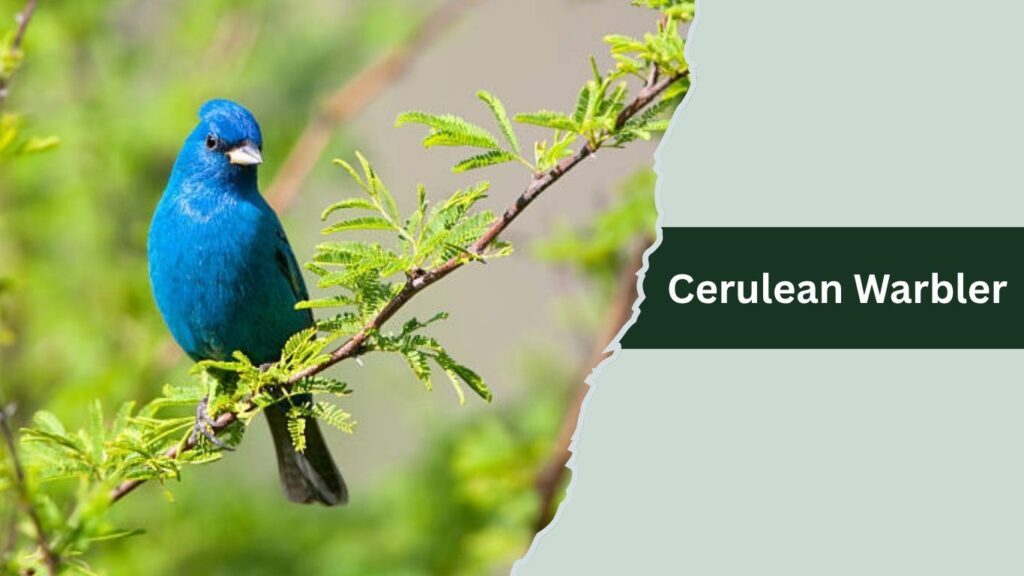
The Cerulean Warbler is a tiny migratory songbird recognized for the male’s beautiful sky-blue upperparts and pale underside. It spends much of its time high in the canopy, making it difficult to observe closely. This small blue bird is mainly associated with mature deciduous forests near streams and river valleys.
Identification
- Adult males have sky-blue backs, heads, and wings.
- The underside is white with a narrow dark chest band.
- Females are bluish-green above with pale yellow underparts.
- Both sexes have two noticeable white wing bars.
- Adults measure about 4.3–4.7 inches long.
Habitat and Range
Cerulean Warblers breed in mature forests across parts of the eastern and central United States and southern Canada. They often prefer tall trees and large, unbroken woodland areas. During winter, they migrate to forested mountain regions in northern South America.
Diet and Feeding
These birds mainly eat caterpillars, beetles, moths, flies, and other small insects. They search for food among leaves and branches near the tops of trees. Cerulean Warblers may also catch insects while making short flights through the canopy.
Nesting Behavior
The female builds a shallow cup-shaped nest on a horizontal tree branch. She uses bark fibers, grass, spider silk, and plant material. A typical clutch contains three or four pale eggs marked with brown spots.
8. Black-Throated Blue Warbler
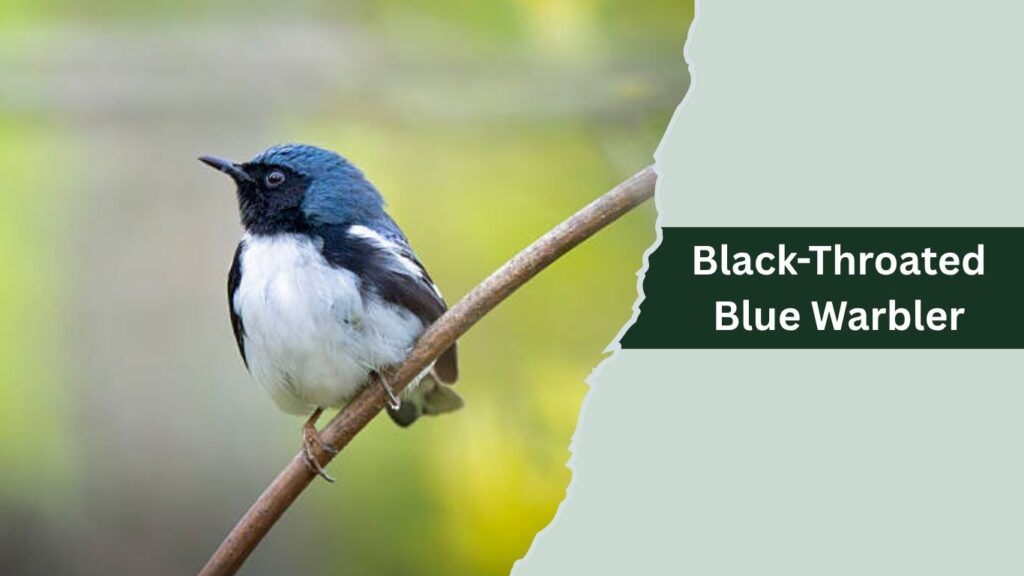
The Black-throated Blue Warbler is a small forest songbird found mainly in eastern North America. Adult males have a striking combination of deep blue, black, and white feathers, while females are much less colorful. These active birds usually remain within dense foliage as they search for insects.
Identification
- Adult males have dark blue backs and black faces and throats.
- Their underparts are bright white.
- A small white patch appears near the base of each wing.
- Females are olive-brown with a pale eyebrow stripe.
- Adults measure about 4.7–5.1 inches long.
Habitat and Range
Black-throated Blue Warblers breed in mature deciduous and mixed forests across southeastern Canada and the northeastern United States. They often prefer wooded mountain slopes with thick shrubs. In winter, they migrate to the Caribbean and parts of Central America.
Diet and Feeding
These warblers primarily eat caterpillars, beetles, flies, moths, and spiders. They carefully inspect leaves, twigs, and branches for hidden prey. Occasionally, they catch flying insects during short aerial movements.
Nesting Behavior
The female builds a cup-shaped nest in dense shrubs close to the ground. The nest is made from bark strips, grass, plant fibers, and spider silk. She usually lays three or four creamy eggs covered with small brown markings.
9. Blue-Gray Gnatcatcher
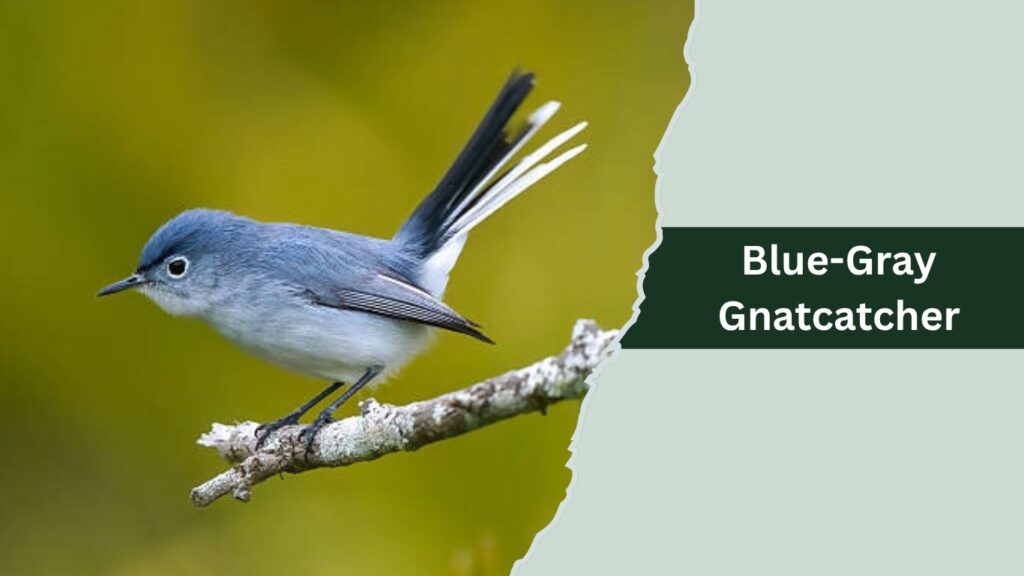
The Blue-gray Gnatcatcher is a tiny, energetic songbird found throughout much of North America. It is known for its soft blue-gray plumage, long tail, and constant movement among tree branches. These birds often flick their tails while searching leaves and twigs for small insects.
Identification
- Adults have blue-gray upperparts and pale gray or white underparts.
- The tail is long, dark, and edged with white feathers.
- Males develop a thin black eyebrow during the breeding season.
- They have a small, pointed bill and a white eye ring.
- Adults measure about 3.9–4.7 inches long.
Habitat and Range
Blue-gray Gnatcatchers live in deciduous forests, woodland edges, scrublands, and areas near rivers. They breed across much of the United States, southern Canada, and Mexico. Northern populations usually migrate south to Mexico, Central America, and the Caribbean during winter.
Diet and Feeding
These birds mainly eat gnats, flies, beetles, caterpillars, spiders, and other tiny invertebrates. They actively move through foliage, picking prey from leaves and branches. They may also hover briefly or fly outward to catch insects in the air.
Nesting Behavior
Both parents help construct a small cup-shaped nest on a horizontal tree branch. They use plant fibers, bark, spider silk, and lichens. The female usually lays three to five pale blue eggs marked with small brown spots.
10. Blue-Winged Warbler
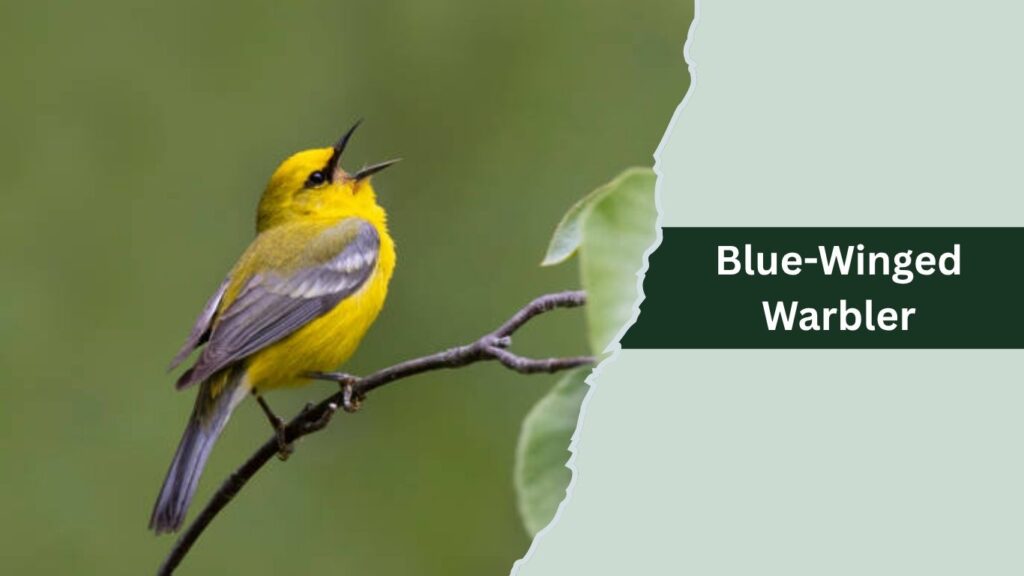
The Blue-winged Warbler is a small, brightly colored songbird found mainly in eastern and central North America. Despite its name, most of its body is yellow, while its wings are bluish-gray. It prefers brushy fields, woodland edges, abandoned farmland, and areas with young shrubs and scattered trees.
Identification
- Adults have bright yellow heads, chests, and underparts.
- A thin black line runs through each eye.
- The wings are bluish-gray with two white wing bars.
- Females are slightly duller than males.
- Adults measure about 4.5–4.7 inches long.
Habitat and Range
Blue-winged Warblers breed in the northeastern and central United States, especially in areas with dense low vegetation. They often occupy habitats created by forest clearing or natural regrowth. During winter, they migrate to Mexico, Central America, and parts of the Caribbean.
Diet and Feeding
These birds mainly eat caterpillars, moths, beetles, flies, spiders, and other small invertebrates. They search carefully among leaves, branches, and buds, sometimes hanging upside down to reach hidden prey. Most feeding occurs in shrubs and low trees.
Nesting Behavior
The female builds a cup-shaped nest close to the ground, usually hidden among grasses or shrubs. She uses dry leaves, bark strips, grass, and plant fibers. A typical clutch contains four to seven creamy-white eggs marked with brown or gray spots.
11. Blue Tit
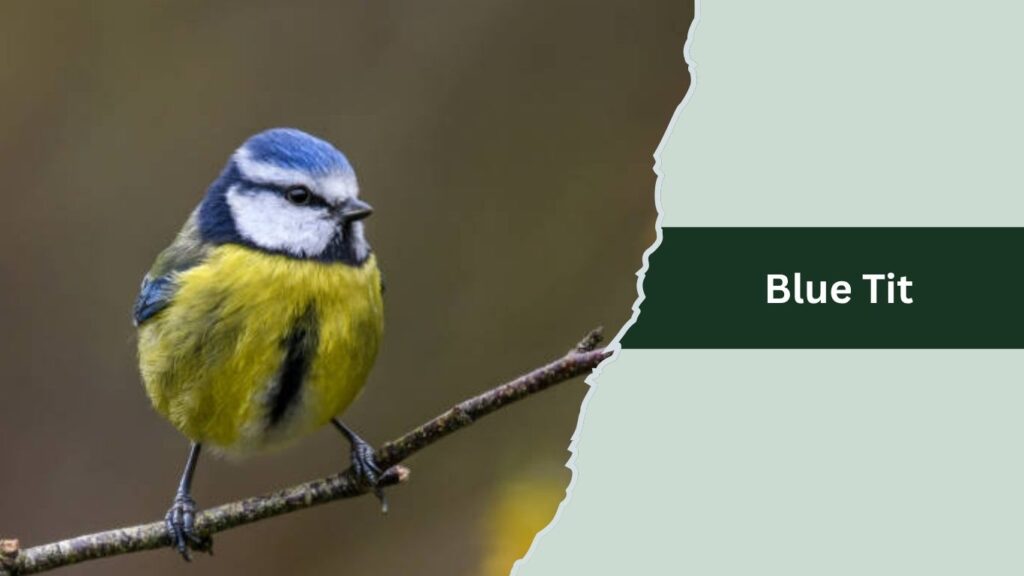
The Blue Tit is a small, lively songbird widely found across Europe and parts of western Asia. It is easily recognized by its blue cap, yellow chest, and white face. Blue Tits commonly visit gardens, parks, woodlands, and backyard feeders, where their energetic behavior makes them popular with birdwatchers.
Identification
- Adults have a bright blue crown, wings, and tail.
- The face is white with a dark blue line across the eyes.
- The chest and belly are mostly yellow.
- The back is greenish-blue.
- Adults measure about 4.5–4.7 inches long.
Habitat and Range
Blue Tits live in deciduous and mixed forests, gardens, orchards, hedgerows, and urban parks. They are common throughout much of Europe and remain in their territories throughout the year. Some birds may move short distances during harsh winter conditions.
Diet and Feeding
Their diet includes caterpillars, aphids, spiders, beetles, seeds, nuts, and berries. During spring and summer, insects become especially important for feeding young chicks. Blue Tits often hang upside down from thin branches while searching for food.
Nesting Behavior
Blue Tits nest inside tree holes, wall cavities, and birdhouses. The female builds a soft nest from moss, grass, feathers, and animal hair. She usually lays seven to twelve small white eggs covered with reddish-brown spots.
12. Azure Tit
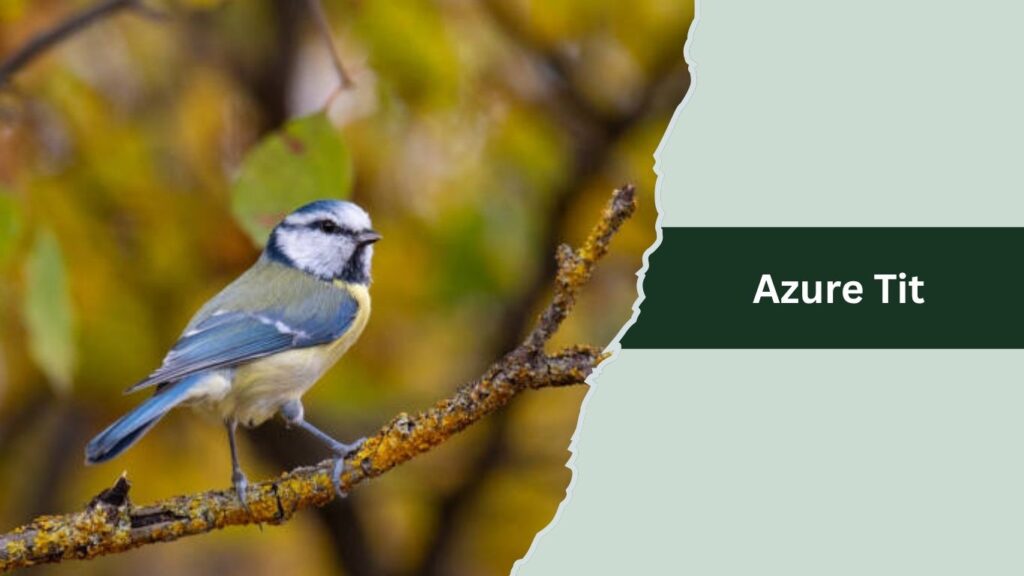
The Azure Tit is a small and attractive songbird known for its pale blue and white plumage. It is mainly found across parts of Russia, Central Asia, and northeastern Europe. This active bird lives in woodlands, river valleys, reed beds, parks, and gardens where trees and shrubs provide food and nesting sites.
Identification
- Adults have a white head with a dark blue eye stripe.
- The wings, back, and tail are pale azure blue.
- The underparts are mostly white.
- The tail is relatively long with white outer feathers.
- Adults measure about 4.7–5.1 inches long.
Habitat and Range
Azure Tits prefer deciduous forests, willow thickets, wetlands, and wooded areas near rivers. Their range extends from western Russia through Central Asia to parts of China and Mongolia. Most populations remain within their range throughout the year, although some move locally during winter.
Diet and Feeding
These birds feed on caterpillars, beetles, spiders, insect eggs, seeds, berries, and small fruits. They search for food among leaves, branches, bark, and flower buds. Azure Tits are agile feeders and may hang upside down while reaching insects hidden beneath twigs.
Nesting Behavior
Azure Tits nest in tree cavities, abandoned woodpecker holes, wall openings, and birdhouses. The female builds a soft nest using moss, grass, feathers, wool, and animal hair. She usually lays seven to eleven white eggs marked with reddish-brown spots.
13. Eurasian Blue Tit
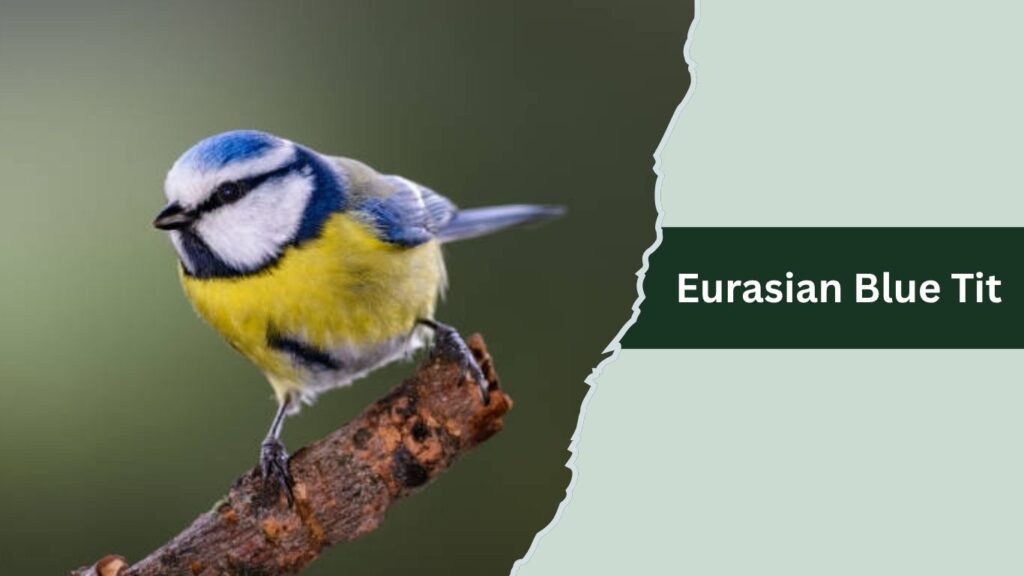
The Eurasian Blue Tit, commonly called the Blue Tit, is a small and colorful songbird found across Europe, western Asia, and parts of North Africa. It is highly adaptable and frequently visits gardens, parks, orchards, and backyard feeders. Its bright blue cap, yellow chest, and energetic movements make it easy to recognize.
Identification
- Adults have a blue crown, wings, and tail.
- The face is white with a dark stripe through the eyes.
- The chest and belly are bright yellow.
- The back is usually greenish or olive-blue.
- Adults measure approximately 4.5–4.7 inches long.
Habitat and Range
Eurasian Blue Tits inhabit deciduous and mixed woodlands, hedgerows, gardens, farmland, and urban parks. They are widespread throughout much of Europe and extend into western Asia. Most populations remain in the same general area throughout the year, although some may move during severe winters.
Diet and Feeding
These birds feed on caterpillars, aphids, beetles, spiders, seeds, nuts, and berries. They often search beneath leaves and along thin branches. Their strong feet allow them to hang upside down while collecting insects or feeding from suspended bird feeders.
Nesting Behavior
Eurasian Blue Tits nest inside tree cavities, wall openings, and nest boxes. The female builds the nest using moss, grass, feathers, and animal hair. She commonly lays seven to twelve white eggs marked with reddish-brown spots.
14. Ultramarine Flycatcher
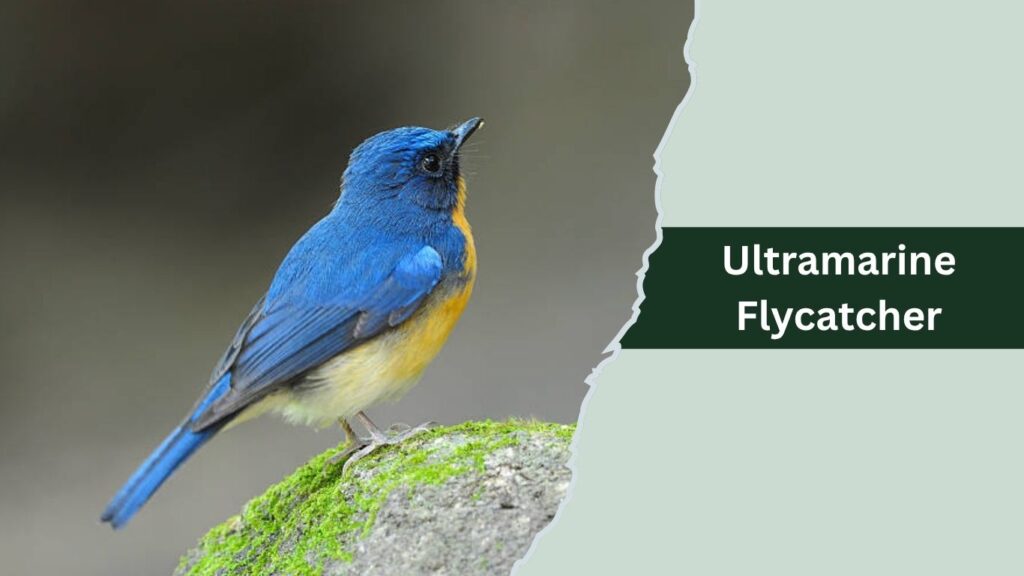
The Ultramarine Flycatcher is a small, beautifully colored songbird found in the Himalayan region and nearby parts of Asia. Adult males display rich blue plumage that contrasts sharply with their pale underparts. These birds usually inhabit mountain forests, wooded valleys, forest edges, and areas with scattered trees.
Identification
- Adult males have deep ultramarine-blue heads, backs, wings, and tails.
- The throat, chest, and belly are mostly white.
- Females are grayish-brown with pale underparts.
- Juveniles appear duller and may have spotted plumage.
- Adults measure approximately 4.5–5 inches long.
Habitat and Range
Ultramarine Flycatchers breed in mountain forests across the Himalayas, including parts of India, Nepal, Bhutan, Pakistan, and surrounding regions. They prefer cool coniferous or mixed forests at higher elevations. During winter, many move to lower hills, valleys, gardens, and lightly wooded areas.
Diet and Feeding
These birds mainly eat flies, beetles, moths, caterpillars, and other small insects. They often sit quietly on an exposed branch before flying out to catch prey. After capturing an insect in the air, they commonly return to the same or a nearby perch.
Nesting Behavior
The female usually builds a small cup-shaped nest inside a tree cavity, rock crevice, or hollow stump. Moss, grass, roots, feathers, and plant fibers are commonly used. She generally lays three to five pale eggs marked with small brown spots.
15. Verditer Flycatcher
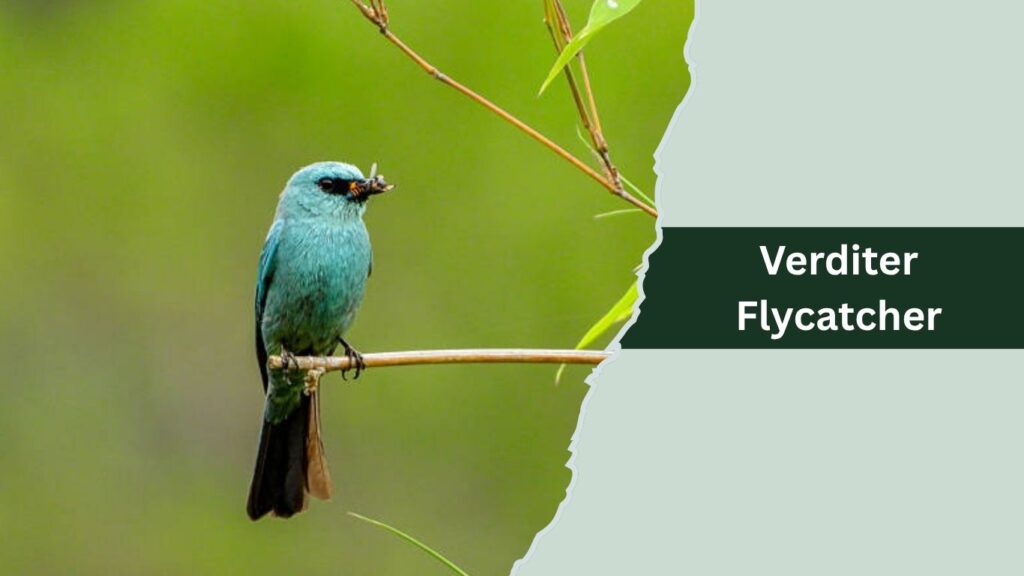
The Verditer Flycatcher is a small, striking songbird recognized by its bright turquoise-blue plumage. It is found across the Himalayas, Southeast Asia, southern China, and parts of the Indian subcontinent. This active bird often sits on exposed branches in forests, gardens, and mountain valleys while watching for flying insects.
Identification
- Adult males are covered mainly in vivid turquoise-blue feathers.
- A dark patch appears between the eyes and the base of the bill.
- Females are duller blue-gray with paler underparts.
- The bill is short, slender, and dark-colored.
- Adults usually measure about 6.1–6.7 inches long.
Habitat and Range
Verditer Flycatchers inhabit open forests, forest edges, wooded hills, plantations, gardens, and areas near streams. Many populations breed at higher elevations in the Himalayas and move to lower valleys and warmer regions during winter.
Diet and Feeding
These birds mainly eat flies, beetles, moths, butterflies, and other small insects. They usually hunt from an exposed perch, flying outward to capture prey in the air before returning to the same branch.
Nesting Behavior
The female builds a small cup-shaped nest inside a tree cavity, wall opening, rock crevice, or old woodpecker hole. Moss, grass, roots, feathers, and plant fibers are used. She normally lays three to five pale eggs with reddish-brown markings.
16. Blue Rock Thrush
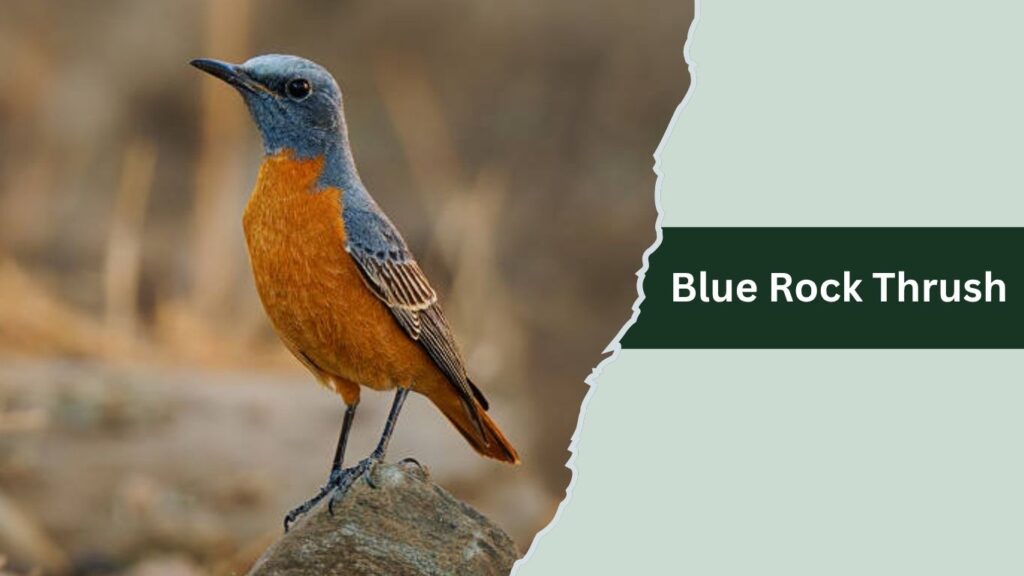
The Blue Rock Thrush is a medium-small songbird commonly found around rocky hills, cliffs, ruins, coastal areas, and old buildings. Adult males are known for their dark blue plumage, while females have brown, patterned feathers. These birds often perch in exposed places and can be seen watching the ground for prey.
Identification
- Adult males have deep blue or slate-blue plumage.
- Females are brown with pale, scale-like markings.
- The bill is slender, pointed, and dark-colored.
- The tail is medium-length and usually dark.
- Adults measure about 8–9 inches long.
Habitat and Range
Blue Rock Thrushes occur across southern Europe, North Africa, the Middle East, and much of Asia. They prefer dry, rocky environments with ledges and crevices. Some populations remain in the same area year-round, while others migrate to warmer regions during winter.
Diet and Feeding
These birds eat beetles, grasshoppers, caterpillars, spiders, small lizards, berries, and fruits. They often hunt from a rock, wall, or rooftop, dropping to the ground when prey is spotted. They may also search among stones and low vegetation.
Nesting Behavior
Blue Rock Thrushes build nests inside rock cracks, caves, walls, ruins, or buildings. The female creates a cup-shaped nest from grass, roots, leaves, and moss. She usually lays three to five pale blue eggs, sometimes marked with small brown spots.
17. Tickell’s Blue Flycatcher
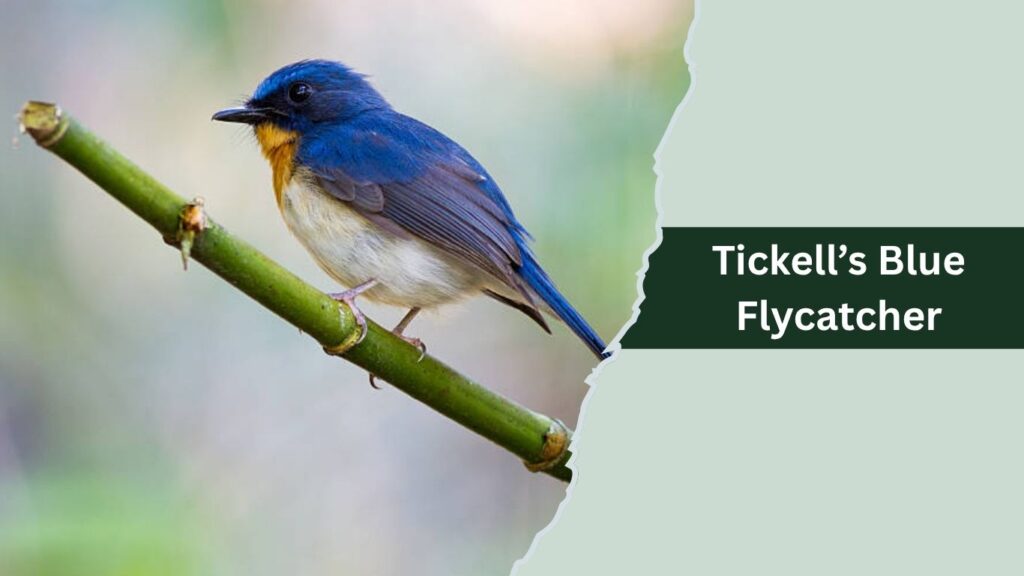
Tickell’s Blue Flycatcher is a small, colorful songbird found across the Indian subcontinent and parts of Southeast Asia. It is known for its bright blue upperparts, orange chest, and soft musical calls. This bird commonly lives in forests, wooded gardens, plantations, and shady areas near streams.
Identification
- Adult males have deep blue heads, backs, wings, and tails.
- The throat and upper chest are rusty orange.
- The belly is pale white or cream-colored.
- Females are duller blue-gray with a lighter orange breast.
- Adults usually measure about 4.3–4.7 inches long.
Habitat and Range
Tickell’s Blue Flycatchers occur in India, Nepal, Bangladesh, Sri Lanka, Myanmar, and nearby regions. They prefer moist deciduous forests, bamboo thickets, wooded hills, gardens, and areas with dense vegetation. They are often seen in shaded places close to water.
Diet and Feeding
These birds mainly eat flies, beetles, moths, caterpillars, ants, and other small insects. They usually wait quietly on a low branch before flying out to capture prey. They may also search among leaves and branches for hidden insects.
Nesting Behavior
The female builds a small cup-shaped nest inside a tree cavity, rock crevice, wall opening, or hollow stump. Moss, grass, roots, feathers, and plant fibers are commonly used. She usually lays three to five pale eggs with small brown markings.
18. Small Niltava
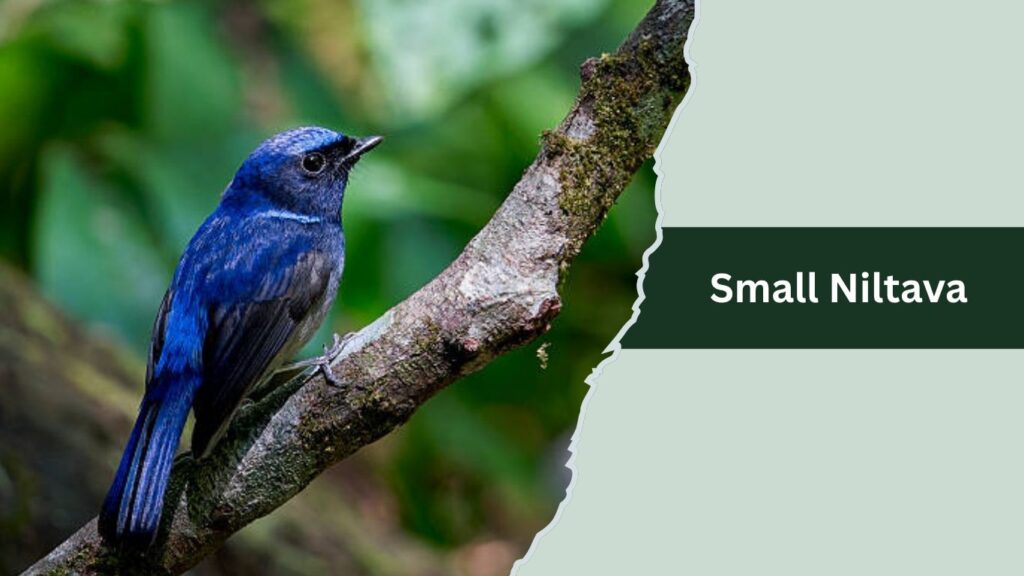
The Small Niltava is a compact forest flycatcher known for the male’s beautiful purplish-blue feathers. Its scientific name is Niltava macgrigoriae. This shy bird usually remains within shaded mountain forests, where its dark coloring can make it difficult to notice.
Identification
- Males have deep purplish-blue upperparts.
- The forehead and neck patches appear bright blue.
- The chin and area around the eyes are dark.
- Females are mostly olive-brown with pale underparts.
- Both sexes have a small, broad-based black bill.
Habitat and Range
Small Niltavas inhabit subtropical and tropical moist mountain forests. Their range includes Nepal, Bhutan, Bangladesh, India, Myanmar, Laos, Thailand, southern China, and Vietnam. They commonly stay in dense forest undergrowth, wooded hills, and damp areas near streams.
Diet and Feeding
These birds mainly eat small insects, larvae, spiders, and other invertebrates. They may also consume berries and small fruits. A Small Niltava often waits quietly on a low branch before flying down or outward to catch its prey.
Nesting Behavior
The female builds a compact cup-shaped nest using moss, roots, grass, and plant fibers. It is generally placed inside a bank, rock crevice, tree cavity, or another sheltered forest location. The hidden position protects the eggs and young birds from rain and predators.
19. Hainan Blue Flycatcher
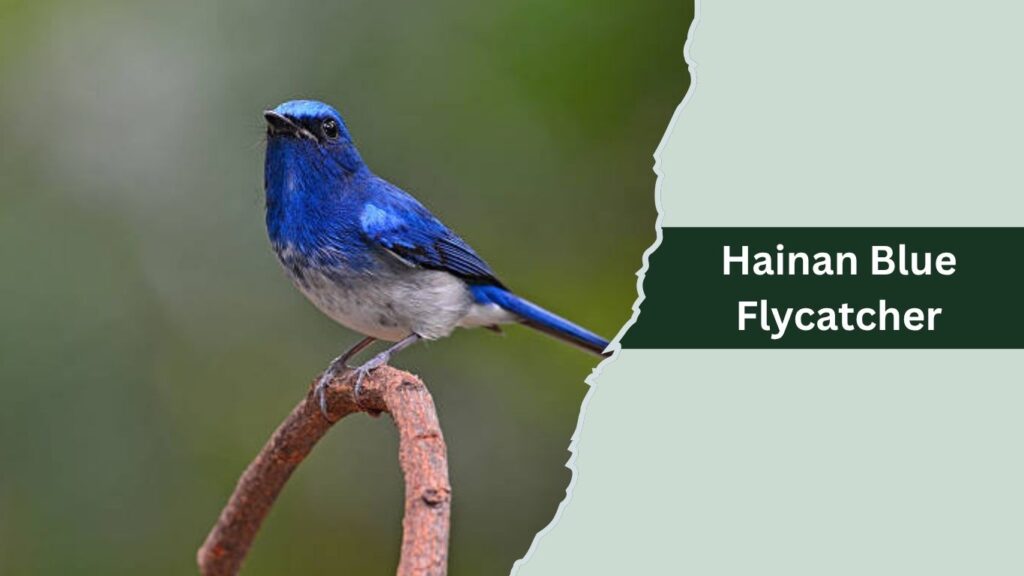
The Hainan Blue Flycatcher is a small forest songbird with striking blue plumage. Its scientific name is Cyornis hainanus. It is native to southern China and parts of mainland Southeast Asia, where it usually stays in shaded tropical or subtropical forests.
Identification
- Adult males have deep blue heads, backs, wings, and tails.
- The throat and upper breast are usually dark blue.
- The belly is pale gray or whitish.
- Females are mostly brownish or olive-gray.
- Both sexes have a small, pointed black bill.
Habitat and Range
Hainan Blue Flycatchers occur in China, including Hainan, as well as Myanmar, Thailand, Laos, Cambodia, and Vietnam. They favor moist lowland and foothill forests, bamboo thickets, forest edges, and wooded areas near streams. They usually remain in the understory or lower tree levels.
Diet and Feeding
These birds mainly eat flies, beetles, insect larvae, cockroaches, spiders, and other small invertebrates. They often wait quietly on a low perch before making a quick flight to capture prey from the air, foliage, or forest floor.
Nesting Behavior
The Hainan Blue Flycatcher may place its cup-shaped nest inside a tree hole, rocky bank, or another sheltered cavity. Moss, grasses, roots, leaves, and plant fibers are commonly used to form the nest.
20. Pale Blue Flycatcher
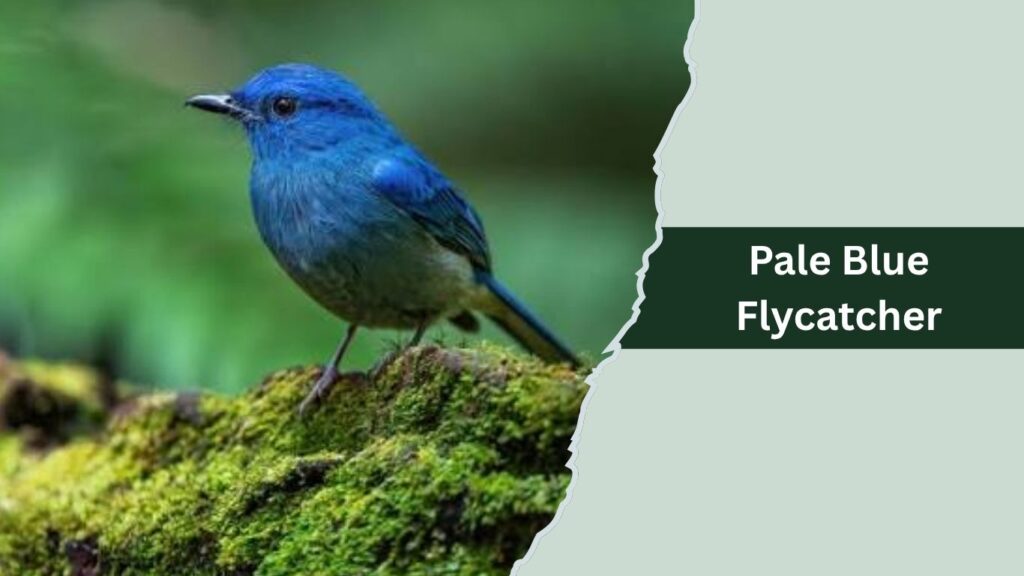
The Pale Blue Flycatcher is a small forest bird known for its soft blue coloring and quiet behavior. Its scientific name is Cyornis unicolor. It occurs across the eastern Himalayas and Southeast Asia, usually remaining within moist, densely wooded habitats.
Identification
- Adult males have pale blue heads, backs, wings, and tails.
- Their throat and underparts are bluish-gray.
- A broken dark patch may appear around the eyes.
- Females are generally brownish-gray with duller blue areas.
- The bill is short, pointed, and dark.
The male resembles the Verditer Flycatcher but has paler plumage and grayer underparts.
Habitat and Range
Pale Blue Flycatchers inhabit tropical and subtropical moist lowland and mountain forests. Their range includes India, Nepal, Bhutan, Bangladesh, southern China, Myanmar, Thailand, Vietnam, Malaysia, Indonesia, and nearby countries. They often remain beneath the forest canopy, where dense vegetation provides cover.
Diet and Feeding
These flycatchers mainly feed on small insects and other invertebrates. They search through shaded branches and foliage or make quick flights from a perch to capture moving prey. Their insect-based diet helps control small forest pests.
Similar Species
The Verditer Flycatcher is brighter turquoise and generally appears more uniformly colored. The Pale Blue Flycatcher has softer blue upperparts, grayish underparts, and darker markings near the eyes, helping birdwatchers distinguish the two species.
FAQs
What is the most common small blue bird?
The Eastern Bluebird is one of the most common small blue birds in North America. It is easily recognized by its bright blue upperparts, orange chest, and pale belly. It often lives in open fields, farms, gardens, and woodland edges.
Are all small blue birds actually blue?
Not all small blue birds contain true blue pigment. In many species, microscopic feather structures reflect light and create a blue appearance. The color may look brighter or duller depending on sunlight, viewing angle, age, sex, and the bird’s seasonal plumage.
What do small blue birds usually eat?
Most small blue birds eat insects, spiders, seeds, berries, and small fruits. Flycatchers and warblers mainly hunt insects, while buntings and bluebirds consume both insects and plant foods. Their diets often change depending on the season and available food sources.
Where do small blue birds build their nests?
Small blue birds build nests in many different places. Bluebirds and tits often use tree cavities or nest boxes, while warblers and buntings build cup-shaped nests in shrubs or low trees. Some flycatchers also nest in rock crevices, tree holes, and sheltered banks.
How can I attract small blue birds to my yard?
Provide clean water, native berry-producing plants, insect-friendly vegetation, and suitable nesting places. Bluebird nest boxes can attract cavity-nesting species. Avoid using pesticides because they reduce insect populations, which are an important food source for many small blue birds and their chicks.