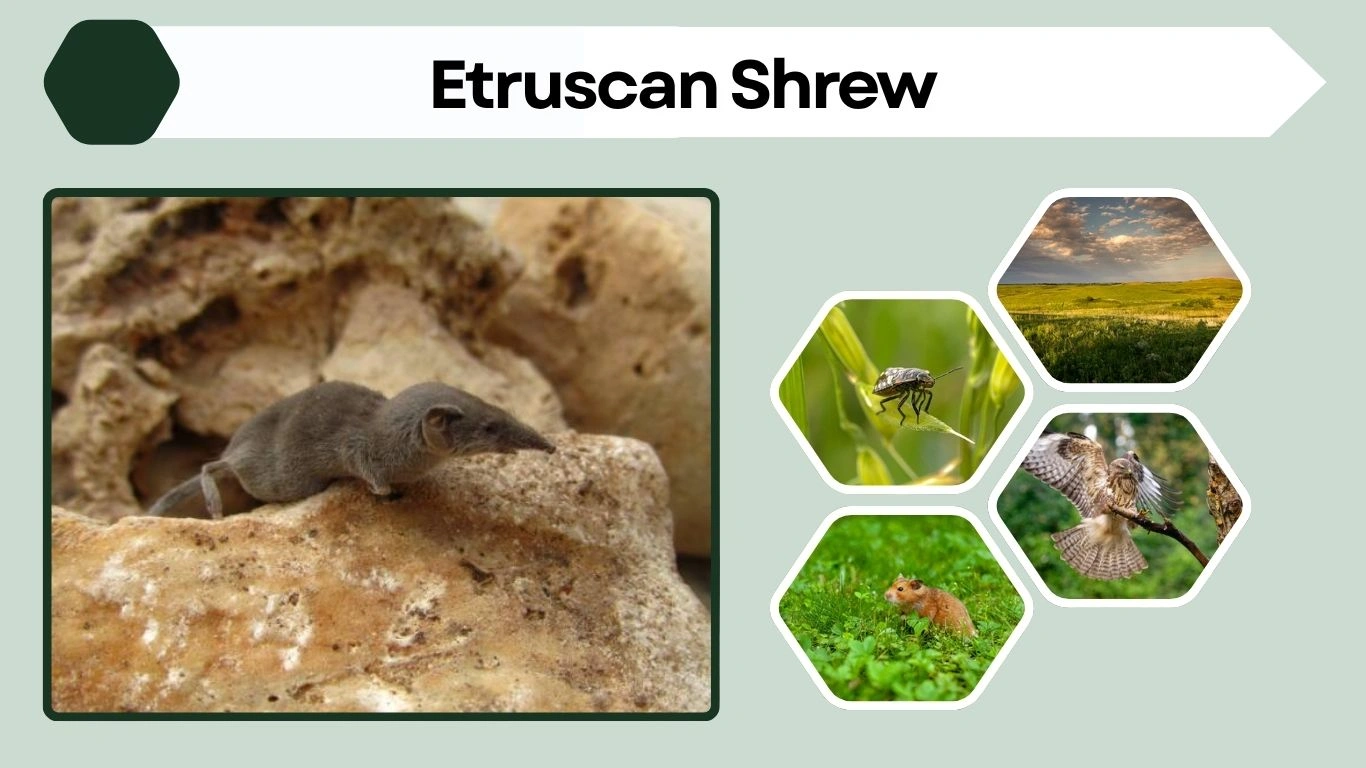
The Etruscan shrew is one of the most fascinating tiny mammals in the world. Known as the smallest mammal by weight, this tiny creature is incredibly active and constantly searching for food to survive. Despite its small size, it plays an important role in ecosystems by controlling insect populations. Its fast metabolism, rapid movements, and unique behavior make it a subject of interest for scientists and nature enthusiasts alike. In this guide, you’ll learn how to identify the Etruscan shrew, understand its diet, and explore its habitat and lifestyle.
What Is an Etruscan Shrew?
The Etruscan shrew is the smallest mammal in the world by mass. It is a tiny insect-eating animal known for its high energy levels and constant need for food. Despite its size, it is an efficient hunter and an important part of the ecosystem.
Scientific Classification
The scientific name of the Etruscan shrew is Suncus etruscus. It belongs to the Soricidae family, which includes various species of shrews found around the world.
Shrews are not rodents, even though they are often mistaken for mice. They belong to a different group of mammals known as insectivores, meaning their diet mainly consists of insects.
This classification explains many of their behaviors, including their constant movement and need for frequent feeding.
Why It’s the Smallest Mammal
The Etruscan shrew holds the title of the smallest mammal by weight, typically weighing around 1.5 to 2 grams. This makes it lighter than many insects.
Its tiny body structure allows it to move quickly and efficiently, but it also means it requires a constant supply of energy to survive.
Because of its size and metabolism, it must eat frequently throughout the day to maintain its body functions.
Etruscan Shrew Identification
Identifying an Etruscan shrew can be challenging due to its extremely small size. However, its physical features make it unique among small mammals.
Size and Weight
The Etruscan shrew is incredibly small, with a body length of about 3 to 5 centimeters, not including its tail. Its weight is usually around 2 grams.
This tiny size makes it one of the smallest mammals ever recorded. It is so small that it can easily be overlooked or mistaken for an insect at first glance.
Despite its size, it moves quickly and actively, making it easier to notice when in motion.
Physical Features
The Etruscan shrew has a long, pointed snout that it uses to detect food. This feature is one of its most distinctive characteristics.
Its fur is typically gray or brown, helping it blend into its natural surroundings. The fur is soft and fine, providing insulation.
It has small eyes and ears, which are not very prominent. Its thin tail adds to its overall slender appearance.
Etruscan Shrew Facts
The Etruscan shrew has several unique traits that make it one of the most interesting mammals in the world.
- Smallest mammal by weight
- Extremely fast metabolism
- Must eat frequently to survive
- Heart beats very rapidly
- Highly active and constantly moving
One of the most remarkable facts about this shrew is its metabolism. It burns energy at a very high rate, which is why it needs to eat almost continuously.
Its heart rate is also extremely fast compared to larger animals. This helps support its high level of activity and energy use. Because of these characteristics, the Etruscan shrew spends most of its time searching for food.
Etruscan Shrew Diet
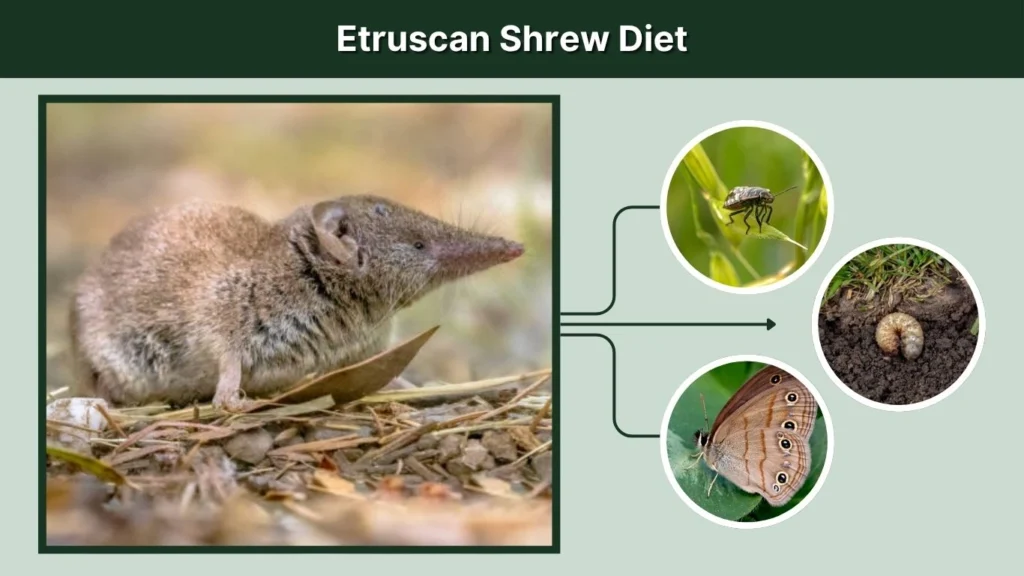
The diet of the Etruscan shrew is essential for its survival. Its high metabolism means it needs a constant supply of food.
What Do Etruscan Shrews Eat?
The Etruscan shrew primarily feeds on insects and other small invertebrates. These provide the protein and energy it needs to sustain its rapid metabolism.
Common food sources include:
- Insects
- Larvae
- Small invertebrates
These food sources are abundant in its natural habitat, allowing it to find food frequently.
Feeding Behavior
The Etruscan shrew eats multiple times throughout the day. It cannot go long without food due to its high energy requirements.
It actively hunts for prey, using its sharp senses and quick movements. Its pointed snout helps it detect small insects in the environment. Because of its constant need for food, it spends most of its time foraging and hunting.
Habitat and Distribution
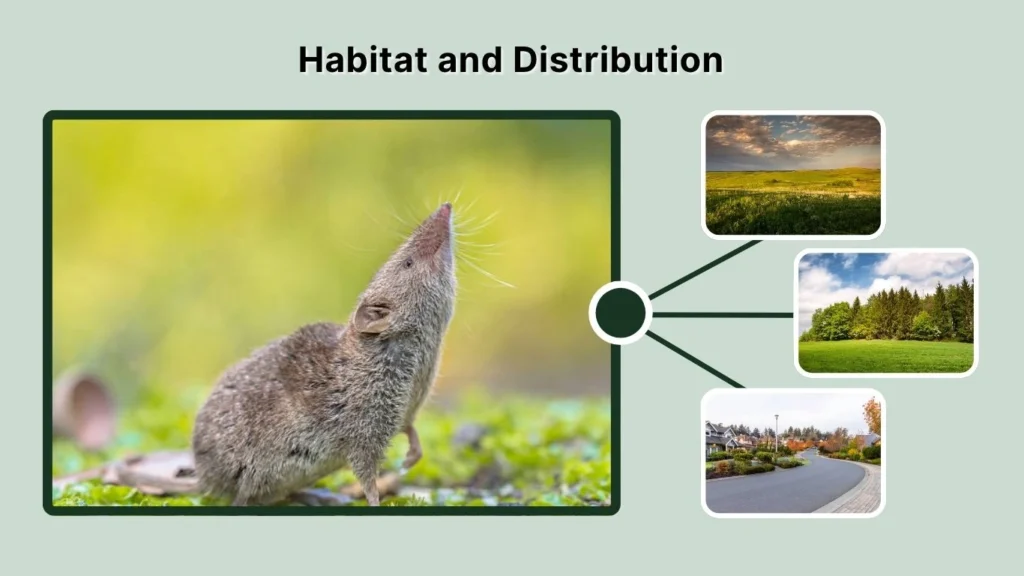
The Etruscan shrew is found in a variety of regions and prefers habitats that provide both shelter and a steady food supply.
Natural Habitat
This tiny mammal typically lives in grasslands, forest edges, and shrub-covered areas. These environments provide the insects it relies on for food.
It often stays hidden in dense vegetation, leaf litter, or underground spaces to avoid predators and stay protected.
Geographic Distribution
The Etruscan shrew is found across parts of Europe, North Africa, and Asia. Its distribution depends on climate and habitat availability.
It prefers warmer regions where insects are abundant throughout the year. This ensures it can meet its constant food needs.
Behavior and Lifestyle
Despite its small size, the Etruscan shrew has an extremely active and fast-paced lifestyle.
- Active both day and night
- Moves quickly and constantly
- Uses sound for navigation
- Hunts frequently
- Highly energetic
The Etruscan shrew rarely stays still. It is almost always moving, searching for food or exploring its surroundings.
It may use sound-based navigation to help locate prey and move through its environment, especially in low visibility conditions. Its active lifestyle is necessary to support its high metabolism and survival needs.
Lifespan and Survival
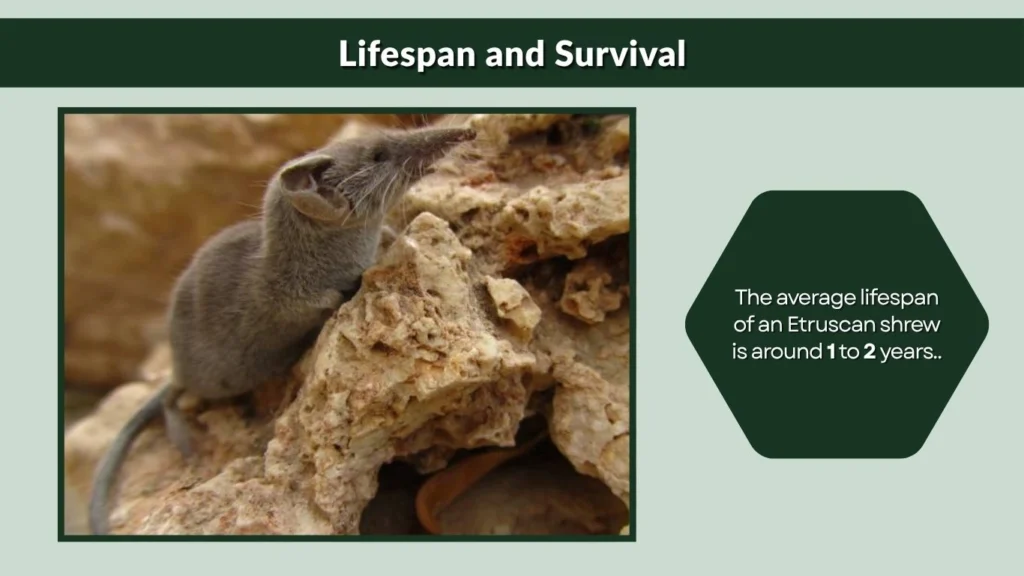
The Etruscan shrew has a relatively short lifespan, mainly due to its extremely fast metabolism and constant energy demands. Its survival depends on finding enough food and avoiding predators.
Average Lifespan
The average lifespan of an Etruscan shrew is around 1 to 2 years. This is typical for very small mammals with high metabolic rates.
Because they use energy so quickly, their bodies experience rapid wear over time. This contributes to their shorter lifespan compared to larger mammals.
Survival Challenges
Several factors affect the survival of the Etruscan shrew:
- Constant need for food
- High risk of predation
- Environmental changes
- Limited fat storage
Since they cannot store much energy, even short periods without food can be life-threatening. This makes their daily survival highly dependent on consistent feeding.
Etruscan Shrew vs Other Small Mammals
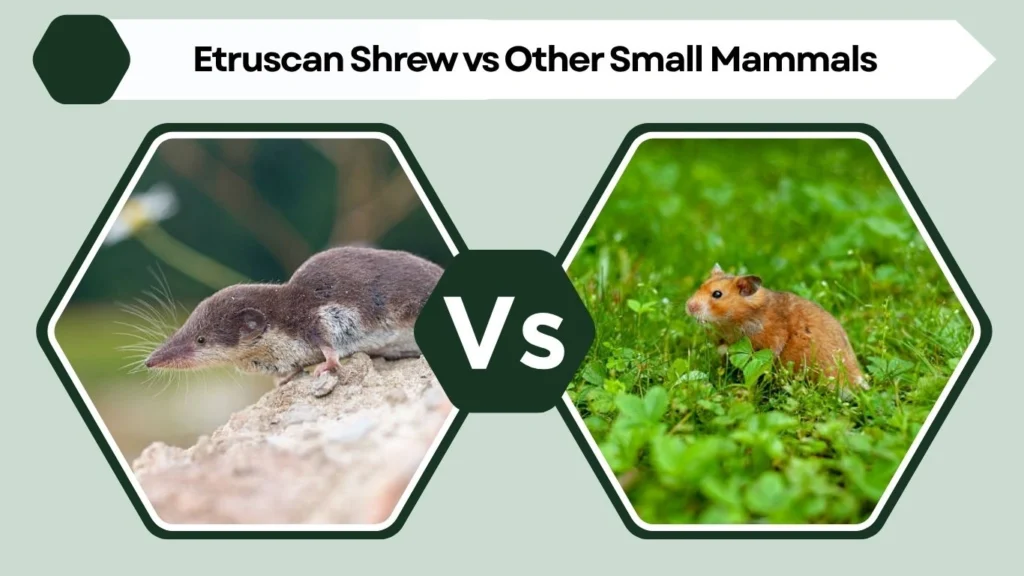
Comparing the Etruscan shrew with other small mammals highlights just how unique it is in terms of size and behavior.
| Feature | Etruscan Shrew | House Mouse | Pygmy Shrew |
| Size | Smallest | Larger | Slightly larger |
| Weight | ~2 grams | 20–30 grams | 3–5 grams |
| Diet | Insects | Omnivore | Insects |
| Activity | Constant | Moderate | Active |
| Lifespan | Short | Longer | Short |
The Etruscan shrew stands out as the smallest and one of the most energy-demanding mammals. Its constant activity and insect-based diet make it very different from common rodents like mice.
Predators and Threats
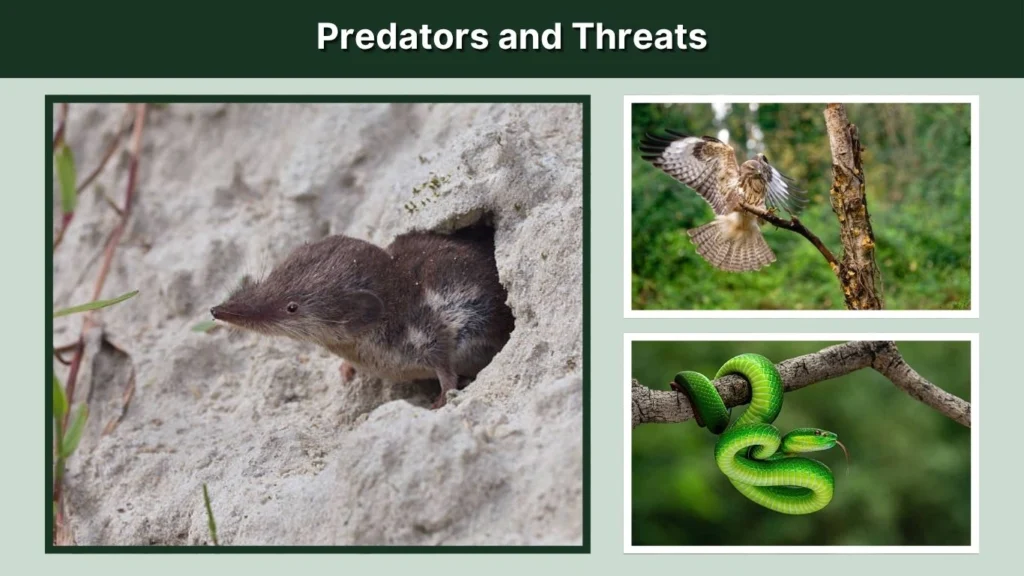
Despite its speed and agility, the Etruscan shrew faces many natural threats in the wild. Its small size makes it vulnerable to a wide range of predators.
- Birds of prey
- Snakes
- Larger mammals
- Domestic animals
- Habitat destruction
Birds are among the most common predators, as they can easily spot and capture such a small animal. Snakes and other ground predators also pose a significant threat.
Human activity, including habitat loss and environmental changes, can also impact their population.
Pictures and Visual Identification
Because of its tiny size, identifying an Etruscan shrew visually can be challenging. However, certain features make it recognizable.
- Extremely small size compared to surroundings
- Long, pointed snout
- Rapid, darting movement
- Soft gray or brown fur
- Thin tail
Observing its size in relation to objects around it is one of the easiest ways to identify it. It often appears much smaller than expected. Its quick and constant movement is another clue. Unlike many animals, it rarely stays still.
Importance in Ecosystem
The Etruscan shrew plays an important role in maintaining ecological balance despite its tiny size.
Role in Food Chain
The Etruscan shrew helps control insect populations by feeding on large numbers of small invertebrates. This reduces the spread of pests in its habitat.
At the same time, it serves as prey for larger animals, making it an important link in the food chain.
Environmental Impact
By regulating insect populations, the Etruscan shrew contributes to a healthier ecosystem. Its presence can indicate a balanced environment with sufficient food and shelter. Because of its sensitivity to environmental changes, it can also act as an indicator of ecosystem health.
FAQs
What makes the Etruscan shrew the smallest mammal?
The Etruscan shrew is considered the smallest mammal by weight, typically weighing around 1.5 to 2 grams. Its extremely small body mass, rather than length, is what gives it this unique distinction among mammals.
How often does an Etruscan shrew need to eat?
It needs to eat very frequently, sometimes every few hours, because of its fast metabolism. Without regular food intake, it can quickly lose energy and may not survive for long.
Can the Etruscan shrew be kept as a pet?
No, it is not suitable as a pet. Due to its delicate body, high energy needs, and constant feeding requirements, it is very difficult to care for in captivity.
How fast is the Etruscan shrew’s heart rate?
The Etruscan shrew has an extremely fast heart rate, which can exceed 1,000 beats per minute. This supports its high metabolism and constant activity level.
Does the Etruscan shrew use echolocation?
Yes, it uses sound-based navigation similar to echolocation. It emits high-frequency sounds to help detect objects and prey, especially in low-light environments.