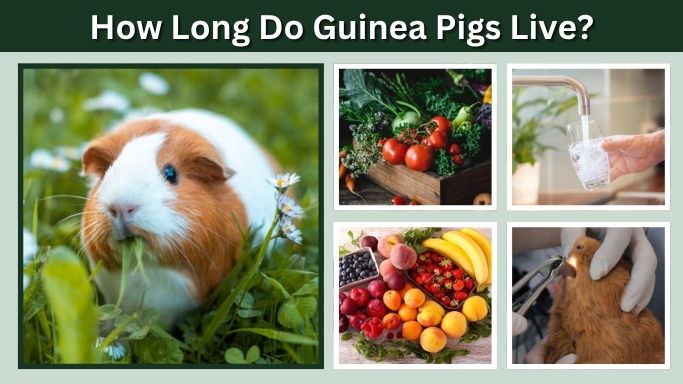
Guinea pigs usually live longer than many small pets, which is one reason families love them. On average, a healthy pet guinea pig can live 5 to 7 years, but some may reach 8 years or more with excellent care. Their lifespan depends on diet, housing, genetics, exercise, companionship, and regular health checks. Understanding these factors helps owners give guinea pigs a safer, happier, and longer life.
How Long Do Guinea Pigs Live on Average?
Most domestic guinea pigs live around 5 to 7 years. Some may live only 4 years if they have poor care, weak genetics, or untreated illness. Others can live 8 years or longer when they receive a balanced diet, clean housing, social companionship, and quick veterinary attention.
Average Pet Guinea Pig Lifespan
Pet guinea pigs usually live longer than wild guinea pigs because they are protected from predators, harsh weather, and food shortages. A well-cared-for indoor guinea pig often has a better chance of reaching the higher end of the lifespan range.
Common lifespan ranges include:
- Average guinea pig: 5 to 7 years
- Healthy indoor guinea pig: 6 to 8 years
- Poorly cared-for guinea pig: 3 to 5 years
- Exceptional lifespan: 8 years or more
A guinea pig’s life can change quickly if it stops eating, becomes inactive, or develops breathing problems. Early care is very important because guinea pigs often hide sickness until the condition becomes serious.
Do Guinea Pigs Live Longer Than Hamsters?
Yes, guinea pigs usually live much longer than hamsters. Hamsters often live about 2 to 3 years, while guinea pigs commonly live 5 to 7 years. This makes guinea pigs a longer commitment for owners.
Before getting a guinea pig, it is important to understand that they need daily feeding, cleaning, handling, and attention for several years. They are not short-term pets. Their longer lifespan can be rewarding, but it also means owners must be ready for long-term care.
How Long Do Guinea Pigs Live in Human Years?
There is no exact human-year comparison for guinea pigs, but they age much faster than people. A 1-year-old guinea pig is already an adult, and a 5-year-old guinea pig is considered senior.
A guinea pig may still be active at 5 or 6 years old, but older guinea pigs often need extra care. They may need softer bedding, easier access to food and water, regular weight checks, and more frequent vet visits.
Guinea Pig Lifespan by Living Condition
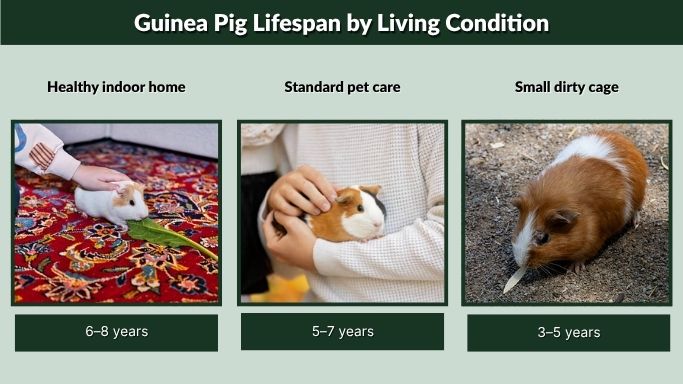
Where and how a guinea pig lives has a big effect on its health. Guinea pigs kept indoors in a clean, safe, temperature-controlled space usually live longer than guinea pigs kept outside in poor conditions.
Indoor Guinea Pigs
Indoor guinea pigs often live 5 to 8 years when they receive proper care. Indoor housing protects them from extreme heat, cold, rain, predators, parasites, and sudden weather changes.
Indoor guinea pigs also get more regular attention from owners. This helps people notice early warning signs such as weight loss, dental problems, rough breathing, or changes in appetite. These small signs can be easy to miss if the guinea pig lives outside.
Outdoor Guinea Pigs
Outdoor guinea pigs may live a shorter life if their housing is not safe. They are sensitive to heat, cold, dampness, predators, and stress. A guinea pig kept outside needs a strong, weatherproof enclosure with shade, ventilation, dry bedding, and protection from animals.
Outdoor living is riskier because guinea pigs cannot handle sudden temperature changes well. Hot weather can cause heatstroke, while cold and damp conditions may lead to respiratory illness.
Guinea Pigs in a Cage
Guinea pigs can live a normal lifespan in a cage if the cage is large, clean, and properly designed. However, a small or dirty cage can reduce their quality of life and may lead to obesity, stress, foot problems, and illness.
| Living Situation | Expected Lifespan | Main Risk |
| Healthy indoor home | 6–8 years | Obesity or dental issues |
| Standard pet care | 5–7 years | Missed illness signs |
| Outdoor setup | 4–6 years | Weather and predators |
| Small dirty cage | 3–5 years | Stress and infection |
| Excellent care | 8+ years | Age-related disease |
A good cage should allow running, hiding, eating, and resting. Guinea pigs also need time outside the cage in a safe play area for exercise and mental stimulation.
Do Different Guinea Pig Breeds Live Different Lengths?
Most guinea pig breeds have a similar lifespan, usually around 5 to 7 years. However, some types may need more grooming or skin care, and poor maintenance can affect their health.
Abyssinian Guinea Pigs
Abyssinian guinea pigs usually live around 5 to 7 years. They are known for their rough, rosette-patterned coat. Their lifespan is similar to American guinea pigs, but they still need proper diet, space, and regular care.
Because of their coat texture, owners should check their skin and fur often. Dirt, mites, or skin irritation can hide under the coat if the guinea pig is not handled regularly.
American Guinea Pigs
American guinea pigs are one of the most common pet types. They usually live 5 to 7 years, and their short coat makes grooming easier than long-haired breeds.
They are often recommended for beginners because they are easier to maintain. Still, they need daily hay, fresh vegetables, clean water, companionship, and a spacious cage to stay healthy.
Long-Haired Guinea Pigs
Long-haired guinea pigs, such as Peruvian, Silkie, Sheltie, or Texel guinea pigs, usually live about 5 to 7 years with proper care. Their lifespan is not necessarily shorter, but grooming needs are higher.
Long-haired guinea pigs need:
- Regular brushing
- Clean bedding
- Coat trimming when needed
- Checks for matting
- Skin and parasite inspection
If their fur becomes dirty or tangled, it can cause discomfort and skin problems. Good grooming helps them stay healthy and active.
Hairless Guinea Pigs
Hairless guinea pigs, often called skinny pigs, may live around 5 to 7 years, but they need special care. Because they do not have much fur, they are more sensitive to cold, drafts, dry skin, and temperature changes.
They should be kept indoors in a warm, safe space. Their skin should be checked often for dryness, scratches, or irritation. They may also need slightly more food because their bodies use more energy to stay warm.
Male vs Female Guinea Pig Lifespan
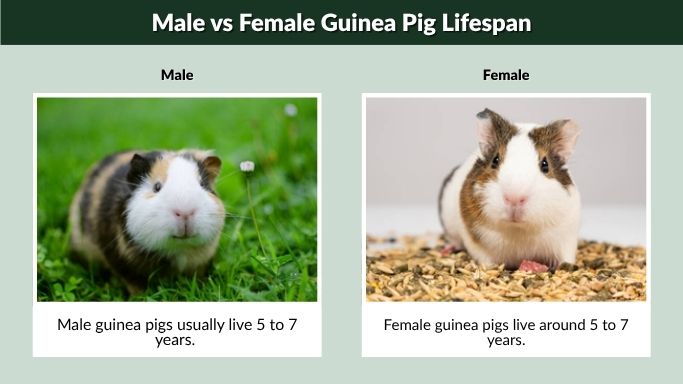
Male and female guinea pigs usually have similar lifespans. A guinea pig’s sex does not matter as much as its diet, environment, genetics, and medical care.
How Long Do Male Guinea Pigs Live?
Male guinea pigs, also called boars, usually live 5 to 7 years. Some live longer with excellent care. Males can be friendly and social, but they may fight if paired incorrectly.
Two males can live together peacefully if they have enough space, separate food bowls, multiple hiding places, and are introduced carefully. Stress from fighting can affect health, so owners should watch their behavior.
How Long Do Female Guinea Pigs Live?
Female guinea pigs, also called sows, also live around 5 to 7 years on average. Female guinea pigs often do well in pairs or small groups, especially when introduced properly.
One important health issue for females is reproductive disease. Older female guinea pigs can develop ovarian cysts or uterine problems. If a female becomes swollen, loses hair on her sides, acts painful, or changes behavior, a vet should check her.
Does Gender Affect Health?
Gender alone does not decide lifespan. Both male and female guinea pigs can live long lives with proper care. However, they may face different health risks.
Male guinea pigs may develop grease gland buildup or impaction as they age. Female guinea pigs may have reproductive concerns. Regular checks help owners notice these problems early.
What Helps Guinea Pigs Live Longer?
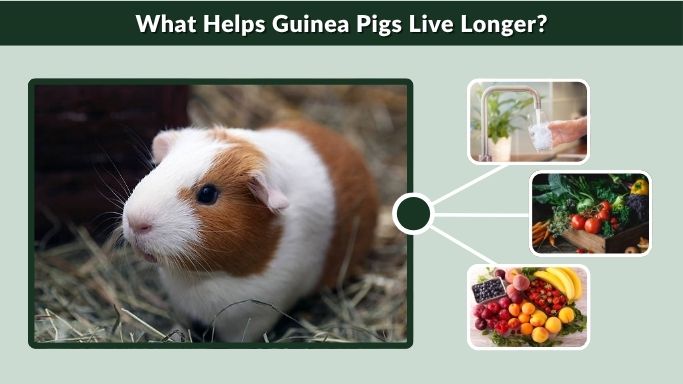
Guinea pigs need more than a cage and food bowl. Their bodies require constant fiber, vitamin C, exercise, companionship, and a calm environment. Small daily care habits can make a big difference in lifespan.
Feed a Healthy Diet
Diet is one of the most important parts of guinea pig care. Guinea pigs need unlimited grass hay every day because it supports digestion and keeps their teeth worn down. Their teeth grow continuously, so chewing hay is essential.
A healthy diet includes:
- Unlimited timothy hay or other grass hay
- Fresh water every day
- Small portions of guinea pig pellets
- Fresh vegetables rich in vitamin C
- Limited fruit as a treat
- No chocolate, onion, garlic, or junk food
Guinea pigs cannot make their own vitamin C, so they must get it from food. A lack of vitamin C can cause weakness, pain, poor coat condition, and serious illness.
Provide Enough Space
A cramped cage can lead to stress, obesity, boredom, and weak muscles. Guinea pigs need room to walk, run, hide, and explore. A larger cage is always better than a tiny pet-store cage.
They should also have safe floor time outside the cage. This gives them exercise and mental stimulation. Owners should remove wires, toxic plants, small objects, and unsafe items before letting guinea pigs play.
Keep the Cage Clean
Dirty bedding can cause skin problems, foot sores, bad smells, and respiratory issues. Guinea pigs spend most of their time close to the ground, so clean bedding is very important.
Basic cleaning habits include:
- Remove wet spots daily
- Replace soiled bedding often
- Wash food bowls and water bottles
- Deep clean the cage weekly
- Keep hay dry and fresh
A clean cage also helps owners notice changes in droppings, urine, or appetite. These signs can reveal health problems early.
Give Them a Friend
Guinea pigs are social animals. Many guinea pigs are happier and less stressed when they live with another compatible guinea pig. A lonely guinea pig may become bored, quiet, or less active.
However, pairing must be done carefully. Not every guinea pig gets along with every other guinea pig. Introductions should be slow, and the cage should be large enough for both animals.
How Long Do Guinea Pigs Live Alone?
A guinea pig can survive alone for years, but living alone is not ideal for most of them. Guinea pigs are naturally social and often feel safer with a companion. Loneliness may not always shorten life directly, but stress and boredom can affect overall health.
Can a Single Guinea Pig Live a Full Life?
Yes, a single guinea pig can live a full lifespan if the owner gives it plenty of attention, enrichment, and care. However, human attention does not fully replace another guinea pig.
A single guinea pig needs daily interaction. It should have toys, tunnels, hiding spaces, floor time, and gentle handling. Owners should watch for signs of loneliness, such as low activity, loud calling, or loss of interest in food.
What Happens After One Guinea Pig Dies?
When one guinea pig dies, the remaining guinea pig may become quiet or stressed. Some guinea pigs continue normally, while others show signs of grief. They may eat less, hide more, or become less active.
The owner should monitor the surviving guinea pig closely. If it stops eating, loses weight, or seems depressed, a vet visit is important. A new companion may help, but introductions should be done slowly and safely.
Signs a Guinea Pig Needs More Companionship
Some guinea pigs handle being alone better than others. Still, owners should watch for behavior changes.
Possible signs include:
- Less movement or play
- Loud calling often
- Hiding more than usual
- Reduced appetite
- Chewing cage bars
- Less interest in people
- Weight loss or stress behavior
If these signs appear, the guinea pig may need more attention, enrichment, or a suitable companion.
Common Health Problems That Affect Lifespan
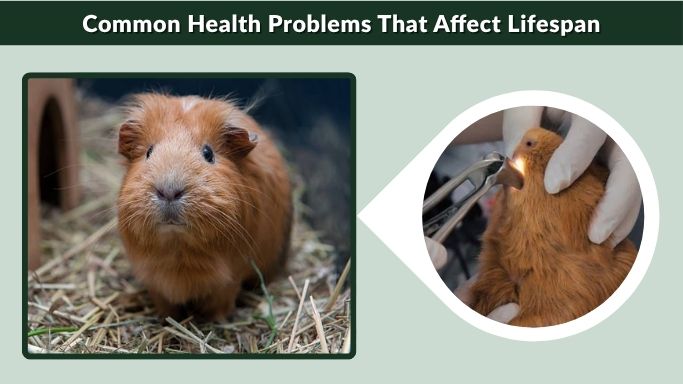
Guinea pigs can become sick quickly, and early treatment can save their life. Because they are prey animals, they often hide pain and illness. Owners should check them daily.
Dental Problems
Guinea pig teeth grow throughout life. If teeth become overgrown, uneven, or painful, the guinea pig may stop eating. This is dangerous because guinea pigs need constant digestion.
Signs of dental problems include drooling, weight loss, dropping food, chewing oddly, or refusing hay. A vet should check these symptoms quickly.
Respiratory Infections
Respiratory infections can be serious in guinea pigs. Damp bedding, cold drafts, poor ventilation, or stress can increase risk.
Warning signs include:
- Sneezing often
- Noisy breathing
- Crusty eyes or nose
- Low energy
- Loss of appetite
- Sitting puffed up
A guinea pig with breathing problems should see a vet as soon as possible. Waiting too long can make the illness harder to treat.
Digestive Issues
Guinea pigs have sensitive digestive systems. Sudden diet changes, lack of hay, dehydration, or illness can cause serious gut problems.
If a guinea pig stops eating or stops producing droppings, it is an emergency. Owners should not wait to see if it improves. Quick veterinary care is important.
How to Tell If a Guinea Pig Is Getting Old
Guinea pigs are often considered seniors around 5 years old. Some remain active and playful, while others slow down gradually. Older guinea pigs may need extra comfort and closer monitoring.
Senior Guinea Pig Signs
Older guinea pigs may show changes in movement, appetite, sleep, and weight. These changes are normal to some degree, but sudden changes should not be ignored.
Common senior signs include:
- Moving more slowly
- Sleeping more often
- Losing muscle
- Thinner coat
- Cloudy eyes
- Eating more slowly
- Weight changes
- Less interest in play
Senior guinea pigs should be weighed regularly. Weight loss is often one of the first signs of illness.
Caring for an Older Guinea Pig
Older guinea pigs need easy access to hay, water, hiding areas, and soft bedding. Their cage should be simple to move around in, especially if they have joint stiffness.
Owners may need to lower ramps, add softer bedding, and keep food close. Senior guinea pigs also benefit from regular vet checks to catch dental, joint, kidney, or heart problems early.
FAQs
How long do guinea pigs usually live?
Guinea pigs usually live 5 to 7 years as pets. Some may live only 4 years, while others can reach 8 years or more with excellent care. Their lifespan depends on diet, housing, genetics, cleanliness, social life, and early treatment when they become sick.
How long do guinea pigs live in captivity?
In captivity, guinea pigs often live 5 to 7 years. Indoor guinea pigs with proper food, clean bedding, enough space, and regular health checks may live longer. Poor cage conditions, lack of vitamin C, loneliness, or untreated illness can shorten their lifespan.
Do indoor guinea pigs live longer?
Indoor guinea pigs often live longer because they are protected from predators, extreme weather, damp conditions, and sudden temperature changes. They are also easier to monitor indoors. Owners can quickly notice appetite loss, breathing issues, weight loss, or behavior changes.
How long do guinea pigs live without food?
A guinea pig should not go long without food. If it stops eating, it can become seriously ill very quickly. This should be treated as urgent. Guinea pigs need constant hay and regular eating to keep their digestive system working properly.
Can guinea pigs live outside?
Guinea pigs can live outside only if the setup is very safe, dry, shaded, predator-proof, and temperature-controlled. However, outdoor living is riskier than indoor housing. Heat, cold, damp bedding, insects, and predators can all reduce a guinea pig’s health and lifespan.