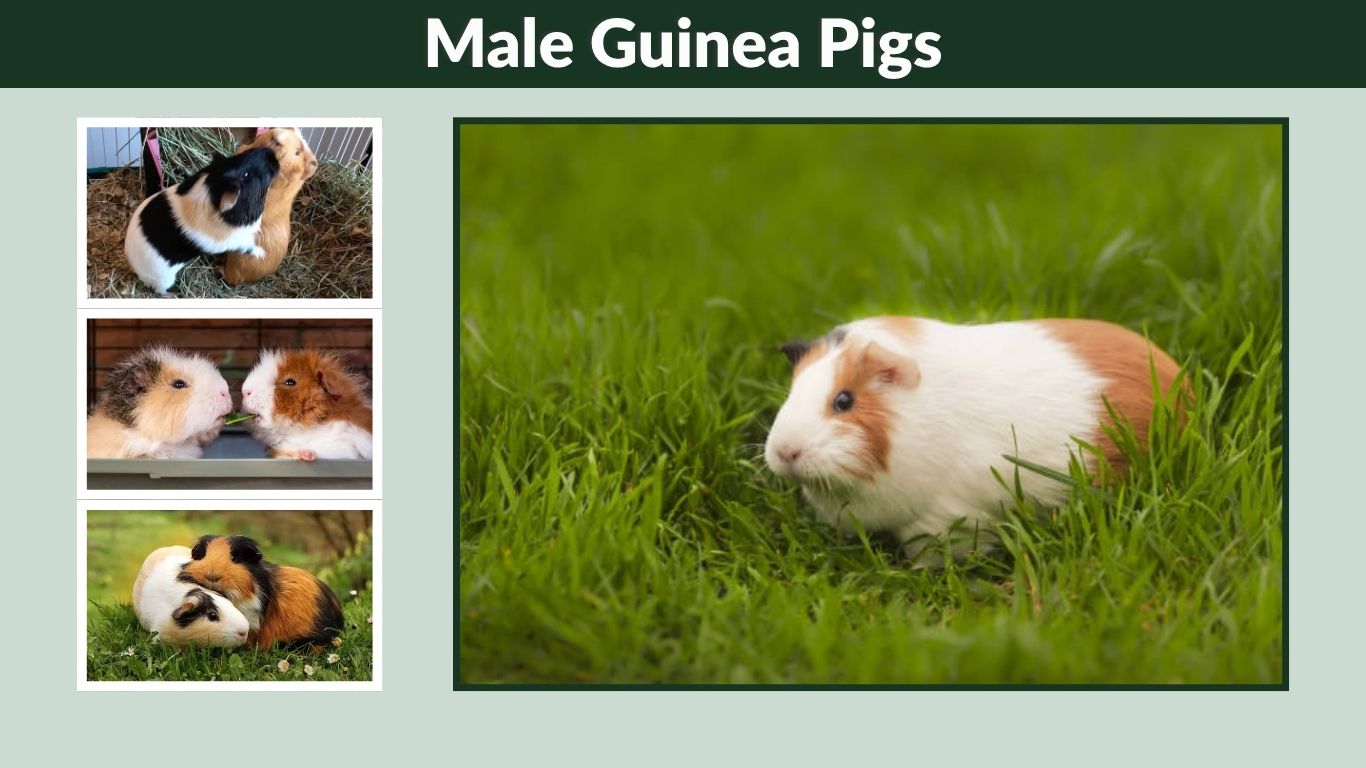
Male guinea pigs can be friendly, social and affectionate pets when they receive suitable housing, companionship and gentle handling. Commonly called boars, males may live successfully with another male, but compatibility depends on personality, space and careful introductions. Owners must also correctly identify their guinea pigs’ sex to prevent unexpected pregnancies. This guide explains male guinea pig behavior, sex differences, bonding, fighting, housing and neutering.
What Are Male Guinea Pigs Called?
A male guinea pig is called a boar, while a female is known as a sow. Despite these pig-related terms, guinea pigs are rodents rather than members of the pig family.
Boars are not automatically aggressive or difficult to care for. Their behavior varies between individuals and is shaped by age, personality, previous experiences, available space and the temperament of their companion.
How to Tell Whether a Guinea Pig Is Male or Female
Correctly determining a guinea pig’s sex is essential, especially when keeping several animals together. Young guinea pigs can be difficult to identify, and even breeders or pet stores may occasionally make mistakes.
Identifying a Male Guinea Pig
A male guinea pig’s genital opening generally resembles a lowercase “i.” When gentle pressure is applied immediately above the opening, the penis may emerge. In an unneutered adult, the testicles may also be visible beside the rear area.
Identifying a Female Guinea Pig
A female guinea pig’s genital opening normally resembles an uppercase “Y.” Gentle pressure above the opening will not cause a penis to emerge. Because young animals can be challenging to sex accurately, owners should consult an experienced veterinarian when uncertain.
| Feature | Male guinea pig | Female guinea pig |
| Common name | Boar | Sow |
| Genital appearance | Often resembles a lowercase “i” | Often resembles a “Y” |
| Reproductive anatomy | Penis and, if intact, testicles | Vulva |
| Typical adult build | May be slightly broader or heavier | May be slightly smaller |
| Can have nipples? | Yes | Yes |
Do Male Guinea Pigs Have Nipples?
Yes. Male guinea pigs have nipples or teats, just as females do. Therefore, nipples cannot be used to determine whether a guinea pig is male or female. The genital shape and reproductive anatomy provide more reliable clues.
Male vs Female Guinea Pigs
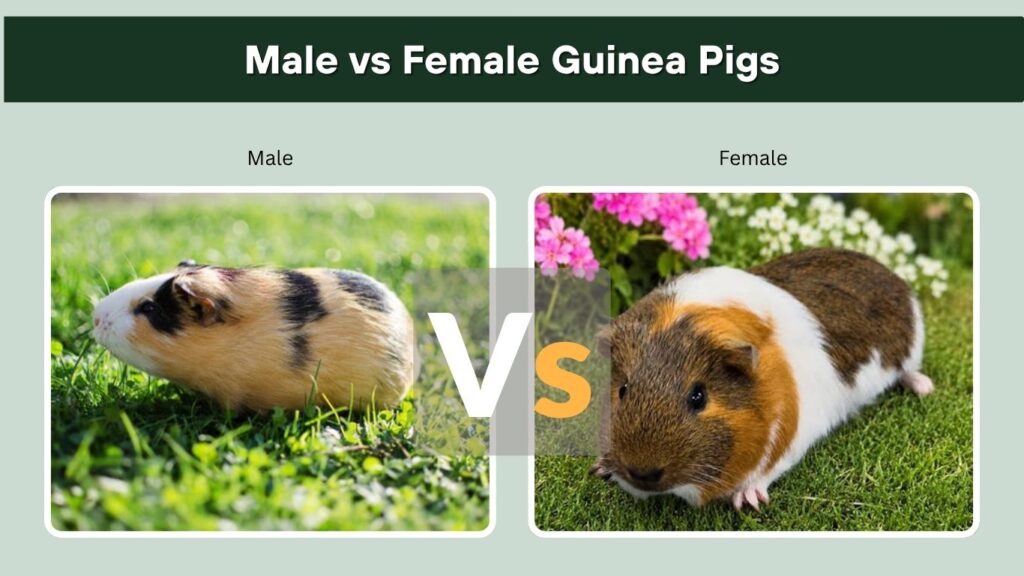
Male and female guinea pigs have similar feeding, exercise, housing and healthcare requirements. Sex alone does not determine whether an animal will be friendly, affectionate or easy to handle.
| Trait | Males | Females |
| Body size | Often somewhat larger | Often somewhat smaller |
| Social pairing | Usually pairs rather than large male groups | Pairs and groups often work well |
| Scent marking | May be more noticeable | Usually less noticeable |
| Dominance displays | Mounting and rumbling may occur | Dominance behavior also occurs |
| Mixed-sex housing | Must be neutered before living with females | Should not live with an intact male |
Are Male or Female Guinea Pigs Friendlier?
Neither sex is consistently friendlier. A well-socialized male can be just as affectionate as a female. Handling history, confidence, health and individual personality usually influence friendliness more than sex.
Gentle, regular handling can help guinea pigs learn that people are safe. Rough or limited handling may cause fear, hiding or defensive behavior.
Are Male Guinea Pigs Bigger Than Females?
Adult males are often slightly larger and broader than females, although breed, diet and genetics create considerable variation. Body size should not be used as the only method of determining sex.
Can Two Male Guinea Pigs Live Together?
Two male guinea pigs can live together successfully. Brothers raised together may bond particularly well, but unrelated males can also form stable pairs when their personalities are compatible. Neutering is not normally required simply for two males to share a home.
Successful male pairings usually require:
- A large, one-level enclosure
- Separate food bowls and water sources
- Several piles of hay
- At least one hiding area per guinea pig
- Hides with two entrances so no animal becomes trapped
- Gradual introductions in neutral territory
Blue Cross recommends at least 5 by 2 feet, or 10 square feet, for two guinea pigs and notes that more space is preferable. Its broader housing guidance recommends about 12 square feet for a male pair.
Bonding Male Guinea Pigs
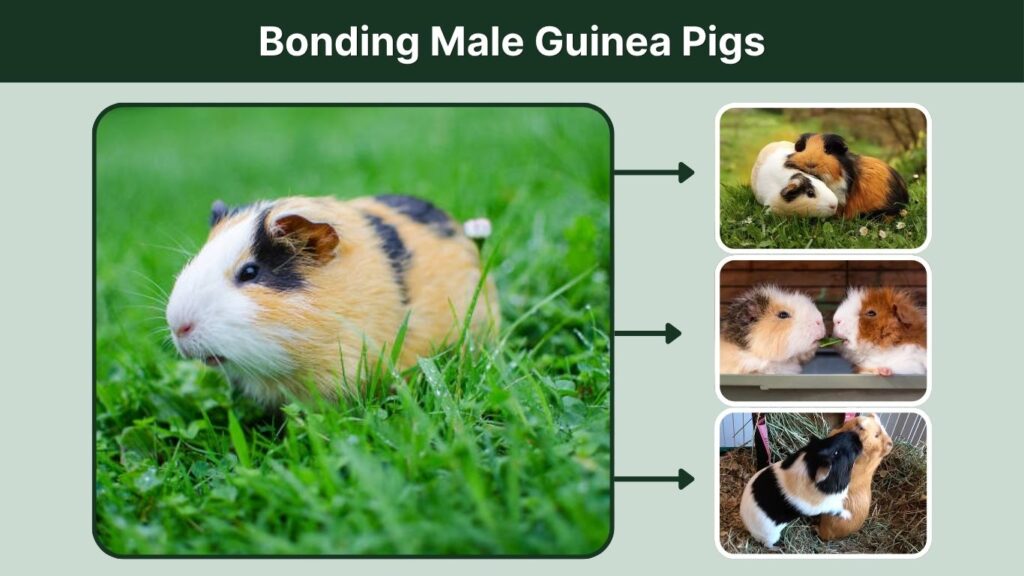
Male guinea pigs should be introduced gradually rather than immediately placed in one cage. A neutral space reduces territorial behavior because neither animal considers it his established home.
Steps for Introducing Two Males
Begin by allowing the guinea pigs to smell each other’s bedding or housing items. Next, position their enclosures close enough for safe visual and scent contact. Their first direct meeting should happen in a large neutral area with scattered hay and open-ended shelters.
Normal introductory behaviors may include:
- Sniffing
- Rumbling
- Mounting
- Brief chasing
- Nose raising
- Mild teeth chattering
These actions often help the animals establish their social ranking. Introductions should be monitored closely, and a solid board can be kept nearby to separate them safely if serious aggression develops.
Can Three Male Guinea Pigs Live Together?
A trio of males is usually harder to maintain than a pair. Two may bond closely and exclude the third, or competition may develop as they mature. Blue Cross advises avoiding male trios because they are less likely to remain harmonious.
Larger male groups occasionally succeed in exceptionally spacious environments, but they require careful matching, abundant resources and close monitoring.
Why Do Male Guinea Pigs Fight?
Not every chase, mount or rumble is a fight. Guinea pigs naturally establish a hierarchy, and some dominant behavior is expected, especially during introductions or adolescence.
Common causes of conflict include:
- Insufficient floor space
- Competition over food or shelters
- Houses with only one entrance
- Incompatible personalities
- Sudden environmental changes
- The presence or scent of female guinea pigs
- Illness, discomfort or pain
Constant attacks, biting, bleeding or one guinea pig being prevented from eating require intervention. Separate fighting animals with a board or towel rather than placing bare hands between them. A veterinarian should examine any wounds.
Neutering does not reliably stop fighting between two males because compatibility depends more on personality than hormones.
Can Male and Female Guinea Pigs Live Together?
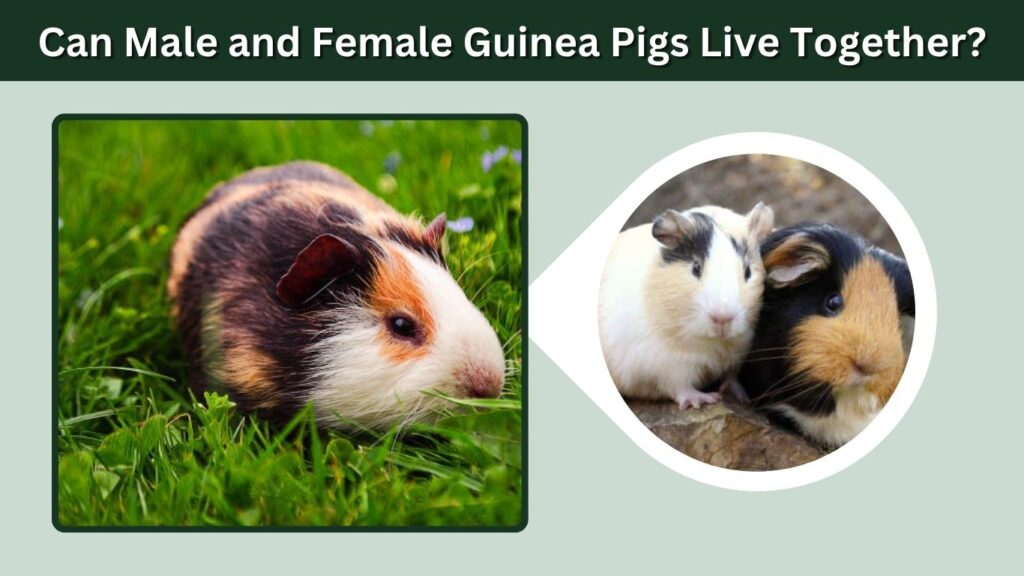
A male and female can form a strong bond, but an intact male should never be housed with a female unless intentional, carefully managed breeding is planned. Guinea pigs reproduce early, and pregnancies carry health risks.
A commonly successful arrangement is one neutered male with one or more females. Only one male should normally be kept in a mixed-sex group because multiple males may compete over the females.
Neutering Male Guinea Pigs
Male guinea pigs can be neutered by a veterinarian experienced with guinea pigs and other small mammals. Neutering allows a male to live with females without creating unwanted litters, but it is not a guaranteed solution for aggression between males.
A recently neutered male may remain fertile temporarily. Blue Cross recommends waiting four to six weeks before introducing him to females.
Can a Male Guinea Pig Live Alone?
Guinea pigs are naturally social and should normally have at least one compatible guinea pig companion. Long-term isolation may contribute to stress or abnormal behavior.
Temporary separation may be necessary after surgery, during illness or following a serious fight. In these cases, neighboring enclosures can sometimes allow safe visual and vocal contact while preventing physical injury.
FAQs
Are male guinea pigs aggressive?
Male guinea pigs are not naturally aggressive toward people. They may show dominance toward another guinea pig through mounting, chasing or rumbling. Serious aggression is more likely when space is limited, resources are scarce or two incompatible animals are forced to live together.
Can two unneutered male guinea pigs live together?
Yes. Two intact males can live together, and neutering is not required for a male-only pair. A spacious enclosure, multiple feeding areas, suitable hiding places and compatible personalities are more important. Neutering also does not reliably resolve fighting between males.
Why do male guinea pigs hump each other?
Mounting is commonly a dominance behavior rather than evidence of mating. It may appear during introductions, adolescence or changes in the social hierarchy. Occasional mounting is usually normal, but relentless harassment that prevents one guinea pig from resting or eating requires attention.
At what age do male guinea pigs become fertile?
Male guinea pigs may begin mounting females at approximately three to four weeks of age, even though full sexual maturity is generally reached later. Young males must therefore be separated from females early enough to prevent accidental pregnancy.
Can guinea pigs become pregnant without a male?
A female guinea pig cannot become pregnant without mating with a fertile male. However, a newly adopted female may already be pregnant, and a recently neutered male can remain fertile for several weeks after surgery. Correct sex identification and responsible separation are essential.