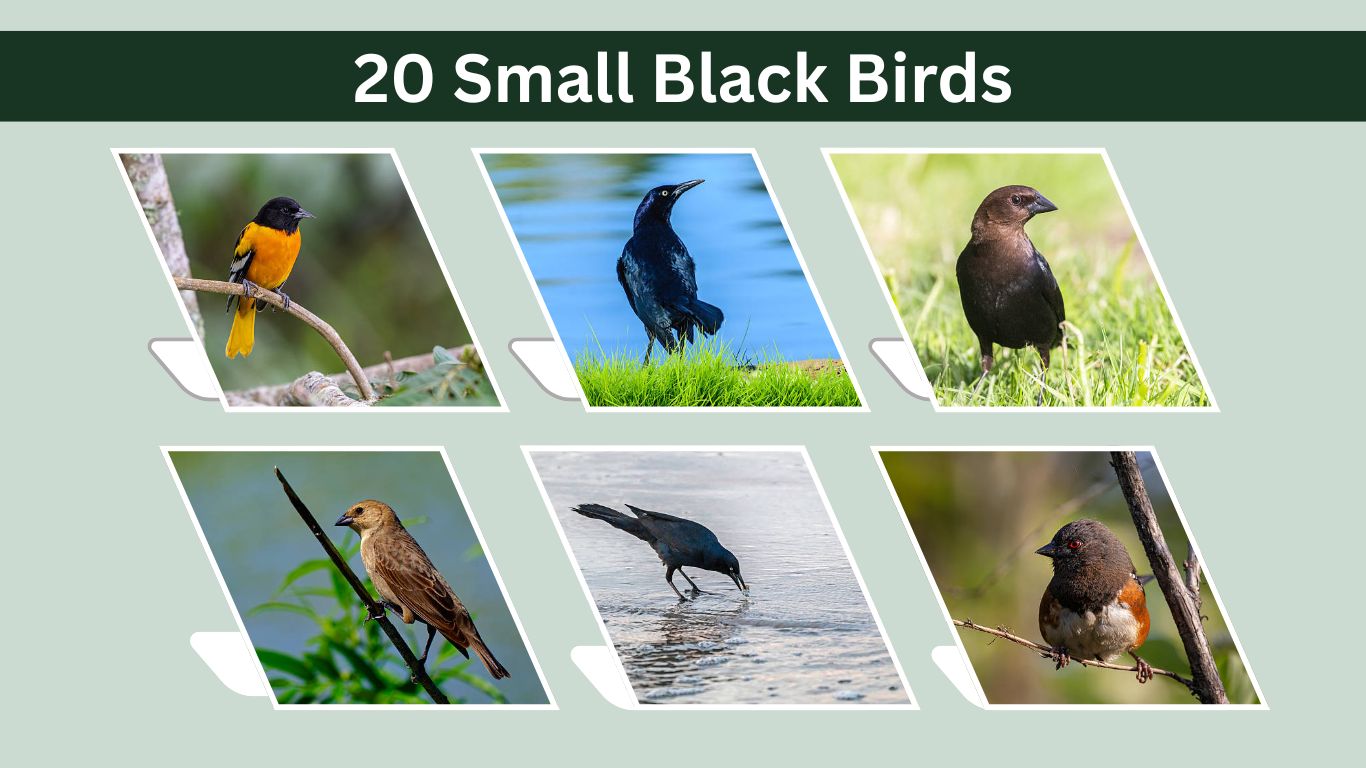
Small black birds can be confusing because many species look similar at first glance. Some are fully black, while others have black heads, gray bodies, brown heads, orange patches, long tails, or shiny iridescent feathers. This guide covers 20 common small black birds, including blackbirds, grackles, cowbirds, chickadees, nuthatches, towhees, and orioles. You will learn how to identify each bird by color, size, habitat, behavior, and similar species.
1. Red-winged Blackbird
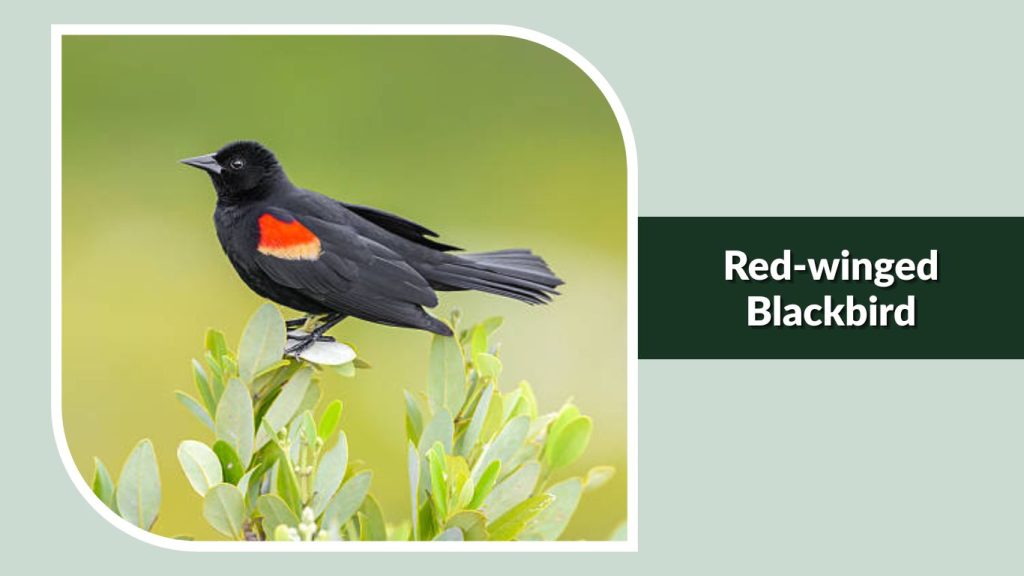
The Red-winged Blackbird is one of the most common small black birds people notice in fields, marshes, wetlands, and roadside grasses. Males are easy to identify because of their glossy black body and bright red-and-yellow shoulder patches. Females look very different, with brown streaked feathers that can confuse beginners.
Identification
- Male has a shiny black body
- Bright red shoulder patch with yellow edge
- Female is brown and heavily streaked
- Medium-small songbird with a sharp, pointed bill
- Often seen perched on cattails, fences, or tall grasses
Habitat and Range
Red-winged Blackbirds are common across much of North America. They prefer marshes, ponds, wet meadows, grasslands, farm fields, and open roadside areas. During breeding season, males often defend territories near water or tall vegetation.
Behavior and Diet
These birds are active and noisy. Males often sing from high perches to claim territory. Their diet includes insects, seeds, grains, and small invertebrates. In summer, they eat more insects, while in winter they often gather in large flocks and feed on seeds.
Similar Birds
Red-winged Blackbirds may be confused with Common Grackles, Brewer’s Blackbirds, or Brown-headed Cowbirds. The easiest clue is the male’s red shoulder patch. If the bird is all black but shows red and yellow on the wings, it is likely a Red-winged Blackbird.
2. Common Grackle
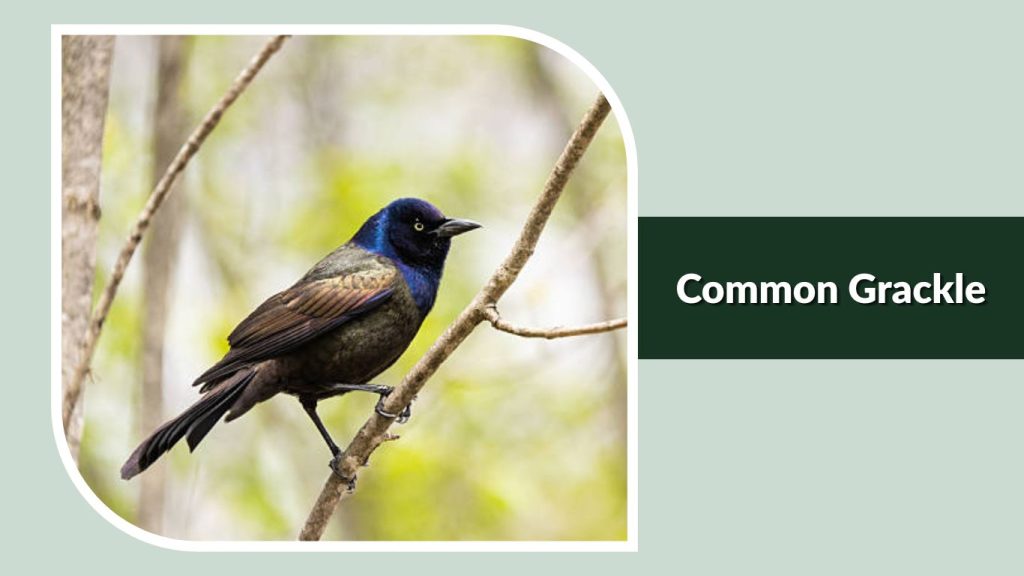
The Common Grackle is a black-looking bird often seen in yards, parking lots, farms, and open fields. At first glance, it may look like a small crow, but it has a slimmer body, longer tail, and shiny iridescent feathers. In bright light, its head may appear blue, purple, or green.
Identification
- Glossy black body with iridescent shine
- Long tail compared to many blackbirds
- Yellow eyes
- Long, sharp bill
- Often looks purple-blue on the head in sunlight
Habitat and Range
Common Grackles live across much of eastern and central North America. They are common in neighborhoods, parks, fields, wetlands, farms, and woodland edges. They adapt well to human areas and often visit lawns, feeders, and parking lots.
Behavior and Diet
Common Grackles are bold, social birds. They often walk on the ground while searching for food. Their diet includes insects, seeds, grains, fruit, small animals, and human food scraps. In fall and winter, they may gather in large noisy flocks.
Similar Birds
Common Grackles can be confused with American Crows, Brewer’s Blackbirds, and Boat-tailed Grackles. The best clues are their long tail, yellow eyes, glossy body, and smaller size compared to crows.
3. Brewer’s Blackbird
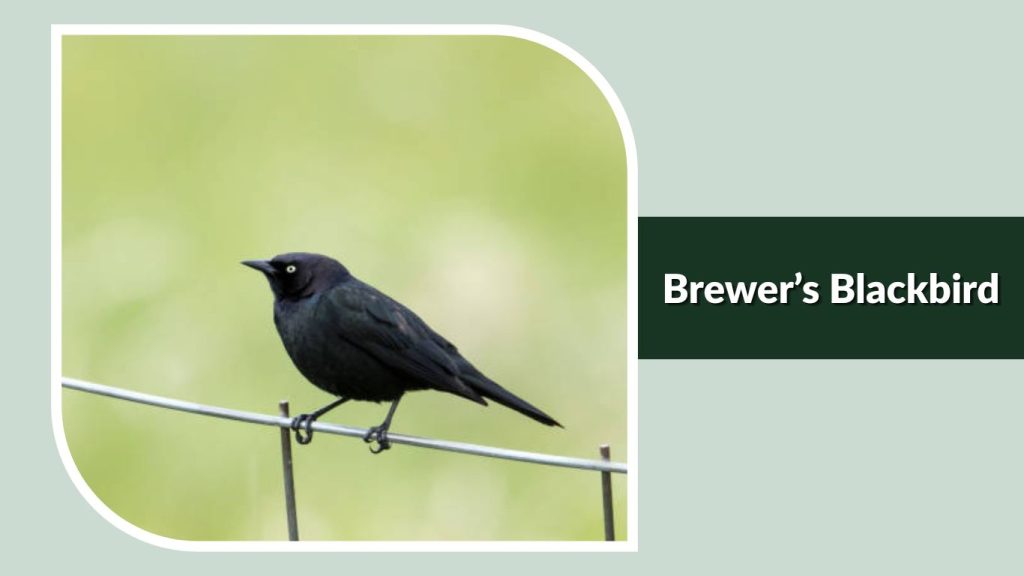
The Brewer’s Blackbird is a medium-sized blackbird with a neat, sleek appearance. Males are glossy black with a slight purple or green shine, while females are brownish-gray. They are often seen walking on the ground in open areas, parking lots, fields, and farms.
Identification
- Male is glossy black with purple-green shine
- Female is plain brownish-gray
- Pale yellow eye in adults
- Straight, pointed bill
- Shorter tail than grackles
Habitat and Range
Brewer’s Blackbirds are common in western North America, but they may also appear in other regions depending on season. They prefer open habitats such as fields, grasslands, farms, roadsides, parks, and towns. They are comfortable around people and often forage near buildings.
Behavior and Diet
These birds usually feed on the ground. They eat insects, seeds, grains, berries, and food scraps. During breeding season, they may nest in shrubs, trees, or low vegetation. Outside breeding season, they often form flocks with other blackbirds.
Similar Birds
Brewer’s Blackbirds may be confused with Common Grackles, Rusty Blackbirds, or Brown-headed Cowbirds. Compared with grackles, they have a shorter tail and less heavy body. Males are glossy black but lack the red wing patches of Red-winged Blackbirds.
4. Rusty Blackbird
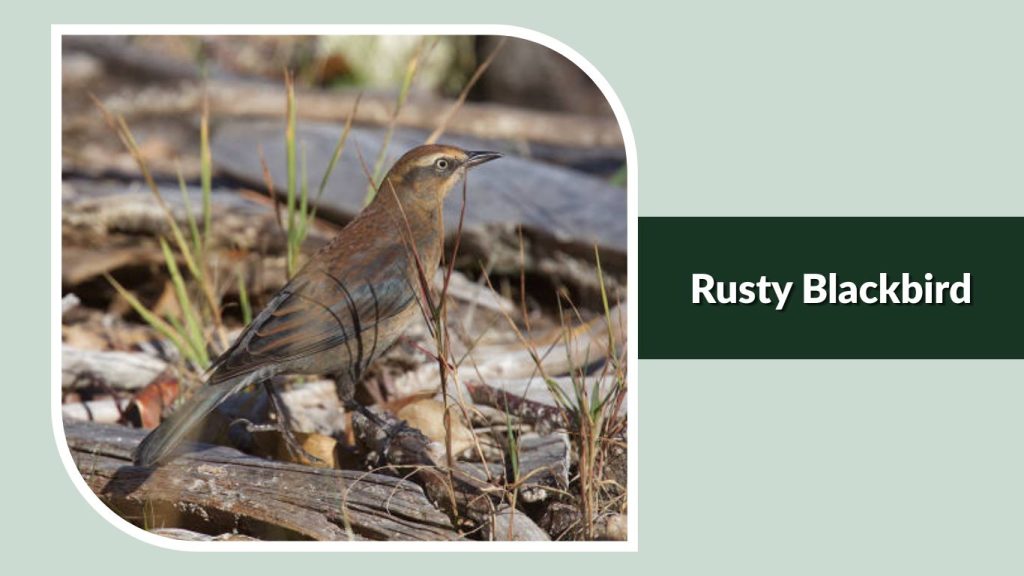
The Rusty Blackbird is a dark songbird named for the rusty-brown feather edges it shows during the nonbreeding season. It is less common than many other blackbirds and is often found near wet woods, swamps, bogs, and flooded areas.
Identification
- Dark blackish body in breeding males
- Rusty-brown feather edges in fall and winter
- Pale yellow eye
- Slender pointed bill
- Females are gray-brown with rusty tones
Habitat and Range
Rusty Blackbirds breed in northern boreal forests and migrate through parts of the United States. During migration and winter, they often use wet forests, swamp edges, ponds, streams, and flooded woodlands. They are usually more tied to wet habitats than many other blackbirds.
Behavior and Diet
Rusty Blackbirds forage mostly on the ground or in shallow water. They eat insects, aquatic invertebrates, seeds, berries, and small animals. They often flip leaves and debris while searching for food. They may appear alone, in small groups, or mixed with other blackbirds.
Similar Birds
Rusty Blackbirds can look like Brewer’s Blackbirds or Common Grackles. The best clues are the rusty feather edges, pale eye, slimmer shape, and wet woodland habitat. They are usually less glossy than grackles.
5. European Starling
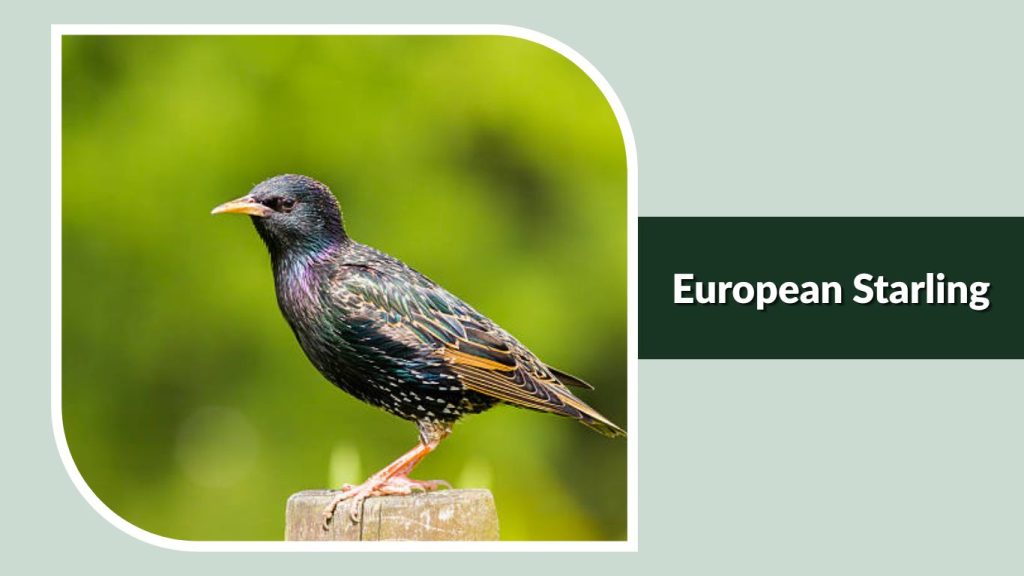
The European Starling is a small to medium-sized dark bird that often looks black from a distance. Up close, it has shiny purple-green feathers and pale speckles, especially in winter. It is one of the most common black-looking birds in cities, farms, lawns, and parking lots.
Identification
- Dark glossy body with purple-green shine
- Pale speckles on feathers
- Short tail
- Pointed bill
- Bill is yellow in breeding season and darker in winter
Habitat and Range
European Starlings are widespread across North America. They live in cities, suburbs, farms, fields, parks, lawns, and open woodlands. They often nest in holes, building gaps, vents, and tree cavities.
Behavior and Diet
Starlings are noisy, social, and active. They walk quickly on the ground while searching for insects, seeds, fruit, and scraps. In winter, they may form large flocks that move together in impressive swirling patterns called murmurations.
Similar Birds
European Starlings may be confused with blackbirds, grackles, or small crows. Their short tail, speckled body, pointed bill, and glossy purple-green shine help separate them from other small black birds.
6. Brown-headed Cowbird
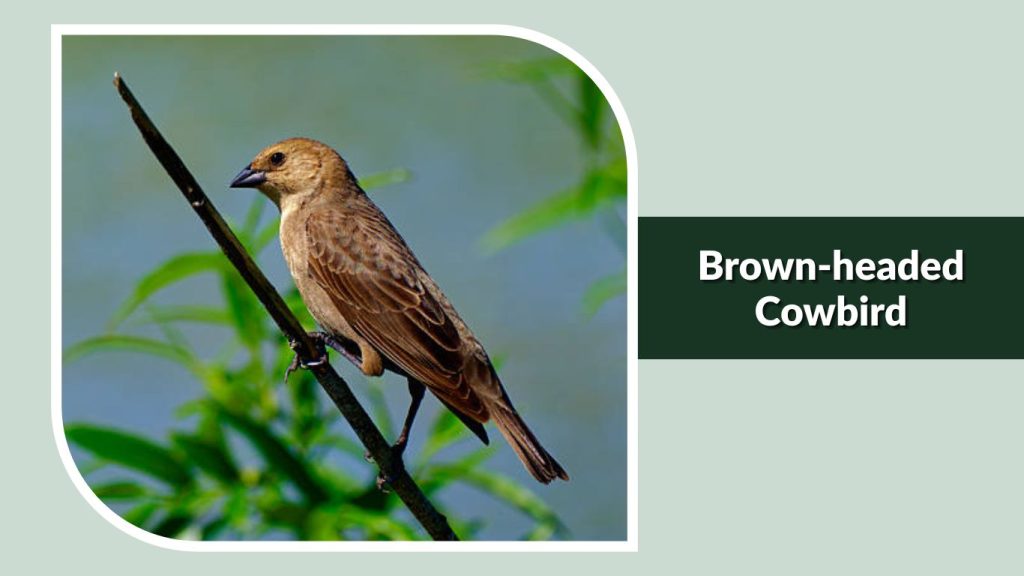
The Brown-headed Cowbird is a small blackbird often seen in fields, farms, pastures, lawns, and woodland edges. Males are easy to recognize because they have a glossy black body with a rich brown head. Females are plainer, with gray-brown feathers and a softer appearance.
Identification
- Male has a black body and brown head
- Female is plain gray-brown
- Short, thick, cone-shaped bill
- Stocky body shape
- Often walks on the ground while feeding
Habitat and Range
Brown-headed Cowbirds are common across much of North America. They prefer open and semi-open habitats, including fields, grasslands, farms, roadsides, forest edges, and suburban areas. They are often seen near livestock, where they feed around disturbed soil and short grass.
Behavior and Diet
These birds eat seeds, grains, insects, and small invertebrates. They often forage on the ground in flocks. Brown-headed Cowbirds are also known as brood parasites, which means females lay eggs in the nests of other bird species instead of building their own nests.
Similar Birds
Brown-headed Cowbirds may be confused with blackbirds, grackles, or starlings. The male’s brown head and black body are the best clues. Females can be harder to identify, but their plain gray-brown color and thick bill help separate them from sparrows.
7. Bronzed Cowbird
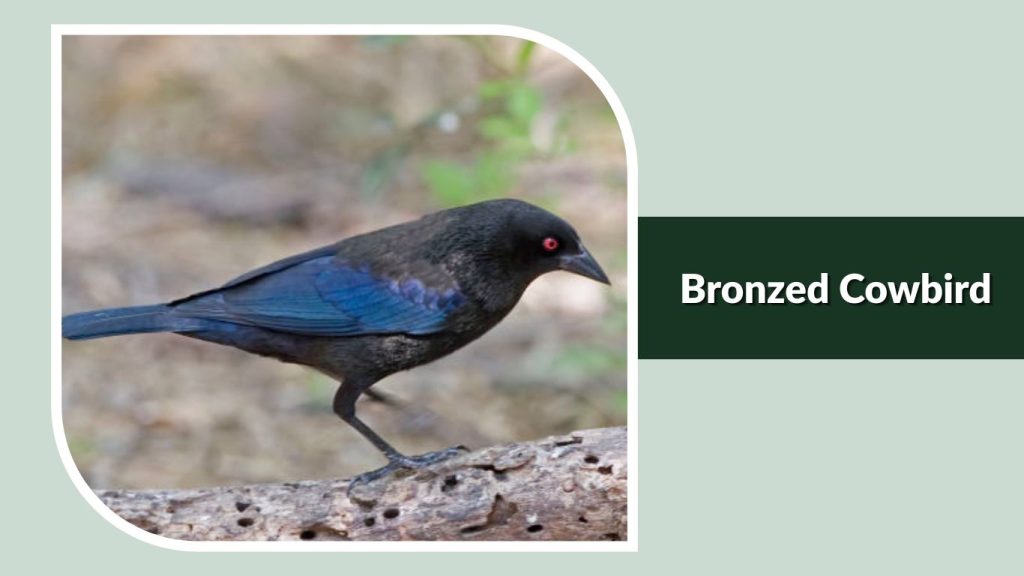
The Bronzed Cowbird is a dark blackbird with a glossy, bronzy shine. It is less widespread than the Brown-headed Cowbird and is mostly found in the southern United States, especially in parts of Texas, Arizona, New Mexico, and nearby regions.
Identification
- Glossy black body with bronze or green shine
- Red eyes in males
- Thick, pointed bill
- Males have a slightly raised neck ruff
- Females are duller brownish-black
Habitat and Range
Bronzed Cowbirds prefer open country, brushy areas, agricultural land, woodland edges, and areas near livestock. In the United States, they are most common in the Southwest and along the southern border. They may also be seen in towns and open rural areas.
Behavior and Diet
Like other cowbirds, Bronzed Cowbirds often feed on the ground. They eat seeds, grains, insects, and other small food items. They are also brood parasites, laying their eggs in the nests of other birds rather than raising their own young.
Similar Birds
Bronzed Cowbirds can be confused with Brown-headed Cowbirds or grackles. Look for the male’s red eye, glossy bronze shine, and thicker neck appearance. Unlike the Brown-headed Cowbird, the male does not have a brown head.
8. Shiny Cowbird
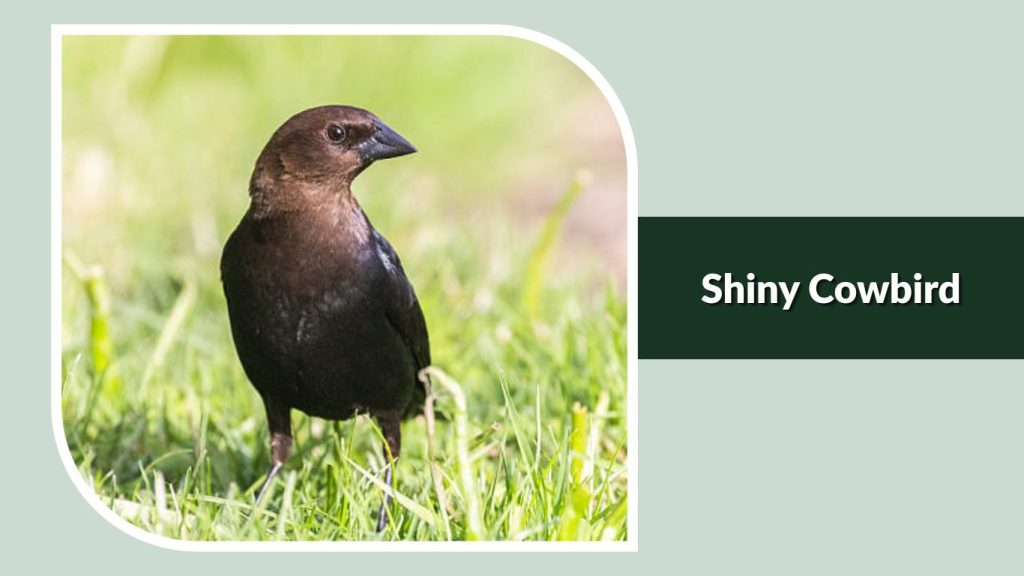
The Shiny Cowbird is a glossy black bird found mainly in parts of the southern United States, the Caribbean, Central America, and South America. In North America, it is much less common than the Brown-headed Cowbird, but it may appear in Florida and nearby areas.
Identification
- Male is glossy black or bluish-black
- Female is dull brownish-gray
- Slimmer shape than Brown-headed Cowbird
- Dark eyes
- Short, pointed bill
Habitat and Range
Shiny Cowbirds use open habitats, farms, fields, pastures, forest edges, and disturbed areas. Their range is larger in the Caribbean, Central America, and South America. In the United States, they are mostly rare or local, especially compared with other cowbirds.
Behavior and Diet
Shiny Cowbirds feed on seeds, grains, insects, and small invertebrates. They often forage on the ground and may join mixed flocks. Like other cowbirds, they are brood parasites and lay eggs in the nests of other birds.
Similar Birds
Shiny Cowbirds may resemble Bronzed Cowbirds, Brown-headed Cowbirds, or small blackbirds. Males are glossy black without a brown head, while females are plain and dull. Location is very important because they are uncommon in much of the United States.
9. Boat-tailed Grackle
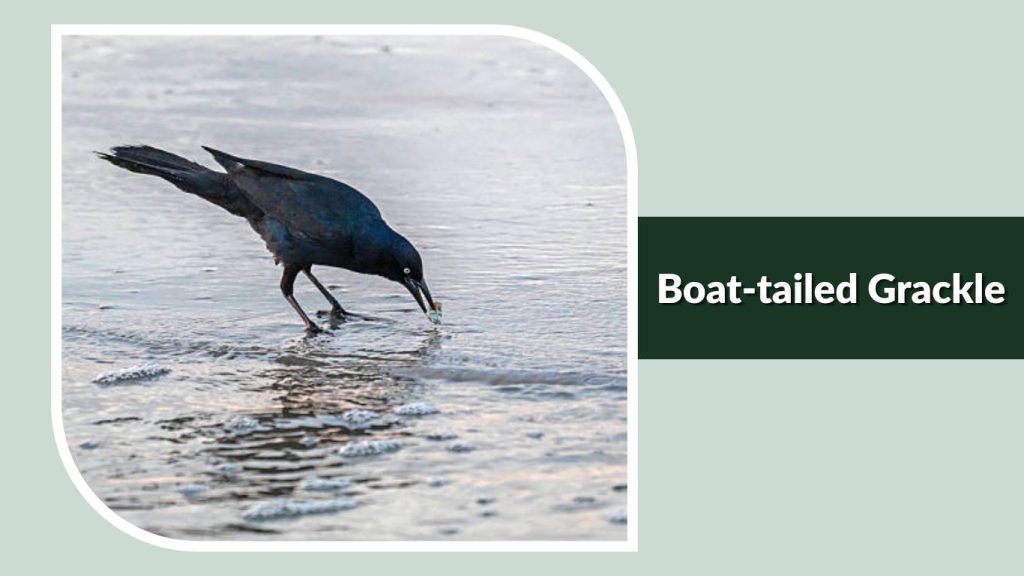
The Boat-tailed Grackle is a large blackbird with a long, wide tail that often looks folded into a boat shape. Males are glossy black with blue or purple shine, while females are much smaller and brownish. This bird is common in coastal marshes and wetlands.
Identification
- Male is glossy black with a very long tail
- Tail is broad and boat-shaped
- Yellow or brownish eyes depending on region
- Female is smaller and brown
- Long pointed bill
Habitat and Range
Boat-tailed Grackles live mainly along the Atlantic and Gulf coasts of the southeastern United States. They prefer salt marshes, freshwater marshes, coastal wetlands, beaches, parking lots, and areas near water. They are especially common in Florida and coastal states.
Behavior and Diet
These grackles are bold, noisy, and social. They eat insects, seeds, grains, small animals, crustaceans, and food scraps. Males often display by puffing up, raising their bills, and spreading their tails to attract females.
Similar Birds
Boat-tailed Grackles may be confused with Great-tailed Grackles or Common Grackles. Their huge tail, coastal habitat, and large size help with identification. Compared with Common Grackles, they are bigger and have a more dramatic tail.
10. Great-tailed Grackle
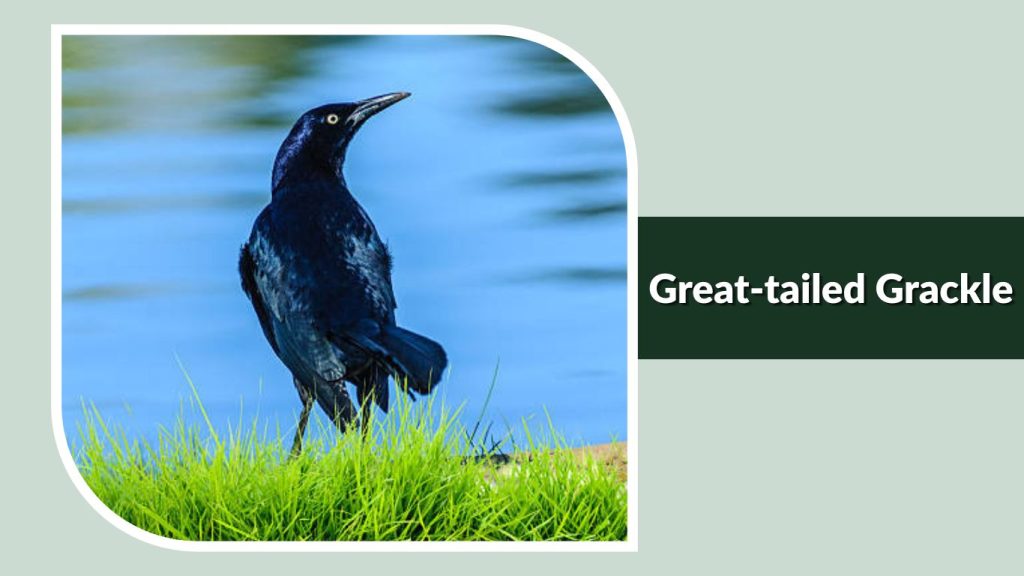
The Great-tailed Grackle is a large, glossy black bird known for its extremely long tail and loud calls. Males are shiny black with purple-blue iridescence, while females are smaller and brown. They are common in open areas, towns, farms, and parking lots.
Identification
- Male is glossy black with a very long tail
- Bright yellow eyes
- Large body and long legs
- Female is smaller and brown
- Loud, harsh calls
Habitat and Range
Great-tailed Grackles are common in the southern and western United States, Mexico, and Central America. They live in cities, suburbs, farms, wetlands, parks, shopping areas, and open fields. They adapt very well to human environments.
Behavior and Diet
These birds are noisy, social, and bold. They forage on the ground for insects, seeds, grains, fruit, small animals, and human food scraps. Males often gather in visible areas and perform displays with raised bills, puffed feathers, and spread tails.
Similar Birds
Great-tailed Grackles can look like Boat-tailed Grackles or Common Grackles. The best clues are their very long tail, yellow eyes, loud calls, and inland western or southern range. They are larger and longer-tailed than Common Grackles.
11. Fish Crow
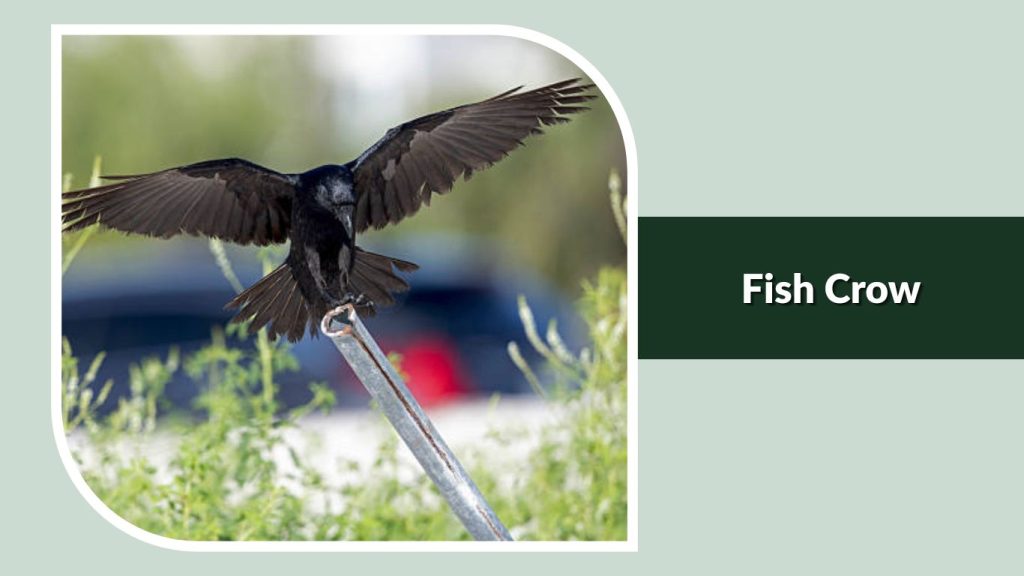
The Fish Crow is a small black crow that often looks very similar to the American Crow. It is usually found near coastal areas, rivers, marshes, lakes, and wetlands. Compared with the American Crow, the Fish Crow is slightly smaller and has a thinner bill, but its voice is often the easiest way to identify it.
Identification
- All-black body
- Smaller than American Crow
- Slightly thinner bill
- Shorter legs and slimmer shape
- Nasal “uh-uh” call
Habitat and Range
Fish Crows are most common in the southeastern and eastern United States. They often live near water, including beaches, rivers, estuaries, marshes, lakes, and coastal towns. They also visit parks, parking lots, neighborhoods, and open areas where food is available.
Behavior and Diet
Fish Crows are intelligent and social birds. They eat fish, insects, eggs, small animals, fruit, seeds, carrion, and human food scraps. They often search shorelines and wet areas for food, but they also scavenge in urban places.
Similar Birds
Fish Crows are easily confused with American Crows. The best clue is the voice. Fish Crows sound more nasal and higher-pitched. They are also usually smaller and slimmer, especially when seen beside an American Crow.
12. American Crow
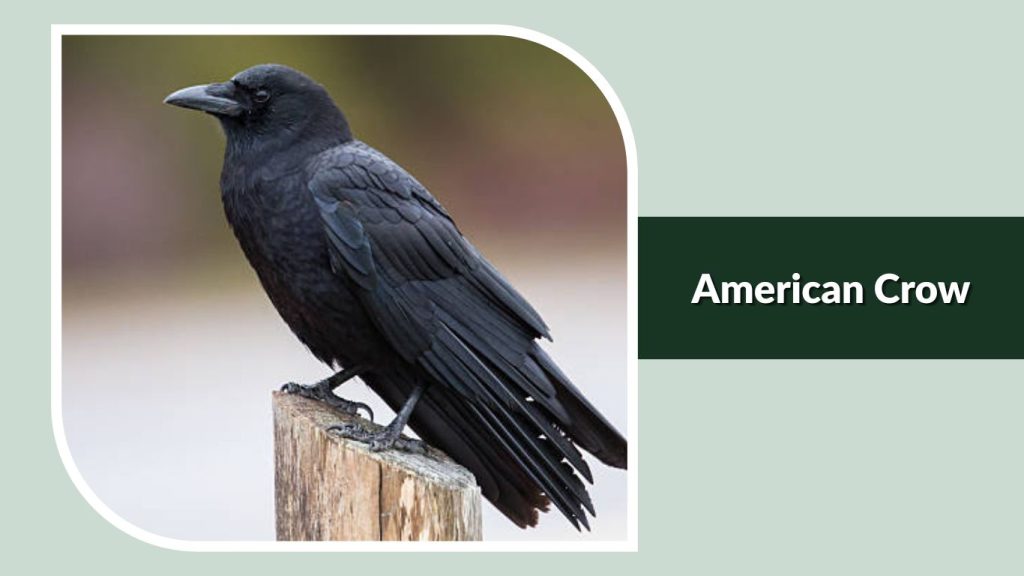
The American Crow is a familiar all-black bird found in cities, farms, forests, fields, and neighborhoods. It is larger than most small black birds, but many people search for it when trying to identify a black bird that looks like a crow or a smaller crow-like bird.
Identification
- Entire body is black
- Thick black bill
- Fan-shaped tail
- Strong legs and feet
- Loud “caw-caw” call
Habitat and Range
American Crows are widespread across North America. They live in forests, farmlands, towns, parks, roadsides, beaches, and open fields. They are very adaptable and can survive in both rural and urban environments.
Behavior and Diet
American Crows are smart, social, and curious. They eat almost anything, including insects, seeds, fruit, eggs, small animals, carrion, garbage, and crop grains. They often gather in family groups and may form large winter roosts.
Similar Birds
American Crows may be confused with Fish Crows, Common Ravens, and grackles. Compared with grackles, crows are larger, heavier, and have thicker bills. Compared with ravens, crows are smaller and have a fan-shaped tail instead of a wedge-shaped tail.
13. Black Phoebe
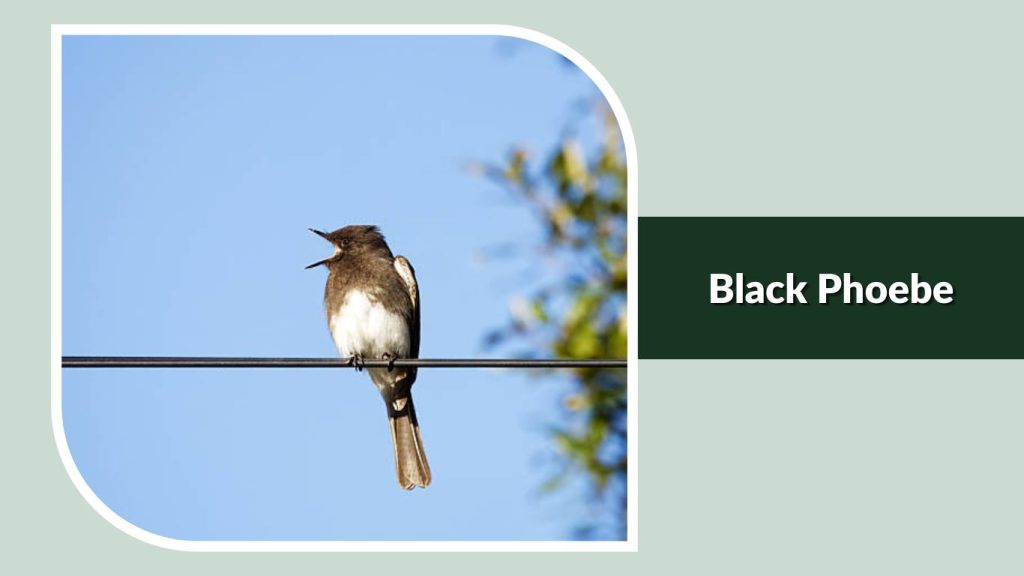
The Black Phoebe is a small black-and-white flycatcher often seen near water. It has a dark head, dark back, and clean white belly. This bird is easy to recognize because it often perches low, flicks its tail, and flies out to catch insects in the air.
Identification
- Black head, chest, and back
- White belly
- Small, upright body shape
- Thin black bill
- Frequently pumps or flicks tail
Habitat and Range
Black Phoebes are common in the western and southwestern United States, Mexico, and parts of Central and South America. They prefer streams, ponds, lakes, canals, bridges, farms, and wet open areas. They often stay close to water.
Behavior and Diet
Black Phoebes are insect-eating birds. They sit on low perches, watch for flying insects, and then dart out to catch them. They may return to the same perch again and again. Their diet includes flies, beetles, wasps, mosquitoes, and other small insects.
Similar Birds
Black Phoebes may be confused with other flycatchers or small black-and-white birds. The easiest clues are the black upper body, white belly, tail flicking, and habit of staying near water.
14. Dark-eyed Junco
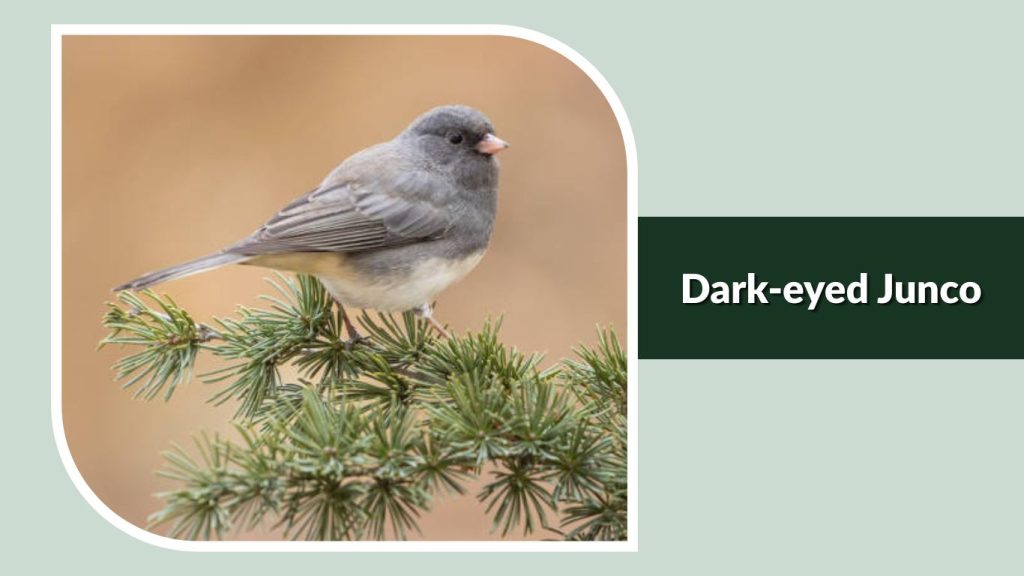
The Dark-eyed Junco is a small sparrow-like bird that often appears dark gray, black, or charcoal depending on the region. It is a common backyard bird, especially in winter. Many people notice it hopping on the ground under feeders or in leaf litter.
Identification
- Dark gray, black, or brownish upper body
- Pale belly
- Small pinkish bill
- White outer tail feathers
- Sparrow-like shape
Habitat and Range
Dark-eyed Juncos are widespread across North America. They breed mostly in forests and mountain areas but often move into yards, parks, gardens, and woodland edges during winter. They are especially common around bird feeders in colder months.
Behavior and Diet
Juncos mainly feed on seeds, but they also eat insects during the breeding season. They often forage on the ground, scratching through leaves and grass. In winter, they may form small flocks and feed under shrubs or feeders.
Similar Birds
Dark-eyed Juncos can be confused with small sparrows or other gray birds. The pale bill, dark hood or body, white belly, and flashing white tail feathers are helpful identification clues.
15. Black-capped Chickadee
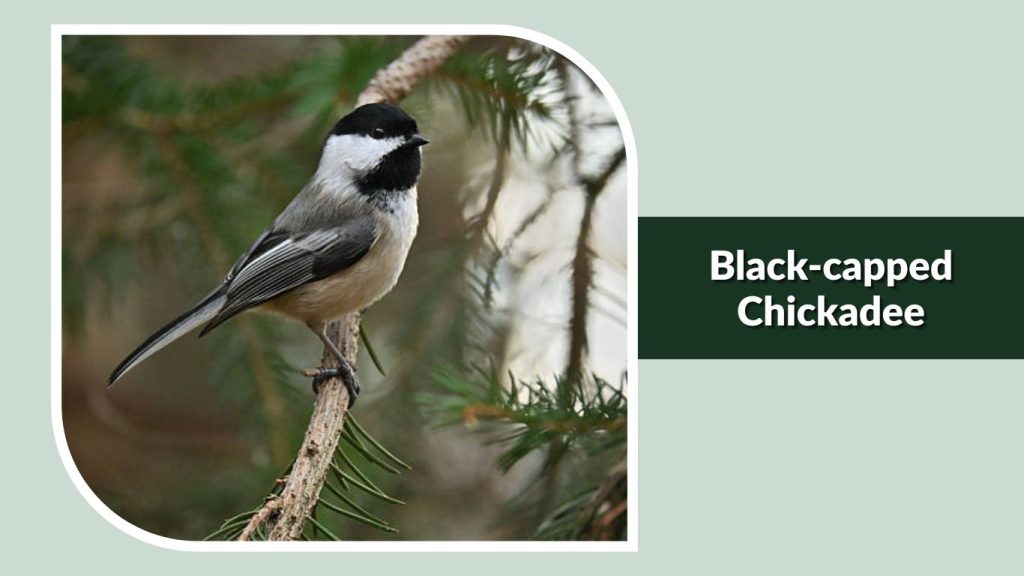
The Black-capped Chickadee is a tiny black, white, and gray bird known for its bold personality and familiar “chick-a-dee-dee-dee” call. It has a black cap and bib, white cheeks, gray back, and pale underside. It is a favorite backyard bird in northern areas.
Identification
- Black cap on top of head
- Black bib under the bill
- Bright white cheeks
- Gray back and wings
- Small round body
Habitat and Range
Black-capped Chickadees are common across northern North America. They live in deciduous forests, mixed woods, parks, suburbs, gardens, and backyard areas. They often visit bird feeders, especially for sunflower seeds and suet.
Behavior and Diet
These birds are active, curious, and social. They eat insects, seeds, berries, and suet. In winter, they often join mixed flocks with nuthatches, titmice, and woodpeckers. They may store food in bark cracks and return to eat it later.
Similar Birds
Black-capped Chickadees are often confused with Carolina Chickadees. Black-capped Chickadees usually live farther north and have more white edging on the wings. Their black cap, white cheeks, and tiny round body make them easy to recognize.
16. Carolina Chickadee
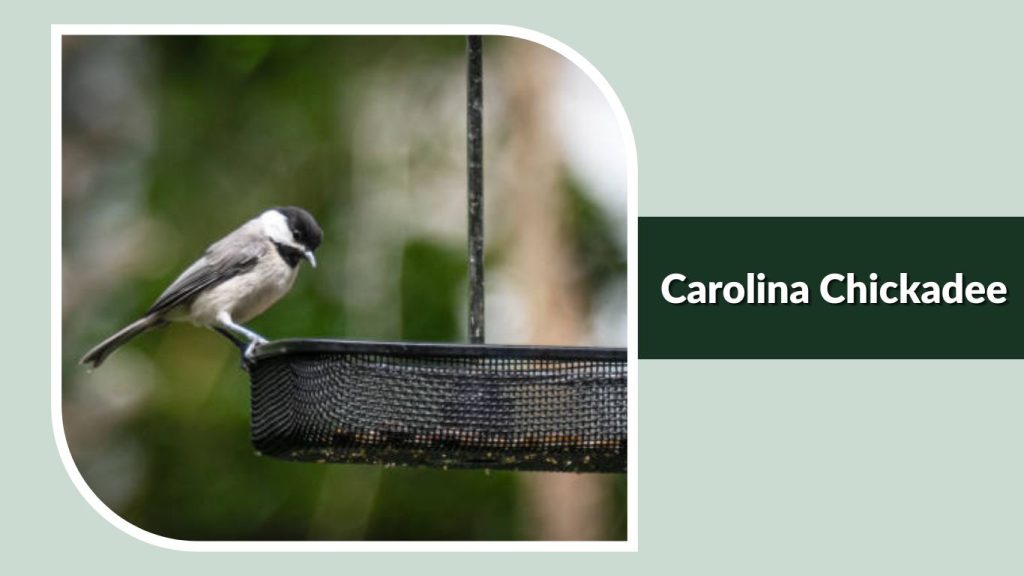
The Carolina Chickadee is a tiny black, white, and gray bird that looks very similar to the Black-capped Chickadee. It has a black cap, black throat patch, white cheeks, and gray wings. This bird is common in the southeastern United States and often visits backyard feeders.
Identification
- Black cap on top of the head
- Black bib under the bill
- White cheeks
- Gray back and wings
- Small round body with a short bill
Habitat and Range
Carolina Chickadees live mainly in the southeastern and south-central United States. They are common in forests, woodlands, parks, suburbs, gardens, and backyard areas. They often stay in places with trees, shrubs, and nearby food sources.
Behavior and Diet
These chickadees are active and curious. They eat insects, spiders, seeds, berries, and suet. At feeders, they often take one seed at a time and fly to a branch to eat it. In winter, they may join mixed flocks with titmice, nuthatches, and woodpeckers.
Similar Birds
Carolina Chickadees are often confused with Black-capped Chickadees. Range is one of the best clues: Carolina Chickadees are more common in the Southeast, while Black-capped Chickadees are more northern. Carolina Chickadees usually have less white edging on the wings.
17. White-breasted Nuthatch
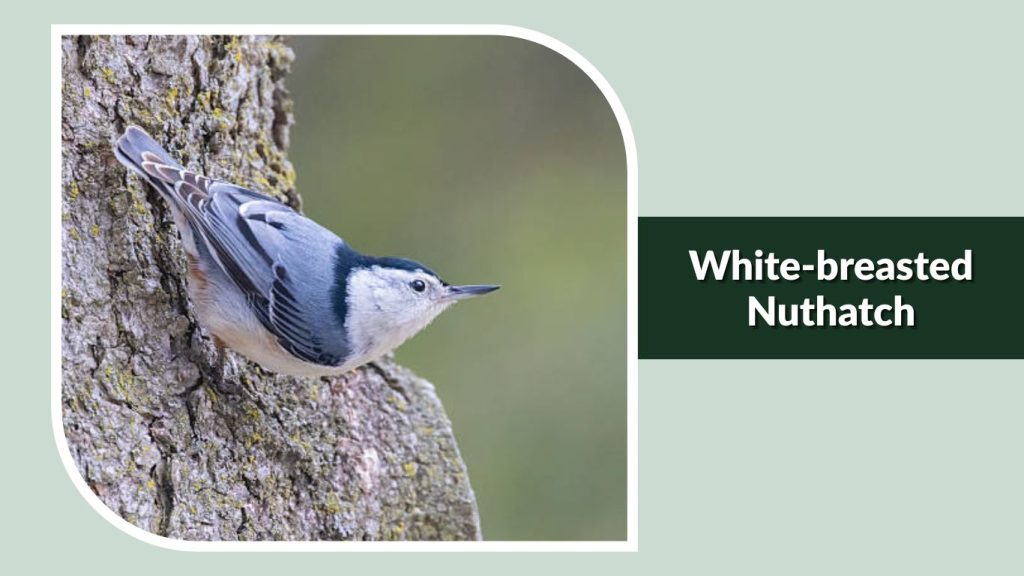
The White-breasted Nuthatch is a small black, white, and gray bird often seen climbing tree trunks headfirst. It has a black cap, white face, blue-gray back, and white underside. Its unusual climbing behavior makes it easier to identify than many other small birds.
Identification
- Black or dark cap
- White face and white underside
- Blue-gray back and wings
- Short tail
- Long, pointed bill
Habitat and Range
White-breasted Nuthatches are widespread across much of North America. They live in mature forests, woodlands, parks, orchards, suburbs, and yards with large trees. They are common at feeders, especially where sunflower seeds, peanuts, or suet are available.
Behavior and Diet
These birds search bark for insects, seeds, and nuts. They often climb down tree trunks headfirst, which helps separate them from woodpeckers and chickadees. They may store food in bark cracks and return to it later.
Similar Birds
White-breasted Nuthatches may be confused with chickadees or smaller nuthatches. The best clues are the long pointed bill, white face, gray back, and habit of walking upside down on tree trunks.
18. Spotted Towhee
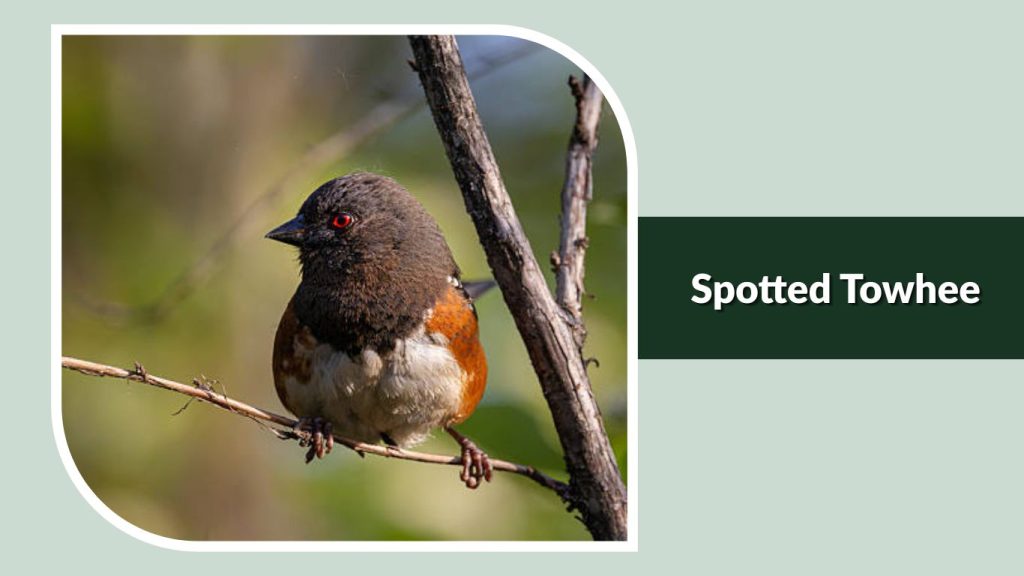
The Spotted Towhee is a bold black, white, and reddish bird often found scratching in leaf litter. Males have a black head and upper body, white spots on the wings and back, and reddish-orange sides. Females are similar but usually browner.
Identification
- Black head and upper body in males
- White spots on wings and back
- Reddish-orange sides
- Long dark tail
- Thick, seed-eating bill
Habitat and Range
Spotted Towhees are common in western North America. They prefer brushy areas, woodland edges, chaparral, thickets, dry scrub, and shrubby backyards. They often stay low in dense cover and may be heard before they are seen.
Behavior and Diet
Spotted Towhees feed mostly on the ground. They scratch through leaves with both feet to uncover seeds, insects, beetles, spiders, and berries. They are often shy but noisy, giving sharp calls from shrubs and low branches.
Similar Birds
Spotted Towhees can be confused with Eastern Towhees. Spotted Towhees have clear white spots on the wings and back, while Eastern Towhees usually have a cleaner black back. Range is also helpful, with Spotted Towhees mainly in the West.
19. American Redstart
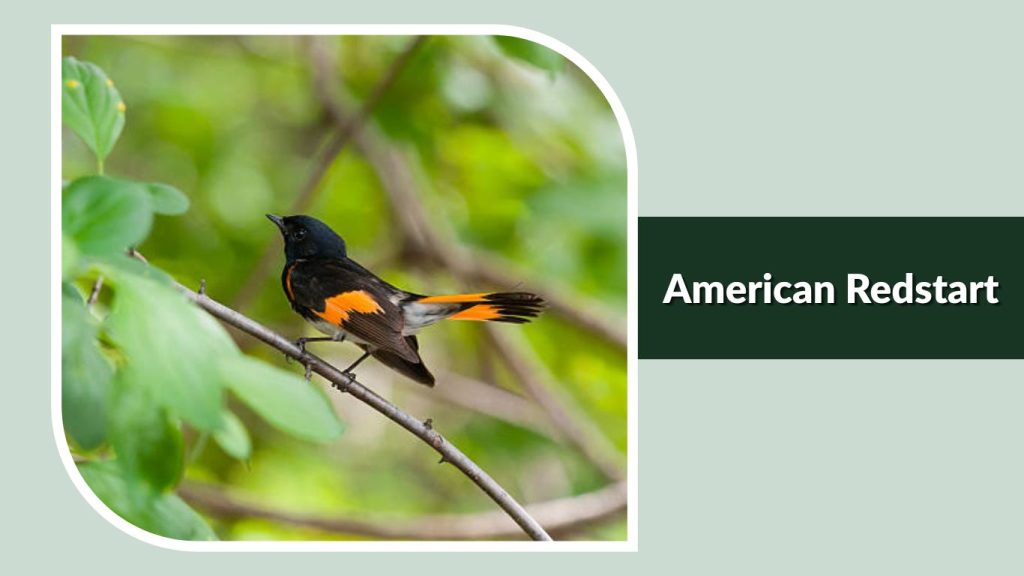
The American Redstart is a small warbler with bold black and orange coloring in males. Males have a black body with bright orange patches on the wings, sides, and tail. Females and young birds are grayish or olive with yellow patches instead of orange.
Identification
- Male has black body with orange patches
- Orange patches on wings, sides, and tail
- Female is grayish with yellow patches
- Small, active warbler shape
- Thin insect-catching bill
Habitat and Range
American Redstarts breed in deciduous forests, woodland edges, streamside woods, and second-growth forests across much of eastern and northern North America. During migration, they may appear in parks, gardens, and wooded neighborhoods.
Behavior and Diet
American Redstarts are energetic insect hunters. They often fan their tails and spread their wings to flash their bright patches, which may help startle insects. They eat flies, beetles, caterpillars, moths, and other small insects.
Similar Birds
Male American Redstarts may be confused with small black-and-orange birds such as orioles, but they are much smaller and more active. Their flashing orange tail and wing patches are strong identification clues.
20. Baltimore Oriole
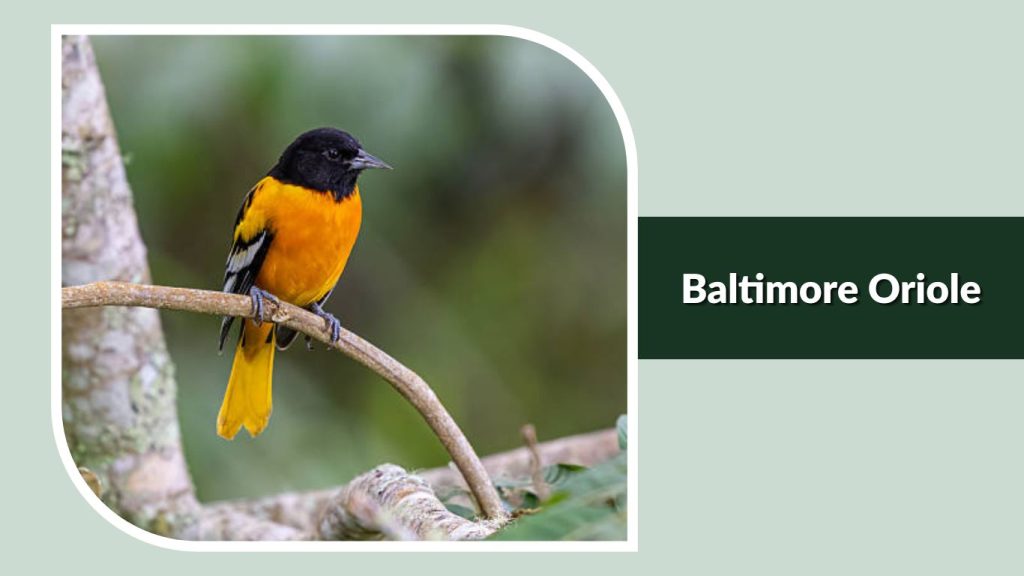
The Baltimore Oriole is a bright orange and black songbird often seen in trees, parks, orchards, and backyards. Adult males have a black head and back with vivid orange underparts. Females are more yellow-orange or brownish-orange and less sharply marked.
Identification
- Male has black head and bright orange body
- Black wings with white wing bars
- Female is yellow-orange to brownish-orange
- Slim pointed bill
- Medium-sized songbird shape
Habitat and Range
Baltimore Orioles are common in eastern and central North America during the breeding season. They prefer open woodlands, forest edges, river groves, parks, orchards, and shade trees. Many people attract them with orange halves, jelly, or nectar feeders.
Behavior and Diet
Baltimore Orioles eat insects, fruit, nectar, and berries. They often search tree canopies for caterpillars and other insects. They are also known for their hanging pouch-shaped nests, which females weave from plant fibers, grasses, and other materials.
Similar Birds
Baltimore Orioles may be confused with Orchard Orioles, American Redstarts, or other orange-and-black birds. Males are larger than warblers and have a strong orange body with a black head. Their tree-top behavior and sweet whistling song also help with identification.