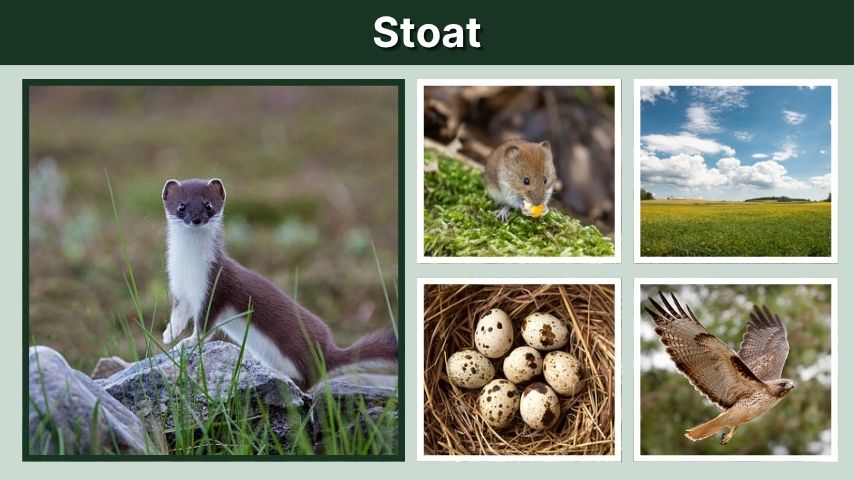
A stoat is a small, fast, and fearless carnivorous mammal often confused with weasels and ferrets. It has a long slim body, short legs, sharp teeth, and a black-tipped tail. Stoats are wild animals known for their hunting skill, seasonal coat changes, and ability to survive in different habitats. In this guide, you will learn what a stoat is, what it looks like, where it lives, what it eats, and how it differs from similar animals.
What Is a Stoat?
A stoat is a wild animal from the mustelid family, the same family that includes weasels, ferrets, mink, badgers, martens, and otters. Although it is small, it is a strong predator with quick movements and sharp senses. Stoats are best known for their long bodies, black-tipped tails, and white winter coats in colder regions.
Stoat Definition
A stoat is a small carnivorous mammal with a slender body, short legs, and a long tail with a black tip. Its scientific name is Mustela erminea. In many places, the word “stoat” refers to the animal in its normal brown coat, while “ermine” often refers to the same animal when it turns white in winter.
What Animal Family Does a Stoat Belong To?
Stoats belong to the mustelid family. Mustelids are mostly meat-eating mammals with long bodies, short legs, and strong hunting instincts. This family includes many animals that look similar, which is why people often compare stoats with weasels, ferrets, and mink.
Is a Stoat a Weasel?
A stoat is closely related to weasels, but it is not exactly the same animal. Stoats are usually larger than many weasels and have a longer tail with a clear black tip. Weasels are often smaller and usually do not have the same obvious black-tipped tail.
What Does a Stoat Look Like?
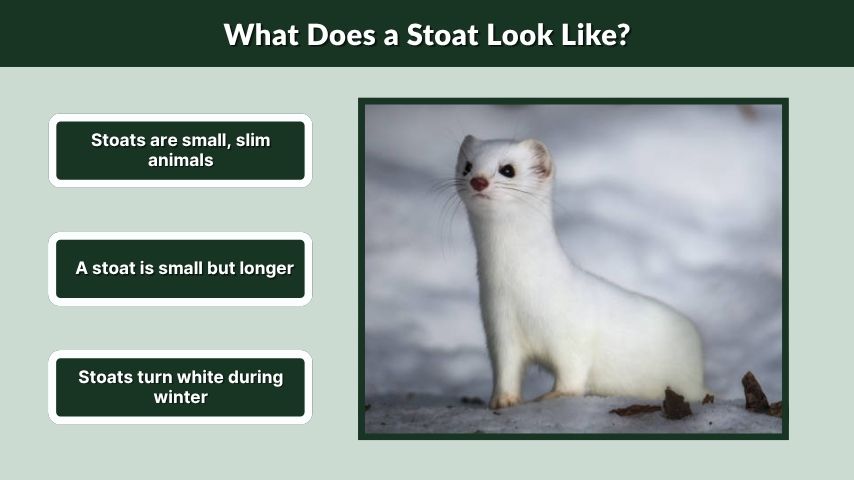
Stoats are small, slim animals built for speed, flexibility, and hunting. Their long bodies help them chase prey through grass, rocks, and burrows. A stoat’s appearance can change with the season, especially in cold regions. Its most useful identifying feature is the black tip at the end of its tail.
Stoat Size
A stoat is small but longer than it first appears because of its stretched body shape. Most stoats have a narrow head, rounded ears, short legs, and a tail that is fairly long compared with a weasel’s tail. Their lightweight bodies allow them to move quickly through tight spaces.
Stoat Color
In warmer months, stoats usually have brown fur on the back and sides, with a pale cream or white underside. The tail tip stays black, which makes stoats easier to identify. This black-tipped tail is one of the clearest differences between a stoat and many smaller weasels.
White Stoat in Winter
In snowy regions, some stoats turn white during winter. This white coat helps them blend into snow and avoid predators while hunting. Even when the body becomes white, the tail tip usually remains black. A white winter stoat is often called an ermine.
Stoat vs Ermine: Are They the Same?
Many people search for “stoat vs ermine” because the two names can be confusing. In most cases, they refer to the same animal. The difference is usually about the coat color and season. A stoat is commonly brown in summer, while an ermine is the white winter form of the stoat.
What Is an Ermine?
An ermine is usually a stoat in its white winter fur. The word is also used for the soft white fur that was historically valued in clothing. In animal terms, however, ermine and stoat often mean the same species, just seen in different seasonal coats.
Why Do Some Stoats Turn White?
Some stoats turn white because it helps them survive in snowy habitats. Their winter coat works as camouflage, making it harder for prey and predators to see them. This change does not happen everywhere. In warmer areas without snow, stoats may stay brown all year.
Summer Stoat vs Winter Stoat
A summer stoat usually has brown upper fur, a pale belly, and a black-tipped tail. A winter stoat may become almost completely white except for the black tail tip. This seasonal change is one reason stoats are often mistaken for different animals.
Stoat vs Weasel vs Ferret
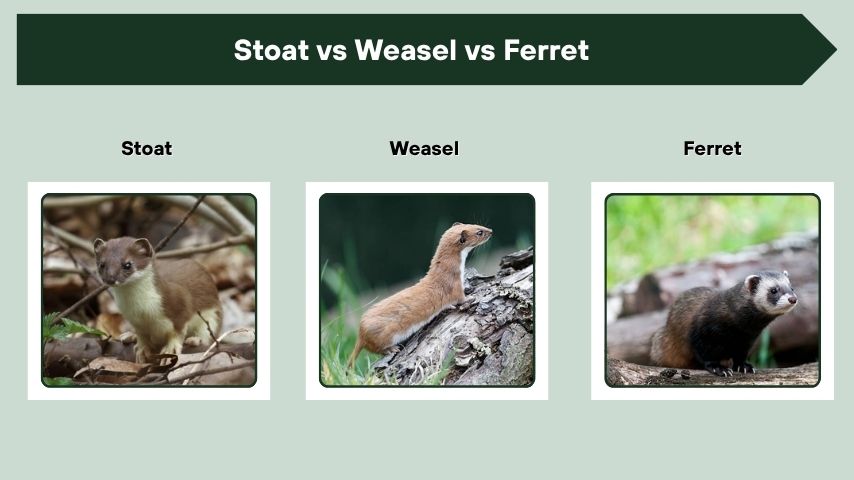
Stoats, weasels, and ferrets are related, but they are not the same. They all have long bodies and hunting instincts, yet they differ in size, behavior, tail shape, and relationship with humans. The easiest way to understand them is to compare their wild or domestic status and physical features.
Stoat vs Weasel
Stoats and weasels look similar, but there are some common differences:
- Stoats are usually larger than many weasels.
- Stoats have a longer tail with a black tip.
- Weasels usually have shorter tails.
- Stoats may turn white in winter in cold regions.
- Both are wild predators with strong hunting instincts.
Stoat vs Ferret
Ferrets are domesticated animals, while stoats are wild animals. This is the most important difference. Ferrets have been bred to live with humans, but stoats have not. A stoat may look cute, but it still behaves like a wild hunter and is not naturally suited to life as a pet.
Stoat vs Mink
Stoats and mink are also mustelids, but mink are usually larger and more connected to water. Mink often live near rivers, lakes, and wetlands, while stoats are more commonly found in grasslands, woods, farms, and hedgerows. Both are skilled hunters, but they do not have the same size or lifestyle.
Where Do Stoats Live?
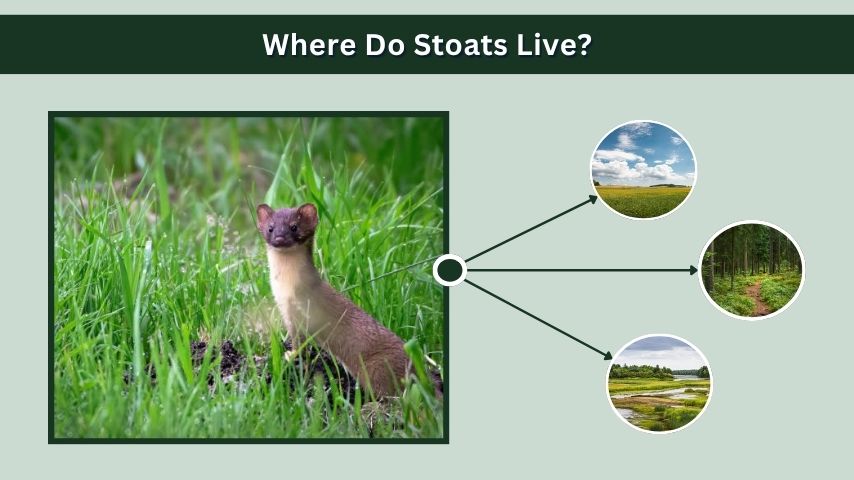
Stoats can live in many environments, from open grasslands to woodland edges and cold northern regions. They prefer places where they can find cover and prey. Their flexible bodies help them move through burrows, thick grass, stone walls, and brush. In some countries, stoats are native; in others, they are invasive.
Natural Stoat Habitat
Stoats are commonly found in places such as:
- Grasslands
- Woodlands
- Farms
- Hedgerows
- Wetlands
- Mountain areas
- Cold northern regions
They usually need cover for hunting and hiding. They do not like completely open areas without shelter because they can be hunted by larger predators.
Where Do Stoats Live in the World?
Stoats are found across parts of Europe, Asia, and North America. They are well adapted to different climates and can survive in both mild and cold areas. In colder regions, their white winter coat gives them an advantage in snowy landscapes.
Stoats in New Zealand
Stoats were introduced to New Zealand and became a serious problem for native wildlife. They prey on native birds, chicks, and eggs. Because many New Zealand birds evolved without land predators, stoats have had a damaging effect on local ecosystems.
What Do Stoats Eat?
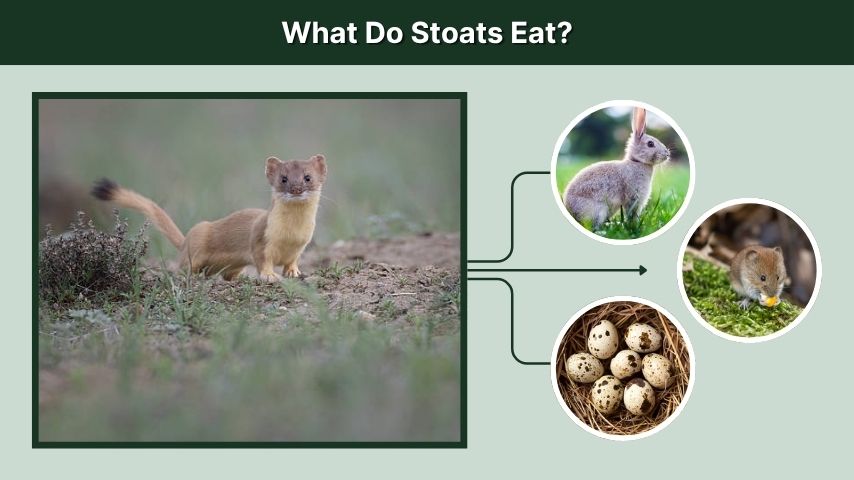
Stoats are carnivores, which means they mainly eat other animals. They are small, but they are brave and skilled hunters. A stoat can chase prey through burrows, grass, rocks, and thick vegetation. Its diet depends on location, season, and what animals are available nearby.
Stoat Diet
A stoat’s diet often includes:
- Rabbits
- Mice
- Voles
- Rats
- Small birds
- Bird eggs
- Insects
- Lizards or amphibians when available
Stoats are especially known for hunting animals that may be larger than themselves. Their slim bodies allow them to follow prey into tight spaces where larger predators cannot go.
How Do Stoats Hunt?
Stoats hunt with speed, patience, and surprise. They often move low to the ground and use cover to get close to prey. Once near the target, they attack quickly with sharp teeth. Their flexible bodies help them twist, jump, and chase animals through narrow paths or underground tunnels.
Do Stoats Eat Rabbits?
Yes, stoats can eat rabbits. In some areas, rabbits are an important part of their diet. Although a rabbit is much larger than a stoat, the stoat is a determined predator. It may target young rabbits or chase adult rabbits into burrows where it has an advantage.
Are Stoats Dangerous?
Stoats are not usually dangerous to humans, but they are still wild animals. They normally avoid people and prefer to escape rather than fight. However, a stoat may bite if it is cornered, trapped, handled, or threatened. Their small size can make them look harmless, but they are strong predators for their body size.
Are Stoats Dangerous to Humans?
Stoats do not usually attack humans. Most people will only see them running across a path, field, or garden. The main risk comes from trying to touch, catch, or keep one. A frightened stoat may defend itself with a painful bite.
Are Stoats Dangerous to Pets?
Stoats can be dangerous to small animals. Pet rabbits, chickens, young birds, and very small pets may be at risk if a stoat gets access to them. Larger pets, such as adult cats and dogs, are usually not normal prey, but they may still chase or injure a stoat.
Why Do Stoats Look Angry?
Stoats may look angry because of their sharp face, quick movements, and defensive posture. When scared, they may open their mouth, show their teeth, or make sudden movements. This does not mean they are naturally aggressive toward people. It usually means they feel threatened.
Stoat Lifespan and Life Cycle
Stoats have active but often short lives in the wild. Their survival depends on food supply, weather, predators, disease, and habitat conditions. Young stoats grow quickly because they must learn to hunt and survive early. Although they are skilled predators, they are also prey for larger animals.
Stoat Life Expectancy
A stoat’s lifespan in the wild is often short. Many do not survive their first year because of predators, hunger, accidents, or harsh weather. Those that survive can live longer, but wild life is risky. In captivity, mustelids may live longer, but stoats are not common domestic animals.
Baby Stoats
Baby stoats are called kits. They are born helpless and depend on their mother for warmth, food, and protection. As they grow, they begin to explore and learn hunting skills. Young stoats must become independent quickly because survival in the wild requires speed and strong instincts.
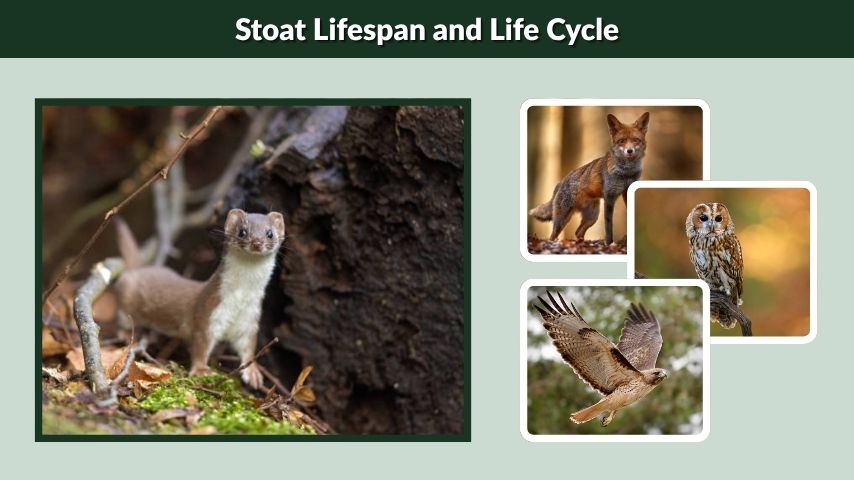
Stoat Predators
Stoats are predators, but they also have enemies. Common stoat predators include:
- Foxes
- Owls
- Hawks
- Eagles
- Larger carnivorous mammals
- Domestic cats and dogs in some areas
Because stoats are small, they rely on speed, hiding places, and quick reactions to avoid danger.
Can You Have a Stoat as a Pet?
Many people search for stoats as pets because they look cute, clever, and similar to ferrets. However, stoats are wild animals, not domesticated pets. They have strong hunting instincts, high energy, sharp teeth, and special care needs. In many places, owning a stoat may also be illegal or require a wildlife license.
Are Stoats Good Pets?
Stoats usually do not make good pets. They are not bred to live with humans like domestic ferrets. A stoat may bite, escape, become stressed, or harm small animals in the home. Even if raised young, it still has wild instincts that make normal pet care very difficult.
Can You Buy a Stoat?
Buying a stoat is not recommended. In many regions, selling or keeping wild stoats may be restricted by wildlife laws. People searching for “stoat for sale” or “where to buy a stoat” should check local rules and avoid illegal wildlife trade. A licensed wildlife rescue or authority is the safest place to ask.
Better Alternative: Ferrets
For people who like stoat-like animals, a domestic ferret is usually a better option where legal. Ferrets are related to stoats, but they have been domesticated over many generations. They still need proper care, space, food, and attention, but they are much more suitable for human homes than stoats.
Fun Facts About Stoats
Stoats are small animals with surprising strength, speed, and adaptability. They are famous for their black-tipped tails, seasonal coat changes, and fearless hunting style. Although they may look cute, they are serious predators. These facts make stoats one of the most interesting small mammals in the wild.
Interesting Stoat Facts
- A white winter stoat is often called an ermine.
- Stoats can hunt prey larger than themselves.
- The black-tipped tail is a key identifying feature.
- Stoats are related to weasels, ferrets, mink, and otters.
- In New Zealand, stoats are considered invasive predators.
- Stoats are fast, flexible, and excellent at chasing prey into burrows.
FAQs
What is a stoat?
A stoat is a small carnivorous mammal from the mustelid family. It has a long slim body, short legs, sharp teeth, and a black-tipped tail. Stoats are related to weasels, ferrets, mink, badgers, and otters.
Is a stoat the same as an ermine?
Yes, in most cases, a stoat and an ermine are the same animal. “Ermine” usually refers to a stoat when it has its white winter coat. In summer, the same animal is usually brown above and pale underneath.
What do stoats eat?
Stoats eat small animals such as rabbits, mice, voles, rats, birds, eggs, insects, and sometimes reptiles or amphibians. They are active hunters and can chase prey through burrows, grass, rocks, and thick vegetation.
Can you have a stoat as a pet?
Stoats usually do not make good pets because they are wild animals, not domesticated like ferrets. They may bite, escape, become stressed, and need specialized care. In many places, owning a stoat may also be illegal without a license.
What is the difference between a stoat and a weasel?
Stoats are usually larger than many weasels and have a longer tail with a black tip. Weasels are generally smaller and often have shorter tails. Both animals are wild predators, but the black-tipped tail is a key stoat feature.