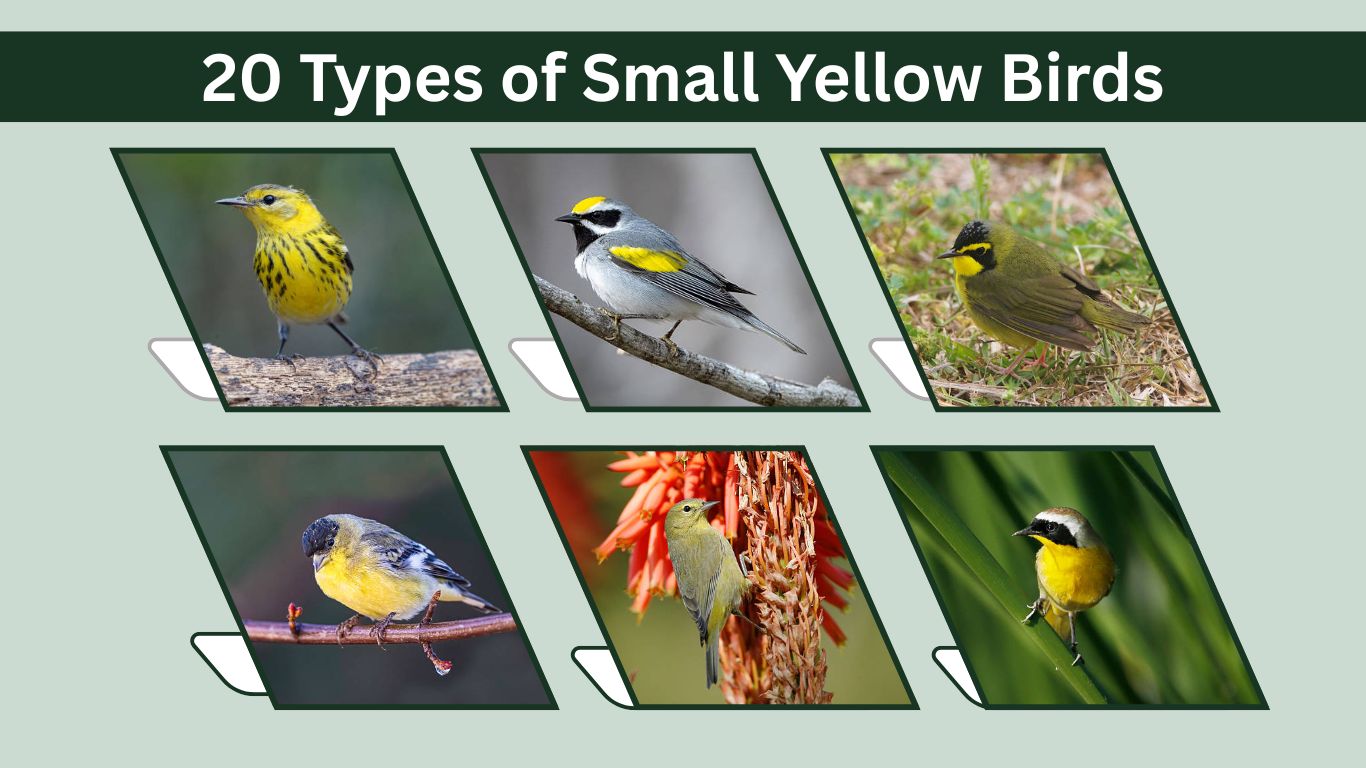
Small yellow birds are some of the brightest and most eye-catching birds in forests, gardens, wetlands, and open fields. Many belong to the finch and warbler families, and they often look similar at first glance. However, their wing patterns, face markings, songs, habitats, and feeding habits can help you tell them apart. From the American Goldfinch to the Golden-winged Warbler, these birds bring color, movement, and beauty to many natural places.
1. American Goldfinch
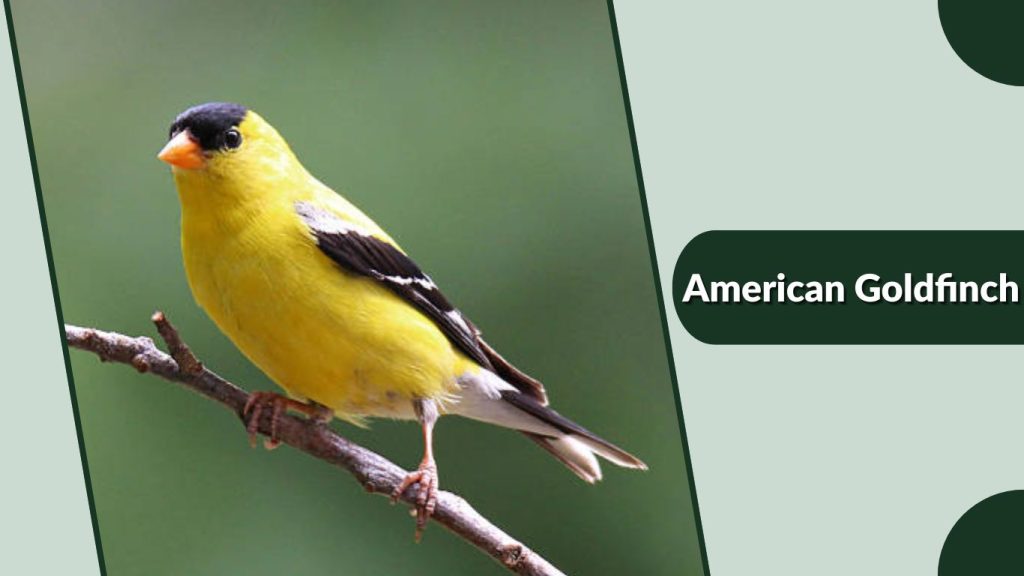
The American Goldfinch is one of the most familiar small yellow birds in North America. Males become bright lemon-yellow during the breeding season, while females and winter males look duller with olive-yellow tones. These cheerful birds are often seen in gardens, fields, and open areas where seed-producing plants grow.
Identification
- Small finch with a short, cone-shaped bill
- Breeding males are bright yellow with a black cap
- Black wings with white wing bars
- Females are dull yellow or olive-brown
- Bouncy, wave-like flight pattern
Habitat and Distribution
American Goldfinches live in open habitats such as meadows, weedy fields, roadsides, orchards, and backyard gardens. They are widespread across the United States and parts of Canada. In winter, some birds move south, but many remain in areas with enough food.
Diet and Feeding
These birds mainly eat seeds, especially from thistle, sunflower, dandelion, and other weeds. They often cling to flower heads while feeding. In backyards, they commonly visit feeders filled with nyjer or sunflower chips.
Behavior and Nesting
American Goldfinches are social birds and often travel in small flocks. They breed later than many birds because they wait for seed-rich plants to mature. Females build small cup-shaped nests in shrubs or trees, usually using plant fibers and soft materials.
2. Lesser Goldfinch
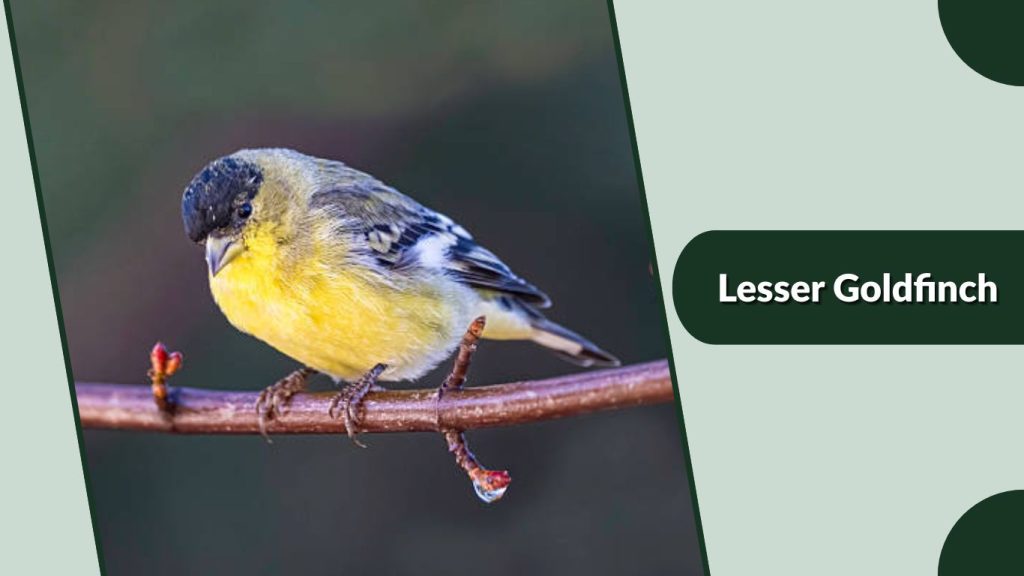
The Lesser Goldfinch is a tiny yellow songbird with a bright body and dark wings. It is smaller than the American Goldfinch and is often found in the western and southwestern United States. These active birds are common around gardens, open woodlands, and brushy areas where seeds are easy to find.
Identification
- Very small finch with a short, pointed bill
- Males have yellow underparts and dark wings
- Back may look glossy black or olive-green
- Females are dull yellowish-green
- White patches are visible on the wings during flight
Habitat and Distribution
Lesser Goldfinches prefer open areas with scattered trees, shrubs, and weeds. They are often seen in parks, farms, desert edges, and backyard gardens. Their range includes the western United States, Mexico, and parts of Central America.
Diet and Feeding
This bird mainly feeds on seeds from weeds, grasses, and wildflowers. It also visits bird feeders, especially those offering nyjer or sunflower seeds. Lesser Goldfinches often feed in small flocks and move quickly from plant to plant.
Behavior and Nesting
Lesser Goldfinches are lively and social birds with sweet, musical calls. They often gather in groups outside the breeding season. During nesting, females build small cup-shaped nests in trees or shrubs, using grasses, plant fibers, and soft materials.
3. Lawrence’s Goldfinch
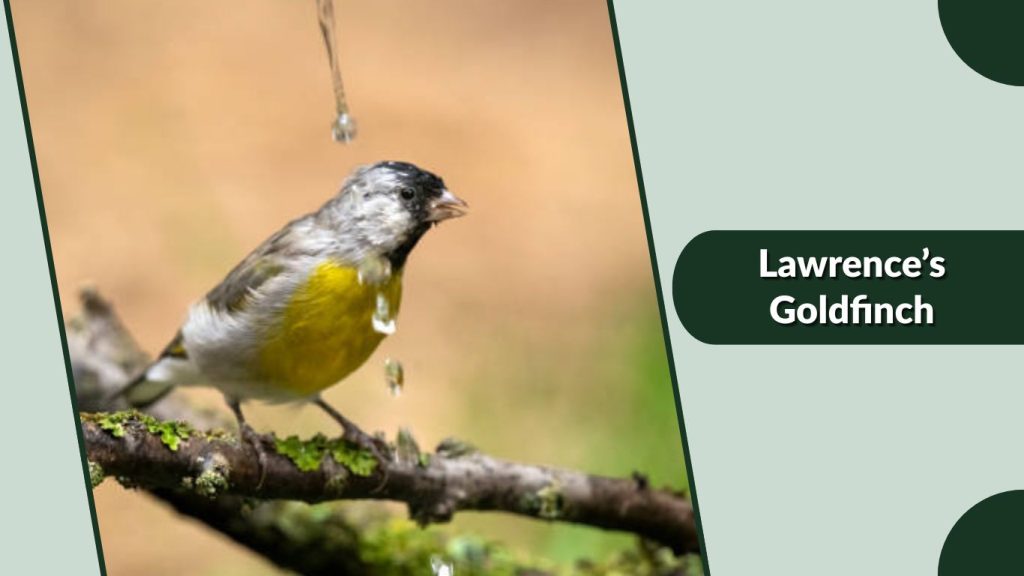
Lawrence’s Goldfinch is a small and beautiful finch with soft gray, yellow, and black markings. Unlike many bright yellow birds, it has a more delicate appearance. This bird is mostly found in dry parts of the western United States, especially in California and nearby regions.
Identification
- Small finch with a gray body
- Yellow patches on the wings and chest
- Male has a black face and throat
- Females are paler with less black coloring
- Forked tail and slim finch shape
Habitat and Distribution
Lawrence’s Goldfinches live in dry open habitats, including oak woodlands, chaparral, grasslands, and weedy fields. They are most common in California but may move around depending on rainfall and food supply.
Diet and Feeding
Their diet is mostly made up of small seeds. They often feed on seeds from wildflowers, weeds, and grasses. When food is available, they may appear in flocks and forage close to the ground or on dry plant stems.
Behavior and Nesting
This species can be unpredictable in movement because it follows seasonal seed crops. Lawrence’s Goldfinches are usually quiet and gentle compared with some other finches. Pairs build nests in trees or shrubs, often in sheltered woodland edges.
4. Yellow Warbler
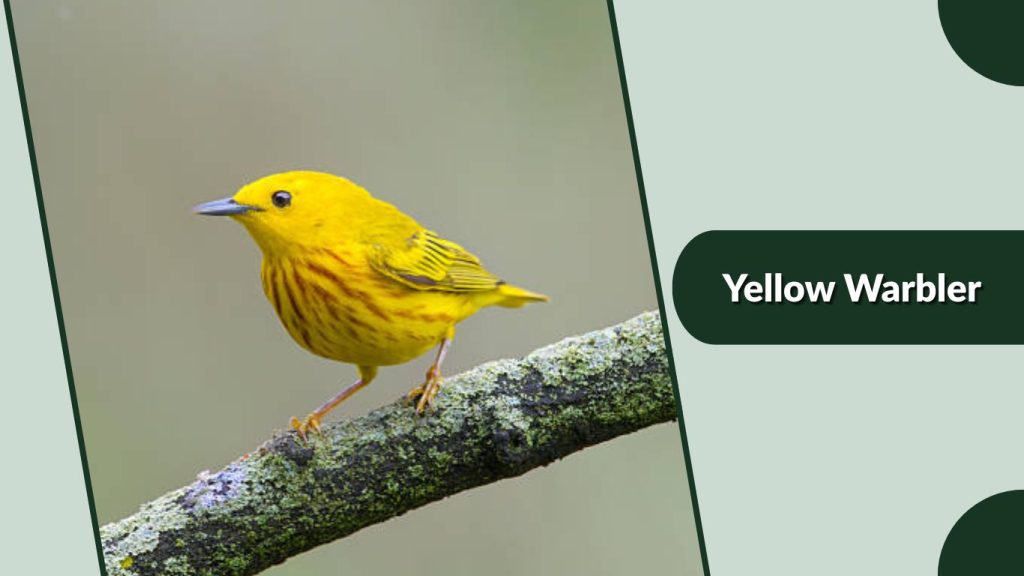
The Yellow Warbler is a bright, small songbird known for its golden-yellow body and sweet song. It is one of the most widespread yellow birds in North America. During spring and summer, it is often seen moving through shrubs and trees near water.
Identification
- Small, slim warbler with a rounded head
- Bright yellow body and face
- Males have reddish streaks on the chest
- Females are plainer yellow without strong streaking
- Thin bill made for catching insects
Habitat and Distribution
Yellow Warblers are commonly found in wetlands, stream edges, willow thickets, gardens, and shrubby areas. They breed across much of North America and migrate south to Central America and northern South America for winter.
Diet and Feeding
These birds mainly eat insects, including caterpillars, beetles, flies, and small spiders. They search for food among leaves and branches, often hopping quickly through shrubs while picking insects from foliage.
Behavior and Nesting
Yellow Warblers are active and vocal during the breeding season. Males sing often to defend their territory. Females build neat cup-shaped nests in shrubs or small trees, usually hidden among leaves near damp or brushy areas.
5. Wilson’s Warbler
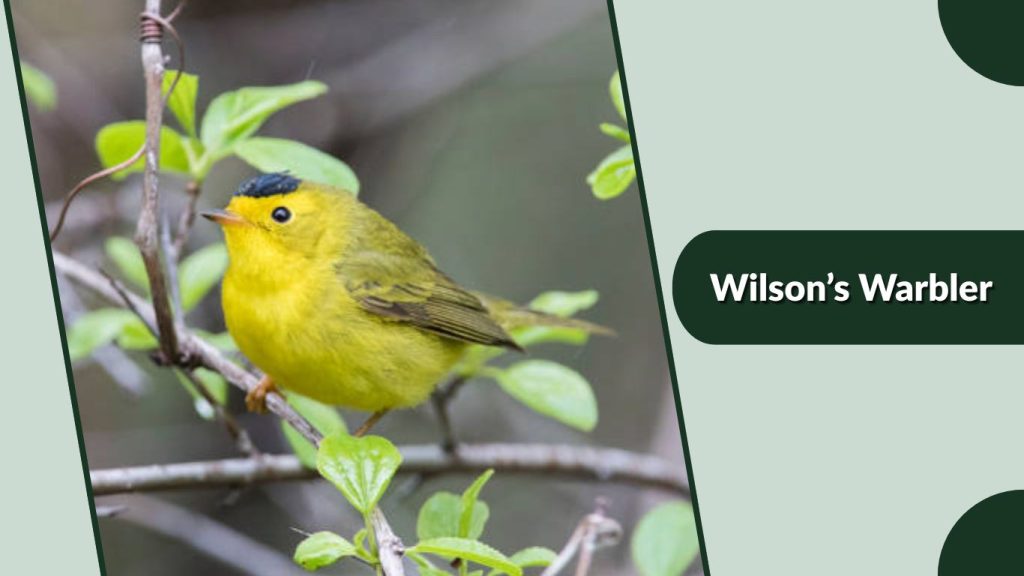
Wilson’s Warbler is a tiny yellow bird with a lively personality and quick movements. Males are easy to notice because of their small black cap. These birds often stay low in shrubs, making fast movements as they search for insects.
Identification
- Small warbler with a bright yellow face and body
- Male has a neat black cap
- Female may have a faint or missing cap
- Thin, pointed bill
- Often flicks its wings while moving
Habitat and Distribution
Wilson’s Warblers breed in wet thickets, willow areas, forest edges, and shrubby mountain habitats. They migrate through much of North America and spend winter in Mexico and Central America.
Diet and Feeding
This bird eats mostly insects and other tiny invertebrates. It searches leaves, stems, and low branches for flies, beetles, caterpillars, and spiders. It often feeds close to the ground or in dense shrubs.
Behavior and Nesting
Wilson’s Warblers are energetic birds that rarely stay still for long. During breeding season, males sing from shrubs or low branches. Nests are usually built low in vegetation or on the ground, hidden among grasses and plants.
6. Prothonotary Warbler
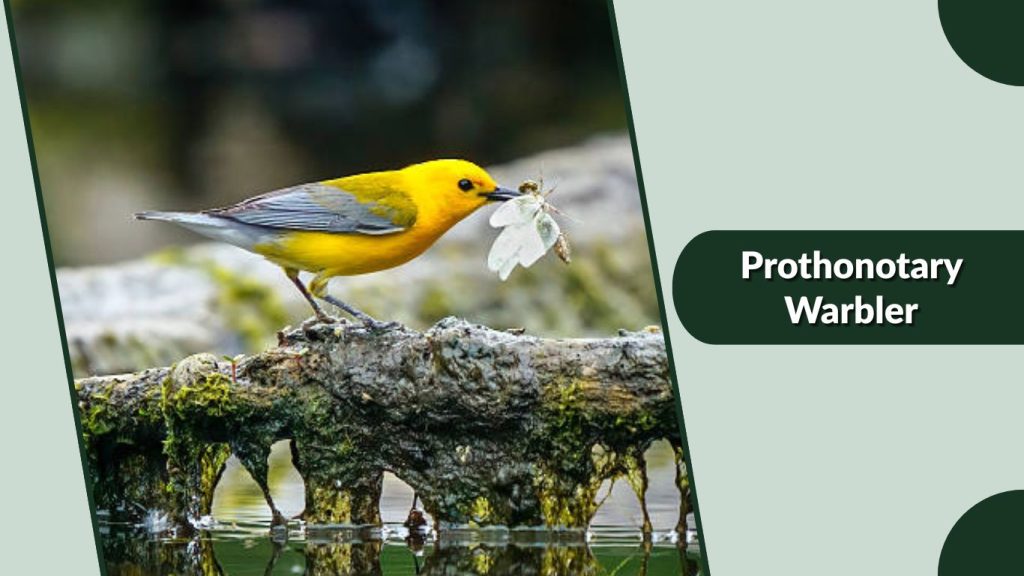
The Prothonotary Warbler is a small, bright yellow bird with a glowing golden head and body. It is often found near water, especially in wooded swamps and wet forests. Unlike many warblers, this species nests in tree cavities, making it unique among small yellow birds.
Identification
- Bright golden-yellow head and underparts
- Blue-gray wings and tail
- Small, thin bill for catching insects
- Dark eyes stand out on the yellow face
- Short tail and rounded body shape
Habitat and Distribution
Prothonotary Warblers prefer wet habitats such as swamps, wooded wetlands, river edges, and flooded forests. They breed mostly in the eastern United States and migrate to Central America, the Caribbean, and northern South America during winter.
Diet and Feeding
This bird mainly eats insects, spiders, caterpillars, flies, and small aquatic invertebrates. It often searches for food near water, hopping along branches, roots, and low vegetation. Sometimes it may also eat small snails or seeds.
Behavior and Nesting
Prothonotary Warblers are active but often stay close to wet, shaded places. They nest in natural tree holes or old woodpecker cavities. Females line the nest with moss, leaves, and soft plant fibers, usually near standing water.
7. Blue-winged Warbler
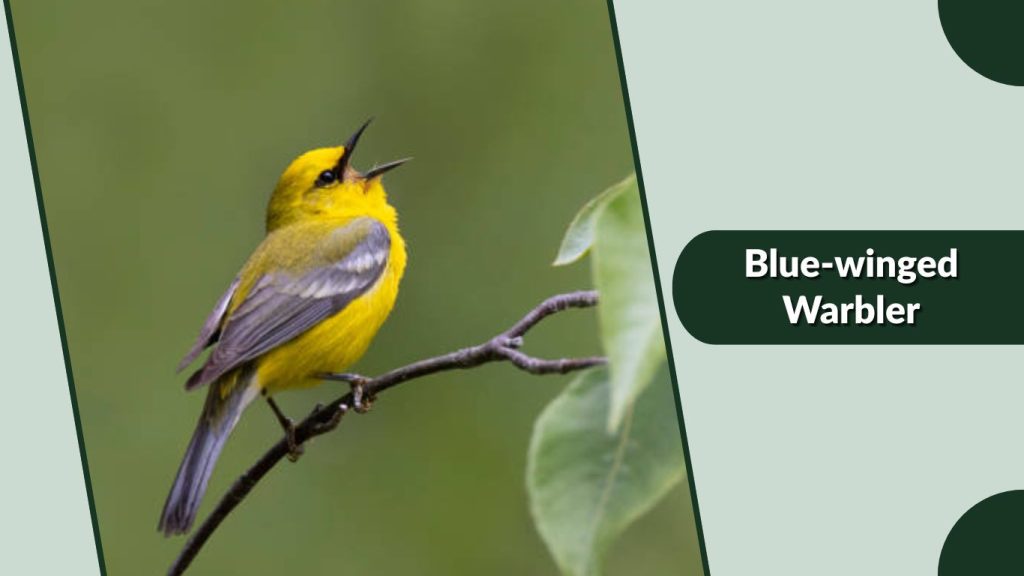
The Blue-winged Warbler is a small yellow bird with a bright body and bluish-gray wings. It is often seen in brushy fields, young forests, and overgrown areas. Its sharp song and bold facial markings make it easier to recognize during the breeding season.
Identification
- Bright yellow head and underparts
- Bluish-gray wings with pale wing bars
- Black line through the eye
- Small, pointed insect-eating bill
- Slim body and active movements
Habitat and Distribution
Blue-winged Warblers live in shrubby fields, forest edges, abandoned farms, and young woodland growth. They breed mainly in the eastern and central United States. During winter, they migrate to Central America and nearby tropical regions.
Diet and Feeding
These birds mainly feed on insects and spiders. They search leaves, twigs, and low shrubs for caterpillars, beetles, moths, and other small prey. They often move carefully through dense vegetation while feeding.
Behavior and Nesting
Blue-winged Warblers usually stay low in shrubs and brush. Males sing from exposed branches to defend their territory. Females build cup-shaped nests close to the ground, often hidden among grasses, weeds, or low bushes.
8. Pine Warbler
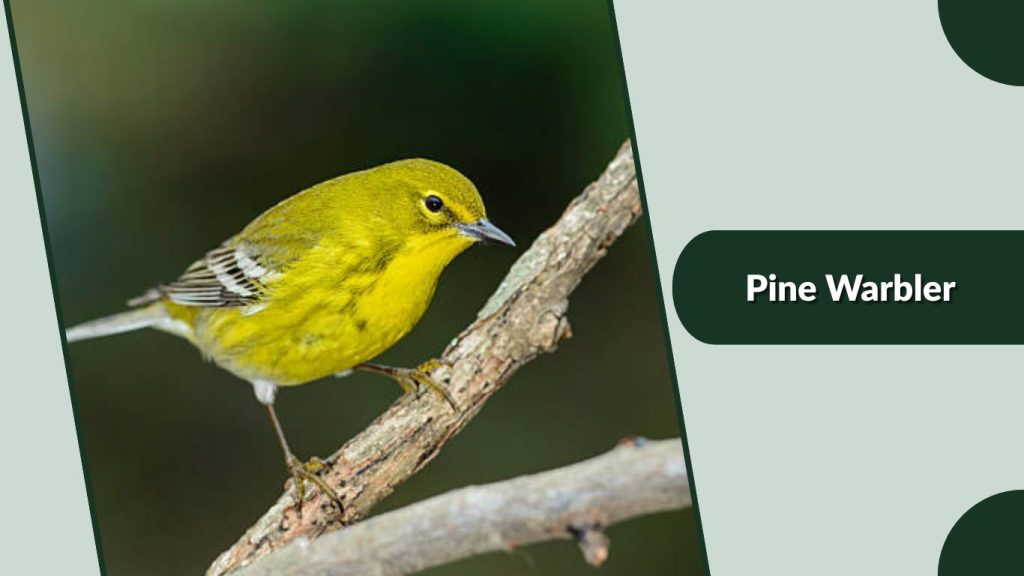
The Pine Warbler is a small yellow songbird that is closely linked with pine trees. It has a softer yellow color than some other warblers, often mixed with olive tones. This bird is easier to find by listening for its gentle trill in pine forests.
Identification
- Small warbler with yellow throat and chest
- Olive back and pale belly
- Two white wing bars
- Thin bill for insects and seeds
- Males are brighter than females
Habitat and Distribution
Pine Warblers are usually found in pine forests, mixed pine-oak woods, and wooded neighborhoods with mature pines. They live across much of the eastern United States and parts of southeastern Canada. Some stay year-round in warmer southern areas.
Diet and Feeding
Unlike many warblers, Pine Warblers eat both insects and seeds. They feed on caterpillars, beetles, ants, spiders, pine seeds, and berries. In winter, they may visit feeders for suet, sunflower seeds, or mealworms.
Behavior and Nesting
Pine Warblers often move high in pine trees, searching branches and bark for food. Males sing from treetops during spring. Their nests are usually built high in pine trees, hidden among needles and branches.
9. Prairie Warbler
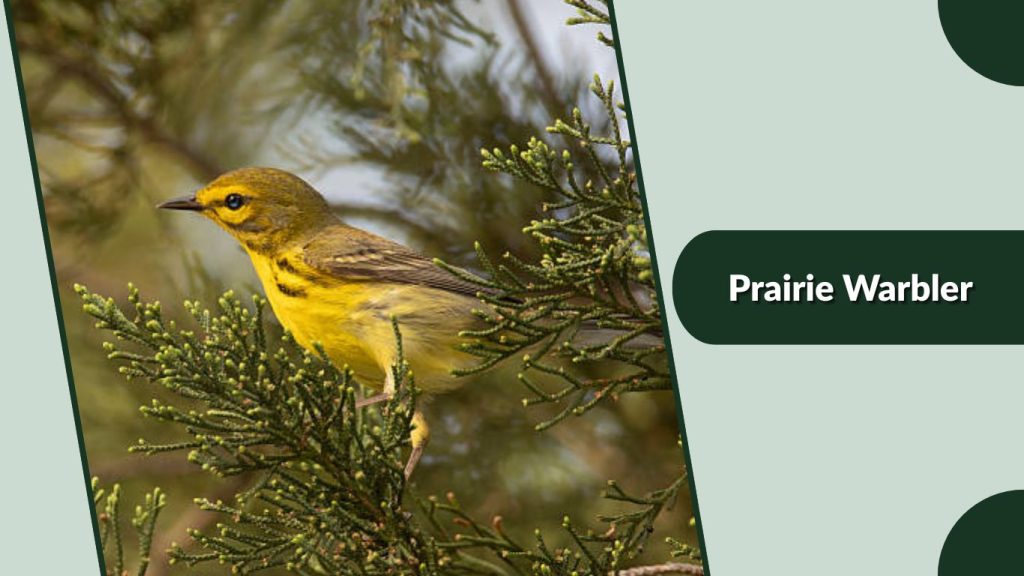
The Prairie Warbler is a small yellow bird with bold streaks and a bright face. Despite its name, it is not mainly a prairie bird. It usually lives in shrubby fields, young pine areas, and dry open habitats with scattered bushes.
Identification
- Bright yellow underparts
- Olive back with dark streaks
- Black streaks along the sides
- Yellow face with dark eye markings
- Constant tail-bobbing behavior
Habitat and Distribution
Prairie Warblers prefer open, brushy habitats such as scrublands, young forests, old fields, and pine barrens. They breed in the eastern and southeastern United States. In winter, they move to Florida, the Caribbean, and parts of Central America.
Diet and Feeding
This species mostly eats insects and spiders. It forages among low branches, shrubs, and small trees, picking caterpillars, beetles, flies, and other tiny prey from leaves. It may also take small insects while moving through brush.
Behavior and Nesting
Prairie Warblers are active birds that often flick or bob their tails. Males sing from low trees and shrubs to mark their territory. Females build cup-shaped nests in shrubs, usually well hidden among leaves and twigs.
10. Common Yellowthroat
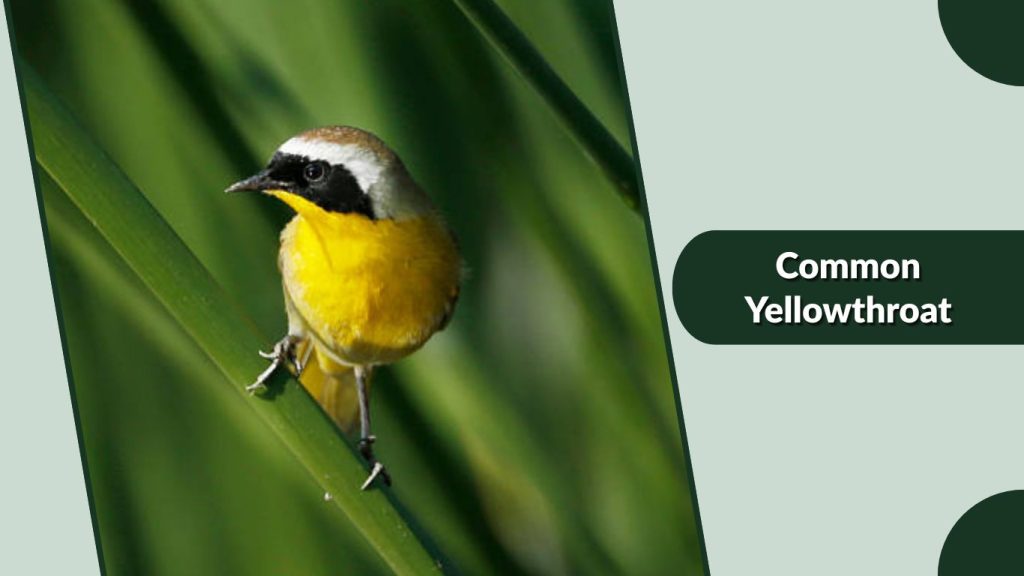
The Common Yellowthroat is a small yellow warbler often found in marshes and thick vegetation. Males are easy to identify because of their black face mask. These secretive birds are more often heard than seen as they move through reeds and bushes.
Identification
- Small warbler with yellow throat and chest
- Male has a black mask with pale border
- Olive-brown back and wings
- Female is plainer without the black mask
- Short wings and rounded tail
Habitat and Distribution
Common Yellowthroats live in marshes, wet fields, grasslands, stream edges, and brushy areas. They are widespread across North America during the breeding season. Many migrate south for winter, while some remain in warmer regions year-round.
Diet and Feeding
They mainly eat insects, spiders, larvae, and other small invertebrates. Common Yellowthroats search low vegetation for food, often staying hidden in grasses, reeds, and shrubs while picking prey from leaves and stems.
Behavior and Nesting
Common Yellowthroats are shy but vocal birds. Males sing loudly from hidden perches in dense cover. Females build low nests in grasses or shrubs, often close to the ground and well concealed from predators.
11. Orange-crowned Warbler
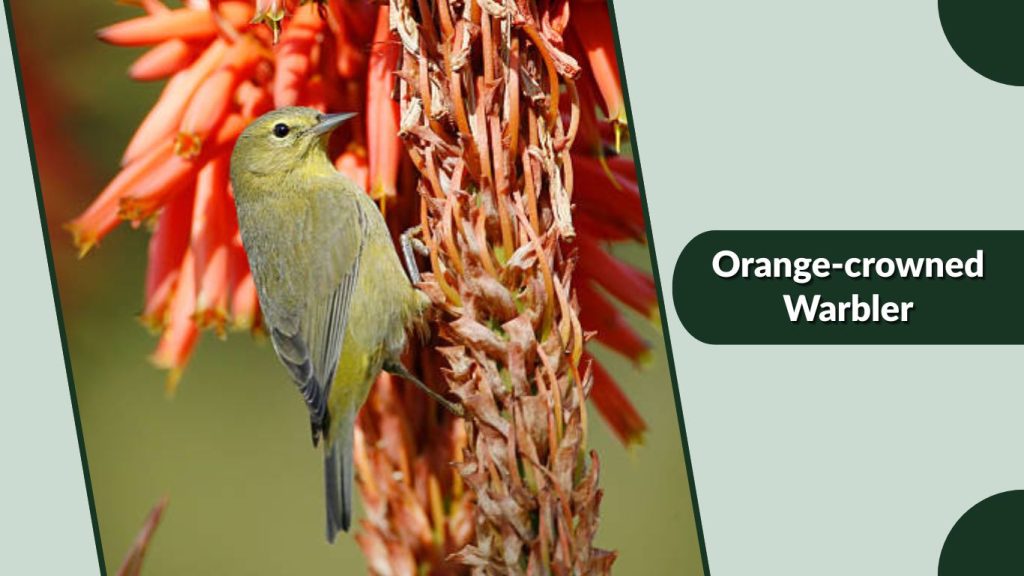
The Orange-crowned Warbler is a small yellowish bird with a plain, soft-colored appearance. Its orange crown is usually hidden, so it can be harder to identify than brighter warblers. This active bird often moves quietly through shrubs, low trees, and brushy areas while searching for insects.
Identification
- Small warbler with olive-yellow body
- Thin, pointed bill
- Faint eye line and plain face
- Hidden orange crown patch
- Duller than many bright yellow warblers
Habitat and Distribution
Orange-crowned Warblers live in brushy woodlands, forest edges, shrubby fields, and low vegetation. They breed mostly in Canada, Alaska, and parts of the western United States. During migration and winter, they can be found across much of the southern United States, Mexico, and Central America.
Diet and Feeding
This bird mainly eats insects, spiders, caterpillars, and small larvae. It also drinks nectar and may visit flowering plants or backyard feeders. Orange-crowned Warblers forage low in shrubs, carefully picking food from leaves, buds, and branches.
Behavior and Nesting
Orange-crowned Warblers are active but often quiet, making them easy to overlook. They usually stay low in vegetation rather than high in trees. Females build well-hidden nests on or near the ground, often tucked among grasses, shrubs, or leafy cover.
12. Yellow-rumped Warbler
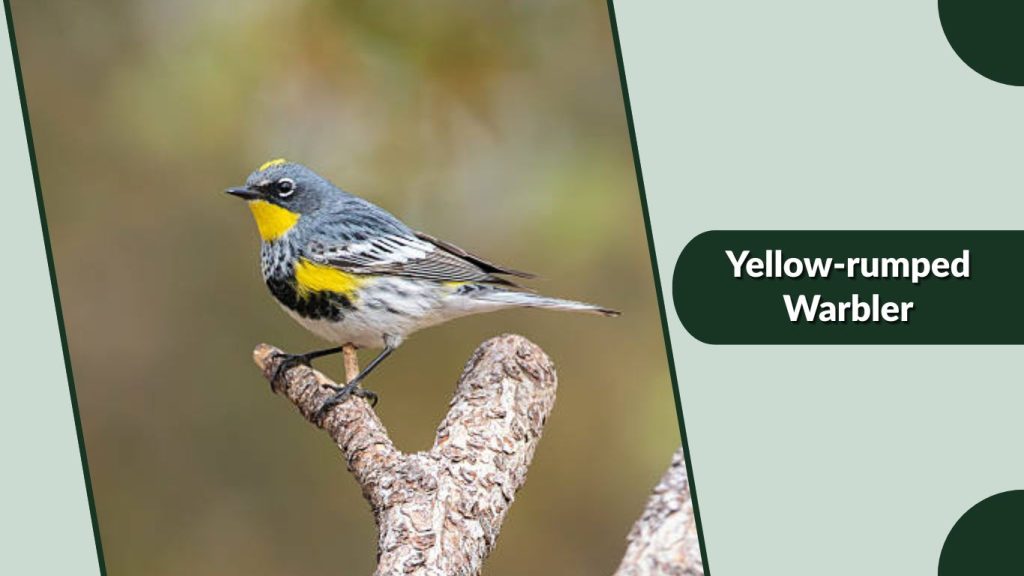
The Yellow-rumped Warbler is a small, active bird with yellow patches on its rump, sides, and crown. It is one of the most common warblers in North America and can be seen in many habitats. Its ability to eat berries helps it survive colder seasons.
Identification
- Small warbler with gray, brown, and yellow markings
- Bright yellow rump patch
- Yellow patches on sides and crown
- White throat in some forms
- Slim bill and active movements
Habitat and Distribution
Yellow-rumped Warblers live in forests, woodland edges, parks, gardens, and coastal shrubs. They breed mostly in northern forests and mountain areas. During winter, they spread widely across the southern United States, Mexico, Central America, and the Caribbean.
Diet and Feeding
They eat insects during warmer months, including beetles, caterpillars, ants, flies, and spiders. In winter, they also eat berries, especially waxy fruits like bayberry and myrtle. This flexible diet makes them more winter-hardy than many warblers.
Behavior and Nesting
Yellow-rumped Warblers are energetic birds that often move in flocks during migration and winter. They may catch insects in the air or pick them from leaves. Females build cup-shaped nests in trees, usually hidden on branches among needles or leaves.
13. Nashville Warbler
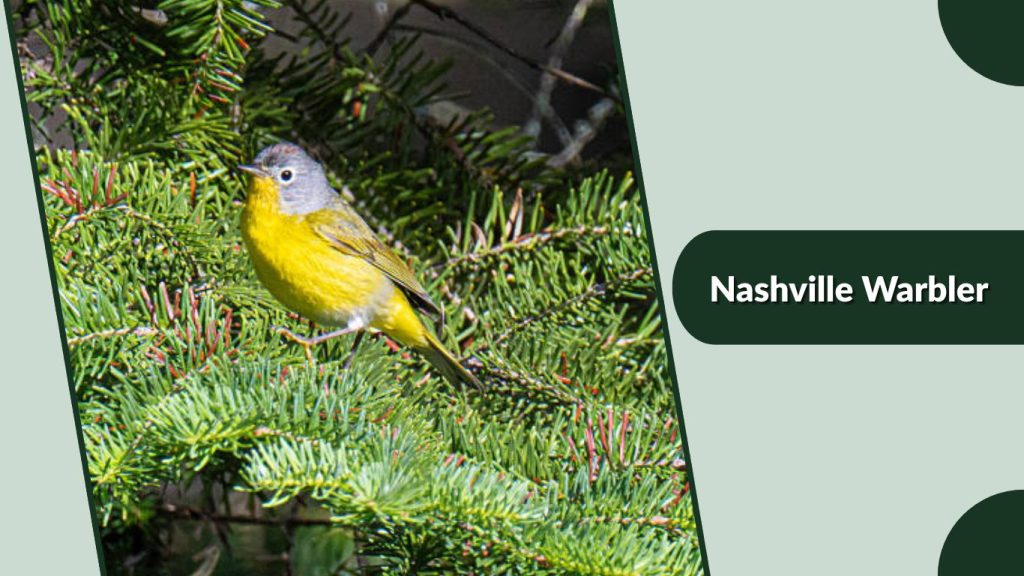
The Nashville Warbler is a small yellow bird with a gray head, white eye ring, and bright yellow belly. Despite its name, it is not especially tied to Nashville. This bird is usually seen during migration or in young forests and brushy habitats.
Identification
- Small warbler with yellow underparts
- Gray head and olive back
- Bold white eye ring
- Thin, pointed bill
- Males may show a hidden reddish crown patch
Habitat and Distribution
Nashville Warblers breed in young forests, open woodlands, brushy clearings, and forest edges, mainly in northern and northeastern North America and parts of the West. They migrate through many regions and spend winter in Mexico and Central America.
Diet and Feeding
This bird mostly eats insects and small invertebrates. It searches leaves and twigs for caterpillars, beetles, flies, and spiders. Nashville Warblers often forage in low to middle vegetation, moving quickly but carefully through branches.
Behavior and Nesting
Nashville Warblers are active, restless birds during feeding. Males sing from shrubs or small trees in breeding areas. Females usually build nests on the ground, hidden under grasses, moss, leaves, or low plants for protection.
14. Hooded Warbler
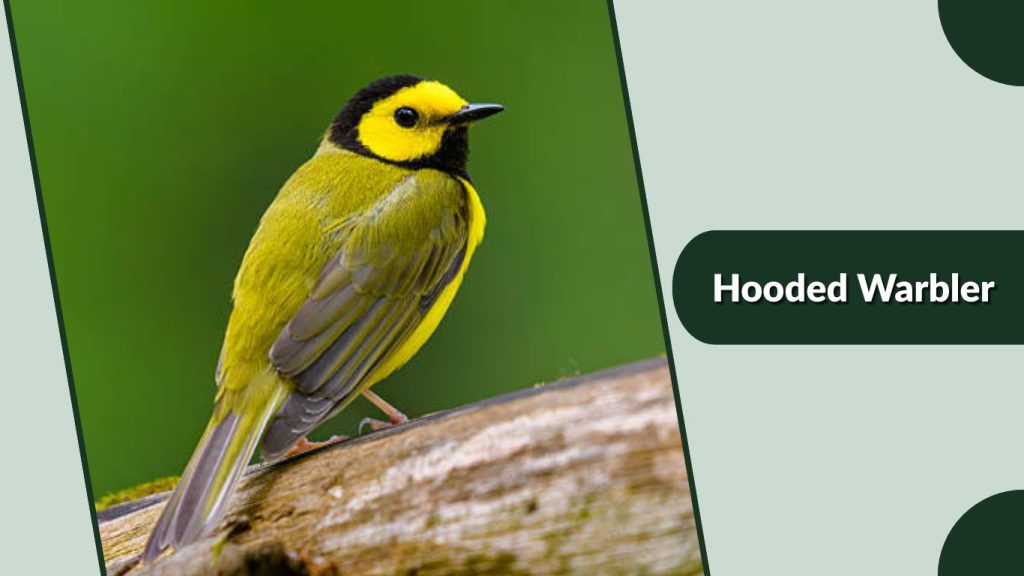
The Hooded Warbler is a striking small yellow bird with a bright face and bold black hood in males. It often stays in shady forests with thick undergrowth. Although colorful, it can be difficult to see because it moves through dense vegetation.
Identification
- Bright yellow face and underparts
- Male has a black hood and throat
- Olive-green back and wings
- Female has a weaker or incomplete hood
- White tail spots visible when tail is spread
Habitat and Distribution
Hooded Warblers live in mature forests with dense shrubs, especially in the eastern United States. They prefer moist woodland areas, ravines, and forest edges with thick undergrowth. In winter, they migrate to Mexico, Central America, and the Caribbean.
Diet and Feeding
They feed mainly on insects and spiders. Hooded Warblers search low branches, leaves, and forest-floor vegetation for caterpillars, beetles, flies, and other small prey. They sometimes fan their tails while foraging, flashing white tail spots.
Behavior and Nesting
Hooded Warblers are often secretive, staying low in shaded forest cover. Males sing to defend territories during spring and summer. Females build cup-shaped nests in shrubs or small plants, usually close to the ground in thick vegetation.
15. Yellow-breasted Chat
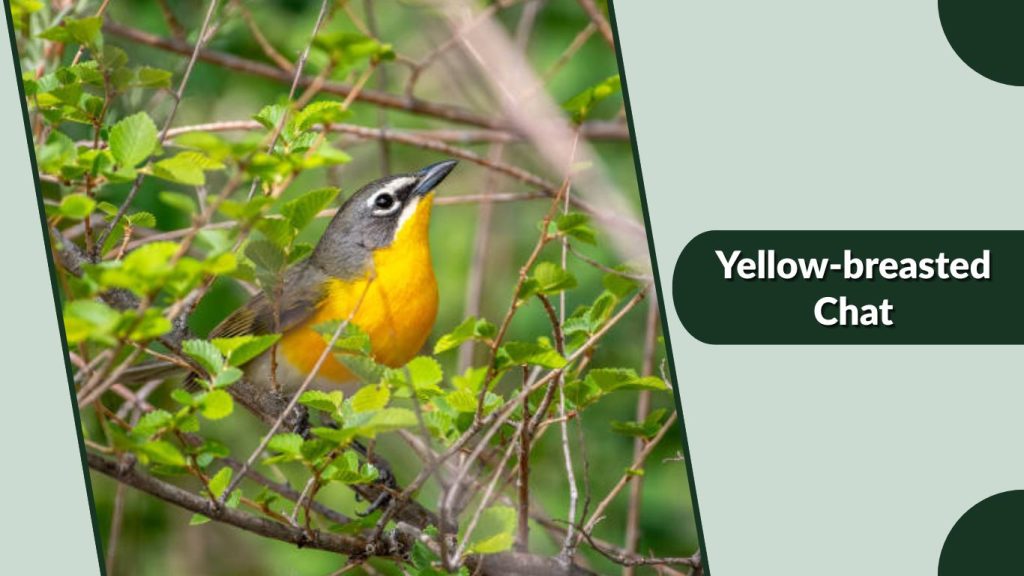
The Yellow-breasted Chat is a large, unusual warbler-like bird with a bright yellow chest and bold white eye markings. Though bigger than most warblers, it is still often grouped with small yellow birds. It is known for its loud, varied calls and secretive habits.
Identification
- Bright yellow throat and breast
- Olive-green back and wings
- Bold white spectacles around the eyes
- Long tail and thick bill
- Larger and heavier than most warblers
Habitat and Distribution
Yellow-breasted Chats live in dense thickets, brushy fields, woodland edges, and overgrown clearings. They breed across much of the United States and parts of southern Canada. In winter, they migrate to Mexico and Central America.
Diet and Feeding
This bird eats insects, spiders, caterpillars, beetles, grasshoppers, and berries. It often feeds inside dense shrubs, making it difficult to watch. During late summer and fall, fruit becomes an important part of its diet.
Behavior and Nesting
Yellow-breasted Chats are shy but noisy birds. Males produce whistles, clucks, and unusual calls from hidden perches. Females build nests low in thick shrubs, using grasses, leaves, bark strips, and other plant materials.
16. Canada Warbler
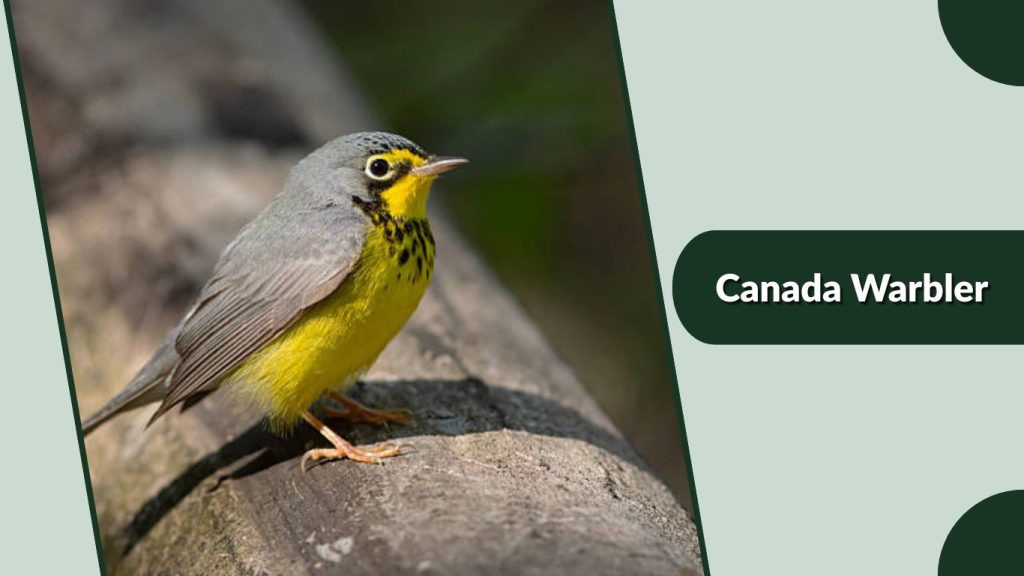
The Canada Warbler is a small, bright yellow songbird with a gray back and bold necklace-like markings across the chest. It is an active forest bird that often moves quickly through low branches and shrubs. This species is mostly seen during migration or in cool, moist breeding forests.
Identification
- Bright yellow throat and underparts
- Gray upperparts and face
- Black necklace-like streaks on the chest
- White eye ring or “spectacles”
- Small, thin insect-catching bill
Habitat and Distribution
Canada Warblers breed in moist forests, wooded swamps, stream edges, and dense undergrowth across parts of Canada and the northeastern United States. During migration, they pass through many eastern regions. In winter, they travel to northern South America.
Diet and Feeding
These birds mainly eat insects and other small invertebrates. They search leaves, twigs, and low vegetation for caterpillars, beetles, flies, moths, and spiders. Their quick movements help them catch prey hidden among dense plants.
Behavior and Nesting
Canada Warblers are energetic but often difficult to watch because they stay in thick cover. Males sing from low branches during the breeding season. Females build nests close to the ground, usually hidden among roots, moss, leaves, or dense plants.
17. Kentucky Warbler
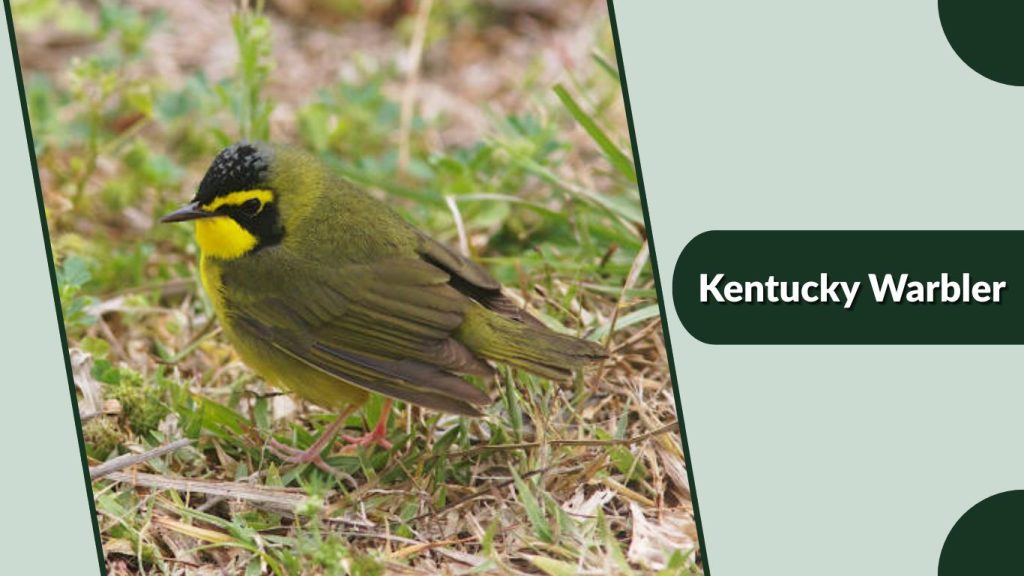
The Kentucky Warbler is a small yellow bird with olive upperparts and a bold black facial pattern. It prefers shady forests with thick undergrowth and often stays close to the ground. Although colorful, it can be hard to see because of its secretive habits.
Identification
- Bright yellow underparts
- Olive-green back and wings
- Black markings on face and crown
- Yellow eyebrow line
- Short tail and sturdy body
Habitat and Distribution
Kentucky Warblers breed in mature deciduous forests with dense shrubs, especially in the eastern and southeastern United States. They prefer moist woodland floors, ravines, and shaded thickets. During winter, they migrate to Mexico, Central America, and nearby tropical regions.
Diet and Feeding
This bird mainly eats insects, spiders, beetles, caterpillars, ants, and other small invertebrates. It usually feeds near the ground, walking or hopping through leaf litter while searching for prey under leaves and low plants.
Behavior and Nesting
Kentucky Warblers are more often heard than seen. Males sing loudly from hidden perches in dense forest cover. Females build nests on or near the ground, usually well concealed among leaves, grasses, roots, or low vegetation.
18. Magnolia Warbler
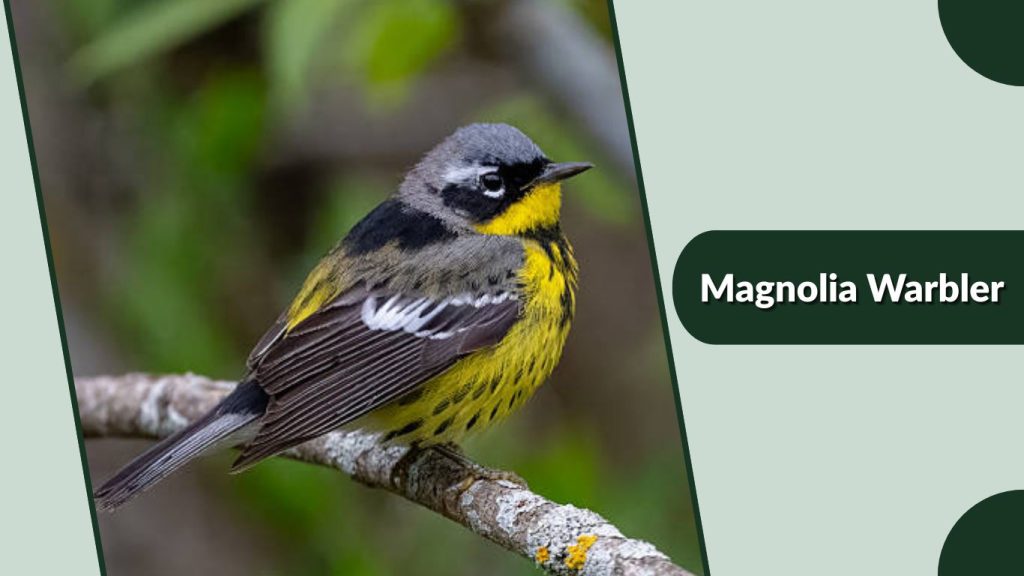
The Magnolia Warbler is a small, colorful songbird with bright yellow underparts and bold black streaks. Despite its name, it is not limited to magnolia trees. This warbler is especially noticeable during migration when it passes through woodlands, parks, and gardens.
Identification
- Bright yellow belly and throat
- Black streaks along the sides
- Gray head and black mask in males
- White wing patches
- Black-and-white tail pattern
Habitat and Distribution
Magnolia Warblers breed mainly in northern coniferous and mixed forests across Canada and parts of the northeastern United States. During migration, they appear in many wooded habitats. In winter, they move to Central America and the Caribbean.
Diet and Feeding
Magnolia Warblers eat mostly insects and spiders. They pick caterpillars, beetles, flies, and small larvae from leaves and branches. They often forage in shrubs and low trees, moving quickly while flicking their wings and tail.
Behavior and Nesting
These birds are active and restless while feeding. During breeding season, males sing from trees in dense forests. Females build small cup-shaped nests in low conifers, often hidden among thick needles and branches.
19. Cape May Warbler
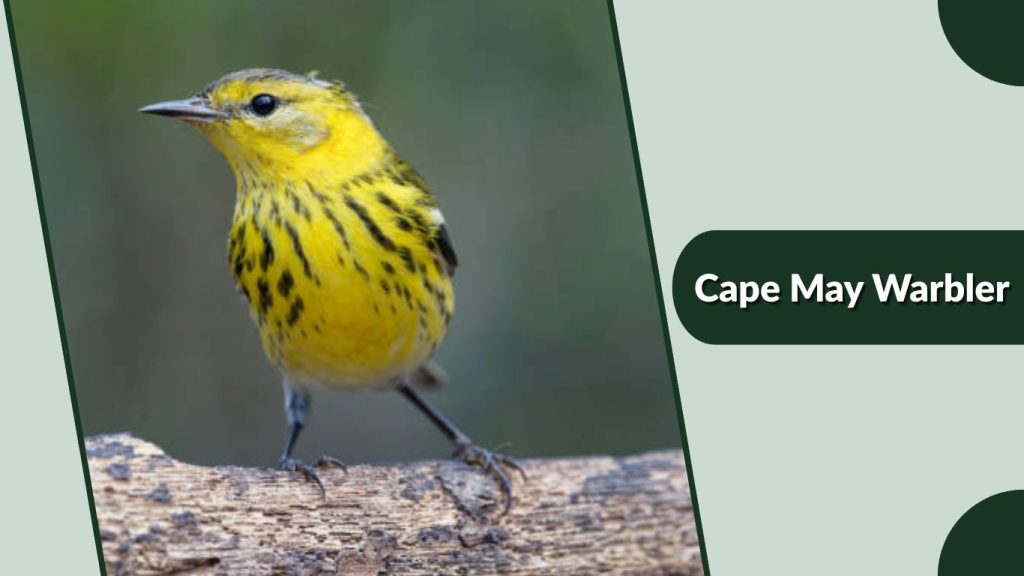
The Cape May Warbler is a small yellow bird with fine streaking and a sharp, slightly curved bill. Males are especially colorful, showing yellow underparts, chestnut cheek patches, and dark stripes. This species is often linked with spruce forests during the breeding season.
Identification
- Yellow underparts with dark streaks
- Sharp, thin, slightly curved bill
- Male has chestnut cheek patch
- Olive back and pale wing patch
- Female is duller and less strongly marked
Habitat and Distribution
Cape May Warblers breed mainly in boreal spruce and fir forests across Canada and parts of the northern United States. During migration, they may appear in parks, gardens, and woodland edges. In winter, they travel to the Caribbean.
Diet and Feeding
During breeding season, they eat many insects, especially spruce budworms when available. They also feed on caterpillars, flies, beetles, and spiders. In winter, they drink nectar and eat small fruits, using their specialized bill to reach food.
Behavior and Nesting
Cape May Warblers often forage high in trees, moving along branches and needles. Their numbers may rise when spruce budworms are abundant. Females build nests in conifer trees, usually placing them on branches hidden by dense foliage.
20. Golden-winged Warbler
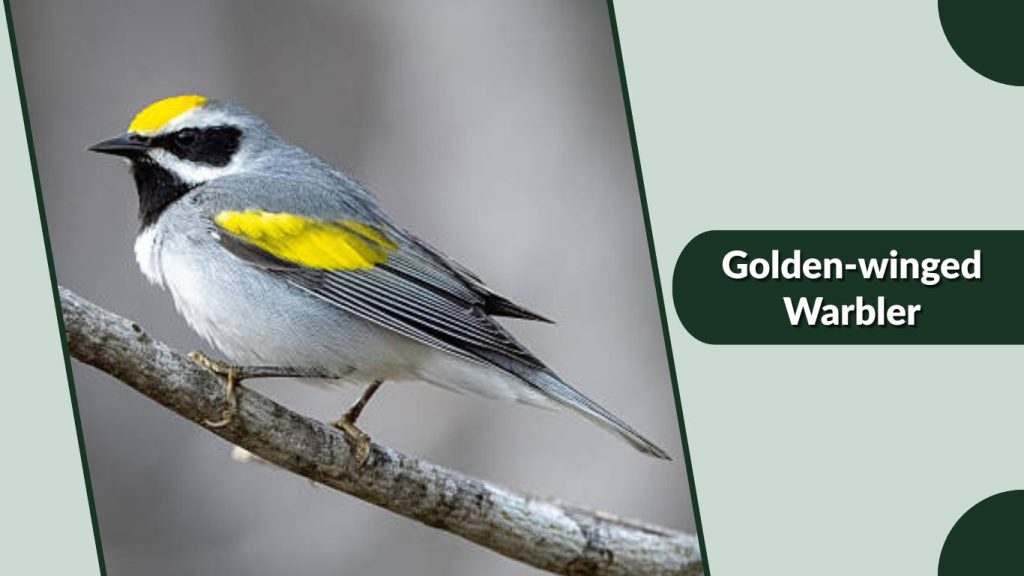
The Golden-winged Warbler is a small yellow-marked bird with a gray body, black throat, and bright golden wing patches. It is a rare and declining species in many areas. This bird usually lives in young forests, shrubby fields, and brushy edges.
Identification
- Bright yellow crown and wing patches
- Gray body and white underparts
- Black throat and face mask in males
- Thin, pointed bill
- Females are duller with softer markings
Habitat and Distribution
Golden-winged Warblers breed in early-successional habitats such as shrubby fields, young forests, powerline cuts, and wet brushy areas. They are found in parts of the Great Lakes region and Appalachian areas. In winter, they migrate to Central and northern South America.
Diet and Feeding
This bird mainly eats insects, spiders, caterpillars, and small larvae. It forages among leaves, shrubs, and tree branches, often probing curled leaves or clusters of foliage to find hidden prey.
Behavior and Nesting
Golden-winged Warblers are active but often stay in dense vegetation. Males sing from shrubs or small trees to defend territories. Females build nests on or near the ground, usually hidden among grasses, weeds, or low shrubs.