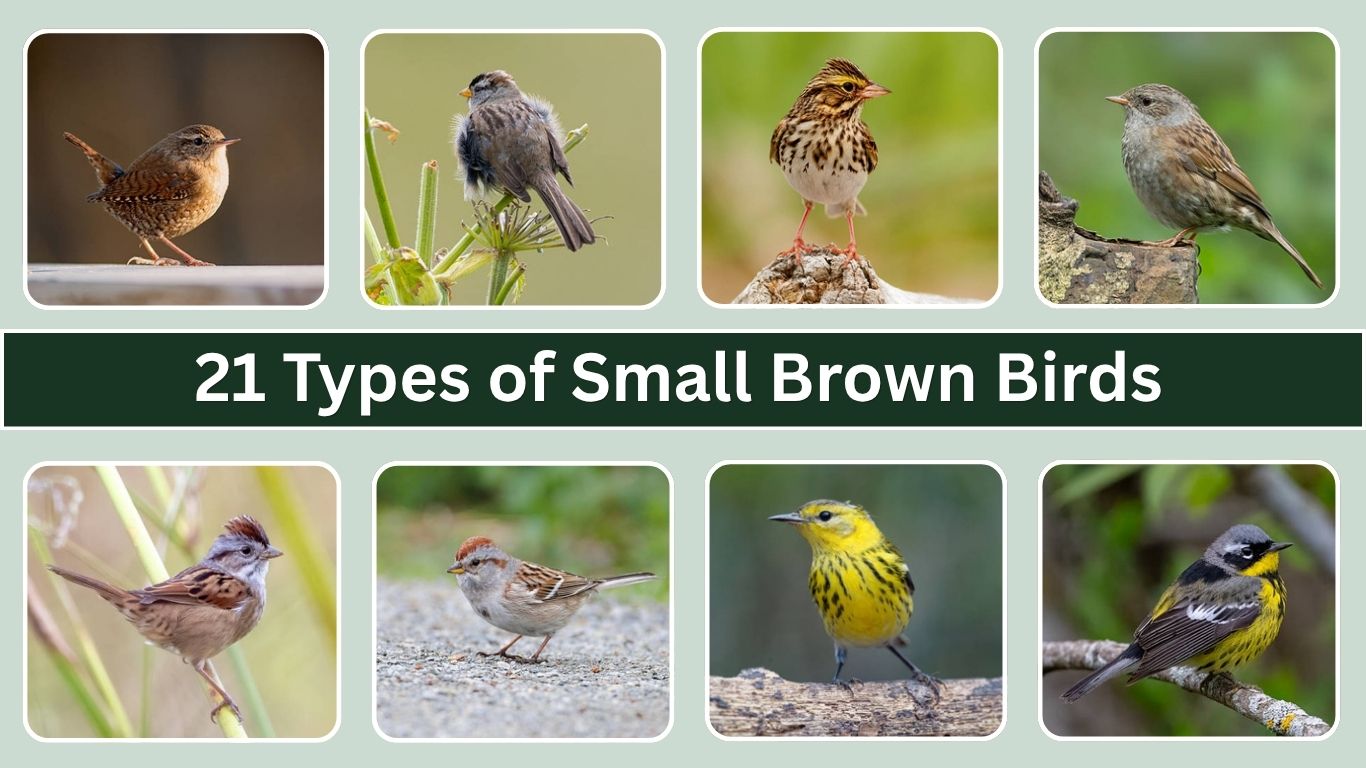
Small brown birds are common in gardens, forests, grasslands, wetlands, and backyard areas. At first, many of them look similar, but their size, streaks, head patterns, bill shape, song, and habitat can help with identification. Some are sparrows that feed on seeds, while others are wrens, creepers, or towhees that search for insects in shrubs, bark, or leaf litter.
1. House Sparrow
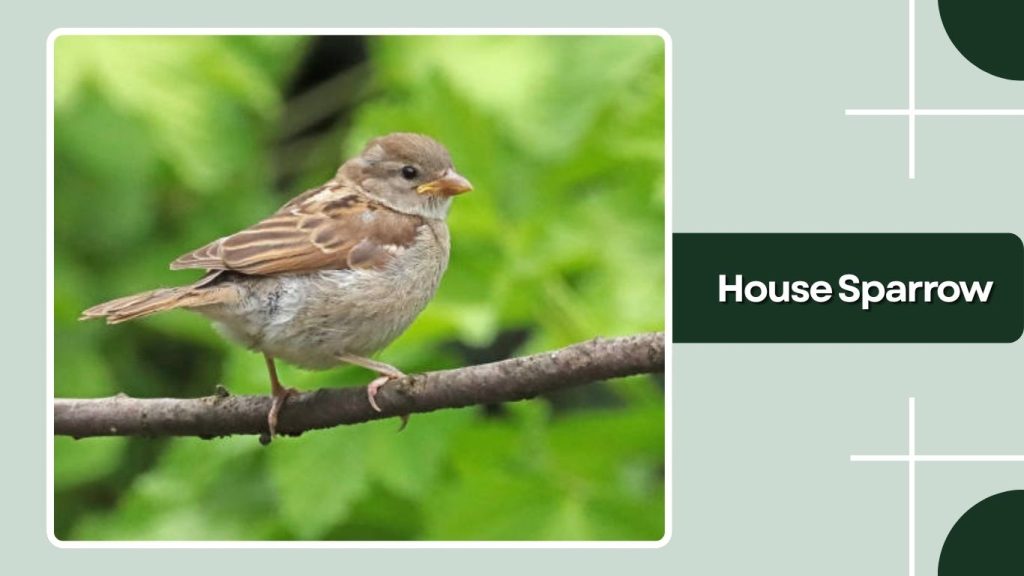
The House Sparrow is one of the most common small brown birds in towns, villages, farms, and cities. It is closely associated with people and often nests around buildings. Although males have bolder markings, females are plainer brown and can be confused with other small sparrows.
Identification
- Small, stocky brown bird
- Male has a gray crown and black throat patch
- Female is pale brown with a plain face
- Short, thick bill for eating seeds
- Often seen hopping on the ground
Habitat and Distribution
House Sparrows live near human settlements, including neighborhoods, markets, farms, parks, and city streets. They are found across much of the world and adapt well to both rural and urban environments.
Diet and Feeding
House Sparrows mainly eat seeds, grains, crumbs, and small insects. Around people, they often feed on spilled food, birdseed, and crop grains. During the breeding season, they feed insects to their chicks.
Behavior and Nesting
These birds are social and often gather in noisy groups. They nest in holes, roof spaces, signs, vents, and wall gaps. Their nests are made from grass, feathers, paper, and other soft materials.
2. Song Sparrow
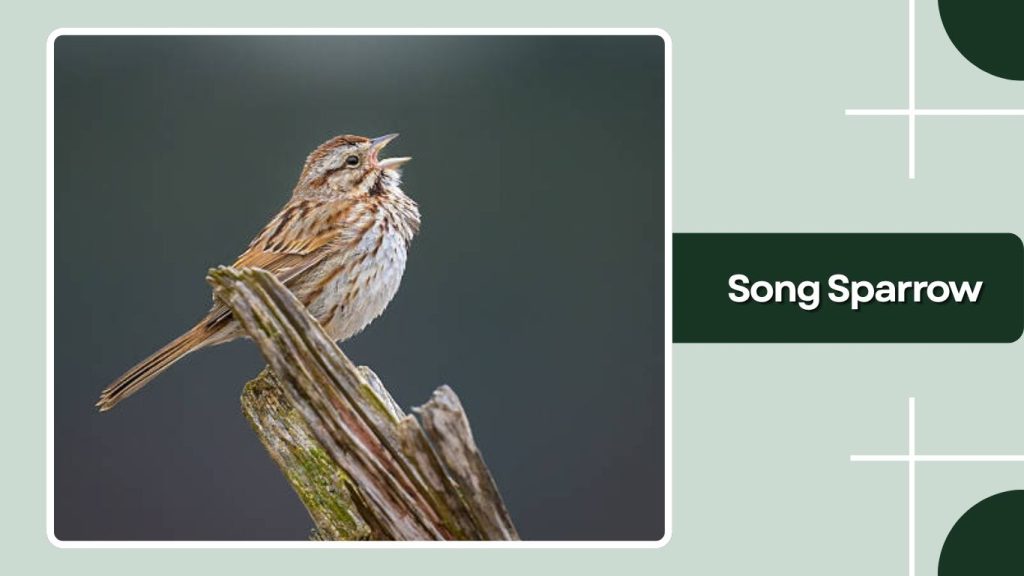
The Song Sparrow is a small brown bird known for its streaked body and sweet, musical song. It is common in North America and can be found in many open or brushy habitats. Its brown streaks help it blend into grasses and shrubs.
Identification
- Brown upperparts with heavy streaking
- White or pale belly with dark chest streaks
- Often has a central dark spot on the breast
- Rounded tail and medium-length bill
- Face has brown and gray stripes
Habitat and Distribution
Song Sparrows live in wetlands, gardens, fields, woodland edges, and shrubby areas. They are widespread across North America and are often seen near water, brush piles, or dense vegetation.
Diet and Feeding
They eat seeds, insects, spiders, and small invertebrates. In winter, seeds become more important. Song Sparrows usually feed on or near the ground, scratching through leaves and grasses for food.
Behavior and Nesting
Song Sparrows are often heard before they are seen. Males sing from shrubs, fences, or low trees. Females build cup-shaped nests in grasses, shrubs, or low plants, usually hidden from predators.
3. Chipping Sparrow
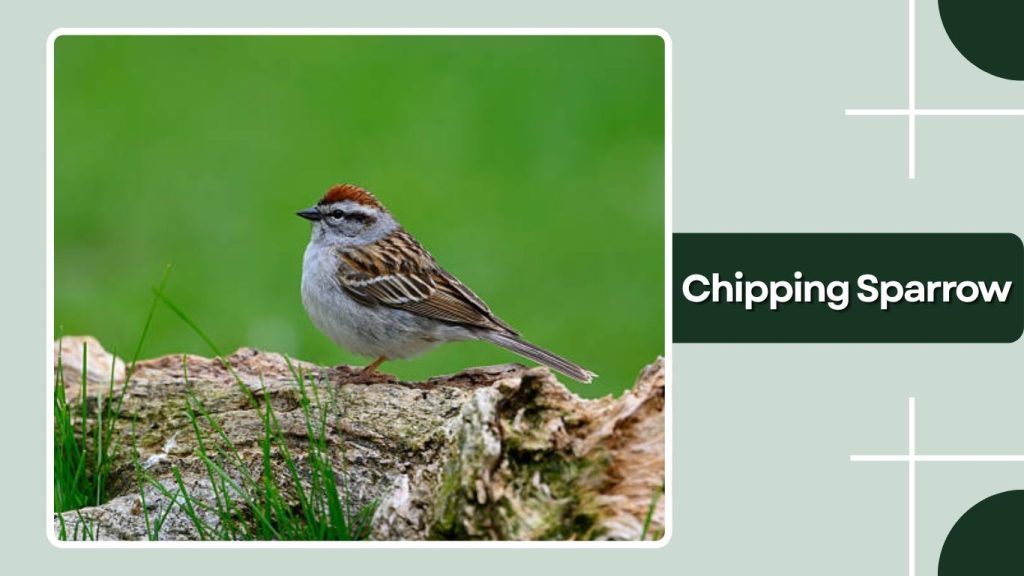
The Chipping Sparrow is a small, neat-looking brown bird with a slim body and sharp features. During the breeding season, it shows a rusty cap and clear face pattern. It is often seen in open woods, lawns, parks, and gardens.
Identification
- Small sparrow with a slim shape
- Rusty crown during breeding season
- Black line through the eye
- Grayish face and pale underparts
- Brown streaked back
Habitat and Distribution
Chipping Sparrows prefer open woodlands, pine areas, parks, orchards, yards, and grassy places with scattered trees. They are widespread across North America, especially during spring and summer.
Diet and Feeding
Their diet includes seeds, grasses, weeds, and small insects. During nesting season, insects become important for feeding young birds. They often forage on the ground in small groups.
Behavior and Nesting
Chipping Sparrows have a dry, rapid trill that is easy to notice in spring. They often move calmly through lawns and low vegetation. Females build small cup nests in shrubs or trees using grass, roots, and fine plant fibers.
4. Field Sparrow
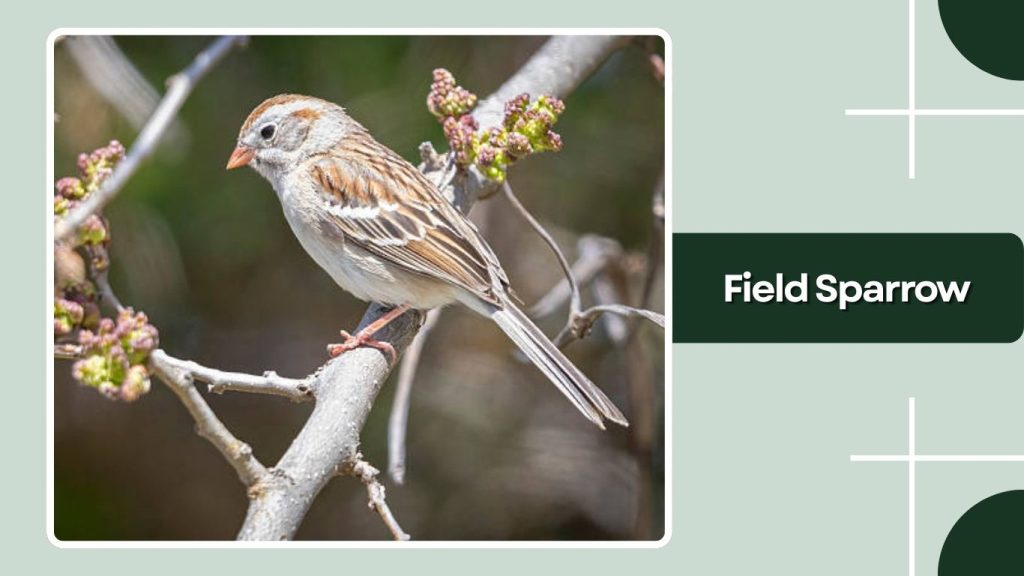
The Field Sparrow is a small, soft-colored brown bird with a gentle appearance and a sweet song. It is often found in open fields, brushy areas, and young woodland edges. Its plain face and pinkish bill help separate it from many other sparrows.
Identification
- Small brown sparrow with a pale body
- Pinkish bill and plain face
- Rusty crown and brown back
- White eye ring
- Long tail often held slightly raised
Habitat and Distribution
Field Sparrows live in grasslands, old fields, brushy pastures, woodland edges, and shrubby clearings. They are common in eastern and central parts of North America, especially in areas with scattered bushes.
Diet and Feeding
They mainly eat seeds from grasses and weeds. During warmer months, they also eat insects, spiders, and small larvae. Field Sparrows usually feed close to the ground, moving quietly through grass and low plants.
Behavior and Nesting
Field Sparrows are shy and gentle birds. Males sing a sweet, bouncing song from shrubs or low trees. Females build cup-shaped nests low in grass, bushes, or small shrubs, using grass and soft plant fibers.
5. Swamp Sparrow
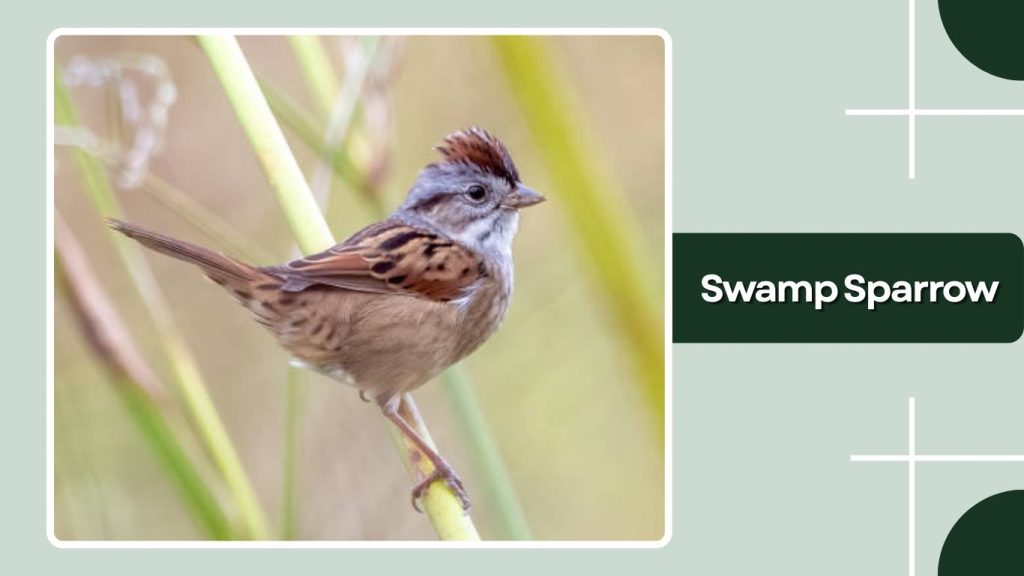
The Swamp Sparrow is a small brown bird that lives mostly in wet places. It has rich brown markings and often stays hidden among reeds, cattails, and marsh grasses. Although secretive, its sharp calls and song can reveal its presence.
Identification
- Small brown sparrow with a rusty cap
- Gray face and pale throat
- Brown streaked back
- Short wings and rounded tail
- Often found low in marsh plants
Habitat and Distribution
Swamp Sparrows live in marshes, wet meadows, bogs, cattail beds, and brushy wetlands. They are found across much of North America, breeding mostly in northern and eastern regions and wintering farther south.
Diet and Feeding
They eat seeds, insects, spiders, and small aquatic invertebrates. In marshes, they forage near the ground or along wet edges, picking food from mud, stems, grasses, and shallow water areas.
Behavior and Nesting
Swamp Sparrows are often shy and stay deep in wet vegetation. Males sing from reeds or low shrubs. Females build hidden nests close to the ground or just above water, using grasses, sedges, and soft plant material.
6. Lincoln’s Sparrow
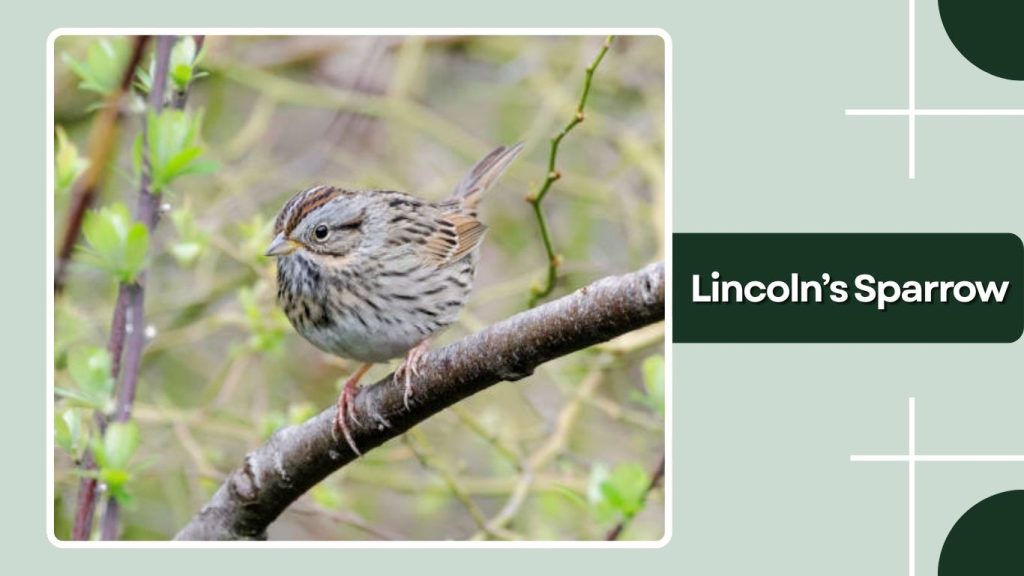
Lincoln’s Sparrow is a small brown bird with fine streaks and a neat, delicate look. It is often found in damp, brushy habitats during breeding season and appears in weedy fields and thickets during migration. Because it is shy, it may stay hidden in low cover.
Identification
- Small brown sparrow with fine streaking
- Buff-colored chest with thin dark streaks
- Gray face with a pale eye ring
- Brown crown with a central gray stripe
- Slim body and rounded tail
Habitat and Distribution
Lincoln’s Sparrows breed in wet meadows, boggy areas, willow thickets, and brushy edges, especially in northern and western North America. During migration and winter, they use weedy fields, woodland edges, and dense shrubs.
Diet and Feeding
This bird eats seeds, insects, spiders, and other small invertebrates. It usually feeds low to the ground, moving quietly through grasses and leaf litter. During warmer months, insects become especially important in its diet.
Behavior and Nesting
Lincoln’s Sparrows are secretive and often difficult to see clearly. Males sing a sweet, musical song from hidden perches. Females build cup-shaped nests low in thick vegetation, usually well concealed among grasses or shrubs.
7. Savannah Sparrow
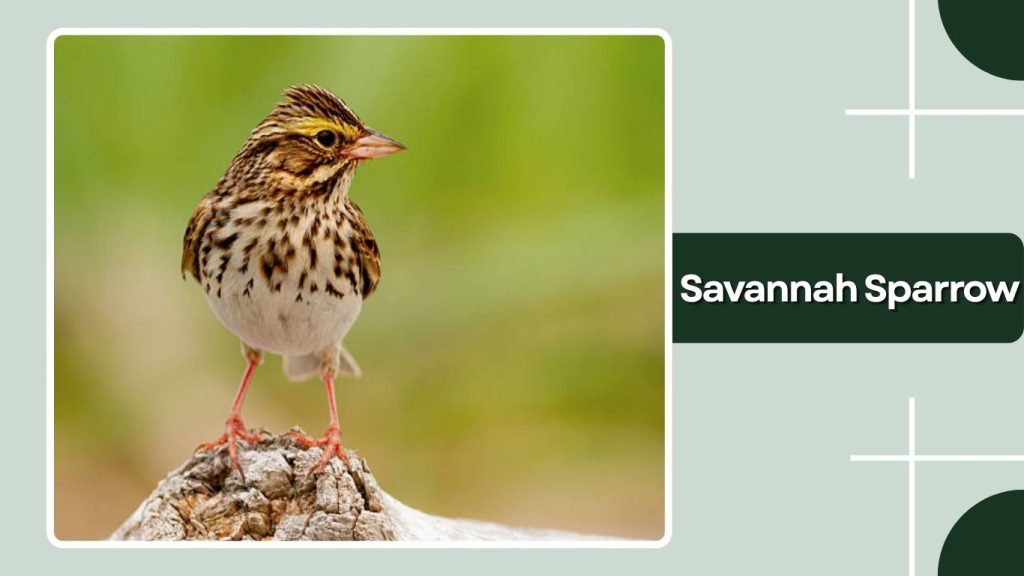
The Savannah Sparrow is a small brown bird commonly seen in open fields and grasslands. It has a streaked body and a short tail, often moving low through grasses. A small yellow spot near the eye is one of its helpful field marks.
Identification
- Small brown sparrow with heavy streaking
- Short tail and slim shape
- Yellow patch in front of the eye
- Pale belly with dark breast streaks
- Brown back with clear markings
Habitat and Distribution
Savannah Sparrows live in grasslands, pastures, hayfields, coastal marshes, prairies, and open agricultural areas. They are widespread across North America during breeding and migration, and many winter in southern regions.
Diet and Feeding
They mainly eat seeds and insects. In summer, they feed on grasshoppers, beetles, caterpillars, spiders, and other small prey. In winter, they rely more on grass and weed seeds found in open fields.
Behavior and Nesting
Savannah Sparrows spend much of their time on or near the ground. Males sing from fence posts, grass stems, or low shrubs. Females build hidden nests in grasses, often placed in a small depression on the ground.
8. Fox Sparrow
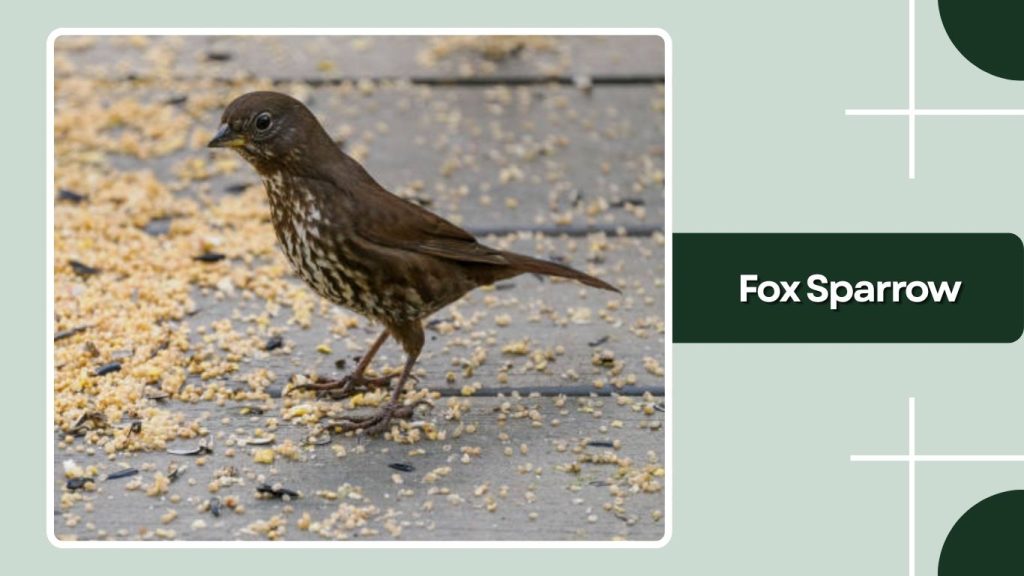
The Fox Sparrow is a large, rich brown sparrow with bold streaking and a strong scratching habit. Although bigger than many small brown birds, it is often included with brown backyard and woodland birds. Its warm reddish-brown tones make it stand out in good light.
Identification
- Brown to reddish-brown upperparts
- Heavy streaks on the chest and sides
- Thick, cone-shaped bill
- Rounded body and long tail
- Often scratches leaves with both feet
Habitat and Distribution
Fox Sparrows breed in northern forests, shrubby tundra edges, and dense thickets. During migration and winter, they can be found in brushy woodlands, forest edges, gardens, and areas with leaf litter.
Diet and Feeding
They eat seeds, berries, insects, and small invertebrates. Fox Sparrows often forage by scratching through fallen leaves with both feet, uncovering hidden seeds, beetles, larvae, and other food on the ground.
Behavior and Nesting
Fox Sparrows are usually shy and prefer dense cover. Their rich, musical song is heard during the breeding season. Females build nests on or near the ground, often hidden in shrubs, low branches, or thick vegetation.
9. White-throated Sparrow
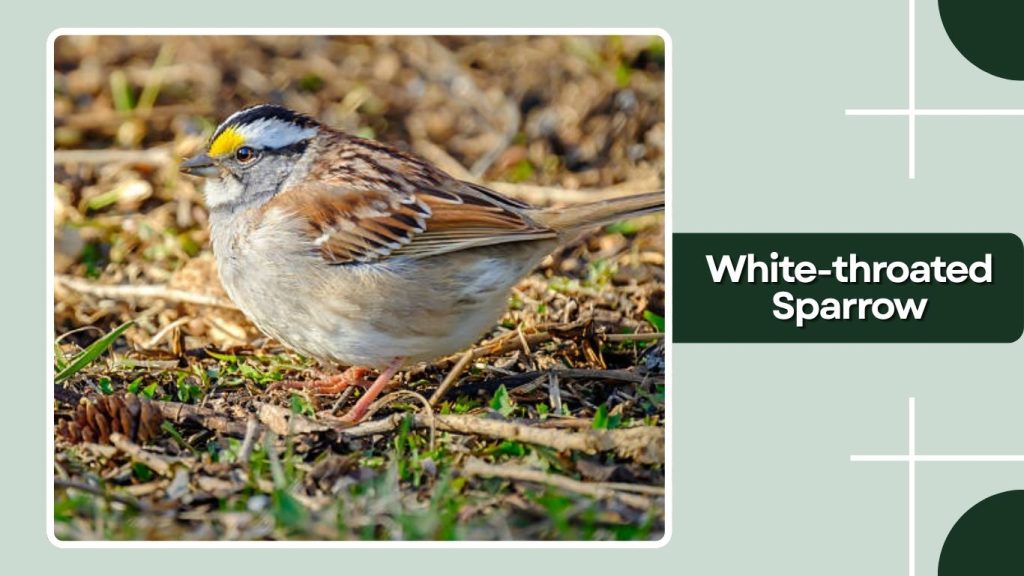
The White-throated Sparrow is a small brown bird with bold head stripes and a clear white throat. It is common in brushy areas, woodland edges, and backyards during migration and winter. Its sweet whistled song is well known in northern forests.
Identification
- Brown streaked back and wings
- White throat patch
- Black-and-white or brown-and-tan head stripes
- Yellow spots near the eyes
- Grayish chest and pale belly
Habitat and Distribution
White-throated Sparrows breed in northern forests and shrubby clearings across Canada and parts of the northeastern United States. In winter, they move south into woodlands, thickets, parks, gardens, and backyard areas.
Diet and Feeding
They eat seeds, berries, insects, and small invertebrates. In winter, they often visit feeders for millet and sunflower seeds. They usually feed on the ground, scratching through leaves and low plants.
Behavior and Nesting
These sparrows often move in small flocks during winter. They stay close to shrubs or brush piles for safety. Females build nests on or near the ground, usually hidden under low vegetation in forested habitats.
10. White-crowned Sparrow
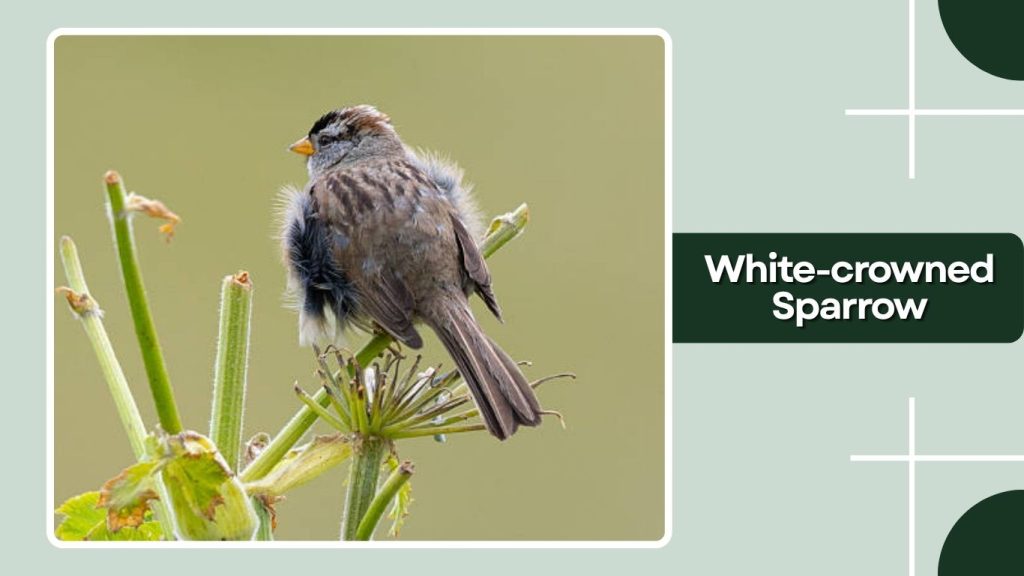
The White-crowned Sparrow is a small brown bird with a striking black-and-white striped head. Young birds are duller brown with softer head stripes. This species is often seen in weedy fields, gardens, brushy areas, and open woodland edges.
Identification
- Brown streaked back with pale underparts
- Bold black-and-white crown stripes in adults
- Pink or yellowish bill
- Long tail and upright posture
- Young birds have brown-and-tan head stripes
Habitat and Distribution
White-crowned Sparrows breed in northern and western North America, including shrubby tundra, mountain meadows, and brushy areas. During migration and winter, they appear in fields, hedgerows, gardens, parks, and woodland edges.
Diet and Feeding
Their diet includes seeds, grains, berries, insects, and buds. They often feed on the ground, searching through weeds, grasses, and leaf litter. In backyards, they may visit feeders for millet and cracked grains.
Behavior and Nesting
White-crowned Sparrows are active ground feeders and often gather in loose flocks. Males sing clear, whistled songs during breeding season. Females build cup-shaped nests low in shrubs or on the ground, depending on habitat.
11. American Tree Sparrow
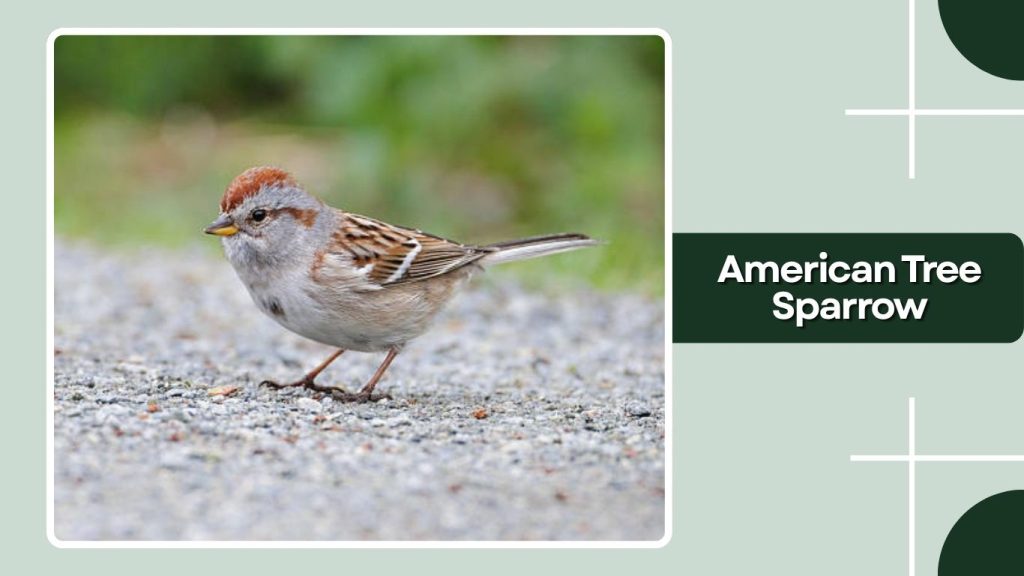
The American Tree Sparrow is a small brown bird with a rusty cap, pale underparts, and a neat dark spot on the chest. Despite its name, it is often seen in weedy fields, brushy edges, and open winter habitats rather than deep forests.
Identification
- Small brown sparrow with a rusty crown
- Gray face and pale eyebrow
- Dark spot in the center of the chest
- Brown streaked back and wings
- Two-toned bill with dark upper part and yellow lower part
Habitat and Distribution
American Tree Sparrows breed in northern tundra and shrubby areas. During winter, they move south into fields, gardens, woodland edges, hedgerows, and weedy roadsides across much of North America.
Diet and Feeding
They mainly eat seeds from grasses and weeds, especially during winter. In warmer months, they also eat insects and small invertebrates. They usually feed on the ground, scratching lightly among leaves, snow, and low plants.
Behavior and Nesting
American Tree Sparrows often form small winter flocks. They are active but gentle birds, usually staying near brushy cover. Females build nests low in shrubs or on the ground in northern breeding areas.
12. Vesper Sparrow
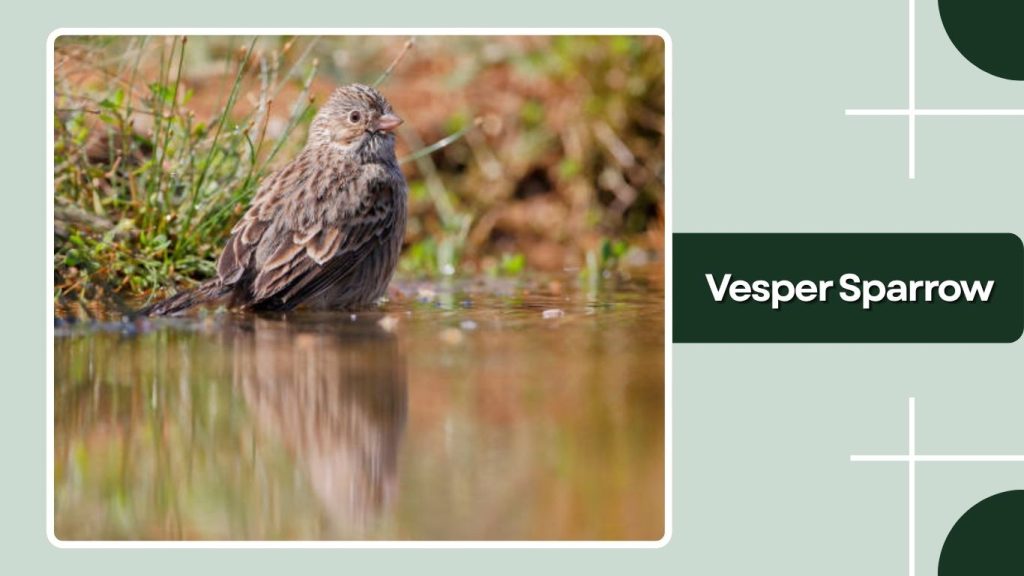
The Vesper Sparrow is a small brown bird of open country, known for its soft evening song. It has a streaked body, white outer tail feathers, and a pale eye ring. This bird is often seen in dry fields, grasslands, and farmland.
Identification
- Brown streaked upperparts and pale underparts
- White outer tail feathers visible in flight
- Thin white eye ring
- Dark streaks on the chest
- Medium-length tail and slim body
Habitat and Distribution
Vesper Sparrows live in open habitats such as grasslands, pastures, dry fields, prairies, and farmland. They breed across much of North America, especially in areas with short grass and scattered bare ground.
Diet and Feeding
Their diet includes seeds, grains, insects, and spiders. In summer, they eat more insects, including beetles, grasshoppers, and caterpillars. In winter and migration, seeds become a larger part of their food.
Behavior and Nesting
Vesper Sparrows often sing from fence posts, shrubs, or low trees, especially near evening. They walk or hop on the ground while feeding. Females build nests on the ground, usually hidden in grass or low vegetation.
13. House Wren
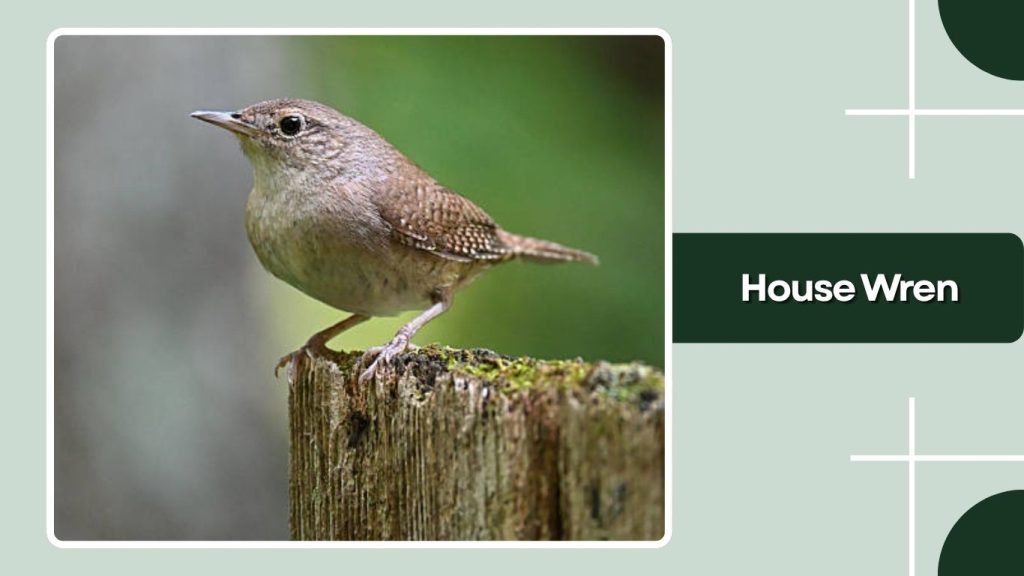
The House Wren is a tiny brown bird with a lively voice and restless movements. It has a plain brown body, short wings, and a slightly curved bill. Although small and simple-looking, it is easy to notice because of its loud, bubbling song.
Identification
- Very small brown bird with a compact body
- Short tail often held upward
- Thin, slightly curved bill
- Faint barring on wings and tail
- Plain face without bold markings
Habitat and Distribution
House Wrens live in gardens, parks, open woodlands, farms, forest edges, and backyards. They are widespread across North America during the breeding season and use nest boxes, tree cavities, and other small holes.
Diet and Feeding
They mainly eat insects and spiders. Their food includes beetles, caterpillars, flies, ants, crickets, and small larvae. House Wrens search branches, bark, leaf litter, and garden plants for hidden prey.
Behavior and Nesting
House Wrens are energetic and curious birds. Males often fill several cavities with sticks before females choose a nesting site. Their nests are usually built in holes, nest boxes, or sheltered gaps around buildings and trees.
14. Carolina Wren
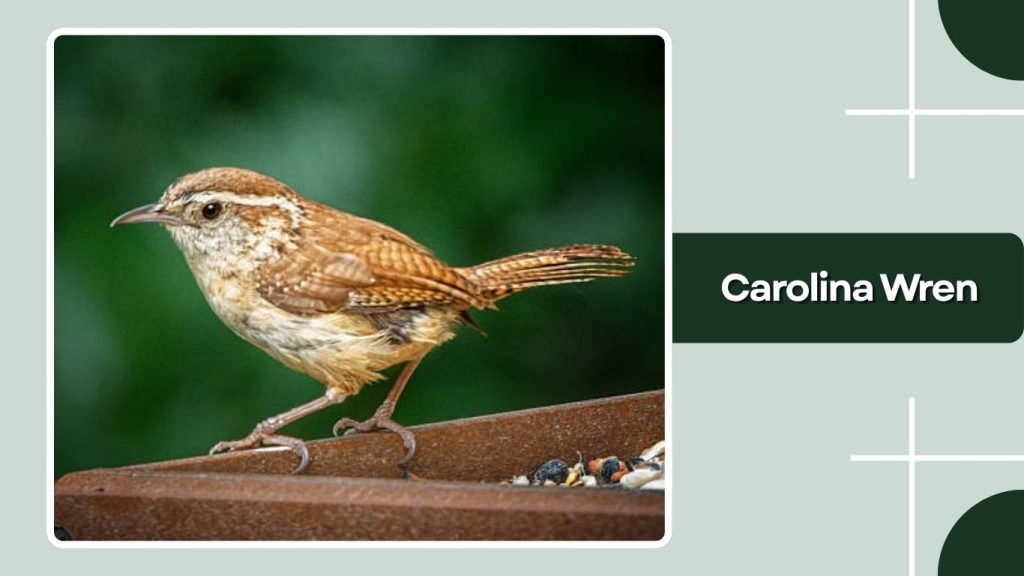
The Carolina Wren is a small brown bird with a warm reddish-brown back and a bold white eyebrow stripe. It is well known for its loud, ringing song. This bird often stays low in thick cover, brush piles, gardens, and wooded yards.
Identification
- Small brown bird with warm reddish tones
- Bold white eyebrow stripe
- Buff-orange underparts
- Long tail often held upward
- Slightly curved bill
Habitat and Distribution
Carolina Wrens live in wooded areas, thickets, brushy yards, gardens, swamps, and forest edges. They are common in the eastern and southeastern United States and may remain in the same area year-round.
Diet and Feeding
They eat insects, spiders, beetles, caterpillars, small snails, and other invertebrates. They may also eat seeds and berries. Carolina Wrens usually forage close to the ground, searching through leaves, bark, and tangled plants.
Behavior and Nesting
Carolina Wrens are bold and vocal for their size. Pairs often stay together throughout the year. They nest in natural cavities, boxes, hanging plants, wall gaps, or sheltered corners, using leaves, grasses, moss, and feathers.
15. Bewick’s Wren
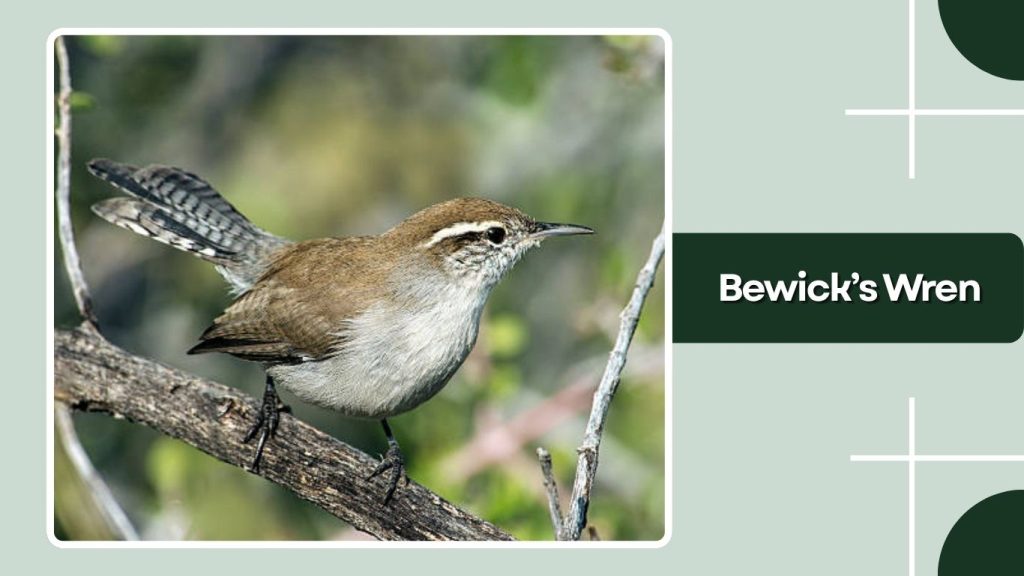
Bewick’s Wren is a small brown bird with a long tail and a clear white eyebrow stripe. It is active, curious, and often seen flicking its tail while moving through shrubs and brush. Its song is varied and musical.
Identification
- Small brown wren with grayish underparts
- Long tail with white edges
- Bold white eyebrow stripe
- Thin, slightly curved bill
- Tail often flicked side to side
Habitat and Distribution
Bewick’s Wrens prefer brushy habitats, open woodlands, thickets, scrub, gardens, and dry edges. They are most common in the western and southern United States, where suitable shrubs and nesting cavities are available.
Diet and Feeding
They mainly eat insects, spiders, beetles, caterpillars, ants, and other tiny invertebrates. Bewick’s Wrens search bark, twigs, leaves, and ground cover for prey, often moving quickly through low vegetation.
Behavior and Nesting
Bewick’s Wrens are active and expressive birds. Males sing from shrubs, fences, or low branches. They nest in cavities, boxes, old woodpecker holes, or sheltered gaps, building nests with grass, leaves, bark strips, and feathers.
16. Winter Wren
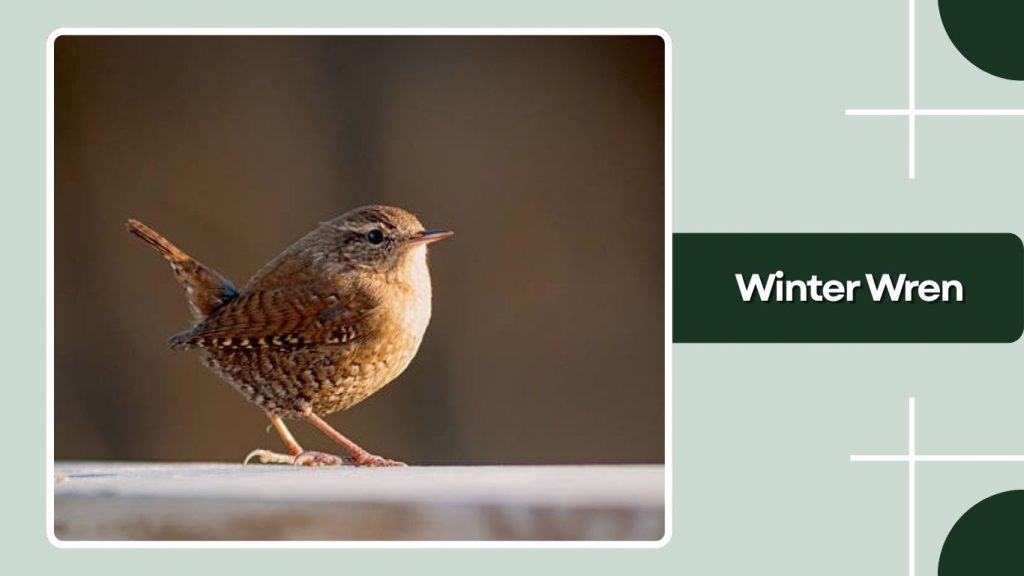
The Winter Wren is a tiny brown bird with a round body, short tail, and quick movements. It often stays low in dark, damp forests where fallen logs, roots, and thick plants provide cover. Although very small, it has a surprisingly loud and complex song.
Identification
- Very small brown bird with a rounded body
- Short tail often held upright
- Fine barring on wings, tail, and body
- Thin, slightly curved bill
- Often hides near logs and roots
Habitat and Distribution
Winter Wrens live in cool, moist forests, especially areas with dense undergrowth, fallen trees, moss, and tangled roots. They breed across northern forests and mountain regions. In winter, many move to lower elevations, woodland edges, and brushy places.
Diet and Feeding
Winter Wrens mainly eat insects, spiders, beetles, larvae, and other tiny invertebrates. They search for food close to the ground, slipping between logs, roots, rocks, and leaf litter. Their small size helps them reach hidden prey in tight spaces.
Behavior and Nesting
These wrens are shy and secretive, often heard before they are seen. Males sing loudly from low perches during breeding season. Females nest in cavities, root tangles, or sheltered spots, using moss, grass, feathers, and plant fibers.
17. Brown Creeper
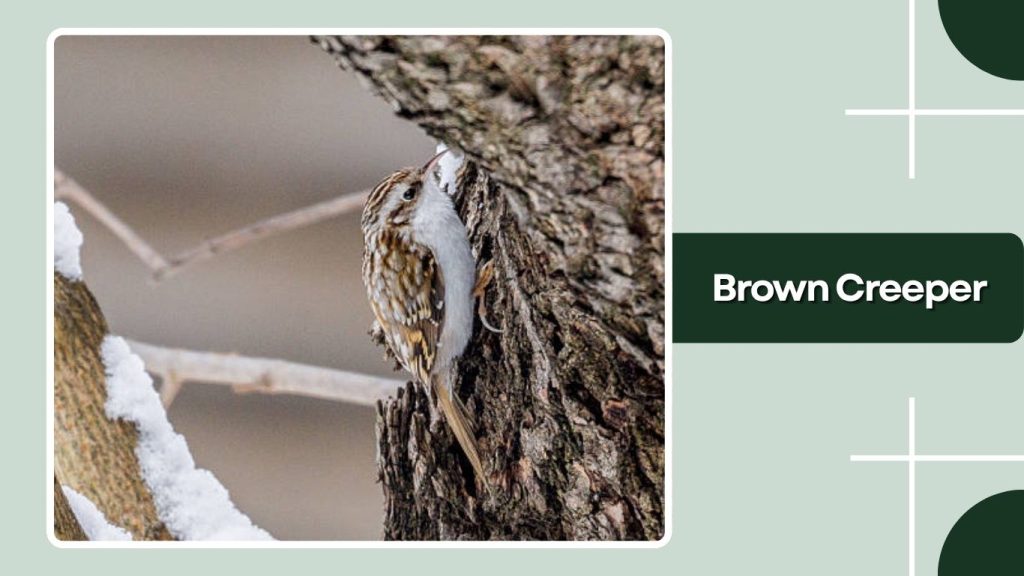
The Brown Creeper is a tiny brown bird with a slender body and a curved bill. It is usually seen climbing tree trunks in a spiral pattern while searching for insects. Its brown streaked back blends perfectly with bark, making it easy to miss.
Identification
- Small brown bird with streaked upperparts
- Pale underside and thin curved bill
- Long stiff tail used for support
- Creeps upward along tree trunks
- Camouflaged bark-like pattern
Habitat and Distribution
Brown Creepers live in mature forests, wooded parks, coniferous woods, mixed forests, and large groves of trees. They are found across much of North America, especially in areas with older trees and rough bark.
Diet and Feeding
They mainly eat insects, spiders, eggs, larvae, and other small invertebrates hidden in bark. Brown Creepers use their curved bill to probe cracks and crevices. In colder months, they may also eat some seeds.
Behavior and Nesting
Brown Creepers usually start near the base of a tree and climb upward while feeding. After reaching higher branches, they fly down to another trunk and repeat the pattern. They nest behind loose bark, using twigs, grass, moss, and feathers.
18. Bushtit
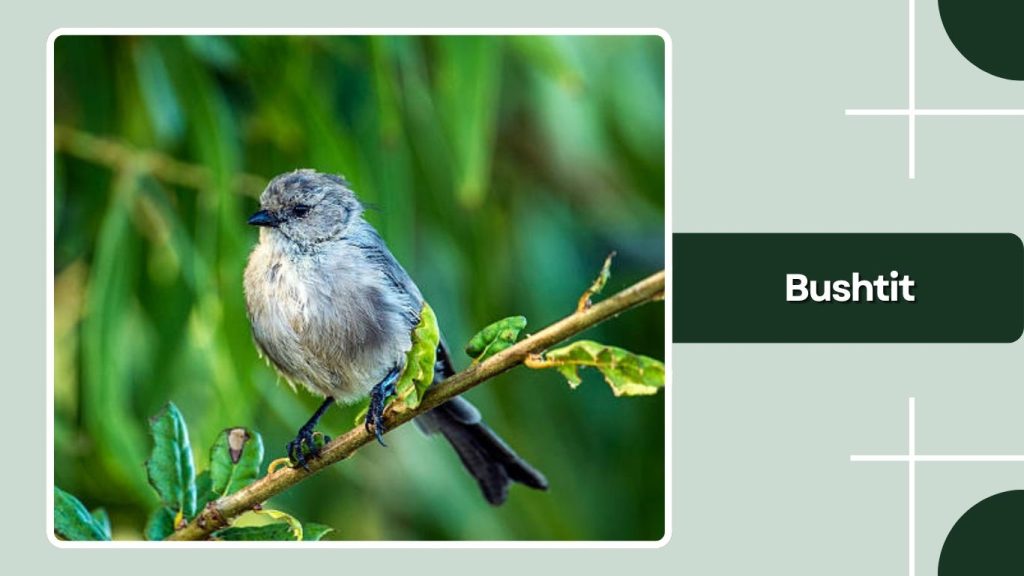
The Bushtit is a very small brownish-gray bird with a long tail and a soft, rounded shape. These tiny birds are highly social and often move in active flocks through shrubs and trees. Their constant movement and soft calls help reveal them.
Identification
- Tiny brownish-gray bird
- Long tail and small round body
- Short bill and plain face
- Females may show pale eyes
- Often seen in fast-moving flocks
Habitat and Distribution
Bushtits live in scrublands, open woodlands, parks, gardens, chaparral, and wooded neighborhoods. They are common in western North America, especially where shrubs, trees, and brushy cover are available.
Diet and Feeding
Bushtits eat tiny insects, spiders, scale insects, aphids, and larvae. They move quickly through leaves and branches, picking small prey from foliage. Their flocking behavior helps them search large areas efficiently.
Behavior and Nesting
Bushtits are social birds and often travel in groups outside the breeding season. They build impressive hanging pouch-shaped nests from moss, spider silk, grass, and plant fibers. The nest is usually hidden in shrubs or trees.
19. Eurasian Tree Sparrow
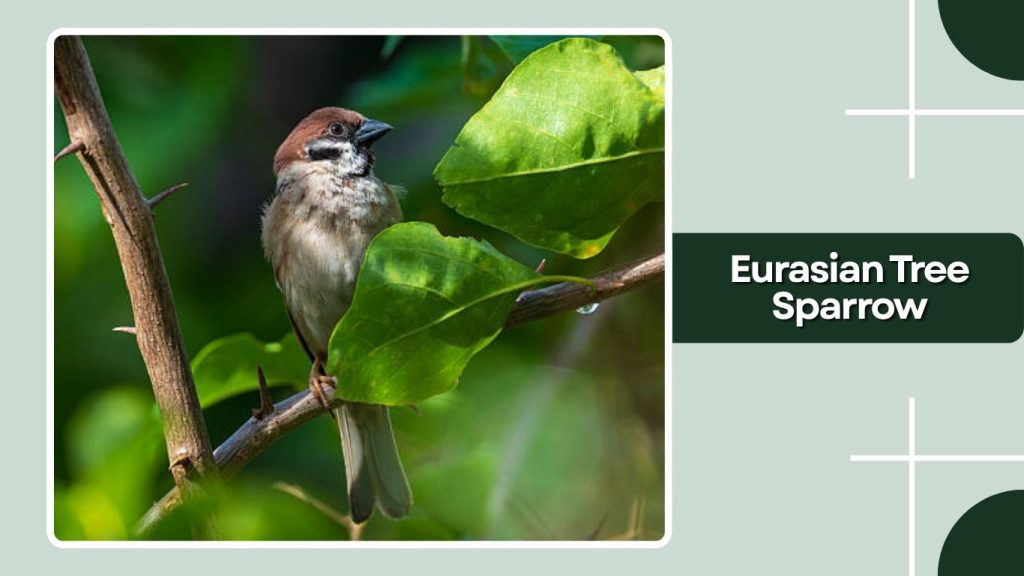
The Eurasian Tree Sparrow is a small brown bird that looks similar to the House Sparrow but has cleaner markings. It has a chestnut head, white cheek, and black cheek spot. This bird is often found near farms, villages, open woods, and gardens.
Identification
- Small brown sparrow with chestnut crown
- White cheeks with black cheek spots
- Black throat patch
- Brown streaked wings and back
- Similar male and female appearance
Habitat and Distribution
Eurasian Tree Sparrows live in farmland, villages, orchards, woodland edges, parks, and gardens. They are native to Europe and Asia and have also been introduced to some other regions. They often stay close to fields and human settlements.
Diet and Feeding
They mainly eat seeds, grains, weeds, and small insects. During the breeding season, insects are especially important for feeding chicks. Eurasian Tree Sparrows often forage on the ground in small flocks.
Behavior and Nesting
These birds are social and may gather with other sparrows. They nest in tree holes, wall gaps, nest boxes, and building cavities. Their nests are made from grass, straw, feathers, and other soft materials.
20. Dunnock
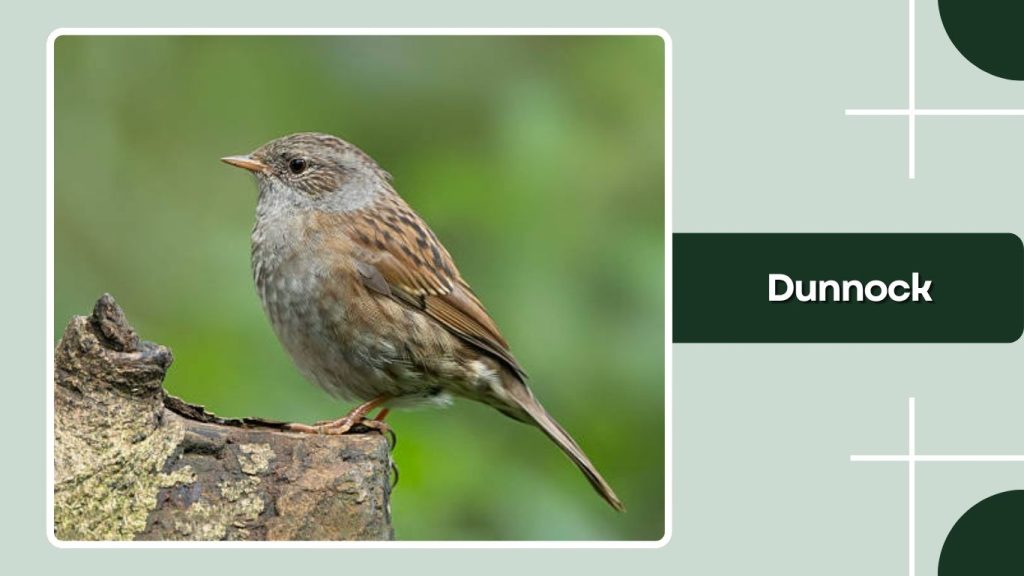
The Dunnock is a small brown and gray bird with a quiet, shy nature. It is often seen moving low under hedges, shrubs, and garden plants. Although it may look like a sparrow, it has a thinner bill and more delicate feeding behavior.
Identification
- Small brown bird with gray face and chest
- Thin, pointed bill
- Brown streaked back and wings
- Slender body and quiet movements
- Often stays low near cover
Habitat and Distribution
Dunnocks live in hedgerows, gardens, woodland edges, parks, farms, and scrubby areas. They are common across much of Europe and parts of western Asia. They prefer places with dense low cover for hiding and nesting.
Diet and Feeding
Dunnocks eat insects, spiders, worms, seeds, and small invertebrates. They usually feed close to the ground, picking food from soil, leaf litter, and low plants. In winter, they may eat more seeds and visit garden feeding areas.
Behavior and Nesting
Dunnocks are quiet, secretive birds that often creep through bushes rather than perch openly. Their song is thin and sweet. Females build cup-shaped nests in dense shrubs or hedges using moss, grass, leaves, and soft lining.
21. Spotted Towhee
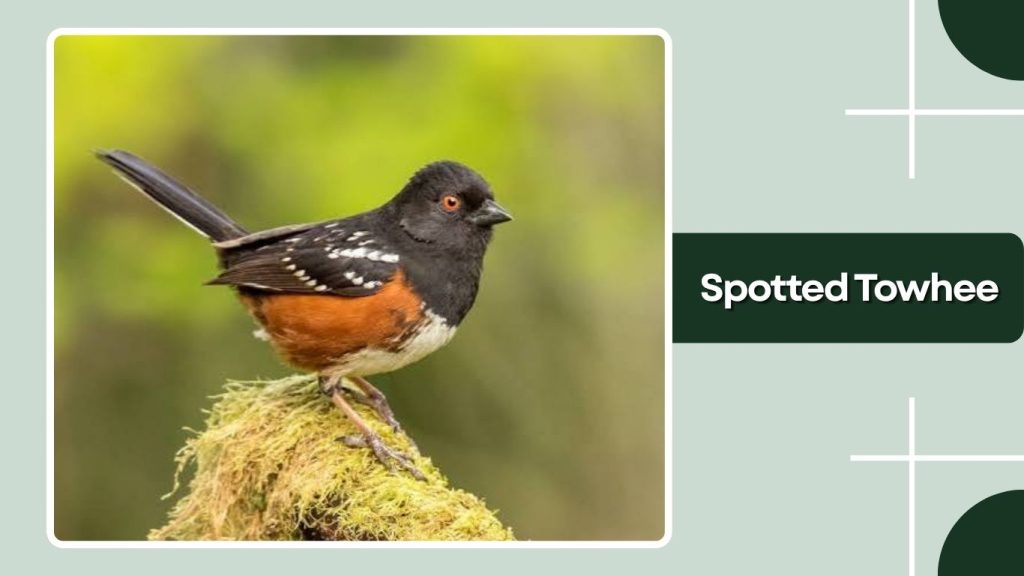
The Spotted Towhee is a small to medium-sized brown bird with a long tail and bold markings. Females are brownish above with spotted wings and warm reddish sides, while males are darker and more striking. These birds often stay near thick shrubs, where they scratch through leaves for food.
Identification
- Brownish or dark upperparts with white wing spots
- Warm reddish-brown sides
- White belly
- Long rounded tail
- Thick, seed-eating bill
Habitat and Distribution
Spotted Towhees live in brushy fields, woodland edges, thickets, chaparral, scrublands, and shrubby backyards. They are common in western North America, especially where dense low vegetation provides cover.
Diet and Feeding
Spotted Towhees eat seeds, insects, spiders, beetles, caterpillars, and berries. They often feed on the ground by scratching through dry leaves with both feet. This noisy scratching can help reveal them even when they are hidden.
Behavior and Nesting
These birds are shy but active, usually staying close to dense cover. Males sing from shrubs or low trees during breeding season. Females build cup-shaped nests on or near the ground, hidden under shrubs, grasses, or tangled plants.