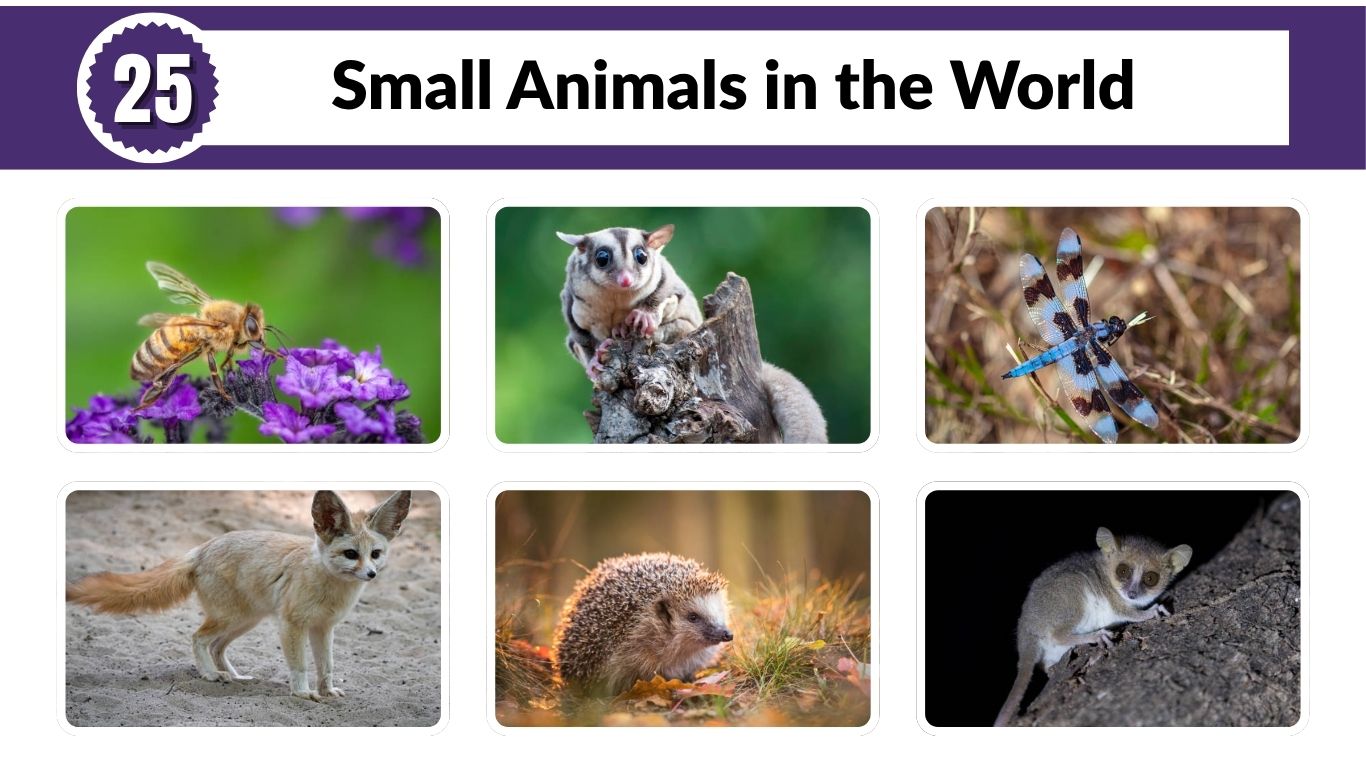
Small animals are fascinating because of their diversity, unique adaptations, and important roles in nature. From tiny mammals like the pygmy marmoset to insects like the honey bee, these creatures thrive in different environments across the world. Despite their small size, they contribute significantly to ecosystems by controlling pests, pollinating plants, and maintaining balance. This collection highlights 25 small animals, giving a closer look at their identification, habitat, behavior, and lifespan in an easy-to-understand way.
1. Pygmy Marmoset
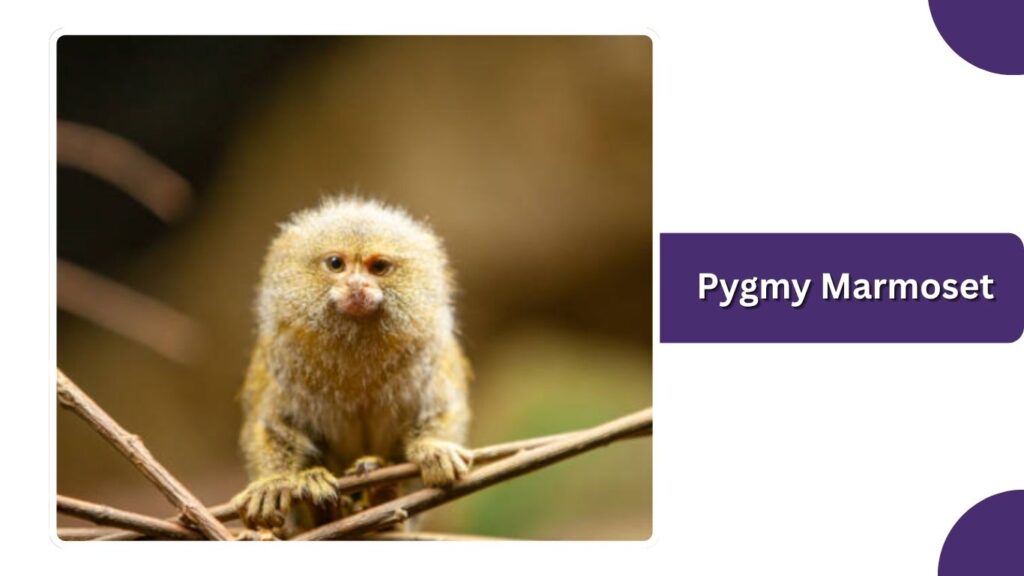
The pygmy marmoset is the smallest monkey in the world, native to the dense rainforests of South America. Despite its tiny size, it is an energetic and agile creature that spends most of its life in trees. It is highly social, living in small family groups and communicating through soft vocal sounds. This animal plays an important role in its ecosystem, especially in maintaining tree health through its feeding habits.
Identification
- Body length ranges from about 12 to 16 cm
- Tail is longer than the body and helps with balance
- Fur is brownish-golden with subtle dark patterns
- Large, expressive eyes and small rounded ears
- Sharp, curved claws instead of flat nails for climbing
Habitat and Distribution
Pygmy marmosets are found mainly in the Amazon Basin, including countries such as Brazil, Peru, Ecuador, and Colombia. They live in tropical rainforests where humidity is high and vegetation is dense. These animals prefer areas close to rivers and floodplains because such environments provide easy access to food sources like tree sap and insects. They are highly adapted to life in the trees and rarely come down to the forest floor. Their habitat is rich in tall trees that allow them to move quickly and safely while avoiding predators.
Behavior and Diet
Pygmy marmosets are social animals that live in small groups, usually consisting of 2 to 9 members. They communicate through high-pitched calls, body movements, and scent marking. Their diet mainly consists of tree sap, which they obtain by gnawing holes into bark using their sharp lower teeth. In addition to sap, they eat insects, small fruits, and occasionally nectar. They are active during the day and spend much of their time foraging, grooming, and interacting with group members. Their quick movements and ability to leap between branches help them escape predators.
Lifespan
In the wild, pygmy marmosets generally live between 10 and 12 years, depending on environmental conditions and threats from predators. Factors such as habitat loss and food availability can influence their survival. In captivity, where they are protected and receive regular care, they can live slightly longer, sometimes reaching up to 15 years.
2. Bumblebee Bat
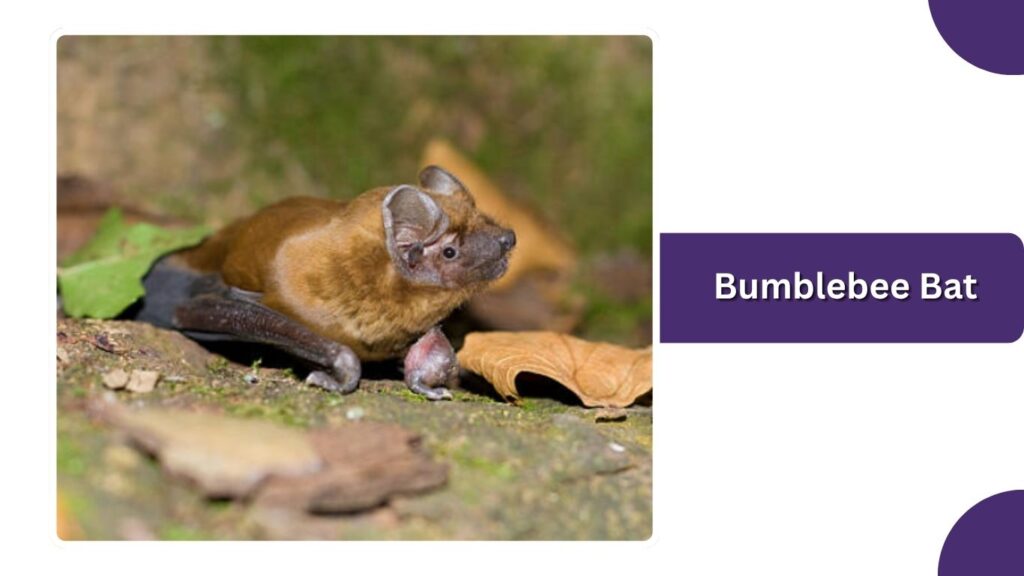
The bumblebee bat, also known as Kitti’s hog-nosed bat, is the smallest bat in the world and one of the tiniest mammals overall. It is named for its small size, similar to a large bumblebee. This rare species is found in limited areas and is known for its unique appearance and delicate structure.
Identification
- Body length around 2.5 to 3.3 cm
- Weight about 2 grams
- Short, pig-like snout
- Reddish-brown or gray fur
- Small wings with a relatively wide shape
Habitat and Distribution
Bumblebee bats are found mainly in parts of Thailand and Myanmar. They live in limestone caves, often near rivers or forested areas. These caves provide a safe resting place during the day and protection from predators. They prefer warm climates and environments where insects are abundant. Their distribution is quite limited, making them vulnerable to habitat disturbance. The surrounding forests are also important, as they serve as feeding grounds during nighttime activity.
Behavior and Diet
These bats are nocturnal and become active at dusk. They usually forage for a short period in the evening and sometimes again before dawn. Bumblebee bats feed mainly on small insects, especially flies and spiders, which they catch while flying. They use echolocation to navigate and locate prey in the dark. They are not highly social compared to other bats and often roost in small groups. During the day, they remain still inside caves, hanging from cave walls or ceilings.
Lifespan
The lifespan of the bumblebee bat in the wild is not widely documented due to its rarity, but it is estimated to live around 5 to 10 years. Like many small mammals, their survival depends on environmental conditions, food availability, and protection from predators.
3. Etruscan Shrew
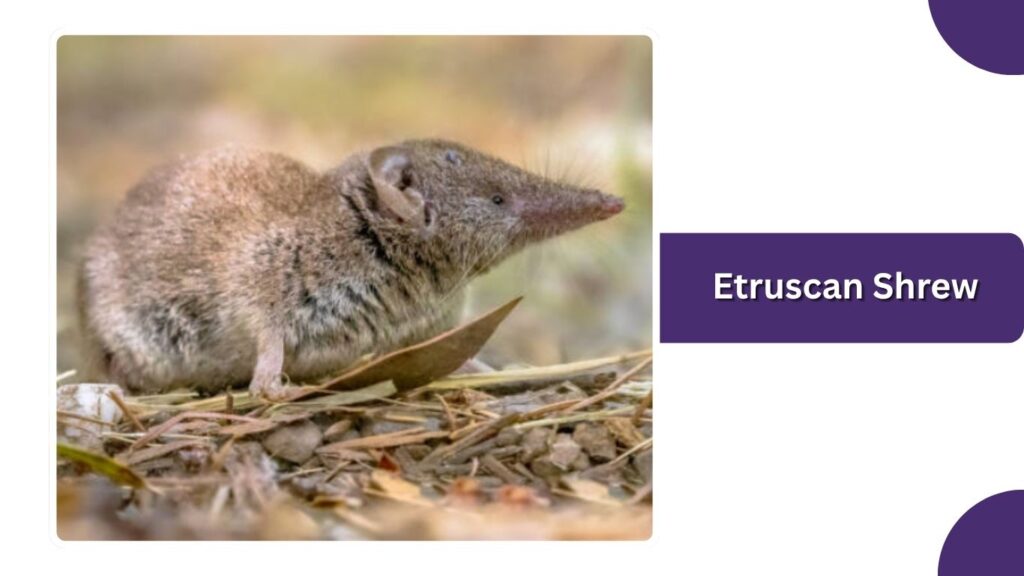
The Etruscan shrew is the smallest mammal in the world by mass. Despite its tiny size, it has an incredibly fast metabolism and must eat frequently to survive. This energetic animal is constantly active and is known for its rapid movements and high energy levels.
Identification
- Body length about 3 to 5 cm
- Weight around 1.5 to 2 grams
- Grayish-brown fur with a lighter underside
- Long, pointed snout
- Small eyes and ears
Habitat and Distribution
Etruscan shrews are found across parts of Europe, North Africa, and Asia. They prefer warm and temperate regions with plenty of ground cover such as grasslands, forests, and shrublands. These animals often live in burrows or hide under rocks, leaves, and dense vegetation to stay protected from predators. They require habitats with abundant insect populations, as their survival depends heavily on constant food availability. Their wide distribution shows their adaptability to different environments, as long as there is enough shelter and food.
Behavior and Diet
This shrew is extremely active and must eat almost constantly due to its high metabolic rate. It feeds mainly on insects, including ants, beetles, and larvae. It uses its keen sense of smell and touch to locate prey. The Etruscan shrew is mostly solitary and can be territorial. It is active both day and night in short bursts, rarely staying still for long. Its fast heartbeat and quick movements help it hunt efficiently but also require it to consume food frequently to maintain energy.
Lifespan
The Etruscan shrew has a short lifespan, typically living around 1.5 to 2 years in the wild. Due to its small size and high energy needs, it faces many risks from predators and environmental changes.
4. Pygmy Rabbit
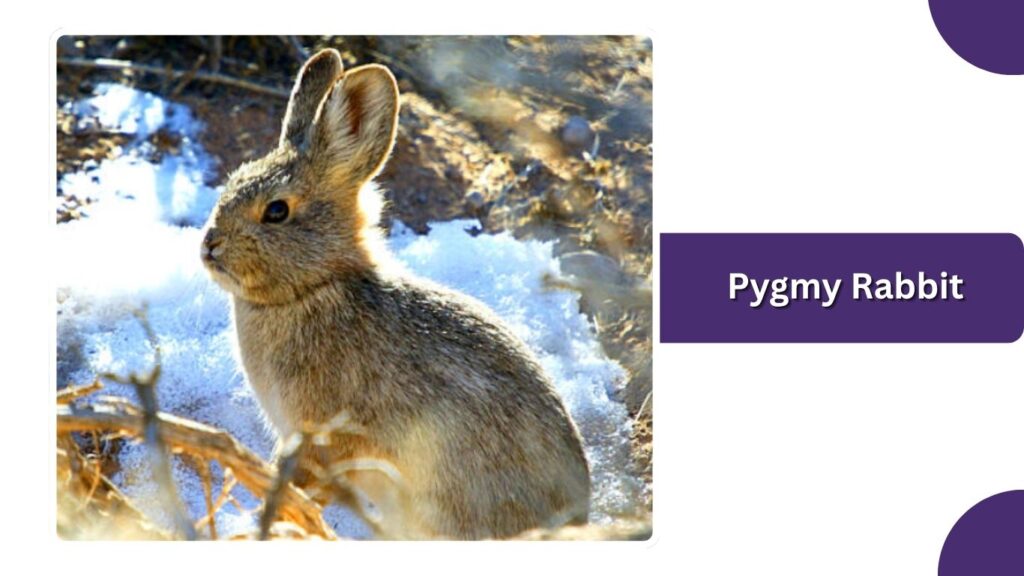
The pygmy rabbit is the smallest rabbit species in the world, known for its shy nature and strong dependence on dense vegetation for survival. It is native to North America and is unique among rabbits for its ability to dig its own burrows.
Identification
- Body length about 23 to 29 cm
- Weight ranges from 375 to 500 grams
- Gray-brown fur that blends with surroundings
- Short ears compared to other rabbits
- Very small tail with little white coloration
Habitat and Distribution
Pygmy rabbits are found mainly in the western United States, especially in regions with dense sagebrush. They rely heavily on this type of vegetation for both food and shelter. Unlike many other rabbit species, they dig their own burrows in soft soil, which they use for protection from predators and harsh weather. Their habitat is typically dry, with open landscapes that provide enough plant cover to hide and survive. Loss of sagebrush habitats has significantly affected their population in some areas.
Behavior and Diet
These rabbits are generally quiet and solitary, although they may live near others. They are most active during dawn and dusk. Their diet mainly consists of sagebrush, especially during winter, along with grasses and other plants in warmer months. Pygmy rabbits depend heavily on nearby cover and rarely travel far from their burrows. When threatened, they quickly retreat into their tunnels rather than running long distances.
Lifespan
In the wild, pygmy rabbits usually live around 3 to 5 years. Their survival is influenced by habitat quality, food availability, and predation. In protected environments, they may live slightly longer.
5. Mouse Lemur
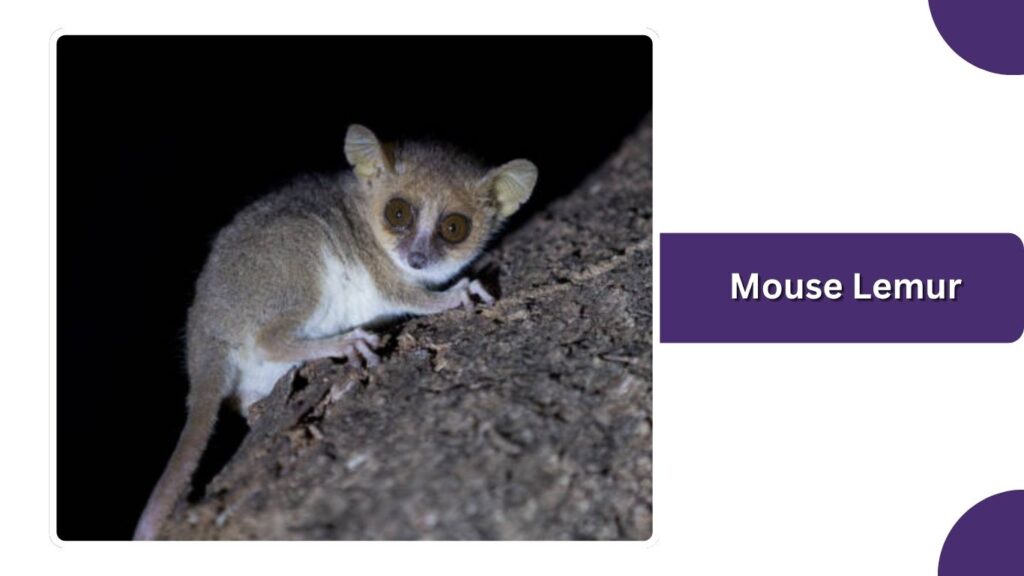
The mouse lemur is one of the smallest primates in the world, native to the forests of Madagascar. It is known for its tiny body, large eyes, and nocturnal lifestyle. Despite its size, it is highly adaptable and plays an important role in its ecosystem as both a predator of insects and a seed disperser.
Identification
- Body length about 9 to 14 cm
- Long tail often equal to body length
- Large round eyes adapted for night vision
- Soft gray or brown fur
- Small, pointed snout
Habitat and Distribution
Mouse lemurs are found only in Madagascar, living in a variety of habitats including dry forests, rainforests, and coastal regions. They prefer areas with dense vegetation that provide shelter and food sources. These animals often sleep in tree holes or nests made of leaves during the day. Their ability to live in different forest types makes them one of the more adaptable lemur species, although habitat loss still threatens their populations.
Behavior and Diet
Mouse lemurs are nocturnal and spend their nights searching for food. They are mostly solitary but may share sleeping sites. Their diet includes insects, fruits, nectar, and small vertebrates. They use their strong sense of smell and vision to locate food in the dark. These primates are agile climbers and move quickly through trees, using their tails for balance. During colder periods, some species can enter a state of reduced activity to conserve energy.
Lifespan
In the wild, mouse lemurs typically live around 5 to 8 years. In captivity, where they are protected from predators and have a stable food supply, they can live up to 10 to 12 years.
6. Dwarf Hamster
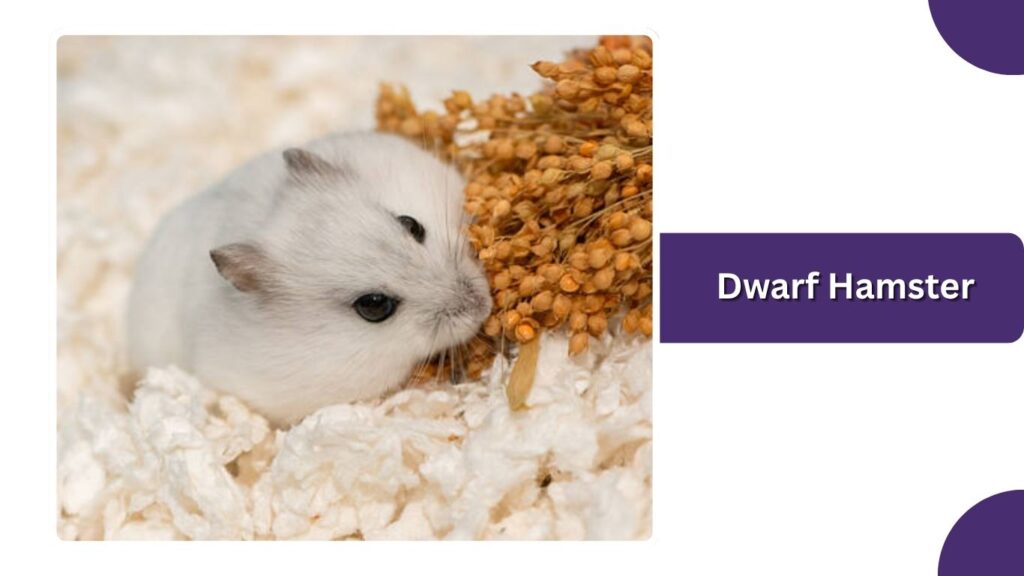
The dwarf hamster is a small rodent known for its round body, short limbs, and energetic behavior. It is popular as a pet due to its manageable size and active nature. In the wild, it is well adapted to harsh environments and can survive in extreme temperatures.
Identification
- Body length about 5 to 10 cm
- Short tail that is barely visible
- Soft fur in shades of gray, brown, or white
- Rounded body with small ears
- Dark eyes and tiny paws
Habitat and Distribution
Dwarf hamsters are found in parts of Europe and Asia, especially in regions like Siberia, Mongolia, and Kazakhstan. They typically live in grasslands, deserts, and semi-arid areas. These hamsters dig burrows underground to protect themselves from predators and extreme weather conditions. Their burrows often have multiple chambers used for sleeping, storing food, and raising young. They are well adapted to cold climates and can survive harsh winters by staying in their burrows.
Behavior and Diet
Dwarf hamsters are active and curious animals, often most active during the evening and night. In the wild, they are generally solitary, though some species can tolerate living in pairs or small groups. Their diet mainly includes seeds, grains, fruits, and insects. They have cheek pouches that allow them to store and carry food back to their burrows. These hamsters are known for their quick movements and habit of constantly exploring their surroundings.
Lifespan
In the wild, dwarf hamsters usually live around 1 to 3 years. In captivity, with proper care and nutrition, they can live slightly longer, often reaching up to 3 to 4 years.
7. Harvest Mouse
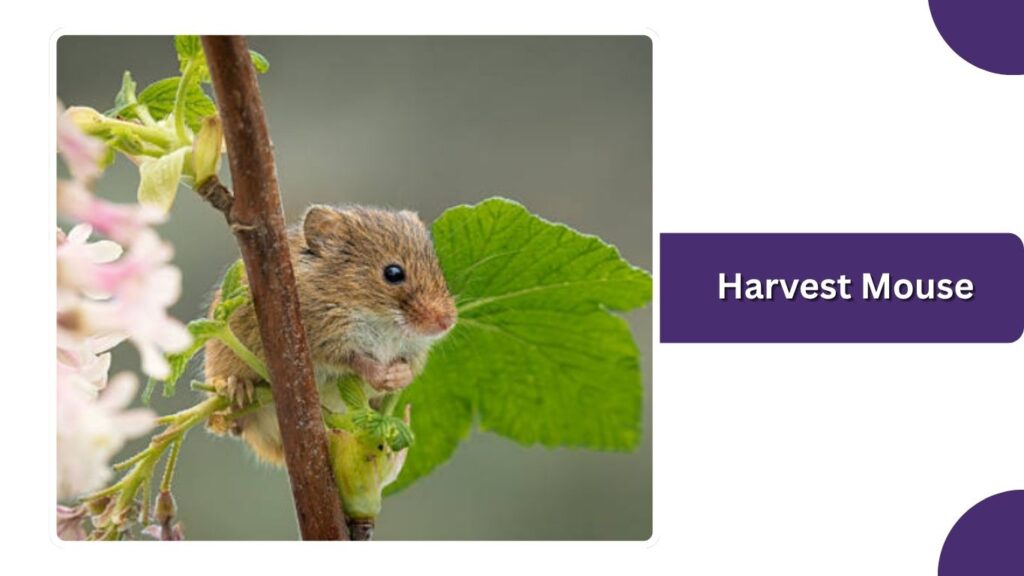
The harvest mouse is one of the smallest rodents in the world, known for its delicate body and excellent climbing ability. It is commonly found in grassy habitats and is especially notable for building small, woven nests above the ground.
Identification
- Body length about 5 to 7 cm
- Tail almost equal to body length and used for balance
- Golden-brown fur with a lighter underside
- Small rounded ears and black eyes
- Tiny, grasping feet for climbing
Habitat and Distribution
Harvest mice are found across Europe and parts of Asia. They live in grasslands, खेत edges, reed beds, and agricultural fields. These mice prefer areas with tall grasses where they can easily hide and build nests. Their nests are usually suspended above the ground, attached to grass stems, which helps protect them from predators. They thrive in environments that provide both food and dense vegetation for shelter.
Behavior and Diet
Harvest mice are active climbers and spend much of their time above the ground. They are mostly active during the night but can also be seen during the day. Their diet includes seeds, grains, small insects, and berries. They use their tails to help balance while climbing thin stems. These mice are generally solitary but may live close to others in areas with abundant food.
Lifespan
In the wild, harvest mice usually live around 1 to 2 years. Their small size makes them vulnerable to predators such as birds and snakes. In safer environments, such as captivity, they may live slightly longer.
8. Jerboa
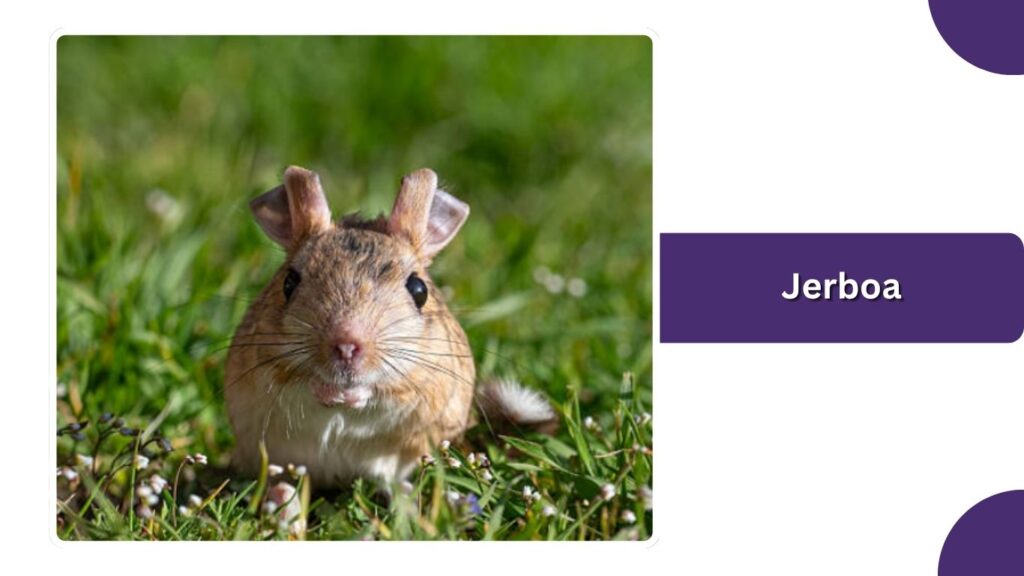
The jerboa is a small desert rodent known for its long hind legs and unique hopping movement, similar to a kangaroo. It is well adapted to dry environments and can survive with very little water. This nocturnal animal is rarely seen during the day, as it stays hidden to avoid extreme heat and predators.
Identification
- Body length about 5 to 10 cm
- Long hind legs adapted for jumping
- Tail longer than body with a tuft at the end
- Large ears for hearing and heat control
- Soft sandy-colored fur
Habitat and Distribution
Jerboas are found in deserts and semi-arid regions across North Africa and Asia, including countries like Mongolia, China, and parts of the Middle East. They prefer sandy or loose soil where they can dig burrows. These burrows provide shelter from extreme temperatures and predators. Their environment is typically dry, with sparse vegetation, but they are highly adapted to these harsh conditions.
Behavior and Diet
Jerboas are nocturnal and spend the daytime inside their burrows. At night, they come out to forage and can move quickly by hopping on their strong hind legs. Their diet mainly consists of seeds, roots, and insects. They obtain most of their water from food, which helps them survive in dry habitats. Jerboas are generally solitary and rely on speed and agility to escape predators.
Lifespan
In the wild, jerboas usually live around 2 to 3 years. Their survival depends on environmental conditions and predation. In captivity, they may live slightly longer with proper care.
9. Chipmunk
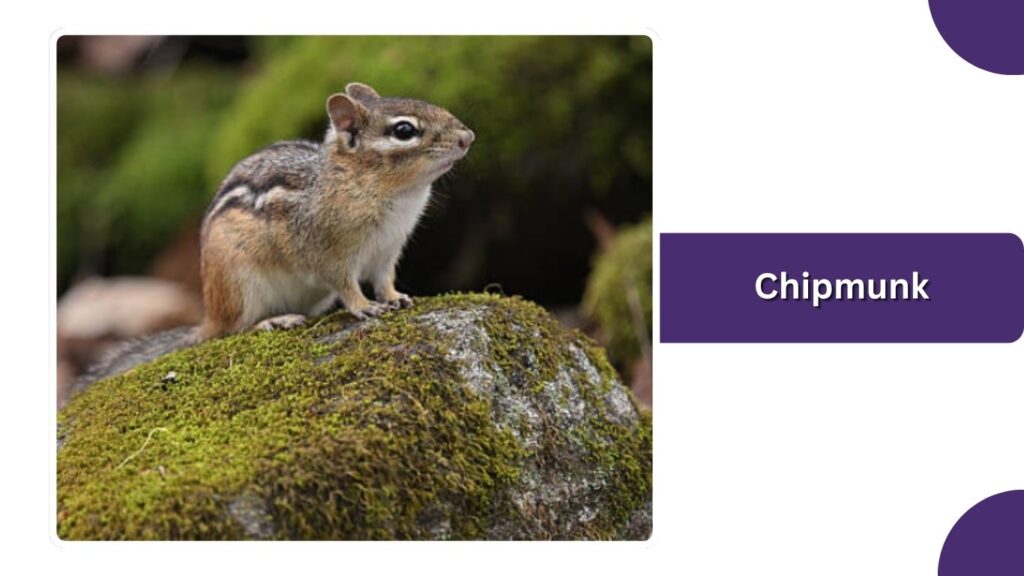
The chipmunk is a small, striped rodent known for its quick movements and cheek pouches used to store food. It is commonly found in forests and woodlands, where it gathers seeds and nuts. Active during the day, it is alert and agile, often seen darting across the ground or climbing trees in search of food.
Identification
- Body length about 20 to 25 cm including tail
- Distinct dark and light stripes along the back
- Bushy tail and small rounded ears
- Large cheek pouches for carrying food
- Brown fur with white and black markings
Habitat and Distribution
Chipmunks are mainly found in North America, especially in forests, woodlands, and grassy areas. Some species also live in parts of Asia. They prefer habitats with plenty of ground cover such as logs, rocks, and bushes, which provide protection from predators. Chipmunks build burrows underground with multiple chambers for sleeping, storing food, and raising young. These burrows are carefully hidden to avoid detection.
Behavior and Diet
Chipmunks are active during the day and are known for their energetic and curious nature. They spend much of their time collecting food and storing it in their cheek pouches to carry back to their burrows. Their diet includes seeds, nuts, fruits, insects, and occasionally small animals. They are generally solitary but may tolerate others in areas with abundant food. During colder months, they stay in their burrows and rely on stored food.
Lifespan
In the wild, chipmunks usually live around 2 to 3 years. Due to predators and environmental challenges, many do not reach old age. In captivity, they can live longer, sometimes up to 5 years with proper care.
10. Sugar Glider
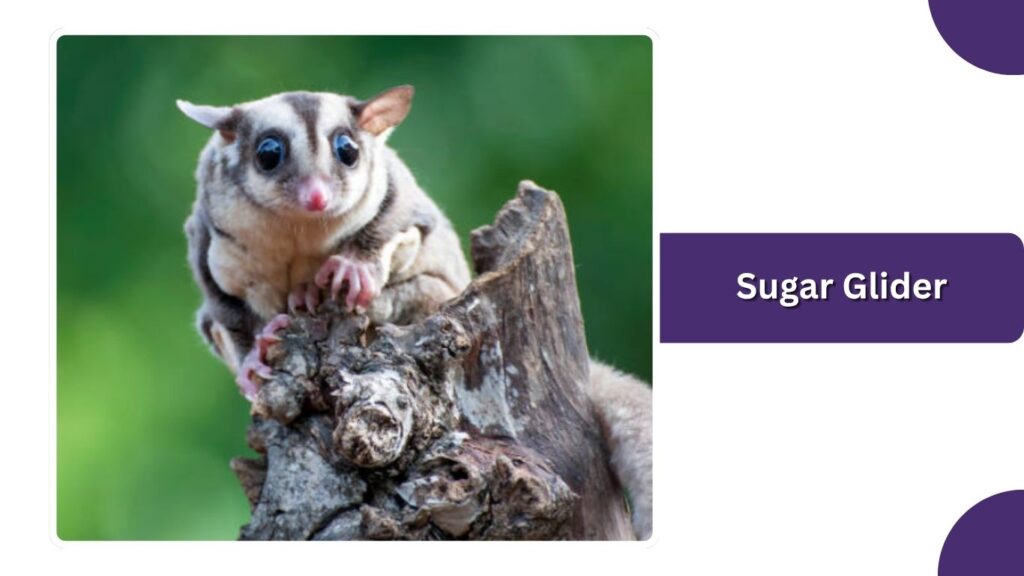
The sugar glider is a small, tree-dwelling mammal known for its ability to glide through the air using a membrane stretched between its limbs. Native to Australia and nearby regions, it is social and often lives in groups. Its name comes from its preference for sweet foods like nectar and fruit.
Identification
- Body length about 12 to 16 cm
- Long, bushy tail used for balance
- Large eyes adapted for night vision
- Gray fur with a dark stripe along the back
- Thin gliding membrane between front and hind limbs
Habitat and Distribution
Sugar gliders are found in Australia, Papua New Guinea, and parts of Indonesia. They live in forests, especially in areas with eucalyptus and acacia trees. These animals spend most of their lives in trees and rarely come to the ground. They nest in tree hollows lined with leaves, which provide safety and comfort. Their habitat must have plenty of trees close together to allow easy gliding from one branch to another.
Behavior and Diet
Sugar gliders are nocturnal and highly social, often living in groups. They communicate through sounds and scent marking. Their diet includes nectar, sap, fruits, and insects. They glide from tree to tree to find food and avoid predators. These animals are active at night, spending their time foraging, grooming, and interacting with group members.
Lifespan
In the wild, sugar gliders typically live around 5 to 7 years. In captivity, with proper care and diet, they can live much longer, often reaching 10 to 15 years.
11. Hedgehog
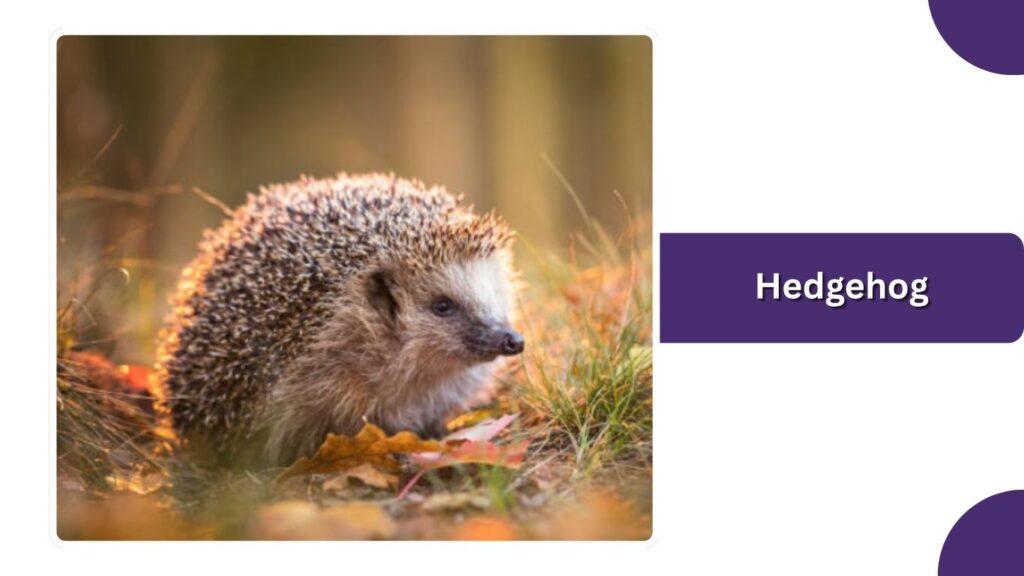
The hedgehog is a small, spiny mammal known for its unique defense mechanism of rolling into a tight ball when threatened. It is found in various parts of Europe, Asia, and Africa. Despite its prickly appearance, it is generally harmless and plays an important role in controlling insect populations in its environment.
Identification
- Body length about 15 to 30 cm
- Covered with sharp spines instead of soft fur on its back
- Small face with a pointed snout
- Short legs and a rounded body
- Brown or gray coloration
Habitat and Distribution
Hedgehogs are found across Europe, Asia, and Africa in a wide range of habitats. They prefer areas such as grasslands, forests, gardens, and farmlands where there is plenty of ground cover. They often build nests from leaves and grass under bushes or logs. Hedgehogs adapt well to human environments and are sometimes seen in gardens searching for food at night.
Behavior and Diet
Hedgehogs are mostly nocturnal and spend their nights foraging. They feed mainly on insects, worms, snails, and small creatures. When threatened, they curl into a ball so that their spines face outward, protecting them from predators. They are generally solitary animals and prefer to live alone except during breeding season.
Lifespan
In the wild, hedgehogs usually live around 3 to 5 years. Their lifespan can vary depending on food availability, habitat conditions, and threats from predators. In captivity, they may live slightly longer with proper care.
12. Pika
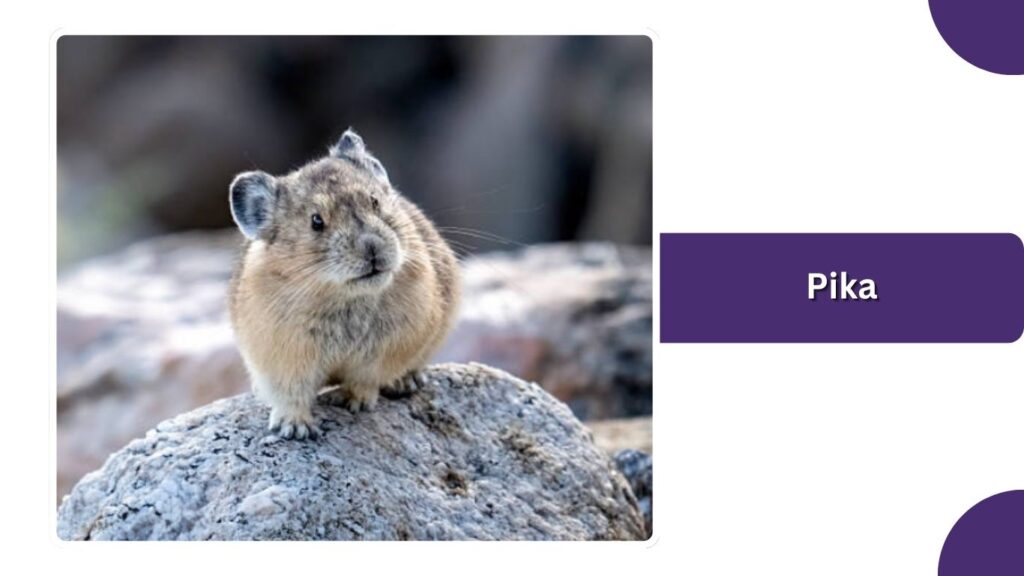
The pika is a small, mountain-dwelling mammal related to rabbits and hares. It is known for its round body, short limbs, and lack of a visible tail. Pikas are well adapted to cold environments and are often found in rocky areas, where they gather food and store it for winter survival.
Identification
- Body length about 15 to 23 cm
- Rounded body with no visible tail
- Short ears and small eyes
- Thick, soft fur in gray or brown shades
- Short legs suited for rocky terrain
Habitat and Distribution
Pikas are found in mountainous regions of North America and Asia. They live in rocky slopes, alpine meadows, and high-altitude environments where temperatures are cool. These animals prefer areas with plenty of rocks and crevices, which provide shelter from predators and harsh weather. They do not dig burrows like rabbits but instead use natural gaps between rocks as their homes.
Behavior and Diet
Pikas are active during the day and are known for their alert behavior. They feed mainly on grasses, herbs, and small plants. During warmer months, they collect and store vegetation in piles called “haypiles” to use as food during winter. Pikas are generally solitary but may live near others in suitable habitats. They communicate using sharp, high-pitched calls to warn of danger.
Lifespan
In the wild, pikas typically live around 3 to 6 years. Their lifespan depends on environmental conditions, food availability, and exposure to predators. In stable habitats, they may survive longer.
13. Tree Shrew
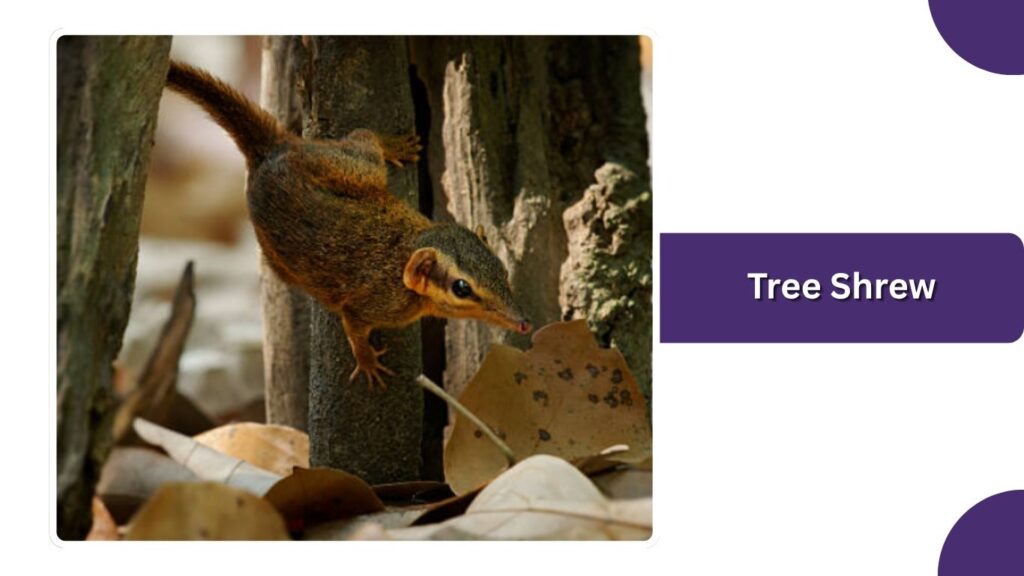
The tree shrew is a small, squirrel-like mammal known for its slender body and quick movements. Despite its name, it is not a true shrew. It is active during the day and spends much of its time climbing trees or moving through dense vegetation in search of food.
Identification
- Body length about 10 to 20 cm
- Long, bushy tail
- Pointed snout and small ears
- Brown or gray fur
- Sharp claws for climbing
Habitat and Distribution
Tree shrews are found in Southeast Asia, including countries like Malaysia, Indonesia, and Thailand. They live in tropical forests, plantations, and wooded areas. These animals are comfortable both on the ground and in trees, often moving between the two. They prefer habitats with dense vegetation, which provides shelter and easy access to food sources. Their environment usually includes warm temperatures and plenty of plant cover.
Behavior and Diet
Tree shrews are active during the day and are usually solitary or found in pairs. They are very quick and alert, often moving rapidly through branches or along the forest floor. Their diet mainly includes insects, fruits, and small animals. They use their sharp sense of smell and vision to locate food. Tree shrews are territorial and may mark their area using scent.
Lifespan
In the wild, tree shrews typically live around 2 to 4 years. Their lifespan depends on environmental factors such as food availability and predation. In captivity, they may live slightly longer with proper care.
14. Least Weasel
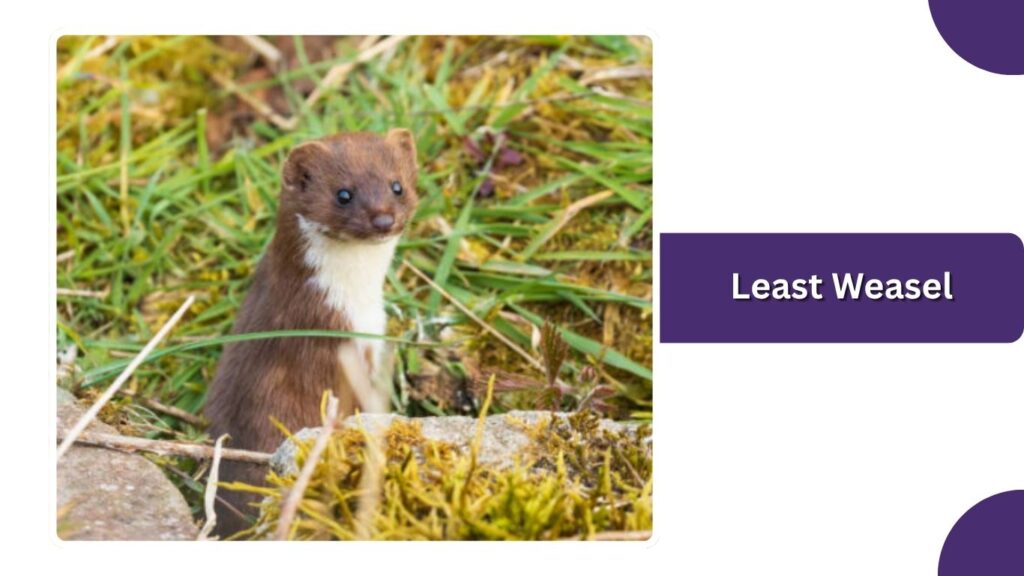
The least weasel is the smallest carnivorous mammal in the world. It has a slender body and is a skilled hunter despite its tiny size. This animal is highly active and known for its ability to take down prey larger than itself, making it an efficient predator in its environment.
Identification
- Body length about 11 to 26 cm
- Long, thin body with short legs
- Brown fur on the back and white underside
- Small head with short ears
- Tail is short and usually without a black tip
Habitat and Distribution
Least weasels are found across Europe, Asia, and North America. They live in a variety of habitats including grasslands, forests, farmlands, and tundra regions. These animals prefer areas with plenty of cover such as bushes, rocks, or burrows. They often use the tunnels of other animals for shelter and hunting. Their wide distribution shows their adaptability to different climates and environments.
Behavior and Diet
Least weasels are active hunters both day and night. They mainly feed on small rodents such as mice and voles, which they chase into burrows using their slim bodies. They are solitary and highly territorial animals. Despite their small size, they are fearless and aggressive when hunting. Their fast movements and sharp teeth make them very effective predators.
Lifespan
In the wild, least weasels usually live around 1 to 3 years. Their short lifespan is influenced by predators, food availability, and environmental conditions. In captivity, they may live slightly longer with proper care.
15. Fennec Fox
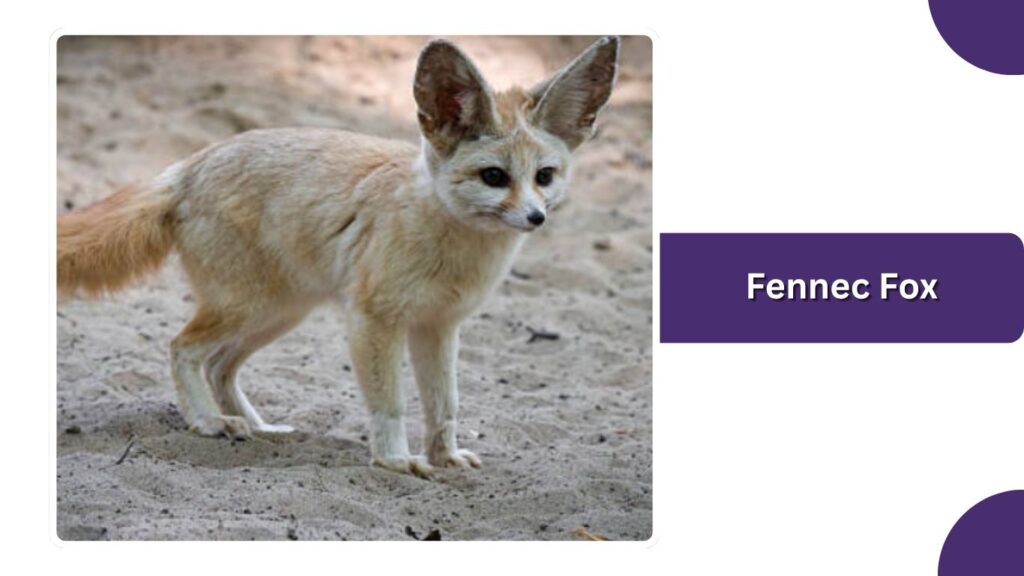
The fennec fox is the smallest species of fox, easily recognized by its unusually large ears. Native to desert regions, it is well adapted to hot climates and sandy environments. This nocturnal animal is known for its playful behavior and ability to survive with very little water.
Identification
- Body length about 24 to 41 cm
- Large ears that help release body heat
- Cream-colored fur suited for desert camouflage
- Bushy tail with a dark tip
- Small, lightweight body
Habitat and Distribution
Fennec foxes are found in the deserts of North Africa, especially the Sahara. They live in sandy areas where they dig burrows to escape the heat of the day and stay safe from predators. These burrows can be complex, with multiple entrances and tunnels. Their habitat is extremely dry, with little vegetation, but they are highly adapted to survive in such harsh conditions.
Behavior and Diet
Fennec foxes are nocturnal and become active at night when temperatures are cooler. They are social animals and often live in small groups. Their diet includes insects, small rodents, birds, and fruits. They use their keen hearing to locate prey underground. Their large ears also help regulate body temperature in the hot desert climate.
Lifespan
In the wild, fennec foxes typically live around 10 years. In captivity, with proper care and nutrition, they can live longer, often reaching up to 12 to 14 years.
16. Axolotl
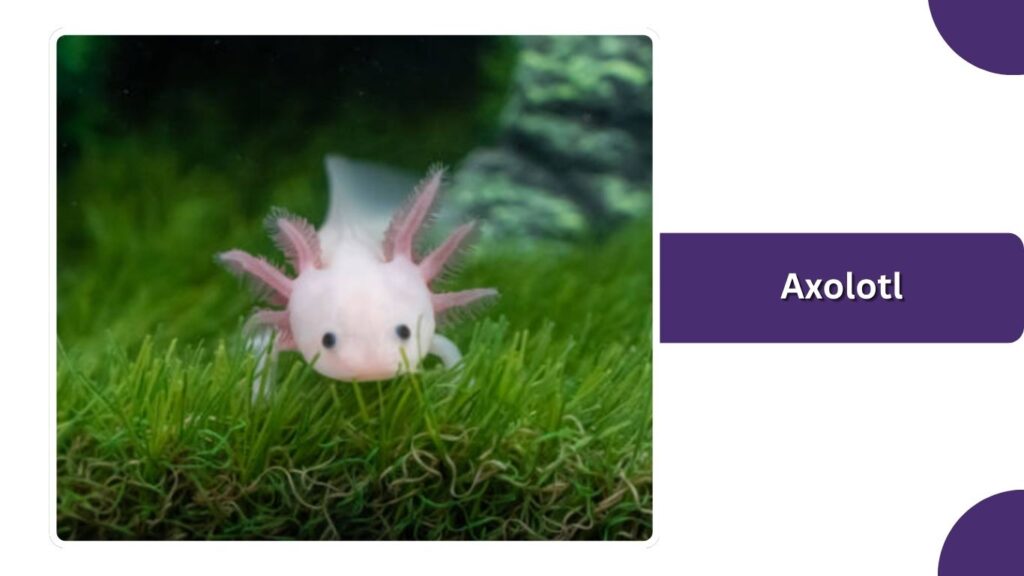
The axolotl is a small aquatic amphibian known for its unique ability to regenerate body parts, including limbs and even parts of its heart and brain. Native to Mexico, it remains in its larval stage throughout its life. Its unusual appearance and regenerative abilities make it one of the most fascinating small animals.
Identification
- Body length about 15 to 30 cm
- Smooth, soft skin
- External feathery gills on both sides of the head
- Wide mouth with a flat head
- Usually pink, white, or dark-colored body
Habitat and Distribution
Axolotls are native to lakes and canals in Mexico, especially Lake Xochimilco. They live in freshwater environments with slow-moving water and plenty of vegetation. These habitats provide shelter and food, as well as protection from predators. Due to urban development and pollution, their natural habitat has been greatly reduced, making them critically endangered in the wild.
Behavior and Diet
Axolotls are mostly solitary and spend their time resting on the bottom of the water. They are carnivorous and feed on small fish, worms, insects, and crustaceans. They use a suction method to capture prey quickly. These animals are generally calm and slow-moving but can react quickly when hunting.
Lifespan
In the wild, axolotls typically live around 5 to 6 years, though many do not survive due to environmental threats. In captivity, with proper care, they can live up to 10 to 15 years.
17. Glass Frog
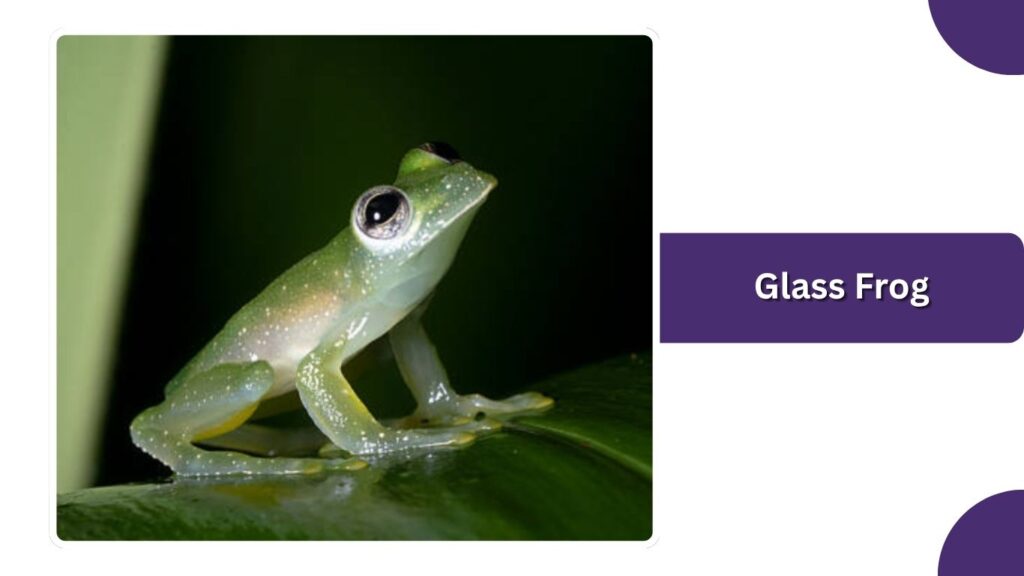
The glass frog is a small tree frog known for its transparent skin, especially on its underside, which allows internal organs to be seen. It is mostly found in tropical regions and is admired for its unique appearance. These frogs are usually active at night and spend much of their time in trees near water.
Identification
- Body length about 3 to 7 cm
- Bright green upper body
- Transparent or translucent underside
- Large forward-facing eyes
- Slim body with long limbs
Habitat and Distribution
Glass frogs are found in Central and South America, especially in countries like Costa Rica, Ecuador, and Colombia. They live in tropical rainforests, usually near streams and rivers. These frogs prefer humid environments with dense vegetation, where they can easily hide among leaves. They often stay on the underside of leaves during the day to avoid predators and sunlight.
Behavior and Diet
Glass frogs are nocturnal and become active at night. They feed mainly on small insects such as flies, ants, and spiders. Males are known to guard eggs laid on leaves above water, protecting them from predators. When the eggs hatch, the tadpoles fall into the water below. These frogs are generally quiet but can make soft calls during mating season.
Lifespan
In the wild, glass frogs typically live around 10 to 14 years, depending on environmental conditions and predation. Their lifespan can vary based on habitat quality and availability of food.
18. Dart Frog
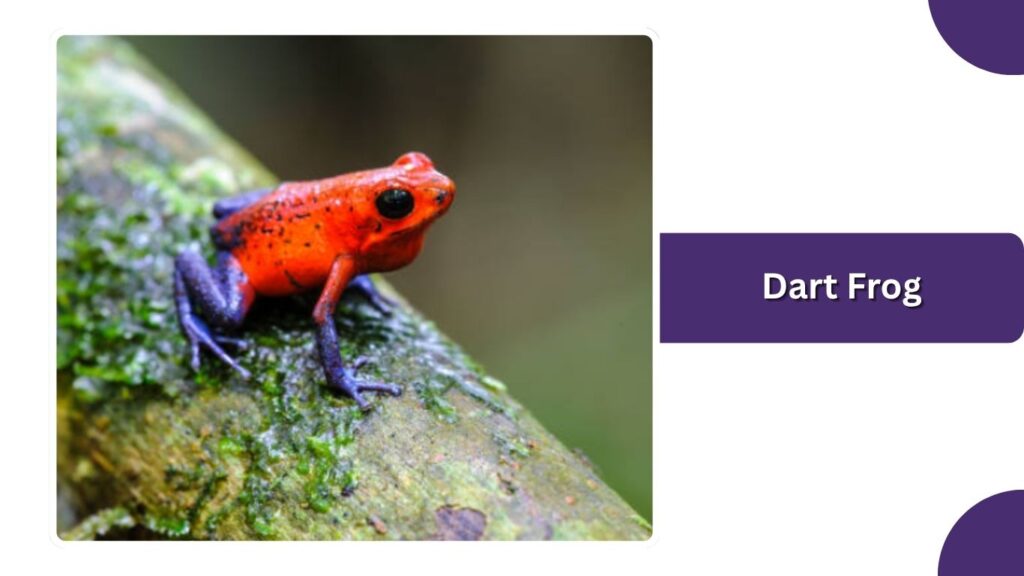
The dart frog, also known as the poison dart frog, is a small and brightly colored amphibian found in tropical forests. It is famous for its vivid colors and toxic skin, which serves as a warning to predators. Despite its tiny size, it is one of the most striking and recognizable small animals.
Identification
- Body length about 1.5 to 6 cm
- Bright colors such as blue, yellow, red, or green
- Smooth, shiny skin
- Small, compact body
- Sticky toe pads for climbing
Habitat and Distribution
Dart frogs are found in Central and South America, especially in rainforests of countries like Brazil, Colombia, and Costa Rica. They prefer warm, humid environments with dense vegetation. These frogs usually live near the forest floor or low plants, where moisture levels are high. Their habitat provides both shelter and access to food sources like insects.
Behavior and Diet
Dart frogs are active during the day, which is unusual for many small amphibians. They feed mainly on ants, termites, and small insects. Their bright colors act as a warning signal to predators about their toxicity. Some species show parental care, carrying tadpoles to water sources after hatching. They are generally solitary but may be seen in small groups.
Lifespan
In the wild, dart frogs usually live around 5 to 10 years. In captivity, with proper care and a controlled environment, they can live longer, sometimes reaching up to 10 to 15 years.
19. Seahorse
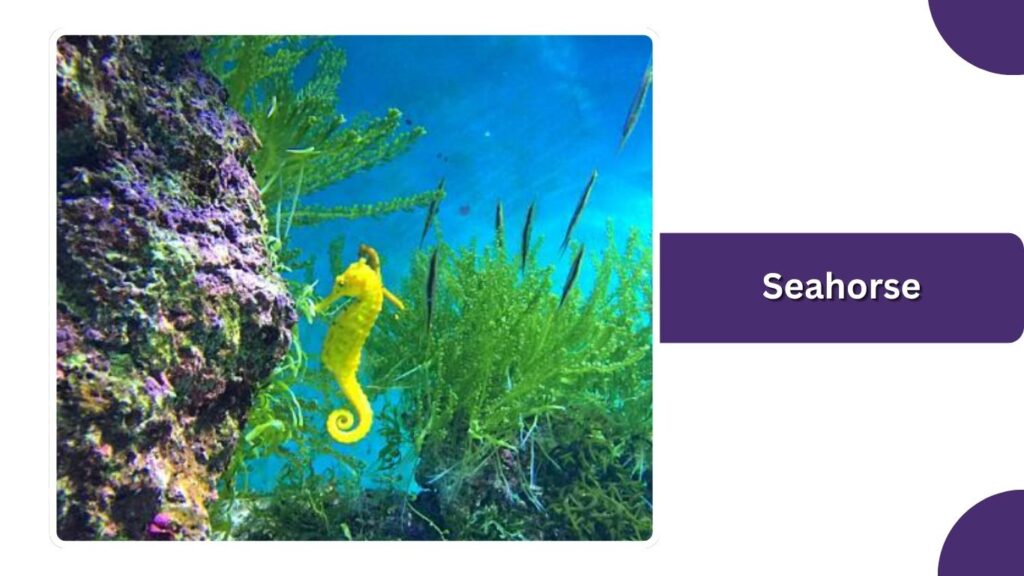
The seahorse is a small marine animal known for its horse-like head and upright swimming posture. It belongs to the fish family but has a very unique appearance and behavior. Seahorses are slow swimmers and rely on camouflage to protect themselves from predators in ocean environments.
Identification
- Body length about 2 to 15 cm depending on species
- Horse-shaped head with a curved neck
- Prehensile tail used to grasp objects
- Bony body covered with plates instead of scales
- Colors vary to blend with surroundings
Habitat and Distribution
Seahorses are found in shallow coastal waters around the world, especially in tropical and temperate regions. They live in areas such as seagrass beds, coral reefs, and mangroves. These habitats provide plenty of hiding places and objects they can hold onto with their tails. Seahorses prefer calm waters where they can anchor themselves and avoid strong currents.
Behavior and Diet
Seahorses are slow-moving and rely on camouflage to avoid predators. They use their tails to cling to plants or coral. Their diet mainly consists of small crustaceans and plankton, which they suck into their mouths quickly. Seahorses are unique because males carry and give birth to the young. They are often seen alone or in pairs.
Lifespan
In the wild, seahorses usually live around 1 to 5 years depending on the species. Their lifespan is influenced by environmental conditions and predation. In captivity, they may live longer with proper care.
20. Guppy
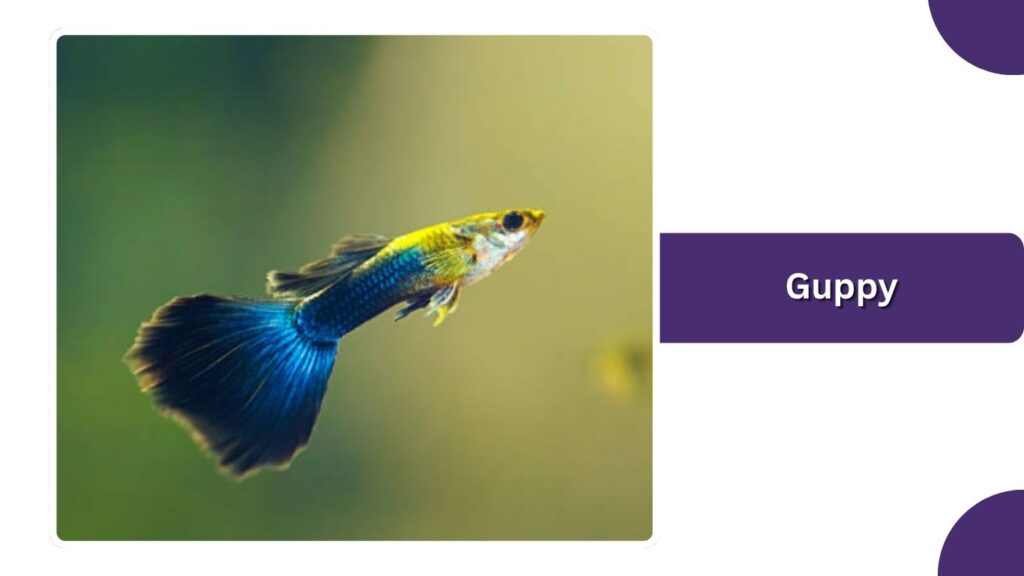
The guppy is a small freshwater fish known for its bright colors and flowing tails. It is one of the most popular aquarium fish in the world due to its easy care and active nature. Guppies are highly adaptable and can live in a variety of water conditions, making them widespread in many regions.
Identification
- Body length about 3 to 6 cm
- Males are smaller and more colorful than females
- Bright colors like orange, blue, red, and green
- Flowing tail fins with various patterns
- Slender body shape
Habitat and Distribution
Guppies are native to parts of South America, including countries like Venezuela, Brazil, and Guyana. They live in freshwater habitats such as streams, rivers, ponds, and lakes. Due to their adaptability, they have been introduced to many other parts of the world. They prefer warm water with slow currents and areas with vegetation, which provide shelter and breeding spaces.
Behavior and Diet
Guppies are active, social fish that often swim in groups. They are peaceful and can live with other small fish. Their diet includes algae, small insects, and plant material. In aquariums, they are often fed flakes or pellets. Guppies are known for their rapid reproduction, with females giving birth to live young instead of laying eggs.
Lifespan
In the wild, guppies typically live around 1 to 2 years. In captivity, with proper care and stable conditions, they can live slightly longer, often up to 2 to 3 years.
21. Ladybug
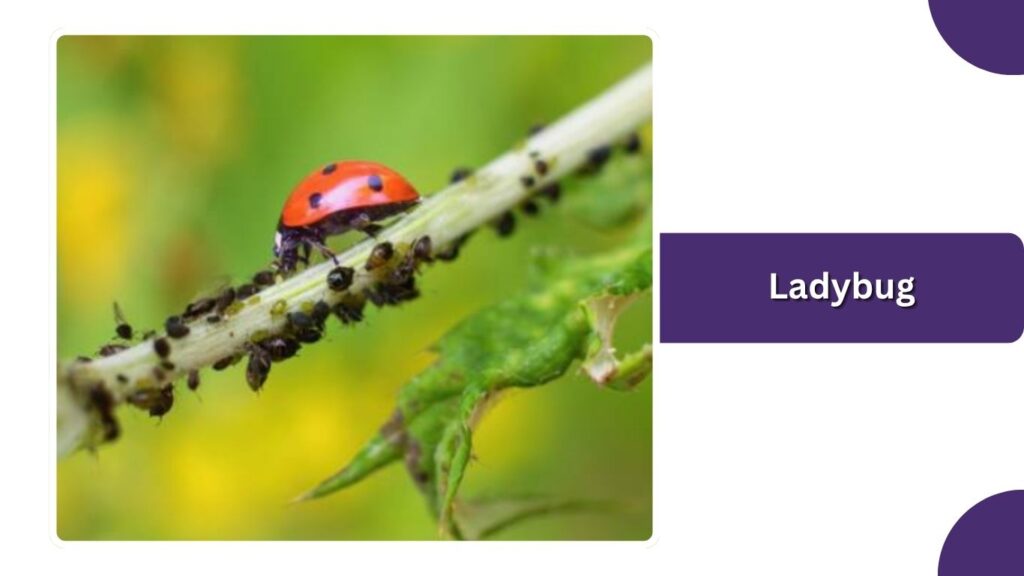
The ladybug, also known as a ladybird beetle, is a small insect famous for its bright red or orange shell with black spots. It is considered beneficial because it helps control harmful pests like aphids. Ladybugs are found in many parts of the world and are often seen in gardens and fields.
Identification
- Body length about 0.8 to 1.8 cm
- Round, dome-shaped body
- Bright red, orange, or yellow wing covers with black spots
- Black head with small white markings
- Six short legs
Habitat and Distribution
Ladybugs are found worldwide in a wide range of habitats, including gardens, forests, grasslands, and agricultural fields. They prefer areas with plenty of plants where their prey is abundant. During colder months, they often gather in large groups and hide in sheltered places like under leaves, bark, or inside buildings to survive the winter.
Behavior and Diet
Ladybugs are active during the day and are known for their role in controlling pests. They mainly feed on aphids, small insects, and mites. Both adult ladybugs and their larvae are effective predators. When threatened, they may release a yellow fluid as a defense mechanism. They are generally harmless to humans.
Lifespan
In the wild, ladybugs usually live around 1 year, though some species can live longer depending on environmental conditions. Their lifespan includes stages such as egg, larva, pupa, and adult.
22. Praying Mantis
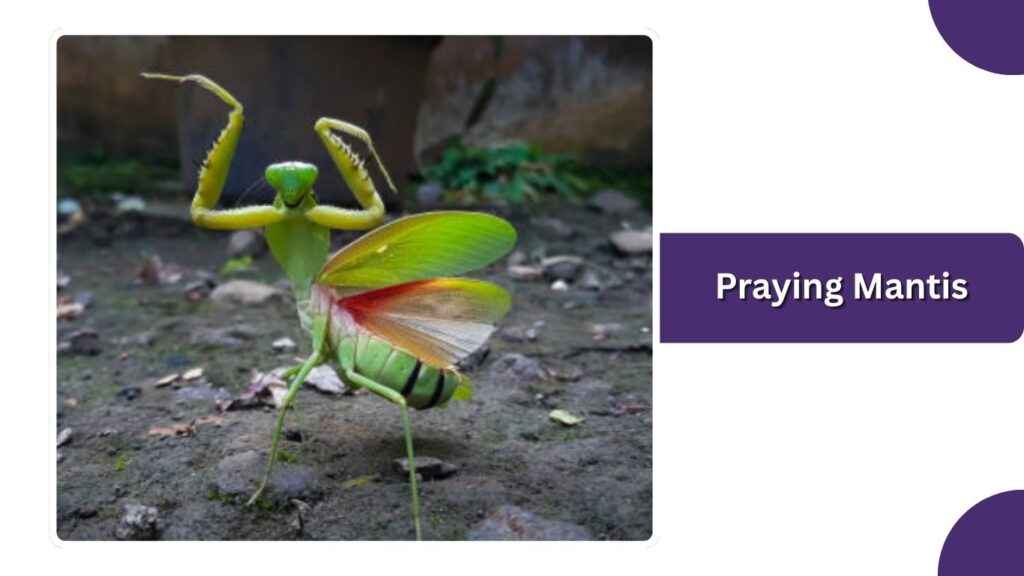
The praying mantis is a small insect known for its folded front legs that look like it is praying. It is a skilled predator with excellent camouflage and quick reflexes. Found in many parts of the world, it plays an important role in controlling insect populations.
Identification
- Body length about 4 to 10 cm
- Long, slender body
- Triangular head with large compound eyes
- Front legs folded and adapted for catching prey
- Green or brown color for camouflage
Habitat and Distribution
Praying mantises are found in tropical and temperate regions across the world, including Asia, Africa, Europe, and the Americas. They live in gardens, forests, grasslands, and fields where vegetation is present. These insects prefer environments with plenty of plants, which help them hide and hunt effectively. Their coloration allows them to blend into leaves and branches.
Behavior and Diet
Praying mantises are ambush predators and remain still while waiting for prey. They feed on insects such as flies, crickets, and moths, and sometimes even small vertebrates. They use their strong front legs to quickly grab prey. They are mostly solitary and can be active during both day and night depending on the species.
Lifespan
In the wild, praying mantises typically live about 6 months to 1 year. Their lifespan depends on environmental conditions and food availability. They go through stages from egg to adult during their life cycle.
23. Dragonfly
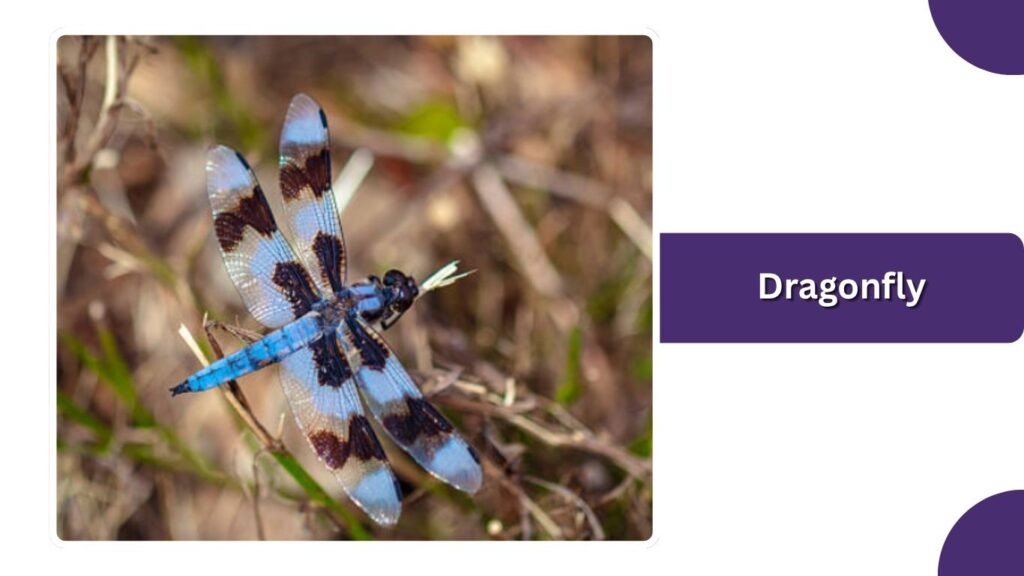
The dragonfly is a small flying insect known for its long body, large eyes, and strong wings. It is an excellent flier and can move in different directions with great speed and precision. Dragonflies are often seen near water and play an important role in controlling mosquito populations.
Identification
- Body length about 3 to 10 cm
- Long, slender body
- Two pairs of transparent wings
- Large compound eyes covering most of the head
- Bright or metallic colors such as blue, green, or red
Habitat and Distribution
Dragonflies are found all over the world, especially near freshwater habitats like ponds, lakes, rivers, and wetlands. They need water to reproduce, as their larvae live in aquatic environments. Adult dragonflies are often seen flying above water or resting on nearby plants. They prefer warm climates but can also be found in temperate regions.
Behavior and Diet
Dragonflies are active during the day and are skilled hunters. They feed mainly on small flying insects such as mosquitoes, flies, and other tiny bugs. They catch prey in mid-air using their strong legs. Dragonflies are mostly solitary but may gather in areas with abundant food. Their fast flight helps them avoid predators and hunt efficiently.
Lifespan
Dragonflies spend most of their life as aquatic larvae, which can last from several months to a few years depending on the species. As adults, they usually live for a few weeks to a few months.
24. Ant
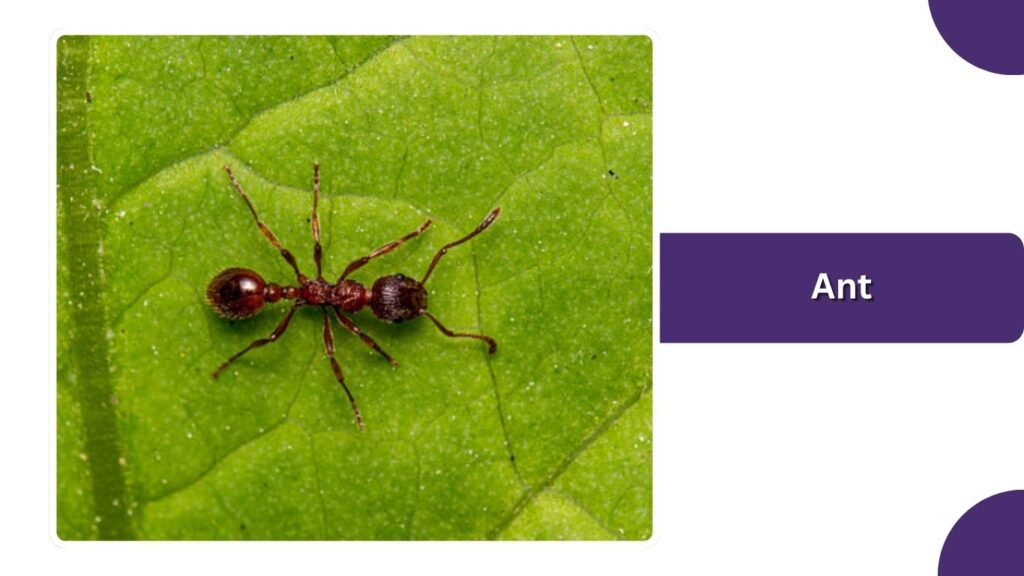
The ant is a tiny but highly organized insect known for its teamwork and strong social structure. It lives in colonies that can range from a few individuals to millions. Ants are found almost everywhere on Earth and are known for their ability to carry objects much heavier than their own body weight.
Identification
- Body length about 1 to 25 mm depending on species
- Three-part body: head, thorax, and abdomen
- Six legs and a pair of antennae
- Strong jaws for carrying and cutting
- Colors vary from black and brown to red
Habitat and Distribution
Ants are found on every continent except Antarctica. They live in a wide variety of habitats including forests, deserts, grasslands, and even urban areas. Ant colonies are usually built underground, inside wood, or under rocks. Some species also build nests in trees. Their adaptability allows them to survive in many different environmental conditions.
Behavior and Diet
Ants are social insects that live in structured colonies with different roles such as workers, soldiers, and a queen. They communicate using chemical signals called pheromones. Their diet varies widely and can include seeds, nectar, fungi, and other insects. Many ants are scavengers, while some actively hunt for food.
Lifespan
The lifespan of ants varies by role and species. Worker ants usually live for a few months, while queens can live for several years, sometimes even over a decade in certain species.
25. Honey Bee
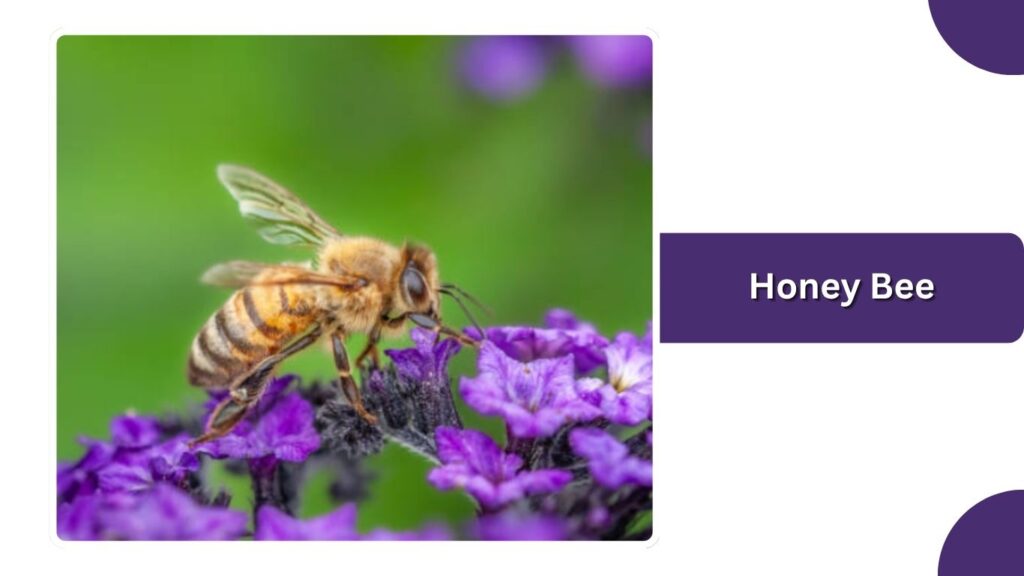
The honey bee is a small flying insect known for producing honey and playing a vital role in pollination. It lives in highly organized colonies and is essential for maintaining ecosystems and supporting agriculture. Honey bees are social insects that work together efficiently to gather food and protect their hive.
Identification
- Body length about 1 to 1.5 cm
- Fuzzy body with yellow and black stripes
- Two pairs of wings
- Six legs and antennae
- Stinger present in worker bees
Habitat and Distribution
Honey bees are found worldwide, except in extreme cold regions like Antarctica. They live in hives, which can be natural (such as hollow trees) or man-made structures. They prefer areas with abundant flowering plants, such as gardens, forests, and farmlands. These environments provide nectar and pollen, which are essential for their survival.
Behavior and Diet
Honey bees are highly social and live in colonies with a queen, workers, and drones. They communicate through movements known as the “waggle dance” to share information about food sources. Their diet mainly consists of nectar and pollen collected from flowers. They convert nectar into honey, which serves as stored food for the colony.
Lifespan
The lifespan of a honey bee depends on its role. Worker bees typically live around 5 to 6 weeks during active seasons, while queens can live for several years. Drones usually live for a few weeks and die after mating.
FAQs
What is the smallest animal in the world?
The smallest animal in the world depends on how it is measured. By weight, the Etruscan shrew is the smallest mammal, while the bumblebee bat is the smallest mammal by length. Among insects, some species are even smaller, but mammals are usually compared separately.
Which small animal lives the longest?
Among the listed animals, the honey bee queen and sugar glider can live the longest. A honey bee queen may live several years, while a sugar glider can live up to 10–15 years in captivity with proper care and a stable environment.
Are small animals more active than large animals?
Yes, many small animals are more active because they have faster metabolisms. They need to eat frequently to maintain energy. Animals like the Etruscan shrew or hummingbird-like species are constantly moving to survive.
Where do most small animals live?
Small animals live in a wide variety of habitats, including forests, deserts, grasslands, and water environments. Many prefer areas with dense vegetation or shelter, as their small size makes them more vulnerable to predators.
Why are small animals important to ecosystems?
Small animals play key roles in ecosystems. They help control insect populations, pollinate plants, spread seeds, and serve as food for larger animals. Without them, natural balance would be disrupted, affecting both wildlife and human life.