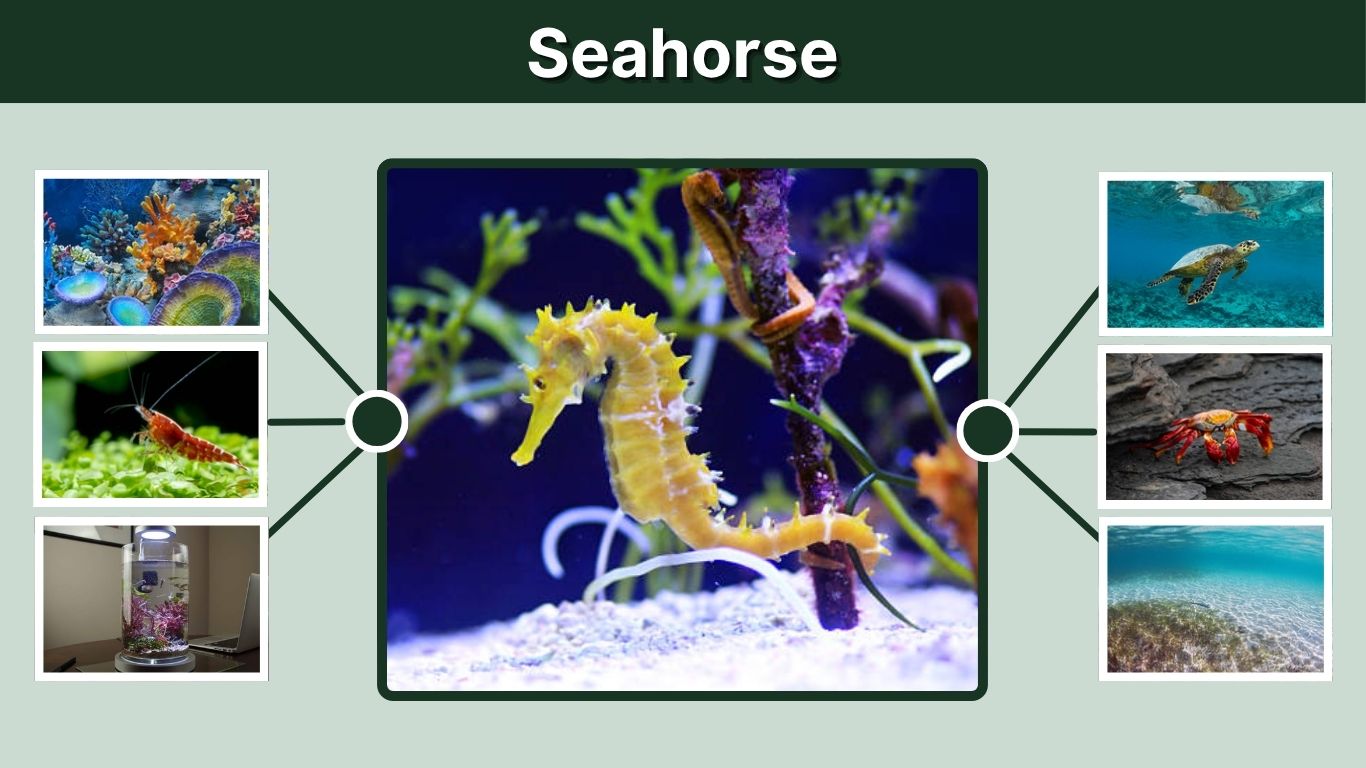
Seahorses are some of the most unique and fascinating creatures found in the ocean. Known for their horse-like heads and curled tails, these small marine fish live in shallow coastal waters around the world. Seahorses are famous for their unusual reproduction because males carry and give birth to babies instead of females. Despite their delicate appearance, they are skilled hunters that rely on camouflage and patience to survive. Understanding seahorse habitat, diet, reproduction, and conservation challenges helps reveal why these remarkable sea animals are so important in marine ecosystems.
What Is a Seahorse?
A seahorse is a small marine fish belonging to the genus Hippocampus. Unlike most fish, seahorses swim upright and have long snouts, curled tails, and bony bodies instead of scales. Their unusual shape makes them one of the most recognizable creatures in the ocean.
Seahorses are slow swimmers and depend heavily on camouflage to avoid predators. They use their tails to grip underwater plants and coral while waiting for tiny prey to drift nearby.
Key Facts About Seahorses
- Seahorses are classified as fish
- They belong to the pipefish family
- Male seahorses carry babies
- Most species live in shallow coastal waters
- They use camouflage for protection
Why Seahorses Are Unique
Seahorses differ from most fish in several unusual ways. Their bodies are covered with hard bony plates rather than scales, and they lack traditional fins used for fast swimming.
Another remarkable feature is their independent eye movement. Each eye can move separately, allowing the seahorse to watch for predators and prey at the same time.
What Does a Seahorse Look Like?
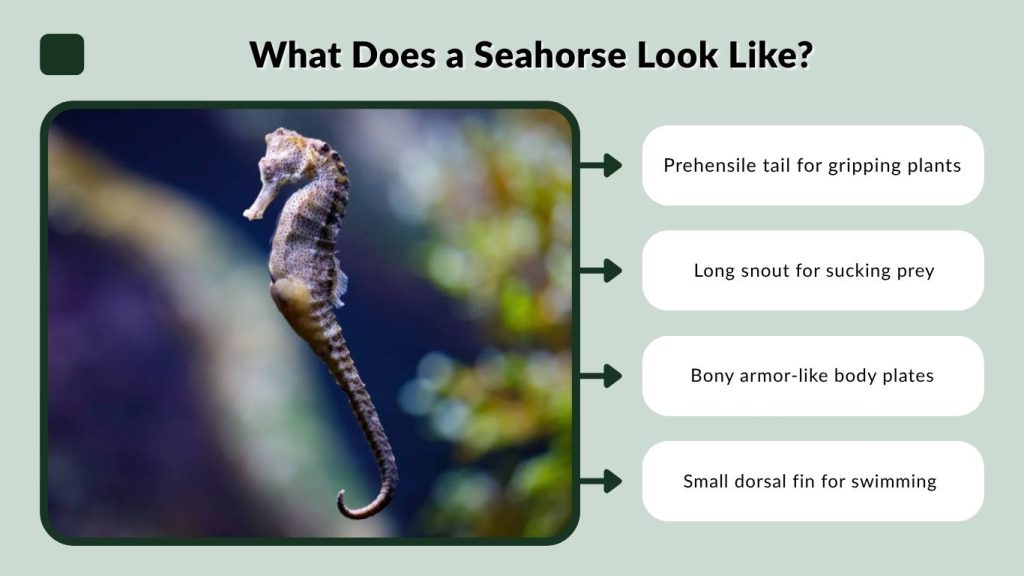
Seahorses have a highly distinctive appearance that resembles a tiny horse combined with a fish. Their long curved necks and tubular snouts make them easy to identify underwater.
Body color varies greatly between species and habitats. Some seahorses appear yellow, brown, black, orange, or even bright red depending on their surroundings.
Unique Seahorse Anatomy
Several physical features help seahorses survive in marine environments.
- Prehensile tail for gripping plants
- Long snout for sucking prey
- Bony armor-like body plates
- Small dorsal fin for swimming
- Independently moving eyes
Seahorse Size
Seahorse size varies widely depending on the species. Some dwarf seahorses are smaller than an inch, while larger species may grow over a foot long.
The smallest species are difficult to spot because they blend perfectly with coral and sea plants. Larger seahorses are still relatively slow-moving compared to many other ocean fish.
Types of Seahorses
Scientists have identified dozens of seahorse species living in tropical and temperate oceans around the world. Each species has slightly different body shapes, colors, and habitat preferences.
Some species live among coral reefs, while others prefer seagrass beds or mangrove roots. Their camouflage abilities help them adapt to different underwater environments.
Smallest and Largest Seahorse Species
Different seahorse species vary greatly in size.
- Pygmy seahorses are among the smallest
- Big-belly seahorses are among the largest
- Dwarf species hide easily in coral
- Larger species prefer seagrass habitats
Common Seahorse Species
Popular seahorse species include:
- Lined seahorse
- Pacific seahorse
- Big-belly seahorse
- Pygmy seahorse
- Tiger tail seahorse
Each species has unique coloration and habitat adaptations that improve survival in different marine ecosystems.
Where Do Seahorses Live?
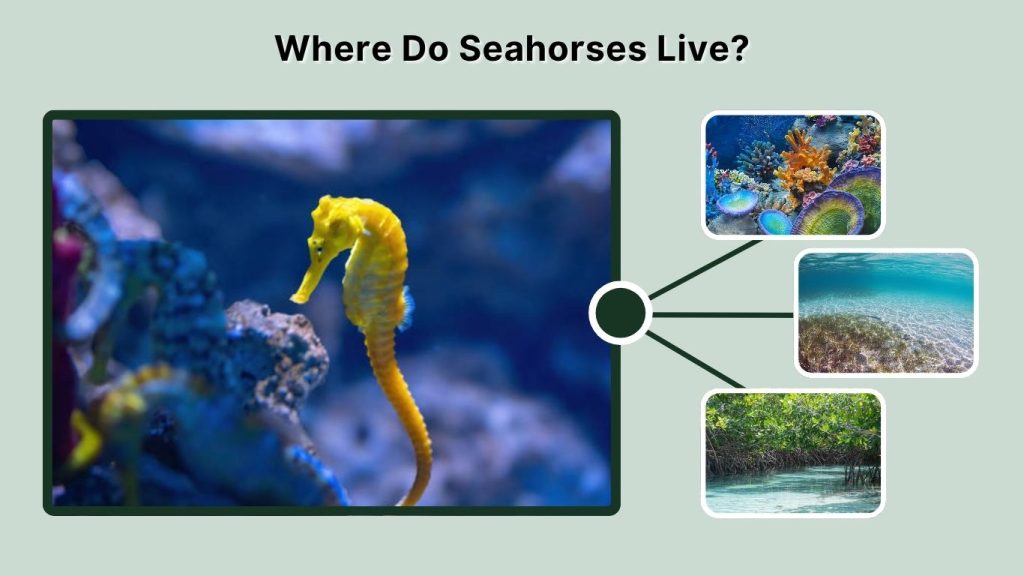
Seahorses live in shallow tropical and temperate oceans throughout the world. They are commonly found near coastlines where underwater vegetation and coral reefs provide shelter and food.
Because seahorses are weak swimmers, they prefer calm waters where strong currents are less likely to carry them away.
Seahorse Habitat
Seahorses commonly inhabit:
- Coral reefs
- Seagrass beds
- Mangrove forests
- Estuaries
- Coastal lagoons
These habitats provide hiding places, food sources, and surfaces for gripping with their tails.
Seahorse Range and Distribution
Seahorses are found in many ocean regions, especially:
- Indo-Pacific waters
- Atlantic coastlines
- Caribbean reefs
- Mediterranean areas
- Southeast Asian seas
Different species are adapted to different water temperatures and environments.
What Do Seahorses Eat?
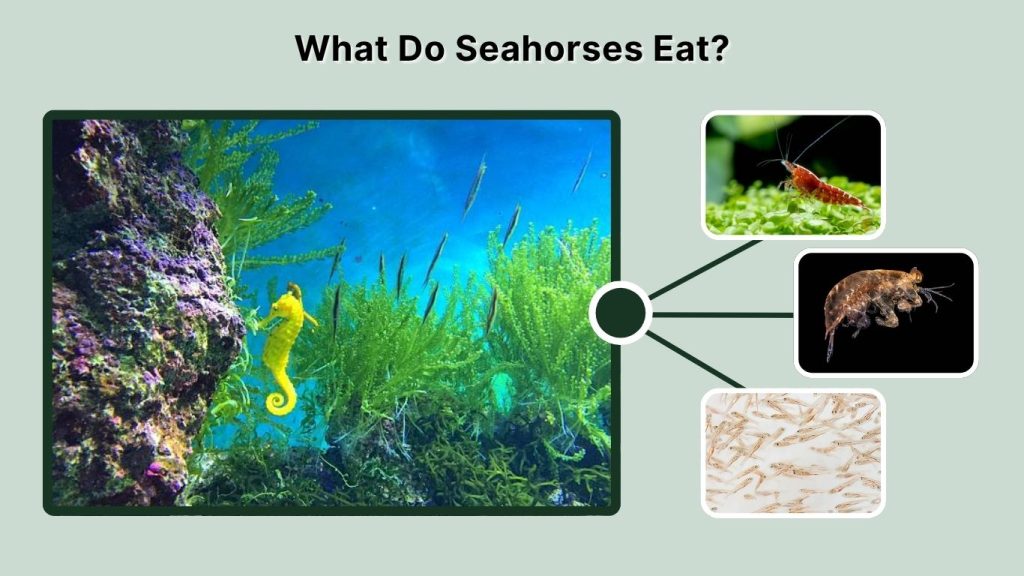
Seahorses are carnivorous hunters that feed on tiny marine animals. Because they lack teeth and stomachs, they must eat frequently throughout the day to survive.
They hunt by remaining still and using camouflage before quickly sucking prey into their snouts.
Common Seahorse Foods
- Tiny shrimp
- Plankton
- Small crustaceans
- Fish larvae
- Copepods
How Seahorses Hunt
Seahorses are ambush predators rather than active chasers. They wait quietly among coral or plants and strike rapidly when prey comes close enough.
Their long snouts create powerful suction that pulls prey directly into the mouth within milliseconds.
How Do Seahorses Reproduce?
Seahorse reproduction is one of the most unusual processes in the animal kingdom because males carry the developing babies instead of females.
During mating, the female transfers eggs into a special brood pouch located on the male’s abdomen. The male fertilizes and protects the eggs inside the pouch until the babies are fully developed.
Male Seahorse Pregnancy
Male seahorses perform several important reproductive roles:
- Carry fertilized eggs
- Protect developing embryos
- Control salt and oxygen levels
- Give birth to baby seahorses
Why Male Seahorses Give Birth
The brood pouch functions similarly to a protective nursery. Once the babies are ready, the male experiences muscular contractions and releases dozens or even hundreds of tiny seahorses into the water.
Seahorse Babies and Life Cycle
After birth, baby seahorses are completely independent and receive no parental care. They must immediately begin searching for food and avoiding predators in the open ocean.
Although a male seahorse may release hundreds of babies at once, only a small number survive to adulthood. Ocean currents, predators, and limited food sources make survival extremely difficult during the early stages of life.
Stages of the Seahorse Life Cycle
The life cycle of a seahorse includes several important stages:
- Egg fertilization inside the male pouch
- Embryo development during pregnancy
- Birth of fully formed baby seahorses
- Juvenile growth in shallow waters
- Adult maturity and reproduction
How Many Babies Can a Seahorse Have?
The number of babies varies greatly depending on the species. Some small species may produce only a few dozen offspring, while larger seahorses can release more than one thousand babies at a time.
Despite these large numbers, survival rates are low because young seahorses are vulnerable to predators and environmental changes.
Seahorse Predators and Defense Mechanisms
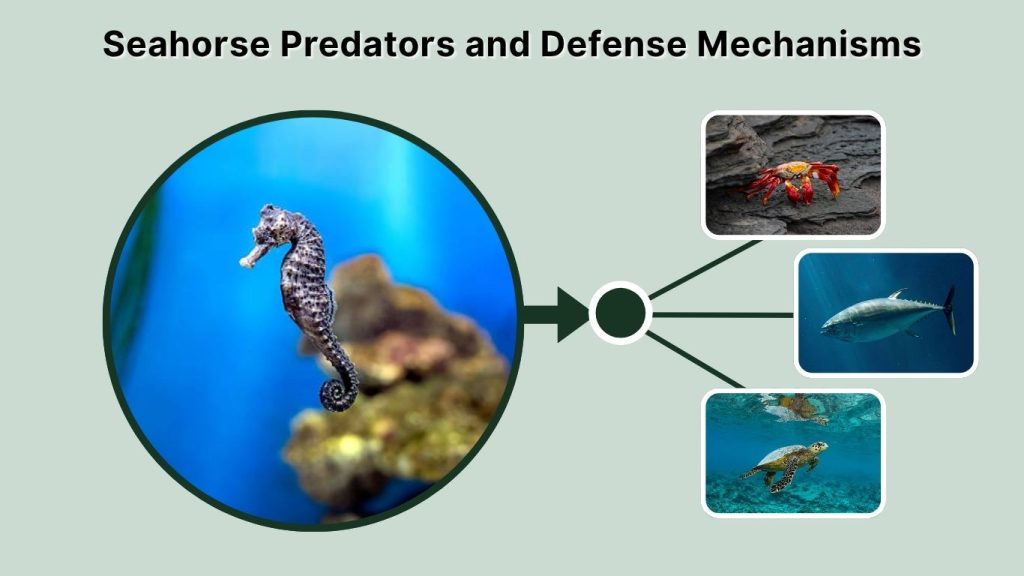
Seahorses are relatively weak swimmers and rely heavily on camouflage and stealth to avoid predators. Their bodies can blend into coral reefs, seagrass, and underwater vegetation, making them difficult to spot.
They often anchor themselves to plants or coral using their curled tails to avoid being swept away by currents.
Common Seahorse Predators
Many marine animals feed on seahorses, including:
- Crabs
- Rays
- Tuna
- Sea turtles
- Larger fish
How Seahorses Protect Themselves
Seahorses use several survival strategies:
- Camouflage coloration
- Slow, hidden movement
- Tail gripping for stability
- Staying among coral and plants
Their bony body plates also provide some protection against small predators.
Are Seahorses Endangered?
Many seahorse species face serious threats due to habitat destruction, pollution, and overfishing. Coastal development and damage to coral reefs and seagrass beds have reduced many natural habitats.
Seahorses are also collected for traditional medicine, souvenirs, and the aquarium trade in some regions of the world.
Major Threats to Seahorses
- Coral reef destruction
- Ocean pollution
- Climate change
- Overfishing
- Illegal wildlife trade
Seahorse Conservation Efforts
Conservation programs around the world focus on protecting marine habitats and reducing seahorse exploitation.
Important conservation actions include:
- Marine protected areas
- Captive breeding programs
- Fishing regulations
- Habitat restoration projects
- International trade protections
These efforts help support healthy seahorse populations and improve marine biodiversity.
Can Seahorses Be Kept as Pets?
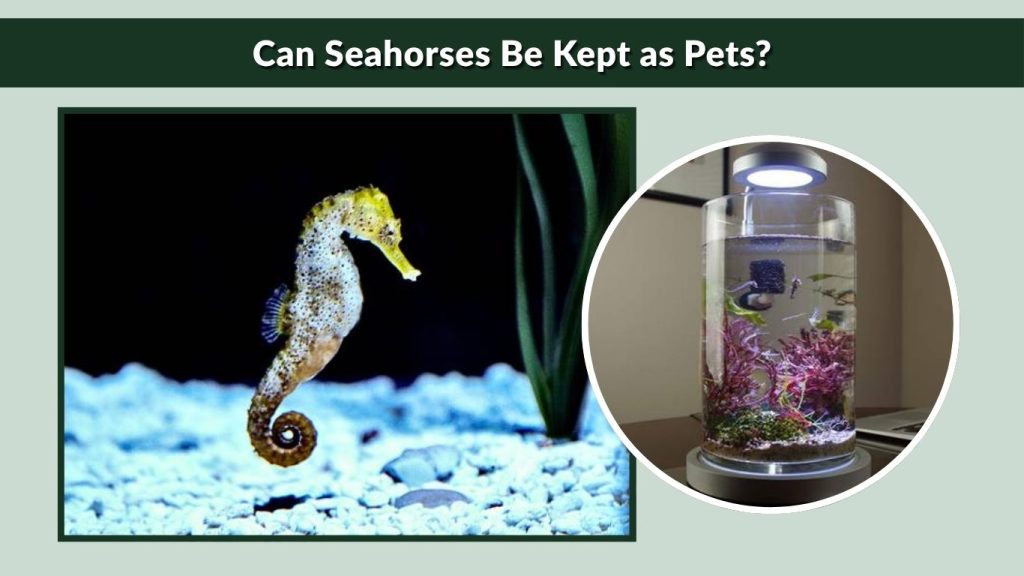
Seahorses can be kept in saltwater aquariums, but they require specialized care and stable water conditions. Because they are sensitive animals, beginner aquarium owners may struggle to maintain proper environments for them.
Captive-bred seahorses are generally preferred over wild-caught individuals because they adapt better to aquarium life and reduce pressure on natural populations.
Seahorse Aquarium Requirements
Proper seahorse tanks usually require:
- Stable saltwater conditions
- Gentle water flow
- Live or frozen food sources
- Plenty of plants or coral
- Peaceful tankmates
Challenges of Keeping Seahorses
Seahorses are delicate fish that can become stressed easily. Poor water quality, aggressive tankmates, or inadequate feeding may quickly lead to health problems.
Potential owners should research their care needs carefully before adding seahorses to an aquarium.
Interesting Seahorse Facts
Seahorses are filled with unusual characteristics that make them different from nearly every other fish species in the ocean.
Fascinating Seahorse Facts
- Male seahorses give birth
- Seahorses can change color
- They swim upright
- Each eye moves independently
- Some species mate repeatedly with the same partner
Why Seahorses Are Weak Swimmers
Seahorses move using a tiny dorsal fin that beats rapidly to push them through the water. Because this fin is very small, they cannot swim quickly and often rely on ocean currents for movement.
Their weak swimming ability is one reason they prefer calm coastal habitats with plenty of vegetation for protection.
Seahorse Camouflage and Behavior
Camouflage plays a major role in seahorse survival. Many species can slightly adjust their body color to blend into nearby coral, algae, or seagrass.
Seahorses are generally calm and solitary, though some species form seasonal pairs during breeding periods.
Seahorse Daily Behavior
Typical seahorse activities include:
- Hunting tiny prey
- Gripping plants with tails
- Resting among coral
- Avoiding predators
- Performing courtship dances
Their slow movement and unique posture make them one of the most recognizable marine animals in the world.
FAQs
Why do male seahorses give birth?
Male seahorses give birth because females place eggs into a special brood pouch on the male’s body. The male fertilizes and protects the eggs until the babies are fully developed and ready to be released into the water.
Are seahorses fish or mammals?
Seahorses are fish, not mammals. They breathe through gills, live underwater, and use fins for movement. Unlike most fish, however, they swim upright and have bony plates instead of scales.
How long do seahorses live?
The lifespan of a seahorse depends on the species and environment. Smaller species may live about one year, while larger seahorses can survive for several years in healthy marine habitats or properly maintained aquariums.
Can seahorses change color?
Yes, many seahorse species can change color to blend into their surroundings. This camouflage helps protect them from predators and allows them to hide among coral reefs, seagrass, and underwater plants more effectively.
What do baby seahorses eat?
Baby seahorses feed on extremely small marine organisms such as plankton and tiny crustaceans. Because they need constant food for growth, young seahorses spend much of their time hunting microscopic prey in the water.