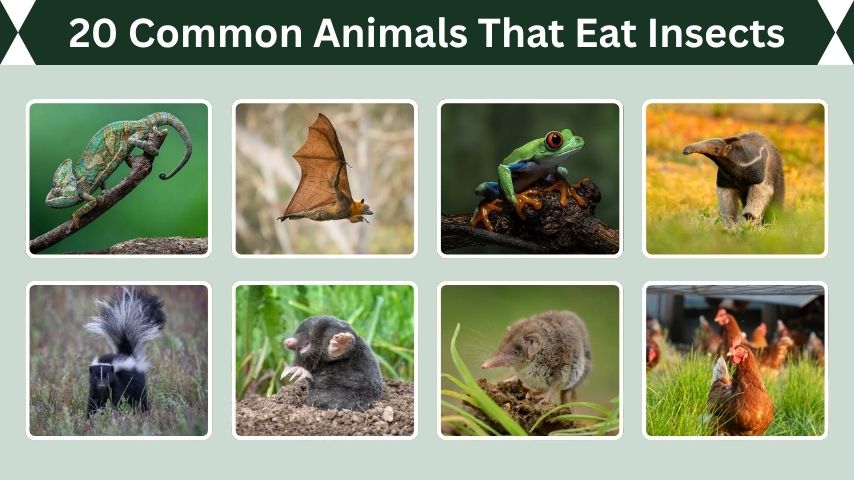
Insect-eating animals play an important role in nature by helping control insect populations and maintaining healthy ecosystems. From tiny frogs and spiders to powerful anteaters and bats, these creatures use special adaptations such as sticky tongues, sharp claws, fast flight, and excellent hearing to catch their prey. Many insect-eating animals are also helpful to humans because they reduce pests naturally in gardens, farms, and forests. Some hunt during the day, while others search for insects at night. This guide explores 20 common animals that survive mainly by feeding on insects and other small invertebrates.
1. Anteater
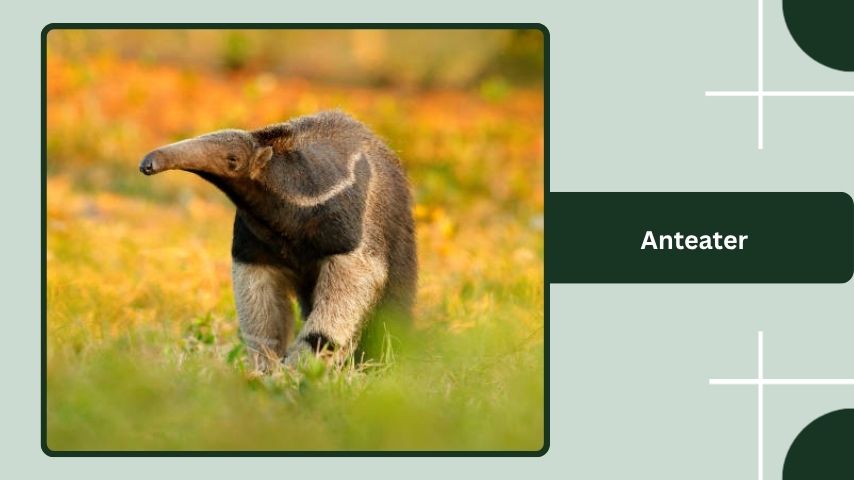
The Anteater is one of the most specialized insect-eating animals in the world. Famous for its long snout and sticky tongue, the anteater mainly feeds on ants and termites found in forests, grasslands, and tropical regions. These unusual mammals use powerful claws to break open insect nests before quickly collecting thousands of insects with their tongues. Anteaters are quiet, solitary animals that spend much of their day searching for food.
Identification
- Long narrow snout
- Sticky tongue that can extend far outward
- Large curved claws
- Thick fur coat
- Small eyes and ears
- Long bushy tail in some species
Habitat and Distribution
Anteaters are mainly found in Central and South America. They live in rainforests, savannas, grasslands, and wetlands where ants and termites are abundant. Different species prefer different habitats, but most require areas with soft soil and insect colonies for feeding.
Some anteaters spend more time in trees, while others stay mostly on the ground. Giant anteaters usually roam open grasslands and forests searching for termite mounds.
Diet and Feeding Behavior
Anteaters are insectivores, meaning insects make up nearly all of their diet. Their long sticky tongues can move rapidly inside anthills and termite nests, allowing them to consume thousands of insects each day.
Instead of destroying entire colonies, anteaters usually feed briefly before moving on. This behavior helps preserve insect populations and ensures future food sources remain available.
Behavior and Adaptations
Anteaters are generally solitary animals that rely heavily on smell rather than eyesight. Their strong claws provide defense against predators and help them dig into hard insect nests.
Despite their slow appearance, some anteaters can become aggressive when threatened. They may stand on their hind legs and use sharp claws for protection. Their specialized body structure makes them highly successful insect hunters in tropical ecosystems.
2. Aardvark
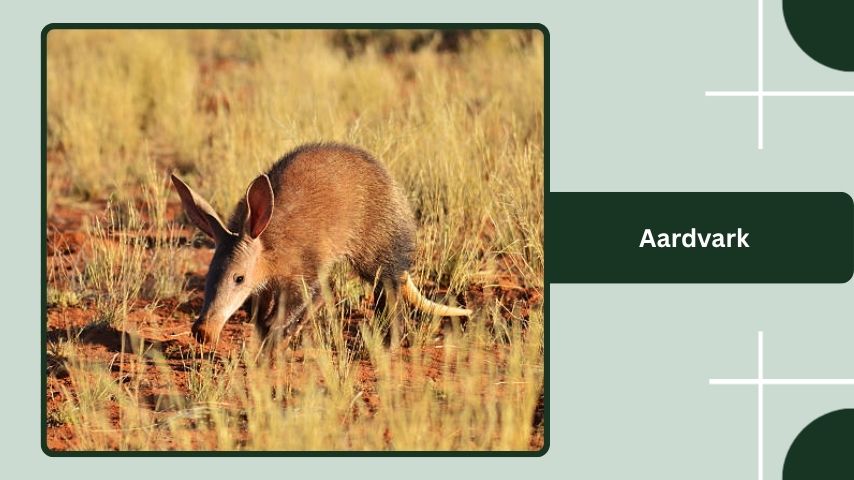
The Aardvark is a nocturnal mammal famous for eating ants and termites across Africa. Its name means “earth pig” because of its pig-like snout and digging behavior. Aardvarks use their strong claws to open insect nests and their sticky tongues to collect prey quickly. These animals spend most of the night searching for food and resting inside underground burrows during the day.
Identification
- Long pig-like snout
- Large upright ears
- Thick tail
- Powerful digging claws
- Grayish wrinkled skin
- Long sticky tongue
Habitat and Distribution
Aardvarks live throughout many parts of sub-Saharan Africa. They prefer grasslands, savannas, woodlands, and open forests where termites and ants are common. Areas with loose soil are especially important because aardvarks dig extensive burrow systems for shelter and protection.
Their burrows are also used by many other animals after being abandoned, making aardvarks important for local ecosystems.
Diet and Feeding Behavior
Aardvarks mainly feed on termites and ants. Using their sharp sense of smell, they locate insect colonies hidden underground. Once they find a nest, they dig rapidly with strong front claws and extend their sticky tongue deep into tunnels.
An aardvark may consume thousands of insects in a single night while traveling long distances in search of food.
Behavior and Adaptations
Aardvarks are solitary and mostly active after sunset. Their strong claws allow them to dig quickly both for food and safety. When threatened, they can escape into burrows or defend themselves using sharp claws.
Their thick skin protects them from insect bites while feeding. Excellent hearing and smell help them survive in dark nighttime environments where vision is less useful.
3. Armadillo
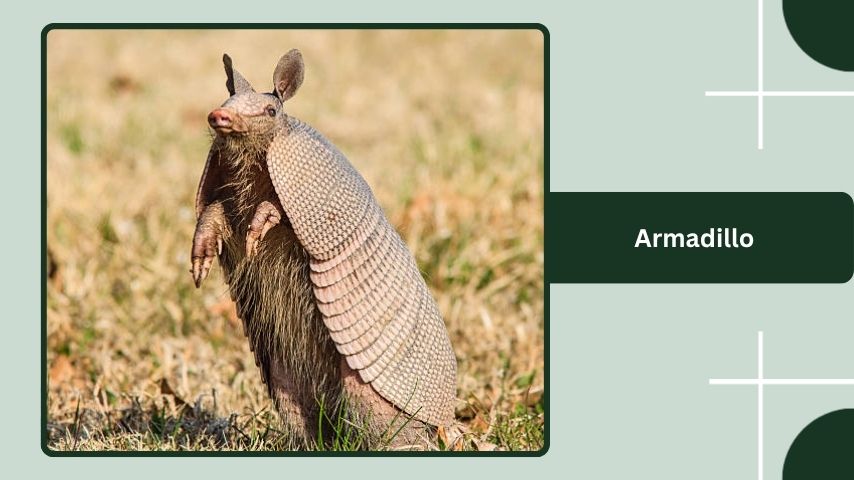
The Armadillo is a unique insect-eating mammal recognized for its armored shell and digging behavior. Armadillos are commonly found in the Americas, especially in grasslands, forests, and desert regions. They use their sharp claws and strong sense of smell to locate insects hidden underground. Many species feed heavily on ants, termites, beetles, and other small invertebrates while searching through soil and leaf litter.
Identification
- Hard protective shell
- Long pointed snout
- Sharp digging claws
- Small eyes
- Long tail
- Gray or brown armor plates
Habitat and Distribution
Armadillos live across North, Central, and South America. Different species occupy deserts, forests, grasslands, and scrublands depending on climate and food availability. They prefer areas with soft soil where digging is easier for both shelter and feeding.
Most armadillos create underground burrows to escape predators and extreme temperatures. These burrows also provide safe resting places during the day.
Diet and Feeding Behavior
Armadillos mainly feed on insects and other small animals found in the ground. Their strong sense of smell helps them detect hidden prey beneath soil and fallen leaves.
Common foods include ants, termites, beetles, larvae, worms, and spiders. Some species also eat fruit, eggs, and plant material when insects are less available.
Behavior and Adaptations
Armadillos are mostly solitary animals that spend much of their time digging and foraging. Their armored shell provides protection against predators, while powerful claws allow them to dig quickly into soil and insect nests.
Some species can curl partially into a ball when threatened, while others rely on fast digging to escape danger. Their low body temperature and slow metabolism help them survive in warm environments where food supplies may vary seasonally.
4. Hedgehog
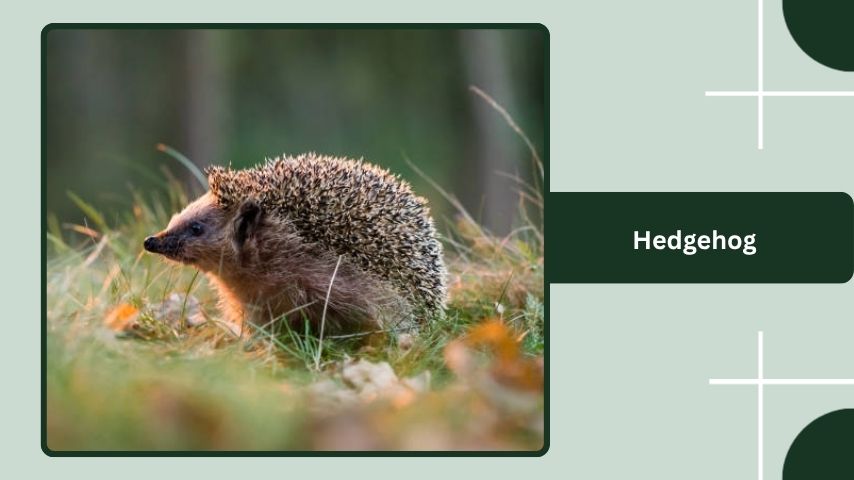
The Hedgehog is a small insect-eating mammal known for its sharp protective spines and nocturnal lifestyle. Hedgehogs are found in Europe, Asia, Africa, and some other regions where they live in gardens, forests, grasslands, and farmland. These animals are highly valued for controlling insect populations because they eat beetles, caterpillars, worms, and many other small invertebrates during nighttime foraging.
Identification
- Body covered with sharp spines
- Small pointed snout
- Short legs
- Tiny dark eyes
- Rounded body shape
- Gray or brown coloration
Habitat and Distribution
Hedgehogs live in a wide range of habitats including forests, grasslands, parks, gardens, and farmland. They prefer areas with dense vegetation where they can hide safely during the day and search for insects at night.
Many hedgehogs build nests using leaves and grass beneath bushes, logs, or thick vegetation. Their adaptability helps them survive close to human settlements.
Diet and Feeding Behavior
Hedgehogs mainly feed on insects and other small creatures found on the ground. Their excellent sense of smell and hearing help them locate prey hidden under leaves and soil.
Common foods include beetles, caterpillars, earthworms, slugs, snails, and spiders. Some hedgehogs also eat fruit, eggs, and small vertebrates when available.
Behavior and Adaptations
Hedgehogs are solitary nocturnal animals that spend most of the night searching for food. Their most famous defense is rolling into a tight ball, exposing only sharp spines to predators.
These animals move slowly but can travel long distances while foraging. In colder regions, some hedgehog species hibernate during winter to conserve energy when insects become scarce.
5. Frog
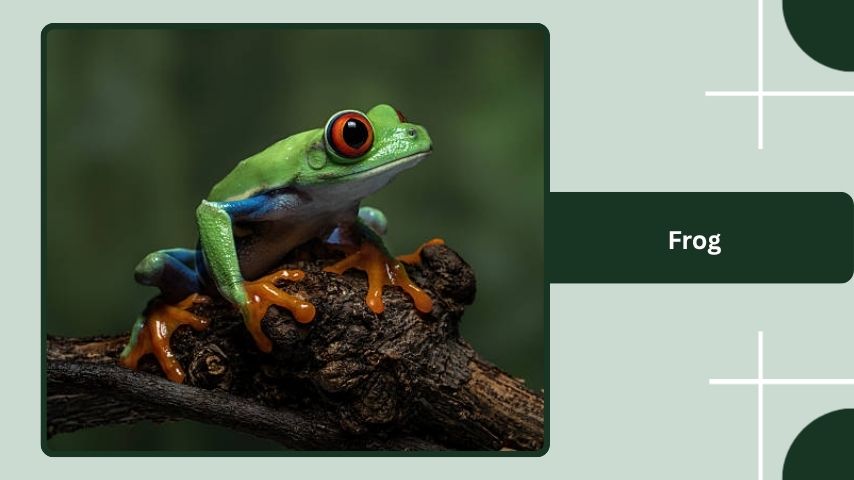
The Frog is one of the most common insect-eating animals found around the world. Frogs are amphibians that live near ponds, wetlands, forests, grasslands, and even gardens. They play an important role in controlling insect populations by feeding on mosquitoes, flies, beetles, and other small invertebrates. Their sticky tongues and quick jumping ability make them highly effective hunters in both water and land environments.
Identification
- Smooth or moist skin
- Large powerful hind legs
- Wide mouth
- Bulging eyes
- Webbed feet in many species
- Long sticky tongue
Habitat and Distribution
Frogs live on every continent except Antarctica. Most species prefer wet environments such as ponds, marshes, rivers, swamps, and rainforests because they require moisture to survive and reproduce.
Some frogs spend most of their lives in water, while others live mainly in trees, grasslands, or underground burrows. Their habitats vary greatly depending on the species and climate.
Diet and Feeding Behavior
Frogs are carnivorous animals that mainly feed on insects and other small prey. They usually wait quietly before suddenly striking with their sticky tongues to capture moving insects.
Common prey includes mosquitoes, flies, moths, beetles, ants, spiders, and worms. Larger frogs may even eat small fish, reptiles, or other frogs if given the opportunity.
Behavior and Adaptations
Frogs rely heavily on camouflage and quick movement for survival. Their powerful hind legs allow them to leap away from predators, while many species blend perfectly into leaves, mud, or vegetation.
Most frogs are active at night when insects are more abundant. Their loud croaking calls are used to attract mates and establish territory during breeding season.
6. Toad
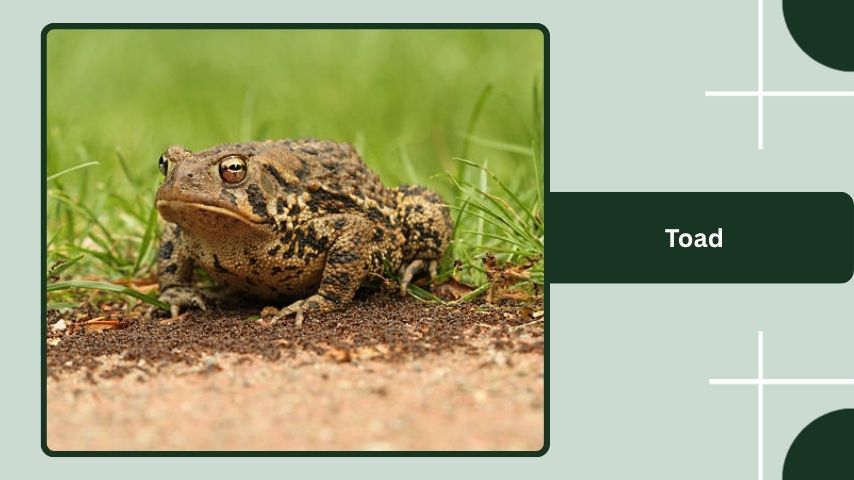
The Toad is a well-known insect-eating amphibian recognized for its dry, bumpy skin and slow walking movement. Toads are commonly found in gardens, forests, grasslands, and wetlands where they help control insect populations naturally. These nocturnal hunters feed on beetles, ants, worms, mosquitoes, and many other small invertebrates. Although they resemble frogs, toads are usually more land-based and better adapted to drier environments.
Identification
- Dry warty skin
- Shorter hind legs than frogs
- Wide body shape
- Large eyes
- Slow hopping or walking movement
- Earth-toned coloration
Habitat and Distribution
Toads live across many parts of the world and adapt well to different habitats. They are often found near ponds, gardens, forests, farms, and damp grassy areas where insects are abundant.
Unlike many frogs, toads can survive farther from water because their thicker skin reduces moisture loss. However, they still return to water during breeding season.
Diet and Feeding Behavior
Toads mainly feed on insects and small invertebrates. They usually sit quietly and wait for prey to come close before quickly striking with their sticky tongues.
Their diet commonly includes beetles, ants, flies, caterpillars, worms, spiders, and slugs. Because they consume many garden pests, toads are considered helpful animals in agricultural and backyard environments.
Behavior and Adaptations
Toads are mostly nocturnal and spend daytime hours hiding beneath rocks, logs, or soil to avoid dehydration and predators. Their skin coloration provides camouflage against dirt and fallen leaves.
When threatened, some toads inflate their bodies or release mild toxins from glands behind their eyes. These defenses help discourage predators from attacking them.
7. Bat
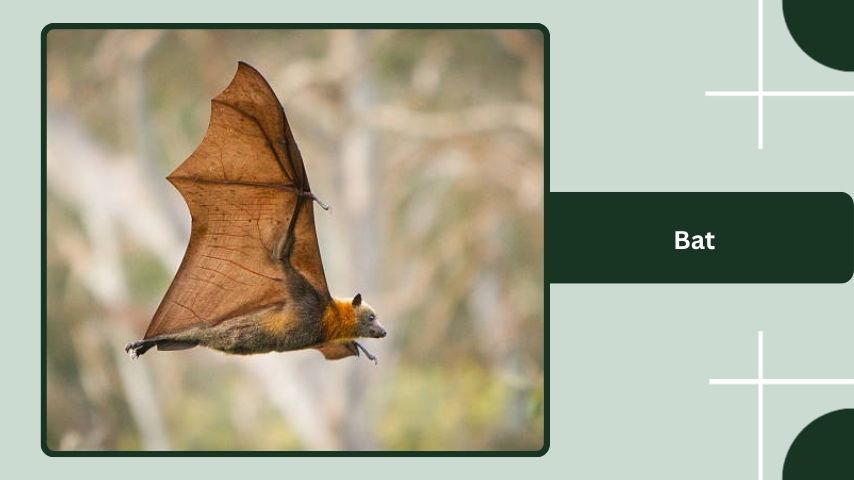
The Bat is one of the most important insect-eating animals in the world. Many bat species feed heavily on flying insects during nighttime hours, helping control mosquitoes, moths, beetles, and agricultural pests. Bats are the only mammals capable of true flight and are found in forests, caves, deserts, cities, and tropical regions across the globe. Their echolocation ability allows them to hunt insects accurately even in complete darkness.
Identification
- Membranous wings
- Large ears
- Sharp teeth
- Small furry body
- Hanging upside-down posture
- Excellent nighttime vision and hearing
Habitat and Distribution
Bats live on nearly every continent except Antarctica. Different species occupy caves, hollow trees, forests, buildings, bridges, and rocky crevices depending on climate and shelter availability.
Many insect-eating bats prefer areas near water because insects gather heavily around ponds, lakes, and rivers during the evening.
Diet and Feeding Behavior
Insect-eating bats capture prey while flying through the air. Using echolocation, they produce sound waves that bounce off insects and help locate prey precisely in darkness.
Common prey includes mosquitoes, moths, beetles, flies, and night-flying insects. Some bats can consume hundreds or even thousands of insects in a single night.
Behavior and Adaptations
Bats are mainly nocturnal and spend daytime hours resting upside down in protected roosts. Their flexible wings allow fast turning and agile flight while chasing insects in midair.
Echolocation is one of their most important adaptations. By listening to returning sound echoes, bats can avoid obstacles and track tiny moving insects even in total darkness.
8. Gecko
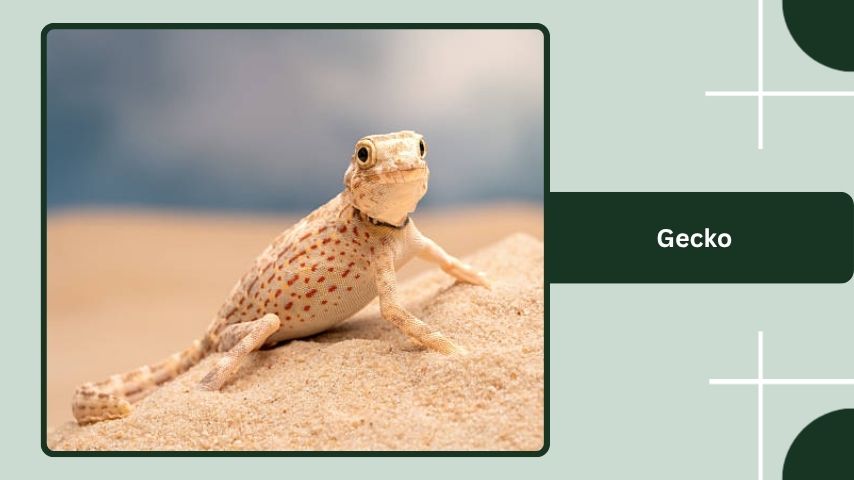
The Gecko is a small insect-eating lizard commonly found in tropical, subtropical, and warm urban environments. Geckos are famous for their sticky toe pads, nighttime activity, and ability to climb walls and ceilings. These reptiles help control insect populations by feeding on mosquitoes, moths, flies, cockroaches, and other small invertebrates around homes, forests, and gardens.
Identification
- Large lidless eyes
- Sticky toe pads
- Soft scaled skin
- Long tail
- Small slender body
- Ability to climb smooth surfaces
Habitat and Distribution
Geckos live across Asia, Africa, Australia, the Americas, and many tropical islands. They prefer warm habitats such as forests, deserts, rocky areas, and human buildings where insects are abundant.
Many house geckos stay close to lights at night because flying insects gather there in large numbers. Some species live entirely in trees, while others prefer ground habitats.
Diet and Feeding Behavior
Geckos mainly feed on insects and other tiny invertebrates. They actively hunt prey at night using excellent eyesight and quick reflexes.
Their diet commonly includes mosquitoes, flies, moths, beetles, spiders, and cockroaches. Larger gecko species may also eat small lizards or soft fruits occasionally.
Behavior and Adaptations
Geckos are mostly nocturnal and rely heavily on camouflage and stealth while hunting. Their sticky toe pads contain tiny structures that help them cling to walls, ceilings, and tree bark easily.
Many geckos can drop their tails when attacked by predators. The detached tail continues moving temporarily, distracting predators while the gecko escapes. Over time, the tail can regrow gradually.
9. Chameleon
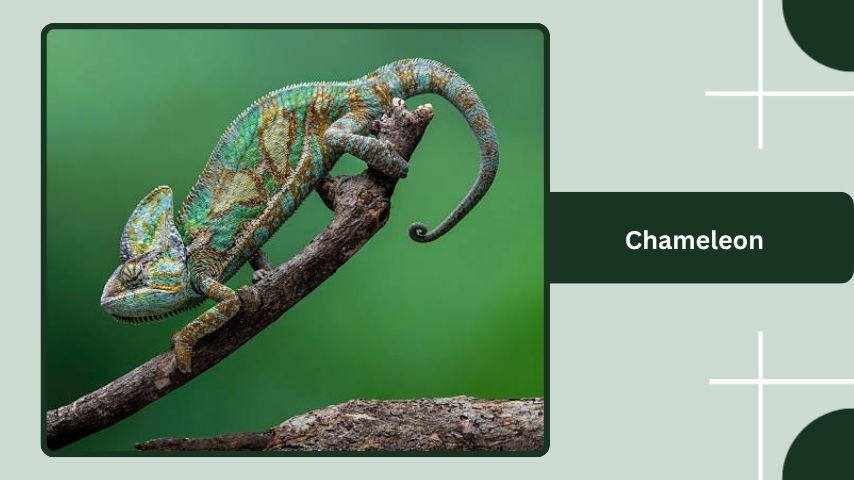
The Chameleon is a specialized insect-eating reptile famous for its color-changing ability and independently moving eyes. Chameleons mainly live in trees and shrubs where they hunt insects using extremely long sticky tongues. These reptiles are commonly found in Africa, Madagascar, parts of Asia, and warm tropical habitats. Their slow movements and camouflage help them approach prey without being noticed.
Identification
- Independently moving eyes
- Long sticky tongue
- Curled tail
- Gripping feet
- Color-changing skin
- Slow climbing movement
Habitat and Distribution
Chameleons mostly live in forests, woodlands, savannas, and tropical shrublands. Many species spend nearly their entire lives in trees where leaves and branches provide protection and hunting opportunities.
Madagascar contains the greatest variety of chameleon species, although some also occur in mainland Africa, southern Europe, and parts of Asia.
Diet and Feeding Behavior
Chameleons mainly feed on insects captured with their long projectile tongues. They usually remain still while watching prey carefully before striking with incredible speed.
Their diet commonly includes crickets, flies, grasshoppers, beetles, moths, and other small insects. Larger species may occasionally eat tiny birds or lizards.
Behavior and Adaptations
Chameleons rely heavily on camouflage and slow movement to avoid predators and approach prey unnoticed. Their independently moving eyes allow them to scan different directions simultaneously without turning their heads.
Their long tails help maintain balance while climbing branches. Color changes may help with communication, temperature control, camouflage, and signaling mood or stress levels.
10. Woodpecker
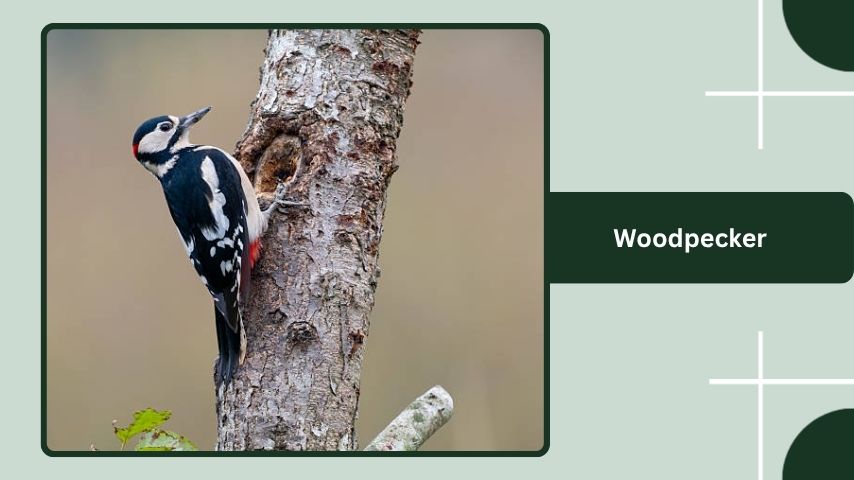
The Woodpecker is a well-known insect-eating bird recognized for pecking into trees in search of insects hidden beneath bark. Woodpeckers are found in forests, woodlands, parks, and suburban areas across much of the world. Their strong beaks and long sticky tongues make them highly effective hunters of beetles, ants, termites, and wood-boring insects that damage trees.
Identification
- Strong chisel-like beak
- Stiff tail feathers
- Sharp climbing claws
- Long sticky tongue
- Black, white, or red plumage
- Vertical tree-climbing posture
Habitat and Distribution
Woodpeckers live in forests, woodlands, parks, orchards, and suburban neighborhoods where trees are abundant. Different species occupy tropical rainforests, temperate forests, deserts, and mountain habitats depending on food and nesting opportunities.
Dead or decaying trees are especially important because they contain many insects and provide nesting cavities.
Diet and Feeding Behavior
Woodpeckers mainly feed on insects hidden inside bark and wood. They use their powerful beaks to drill holes and expose insect tunnels beneath tree surfaces.
Their diet commonly includes beetles, ants, termites, larvae, caterpillars, and spiders. Some species also eat seeds, nuts, berries, and tree sap during certain seasons.
Behavior and Adaptations
Woodpeckers are excellent climbers that move vertically along tree trunks using sharp claws and stiff tail feathers for support. Their skull structure helps absorb shock while pecking repeatedly into wood.
Many species communicate through loud drumming sounds created by striking tree trunks or hollow surfaces. This behavior helps establish territory and attract mates during breeding season.
11. Swallow
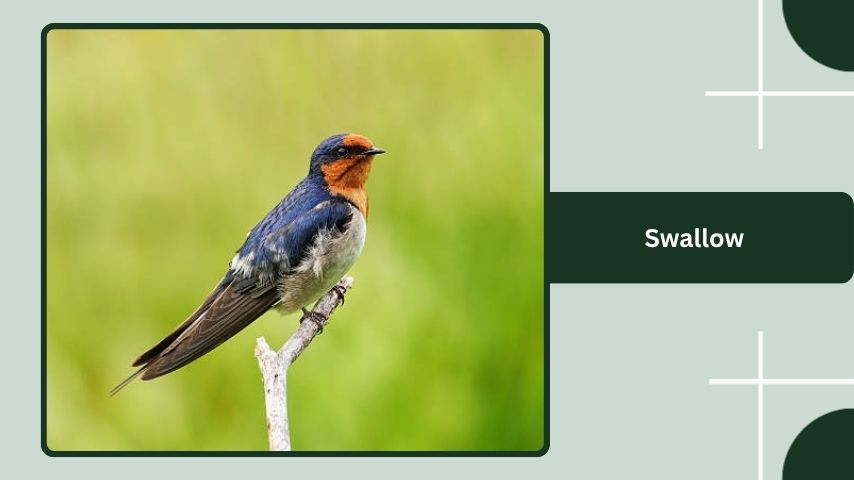
The Swallow is a fast-flying insect-eating bird commonly seen near fields, lakes, farms, and open skies. Swallows are famous for their graceful flight and ability to catch insects while flying through the air. These birds help reduce mosquito and fly populations naturally by feeding on large numbers of flying insects each day. Many swallow species migrate long distances between breeding and wintering grounds.
Identification
- Streamlined body shape
- Long pointed wings
- Forked tail in many species
- Small beak with wide mouth
- Fast agile flight
- Glossy blue or dark feathers
Habitat and Distribution
Swallows live across much of the world and prefer open habitats near water, grasslands, farmland, and human settlements. Lakes, rivers, ponds, and wetlands are especially important because insects gather heavily around these areas.
Many swallows build nests on cliffs, bridges, barns, and buildings where they can safely raise chicks close to feeding areas.
Diet and Feeding Behavior
Swallows mainly feed on flying insects captured during flight. Their wide mouths help them scoop insects from the air while flying at high speed.
Common prey includes mosquitoes, flies, gnats, beetles, moths, and flying ants. Swallows may spend hours circling fields and water sources while hunting continuously.
Behavior and Adaptations
Swallows are highly social birds that often gather in large flocks during migration and roosting periods. Their long pointed wings allow quick turns and fast flight while chasing insects in open air.
Many species migrate thousands of miles between seasons. Their excellent flying ability helps them travel long distances and catch insects efficiently during migration journeys.
12. Spider
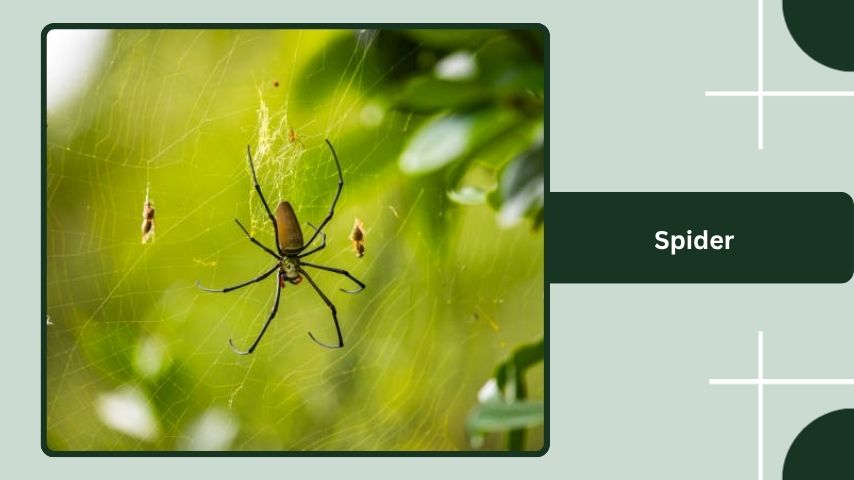
The Spider is one of the most effective insect predators in the world. Spiders live in forests, deserts, grasslands, gardens, caves, and human homes where they help control insect populations naturally. These arachnids use webs, camouflage, speed, or ambush tactics to catch prey. Because they consume huge numbers of flies, mosquitoes, moths, and other insects, spiders play a major role in maintaining ecological balance.
Identification
- Eight legs
- Two main body sections
- Multiple eyes
- Silk-producing spinnerets
- Fangs for injecting venom
- Hairy or smooth body depending on species
Habitat and Distribution
Spiders are found on every continent except Antarctica. Different species occupy forests, grasslands, deserts, wetlands, caves, and urban environments depending on climate and prey availability.
Some spiders build webs between plants or structures, while others hide under rocks, inside burrows, or among leaves waiting for prey to pass nearby.
Diet and Feeding Behavior
Spiders mainly feed on insects and other small arthropods. Web-building species trap flying insects in sticky silk webs, while hunting spiders actively chase or ambush prey.
Their diet commonly includes flies, mosquitoes, beetles, moths, ants, and grasshoppers. Larger spider species may occasionally capture small frogs or lizards.
Behavior and Adaptations
Spiders use a variety of hunting strategies depending on species. Some create complex webs, while others rely on camouflage, jumping ability, or fast movement to catch prey.
Silk production is one of their most important adaptations. Spider silk is used for web construction, egg protection, movement, and trapping prey. Many spiders also rely on venom to immobilize insects quickly after capture.
13. Praying Mantis
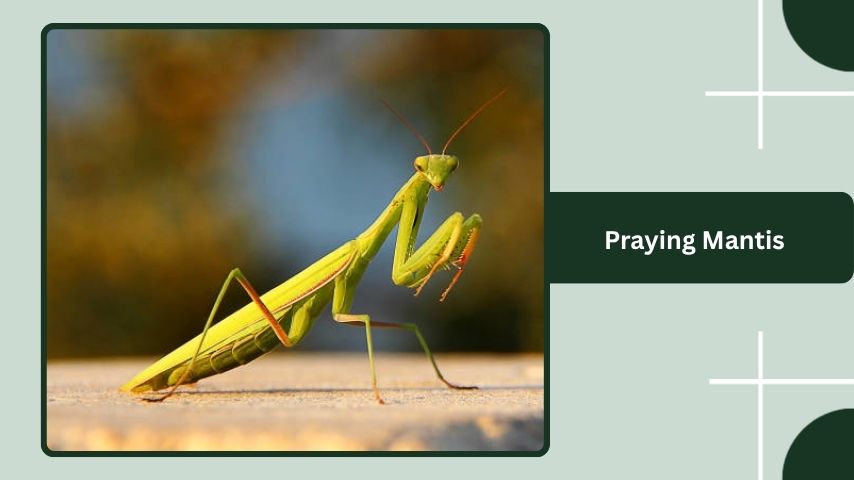
The Praying Mantis is a skilled insect-hunting predator famous for its folded front legs and patient ambush behavior. Praying mantises are found in gardens, forests, grasslands, and tropical habitats where they wait quietly for insects to approach. Their excellent camouflage and lightning-fast reflexes make them highly effective hunters of flies, moths, beetles, and many other insects.
Identification
- Folded raptorial front legs
- Triangular head
- Large compound eyes
- Long slender body
- Camouflage coloration
- Flexible neck movement
Habitat and Distribution
Praying mantises live across warm and temperate regions around the world. They are commonly found on plants, shrubs, flowers, and tall grasses where insects gather frequently.
Their body colors often match surrounding vegetation, helping them blend into leaves, branches, or dry grass while waiting for prey.
Diet and Feeding Behavior
Praying mantises are carnivorous insects that hunt by ambush. They remain perfectly still until prey comes close enough to grab with their powerful front legs.
Their diet includes flies, moths, beetles, grasshoppers, butterflies, spiders, and even smaller mantises. Larger species may occasionally capture tiny frogs, lizards, or hummingbirds.
Behavior and Adaptations
Praying mantises rely heavily on camouflage and patience while hunting. Their flexible necks allow them to rotate their heads and track movement without moving the rest of the body.
Their spiked front legs are specially adapted for gripping prey securely. Many species also display defensive behaviors such as spreading wings or raising front legs to appear larger when threatened.
14. Dragonfly
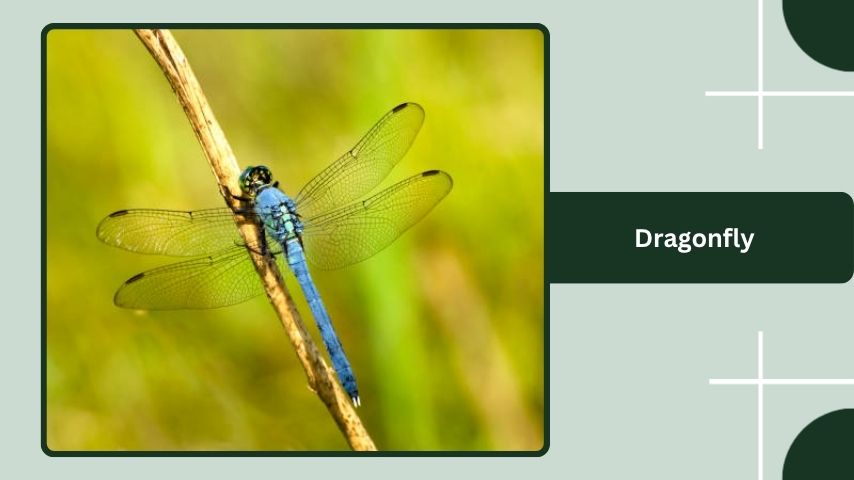
The Dragonfly is a fast-flying insect predator known for its large eyes, transparent wings, and incredible hunting ability. Dragonflies are commonly found near ponds, lakes, rivers, and wetlands where insects are abundant. Both adult dragonflies and their aquatic young feed heavily on insects, making them important natural controllers of mosquitoes and other flying pests.
Identification
- Large compound eyes
- Long slender body
- Two pairs of transparent wings
- Fast agile flight
- Bright metallic colors in many species
- Short antennae
Habitat and Distribution
Dragonflies live worldwide except in extremely cold regions. They are most common near freshwater habitats such as ponds, marshes, rivers, streams, and wetlands because their young develop underwater.
Adult dragonflies often patrol open areas near water where flying insects gather. Some species migrate seasonally across long distances.
Diet and Feeding Behavior
Dragonflies are aggressive predators that catch insects during flight. Their excellent vision and rapid flying ability allow them to hunt prey with remarkable accuracy.
Common prey includes mosquitoes, flies, gnats, moths, butterflies, and smaller dragonflies. Aquatic larvae also feed on insect larvae, tadpoles, and tiny fish underwater.
Behavior and Adaptations
Dragonflies are among the fastest flying insects in the world. Their wings can move independently, allowing sharp turns, hovering, and backward flight while chasing prey.
Their enormous eyes provide nearly complete vision around the body, helping detect movement quickly. Dragonflies also rely on strong jaws to capture and consume insects efficiently during flight.
15. Shrew
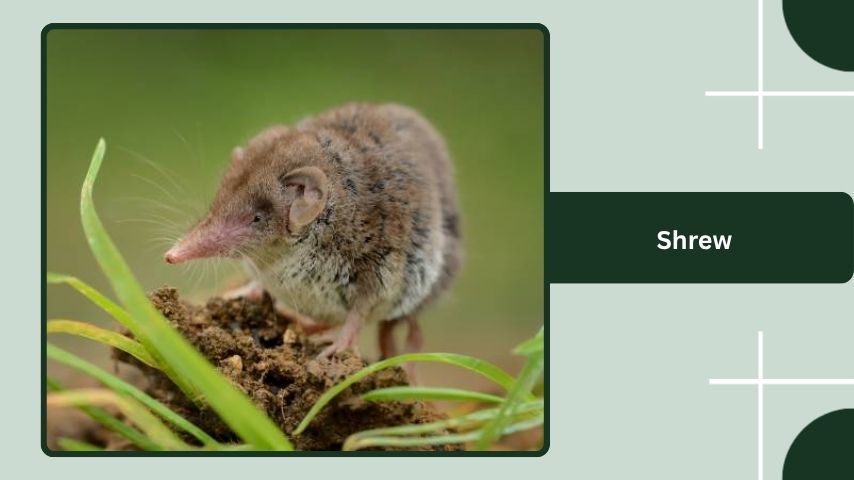
The Shrew is a tiny insect-eating mammal known for its fast movements, pointed snout, and extremely high metabolism. Shrews are found in forests, grasslands, wetlands, and gardens where they actively hunt insects and other small prey. Despite their mouse-like appearance, shrews are not rodents. They spend most of their time searching for food because they require constant energy to survive.
Identification
- Long pointed snout
- Tiny eyes
- Small furry body
- Short legs
- Sharp teeth
- Fast twitching movements
Habitat and Distribution
Shrews live across North America, Europe, Asia, and parts of Africa. They prefer moist habitats with thick vegetation, leaf litter, logs, or underground cover where insects are abundant.
Many shrews hide beneath rocks, fallen leaves, or dense grass during the day. Some species are semi-aquatic and hunt near streams or wetlands.
Diet and Feeding Behavior
Shrews are highly active hunters that feed on insects and other tiny animals almost constantly. Their fast metabolism forces them to eat frequently throughout the day and night.
Common foods include beetles, worms, spiders, caterpillars, slugs, and insect larvae. Larger shrew species may also eat frogs, mice, or small reptiles occasionally.
Behavior and Adaptations
Shrews are solitary and extremely territorial animals. They rely heavily on smell and touch because their eyesight is relatively poor. Their rapid movements help them capture prey and avoid predators.
Some shrew species produce venomous saliva that helps immobilize prey. Their constant feeding behavior makes them one of the most active insect-eating mammals in many ecosystems.
16. Pangolin
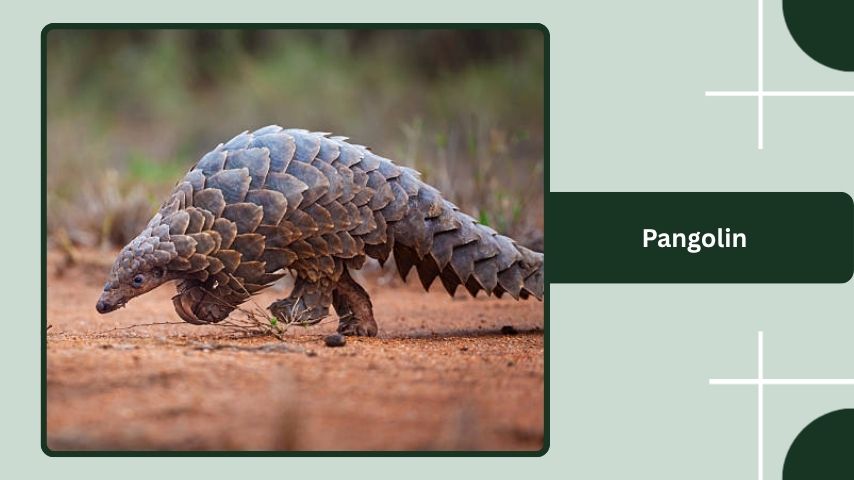
The Pangolin is a unique insect-eating mammal covered in protective keratin scales. Pangolins are famous for feeding mainly on ants and termites using long sticky tongues and powerful digging claws. These shy animals live in forests, grasslands, and savannas across Asia and Africa. Because of their unusual appearance and secretive behavior, pangolins are considered some of the most fascinating insect-eating mammals in the world.
Identification
- Body covered with hard scales
- Long sticky tongue
- Strong curved claws
- Small narrow head
- Long muscular tail
- Ability to curl into a ball
Habitat and Distribution
Pangolins live in tropical forests, savannas, grasslands, and woodland habitats throughout parts of Asia and Africa. Different species may spend more time in trees or on the ground depending on their environment.
They usually remain hidden during the day inside burrows, hollow trees, or dense vegetation to avoid predators and extreme heat.
Diet and Feeding Behavior
Pangolins feed almost entirely on ants and termites. Their powerful claws break open insect nests, while their sticky tongues collect insects deep inside tunnels.
A pangolin may consume thousands of insects in a single night. Because they have no teeth, they swallow small stones and sand that help grind food inside the stomach.
Behavior and Adaptations
Pangolins are mostly nocturnal and solitary animals. Their strongest defense is curling into a tight ball, protecting the soft body beneath hard overlapping scales.
Their sense of smell is highly developed and helps locate insect colonies underground. Strong claws and muscular limbs allow them to dig quickly into termite mounds and burrows while searching for food.
17. Mole
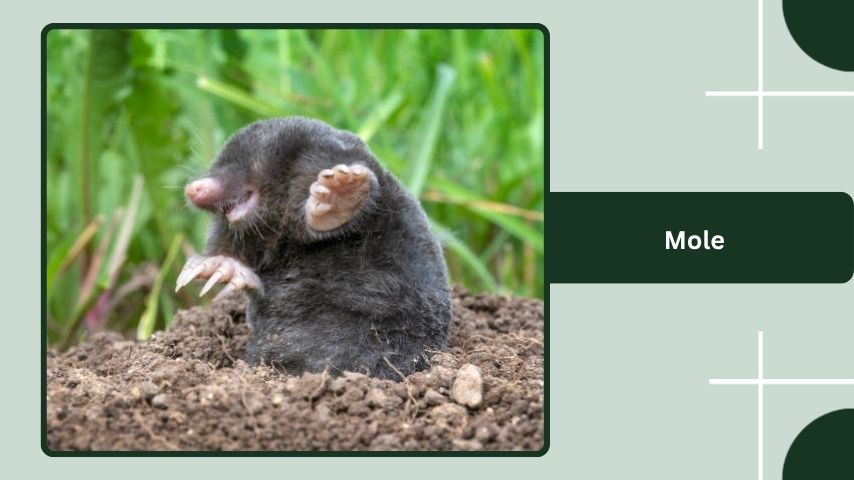
The Mole is a small burrowing mammal specialized for underground life and insect hunting. Moles spend most of their time digging tunnels beneath soil while searching for insects, worms, and larvae. Their powerful front limbs and sensitive snouts make them excellent underground predators. Although rarely seen above ground, moles play an important role in soil ecosystems by controlling insect populations and aerating the earth.
Identification
- Cylindrical body shape
- Velvety dark fur
- Powerful shovel-like front paws
- Tiny hidden eyes
- Pointed sensitive snout
- Very short tail
Habitat and Distribution
Moles live in forests, grasslands, gardens, farmland, and meadows across Europe, Asia, and North America. They prefer moist soil that is easy to dig and rich in insects and worms.
Underground tunnel systems provide both shelter and hunting routes. These tunnels may stretch long distances beneath fields and lawns.
Diet and Feeding Behavior
Moles mainly feed on insects and small underground invertebrates. They constantly search tunnel systems for prey hidden in soil.
Their diet commonly includes earthworms, beetle larvae, ants, termites, grubs, and other small invertebrates. Some species may also eat small amphibians or plant material occasionally.
Behavior and Adaptations
Moles are highly adapted for underground living. Their broad front paws work like digging tools, allowing rapid tunnel construction through soft soil.
Their eyesight is poor, but touch and smell are extremely sensitive. Tiny sensory structures around the snout help detect movement and vibrations from prey underground. Moles are usually solitary and defend tunnel territories from other moles.
18. Skunk
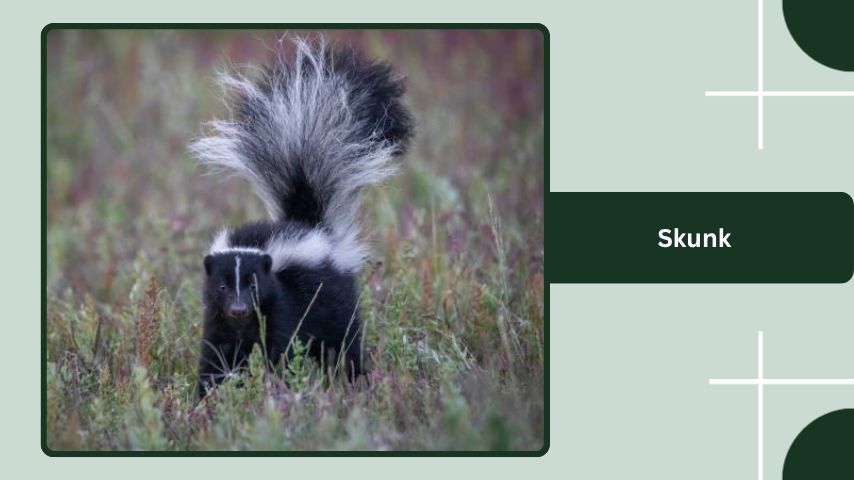
The Skunk is a nocturnal mammal well known for its black-and-white fur pattern and strong defensive spray. Skunks are also effective insect eaters that help control beetles, grubs, grasshoppers, and other pests in forests, grasslands, farms, and suburban areas. Their powerful sense of smell and digging ability make them skilled hunters of insects hidden underground or beneath logs and vegetation.
Identification
- Black fur with white stripes
- Bushy tail
- Short strong legs
- Sharp digging claws
- Small rounded ears
- Strong defensive scent glands
Habitat and Distribution
Skunks live across North and Central America in forests, grasslands, farmland, deserts, and suburban neighborhoods. They adapt well to areas with abundant food and sheltered resting places.
Many skunks hide during the day inside burrows, hollow logs, dense brush, or abandoned animal dens before becoming active at night.
Diet and Feeding Behavior
Skunks are omnivores, but insects form a major part of their diet. They use strong claws to dig through soil and leaf litter while searching for prey.
Common foods include beetles, grubs, grasshoppers, crickets, worms, spiders, and insect larvae. Skunks may also eat fruit, eggs, small rodents, and plant material when available.
Behavior and Adaptations
Skunks are mostly solitary and nocturnal animals. Their famous defensive spray can discourage predators from attacking. Before spraying, skunks often stomp their feet or raise their tails as warning signals.
Their excellent sense of smell helps locate insects hidden underground. Strong front claws also allow them to dig quickly while searching for food or creating shelter.
19. Opossum
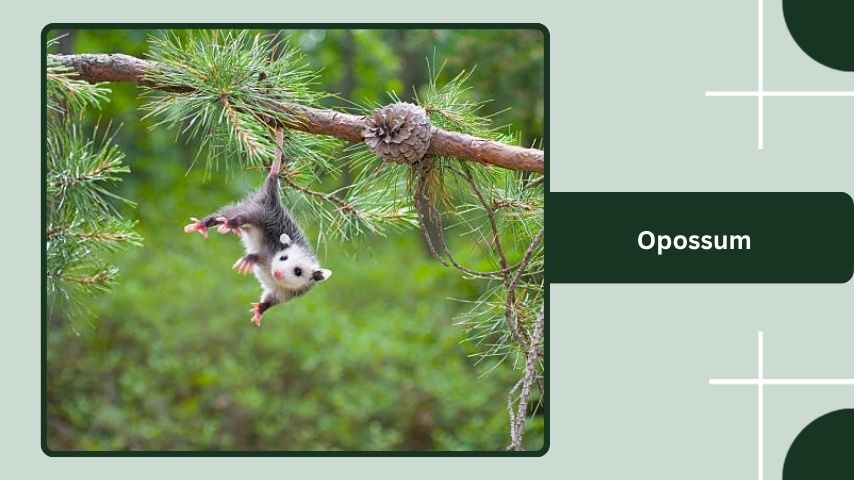
The Opossum is a nocturnal marsupial known for its scavenging habits and ability to eat large numbers of insects. Opossums are commonly found in forests, wetlands, farms, and suburban neighborhoods throughout the Americas. These adaptable animals help control pests by feeding on beetles, cockroaches, ticks, snails, and many other small creatures. Their flexible diet and ability to survive near humans make them important members of many ecosystems.
Identification
- Long hairless tail
- Pointed pink snout
- Gray or white fur
- Sharp teeth
- Small dark eyes
- Opposable hind thumbs
Habitat and Distribution
Opossums live in forests, swamps, grasslands, farmland, and urban areas across North, Central, and South America. They often stay near water sources and dense vegetation where food and shelter are available.
Many opossums rest inside hollow trees, abandoned burrows, sheds, or thick brush during the day before becoming active at night.
Diet and Feeding Behavior
Opossums are opportunistic feeders that consume many insects along with fruit, eggs, and small animals. They search slowly along the ground using smell and touch to locate prey.
Their diet commonly includes beetles, cockroaches, ticks, worms, slugs, snails, and insect larvae. Because they eat large numbers of ticks, opossums may help reduce tick populations naturally.
Behavior and Adaptations
Opossums are solitary nocturnal animals that rely heavily on smell and hearing while foraging. Their prehensile tails help with climbing and balance when moving through trees and vegetation.
When threatened, opossums may hiss, show teeth, or “play dead” by becoming motionless temporarily. This defensive behavior can discourage predators from attacking.
20. Chicken
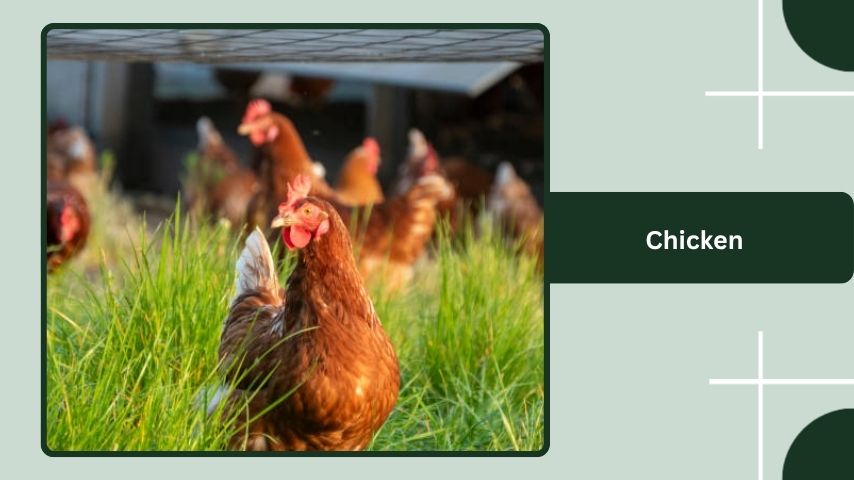
The Chicken is a common domesticated bird that naturally eats many types of insects while foraging on the ground. Chickens are found worldwide on farms, backyards, and rural homesteads where they help control insect populations. Although they are often fed grains and commercial feed, chickens eagerly hunt beetles, grasshoppers, worms, termites, and other small invertebrates whenever given access to outdoor spaces.
Identification
- Feather-covered body
- Short curved beak
- Strong scratching feet
- Comb and wattles on the head
- Rounded wings
- Wide variety of feather colors
Habitat and Distribution
Chickens are domesticated birds raised around the world in farms, villages, and backyard environments. They adapt well to grasslands, rural areas, gardens, and free-range settings where food sources are plentiful.
Outdoor environments are especially beneficial because chickens naturally enjoy scratching through soil, leaves, and grass while searching for insects.
Diet and Feeding Behavior
Chickens are omnivores that eat both plant and animal matter. Insects provide important protein and nutrients, especially for growing chicks and egg-laying hens.
Their diet commonly includes beetles, grasshoppers, termites, ants, worms, caterpillars, and fly larvae. Chickens actively scratch the ground to uncover hidden prey beneath soil and vegetation.
Behavior and Adaptations
Chickens are highly social birds that often forage together in groups. Their strong feet and sharp claws help them dig through dirt and leaf litter while searching for insects.
They rely heavily on vision to detect movement and quickly capture prey. Free-range chickens can consume large numbers of insects daily, making them useful for natural pest control in gardens and farms.
FAQs
Why are insect-eating animals important?
Insect-eating animals help control pest populations naturally. By feeding on mosquitoes, beetles, termites, and other insects, they protect crops, reduce disease-carrying pests, and maintain balance in ecosystems without relying heavily on chemicals.
Which animal eats the most insects?
Animals like anteaters, pangolins, bats, and aardvarks can consume thousands of insects in a single day. Some insect-eating bats may eat hundreds of mosquitoes and flying insects every night while hunting.
Are all insect-eating animals nocturnal?
No. Some insect-eating animals are active during the day, while others hunt at night. Dragonflies and swallows are mainly daytime hunters, whereas bats, hedgehogs, and skunks are usually nocturnal.
Do insect-eating animals help farmers?
Yes. Many insect-eating animals reduce harmful crop pests naturally. Birds, frogs, bats, chickens, and spiders help farmers by controlling insects that damage plants and agricultural fields.
What adaptations help animals catch insects?
Different animals use special adaptations such as sticky tongues, echolocation, camouflage, strong claws, fast flight, sharp eyesight, and digging ability to locate and capture insects efficiently.