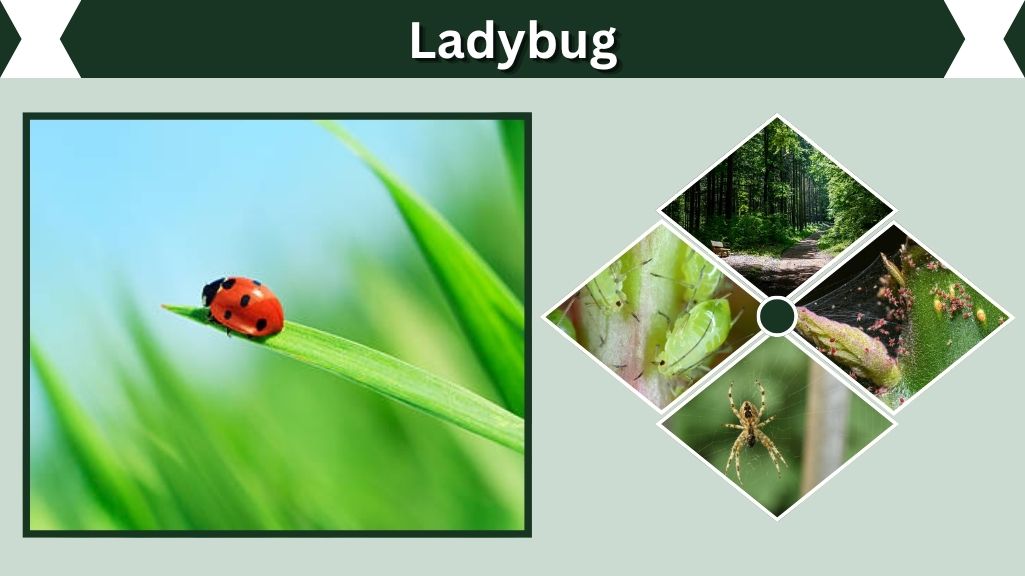
Ladybugs are among the most recognizable and beneficial insects in the world. Known for their rounded bodies, bright colors, and distinctive spots, these small beetles play a vital role in controlling garden pests. Found on every continent except Antarctica, ladybugs thrive in a variety of habitats, from gardens and forests to grasslands and farms. Beyond their ecological importance, ladybugs are often associated with good luck and positive symbolism. Their fascinating life cycle and helpful behavior make them a favorite among gardeners and nature enthusiasts.
What Is a Ladybug?
Ladybugs, also known as ladybird beetles or lady beetles, belong to the insect family Coccinellidae. Despite their small size, they are important predators that help control harmful insect populations. Thousands of ladybug species exist worldwide, each contributing to the health of natural ecosystems and agricultural environments.
Species Overview
Ladybugs are beetles characterized by their dome-shaped bodies and colorful wing covers. While red ladybugs with black spots are the most familiar, many species display different colors and patterns. Their ability to consume large numbers of pests makes them valuable allies for farmers and gardeners.
Scientific Classification
Ladybugs belong to the order Coleoptera, which includes all beetles. The family Coccinellidae contains more than 6,000 known species worldwide. Scientists continue to study these insects to better understand their ecological roles and contributions to natural pest management.
How to Identify a Ladybug
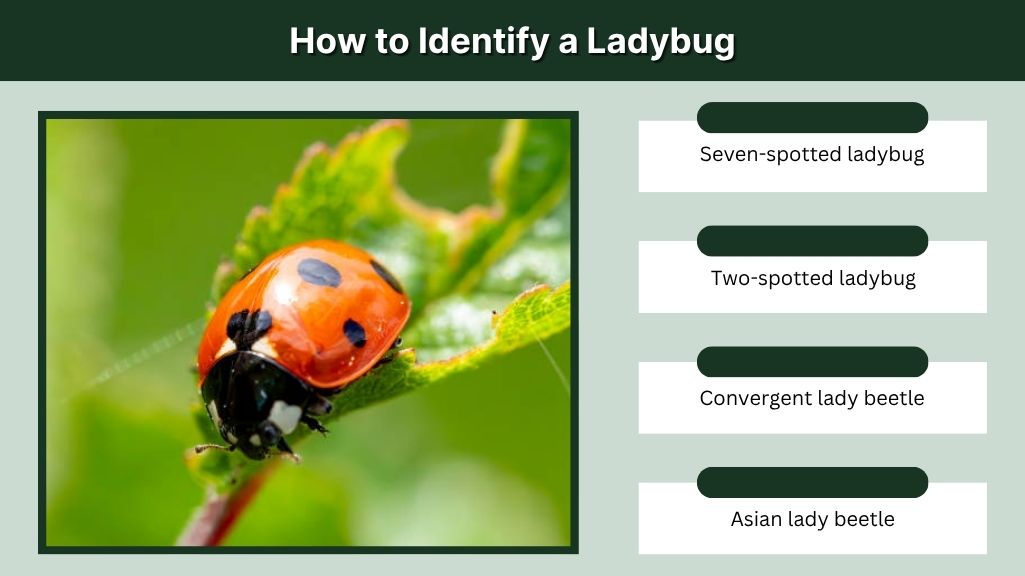
Ladybugs are relatively easy to identify because of their distinctive appearance. However, not all species look alike. Variations in color, spot patterns, and size can sometimes make identification challenging for beginners.
Physical Appearance
Most ladybugs have a rounded or oval body shape with a smooth, shiny surface. Their bright coloration serves as a warning signal to predators, indicating that they may taste unpleasant or contain defensive chemicals. The head is small, while the wing covers protect delicate flying wings underneath.
Ladybug Colors
Ladybugs occur in a surprising range of colors.
Common color variations include:
- Red ladybugs
- Orange ladybugs
- Yellow ladybugs
- Black ladybugs
- Pink or cream-colored species
The number of spots does not necessarily indicate a ladybug’s age. Instead, spot patterns vary according to species.
Common Ladybug Species
Several species are frequently encountered in gardens and agricultural areas.
Popular species include:
- Seven-spotted ladybug
- Two-spotted ladybug
- Convergent lady beetle
- Asian lady beetle
- Twenty-two-spotted ladybug
Each species has unique markings and habitat preferences.
Ladybug Habitat
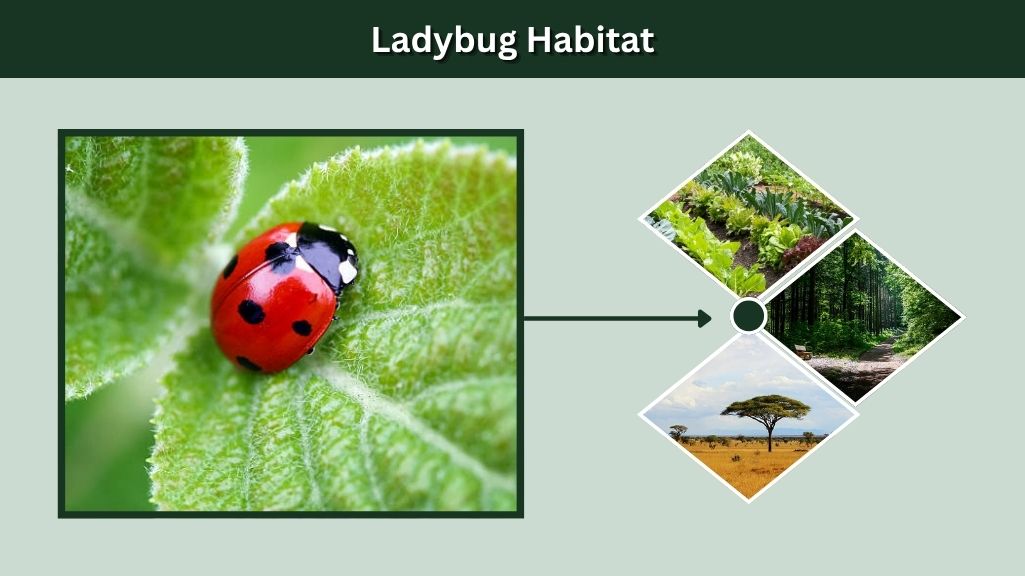
Ladybugs occupy a wide variety of environments where food is readily available. Their habitats are closely linked to the presence of insects such as aphids, which serve as an important food source. Suitable shelter and favorable weather conditions also influence where ladybugs thrive.
Where Do Ladybugs Live?
Ladybugs can be found in gardens, forests, meadows, grasslands, and agricultural fields. They often gather on plants where prey populations are abundant. Flowering vegetation provides additional food sources and shelter throughout the year.
Habitat Requirements
To survive and reproduce successfully, ladybugs require habitats that offer food, protection, and suitable breeding locations. Areas rich in plant diversity generally support larger ladybug populations because they attract a variety of prey species.
Seasonal Habitat Changes
Ladybug habitats can change throughout the year. During warmer months, they remain active in gardens and fields searching for food. As temperatures drop, many species move to protected locations such as tree bark, rock crevices, and buildings where they can survive the winter.
Ladybug Life Cycle
The life cycle of a ladybug is an example of complete metamorphosis. This process involves several distinct stages, each with unique characteristics and behaviors. Understanding these stages helps explain how ladybugs develop from eggs into beneficial adult beetles.
Ladybug Life Cycle Stages
A ladybug progresses through four developmental stages before reaching adulthood.
The stages include:
- Egg
- Larva
- Pupa
- Adult
Each stage plays a critical role in growth and survival.
Ladybug Larvae
Ladybug larvae look very different from adult beetles. They are elongated, often dark-colored, and may have bright markings. During this stage, larvae feed aggressively on aphids and other soft-bodied insects, helping control pest populations naturally.
Development Timeline
Development speed depends on species, temperature, and food availability. Eggs usually hatch within a few days, while the larval stage may last several weeks. After pupation, adult ladybugs emerge and continue feeding, reproducing, and contributing to ecosystem health.
What Do Ladybugs Eat?
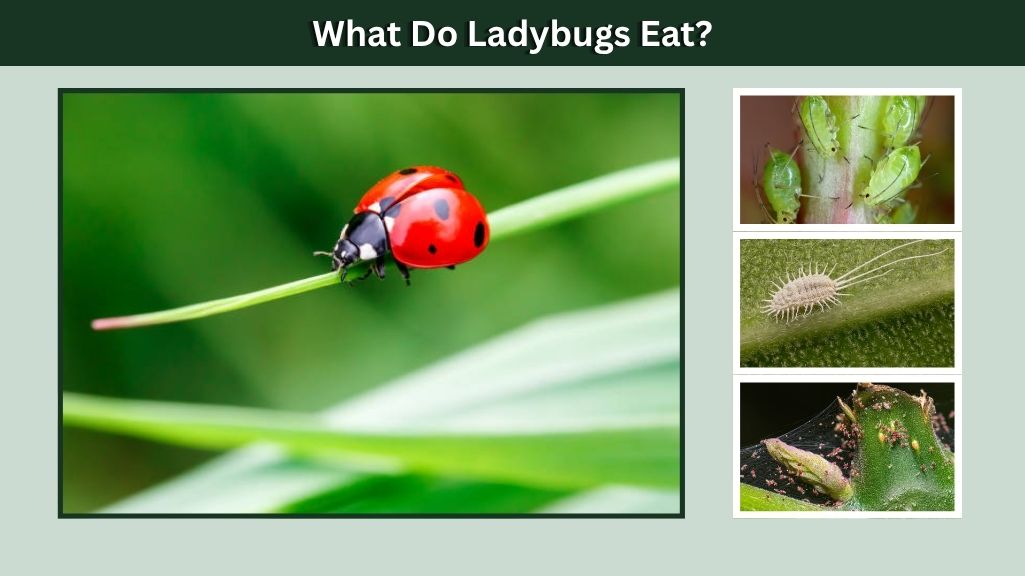
Ladybugs are best known for their appetite for garden pests. Their feeding habits make them one of the most beneficial insects for agriculture and home gardening. By reducing pest populations naturally, ladybugs help decrease the need for chemical pesticides.
Primary Diet
Most ladybug species primarily consume small, soft-bodied insects that damage plants.
Common food sources include:
- Aphids
- Scale insects
- Mites
- Whiteflies
- Mealybugs
A single ladybug can consume large numbers of aphids during its lifetime, making it an effective biological control agent.
Plant-Based Foods
Although insects make up the majority of their diet, some ladybugs also feed on pollen, nectar, and fungi. These alternative food sources become particularly important when prey populations are low.
Benefits to Gardens
Ladybugs are highly valued in gardens because they naturally reduce pest infestations. Their presence promotes healthier plants and supports environmentally friendly gardening practices. Many gardeners encourage ladybug populations as part of integrated pest management strategies.
Ladybug Behavior and Adaptations
Ladybugs possess several unique adaptations that help them survive in a variety of environments. Their bright colors, feeding habits, and seasonal behaviors contribute to their success as one of the most beneficial insect groups. These adaptations not only protect ladybugs from predators but also improve their ability to locate food and reproduce successfully.
Hunting Behavior
Ladybugs are active predators that spend much of their time searching for prey. They use their strong sense of smell and vision to locate insect colonies, particularly aphids. Once prey is found, ladybugs feed continuously and can consume dozens of insects in a single day.
Defense Mechanisms
Despite their small size, ladybugs have effective defenses against predators.
Important defense strategies include:
- Bright warning coloration
- Reflex bleeding from leg joints
- Unpleasant taste to predators
- Hard wing covers for protection
These adaptations discourage birds, reptiles, and other animals from attacking them.
Winter Survival
Many ladybug species survive winter by gathering in large groups. They seek shelter beneath bark, inside rock crevices, or within buildings where temperatures remain more stable. This behavior helps conserve energy until warmer weather returns.
Ladybug Lifespan
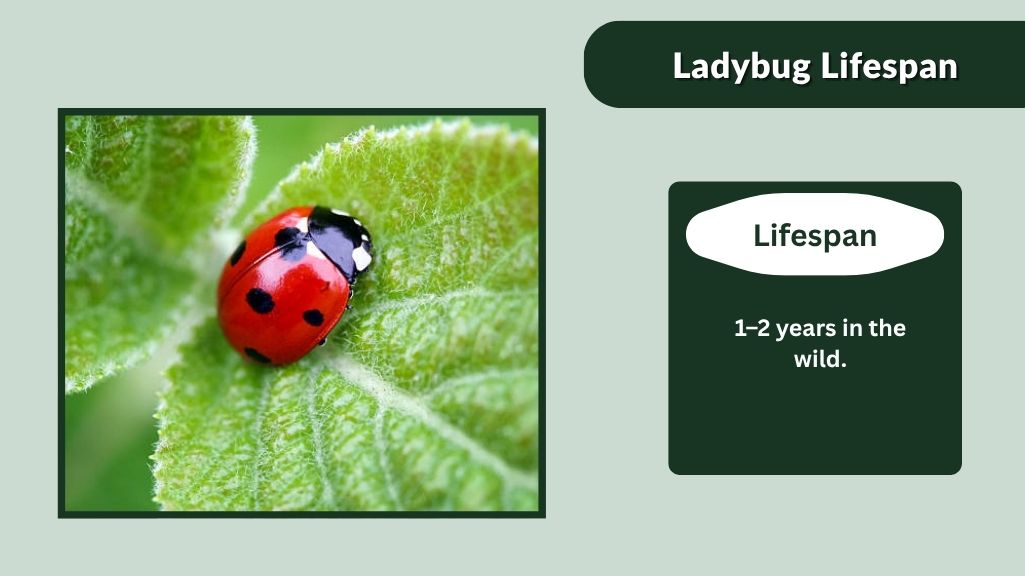
Ladybugs generally have relatively short lifespans compared to larger animals, but their survival depends on food availability, environmental conditions, and predator pressure. Their ability to reproduce efficiently helps maintain healthy populations even when individual lifespans are limited.
Average Lifespan
Most ladybugs complete their entire life cycle within a relatively short period.
Typical lifespan estimates include:
- 1–2 years in the wild
- Several months for some species
- Longer survival in favorable conditions
- Higher mortality during extreme weather
Lifespan can vary significantly between species and habitats.
Factors Affecting Survival
Environmental conditions strongly influence ladybug survival. Food shortages, pesticide exposure, and harsh weather can reduce populations. Healthy ecosystems with abundant prey generally support larger and longer-lasting ladybug populations.
Population Dynamics
Ladybug numbers fluctuate throughout the year. Populations often increase during spring and summer when food is abundant. Seasonal declines may occur during winter or when prey populations decrease.
Ladybug Reproduction
Reproduction is essential to maintaining ladybug populations. Adult beetles begin mating when environmental conditions are favorable and food resources are plentiful. Successful reproduction ensures the continuation of future generations and supports natural pest control efforts.
Mating Behavior
Ladybugs typically mate during warmer months. Males locate females through chemical signals and visual cues. After mating, females search for suitable locations where newly hatched larvae will have immediate access to food.
Egg Production
Female ladybugs can produce large numbers of eggs during their lifetime.
Important reproductive facts include:
- Eggs laid on plant leaves
- Deposited near aphid colonies
- Dozens to hundreds of eggs produced
- Eggs hatch within a few days
This strategy improves the chances of larval survival after hatching.
Offspring Development
Newly hatched larvae immediately begin feeding on nearby insects. After completing several growth stages, they enter the pupal stage before emerging as adult ladybugs. This transformation is an important part of their complete metamorphosis.
Ladybug Predators and Threats
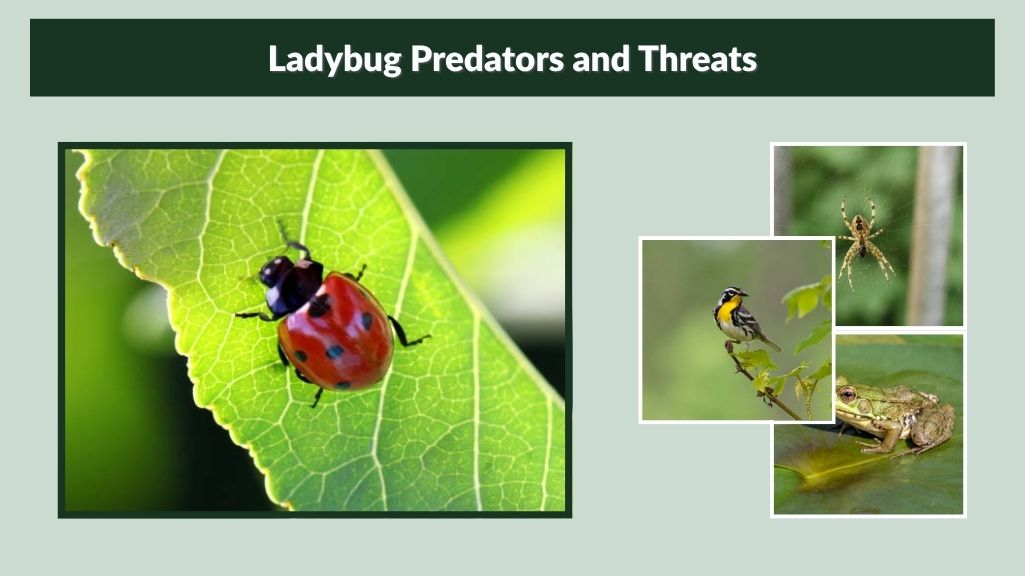
Although ladybugs are protected by several defensive adaptations, they still face numerous natural and human-related threats. Understanding these challenges helps highlight the importance of protecting beneficial insect populations.
Natural Predators
Several animals prey on ladybugs despite their warning colors and defensive chemicals.
Common predators include:
- Birds
- Spiders
- Frogs
- Lizards
- Parasitic wasps
Predation helps regulate ladybug populations within ecosystems.
Environmental Threats
Modern environmental pressures can have significant effects on ladybug populations. Habitat destruction, pesticide use, and climate change may reduce suitable living conditions and food availability.
Conservation Importance
Protecting ladybugs benefits both natural ecosystems and agriculture. Encouraging native plants, reducing pesticide use, and preserving habitat diversity help support healthy populations of these beneficial insects.
Ladybug Meaning and Symbolism
Ladybugs have been associated with positive symbolism for centuries. In many cultures, they are viewed as signs of good fortune, protection, and prosperity. Their attractive appearance and beneficial role in gardens have contributed to their favorable reputation around the world.
Cultural Symbolism
Many traditions regard ladybugs as symbols of luck and happiness. Farmers historically welcomed them because they helped protect crops from harmful pests. This beneficial relationship strengthened their positive image in folklore.
Spiritual Meaning
Some people believe ladybugs represent transformation, personal growth, and new beginnings. Their life cycle and bright appearance are often associated with positive change and future opportunities.
Ladybugs in Folklore
Ladybugs appear in stories and beliefs across Europe, Asia, and North America. In many traditions, spotting a ladybug is considered a sign of good luck, abundance, or favorable events in the near future.
Interesting Facts About Ladybugs
Ladybugs are remarkable insects with several fascinating characteristics. There are more than 6,000 known species worldwide, and some can consume hundreds of aphids during their lifetime. Their bright colors serve as warning signals to predators, while their ability to fly long distances helps them locate food and suitable habitats. Many species gather in large groups during winter, creating impressive seasonal aggregations that can contain thousands of individuals.
FAQs
Why do ladybugs have spots?
Ladybug spots help identify different species rather than indicate age. Some species have many spots, while others have very few or none at all.
Are ladybugs harmful to humans?
Most ladybugs are harmless to humans. They do not sting and rarely bite. However, some species may release a yellow defensive fluid that can cause mild skin irritation in sensitive individuals.
What do ladybug larvae look like?
Ladybug larvae look very different from adults. They have elongated bodies, dark colors, and small orange or yellow markings. Their appearance is often compared to tiny alligators.
How many species of ladybugs are there?
Scientists have identified more than 6,000 species of ladybugs worldwide. These species vary in size, color, habitat, and feeding habits.
Do ladybugs hibernate during winter?
Ladybugs do not truly hibernate, but many species enter a dormant state during cold weather. They often gather in large groups under bark, inside rock crevices, or in buildings until temperatures become warmer.