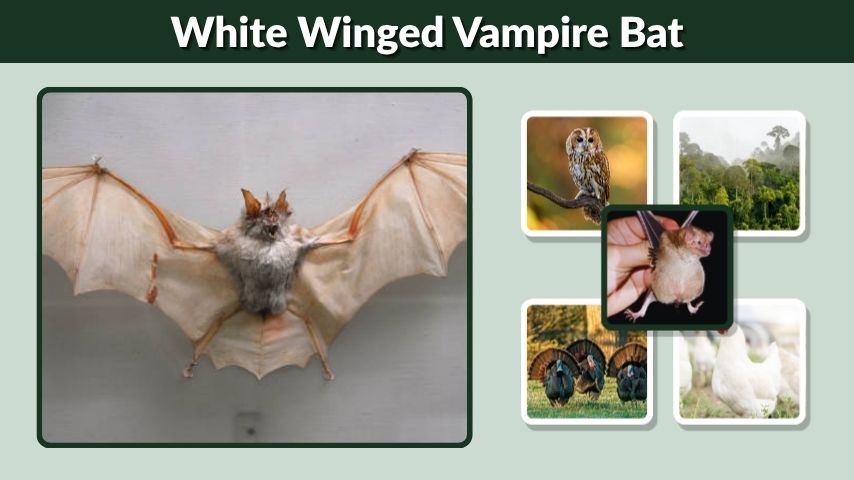
The white winged vampire bat is one of the most unusual bats in the world because it survives by feeding on blood. Found in parts of Central and South America, this rare vampire bat is known for its pale wing markings, sharp teeth, and nighttime feeding habits. Unlike fruit bats or insect-eating bats, it often feeds on the blood of birds and sometimes other animals. Although its name sounds frightening, the white winged vampire bat is a fascinating species with special adaptations for survival. This guide covers its diet, habitat, size, behavior, dangers, and interesting facts.
What Is the White Winged Vampire Bat?
The white winged vampire bat is a blood-feeding bat found in parts of Central and South America. Its scientific name is usually written as Diaemus youngi, although some taxonomic sources use Diaemus youngii. It belongs to the family Phyllostomidae, also known as New World leaf-nosed bats.
This species is one of only three known living vampire bats. The other two are the common vampire bat and the hairy-legged vampire bat. Among them, the white-winged vampire bat is especially interesting because it is strongly associated with feeding on birds.
Why Is It Called White Winged?
The name comes from the pale or whitish edges on parts of its wings. The bat is not completely white. Its fur is usually brown, cinnamon, or reddish-brown, but its wing markings can appear pale compared with the rest of its body.
These white wing markings help separate it from other vampire bat species. However, because it is rarely seen by most people, identification usually requires expert observation.
Scientific Classification
Here is the basic classification:
| Category | White Winged Vampire Bat |
| Common name | White winged vampire bat |
| Scientific name | Diaemus youngi or Diaemus youngii |
| Kingdom | Animalia |
| Phylum | Chordata |
| Class | Mammalia |
| Order | Chiroptera |
| Family | Phyllostomidae |
| Diet type | Blood-feeding mammal |
| Conservation status | Least Concern |
White Winged Vampire Bat Diet
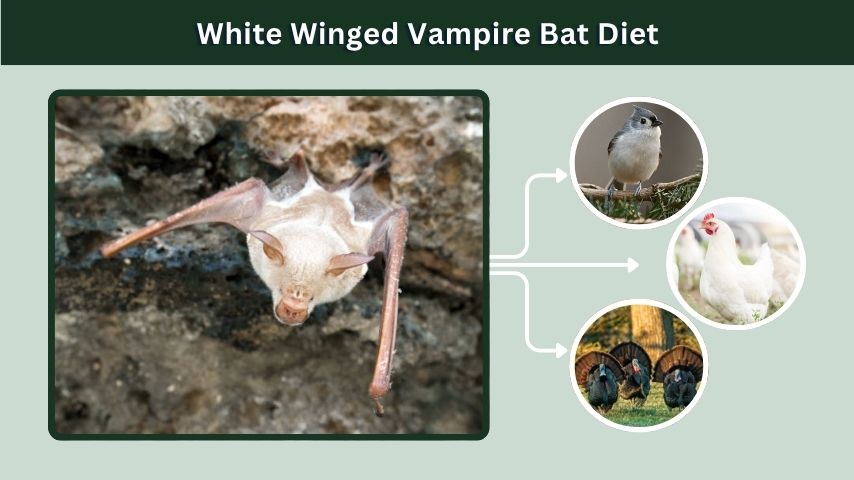
The white winged vampire bat diet is one of the main reasons people search for this animal. Unlike fruit bats or insect-eating bats, this species feeds on blood. It is a true vampire bat, meaning blood is not just part of its diet; it is its primary food source.
What Do White Winged Vampire Bats Eat?
White winged vampire bats mainly feed on the blood of vertebrate animals. They are especially known for feeding on birds. Domestic poultry, such as chickens and turkeys, may be used as food sources in areas where humans, farms, and bat habitats overlap.
Their diet may include blood from:
- Birds
- Chickens
- Turkeys
- Other roosting poultry
- Some mammals
- Livestock in certain situations
They do not eat meat in the normal sense. They make a small wound and drink blood from the surface. Their saliva helps keep the blood flowing while they feed.
How Do They Feed?
A white-winged vampire bat usually approaches quietly at night. It may target a sleeping or resting animal, especially birds roosting in trees or on farm structures. The bat uses sharp teeth to make a small cut, then laps the blood rather than sucking it like a straw.
This feeding method sounds dramatic, but it is highly specialized. The bat must avoid waking the host, locate a good feeding spot, and feed long enough to survive without being noticed.
Where Do White Winged Vampire Bats Live?
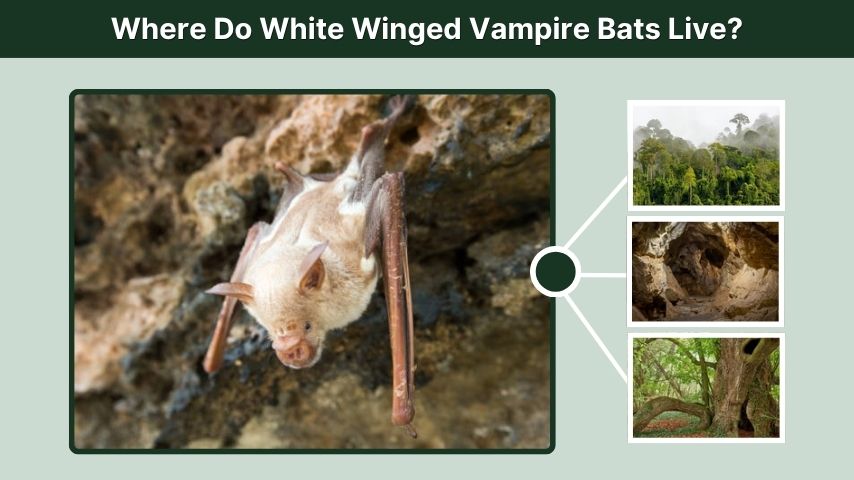
White winged vampire bats live in the Neotropical region. Their range includes parts of Central America, South America, and nearby islands. They have been recorded from Mexico down toward northern Argentina, depending on the source and confirmed observations.
White Winged Vampire Bat Habitat
The white winged vampire bat habitat includes tropical and subtropical environments. It can use both moist and dry forest areas, especially where suitable roosting places and food sources are available.
Common habitats include:
- Tropical forests
- Dry forests
- Moist forests
- Caves
- Hollow trees
- Forest edges
- Areas near farms or poultry
This bat is not usually an animal people see in cities. It is more closely linked to warm regions where roosting spaces and animal hosts are available.
Roosting Behavior
During the day, white winged vampire bats rest in sheltered places. They may roost in caves, tree hollows, or other protected spaces. Roosting sites help them avoid predators, sunlight, and disturbance.
Like many bats, they are nocturnal. They become active at night when feeding opportunities are safer and hosts are less alert.
White Winged Vampire Bat Size and Wingspan
The white winged vampire bat is not a large bat. It has a compact body, long wings, and physical features suited for quiet movement and blood feeding.
How Big Is a White Winged Vampire Bat?
The exact size can vary, but this bat is generally small compared with many fruit bats. It has a short body, lightweight build, and specialized teeth. Its size helps it move quietly and approach hosts without attracting attention.
Important size features include:
- Small mammal body size
- Lightweight frame
- Long wings compared with body length
- Short, specialized teeth
- Compact head and body shape
The bat’s size is part of its survival strategy. A smaller body makes it easier to land near a host, stay quiet, and leave quickly after feeding.
Wings and Flight
The white winged vampire bat wings are important for stealth. Its wings help it fly quietly through forests and around roosting animals. The pale wing edges give the bat its common name.
Its wings are not weapons. They are used for flight, balance, and controlled movement. The bat depends more on stealth and precision than force.
White Winged Vampire Bat Adaptations
The white winged vampire bat has several adaptations that help it live as a blood-feeding mammal. These adaptations affect its teeth, saliva, movement, senses, and behavior.
Feeding Adaptations
Its teeth are designed to make small cuts in the skin of a host animal. The bite must be precise enough to access blood but not so disruptive that the host immediately reacts.
Its saliva is also important. Vampire bats have saliva that helps blood remain fluid while feeding. This allows them to drink efficiently before leaving.
Sensory Adaptations
Like other bats, the white-winged vampire bat uses advanced senses to move at night. It must find roosting animals, avoid obstacles, and escape predators in dark conditions.
Helpful adaptations include:
- Night activity
- Quiet flight
- Sharp teeth
- Blood-feeding saliva
- Strong sense of location
- Ability to approach hosts carefully
These strengths make the bat highly specialized. However, they also mean it depends on suitable habitat and available host animals.
Structural Adaptations
Structural adaptations are physical body features that support survival. For the white winged vampire bat, these include its wings, teeth, mouth, and lightweight body.
Its pale wing markings may help with identification, but its most important structures are related to feeding and movement. The bat’s body is built for careful approach, quick feeding, and safe escape.
Is the White Winged Vampire Bat Dangerous?
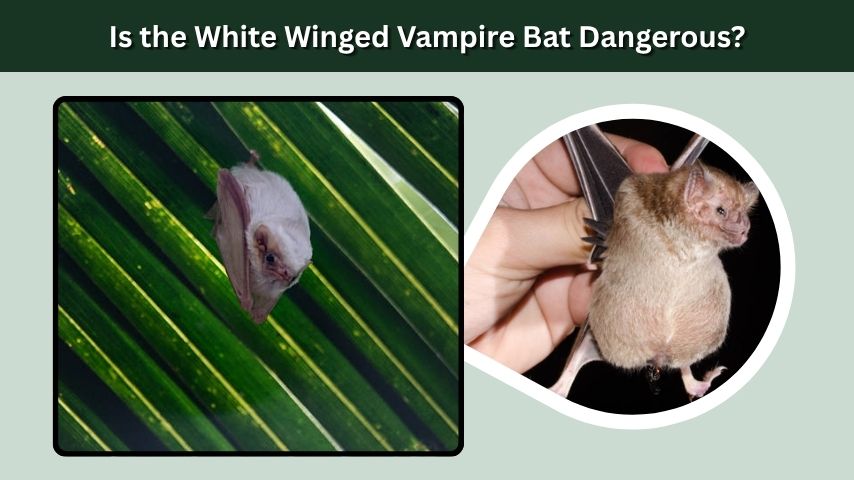
The white winged vampire bat can be dangerous in specific situations, but not in the way movies suggest. It does not attack humans like a monster, and it is not hunting people. However, vampire bats can be a concern because they feed on blood and may interact with livestock or poultry.
Can It Attack Humans?
Human attacks are not the normal focus of this species. White winged vampire bats are more associated with feeding on birds and some animals. However, any wild bat should be treated with caution.
You should never handle a bat with bare hands. Bats can bite when stressed, trapped, or injured. In some regions, bats may also be connected with disease concerns, including rabies risk.
When Should You Be Careful?
Be cautious if:
- A bat is found inside a home
- A bat is acting strangely
- A person or pet may have been bitten
- Livestock or poultry show unexplained wounds
- A bat is found on the ground
- Children or pets have touched a bat
In these cases, contact local wildlife, health, or pest control authorities. Do not try to capture or handle the bat yourself unless instructed by professionals.
White Winged Vampire Bat Predators and Defense
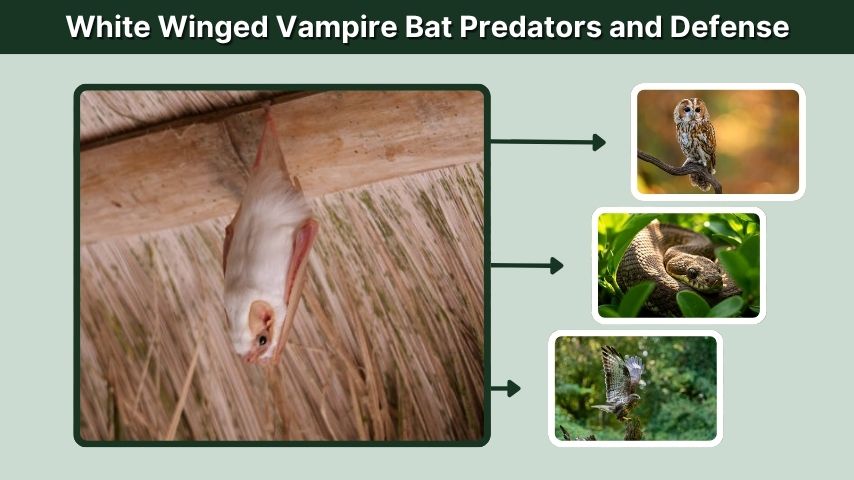
Like other small bats, the white winged vampire bat faces predators. Owls, snakes, carnivorous mammals, and other night hunters may prey on bats when they get the chance.
Predators
Possible predators include:
- Owls
- Snakes
- Hawks
- Small carnivorous mammals
- Larger animals near roosts
Predation risk is one reason bats choose protected roosting sites. Caves, hollow trees, and dark shelters help reduce danger during the day.
Defense Methods
The white winged vampire bat defense system depends mostly on avoidance. It survives by hiding during the day, flying at night, staying alert, and choosing safe roosts.
Its best defenses include:
- Nocturnal behavior
- Quiet movement
- Hidden roosting sites
- Fast escape flight
- Social roosting in some situations
- Avoiding open exposure during daylight
Some vampire bats also produce strong odors when disturbed, which may discourage predators or threats.
White Winged Vampire Bat Population
The white winged vampire bat is considered less commonly encountered than the common vampire bat. However, it has a wide distribution across parts of the Neotropics. Its conservation status is generally listed as Least Concern because it occurs across a broad range.
That does not mean the species is easy to study. Researchers still know less about the white-winged vampire bat than many other bats. Its nocturnal habits, roosting behavior, and scattered records make it difficult to observe in the wild.
Why Population Data Is Limited
Population data can be limited because:
- The species is active at night
- It may roost in hidden places
- It is not often encountered
- It lives across wide tropical regions
- Some areas are difficult to survey
- It may be confused with other bats without expert identification
More field research would help scientists understand its population trends, wild diet, movement, and ecological role.
White Winged Vampire Bat Trophic Level
The white winged vampire bat has an unusual trophic role. Because it feeds on blood from vertebrate animals, it is a parasite-like consumer rather than a typical predator that kills prey for meat.
It does not usually kill the host animal while feeding. Instead, it takes a blood meal and leaves. This makes its ecological role different from insectivorous bats, fruit bats, or carnivorous predators.
Is It a Predator or Parasite?
It can be described as a blood-feeding mammal with parasitic feeding behavior. It feeds from living hosts but does not normally consume the whole animal.
In simple food chain terms, it is a consumer that gets energy from vertebrate blood. Its hosts may be birds or mammals, depending on location and opportunity.
Interesting Facts About the White Winged Vampire Bat
The white winged vampire bat is full of unusual traits. It is not just another scary animal with a spooky name. It is a specialized mammal with rare feeding behavior and important ecological connections.
Fun Facts
Here are some interesting facts about white winged vampire bats:
- It is one of only three living vampire bat species.
- Its scientific name is often written as Diaemus youngi or Diaemus youngii.
- It is the only species in its genus.
- It often feeds on bird blood.
- It has pale wing markings that inspired its common name.
- It lives in parts of Central and South America.
- It is nocturnal and usually feeds at night.
- It does not suck blood like a straw; it laps blood from a small wound.
- It is less commonly seen than the common vampire bat.
- It plays a unique role in tropical ecosystems.
FAQs
What is the scientific name for the white-winged vampire bat?
The scientific name is usually written as Diaemus youngi, though some taxonomic sources use Diaemus youngii. It is the only living species in the genus Diaemus and belongs to the New World leaf-nosed bat family.
What do white winged vampire bats eat?
White winged vampire bats feed on blood. They are especially known for feeding on birds, including poultry in some areas. They may also feed on some mammals, but bird blood is strongly associated with this species.
Where does a white winged vampire bat live?
The white winged vampire bat lives in parts of Central and South America. It is found in tropical and subtropical regions, including forests, caves, hollow trees, forest edges, and areas where suitable animal hosts are available.
Is the white winged vampire bat dangerous?
It is not dangerous in a monster-like way, but it is still a wild bat and should not be handled. Any bat bite or possible exposure should be taken seriously because bats may carry diseases in some regions.
What makes the white winged vampire bat unique?
Its blood-feeding diet, pale wing markings, bird-feeding behavior, and specialized teeth make it unique. It is one of only three living vampire bat species and the only species in the genus Diaemus.