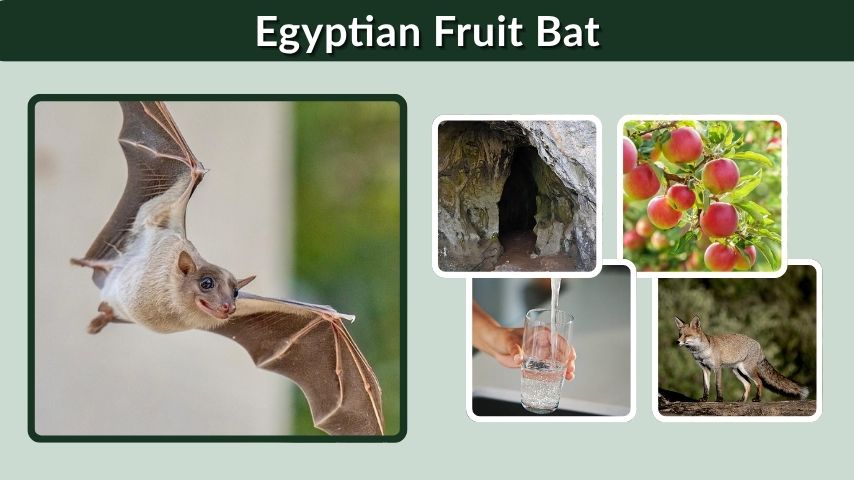
The Egyptian fruit bat is a fascinating fruit-eating bat known for its fox-like face, large eyes, social colonies, and unusual ability to use echolocation. Also called the Egyptian rousette, this bat plays an important role in nature by spreading seeds and helping fruiting plants reproduce. Many people search for Egyptian fruit bat facts because these animals look cute, behave socially, and are often seen in zoos, wildlife videos, and games like Planet Zoo.
What Is an Egyptian Fruit Bat?
The Egyptian fruit bat is a medium-sized megabat that belongs to the Old World fruit bat family. Its scientific name is Rousettus aegyptiacus. Although it is often called a fruit bat, it is also known as the Egyptian rousette.
Unlike the tiny insect-eating bats many people imagine, Egyptian fruit bats have a more dog-like or fox-like face, large eyes, and a diet based mostly on fruit. They are nocturnal, meaning they are most active at night, but they may also be seen moving around in shaded roosts during the day.
Egyptian Fruit Bat Quick Facts
| Feature | Details |
| Common name | Egyptian fruit bat |
| Other name | Egyptian rousette |
| Scientific name | Rousettus aegyptiacus |
| Animal group | Mammal, bat, megabat |
| Family | Pteropodidae |
| Diet | Mostly ripe fruit, fruit juice, and pulp |
| Wingspan | Around 2 feet, depending on individual |
| Habitat | Caves, ruins, forests, orchards, rocky areas, and buildings |
| Activity | Nocturnal |
| Conservation status | Least Concern |
| Pet suitability | Not recommended for private ownership |
Egyptian Fruit Bat Scientific Name and Classification
The Egyptian fruit bat’s scientific name is Rousettus aegyptiacus. It belongs to the order Chiroptera, which includes all bats. Its family, Pteropodidae, includes Old World fruit bats, sometimes called flying foxes or megabats.
Although some people call it a flying fox because of its face shape, it is not one of the largest flying foxes. It is smaller than many famous flying fox species, but larger than many insect-eating bats.
Classification
The Egyptian fruit bat can be classified as:
- Kingdom: Animalia
- Phylum: Chordata
- Class: Mammalia
- Order: Chiroptera
- Family: Pteropodidae
- Genus: Rousettus
- Species: Rousettus aegyptiacus
This classification matters because the Egyptian fruit bat is one of the fruit bats that can use echolocation, which is unusual among many megabats.
What Do Egyptian Fruit Bats Look Like?
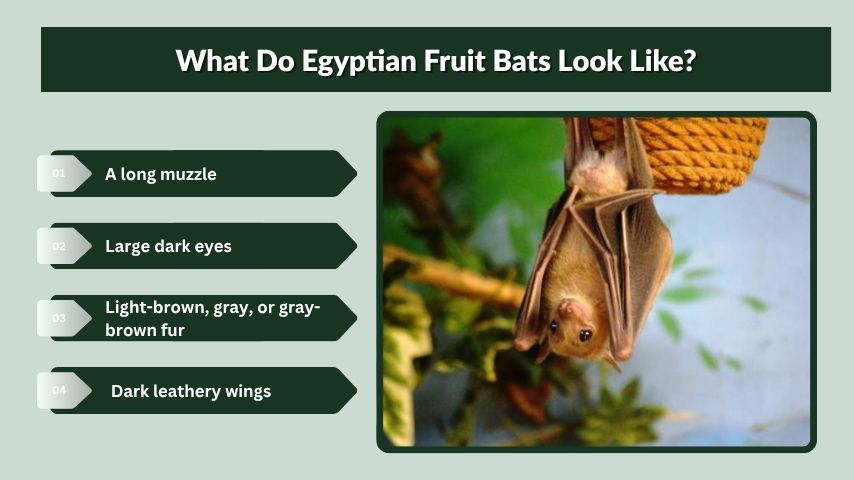
Egyptian fruit bats have soft brown, gray-brown, or medium-gray fur with darker wings. Their faces are long and narrow, giving them a fox-like or puppy-like appearance. This is one reason many people search for “cute Egyptian fruit bat” or “cute Egyptian fruit bats.”
They have large eyes that help them see in low light, pointed ears, and strong wing membranes stretched between elongated finger bones. Like all bats, their wings are modified hands rather than bird-like wings.
Physical Characteristics
Egyptian fruit bats usually have:
- A long muzzle
- Large dark eyes
- Light-brown, gray, or gray-brown fur
- Dark leathery wings
- A clawed thumb on each wing
- Small rounded ears
- A short tail membrane
- A wingspan that can reach about two feet
Their body shape makes them excellent climbers and fliers. When roosting, they hang upside down using their feet, often close together in groups.
Egyptian Fruit Bat Size and Weight
The Egyptian fruit bat is a medium-sized fruit bat. It is much larger than many tiny backyard bats but much smaller than the largest flying foxes. Adults may have a body length of several inches and a wingspan of around two feet.
Their weight can vary by age, sex, food availability, and health. Zoo and wildlife references often describe them as weighing up to several ounces. Males may be slightly larger than females in some populations.
Size Summary
An adult Egyptian fruit bat generally has:
- A body length of about 5 to 7.5 inches
- A wingspan around 20 to 24 inches
- A weight of several ounces
- A compact but strong body
- Long wing bones for efficient flight
Because their wings spread so wide compared with their body, they can look larger in flight than they do while hanging in a roost.
Where Do Egyptian Fruit Bats Live?
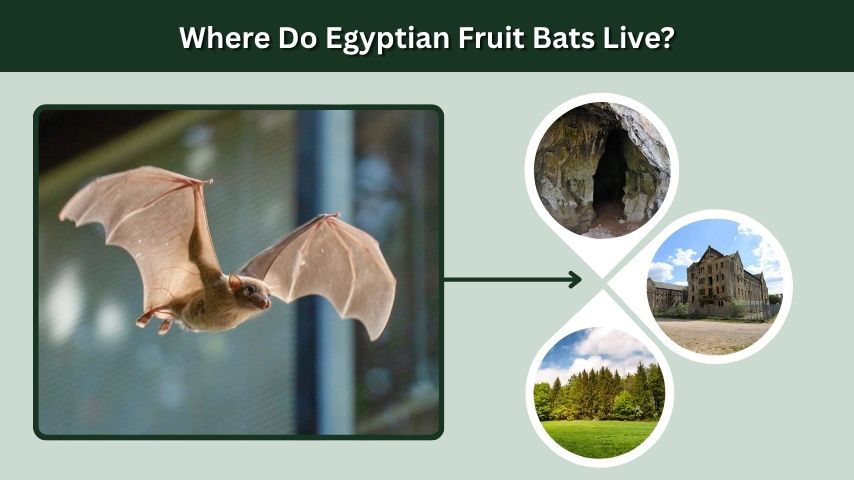
Egyptian fruit bats live across parts of Africa, North Africa, the Middle East, and nearby regions. They are adaptable and can use many types of habitats as long as they have safe roosting places and access to fruiting plants.
They are commonly linked with caves, rocky areas, ruins, mines, forests, orchards, and sometimes buildings. In some places, they live close to farms or human settlements because fruit trees provide food.
Egyptian Fruit Bat Habitat
Egyptian fruit bats may live in:
- Caves
- Rock crevices
- Abandoned buildings
- Ruins
- Mines
- Forest edges
- Orchards
- Savannas
- Gardens and cultivated areas
They prefer places where they can roost safely during the day and fly out at night to feed. Large colonies may gather in caves or other sheltered spaces.
Egyptian Fruit Bat Range
The Egyptian fruit bat range includes much of sub-Saharan Africa, parts of North Africa, and areas of the Middle East. It is also associated with some Mediterranean and nearby Asian regions depending on the source and population.
People often search for “Egyptian fruit bat Israel,” “Egyptian fruit bat Europe,” or “Egyptian fruit bat location” because this species has a broad range compared with many other fruit bats. It is especially well known in areas where fruit farming and bat colonies overlap.
Egyptian Fruit Bat Diet
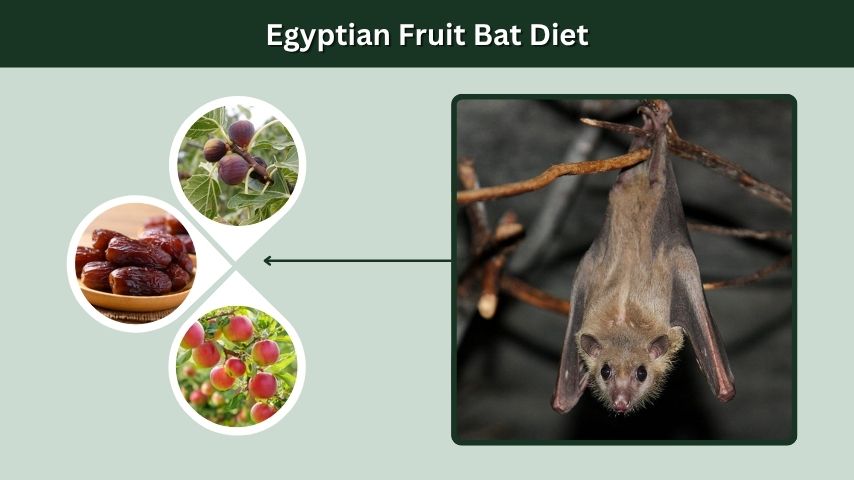
The Egyptian fruit bat diet is based mainly on ripe fruit. These bats often squeeze fruit with their mouth, swallow the juice and soft pulp, and may spit out tougher fibers. They are attracted to sweet, ripe fruits that are easy to chew.
They may feed on figs, dates, apples, apricots, peaches, berries, and many other fruits depending on what is available locally. In the wild, their diet changes with the season and with the fruiting cycle of plants.
What Do Egyptian Fruit Bats Eat?
Egyptian fruit bats may eat:
- Figs
- Dates
- Apples
- Apricots
- Peaches
- Mulberries
- Berries
- Soft tropical fruits
- Fruit pulp and juice
They are not insect hunters like many smaller bats. Their teeth are adapted for biting and crushing fruit rather than catching insects in flight.
Egyptian Fruit Bat Behavior
Egyptian fruit bats are highly social animals. They often roost in colonies, which can range from small groups to very large gatherings. In colonies, they communicate with calls, body movements, and social interactions.
At night, they leave the roost to search for fruit. They may travel significant distances to find feeding trees. When they locate a good food source, many bats may return to the same area repeatedly.
Common Behaviors
Egyptian fruit bats are known for:
- Hanging upside down while resting
- Roosting in groups
- Flying at night to find fruit
- Using vocal sounds for communication
- Grooming themselves and others
- Competing over food and roosting space
- Returning to familiar feeding areas
Their social behavior is one reason they are studied by scientists interested in animal communication.
Do Egyptian Fruit Bats Use Echolocation?
Yes, Egyptian fruit bats can use echolocation. This makes them especially interesting because many fruit bats rely mostly on vision and smell. Egyptian fruit bats use a form of click-based echolocation that helps them navigate in dark spaces such as caves.
Their echolocation is different from the high-frequency sonar used by many insect-eating bats. Still, it helps them avoid obstacles and move through dark roosting areas.
Why Echolocation Helps
Echolocation helps Egyptian fruit bats:
- Navigate inside caves
- Avoid walls and obstacles
- Move in crowded roosts
- Fly in low-light conditions
- Combine sound with vision and smell
This ability gives them an advantage in dark roosting environments where eyesight alone may not be enough.
Egyptian Fruit Bat Lifespan
The Egyptian fruit bat lifespan can vary between the wild and captivity. In the wild, lifespan depends on predators, disease, food supply, climate, and human disturbance. In managed zoo environments, animals may live longer because they receive steady food, veterinary care, and protection from predators.
A general lifespan estimate for Egyptian fruit bats is often around several years, with some individuals living longer under human care. Like many bats, they can live longer than expected for their body size.
Baby Egyptian Fruit Bat and Life Cycle
A baby Egyptian fruit bat is called a pup. Female bats give birth to live young because bats are mammals. The pup clings to its mother and depends on milk before gradually learning to feed on fruit.
Young bats develop flight skills over time. They must learn how to move in a colony, use their senses, and find food. In social colonies, young bats are surrounded by many calls and interactions.
Life Cycle Stages
The Egyptian fruit bat life cycle includes:
- Birth as a live pup
- Nursing from the mother
- Clinging and roosting with the colony
- Learning to fly
- Beginning to feed on fruit
- Growing into a juvenile
- Reaching adulthood and breeding age
Baby Egyptian fruit bats often look especially cute because of their large eyes, small faces, and delicate wings.
Egyptian Fruit Bat Predators and Defense
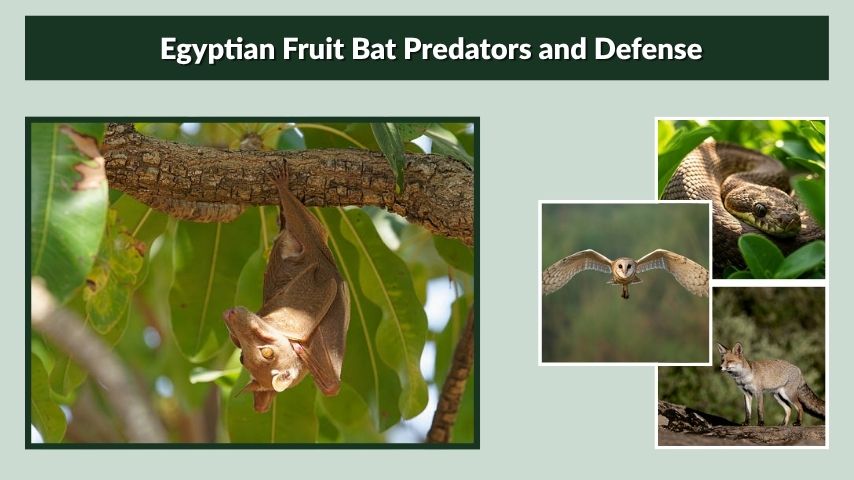
Egyptian fruit bats have several natural enemies. Predators may include birds of prey, snakes, carnivorous mammals, and other animals that can reach roosting sites. Young or weak bats may be more vulnerable than healthy adults.
Their main defense is safety in numbers, choosing protected roosts, flying away quickly, and being active at night. Hanging in large colonies can make it harder for predators to target one bat, although crowded roosts can also attract predators.
Defense Mechanisms
Egyptian fruit bats defend themselves by:
- Roosting in sheltered places
- Staying in groups
- Flying away from danger
- Using claws to grip and climb
- Biting if handled or threatened
- Being active mostly at night
They are not aggressive animals, but like any wild mammal, they may bite if frightened or handled.
Are Egyptian Fruit Bats Dangerous?
Egyptian fruit bats are not dangerous in the sense of being aggressive predators. They do not hunt people and do not attack humans for food. However, they are wild animals and should not be handled.
The main safety concern with wild bats is disease risk. Some Egyptian rousette bats have been associated with Marburg virus in certain regions. This does not mean every Egyptian fruit bat carries disease, but it does mean people should avoid direct contact with wild bats, bat saliva, urine, feces, and roost debris.
Safety Tips Around Wild Bats
Follow these precautions:
- Do not handle wild bats
- Avoid entering dense bat roosts without expert guidance
- Do not touch sick, injured, or dead bats
- Keep children and pets away from bats
- Do not eat fruit that appears contaminated by bat saliva or droppings
- Contact wildlife professionals if a bat is trapped indoors
If a bat bites or scratches a person, medical advice should be sought promptly.
Are Egyptian Fruit Bats Endangered?
Egyptian fruit bats are generally listed as Least Concern, which means they are not currently considered endangered across their full range. However, local populations can still face threats.
Threats may include habitat disturbance, persecution near farms, roost destruction, disease concerns, and conflict with fruit growers. In some regions, they may be treated as crop pests because they feed on commercially grown fruit.
Protecting bat roosts while also helping farmers reduce crop loss is important for long-term coexistence.
Egyptian Fruit Bat as a Pet
Many people search for “Egyptian fruit bat pet,” “Egyptian fruit bats as pets,” or “Egyptian fruit bat for sale.” However, Egyptian fruit bats are not good pets for most people. They are social, nocturnal, messy, highly active, and require specialized care.
They need space to fly, a carefully managed diet, proper humidity and temperature, social housing, veterinary expertise, and legal permission. In many places, keeping bats privately may be restricted or illegal.
Why They Are Poor Household Pets
Egyptian fruit bats are difficult pets because they:
- Need large flight space
- Are social and should not be kept alone
- Are active at night
- Produce strong smells and waste
- Require fresh fruit diets
- May carry disease risks
- Can bite when stressed
- May be illegal to own without permits
For most people, the best way to enjoy Egyptian fruit bats is through zoos, wildlife documentaries, reputable sanctuaries, or conservation programs.
Egyptian Fruit Bat Care in Captivity
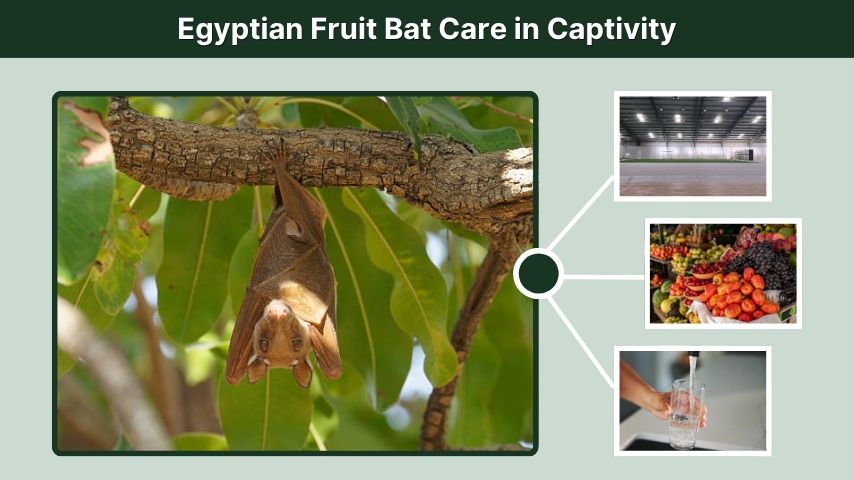
Egyptian fruit bat care should be left to licensed zoos, sanctuaries, researchers, or trained wildlife professionals. Their needs are much more complex than those of common domestic pets.
Captive care requires a large enclosure with flight room, roosting structures, group housing, regular cleaning, enrichment, veterinary monitoring, and a balanced fruit-based diet. Poor care can lead to stress, malnutrition, injuries, and disease.
Captive Care Needs
Professional Egyptian fruit bat care usually includes:
- Large indoor flight enclosure
- Proper roosting structures
- Social group management
- Fresh fruit diet
- Vitamin and mineral balance
- Clean water
- Strict hygiene
- Veterinary care
- Enrichment and climbing space
A small cage is not suitable for an Egyptian fruit bat. These animals are built to fly, climb, socialize, and forage.
Egyptian Fruit Bat in Planet Zoo
The Egyptian fruit bat is also popular because of Planet Zoo. Searches for “Egyptian fruit bat Planet Zoo” or “Planet Zoo Egyptian fruit bat” usually come from players who want to build a realistic habitat.
In a game setting, players can focus on cave-like spaces, climbing areas, hanging roosts, warm lighting, and fruit-based feeding themes. Real Egyptian fruit bats need far more specialized care than a game habitat can show, but Planet Zoo can help players appreciate their social and ecological roles.
Fun Facts About Egyptian Fruit Bats
Egyptian fruit bats are full of interesting traits. They are cute-looking, social, vocal, and important for ecosystems. Their ability to combine vision, smell, and echolocation makes them different from many other fruit bats.
Interesting Facts
- Egyptian fruit bats are also called Egyptian rousettes.
- They are mammals, not birds.
- Their wings are modified hands.
- They feed mostly on ripe fruit.
- They often live in colonies.
- They can use click-based echolocation.
- They help spread seeds.
- They may roost in caves, ruins, and buildings.
- Their large eyes help them see at night.
- They are important to healthy ecosystems.
FAQs
What do Egyptian fruit bats eat?
Egyptian fruit bats mainly eat ripe fruit. They often consume fruit juice and soft pulp from foods such as figs, dates, apples, apricots, peaches, and berries. Their diet changes depending on season and local fruit availability.
Where do Egyptian fruit bats live?
Egyptian fruit bats live across parts of Africa, North Africa, and the Middle East. They roost in caves, rocky areas, ruins, mines, buildings, forests, orchards, and other sheltered places near fruiting plants.
Are Egyptian fruit bats dangerous?
Egyptian fruit bats are not aggressive toward humans, but they are wild animals and should not be handled. Like other bats, they can bite if stressed and may carry disease risks in some regions. Avoid contact with wild bats and roost debris.
Can Egyptian fruit bats be pets?
Egyptian fruit bats are not recommended as pets. They need large flight space, social groups, expert care, fresh fruit diets, permits, and veterinary support. In many places, private ownership may be illegal or restricted.
Are Egyptian fruit bats endangered?
Egyptian fruit bats are generally listed as Least Concern, so they are not considered endangered across their full range. However, local populations may still be affected by roost disturbance, conflict with farmers, habitat changes, and human persecution.