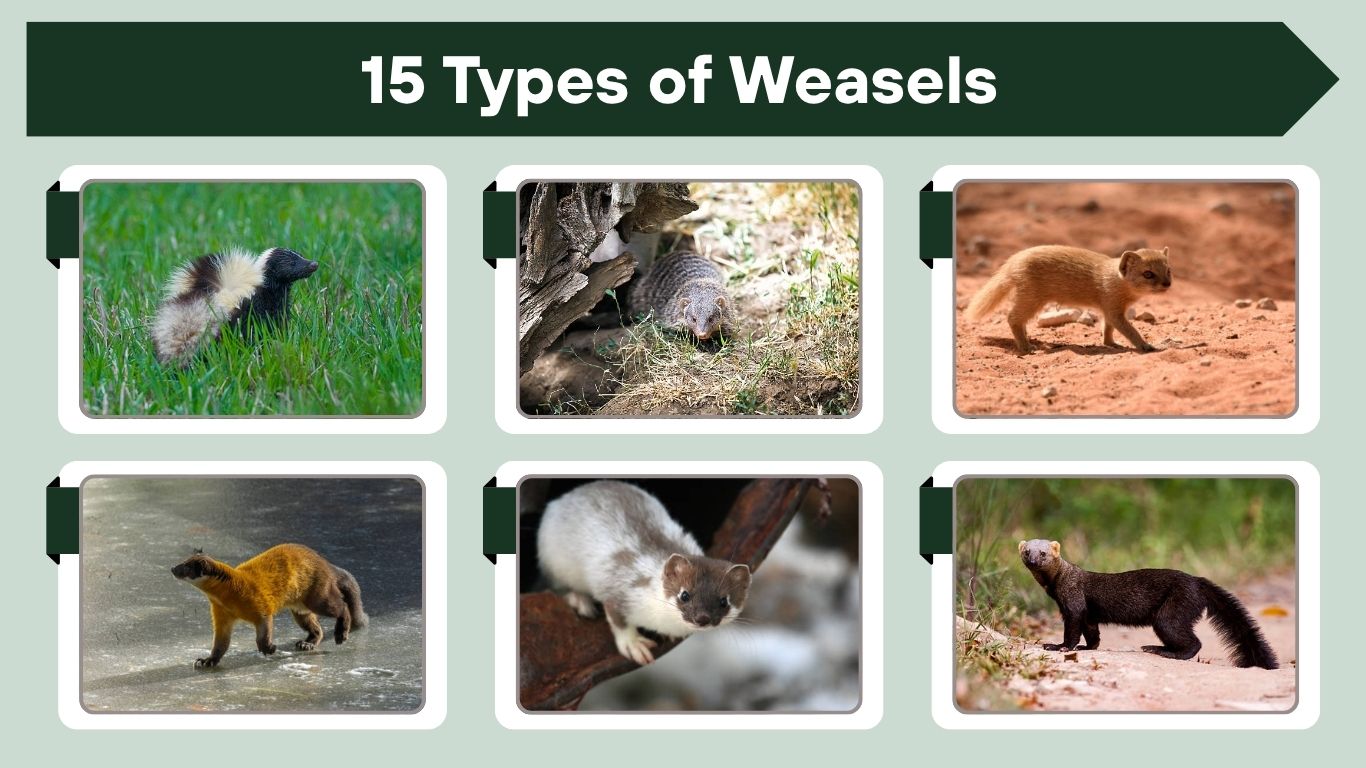
Weasels are small, active mammals known for their long bodies, short legs, and sharp hunting skills. They live in many habitats, including forests, grasslands, mountains, wetlands, and areas near human settlements. Although many weasel species look similar, their size, fur color, tail markings, habitat, and range can help with identification.
1. Least Weasel
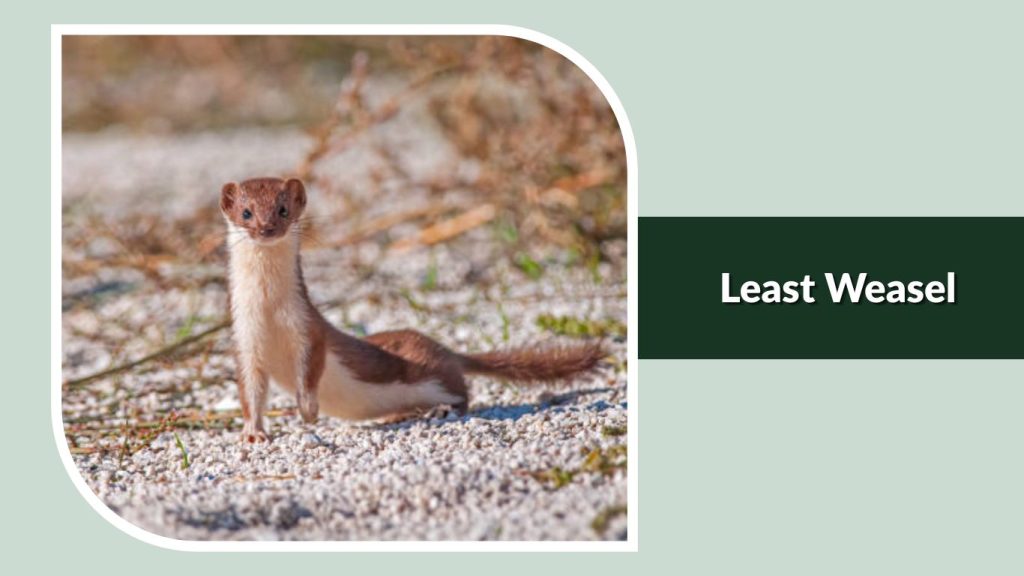
The least weasel is the smallest member of the weasel family, but it is a skilled hunter with a bold nature. This tiny mammal is found across parts of North America, Europe, Asia, and North Africa. Its slim body, sharp senses, and quick movement help it survive in grasslands, forests, farmlands, and snowy regions.
Characteristics
- Smallest weasel species in the world
- Long, slender body with short legs
- Brown upper fur and white or cream underside
- Short tail without a black tip
- Fast, agile, and highly active hunter
- Feeds mainly on mice, voles, and small rodents
Appearance
The least weasel has a thin body that allows it to move through narrow tunnels and dense vegetation. Its fur is usually brown on the back and lighter underneath. In colder areas, some least weasels turn white during winter, which helps them blend into snowy surroundings.
Habitat
Least weasels live in many different habitats, including meadows, fields, woodland edges, and farmland. They often stay close to places where small rodents are common. They may use burrows, rock piles, tree roots, or abandoned nests for shelter.
Identification
You can identify a least weasel by its very small size, slim body, and short tail. Unlike the stoat, its tail usually does not have a black tip. Its quick movements and low-running style also make it easier to recognize in the wild.
2. Stoat
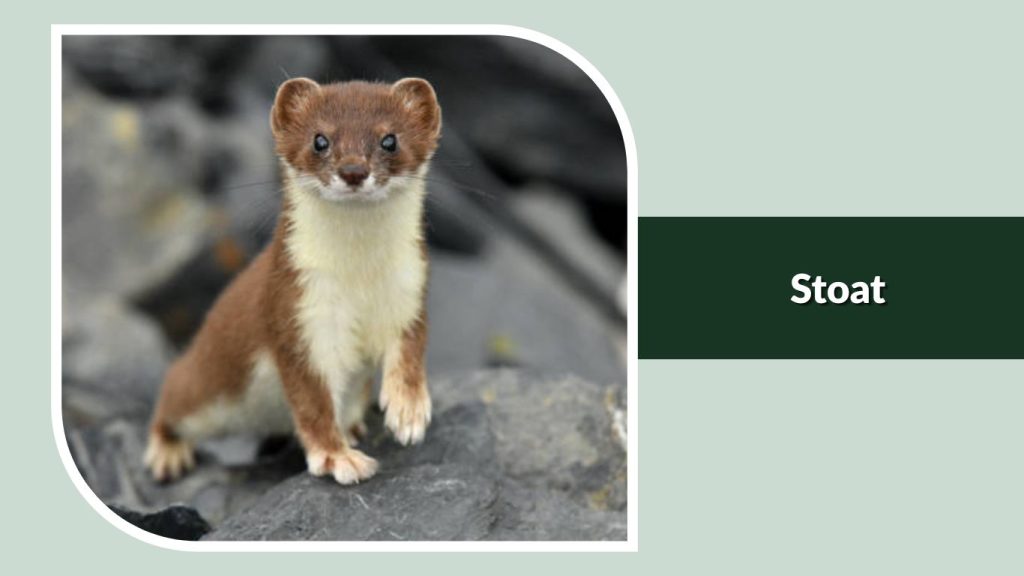
The stoat is a small but powerful predator known for its speed, flexibility, and seasonal fur changes. It is found across Europe, Asia, and North America, where it lives in forests, grasslands, farmlands, and wetlands. Although it looks similar to the least weasel, the stoat is usually larger and has a clear black tip on its tail.
Characteristics
- Slim body with short legs
- Brown fur in summer and often white fur in winter
- Black tip at the end of the tail
- Fast and active hunter
- Feeds on rabbits, rodents, birds, and eggs
- Can live in many types of habitats
Appearance
The stoat has a long, narrow body that helps it move quickly through burrows and thick grass. In summer, its upper body is usually brown, while the underside is white or cream. In snowy regions, its coat may turn white in winter, but the black tail tip remains visible.
Habitat
Stoats live in open fields, forest edges, wetlands, and rocky areas. They prefer places where prey is easy to find. They often use old burrows, tree roots, stone walls, or thick vegetation as hiding spots and nesting areas.
Identification
A stoat can be identified by its slim shape, quick movements, and black-tipped tail. This tail marking is the easiest way to separate it from the least weasel. Its larger size and seasonal white coat also help with identification.
3. Long-tailed Weasel
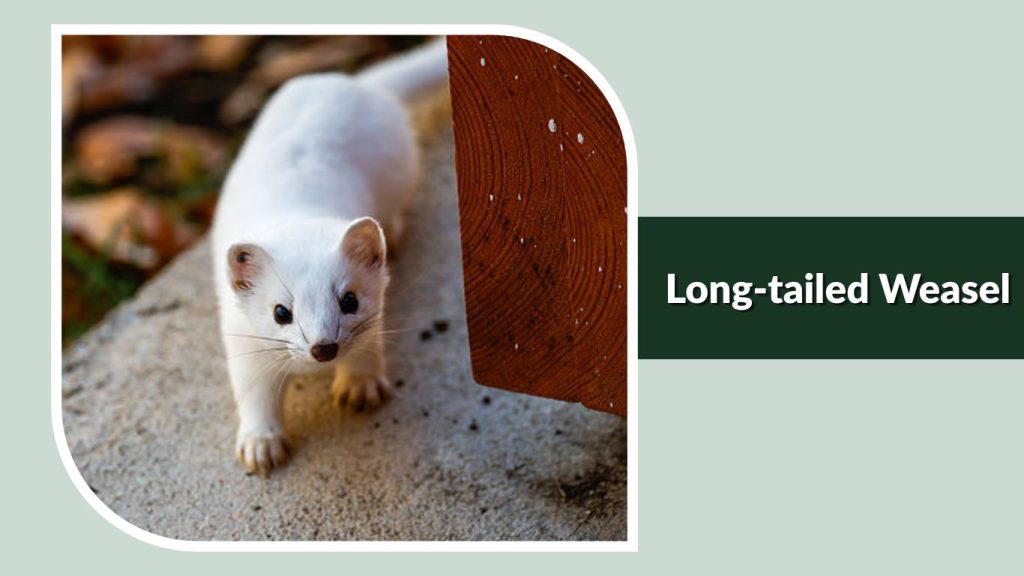
The long-tailed weasel is a common weasel species found across North and Central America. It is known for its long body, narrow head, and noticeably long tail. This species is a strong hunter and can live in many environments, including forests, farms, grasslands, and areas near water.
Characteristics
- Long, slim body with a long tail
- Brown upper fur and pale underside
- Black tip on the tail
- Excellent climber and fast runner
- Hunts rodents, rabbits, birds, and reptiles
- Active during both day and night
Appearance
The long-tailed weasel has a slender body with short legs and a tail that is much longer than that of many other weasels. Its summer coat is usually brown on top and yellowish or white underneath. In colder regions, some individuals may turn white during winter.
Habitat
This weasel lives in woodlands, grasslands, brushy fields, riverbanks, and farmlands. It prefers areas with plenty of cover and small animals to hunt. It may use burrows, logs, rock piles, or abandoned animal shelters for protection.
Identification
You can identify the long-tailed weasel by its extended tail with a black tip. It is usually larger than the least weasel and more noticeably long-tailed than the stoat. Its slender body and quick, bounding movement are also helpful identification signs.
4. Mountain Weasel
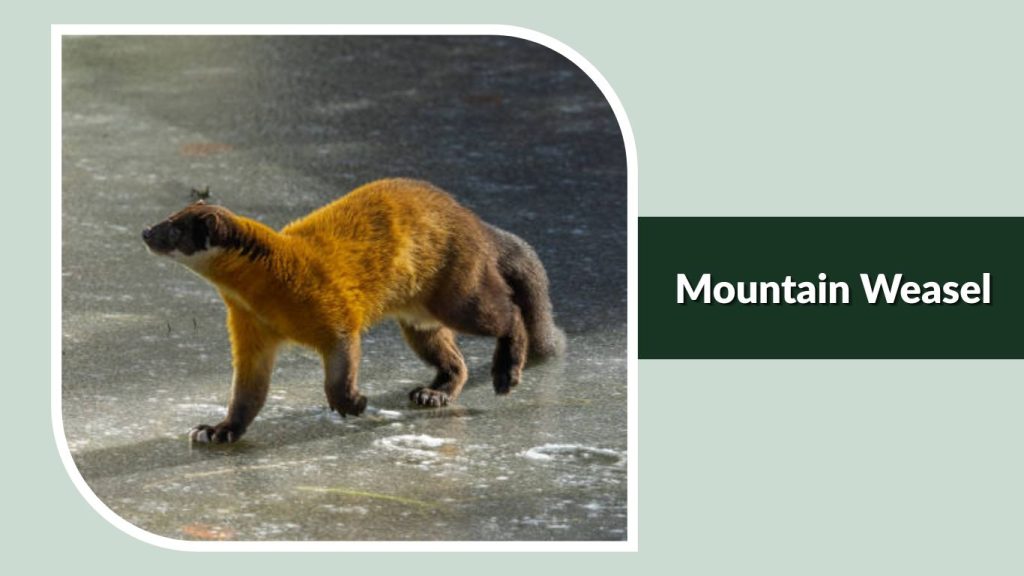
The mountain weasel is a small predator that lives in high-altitude regions of Central and East Asia. It is well adapted to cold climates, rocky slopes, alpine meadows, and mountain grasslands. This species is less commonly seen than many other weasels because it often lives in remote and rugged places.
Characteristics
- Small body with short legs
- Pale brown or yellowish-brown fur
- Light-colored underside
- Adapted to cold mountain habitats
- Feeds mainly on small rodents and birds
- Often found in rocky or grassy highlands
Appearance
The mountain weasel has a slim body and soft fur that helps protect it in cold environments. Its coat is usually light brown, sandy, or yellowish-brown, with a paler underside. Its small size and flexible body allow it to move easily through rocks, burrows, and dense grass.
Habitat
This species usually lives in mountain meadows, rocky valleys, alpine grasslands, and forest edges. It prefers areas where small mammals are common. The mountain weasel often shelters in burrows, cracks between rocks, or hidden spaces under vegetation.
Identification
The mountain weasel can be identified by its small size, pale coat, and mountain habitat. It does not usually have the strong black tail tip seen in stoats and long-tailed weasels. Its high-altitude range is also an important clue for identification.
5. Siberian Weasel
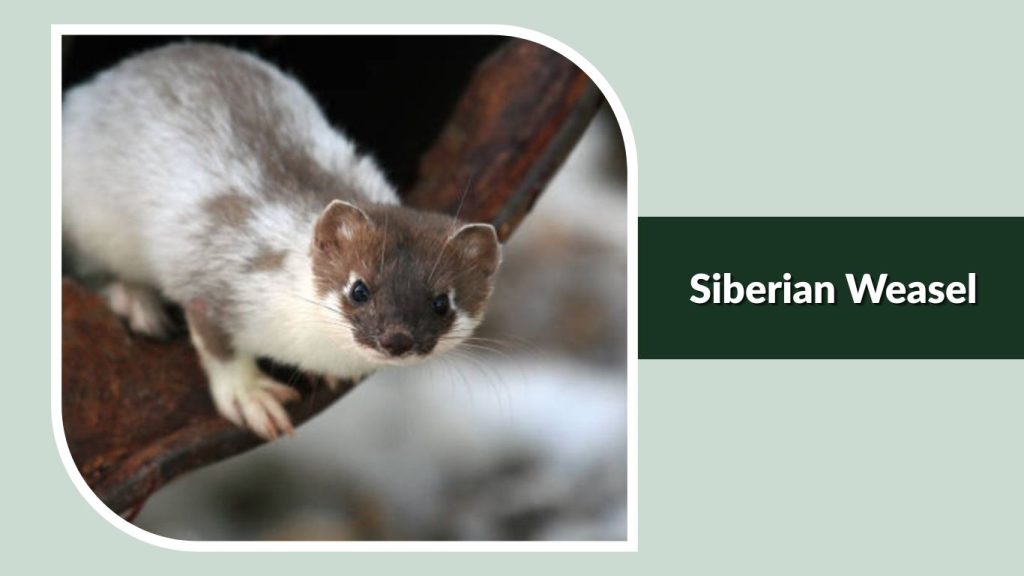
The Siberian weasel is a medium-sized weasel species found across parts of Asia. It is known for its yellowish to reddish-brown coat and active hunting behavior. This species often lives near forests, farms, river valleys, and mountain areas, where it searches for rodents and other small animals.
Characteristics
- Medium-sized weasel with a slender body
- Yellowish, reddish, or golden-brown fur
- Long tail without a strong black tip
- Strong sense of smell and hearing
- Hunts rodents, birds, insects, and small reptiles
- Sometimes lives near human settlements
Appearance
The Siberian weasel has a longer body than many smaller weasel species. Its fur is usually warm yellow, orange-brown, or reddish-brown, giving it a bright appearance. The underside is often lighter, and the face may look slightly darker around the nose and eyes.
Habitat
Siberian weasels live in forests, grasslands, farms, wetlands, and mountain valleys. They can adapt well to different environments as long as food and shelter are available. They may use burrows, hollow logs, rock spaces, or old nests for resting.
Identification
You can identify the Siberian weasel by its warm-colored coat, medium size, and long slim body. Unlike the stoat, it usually lacks a clear black tail tip. Its reddish-yellow fur makes it easier to recognize compared with darker or smaller weasel species.
6. Japanese Weasel
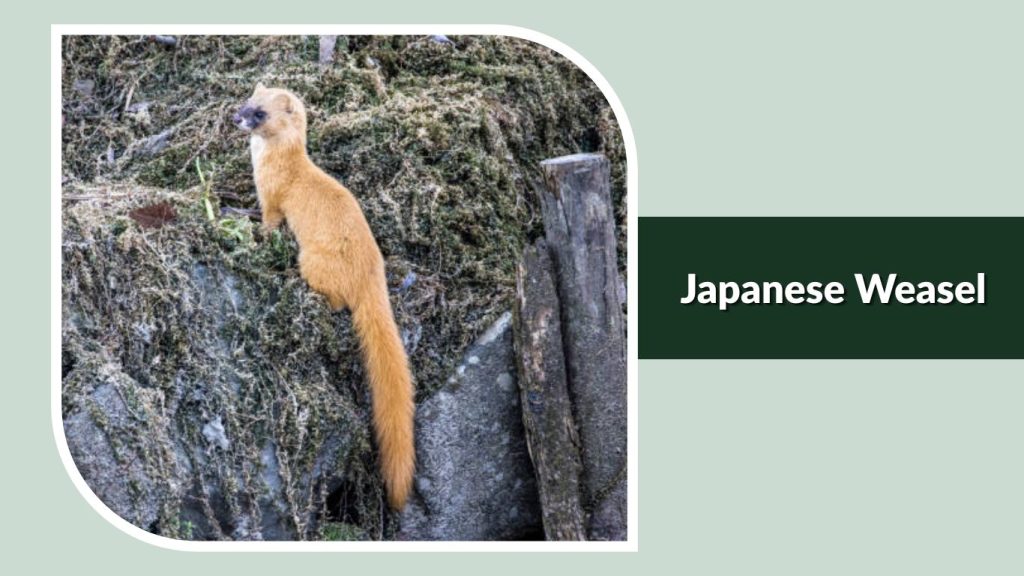
The Japanese weasel is a small carnivorous mammal native to Japan. It is known for its slim body, quick movement, and yellowish-brown fur. This species is often found near forests, rivers, farmlands, and grasslands. Like other weasels, it is an active hunter and mainly feeds on small animals.
Characteristics
- Small, slender body
- Yellowish-brown to orange-brown fur
- Pale underside and throat area
- Short legs with sharp claws
- Feeds on rodents, birds, insects, and amphibians
- Often found near water and farmland
Appearance
The Japanese weasel has a long, narrow body with short legs and a pointed face. Its coat is usually warm brown, yellowish, or orange-brown. The underside is lighter, especially around the throat and chest. Its body shape helps it move through grass, burrows, and tight spaces while hunting.
Habitat
Japanese weasels live in forests, riverbanks, rice fields, grasslands, and areas close to villages. They prefer places where water and prey are available. They often use holes, thick vegetation, rock gaps, or abandoned burrows as resting places.
Identification
You can identify the Japanese weasel by its warm brown coat, slim body, and Japanese range. It is similar to the Siberian weasel, but it is usually associated with Japan. Its quick movement and preference for areas near water also help with identification.
7. Yellow-bellied Weasel
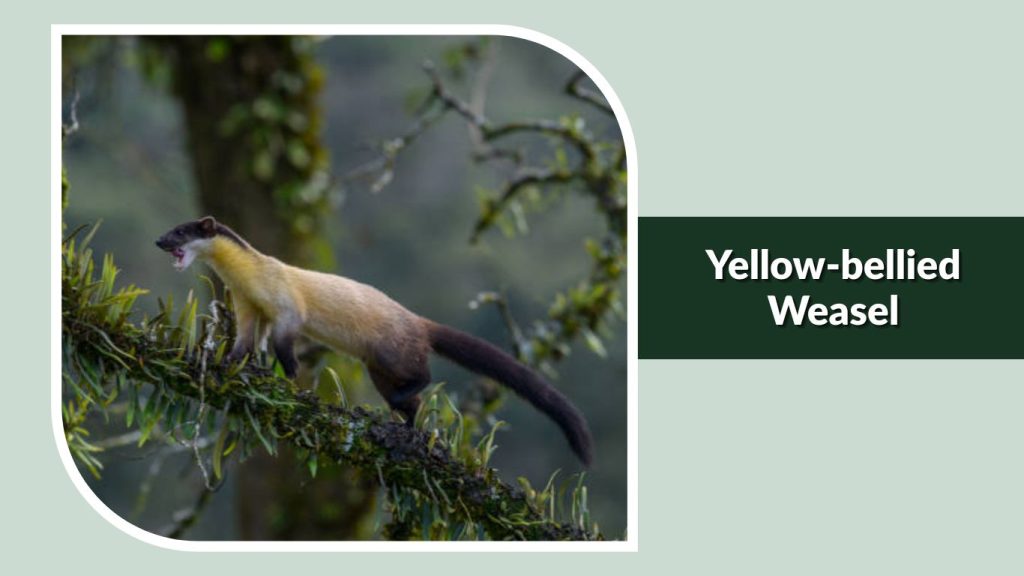
The yellow-bellied weasel is a small weasel species found in parts of Asia. It gets its name from the yellow or orange color on its underside. This species is usually seen in forests, mountain areas, and grasslands. It is a quiet and fast-moving predator that hunts small animals.
Characteristics
- Slim body with short legs
- Dark brown upper fur
- Yellow or orange-colored belly
- Long tail compared with body size
- Feeds on rodents, birds, eggs, and insects
- Often found in forests and mountain regions
Appearance
The yellow-bellied weasel has a narrow body, pointed face, and soft fur. Its back is usually dark brown, while the underside is yellowish or orange. This color contrast makes it different from many other weasel species. Its tail is fairly long and may appear darker near the end.
Habitat
This weasel lives in forests, wooded valleys, mountain slopes, and grassy areas. It prefers places with enough cover to hide from predators and enough prey to hunt. It may rest in burrows, tree roots, rock spaces, or thick plants.
Identification
The easiest way to identify a yellow-bellied weasel is by its yellow or orange underside. Its dark back and bright belly create a clear contrast. Its Asian range and forest or mountain habitat also help separate it from other weasel species.
8. Back-striped Weasel
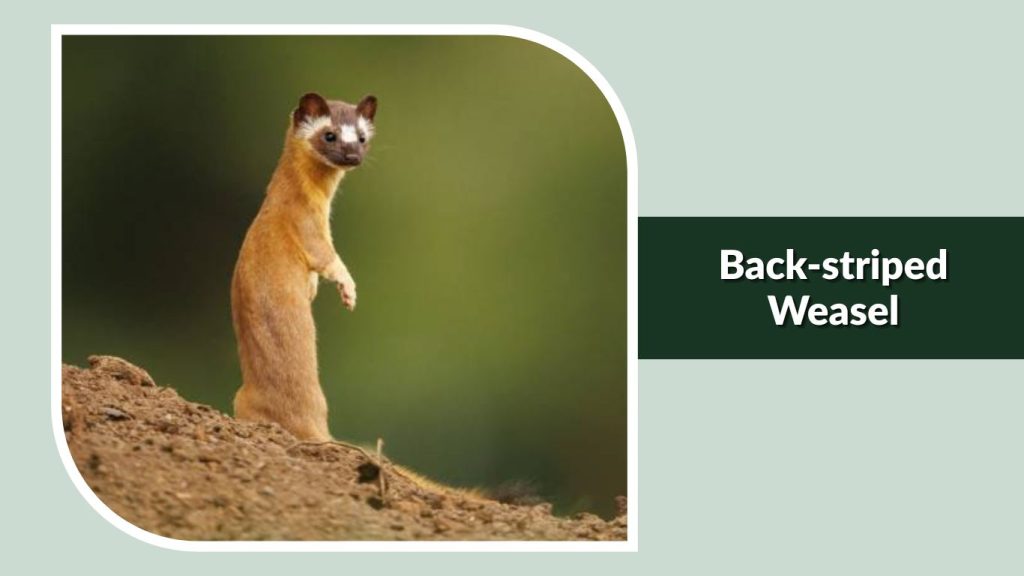
The back-striped weasel is a rare and unusual weasel species found in parts of Southeast Asia. It is named for the pale stripe running along its back. This small predator is not often seen in the wild because it usually lives in dense forests and remote areas.
Characteristics
- Small, slender body
- Dark brown fur with a pale back stripe
- Light stripe may run from head to tail
- Short legs and pointed face
- Feeds on small mammals, birds, and insects
- Rarely seen in the wild
Appearance
The back-striped weasel has a dark brown body with a noticeable pale stripe along its back. This stripe is its most unique feature. Its underside may also be lighter than the rest of the body. Like other weasels, it has a long, flexible body that helps it move through narrow spaces.
Habitat
This species is usually found in forests, hills, and dense vegetation in Southeast Asia. It prefers hidden areas where it can hunt and avoid larger predators. Because it lives in thick forest cover, it is difficult for people to observe or study.
Identification
You can identify the back-striped weasel by the pale stripe on its back. This marking separates it from most other weasels. Its small size, dark fur, and Southeast Asian forest habitat are also useful identification clues.
9. Indonesian Mountain Weasel
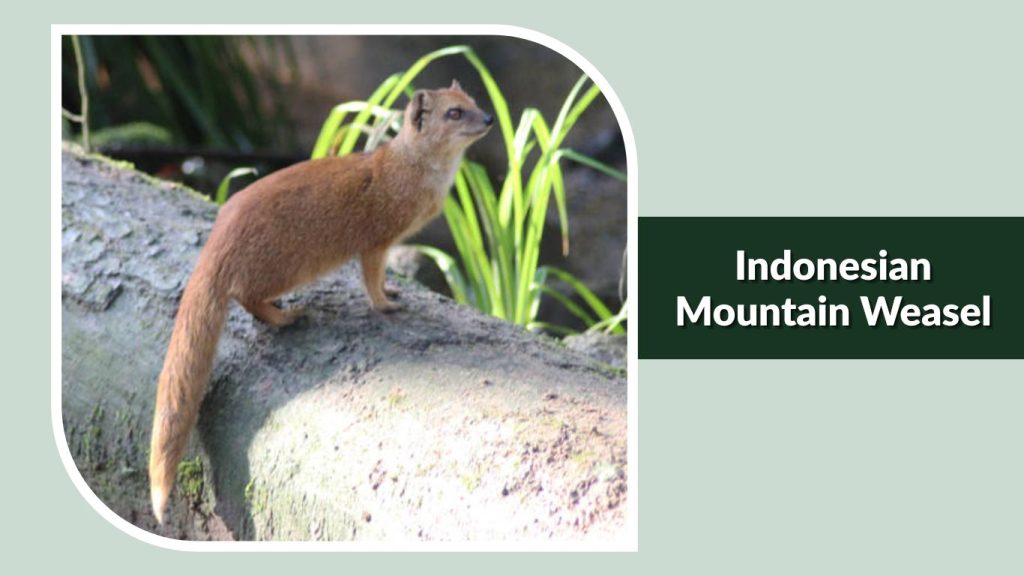
The Indonesian mountain weasel is a little-known species found in mountain regions of Indonesia. It is one of the rarer weasels and is not commonly seen by people. This species is adapted to cool, highland environments and likely depends on forest cover and small prey animals for survival.
Characteristics
- Small and slender body
- Dark brown to reddish-brown fur
- Lives in mountain forests
- Short legs and flexible body
- Feeds mainly on small animals
- Rare and poorly studied species
Appearance
The Indonesian mountain weasel has a slim body with short legs and a narrow head. Its fur is usually dark brown or reddish-brown, helping it blend into forest floors and shaded mountain areas. Its body shape allows it to move through roots, rocks, and thick plants while searching for prey.
Habitat
This weasel lives in highland forests and mountain areas in Indonesia. It prefers cool, moist environments with dense vegetation. These habitats provide shelter and hunting opportunities. Because it lives in remote mountain regions, information about its behavior is limited.
Identification
The Indonesian mountain weasel can be identified by its mountain habitat, dark coat, and Indonesian range. It may look similar to other small weasels, but its location is an important clue. Its rarity also makes direct identification more difficult.
10. Colombian Weasel
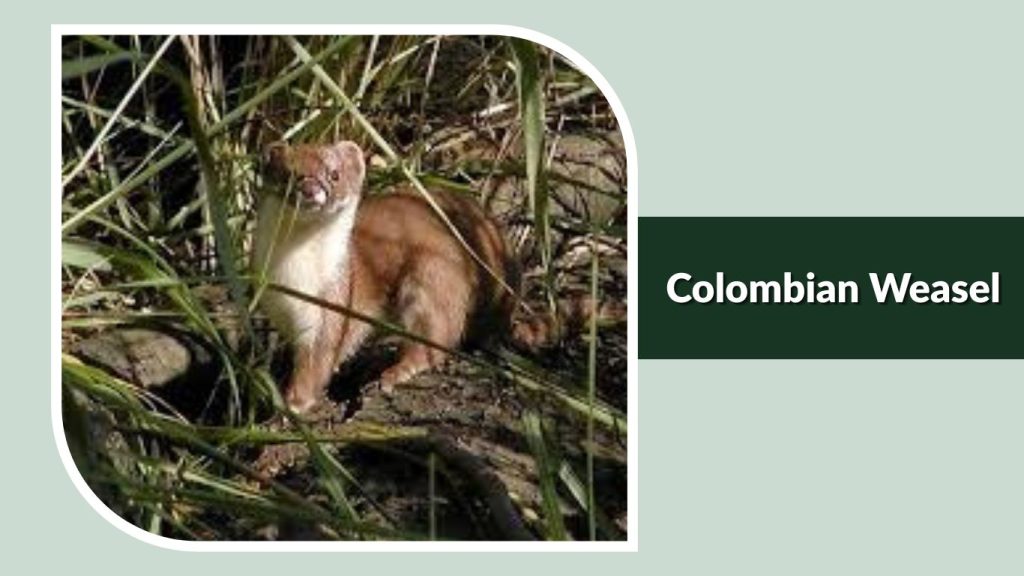
The Colombian weasel is one of the rarest weasel species in the world. It is found in limited areas of Colombia and nearby regions. This small mammal is usually linked to wet habitats, especially areas near rivers and streams. Very little is known about its behavior because it is rarely observed.
Characteristics
- Very rare weasel species
- Small body with short legs
- Dark brown upper fur
- Lighter underside
- Often found near water
- Feeds on small animals, likely rodents and aquatic prey
Appearance
The Colombian weasel has a long, narrow body, short legs, and dark brown fur. Its underside is usually lighter than its back. Its body shape is typical of weasels, allowing it to move through tight spaces. Because sightings are rare, detailed appearance information is limited.
Habitat
This species is believed to live near streams, rivers, and wet forest areas. These habitats may help it find prey and shelter. It is usually associated with remote areas, which makes it hard for researchers to study closely.
Identification
You can identify the Colombian weasel by its small size, dark coat, and connection to wet habitats in Colombia. Its limited range is one of the strongest identification clues. Since it is extremely rare, confirmed sightings are uncommon.
11. Amazon Weasel
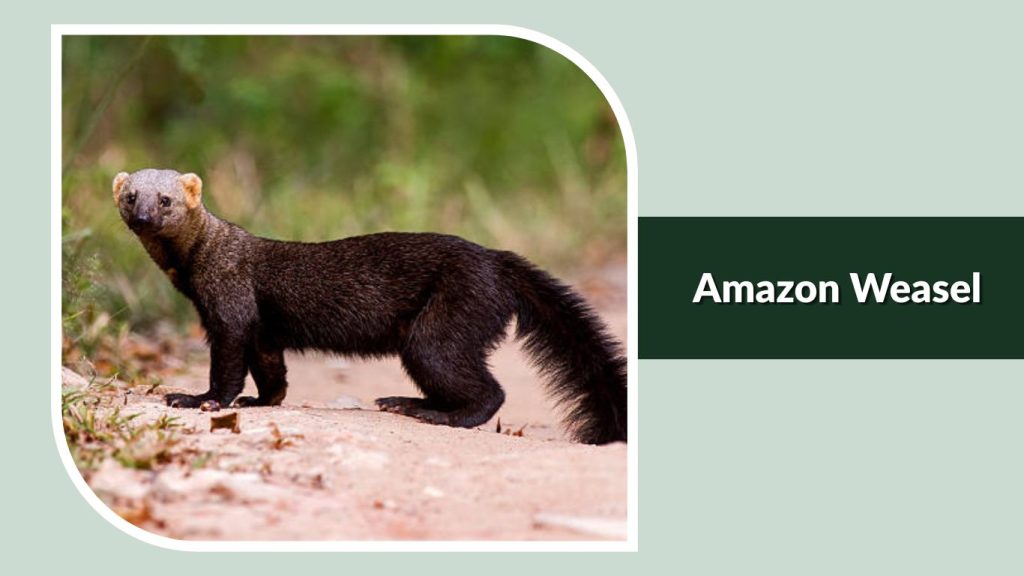
The Amazon weasel is a rare weasel species found in parts of the Amazon Basin. It is not commonly seen because it lives in dense tropical forests and hidden wetland areas. This small predator is believed to depend on forest cover, river edges, and small prey animals for survival.
Characteristics
- Rare and little-known weasel species
- Small, slim body
- Dark brown upper fur
- Lighter underside
- Often linked to wet forest habitats
- Feeds on small mammals, birds, insects, and other small prey
- Lives mostly in tropical regions
Appearance
The Amazon weasel has a narrow body, short legs, and soft dark fur. Its upper body is usually brown, while the underside is lighter. Like other weasels, its flexible body helps it move through thick plants, roots, and narrow spaces while searching for food.
Habitat
This species lives in tropical forests, wet lowlands, and areas near rivers or streams. Dense vegetation gives it protection from larger predators and helps it hunt quietly. Because it lives in remote rainforest areas, it is difficult to observe in the wild.
Identification
You can identify the Amazon weasel by its small size, dark coat, and Amazon rainforest range. Its connection to wet tropical habitats is also an important clue. Since sightings are rare, location is one of the strongest ways to identify it.
12. Egyptian Weasel
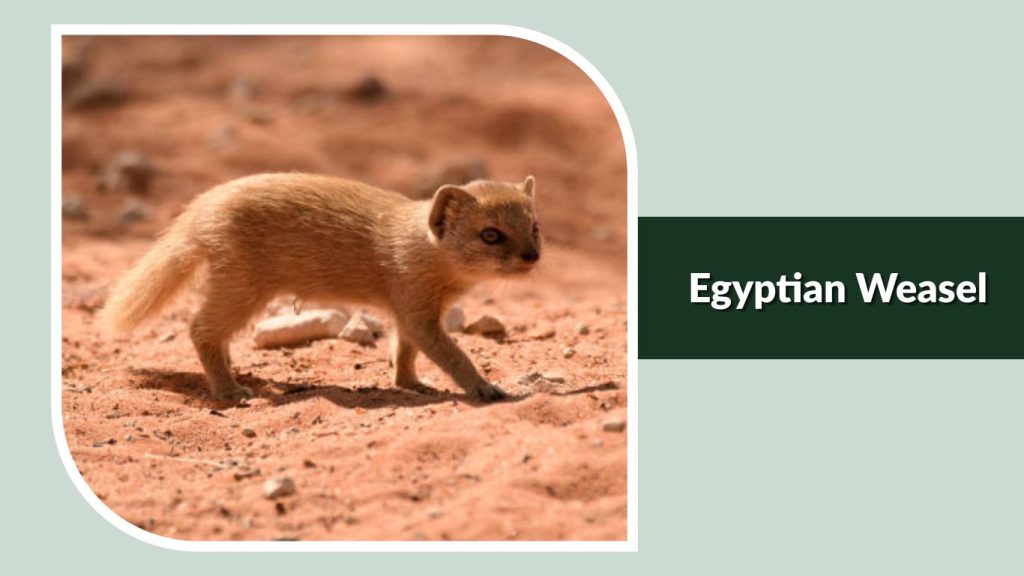
The Egyptian weasel is a small carnivorous mammal found mainly in Egypt. Unlike many wild weasels, it often lives close to human settlements, farms, and villages. It is an active hunter that helps control rodents, making it an important part of local ecosystems.
Characteristics
- Small and slender body
- Brown to grayish-brown fur
- Pale underside
- Often lives near people
- Hunts rats, mice, insects, and small reptiles
- Active and quick-moving predator
- Can adapt to urban and rural areas
Appearance
The Egyptian weasel has a long, narrow body with short legs and a pointed face. Its fur is usually brown or grayish-brown, with a lighter belly. Its slim body allows it to enter small holes, walls, and burrows where rodents may hide.
Habitat
This weasel is often found in villages, farmlands, gardens, and city edges. It may also live near fields and storage areas where rodents are common. Its ability to live close to humans makes it different from many forest-dwelling weasel species.
Identification
You can identify the Egyptian weasel by its small size, pale underside, and Egyptian range. Its habit of living around farms and settlements is also useful for identification. It is usually seen moving quickly near walls, fields, or buildings.
13. Malayan Weasel
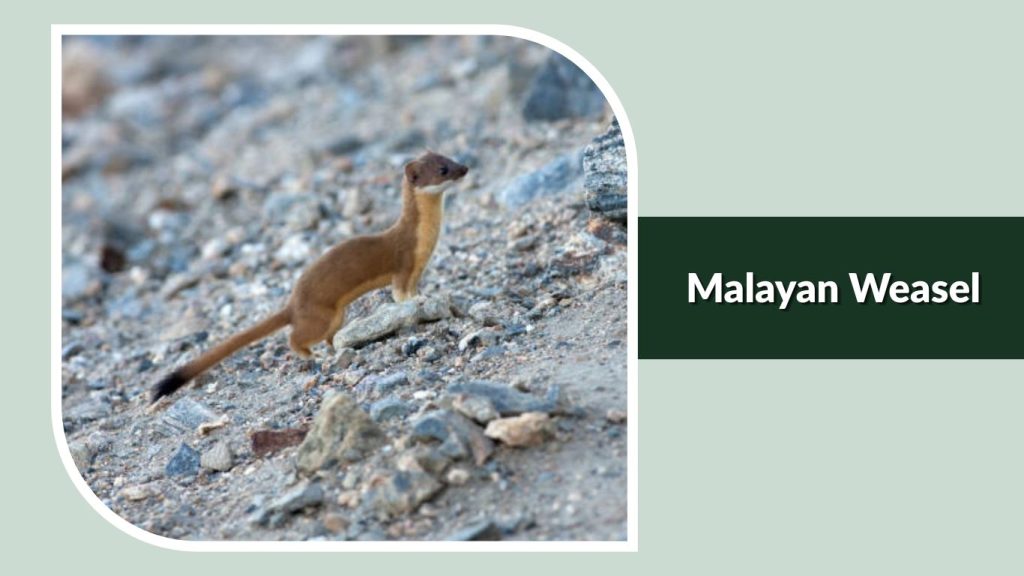
The Malayan weasel is a small weasel species found in parts of Southeast Asia. It is known for its warm brown or reddish-brown coat and secretive behavior. This species usually lives in forests, hills, and areas with thick vegetation, where it hunts small animals.
Characteristics
- Small, slender body
- Brown to reddish-brown fur
- Pale or lighter underside
- Short legs and pointed face
- Feeds on rodents, birds, insects, and reptiles
- Often found in forests and hilly areas
- Secretive and rarely seen
Appearance
The Malayan weasel has a long body, narrow head, and short legs. Its coat is usually brown or reddish-brown, which helps it blend into forest floors and dry leaves. The underside may be lighter than the back, and the tail is usually slim and moderately long.
Habitat
This species lives in tropical forests, hills, plantations, and areas with dense plant cover. It prefers places where it can hide easily and find small prey. It may rest in burrows, tree roots, hollow logs, or thick vegetation during the day.
Identification
You can identify the Malayan weasel by its warm brown coat, slim body, and Southeast Asian range. Its forest habitat and secretive behavior are also helpful clues. Compared with some other weasels, it may appear darker and more reddish.
14. Striped Weasel
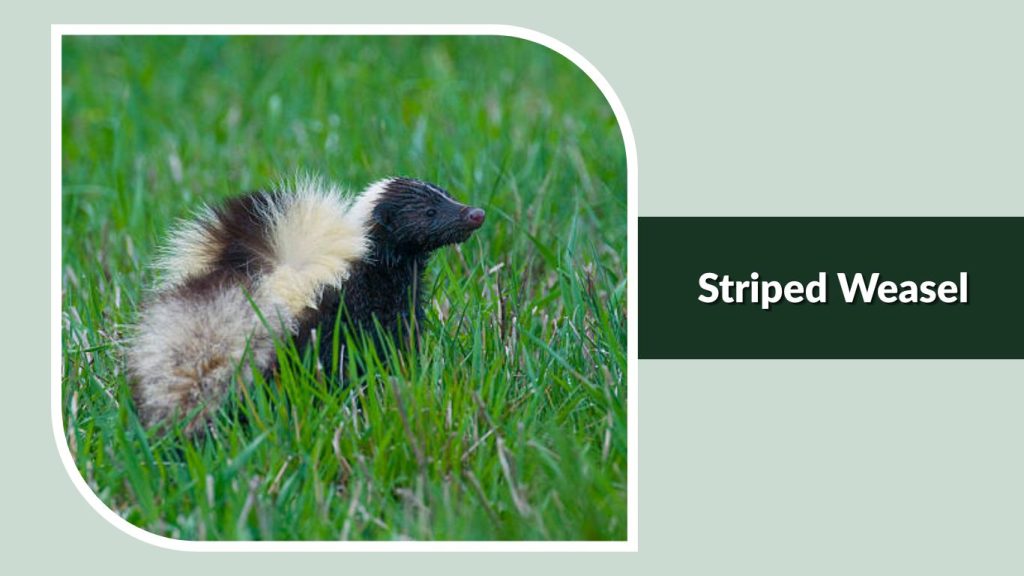
The striped weasel is a distinctive species known for the light-colored stripes running along its dark body. It is found in parts of Africa and is often associated with grasslands, savannas, and open habitats. Its bold markings make it easier to recognize than many plain-colored weasels.
Characteristics
- Slender body with short legs
- Dark fur with pale stripes
- Stripes run along the back and sides
- Long tail with bushy appearance
- Hunts rodents, insects, birds, and small reptiles
- Often found in grasslands and open areas
- Strong defensive smell when threatened
Appearance
The striped weasel has a dark body marked with clear pale or whitish stripes. These stripes may run from the head toward the back and tail. Its tail can look fuller than that of some other weasels. The pattern helps it stand out from brown or single-colored species.
Habitat
This weasel usually lives in grasslands, savannas, scrublands, and open countryside. It prefers areas where it can hunt small animals while staying hidden in grass or burrows. It may use holes, rock spaces, or thick ground cover for shelter.
Identification
You can identify the striped weasel by its dark coat and pale stripes. These markings are its most important identification feature. Its African range and open-country habitat also help separate it from forest-dwelling or plain-colored weasel species.
15. African Striped Weasel
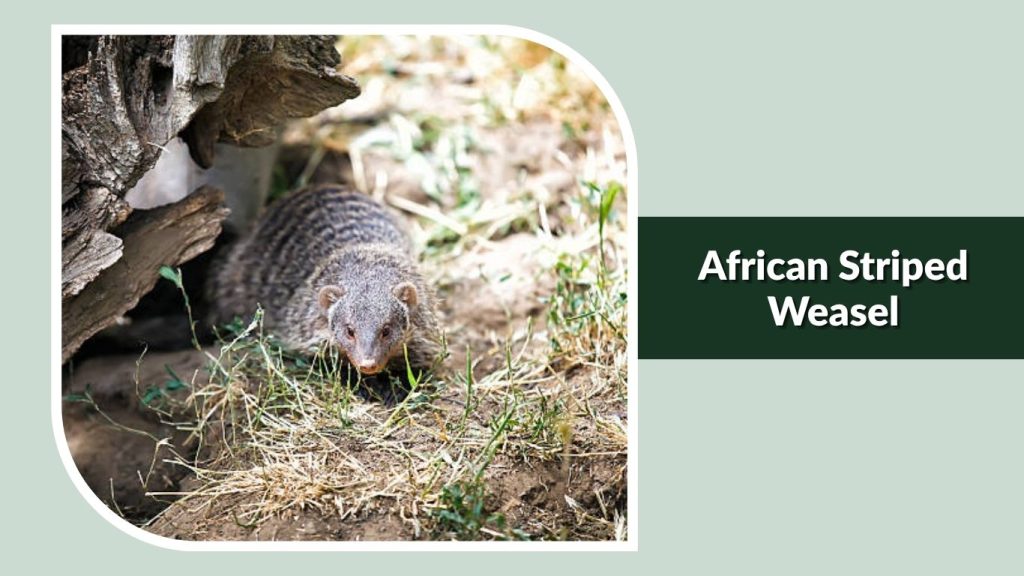
The African striped weasel is a small, striking mammal found in parts of sub-Saharan Africa. It is best known for its black body with white or pale stripes. This species is secretive and mostly active at night, hunting small animals in grasslands and open habitats.
Characteristics
- Small body with bold stripes
- Black or dark fur with white stripes
- Short legs and narrow body
- Bushy tail with dark and light coloring
- Mostly active at night
- Feeds on rodents, insects, birds, and reptiles
- Uses strong scent as defense
Appearance
The African striped weasel has a dark coat with clear white stripes running along the body. Its tail is often bushier than that of many other weasels. The strong contrast between black and white makes it one of the easiest weasel species to recognize.
Habitat
This species lives in grasslands, savannas, open woodlands, and scrub areas. It prefers habitats with enough cover for hiding and enough prey for hunting. During the day, it may rest in burrows, holes, or sheltered spaces under vegetation.
Identification
You can identify the African striped weasel by its black-and-white striped pattern and African range. Its bold markings, bushy tail, and nocturnal behavior help separate it from plain brown weasels. It is usually found in open, dry habitats rather than dense forests.