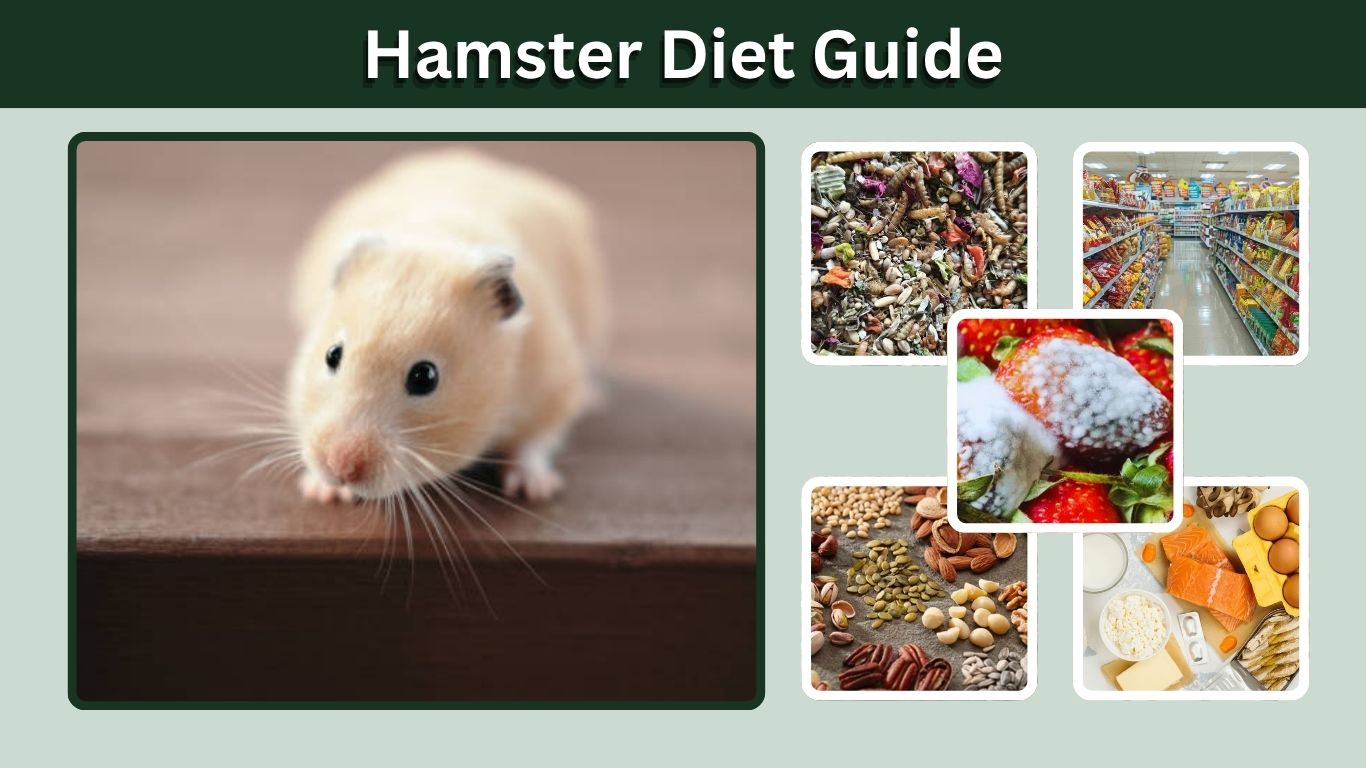
A healthy hamster diet should be balanced, simple, and consistent. Most pet hamsters do best with a quality hamster pellet or lab block as the main food, supported by small portions of safe vegetables, occasional protein, and very limited fruit or treats. Because hamsters are tiny animals, even small diet mistakes can lead to weight gain, digestive upset, or selective feeding problems.
What Should a Hamster’s Diet Consist Of?
A proper hamster diet should provide steady nutrition without too much sugar or fat. The main part of the diet should come from a complete hamster food, usually pellets, lab blocks, or a balanced hamster mix designed for daily feeding.
Seed-only diets are not ideal because many hamsters pick out their favorite fatty seeds and leave the healthier pieces behind. This behavior, called selective feeding, can create an unbalanced diet even if the food mix looks complete in the bowl.
Main Parts of a Healthy Hamster Diet
A balanced hamster diet usually includes:
- Complete hamster pellets or lab blocks as the main food
- Small amounts of safe fresh vegetables
- Occasional healthy protein foods
- Very small portions of fruit, if suitable
- Fresh water every day
- Limited treats
The goal is not to feed many exciting foods every day. The goal is to provide reliable nutrition while using fresh foods and treats in careful amounts.
Best Hamster Diet for Daily Feeding
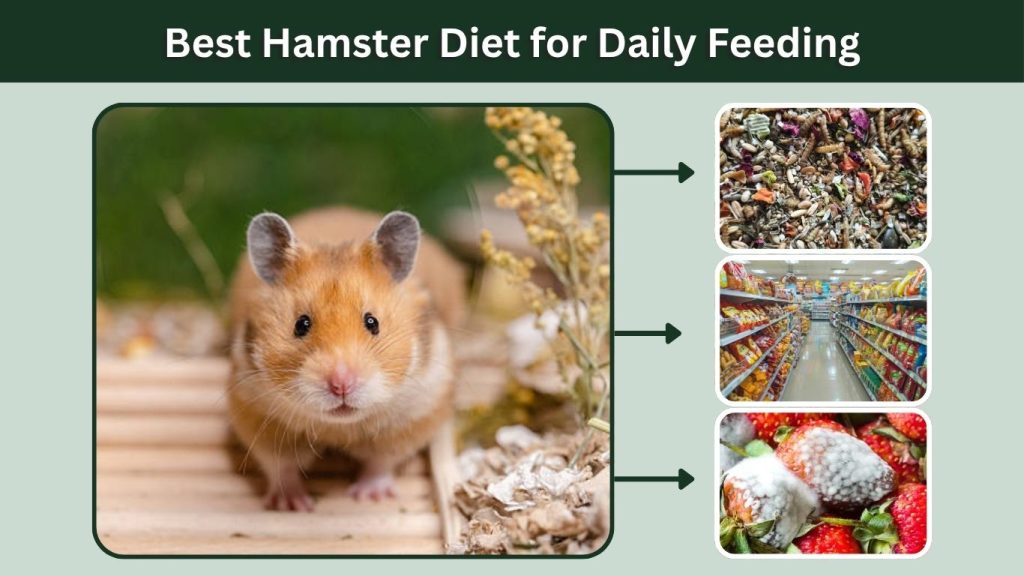
The best hamster diet is one your hamster can eat consistently without becoming overweight or nutritionally deficient. For most pet hamsters, a complete commercial hamster food should be the base. Pellets and lab blocks are often easier to manage than loose seed mixes because each piece contains similar nutrition.
A good daily hamster diet should be measured, not guessed. Hamsters naturally hoard food, so an empty bowl does not always mean the hamster ate everything. Some food may be hidden in bedding, tunnels, corners, or nesting areas.
Daily Feeding Basics
For daily care, focus on these habits:
- Offer a measured portion of complete hamster food.
- Check hidden food stores regularly.
- Remove spoiled fresh food.
- Keep water clean and available.
- Avoid sudden food changes.
- Watch your hamster’s weight and droppings.
If you switch food brands, do it gradually over several days. A sudden change can upset the digestive system and may cause soft stools or reduced appetite.
Hamster Diet Chart
This hamster diet chart gives a simple overview of what a healthy feeding routine may include. Amounts depend on species, age, size, activity level, and health, so use this as a general guide rather than a strict prescription.
| Food Type | How Often | Notes |
| Hamster pellets or lab blocks | Daily | Main part of the diet; helps prevent selective feeding |
| Safe vegetables | Several times weekly | Offer tiny portions and remove leftovers |
| Fruit | Rarely or occasionally | Use very small pieces; avoid for diabetic-prone hamsters |
| Protein foods | Occasionally | Plain cooked egg, mealworms, or suitable animal protein in tiny amounts |
| Seeds and nuts | Limited treats | High in fat; do not use as the whole diet |
| Fresh water | Daily | Check bottle or bowl every day |
Hamster Diet List: Safe Foods
A hamster diet list should separate everyday foods from occasional treats. Safe foods can still cause problems if given too often or in large amounts. Introduce one new food at a time so you can notice any digestive reaction.
Safe Vegetables for Hamsters
Many hamsters enjoy vegetables, but portions should be tiny. A piece the size of a small fingernail is often enough for a dwarf hamster, while Syrian hamsters may handle slightly larger pieces.
Safe vegetable options may include:
- Broccoli
- Carrot
- Cucumber
- Peas
- Romaine lettuce
- Spinach in small amounts
- Bell pepper
- Zucchini
- Cauliflower
- Green beans
Watery vegetables should be fed carefully because too much can contribute to loose stools. Always wash produce before feeding and remove uneaten fresh food before it becomes stale or moldy.
Safe Protein Foods
Hamsters are omnivores, so a small amount of protein can be part of a healthy hamster diet. Some complete hamster foods already contain enough protein, so extra protein should not be overused.
Possible protein treats include:
- Plain cooked egg
- Plain cooked chicken
- Dried mealworms
- Plain tofu in tiny amounts
- Unsalted cooked lentils in tiny amounts
Avoid seasoning, oil, salt, sauces, and processed meats. Hamsters do not need human snack foods.
Foods Hamsters Should Avoid
Some foods are unsafe, while others are simply too sugary, fatty, salty, or difficult to digest. When in doubt, leave it out and ask a veterinarian who understands small mammals.
Unsafe or Poor Choices
Avoid giving hamsters:
- Chocolate
- Candy
- Onion
- Garlic
- Raw potato
- Rhubarb
- Citrus fruits
- Sugary cereal
- Salty chips or crackers
- Fried foods
- Processed meats
- Alcohol or caffeine
- Moldy or spoiled food
- Sticky sweets
Also avoid feeding large amounts of fruit. Even fruits that are not toxic can be too high in sugar, especially for dwarf hamsters and diabetic-prone hamsters.
Syrian Hamster Diet
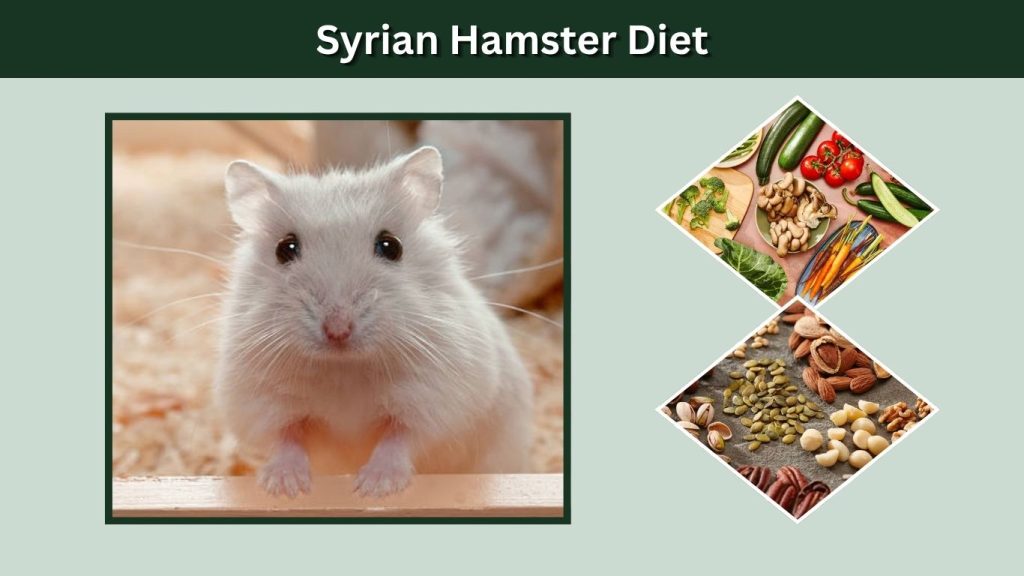
A Syrian hamster diet follows the same basic structure as other pet hamster diets: complete hamster food, small vegetable portions, occasional protein, and limited treats. Syrian hamsters are larger than dwarf species, so their portions may be slightly bigger, but they can still become overweight.
Golden hamsters, teddy bear hamsters, fancy bear hamsters, and black bear hamsters are all types or coat variations of Syrian hamsters. Their diet requirements are generally similar.
Syrian Hamster Feeding Tips
For Syrian hamsters:
- Use a complete hamster pellet or lab block as the base.
- Give vegetables in small, controlled portions.
- Limit seeds, nuts, and fruit.
- Check hoarded food often.
- Watch for weight gain around the body and shoulders.
Syrian hamsters are strong hoarders. They may move food into hidden areas, so cage cleaning should include checking food stores without destroying the whole nest unnecessarily.
Dwarf Hamster Diet
A dwarf hamster diet needs extra care because many dwarf species are small and some are more prone to diabetes. This includes Campbell’s dwarf hamsters, winter white hamsters, Russian dwarf hamsters, and some hybrids.
Because of their size, dwarf hamsters need much smaller portions than Syrian hamsters. Too many treats, seeds, or fruits can quickly become a problem.
Dwarf Hamster Food Tips
For dwarf hamsters:
- Choose a balanced hamster food with controlled portions.
- Avoid frequent fruit.
- Limit high-fat seeds and nuts.
- Offer tiny vegetable pieces.
- Monitor weight and drinking habits.
- Ask a vet about diet if diabetes is suspected.
Signs that may need veterinary attention include increased drinking, increased urination, weight changes, low energy, or a sticky-looking coat around the belly or rear.
Roborovski Hamster Diet
A Roborovski hamster diet is similar to a dwarf hamster diet, but Robo hamsters are usually very small, active, and fast. They need tiny portions and a consistent routine. A complete hamster food should be the main diet, with small amounts of vegetables and occasional treats.
Robo hamsters may enjoy foraging, so scattering part of their daily food around the enclosure can encourage natural behavior. This also keeps them active and mentally engaged.
However, scatter feeding should not make it impossible to monitor food intake. Check hidden stores and remove fresh foods before they spoil.
Chinese Hamster Diet
A Chinese hamster diet should also be careful with sugary foods. Chinese hamsters are small, so treats should be tiny and infrequent. A complete hamster food is still the main diet, supported by safe vegetables and occasional protein.
Some owners treat Chinese hamsters like dwarf hamsters for feeding purposes because of their size and possible sugar sensitivity. Fruit should be rare, and sugary commercial treats are best avoided.
If a Chinese hamster becomes overweight or shows signs of unusual thirst or urination, consult a small-animal veterinarian.
Homemade Hamster Diet: Is It a Good Idea?
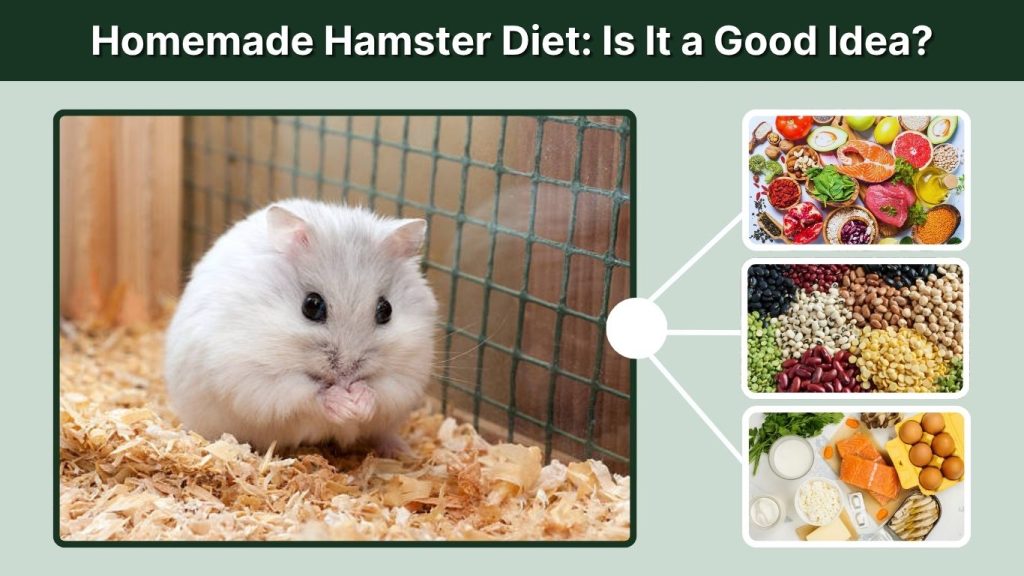
A homemade hamster diet can sound natural, but it is difficult to balance correctly. Hamsters need the right mix of protein, fiber, fat, vitamins, and minerals. A homemade plan based only on vegetables, seeds, grains, or internet recipes may miss key nutrients.
A safer option is to use a complete hamster pellet or lab block as the foundation and add small fresh foods as enrichment.
Homemade Feeding Mistakes
Common mistakes include:
- Feeding only seeds
- Giving too many fruits
- Using human cereal or bread as staples
- Adding too many nuts
- Offering large vegetable portions
- Changing foods too quickly
- Ignoring hidden food stores
If you want a homemade hamster diet for medical reasons, work with an exotic-pet veterinarian rather than guessing.
Hamster Natural Diet vs Pet Diet
A hamster’s natural diet in the wild may include seeds, grains, plants, roots, and small insects. However, a pet hamster’s life is different from a wild hamster’s life. Pet hamsters usually move less, live in a controlled enclosure, and depend completely on their owner for balanced nutrition.
This is why copying a wild hamster diet is not always the best plan. Wild-style feeding can be used for enrichment, such as hiding food or offering safe forage, but the nutritional base should still be controlled and balanced.
How to Put a Hamster on a Diet
If a hamster is overweight, do not suddenly reduce food too much. Hamsters need steady access to appropriate food, and sudden restriction can cause stress. Instead, improve food quality, remove high-fat extras, and increase activity through enrichment.
Helpful steps include:
- Replace seed-heavy foods with balanced pellets gradually.
- Limit nuts, sunflower seeds, and sugary treats.
- Offer safe vegetables in tiny amounts.
- Provide a large wheel suitable for the species.
- Scatter feed part of the daily portion.
- Weigh your hamster weekly.
- Ask a vet before major diet changes.
Weight loss should be slow and safe. A hamster that stops eating, loses weight quickly, or seems weak needs veterinary care.
Fresh Water and Feeding Routine
Fresh water is part of every healthy hamster diet. Whether you use a bottle or bowl, check it every day. Bottles can clog, and bowls can become dirty with bedding.
Feed at a consistent time, often in the evening when hamsters become active. This fits their natural routine and makes it easier to observe appetite and behavior.
Remove old fresh foods daily. Dry food stores can be left briefly if clean, but moldy or damp food should be removed right away.
FAQs
What is the best hamster diet?
The best hamster diet is based on a complete hamster pellet or lab block, with small amounts of safe vegetables, occasional protein, and limited treats. Seed-only diets are not ideal because hamsters may pick out fatty favorites and leave balanced ingredients behind, causing poor nutrition over time.
What should a hamster eat every day?
A hamster should eat a measured amount of complete hamster food every day, along with constant access to fresh water. Small vegetable portions can be added several times a week. Fruit, seeds, nuts, and commercial treats should be limited because they can add too much sugar or fat.
Can hamsters eat fruit?
Hamsters can eat some fruits in very small amounts, but fruit should be occasional rather than daily. Apple without seeds, small blueberry pieces, or tiny bits of banana may be accepted by some hamsters. Dwarf and diabetic-prone hamsters should usually avoid sugary fruits unless a vet approves.
Is a seed mix good for hamsters?
A balanced mix may be used carefully, but seed-only diets are not the best choice. Many hamsters selectively eat sunflower seeds, nuts, and other fatty pieces first. Pellets or lab blocks help prevent selective feeding because each piece contains similar nutrition, making the daily diet more reliable.
What foods are bad for hamsters?
Bad foods for hamsters include chocolate, candy, onion, garlic, rhubarb, raw potato, citrus fruits, salty snacks, fried foods, processed meats, caffeine, alcohol, and spoiled food. Sugary treats and too many fruits are also poor choices, especially for dwarf hamsters or hamsters at risk of diabetes.