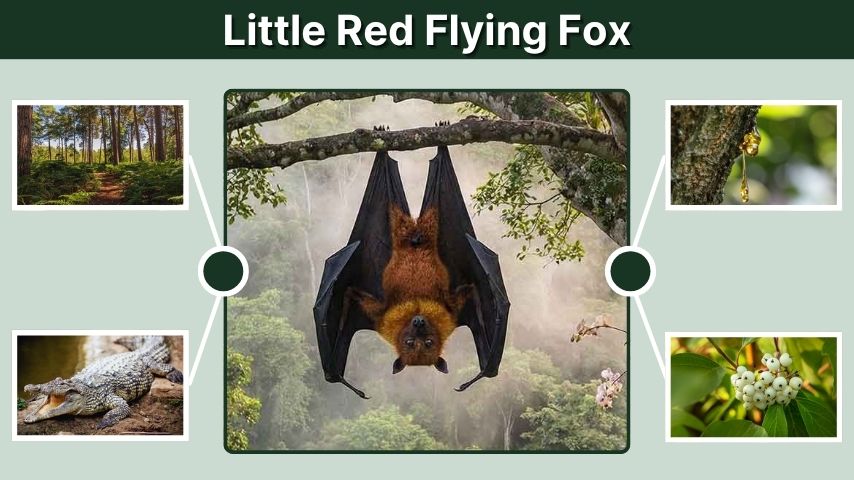
The little red flying fox is one of Australia’s most fascinating fruit bats. Despite its fox-like face and reddish fur, it is not a fox at all. It is a bat that plays an important role in pollination, forest health, and seed movement. Known for traveling long distances and gathering in noisy camps, this species is small compared with other flying foxes but highly important to Australian ecosystems.
What Is a Little Red Flying Fox?
The little red flying fox is a species of megabat found mainly in Australia. Its scientific name is Pteropus scapulatus. It belongs to the flying fox group, which includes large fruit- and nectar-feeding bats with dog-like faces, strong wings, and excellent night vision.
Unlike many small bats, the little red flying fox does not rely mainly on echolocation to hunt insects. Instead, it uses sight and smell to find flowering trees, nectar, pollen, and fruit. This makes it very different from many insect-eating bats people may be more familiar with.
This bat is sometimes called the little red flying-fox, little red fruit bat, or reddish fruit bat. The name comes from its warm reddish-brown fur and its fox-like head shape. Although it can look unusual to people who have never seen a flying fox before, it is a natural and valuable part of Australia’s wildlife.
Little Red Flying Fox Quick Facts
The little red flying fox is the smallest mainland Australian flying fox, but it is still impressive when seen flying overhead at dusk. It has long wings, a furry body, and a sharp-looking face with large eyes.
| Feature | Details |
| Scientific name | Pteropus scapulatus |
| Animal type | Megabat / flying fox |
| Main diet | Nectar, pollen, blossoms, and fruit |
| Native range | Northern and eastern Australia |
| Average weight | About 200 to 600 grams |
| Wingspan | Up to around 3 feet |
| Activity pattern | Mostly nocturnal |
| Conservation status | Generally listed as Least Concern |
These bats are highly mobile and may travel across large areas depending on the availability of flowering trees. Their movements can change with seasons, rainfall, food supply, and habitat conditions.
Little Red Flying Fox Appearance
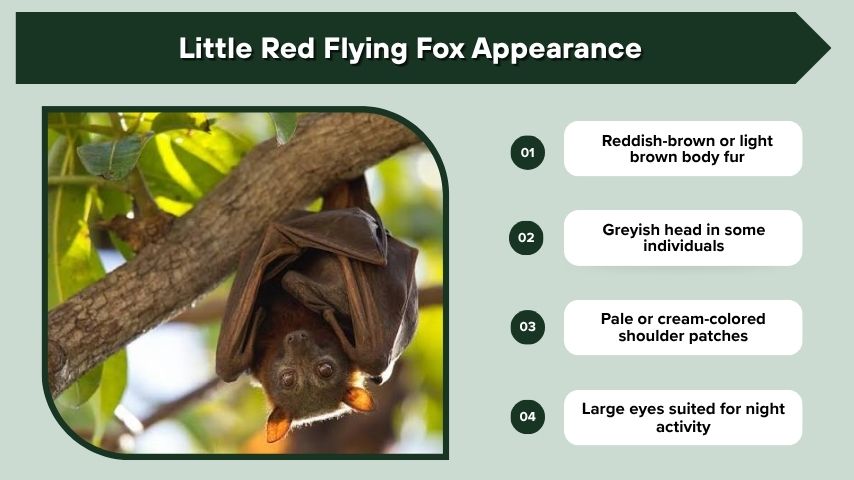
The little red flying fox has a distinct appearance that makes it easier to recognize than some other bats. Its body is covered in reddish-brown to light brown fur. Some individuals may look darker, especially in certain regions. The head may appear greyish, while lighter fur can appear near the shoulders where the wings meet the body.
Its wings are thin, leathery, and pale brown when stretched. In flight, the wing membrane may look slightly translucent. The wings are supported by elongated finger bones, which create the wide surface needed for flight.
The face is one of the reasons flying foxes get their common name. Their pointed muzzle, upright ears, and large eyes give them a fox-like look. However, they are true bats, not related to foxes.
Key Physical Features
Little red flying foxes can be identified by several features:
- Reddish-brown or light brown body fur
- Greyish head in some individuals
- Pale or cream-colored shoulder patches
- Large eyes suited for night activity
- Long wings with thin membranes
- No long tail like many smaller bats
- Fox-like face and pointed ears
Because they are smaller than other Australian flying foxes, size can also help with identification. Still, it may be difficult for beginners to tell flying fox species apart from a distance.
Little Red Flying Fox Size and Wingspan
The little red flying fox is called “little” because it is smaller than other flying foxes found on mainland Australia. Adults usually weigh between about 200 and 600 grams. Even though their bodies are relatively small, their wings can spread impressively wide.
Their wingspan can reach up to around 3 feet, which helps them fly long distances in search of food. Their wing design is well suited for gliding, maneuvering between trees, and traveling from roosting camps to flowering areas at night.
Compared with small insect-eating bats, the little red flying fox may look large. Compared with other flying foxes, such as the grey-headed flying fox or black flying fox, it is noticeably smaller and lighter.
Where Do Little Red Flying Foxes Live?
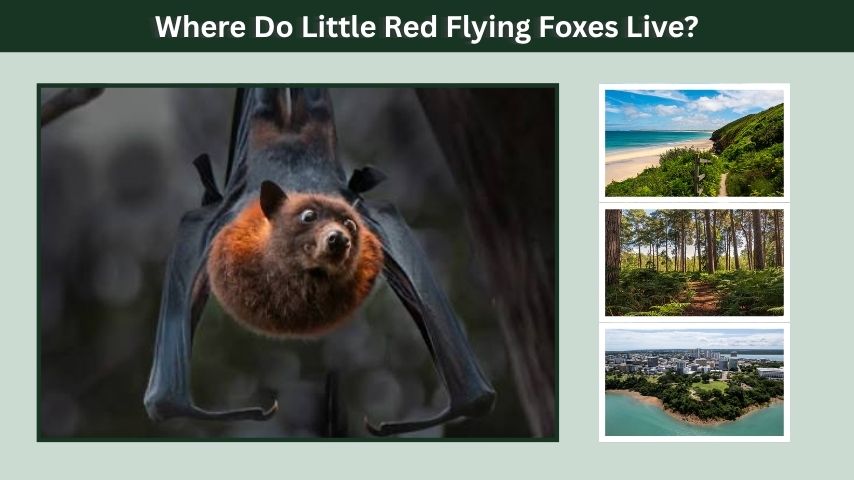
Little red flying foxes live across northern and eastern Australia. Their range includes coastal, subcoastal, tropical, subtropical, and some inland regions. They are more likely to appear where flowering trees provide nectar and pollen.
These bats do not stay in one place all year in the same way many animals do. They are nomadic and move according to food availability. If eucalypts or other nectar-producing trees are flowering in one region, large numbers may arrive and form camps nearby.
They often roost in trees during the day. These roosting areas are called camps. A camp can contain hundreds, thousands, or even many thousands of flying foxes, depending on the season and food conditions.
Common Habitat Areas
Little red flying foxes may be found in:
- Eucalypt forests and woodlands
- River corridors and riparian zones
- Mangroves and coastal vegetation
- Wetlands and forest edges
- Inland areas with seasonal flowering
- Urban or semi-urban tree camps
- Orchards when natural food is limited
They are especially known for following the flowering of eucalypts, which makes them important pollinators in Australian landscapes.
Little Red Flying Fox Diet
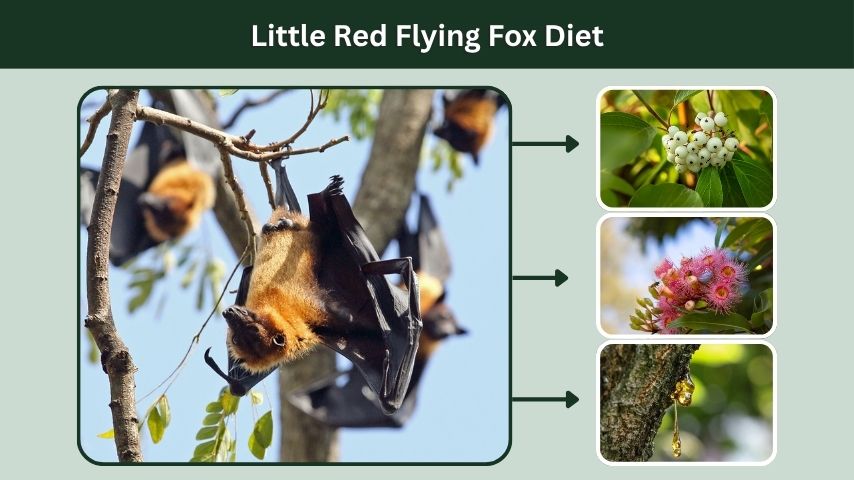
The little red flying fox mainly eats nectar and pollen from flowering trees. It may also feed on blossoms and fruit when available. Its diet makes it an essential pollinator because pollen can stick to its fur while it feeds and then be carried to other flowers.
These bats usually feed at night. At dusk, they leave their camps and fly to food trees. Their strong sense of smell helps them locate flowering plants, while their vision helps them move through the dark.
They do not hunt large prey. They are not predators in the same way owls, snakes, or carnivorous mammals are. Instead, they are plant-focused feeders that support forests by moving pollen and sometimes seeds.
What Do Little Red Flying Foxes Eat?
Their food sources may include:
- Eucalypt nectar
- Pollen from native trees
- Flower blossoms
- Native fruits
- Cultivated fruit in some areas
- Tree sap or juice from soft fruits
When natural flowering is poor, they may visit orchards or backyard fruit trees. This sometimes creates conflict with people, but the species is still ecologically valuable.
Behavior and Daily Life
Little red flying foxes are mostly nocturnal. They rest during the day in tree camps and become active around sunset. At night, they travel to feeding areas, sometimes covering long distances to find suitable food.
Their camps can be loud, active, and crowded. Flying foxes communicate with calls, body movements, and scent. They may squabble over space, groom themselves, stretch their wings, or hang closely together in groups.
One notable behavior of little red flying foxes is their tendency to roost in tight clusters. Several individuals may hang close together on the same branch. In very large camps, the combined weight of many bats can damage tree branches.
These bats also have an unusual way of drinking. They may skim over water and wet their belly fur, then lick moisture from their body after landing. This behavior helps them drink without stopping on the ground, where they could be more vulnerable.
Adaptations of the Little Red Flying Fox
The little red flying fox has several adaptations that help it survive as a flying, fruit- and nectar-feeding mammal. Its wings are the most obvious adaptation. They allow long-distance movement between camps and feeding sites.
Its large eyes help it see in low-light conditions. Its strong sense of smell helps it locate flowering trees at night. Its claws help it grip branches while hanging upside down, feeding, grooming, or resting.
The bat’s lightweight body and wing structure help it fly efficiently. Its teeth and tongue are suited for feeding on soft fruit, nectar, and blossoms rather than catching insects or tearing meat.
Helpful Survival Adaptations
Important adaptations include:
- Wide wings for long-distance flight
- Strong claws for hanging from branches
- Large eyes for night movement
- Sharp sense of smell for finding flowers
- Fox-like muzzle suited for fruit and nectar feeding
- Social roosting behavior for safety and communication
- Ability to travel widely when food sources change
These adaptations make the little red flying fox well suited to Australia’s changing food landscapes.
Little Red Flying Fox Reproduction
Little red flying fox reproduction is connected to seasonal patterns. Breeding and birthing times can vary by region, but young are typically born after a gestation period of several months. Females usually give birth to one pup.
The baby, called a pup, clings to its mother during early life. Like other mammals, the mother feeds the pup milk. Young flying foxes are dependent at first and gradually develop the strength and coordination needed to fly.
Maternity groups may form when females are preparing to give birth and raise young. In large camps, young bats can be seen clinging to their mothers or hanging nearby as they grow.
Flying fox pups face many challenges, including heat stress, storms, food shortages, predators, and separation from their mothers. Wildlife carers sometimes rescue orphaned or injured pups, but bats should never be handled by untrained people because of health risks.
Predators and Threats
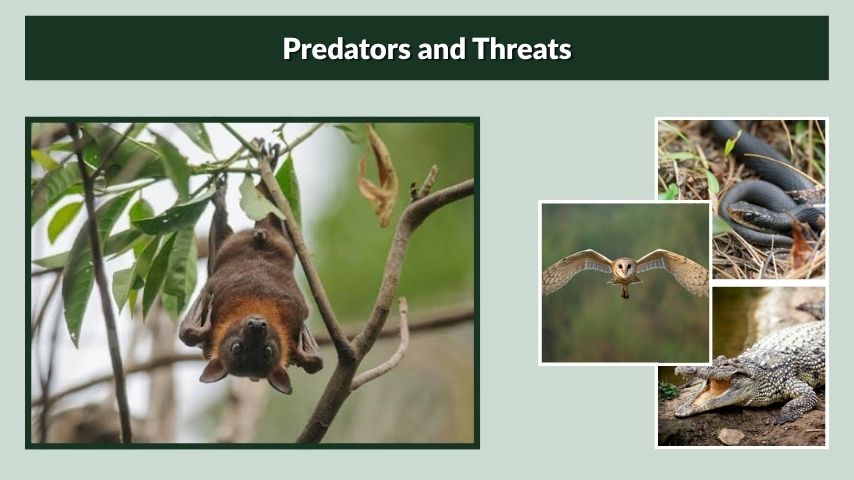
Little red flying foxes have natural predators, especially when young, injured, or exposed. Predators may include birds of prey, snakes, crocodiles in some areas, and other opportunistic animals. However, many threats come from environmental change and human activity.
Habitat loss is a major concern for many flying foxes. When native feeding and roosting areas are cleared, bats may move closer to towns, farms, or orchards. This can increase conflict with people.
Extreme heat can also be dangerous. Flying foxes are sensitive to heat stress, and severe heat events can kill large numbers, especially when suitable shaded roosts are unavailable.
Main Threats
Little red flying foxes may be affected by:
- Loss of native forests
- Removal of roosting trees
- Food shortages after habitat change
- Heatwaves and climate stress
- Storms, hail, and strong winds
- Entanglement in netting or barbed wire
- Conflict with orchards or urban areas
- Disturbance at camps
These threats show why protecting natural habitat is important for the long-term health of flying fox populations.
Are Little Red Flying Foxes Dangerous?
Little red flying foxes are not aggressive animals. They do not attack people for food and usually try to avoid direct contact. However, like all bats, they should not be handled by the public.
In Australia, some bats can carry diseases such as Australian bat lyssavirus. The risk to people is low when bats are left alone, but bites or scratches can be serious. Anyone who finds an injured flying fox should contact a trained wildlife rescue group instead of touching it.
Flying fox camps may also create noise, smell, and droppings when they are close to homes. These issues can be frustrating for residents, but the animals are still important native wildlife and are often protected by law.
Why Little Red Flying Foxes Matter
The little red flying fox plays an important role in forest health. As it feeds on nectar and pollen, it helps pollinate native trees. Because it can fly long distances, it can move pollen between trees that are far apart.
This is especially important for eucalypt forests. Many native trees benefit from nighttime pollinators, and flying foxes can help maintain genetic diversity by connecting separated plant populations.
They may also help spread seeds when they feed on fruit. In this way, flying foxes support forest renewal and help maintain ecosystems used by many other animals.
Without flying foxes, some forests could lose an important pollination partner. Their value is not always obvious when they gather noisily in camps, but their ecological role is significant.
Little Red Flying Fox Fun Facts
The little red flying fox is full of interesting traits that make it stand out among bats. It is small for a flying fox but still has an impressive wingspan. It can travel long distances, gather in huge camps, and help pollinate trees while most people are asleep.
Fun facts include:
- It is the smallest mainland Australian flying fox.
- It is also one of the most widespread Australian megabats.
- It often feeds on nectar rather than insects.
- It can gather in very large camps.
- It may hang in tight clusters with other little red flying foxes.
- It has a fox-like face but is a true bat.
- It helps pollinate native Australian trees.
- It may skim water in flight to drink from its wet fur.
These facts make the little red flying fox one of the most interesting bats in Australia.
FAQs
What is the little red flying fox?
The little red flying fox is a megabat native to Australia. Its scientific name is Pteropus scapulatus. It is known for reddish-brown fur, long wings, and a fox-like face. Unlike many small bats, it mainly feeds on nectar, pollen, blossoms, and fruit rather than insects.
What does a little red flying fox eat?
A little red flying fox mainly eats nectar and pollen from flowering native trees, especially eucalypts. It may also eat blossoms and fruit when available. While feeding, pollen can stick to its fur, allowing it to pollinate trees as it flies between feeding sites at night.
Where do little red flying foxes live?
Little red flying foxes live across northern and eastern Australia. They can be found in coastal, subcoastal, tropical, subtropical, and inland regions where flowering trees provide food. They roost in tree camps during the day and move widely depending on seasonal food availability.
How big is a little red flying fox?
The little red flying fox is small compared with other mainland Australian flying foxes. Adults usually weigh around 200 to 600 grams. Their bodies are relatively compact, but their wings can stretch widely, with a wingspan that may reach around 3 feet.
Are little red flying foxes dangerous?
Little red flying foxes are not aggressive and do not normally attack people. However, they should never be handled because bats can carry diseases, and bites or scratches need medical attention. If you find an injured flying fox, contact trained wildlife rescuers instead of touching it.