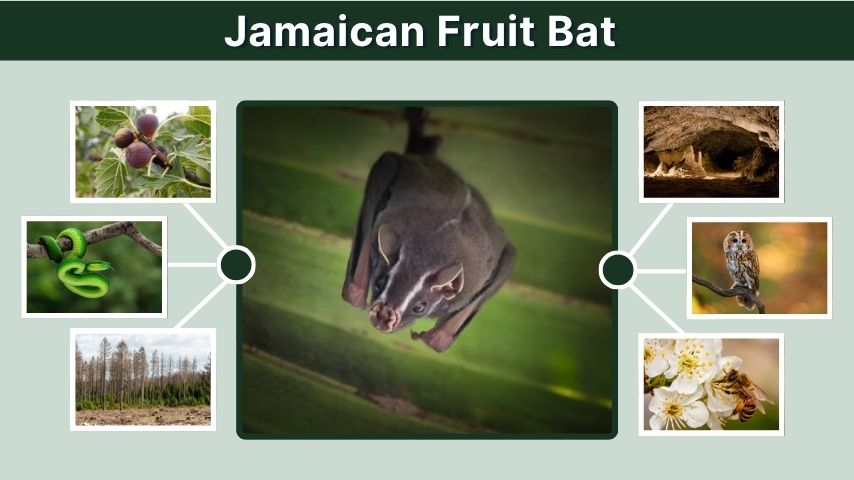
The Jamaican fruit bat is one of the most interesting fruit-eating bats in the Americas. Also called the Jamaican fruit-eating bat, this small mammal is known for its leaf-shaped nose, strong teeth, and love of tropical fruits. It plays a useful role in forests by spreading seeds and helping plants grow. Despite its name, it lives far beyond Jamaica.
What Is the Jamaican Fruit Bat?
The Jamaican fruit bat is a medium-sized bat found in warm parts of the Americas and the Caribbean. Its scientific name is Artibeus jamaicensis. It belongs to the leaf-nosed bat family, a group known for the fleshy noseleaf on the face. This structure gives the bat a distinctive look and may help with echolocation.
Although many people think of bats as insect hunters, the Jamaican fruit bat mainly eats fruit. It is active at night and uses smell, sight, and sound to locate food in dense forests. Because it often carries fruit away from trees before eating, it helps spread seeds across the landscape.
Quick Jamaican Fruit Bat Facts
| Feature | Details |
| Common name | Jamaican fruit bat or Jamaican fruit-eating bat |
| Scientific name | Artibeus jamaicensis |
| Animal group | Mammal |
| Family | Phyllostomidae, or leaf-nosed bats |
| Main diet | Fruit, especially figs |
| Activity pattern | Nocturnal |
| Habitat | Tropical forests, dry forests, caves, and leafy roosts |
| Conservation status | Generally common across much of its range |
Jamaican Fruit Bat Size and Appearance
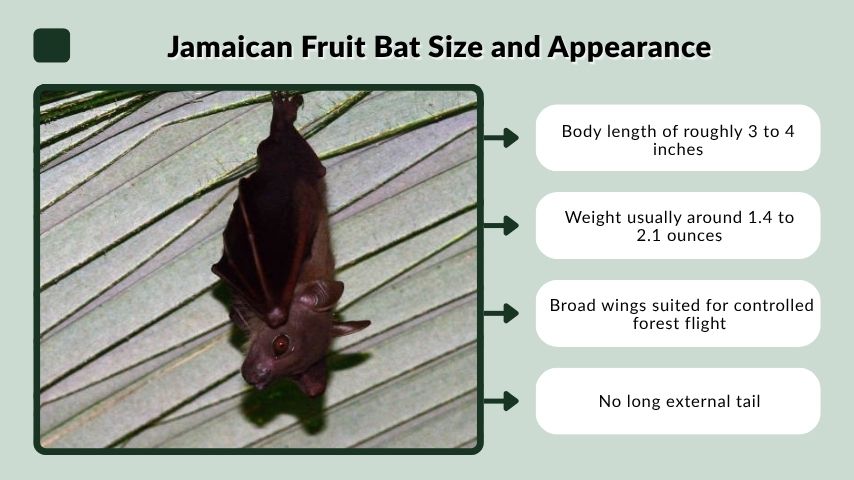
The Jamaican fruit bat is not a giant bat, even though some people search for “giant Jamaican fruit bat.” It is better described as a medium-sized fruit bat. Adults have compact bodies, broad wings, and soft grayish-brown or brown fur. Some individuals show pale facial stripes, though these markings can be faint.
One of the easiest features to notice is the noseleaf. This fleshy structure sits above the nostrils and gives the bat a slightly unusual face compared with many other mammals. It also has pointed ears, dark wings, and no visible external tail.
How Big Are Jamaican Fruit Bats?
Most Jamaican fruit bats are small enough to fit comfortably in a person’s hand, though they should never be handled without proper training. Their wings are much wider than their body length, which helps them fly through forests and carry pieces of fruit.
Important size details include:
- Body length of roughly 3 to 4 inches
- Weight usually around 1.4 to 2.1 ounces
- Broad wings suited for controlled forest flight
- No long external tail
- Strong jaws for processing fruit
Their small size helps them move through vegetation, while their wings give them enough lift to travel between feeding sites and roosts at night.
Where Do Jamaican Fruit Bats Live?
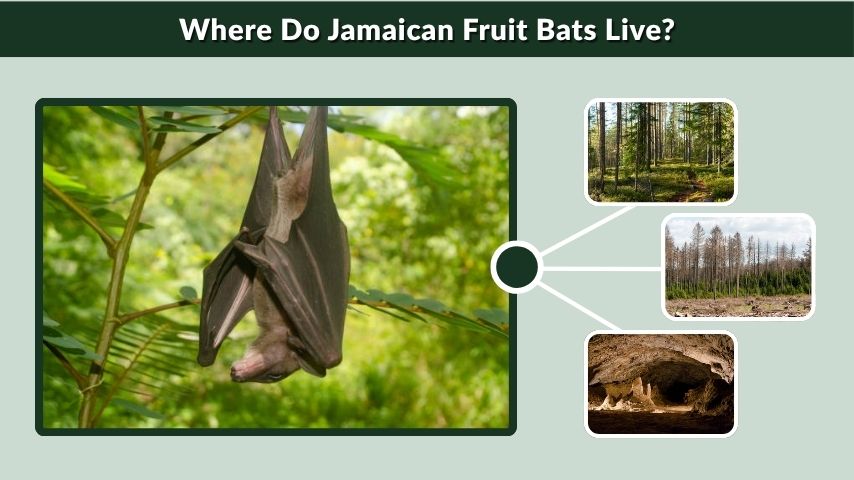
Despite the name, Jamaican fruit bats are not limited to Jamaica. They are found across parts of Mexico, Central America, South America, the Caribbean, and some nearby island regions. They are especially associated with tropical and subtropical environments where fruiting trees are common.
They can live in several habitat types, including wet forests, dry forests, plantations, caves, and areas with dense vegetation. Their flexibility is one reason they remain common in many places.
Jamaican Fruit Bat Habitat
The ideal Jamaican fruit bat habitat offers both food and safe shelter. These bats need fruiting plants, protected roosting sites, and enough tree cover to move safely at night. They may roost in caves, hollow trees, buildings, or under large leaves.
Some Jamaican fruit bats are known for using leaf “tents.” These are large leaves that bats modify or use as shelter. The leaf protects them from rain, wind, sun, and some predators. This behavior is one of the most interesting Jamaican fruit bat adaptations.
Jamaican Fruit Bat Diet
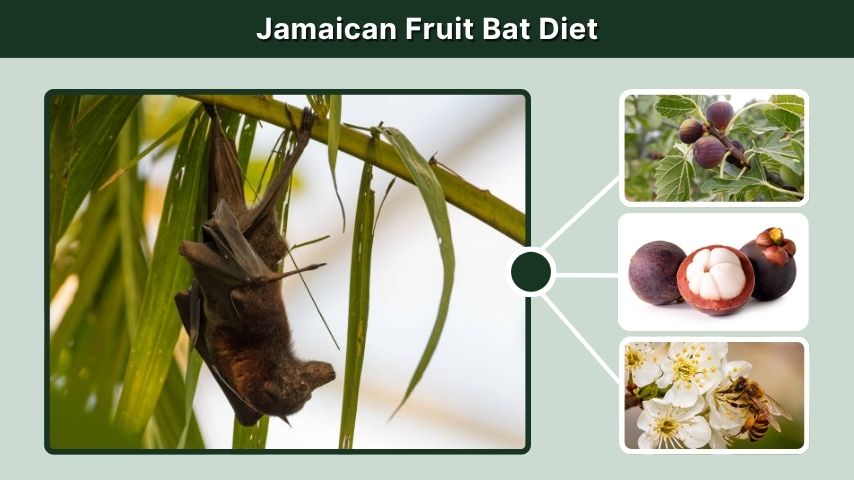
The Jamaican fruit bat diet is mostly fruit-based. Figs are especially important, but these bats may also eat other tropical fruits. When fruit is harder to find, they may consume nectar, pollen, flower parts, and small numbers of insects.
This varied diet helps them survive seasonal changes. In forests, different plants fruit at different times, so the bat must be flexible. Its strong teeth allow it to bite into firm fruit and mash pulp before swallowing the juice and soft parts.
What Do Jamaican Fruit Bats Eat?
Jamaican fruit bats commonly eat:
- Figs and other soft tropical fruits
- Fruit pulp around nuts and seeds
- Nectar from flowers
- Pollen and flower parts
- Occasional insects during food shortages
They often do not eat fruit directly where they find it. Instead, they may pick up fruit, fly to a feeding roost, and eat it there. Seeds or fruit remains can drop away from the parent tree, helping new plants grow in different locations.
Jamaican Fruit Bat Teeth and Feeding Adaptations
The teeth of the Jamaican fruit bat are well suited for fruit eating. Unlike bats that catch insects in flight, fruit bats need teeth that can grip, crush, and process plant material. Their molars are strong enough to mash fruit pulp, while their canines help hold and bite into food.
The Jamaican fruit bat teeth are part of a larger set of feeding adaptations. The bat has a sensitive nose, useful eyesight, and the ability to detect ripe or useful fruit in darkness. Its jaws and teeth work together to break down fruit quickly before the bat flies away from the feeding spot.
Why Their Teeth Matter
Their teeth help them:
- Bite into firm or unripe fruits
- Crush fruit pulp
- Handle fruit while hanging upside down
- Process food efficiently at night
- Support a fruit-based lifestyle
These adaptations also explain why the Jamaican fruit bat has such an important ecological role. By eating fruit and moving seeds, it helps forests regenerate.
How the Jamaican Fruit Bat Finds Food
Many bats use echolocation, and the Jamaican fruit bat can do this too. However, it also relies strongly on smell and sight when searching for fruit. This makes sense because fruit often gives off scent signals when it is ripe or ready to eat.
The noseleaf may help direct sound during echolocation. Jamaican fruit bats are sometimes described as “whisper bats” because their echolocation sounds can be low in intensity compared with some other bats. This short-range system is useful in forests where leaves, branches, and fruit are close together.
Nocturnal Feeding Behavior
At night, a Jamaican fruit bat may travel from its roost to fruiting trees. After choosing a fruit, it may carry the food to another perch. This feeding behavior reduces competition at the fruit tree and may lower the risk of being caught by predators.
Their nightly routine usually includes:
- Leaving the roost after dark
- Searching for fruit by smell, sight, and sound
- Carrying fruit to a feeding perch
- Crushing and eating fruit pulp
- Dropping seeds or remains away from the tree
Jamaican Fruit Bat Lifespan and Reproduction
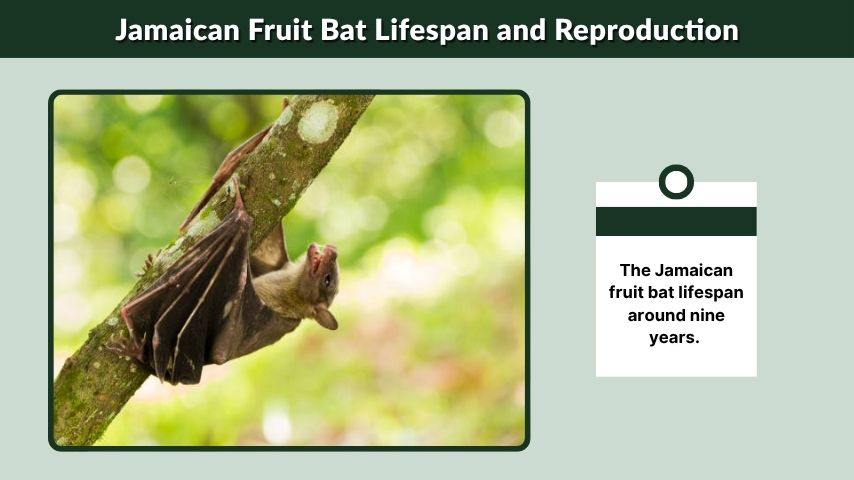
The Jamaican fruit bat lifespan can vary depending on predators, food supply, disease, and habitat conditions. In the wild, some individuals may live several years, with recorded longevity reaching around nine years. Like many small mammals, survival is hardest for young bats.
Female Jamaican fruit bats usually give birth to one pup at a time. In some regions, breeding may happen more than once a year, often linked to fruit availability. This connection makes sense because mothers need enough food to support pregnancy and milk production.
Baby Jamaican Fruit Bats
Young bats are born helpless and depend on their mothers. At first, the mother may carry the pup, but later the young bat can remain in the roost while the mother forages. As it grows, it develops stronger wings, permanent teeth, and the ability to fly.
Key points about young bats include:
- Usually one pup is born per birth
- Mothers provide milk and protection
- Young bats develop quickly
- Flight ability comes after wing growth
- Reproduction is closely tied to food supply
Jamaican Fruit Bat Predators
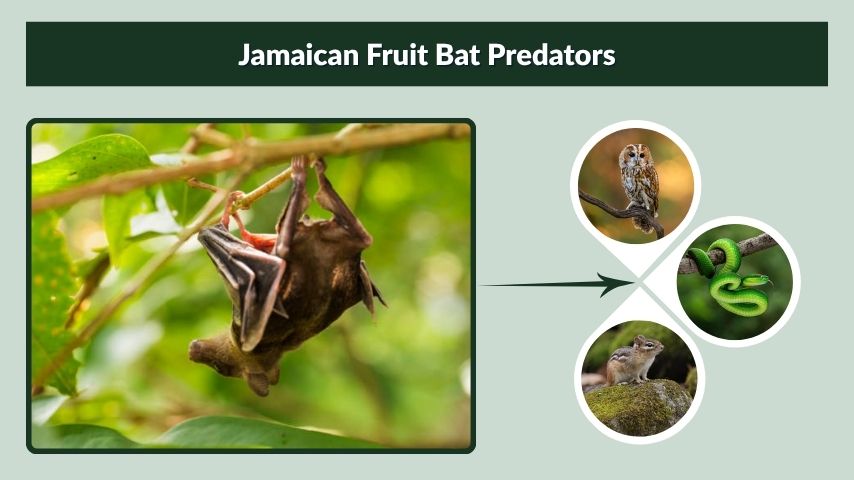
Even though Jamaican fruit bats fly at night, they still face predators. Owls are among the most important threats because they also hunt after dark. Other predators may include snakes, opossums, coatis, falcons, and larger bats in some areas.
Roosting can be risky because bats are gathered in one place. This is one reason sheltered roosts are important. Caves, dense leaves, hollow trees, and tent-like leaves can help reduce danger.
Common Threats
Jamaican fruit bats may be threatened by:
- Owls and other night-hunting birds
- Snakes near roosts
- Mammals that climb or enter shelters
- Loss of natural roosting places
- Disturbance from humans
- Food shortages during seasonal changes
Although the species is generally common, local populations still depend on healthy habitats and safe roosts.
Are Jamaican Fruit Bats in Florida?
Some searches ask about the Jamaican fruit bat in Florida. This species is mainly tropical, but it has been recorded in places such as Key West. However, it is not a bat most people across the wider United States are likely to see regularly.
In areas where it does occur, it may use warm habitats with fruiting plants and suitable shelter. Because bats can be difficult to identify, local wildlife experts or official records are the best source for confirming whether this species is present in a specific location.
Jamaican Fruit Bat Adaptations
The Jamaican fruit bat has several adaptations that help it survive in tropical forests. Its wings allow controlled night flight, its teeth process fruit, and its senses help it locate food in darkness. Its social behavior and roost choices also help it avoid danger.
The noseleaf is one of its best-known features. It may help shape echolocation calls, making it useful for navigating tight spaces and finding food among leaves and branches.
Useful Adaptations
Important Jamaican fruit bat adaptations include:
- Noseleaf linked to echolocation
- Strong molars for crushing fruit
- Good smell for detecting ripe fruit
- Night activity to avoid heat and some predators
- Ability to use caves, trees, and leaf tents as roosts
- Broad wings for maneuvering near vegetation
These traits make the species successful in many tropical environments.
Why Jamaican Fruit Bats Are Important
Jamaican fruit bats are more than unusual-looking nocturnal animals. They are important seed dispersers. When they carry fruit away from trees and drop seeds elsewhere, they help forests recover and expand. This is especially valuable in tropical ecosystems where many plants depend on animals to move their seeds.
They may also help with pollination when they feed on nectar and pollen. While fruit is their main food, these occasional feeding habits still connect them to flowering plants.
Ecological Role
The Jamaican fruit bat supports ecosystems by:
- Spreading seeds across forests
- Helping some plants reproduce
- Supporting forest regeneration
- Serving as prey for larger animals
- Linking fruiting trees with wider habitats
Without fruit bats, many tropical forests would lose an important seed-moving partner.
Jamaican Fruit Bat Fun Facts
The Jamaican fruit bat is full of surprising details. It is not blind, it does not only live in Jamaica, and it is not a blood-feeding bat. It is a fruit specialist with a useful role in nature.
Interesting facts about the Jamaican fruit bat include:
- It is also called the Jamaican fruit-eating bat
- Its Latin name is Artibeus jamaicensis
- It has a leaf-shaped structure on its nose
- It mainly eats figs and other tropical fruits
- It can use echolocation but also depends on smell and sight
- It may carry fruit to a separate feeding roost
- It helps spread seeds after feeding
- It has no obvious external tail
These facts make it a great species for students, wildlife fans, and anyone learning about tropical mammals.
FAQs
What is the Jamaican fruit bat scientific name?
The Jamaican fruit bat scientific name is Artibeus jamaicensis. It is also called the Jamaican fruit-eating bat. This species belongs to the leaf-nosed bat family, which includes many tropical bats with noseleaf structures used in communication, navigation, or echolocation-related behaviors.
What do Jamaican fruit bats eat?
Jamaican fruit bats mainly eat fruit, especially figs and other tropical fruits. They may also eat nectar, pollen, flower parts, and a few insects when fruit is less available. Their strong teeth help them bite into fruit and mash the pulp while feeding at night.
Where do Jamaican fruit bats live?
Jamaican fruit bats live in tropical and subtropical parts of the Americas and the Caribbean. Their range includes areas beyond Jamaica, such as Central America, parts of South America, and several islands. They use forests, caves, hollow trees, leafy shelters, and sometimes human-influenced habitats.
How big are Jamaican fruit bats?
Jamaican fruit bats are medium-sized bats, not giant bats. Their body is only a few inches long, but their wings make them look larger in flight. They usually weigh just a couple of ounces, which helps them move easily through trees and carry fruit.
Are Jamaican fruit bats dangerous?
Jamaican fruit bats are not aggressive animals and usually avoid people. Like all wild mammals, they should not be handled because bats can carry diseases and may bite if frightened. Their main role in nature is beneficial because they spread seeds and support tropical forest growth.