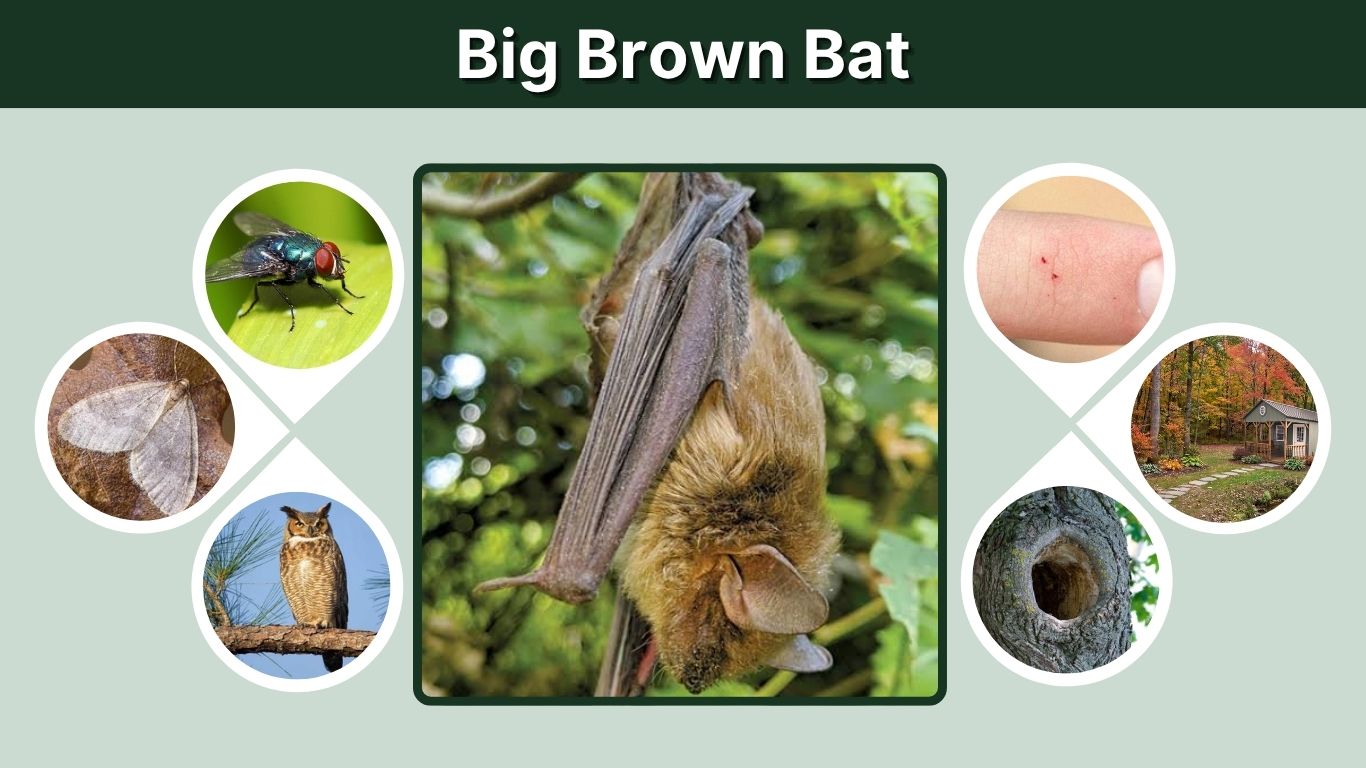
The big brown bat is one of the most familiar bats in North America. Known for its sturdy body, broad wings, dark brown fur, and strong insect-hunting ability, this bat often lives near forests, farms, towns, and even attics. Although it may seem frightening when found inside a house, the big brown bat is an important native mammal that helps control night-flying insects and supports healthy ecosystems.
What Is a Big Brown Bat?
The big brown bat is a medium-to-large bat species found across much of North America. Its scientific name is Eptesicus fuscus. It belongs to the family Vespertilionidae, also known as evening bats or vesper bats. This family includes many insect-eating bats that fly at night and use echolocation to find prey.
Big brown bats are adaptable. They can live in forests, deserts, farms, suburbs, cities, and open landscapes. They often roost in tree cavities, rock crevices, barns, bridges, and buildings. Because of this flexibility, they are one of the bat species people most often notice around homes.
Scientific Name and Classification
The big brown bat is classified as a mammal because it has fur, gives birth to live young, and nurses its pups with milk. It is also a true bat, meaning its wings are formed from stretched skin supported by long finger bones.
- Common name: Big brown bat
- Scientific name: Eptesicus fuscus
- Class: Mammalia
- Order: Chiroptera
- Family: Vespertilionidae
- Genus: Eptesicus
- Species: E. fuscus
The species name fuscus means dark or dusky, which fits the bat’s brown body color. Its common name helps separate it from smaller brown bats, especially the little brown bat.
Big Brown Bat Identification
Big brown bats have dark brown to glossy brown fur, blackish wings, a broad nose, rounded ears, and a strong-looking body. Their face may look blunt compared with smaller bats. The ears are not extremely long, but they are noticeable and rounded.
Key Characteristics
- Medium-to-large bat with a sturdy body
- Brown to dark brown fur on the back
- Paler brown or lighter underside
- Blackish wings and ears
- Broad face and blunt nose
- Rounded ears
- Strong jaw and teeth for eating hard-bodied insects
- Broad wings built for steady flight
- Often seen near buildings, barns, trees, or streetlights
A big brown bat is usually easier to identify by its size, broad shape, and darker wings. It looks heavier than many small bats and often flies with steady, direct movement while hunting insects.
Big Brown Bat Size
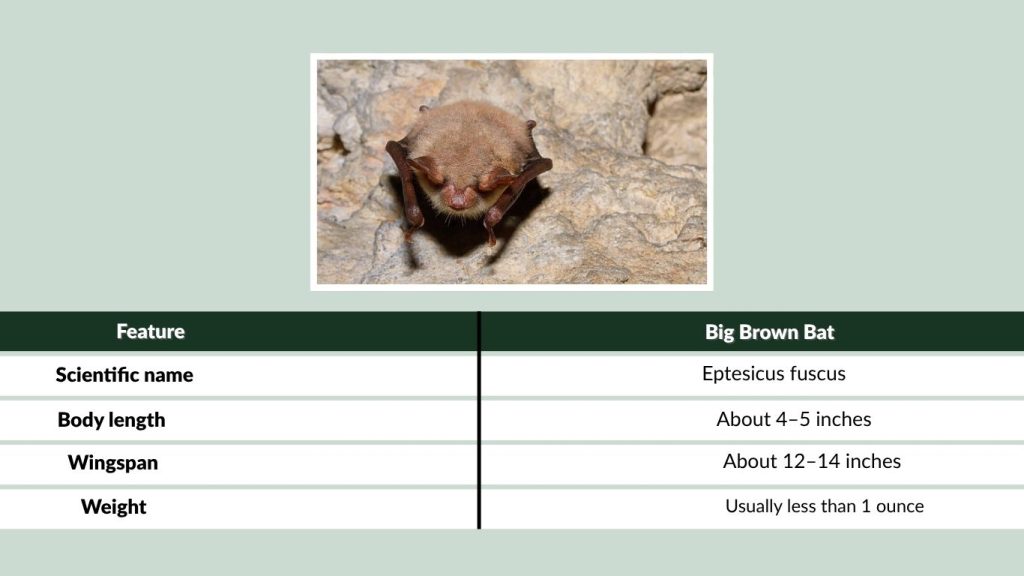
The big brown bat is larger than many common North American bats. It is not huge, but compared with the little brown bat, it appears heavier, broader, and more powerful. Adult size may vary slightly by region and sex.
| Feature | Big Brown Bat |
| Scientific name | Eptesicus fuscus |
| Body length | About 4–5 inches |
| Wingspan | About 12–14 inches |
| Weight | Usually less than 1 ounce |
| Diet | Insects |
| Activity | Nocturnal |
| Roosts | Trees, buildings, barns, bridges, caves, crevices |
| Conservation status | Generally widespread and common |
Big brown bats look larger in flight because of their wingspan. When folded, their body is small enough to fit in narrow cracks, attic gaps, wall spaces, and tree cavities.
Big Brown Bat Wingspan
The wingspan of a big brown bat is usually around 12 to 14 inches. Its wings are broad enough to give it strong, controlled flight. This helps the bat hunt beetles, moths, flies, wasps, leafhoppers, and other night-flying insects.
A broad wing shape also helps big brown bats fly in varied habitats. They may hunt over fields, along forest edges, near lights, above roads, and around water. Their flight is often slower and steadier than the fluttery movement of some smaller bat species.
Big Brown Bat Habitat
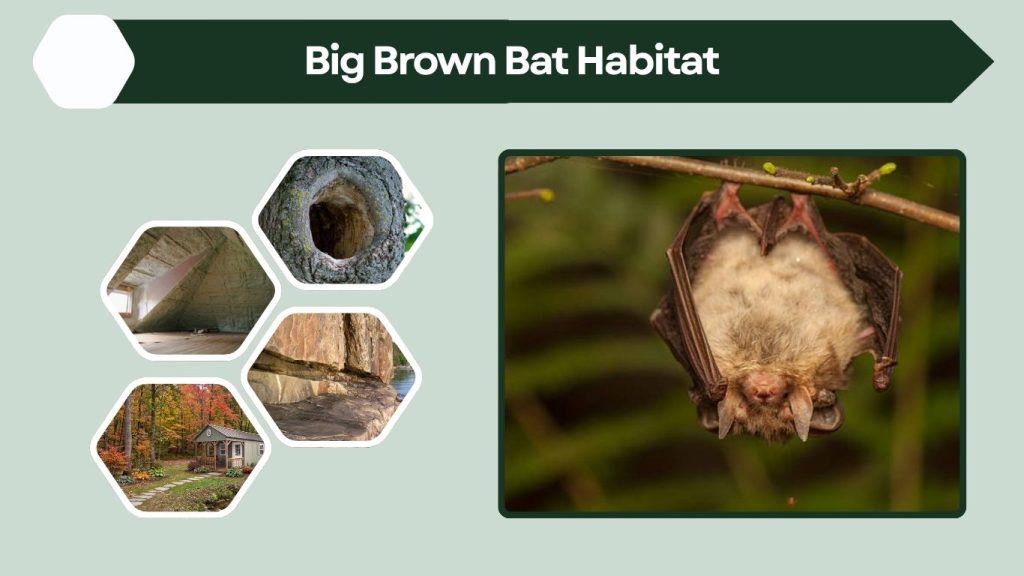
Big brown bats live in many different habitats. They can be found in forests, grasslands, deserts, towns, farms, suburbs, parks, and mountain areas. They are especially common where insects are abundant and safe roosting places are available.
During the day, big brown bats rest in protected roosts. These roosts may be natural or human-made. At night, they leave the roost to hunt insects.
Common Roosting Sites
- Tree cavities
- Loose bark
- Rock crevices
- Barns and sheds
- Attics
- Wall spaces
- Bridges
- Caves and mines
- Roof gaps
- Bat houses
Big brown bats are one of the bat species most likely to use buildings. In summer, females may form maternity colonies in warm attics, barns, or wall spaces where pups can grow safely.
Big Brown Bat Range
The big brown bat has a wide range. It occurs from southern Canada through much of the United States and into parts of Central America, northern South America, and the Caribbean. This broad distribution shows how adaptable the species is.
In the United States, it can be found in many states, including Colorado, Georgia, Illinois, Iowa, Maine, Massachusetts, Michigan, Minnesota, Missouri, Ohio, Pennsylvania, Wisconsin, and many others. It also occurs in places such as Kansas City and nearby regions, where buildings, trees, and insects provide suitable conditions.
Where Do Big Brown Bats Live?
Big brown bats live wherever they can find insects, safe roosts, and seasonal shelter. In rural areas, they may use barns, trees, and farm buildings. In cities and suburbs, they may use attics, bridges, rooflines, and wall gaps. In colder climates, they need winter hibernation sites such as caves, mines, buildings, or deep crevices.
Their ability to use both natural and human-made shelters is one reason they remain common in many places.
Big Brown Bat Diet
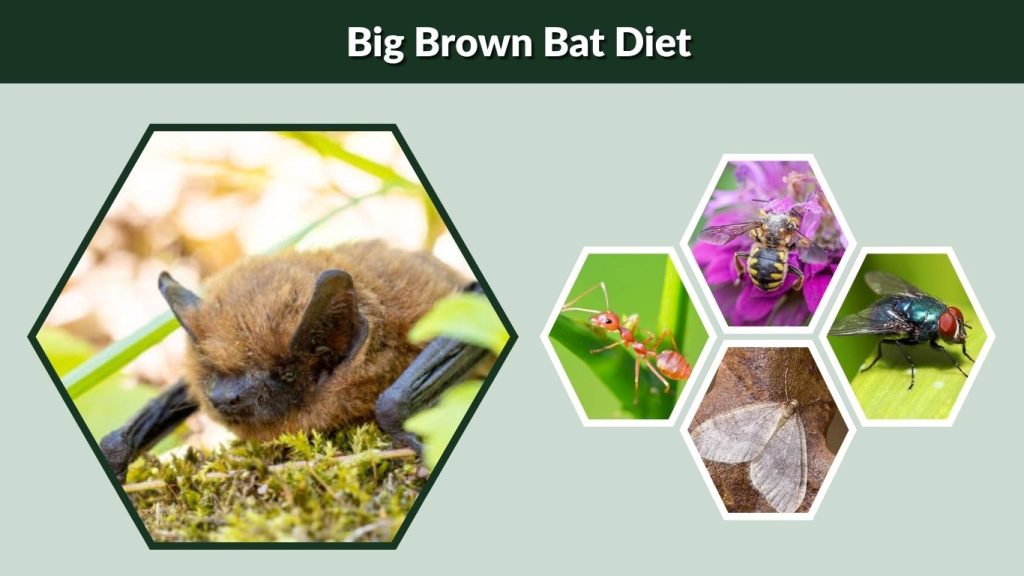
Big brown bats are insectivores, which means they eat insects. They hunt at night and use echolocation to find flying prey. Their strong jaws allow them to crush beetles and other hard-bodied insects that smaller bats may avoid.
What Do Big Brown Bats Eat?
- Beetles
- Moths
- Flies
- Wasps
- Ants
- Leafhoppers
- True bugs
- Lacewings
- Mayflies
- Caddisflies
- Other night-flying insects
Beetles are especially important in their diet. Many beetles eaten by big brown bats are agricultural or garden pests. This makes the species helpful to farms, forests, and backyard ecosystems.
Big Brown Bat Behavior
Big brown bats are mostly nocturnal. They rest during the day and fly at night to feed. At sunset, they leave their roost and begin hunting insects. They may follow regular feeding routes and return to the same productive hunting areas night after night.
These bats often hunt near lights because insects gather there. They may also feed over fields, roads, ponds, forest edges, and open spaces. Their flight is steady and controlled, with turns and dives when chasing prey.
Daily Behavior
Big brown bats usually spend daylight hours hanging upside down in a roost. They may groom, rest, and conserve energy until evening. At night, they may feed in several rounds, returning to the roost between feeding periods.
In summer, females gather in maternity colonies. Males may roost alone or in small groups. During winter, big brown bats hibernate in protected places where temperatures stay cool but not freezing.
Big Brown Bat Echolocation
Big brown bats use echolocation to navigate and hunt. They produce high-frequency sounds that bounce off objects and insects. The returning echoes help them detect prey size, distance, movement, and location.
Humans usually cannot hear most bat echolocation calls because they are too high-pitched. Special bat detectors can convert these calls into sounds people can hear. Big brown bat calls are useful for researchers who monitor bat activity at night.
Echolocation also helps bats avoid obstacles. This is why bats do not usually crash into people, trees, or buildings while flying.
Big Brown Bat Sounds and Noise
Most big brown bat calls are ultrasonic, but people may hear squeaks, scratching, or fluttering when bats are inside walls, attics, or roost spaces. These noises are often noticed at dusk or dawn when bats are leaving or returning.
If a colony is in an attic, people may hear light rustling, chirping, or movement overhead. Bat droppings below entry points can also indicate roosting activity.
Big Brown Bat Hibernation
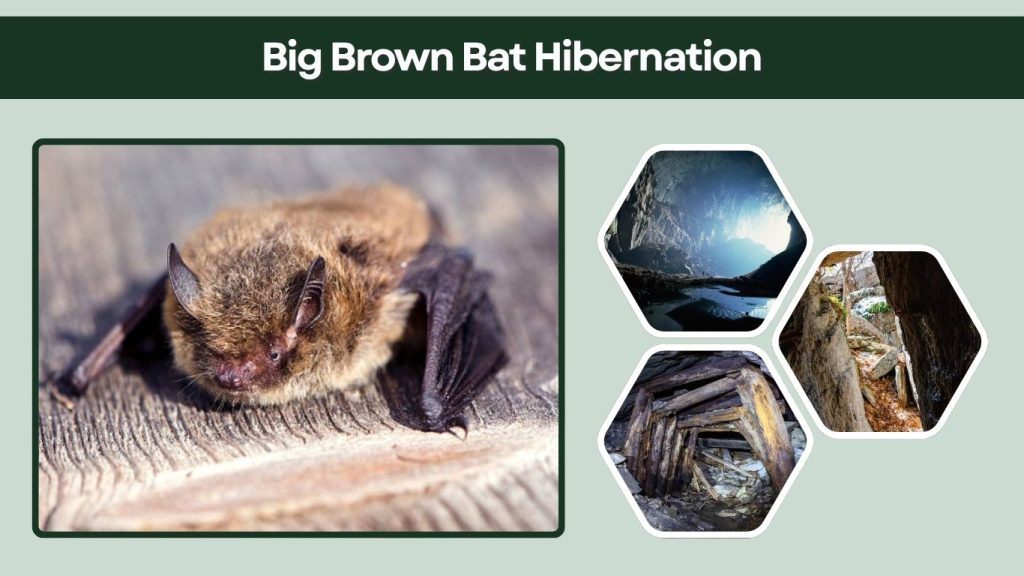
Big brown bats hibernate during cold months in much of their range. Hibernation allows them to survive when insects are not available. During this period, their body temperature drops, their heart rate slows, and they use stored fat for energy.
Hibernation Sites
- Caves
- Mines
- Rock crevices
- Basements
- Attics
- Wall spaces
- Tunnels
- Deep building gaps
Unlike some bats that gather in large cave colonies, big brown bats may hibernate in smaller groups or alone. They are also known to use buildings in winter, which is why they are sometimes found indoors during cold weather.
Do Big Brown Bats Migrate?
Big brown bats are generally not long-distance migrants like some other bat species. In many regions, they remain in the same general area year-round. They may move between summer roosts, feeding sites, and winter hibernation shelters, but these movements are usually local or regional.
Their winter survival depends on finding a place where they can hibernate safely. If they use a building, people may occasionally see one inside during winter when it wakes briefly and moves through the structure.
Big Brown Bat Reproduction and Life Cycle
Big brown bats usually mate in late summer or fall, but females store sperm through winter and become pregnant in spring. This timing allows pups to be born when insects are more abundant.
Females form maternity colonies in warm roosts. A female usually gives birth to one or two pups. The pups are born hairless or lightly furred and cannot fly at first. They depend on their mother’s milk and warmth.
Life Cycle Stages
- Mating occurs in late summer or fall
- Hibernation occurs through winter in cold regions
- Pregnancy begins in spring
- Pups are born in late spring or early summer
- Young bats nurse in maternity colonies
- Pups learn to fly after several weeks
- Juveniles begin hunting insects on their own
Maternity colonies are sensitive. Disturbing a colony during pup season can cause stress, separation, or death of young bats.
Big Brown Bat Lifespan
Big brown bats can live much longer than many small mammals. While many wild individuals die young because of predators, disease, weather, or accidents, some can live for many years. Bats are unusual because they have small bodies but relatively long lifespans.
Their survival depends on safe roosts, enough insects, successful hibernation, and low disturbance. Human activities such as sealing buildings at the wrong time, pesticide use, and disturbing hibernation sites can reduce survival.
Big Brown Bat Adaptations
Big brown bats have several adaptations that help them hunt insects, roost safely, and survive changing seasons. Their body is built for flight, echolocation, and nighttime activity.
Important Adaptations
- Echolocation helps locate insects in darkness
- Wings allow fast and controlled flight
- Strong jaws crush beetles and hard insects
- Dark wings help with nighttime movement
- Clawed feet allow upside-down roosting
- Hibernation conserves energy in winter
- Flexible roosting habits help them live near people
- Large ears help receive returning echoes
These adaptations make the big brown bat one of the most successful bats in North America.
Big Brown Bat Predators
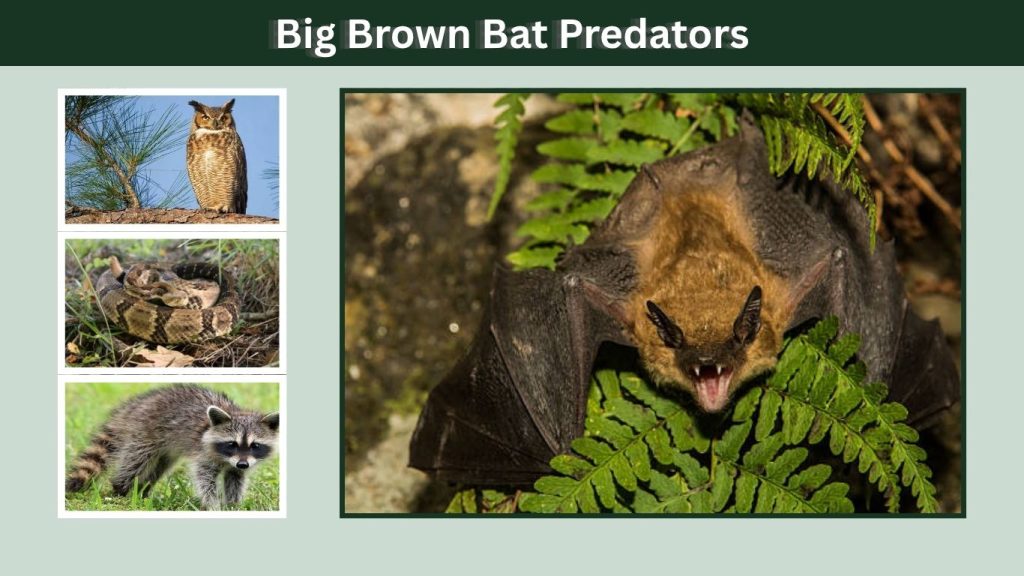
Big brown bats have several natural predators, although their nighttime flight and hidden roosts protect them from many threats. Predators may catch bats when they are flying, roosting, or weakened.
Common predators include owls, hawks, snakes, raccoons, cats, and some larger mammals. Young bats and grounded bats are especially vulnerable. Domestic cats can be a serious threat when bats enter homes or fall near the ground.
Big Brown Bat Poop
Bat droppings are called guano. Big brown bat guano may collect below roosts, attic entry points, wall gaps, or barn beams. It often looks like small dark pellets, but unlike mouse droppings, bat guano usually crumbles into shiny insect fragments when crushed.
Bat guano should not be handled without protection. Large accumulations can create odor, staining, and health concerns. Cleanup should be done carefully, especially in enclosed spaces where dust may be present.
Are Big Brown Bats Dangerous?
Big brown bats are not aggressive and do not attack people on purpose. However, any bat found inside a home should be treated with caution. Bats can bite if handled, trapped, or frightened. Like other mammals, bats can carry rabies, although most bats are not rabid.
Never pick up a bat with bare hands. If a bat has touched a person, bitten someone, been found in a room with a sleeping person, or been near a child or pet, contact local health officials or a medical professional for advice.
Safety Tips
- Do not touch bats with bare hands
- Keep children and pets away from bats
- Close doors to contain a bat in one room
- Open a window if safe and allow it to leave
- Contact wildlife professionals for colonies
- Seek medical advice after possible contact
- Do not seal attic entries during maternity season
Bats are beneficial animals, but safe distance is important.
Big Brown Bat Bite
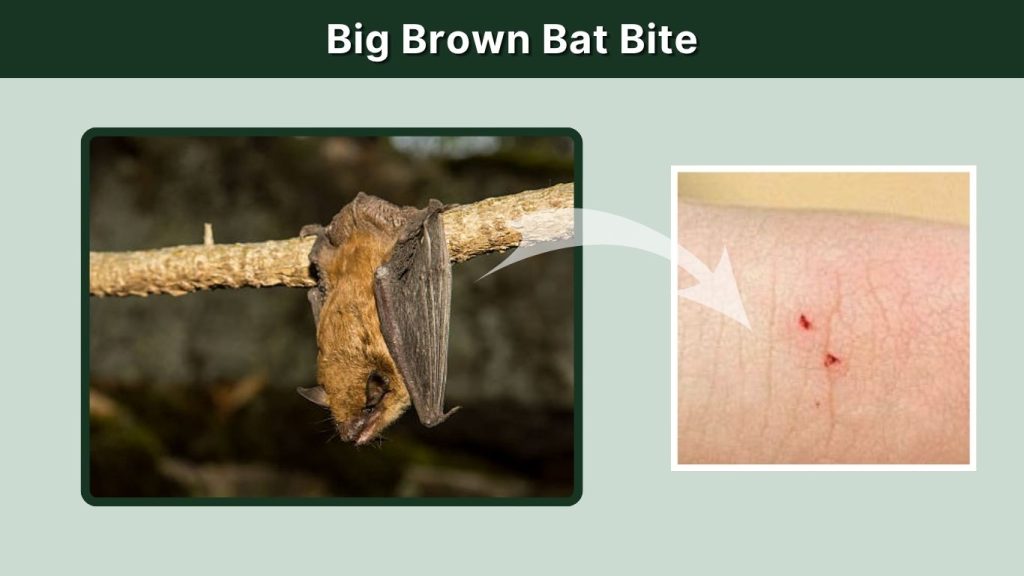
A big brown bat bite may be small and easy to miss. Bat teeth are tiny, and a bite may not always look serious. Because rabies is almost always fatal once symptoms begin, possible bat exposure should be taken seriously.
If someone wakes up with a bat in the room or cannot be sure whether contact occurred, medical guidance is important. Health officials can decide whether rabies testing or post-exposure treatment is needed.
Big Brown Bat in House
A big brown bat may enter a house by accident through a chimney, loose screen, open door, attic gap, or roofline crack. A single bat indoors is often lost and trying to escape. A repeated bat problem may mean a colony is roosting in the building.
The safest approach is to avoid direct contact. Isolate the bat in one room, keep people and pets out, and allow it to exit through an open window if possible. For attic colonies, use professional exclusion methods after confirming that young bats are able to fly.
Big Brown Bat House
Big brown bats may use bat houses, although success depends on placement, temperature, height, sunlight, and local habitat. A bat house should be mounted high enough, placed where it receives proper sun exposure, and located near insect-rich areas.
A bat house is not a guaranteed way to remove bats from an attic. If bats are already inside a building, exclusion and sealing must be done properly. Bat houses can support local bats, but they should be part of a broader bat-friendly yard plan.
Big Brown Bat vs Little Brown Bat
The big brown bat and little brown bat are two common North American bats that people often confuse. Both are brown, nocturnal, insect-eating bats, but they differ in size, build, and some habits.
Main Differences
- Big brown bats are larger and heavier
- Little brown bats are smaller and more delicate
- Big brown bats have broader wings and a more robust face
- Little brown bats have a smaller body and shorter-looking face
- Big brown bats often eat many beetles
- Little brown bats often eat smaller flying insects
- Big brown bats are more common in buildings in some areas
- Little brown bats have been heavily affected by white-nose syndrome
In attics, both species may be possible depending on the region. Professional identification is often needed because several bat species can look similar in low light.
Big Brown Bat vs Evening Bat
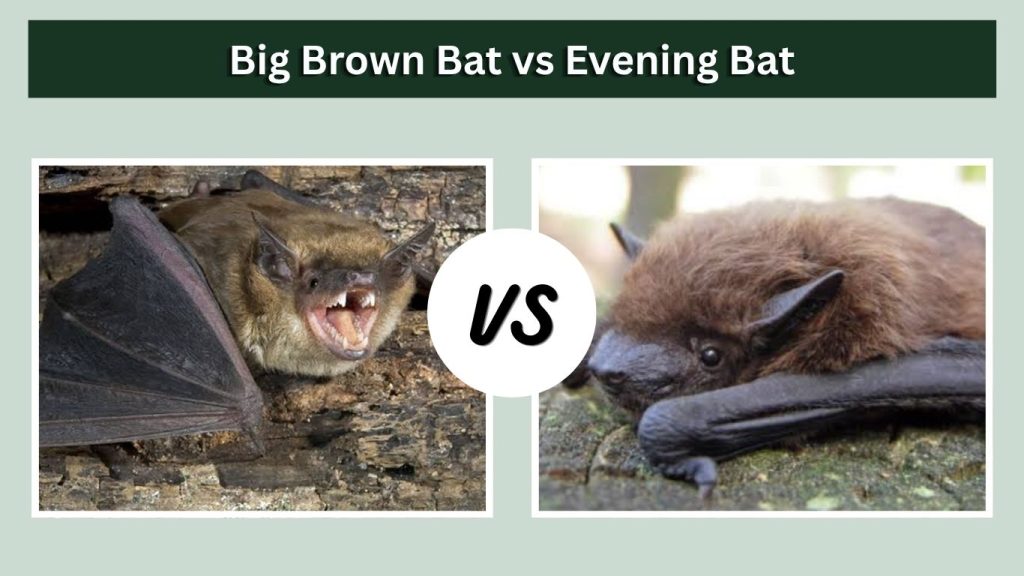
The evening bat is another brown bat that may be confused with the big brown bat in parts of the United States. Evening bats are generally smaller and more common in warmer southeastern areas. Big brown bats are larger and have a broader overall range.
Both species eat insects and may use buildings or tree cavities. Size, ear shape, range, and professional inspection can help separate them.
Are Big Brown Bats Endangered?
The big brown bat is not considered globally endangered and is generally listed as a species of least concern. It remains widespread and adaptable compared with many other bats. However, this does not mean it faces no threats.
White-nose syndrome, habitat loss, pesticide use, wind turbines, human disturbance, and roost removal can affect bat populations. Big brown bats appear more resilient than some cave-hibernating species, but conservation is still important.
Why Big Brown Bats Matter
Big brown bats are valuable insect predators. By eating beetles, moths, flies, and other insects, they help reduce pest pressure in farms, gardens, forests, and neighborhoods. A single bat can eat many insects in one night, and colonies can provide meaningful natural pest control.
They also remind us that wildlife can live close to people. When bats are managed safely and humanely, it is possible to protect homes while also protecting native bat populations.
FAQs
What is the scientific name of the big brown bat?
The scientific name of the big brown bat is Eptesicus fuscus. It belongs to the family Vespertilionidae, a group often called evening bats or vesper bats. This species is widespread in North America and is one of the bats most often found near buildings.
What do big brown bats eat?
Big brown bats eat insects. Their diet includes beetles, moths, flies, wasps, ants, leafhoppers, and other night-flying insects. Beetles are especially important because big brown bats have strong jaws that can crush hard-bodied prey. This makes them helpful natural pest controllers.
How big is a big brown bat?
A big brown bat is usually about 4 to 5 inches long, with a wingspan around 12 to 14 inches. It weighs less than an ounce but looks larger in flight. Compared with a little brown bat, it appears heavier, broader, and more robust.
Do big brown bats bite?
Big brown bats can bite if handled, trapped, or frightened, but they do not attack people on purpose. Never touch a bat with bare hands. If a bat bite or possible exposure occurs, contact a medical professional or local health department for rabies guidance.
Do big brown bats hibernate?
Yes, big brown bats hibernate in colder parts of their range. They may use caves, mines, rock crevices, basements, attics, wall spaces, or other protected shelters. During hibernation, their body temperature and activity drop so they can survive winter when insects are unavailable.