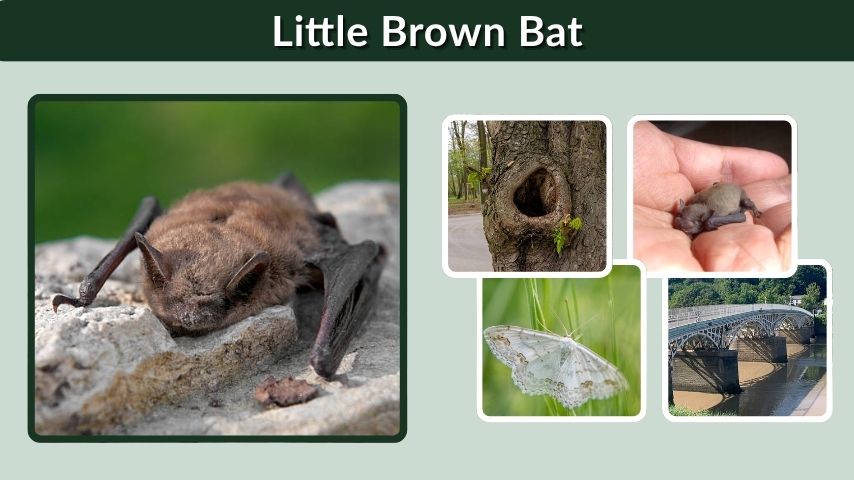
The little brown bat is one of North America’s most familiar bat species. Known scientifically as Myotis lucifugus, this small flying mammal is famous for eating insects, roosting in colonies, and hibernating through cold months. Although it was once very common, disease and habitat pressure have made its future more uncertain in many areas.
What Is a Little Brown Bat?
The little brown bat, also called the little brown myotis, is a small insect-eating bat found across much of North America. It belongs to the family Vespertilionidae, a large group of evening bats. Its name comes from its small body and brown fur, but it is not simply a baby version of a larger bat.
Scientific Name and Classification
The scientific name of the little brown bat is Myotis lucifugus. The word “Myotis” means mouse-eared, which describes the small, rounded ears seen in many bats of this group. “Lucifugus” roughly means avoiding light, which matches its nocturnal lifestyle.
Basic classification:
- Common name: Little brown bat
- Other name: Little brown myotis
- Scientific name: Myotis lucifugus
- Animal type: Mammal
- Order: Chiroptera
- Diet type: Insectivore
- Activity: Nocturnal
Little Brown Bat Size
The little brown bat is small but not weak. Its body is usually only a few inches long, with a lightweight frame designed for fast, flexible flight. Its wingspan is much wider than its body length, helping it chase flying insects at night.
| Feature | Little Brown Bat |
| Body length | About 3–4 inches |
| Wingspan | About 8–11 inches |
| Weight | Usually less than half an ounce |
| Color | Glossy brown to dark brown |
| Diet | Flying insects |
| Activity time | Night |
Little Brown Bat Characteristics
Little brown bats have soft brown fur, short ears, dark wing membranes, and a small pointed face. Their wings look thin and delicate, but they are strong enough for quick turns in the air.
Key characteristics include:
- Small body with long wings
- Brown fur on the back
- Lighter underside
- Rounded ears
- Dark wings and tail membrane
- Fast, fluttering flight
- Strong echolocation ability
Where Do Little Brown Bats Live?
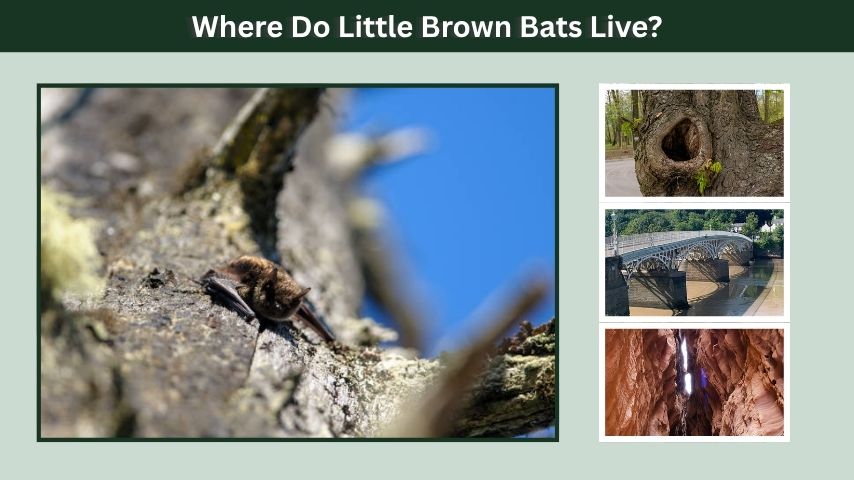
Little brown bats live across much of North America, especially in places with forests, water, caves, old buildings, barns, and bridges. They need safe roosts for daytime resting and reliable insect-rich areas for feeding at night.
Little Brown Bat Habitat
The best little brown bat habitat usually includes water nearby. Rivers, lakes, ponds, wetlands, and forest edges attract flying insects, which makes them good feeding grounds. During the day, these bats rest in warm, dark, sheltered places.
Common roosting sites include:
- Tree cavities
- Attics
- Barns
- Bridges
- Rock crevices
- Bat houses
- Caves and mines
- Loose bark on dead trees
Little Brown Bat Range
The little brown bat range covers many parts of Canada and the United States. It can live in cold northern regions as well as warmer areas, as long as it can find food, roosting sites, and safe winter shelter.
In summer, females may gather in maternity colonies. In winter, many little brown bats move to hibernation sites such as caves or mines. They usually do not migrate extremely long distances compared with some other bat species.
Do Little Brown Bats Hibernate?
Yes, little brown bats hibernate during winter in colder areas. Hibernation helps them survive when insects are not available. Their body temperature drops, their heartbeat slows, and they use stored fat for energy.
During hibernation, disturbance can be dangerous. If bats wake too often, they burn valuable fat reserves before spring arrives. This is one reason cave disturbance and white-nose syndrome are serious threats.
What Do Little Brown Bats Eat?
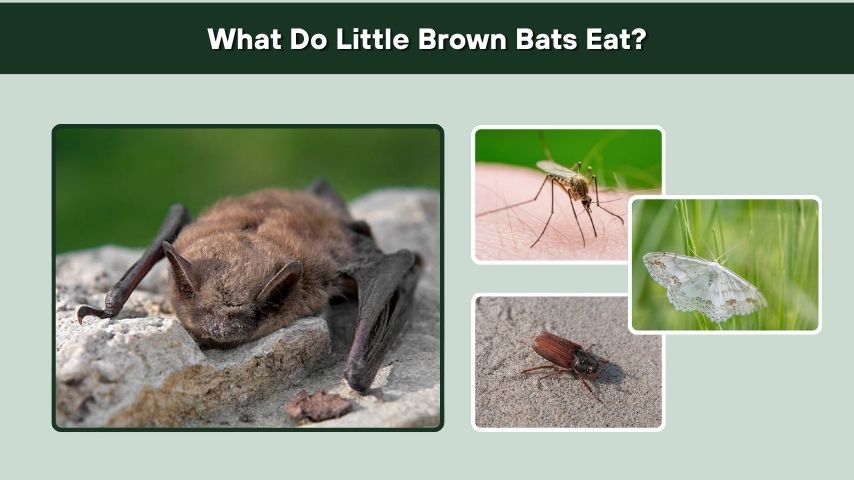
Little brown bats eat insects. They are skilled nighttime hunters that use echolocation to find prey in the dark. Their diet helps control insect populations, making them useful animals in natural ecosystems and around human communities.
Little Brown Bat Diet
The little brown bat diet includes many small flying insects. They often feed over water, along forest edges, near streetlights, and above open fields where insects gather. A single bat may catch many insects in one night.
Common foods include:
- Mosquitoes
- Midges
- Moths
- Beetles
- Mayflies
- Caddisflies
- Small flies
- Other soft-bodied insects
How They Hunt at Night
Little brown bats use echolocation to hunt. They produce high-frequency sounds that bounce off insects and nearby objects. By listening to the returning echoes, they can judge distance, shape, direction, and movement.
Their flight is quick and agile. They may dip, turn, and loop through the air while chasing small prey. This hunting style is one reason they are often seen fluttering over ponds and open spaces at dusk.
Do Little Brown Bats Eat Fruit?
No, little brown bats do not normally eat fruit. They are insectivorous bats, meaning insects are their main food. Fruit bats belong to different groups and live in other parts of the world. If you see a little brown bat in North America, it is almost certainly hunting insects, not fruit.
Little Brown Bat Life Cycle and Lifespan
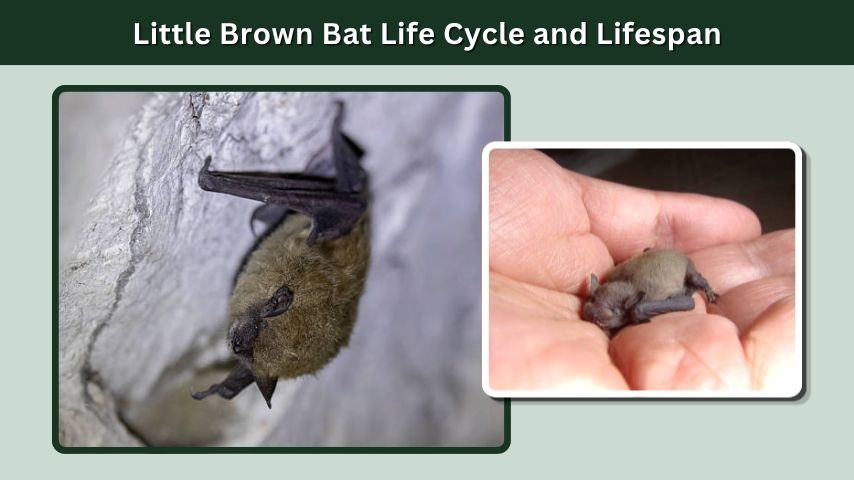
Little brown bats have a seasonal life cycle. They mate, hibernate, form maternity colonies, give birth, raise pups, and prepare for winter again. Their slow reproduction makes population recovery difficult when large numbers die from disease or habitat loss.
Mating and Reproduction
Little brown bats usually mate in late summer or fall, often near hibernation sites. Females can store sperm through winter and become pregnant in spring. This timing allows pups to be born when insects are more available.
Females often gather in warm maternity roosts. These colonies may be found in attics, barns, trees, or bat houses. Warm roosts help pups grow faster.
Little Brown Bat Pup
A female usually gives birth to one pup per year. The pup is born helpless and depends fully on its mother. Young bats grow quickly and may begin flying within a few weeks.
Important pup facts:
- Usually one pup is born each year
- Pups are born in late spring or early summer
- Mothers feed pups with milk
- Young bats grow rapidly
- They learn to fly before becoming independent
Little Brown Bat Lifespan
Little brown bats can live surprisingly long for such small mammals. Some individuals have lived for decades in the wild, although many do not survive that long. Predators, disease, harsh weather, human disturbance, and loss of roosting sites can reduce survival.
Because females usually produce only one pup each year, the species cannot quickly replace large population losses.
Are Little Brown Bats Dangerous?
Little brown bats are not aggressive animals. They usually avoid humans and prefer to escape rather than bite. However, like all wild mammals, they should not be handled because bites, stress, and disease risk are possible.
Little Brown Bat Bite
A little brown bat bite can happen if someone grabs or traps the bat. Bat bites may be small and hard to notice, but they should be taken seriously. Anyone who wakes up with a bat in the room, finds a bat near a child, or has direct contact should seek medical advice.
Never pick up a bat with bare hands. If removal is needed, contact a wildlife expert or local animal control.
Do Little Brown Bats Carry Rabies?
Little brown bats can carry rabies, but most bats are not rabid. The risk becomes important when there is direct human or pet contact. Because rabies is serious, health officials usually recommend caution whenever a bat may have bitten or scratched someone.
Safe rules:
- Do not touch bats
- Keep pets vaccinated
- Seal home entry points after bats leave
- Use professionals for indoor bat problems
- Seek medical guidance after contact
Little Brown Bat Droppings
Little brown bat droppings, also called guano, look like small dark pellets. They may collect below roosting areas such as attics, walls, barns, or porches. Bat droppings can create odor and sanitation concerns if a colony has lived in a building for a long time.
Do not sweep dry guano without protection. Disturbing droppings can release dust. Large cleanup jobs should be handled carefully.
Big Brown Bat vs Little Brown Bat
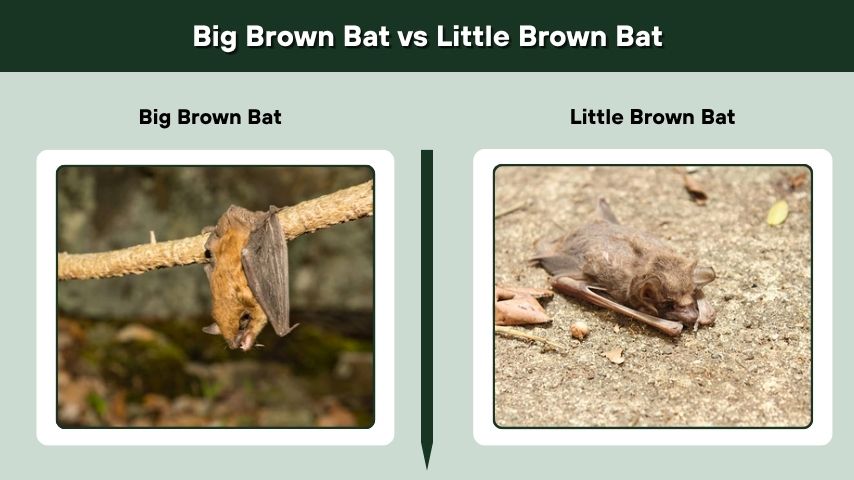
The big brown bat and little brown bat may look similar to beginners, but they are different species. Size is one of the easiest clues, but ear shape, face structure, behavior, and roosting habits can also help.
Main Differences
Big brown bats are usually larger, heavier, and more robust. Little brown bats are smaller and more delicate-looking. A big brown bat may also look broader in the face and body.
Useful differences:
- Big brown bat is larger
- Little brown bat has a smaller body
- Big brown bat has a heavier skull and jaw
- Little brown bat often appears more delicate
- Both eat insects
- Both may use buildings as roosts
Why Identification Can Be Hard
Bat identification is not always easy. Many bats are small, brown, and active at night. Poor lighting, quick flight, and similar body shapes make visual identification difficult. In some cases, experts use measurements, acoustic recordings, or close inspection to confirm the species.
For homeowners, the most important step is not exact identification but safe, legal, and humane bat management.
Why Are Little Brown Bats Endangered in Some Areas?
The little brown bat was once one of the most common bats in North America. Today, many populations have declined sharply, especially because of white-nose syndrome. The U.S. Fish & Wildlife Service notes that the species has suffered severe declines in eastern North America and is under status review.
White-Nose Syndrome
White-nose syndrome is a fungal disease that affects hibernating bats. It can cause bats to wake too often during winter, burn stored fat, and die before spring. The little brown bat is one of the confirmed species affected by this disease.
This disease has caused major losses in many bat colonies. Because little brown bats reproduce slowly, recovery can take a long time.
Other Threats
Little brown bats also face other pressures besides disease. These threats can reduce survival and make recovery harder.
Major threats include:
- Loss of roosting habitat
- Human disturbance in caves
- Wind turbine mortality
- Pesticide impacts on insect prey
- Exclusion from buildings during maternity season
- Climate-related changes to insects and hibernation sites
Are Little Brown Bats Protected?
In many places, bats are protected by wildlife laws. Rules can vary by country, state, or province. Even where removal is allowed, it should be done humanely and at the right season. Excluding bats during maternity season can trap flightless pups inside a building.
The best approach is to contact a licensed wildlife professional before removing a colony.
Helpful Little Brown Bat Facts
Little brown bats are small animals with a big role in the environment. They help control insects, support natural food webs, and show how healthy local ecosystems are. Learning a few simple facts can also reduce fear and misunderstanding.
Interesting Facts
- Little brown bats are nocturnal.
- They use echolocation to find insects.
- They can live much longer than many small mammals.
- Females usually have only one pup per year.
- They often feed near water.
- They may roost in attics, barns, trees, and bat houses.
- They are not blind.
- They avoid humans when possible.
- They help reduce flying insect populations.
- Their scientific name is Myotis lucifugus.
Predators of Little Brown Bats
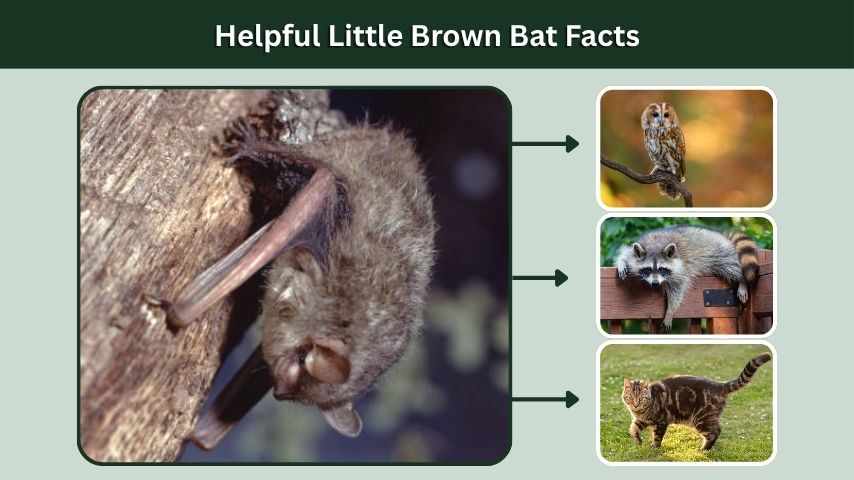
Little brown bats have some natural predators, but predation is not usually their biggest threat. Owls, hawks, snakes, raccoons, cats, and other animals may catch bats, especially when they are roosting, grounded, or flying near obstacles.
Human-related threats and disease are much more serious for many populations today.
Little Brown Bat Adaptations
Little brown bats have several adaptations that help them survive at night. Their wings allow agile flight, their ears help with echolocation, and hibernation helps them survive winter food shortages.
Key adaptations include:
- Echolocation for hunting in darkness
- Lightweight bones for flight
- Wing membranes for maneuvering
- Sharp claws for hanging
- Hibernation to conserve energy
- Nocturnal behavior to avoid many daytime predators
FAQs
What is the scientific name of the little brown bat?
The scientific name of the little brown bat is Myotis lucifugus. It is also called the little brown myotis. The name refers to its mouse-like ears and light-avoiding behavior, which fits its nocturnal lifestyle. It belongs to a large family of small evening bats.
What do little brown bats eat?
Little brown bats eat insects such as mosquitoes, midges, moths, beetles, flies, mayflies, and caddisflies. They hunt at night using echolocation. They often feed near water, forest edges, open fields, and other places where flying insects are common.
Are little brown bats dangerous to humans?
Little brown bats are not aggressive and usually avoid humans. However, they should never be handled because any wild bat can bite if frightened. Bats can also carry rabies, so direct contact should be treated seriously and followed by medical or animal-control advice.
Where do little brown bats live?
Little brown bats live across much of North America. They use forests, wetlands, farms, towns, caves, mines, bridges, barns, attics, and tree cavities. They prefer areas with good roosting sites and plenty of insects, especially near water.
Why are little brown bats declining?
Little brown bats are declining mainly because of white-nose syndrome, a fungal disease that affects hibernating bats. Other threats include habitat loss, roost disturbance, wind turbines, pesticide impacts, and unsafe building exclusions. Their slow reproduction makes recovery difficult.