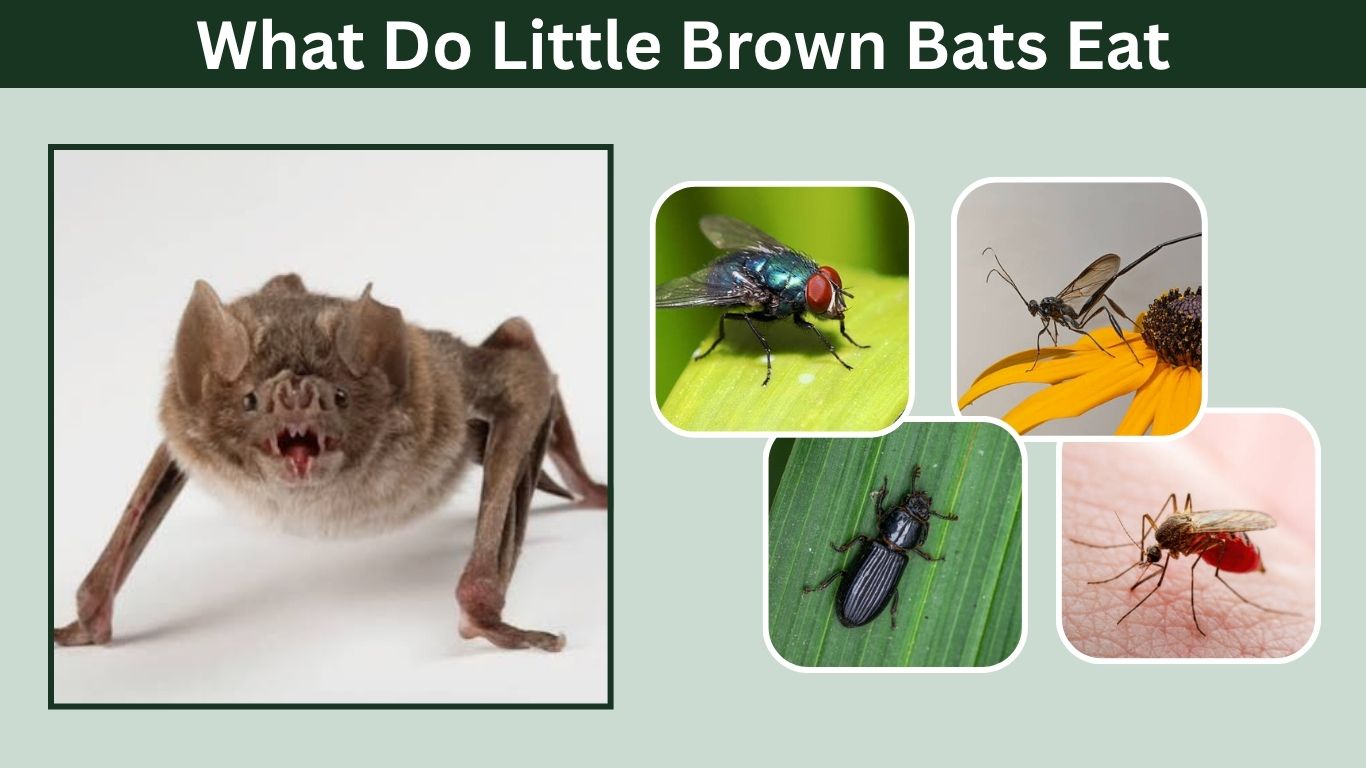
Little brown bats are small nighttime hunters that eat insects almost entirely. They do not eat fruit, seeds, blood, or household food. Instead, they fly after dark and catch tiny prey in the air using echolocation. Their diet changes with season, habitat, and insect availability, but most of their food comes from flying insects found near water, forests, fields, and lights.
Little Brown Bat Diet Overview
Little brown bats are insectivores, meaning their diet is based on insects and other tiny arthropods. They usually feed at dusk and during the night, catching prey in flight. Because many of their favorite insects live near ponds, rivers, marshes, and wetland edges, little brown bats are often seen hunting over water.
What Little Brown Bats Eat Most
Little brown bats eat a wide range of small flying insects. They are not picky hunters. Instead, they take whatever suitable prey is active and easy to catch during the night. Their diet often includes soft-bodied insects, aquatic insects after emergence, and small insects flying near forest edges or water.
Common foods include:
- Mosquitoes
- Moths
- Midges
- Caddisflies
- Beetles
- Mayflies
- Gnats
- Flies
- Leafhoppers
- Wasps and other small insects
Some studies and wildlife guides also mention spiders as occasional prey. However, insects make up the main part of the little brown bat’s diet.
How They Catch Food
Little brown bats use echolocation to find insects in the dark. They send out high-frequency sounds, then listen for returning echoes. These echoes help them judge where an insect is, how far away it is, and how it is moving.
Once a bat detects prey, it turns quickly in flight and catches the insect with its mouth or wing membrane. It may scoop prey into its tail membrane and then transfer the insect to its mouth while flying. This makes little brown bats excellent aerial hunters.
Where They Usually Feed
Little brown bats commonly feed over lakes, streams, ponds, wetlands, forest openings, fields, and along woodland edges. These places attract many insects at night. Water is especially important because mosquitoes, midges, caddisflies, and mayflies often begin life as aquatic larvae before emerging as flying adults.
They may also hunt around outdoor lights where insects gather. However, natural feeding areas such as wetlands and forest edges are more important for their long-term survival.
10 Foods Little Brown Bats Eat
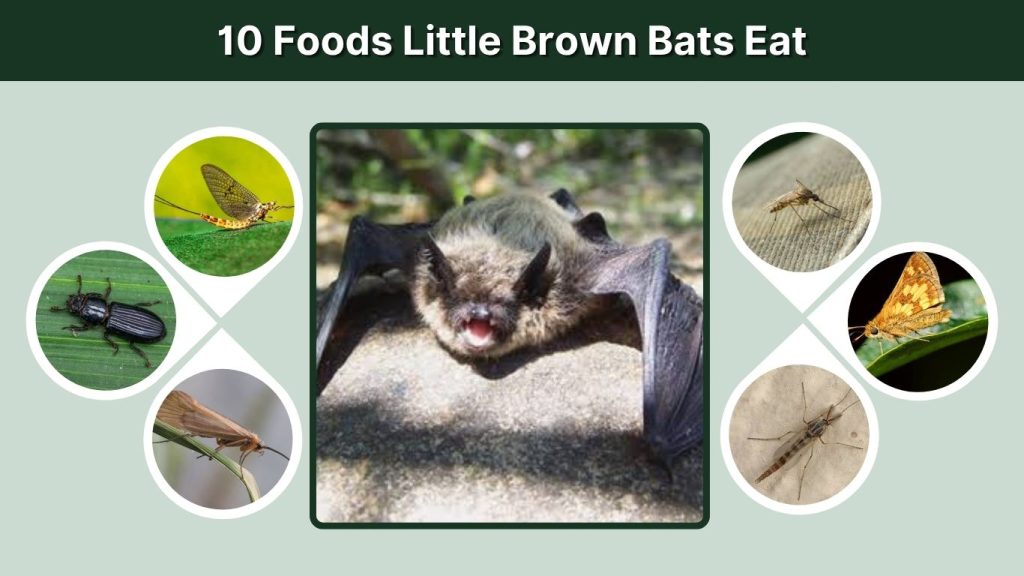
Little brown bats eat many kinds of insects, but some food groups are especially common. The exact diet can change by location and season. In warmer months, they may find more moths, beetles, flies, and aquatic insects. Near water, they often take large numbers of mosquitoes, midges, and caddisflies.
1. Mosquitoes
Mosquitoes are one of the best-known foods of little brown bats. These small flying insects are common near wetlands, ponds, ditches, and slow-moving water. Since mosquitoes are active at dusk and night, they are available when little brown bats begin hunting.
Little brown bats can help reduce mosquito numbers, but they do not eat mosquitoes only. Their diet is much broader. When moths, midges, beetles, or caddisflies are more abundant, bats may eat those instead.
Mosquitoes are easy for bats to catch because they are small and often fly in open areas. A bat hunting over water or around a damp yard may catch many mosquitoes during one feeding period.
2. Moths
Moths are a major food source for little brown bats. Many moths fly at night, making them ideal prey. They are often found near forests, meadows, gardens, and lights. Their soft bodies make them easy to eat compared with harder insects.
Little brown bats may eat small and medium-sized moths while flying through open spaces or along the edges of trees. Moths provide more food value than tiny insects because they are larger and often easier to detect with echolocation.
In late summer, moth activity can increase in many areas, giving bats a rich food source before migration or hibernation preparation.
3. Midges
Midges are tiny flying insects that often gather in large clouds near water. They are very important for bats that hunt along lakes, marshes, rivers, and ponds. Many midges begin life underwater, then emerge as adults in large numbers.
Little brown bats can catch midges repeatedly in quick flight. A single midge is small, but a swarm provides many feeding opportunities. This makes midges useful when bats need to feed quickly after leaving a roost.
Midges are especially common in damp habitats. If little brown bats are active over a pond at dusk, midges may be one of the main foods they are catching.
4. Caddisflies
Caddisflies are another important food, especially near clean streams, rivers, and lakes. Their larvae live in water, and the adults fly after emergence. When many caddisflies appear at once, bats can find a concentrated feeding area.
Little brown bats often hunt over water because insects like caddisflies rise from the surface or fly close to shore. These insects are usually soft enough for bats to eat easily in flight.
Caddisflies are an important link between aquatic habitats and bat feeding. Healthy waterways often support more aquatic insects, which can support better bat foraging.
5. Beetles
Little brown bats also eat small beetles. Beetles are usually harder-bodied than moths or flies, but many small species are still suitable prey. Bats may catch beetles in open air, near tree lines, or around fields.
Because beetles vary widely in size and shape, little brown bats probably choose smaller beetles more often than large, heavily armored ones. Small flying beetles are easier to capture and chew.
Beetles can be especially useful in summer when many species are active at night. They add variety to the bat’s diet and help the bat meet its energy needs.
6. Mayflies
Mayflies are common near water and can appear in large seasonal emergences. Adult mayflies are short-lived, soft-bodied insects that fly above lakes, rivers, and streams. These features make them easy prey for little brown bats.
When mayflies emerge in large numbers, they create a temporary feeding event. Bats may patrol over the water and catch them repeatedly. This kind of food source is valuable because it provides many insects in one location.
Mayflies are another reason little brown bats are closely connected with wetlands and waterways. Good aquatic insect populations can mean better nighttime feeding for bats.
7. Gnats
Gnats are tiny flying insects often found in damp areas, grassy spaces, and shaded habitats. Like midges, they may gather in groups, making them easier for bats to catch in repeated passes.
Little brown bats may not gain much from one gnat, but a group of gnats can provide steady feeding. Since bats are fast and agile, they can take small insects one after another while flying.
Gnats are part of the bat’s flexible diet. When larger prey is limited, tiny insects still help provide energy during nightly foraging.
8. Flies
Little brown bats eat many kinds of flies. This may include small flies, crane flies, and other night-active flying insects. Flies are common in many habitats, including wetlands, fields, farms, forests, and backyards.
Flies can be abundant during warm months, making them a reliable food source. Some fly species are soft-bodied and easy to consume. Others are larger and provide more energy per catch.
Because flies are found in many environments, they help little brown bats survive across a wide range of habitats. This flexible feeding style is one reason the species has been able to live in many parts of North America.
9. Leafhoppers and Other Hoppers
Little brown bats may eat leafhoppers and other small hopping insects when they are flying or moving through vegetation. These insects are common in grassy fields, gardens, meadows, and crop edges.
Hoppers are small, but they can be abundant. They may become part of the diet when bats forage near open fields or low vegetation. Bats do not need to land to catch them if the insects are airborne.
These insects show that little brown bats are not limited to one hunting area. They may feed over water one night and along field edges another night, depending on where insects are active.
10. Wasps and Small Flying Insects
Little brown bats may also eat small wasps and other flying insects. They are more likely to take suitable small species rather than large stinging insects. Since bats hunt at night, they usually encounter night-active or resting insects that become available during their feeding period.
This category can include a mix of small prey that changes by place and season. A little brown bat’s diet is flexible, so it may include many insect types beyond the most familiar ones.
Occasionally, little brown bats may also eat spiders. This is not their main food, but it can happen when spiders are available and easy to catch.
Little Brown Bat Food Table
The foods little brown bats eat are mostly small insects found in air, near water, or around vegetation. This table summarizes 10 common food types and where bats may find them.
| Food | Where Bats Find It | Why It Matters |
| Mosquitoes | Wetlands, ponds, yards | Common nighttime prey |
| Moths | Forest edges, gardens, lights | Larger soft-bodied food |
| Midges | Lakes, streams, marshes | Often gather in swarms |
| Caddisflies | Rivers, lakes, ponds | Important aquatic insect |
| Beetles | Fields, woods, farms | Adds diet variety |
| Mayflies | Water surfaces and shorelines | Seasonal food bursts |
| Gnats | Damp grass and shaded areas | Tiny but abundant |
| Flies | Fields, wetlands, yards | Reliable warm-season prey |
| Leafhoppers | Meadows and vegetation | Common small prey |
| Small wasps | Open air and vegetation | Occasional food source |
How Much Do Little Brown Bats Eat?
Little brown bats have high energy needs because flying takes a lot of effort. They may eat a large amount of insects during a single night, especially in summer. Pregnant and nursing females need even more energy because they are supporting young.
Nightly Feeding
A little brown bat usually begins feeding around dusk. It may feed heavily for a period after leaving the roost, rest for a while, and then feed again later in the night. The exact pattern depends on weather, insect activity, and the bat’s condition.
Warm, calm nights are often better for feeding because insects are more active. Cold, windy, or rainy nights can reduce insect movement, making hunting harder.
Why They Eat So Much
Small bats burn energy quickly. They need enough food to power flight, keep warm, and build fat reserves. Before hibernation, feeding becomes especially important because stored fat helps them survive months with little or no eating.
Female bats also need extra food during pregnancy and while producing milk. A nursing female may spend long hours hunting so she can feed herself and care for her pup.
Do Little Brown Bats Eat Fruit or Blood?
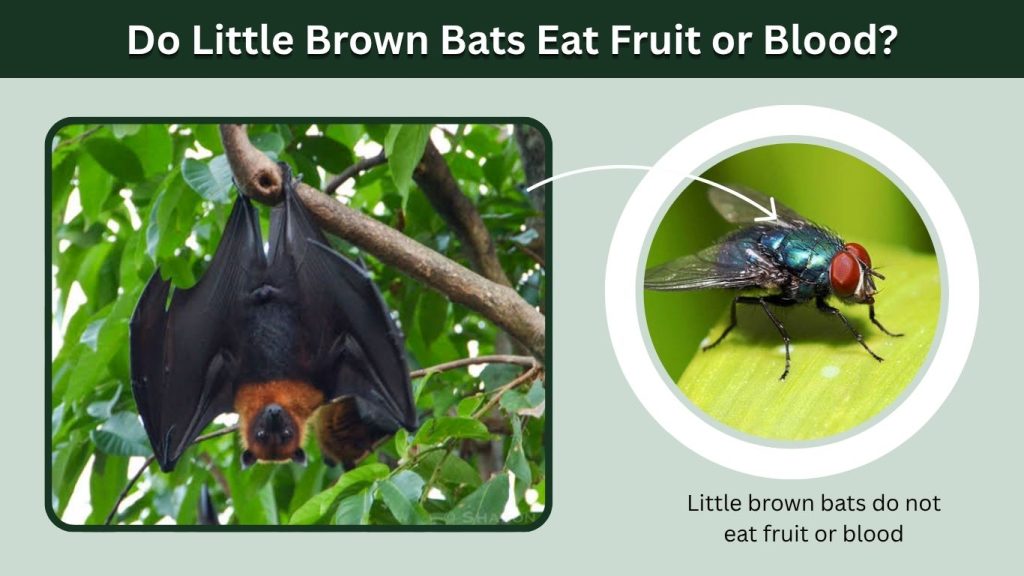
Little brown bats do not eat fruit or blood. They are insect-eating bats. This is an important difference because not all bat species eat the same foods. Some tropical bats eat fruit or nectar, and vampire bats feed on blood, but little brown bats do not belong to those groups.
They Are Not Fruit Bats
Fruit bats usually live in warmer regions and have diets based on fruit, nectar, or pollen. Little brown bats are smaller insect hunters found across much of North America. Their teeth, flight style, and echolocation are adapted for catching insects in the dark.
They Do Not Attack People for Food
Little brown bats do not seek humans as food. They may fly near people if insects are present, especially around lights or water, but they are hunting insects, not people. If a bat is found indoors, it should not be handled by hand. Contact a wildlife professional or local health authority for safe guidance.
Why Their Diet Matters
The little brown bat’s diet is important for ecosystems and people. By eating insects every night, these bats help control insect populations naturally. They are part of a balanced food web and depend on healthy insect-rich habitats.
Natural Pest Control
Little brown bats eat many insects that humans consider pests, including mosquitoes, gnats, moths, and small beetles. They do not remove all pests from an area, but they help reduce insect numbers as part of a natural system.
A healthy bat population can support gardens, farms, forests, and wetlands by keeping insect communities in balance.
Habitat Protection
Because little brown bats eat many insects connected to water, protecting wetlands, streams, lakes, and riparian forests helps protect bat food sources. Clean water supports aquatic insects, and aquatic insects support bats.
Safe roosting places are also important. Little brown bats may roost in buildings, tree cavities, bat houses, caves, mines, and other sheltered places. If bats are living in a home, humane exclusion should be done at the correct season so young bats are not trapped inside.
FAQs
What is the main food of little brown bats?
The main food of little brown bats is small flying insects. They commonly eat mosquitoes, moths, midges, caddisflies, beetles, mayflies, gnats, flies, and other tiny airborne prey. Their diet changes depending on what insects are active at night.
Do little brown bats really eat mosquitoes?
Yes, little brown bats do eat mosquitoes. However, mosquitoes are only one part of their diet. They also eat moths, midges, beetles, caddisflies, mayflies, flies, and other insects. They usually eat whatever suitable prey is most available.
Do little brown bats eat spiders?
Little brown bats may occasionally eat spiders, but spiders are not their main food. Their diet is mostly made of flying insects. Spiders are usually listed as occasional prey rather than a major part of their regular diet.
Do little brown bats eat fruit?
No, little brown bats do not eat fruit. They are insectivorous bats, which means they feed on insects. Fruit-eating bats are different species, mostly found in warmer regions. Little brown bats are adapted for catching insects at night.
Where do little brown bats find food?
Little brown bats find food over ponds, lakes, rivers, wetlands, fields, forest edges, and sometimes around outdoor lights. They prefer places where night-flying insects are active. Water areas are especially useful because many of their prey insects begin life in water.