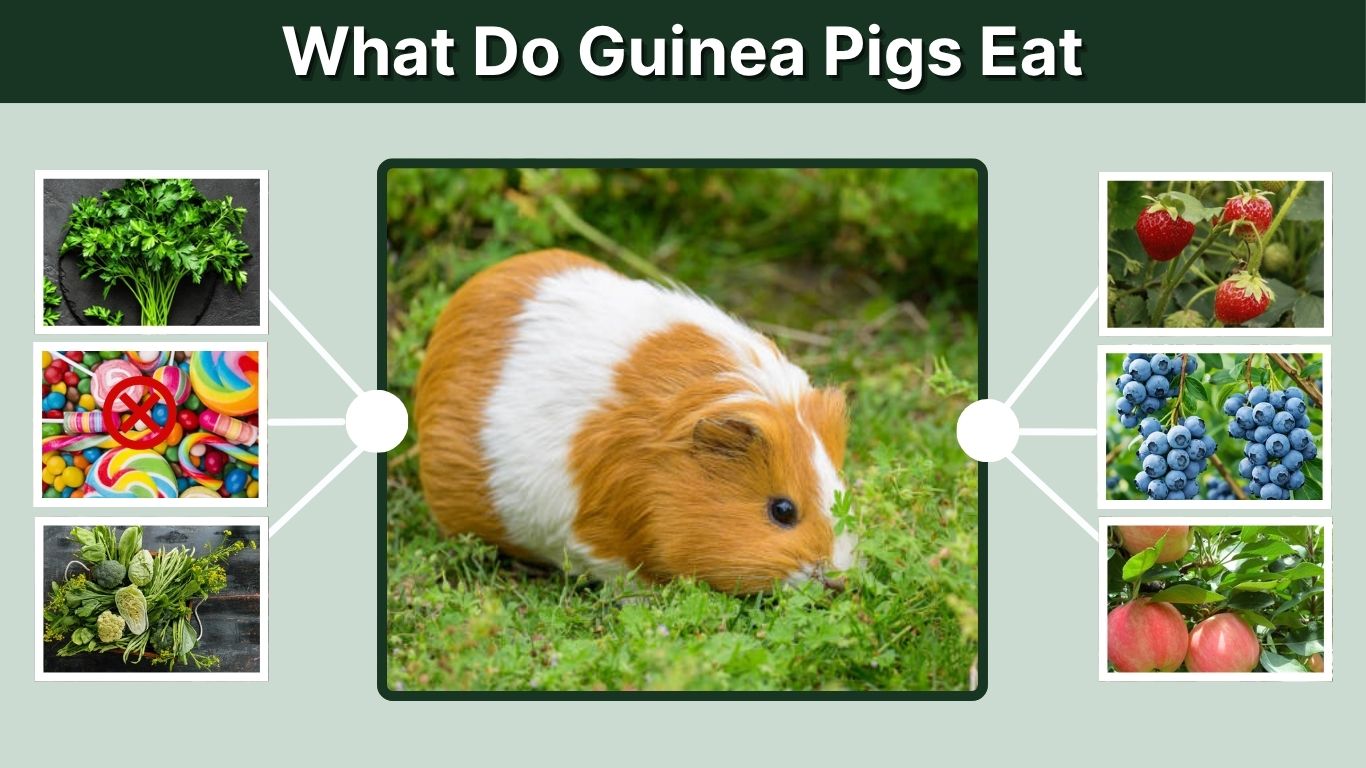
Guinea pigs eat a plant-based diet built around hay, fresh vegetables, clean water, and a small amount of guinea pig pellets. They also need vitamin C every day because their bodies cannot make it naturally. A healthy diet keeps their digestion active, teeth worn down, body weight balanced, and immune system strong. The wrong foods can quickly cause stomach problems or serious illness.
What Do Guinea Pigs Eat Daily?
A guinea pig’s daily diet should be simple, fresh, and high in fiber. They are grazing animals, so their digestive system works best when food is always moving through it. Hay should be available all day, while vegetables and pellets should be given in controlled amounts.
Main Daily Foods
The most important food for guinea pigs is grass hay. Timothy hay is one of the most common choices for adult guinea pigs. Orchard hay and meadow hay can also be used. Hay helps wear down their teeth and supports healthy digestion.
A basic daily diet includes:
- Unlimited fresh hay
- Fresh clean water
- A small portion of guinea pig pellets
- Fresh vegetables
- Vitamin C-rich foods
- Occasional small fruit treats
Pellets should be made specifically for guinea pigs. Rabbit pellets are not a good replacement because they do not always contain the right vitamin C level. Avoid colorful pellet mixes with seeds, dried fruit, or sugary pieces.
Why Hay Is So Important
Guinea pig teeth grow continuously. If they do not chew enough rough food, their teeth can become too long or uneven. This may cause pain, drooling, weight loss, and trouble eating. Hay gives them the natural chewing time they need.
Hay also keeps the gut active. A guinea pig that stops eating can become seriously sick very fast. For this reason, owners should always watch appetite closely. If a guinea pig refuses food, it should be treated as urgent.
Fresh Water Needs
Guinea pigs need clean water available at all times. Some owners use a water bottle, while others use a heavy bowl. Both can work if they are cleaned often. A bottle can clog, and a bowl can become dirty, so check the water source every day.
Water should be changed daily. In warm weather, check it more often. A guinea pig that drinks much more or much less than usual may need a health check.
Best Vegetables for Guinea Pigs
Fresh vegetables are an important part of a guinea pig’s diet. They add moisture, vitamins, minerals, and variety. However, vegetables should be introduced slowly, especially if the guinea pig has not eaten them before.
Safe Vegetable Choices
Many vegetables are safe when washed and served in proper amounts. Leafy greens are often the best daily options. Bell peppers are also useful because they contain vitamin C and are usually lower in sugar than fruits.
Safe vegetables may include:
- Romaine lettuce
- Green leaf lettuce
- Red leaf lettuce
- Bell peppers
- Cucumber
- Cilantro
- Parsley
- Carrot tops
- Zucchini
- Green beans
- Small amounts of broccoli
- Small amounts of kale
- Small amounts of spinach
Not every guinea pig likes the same foods. Some enjoy cucumber and bell pepper, while others prefer leafy greens. Offer variety, but do not change the whole diet at once.
Vegetables to Feed in Moderation
Some vegetables are safe but should not be overfed. Broccoli, cabbage, cauliflower, kale, and Brussels sprouts can cause gas in some guinea pigs. Spinach and parsley contain calcium, so they should not be the main daily food for every guinea pig.
Carrots are safe but naturally sweet. They are better as a small treat instead of a large daily portion. Lettuce is fine if it is a safe variety, but iceberg lettuce is not a good choice because it is watery and low in nutrition.
Simple Vegetable Feeding Chart
| Food Type | Examples | Feeding Note |
| Daily base | Hay, water | Always available |
| Daily vegetables | Bell pepper, romaine, cilantro | Serve fresh and washed |
| Moderate vegetables | Kale, spinach, parsley, broccoli | Use small amounts |
| Occasional fruits | Apple, strawberry, blueberry | Treat only |
| Avoid foods | Onion, avocado, potato, chocolate | Do not feed |
Can Guinea Pigs Eat Fruit?
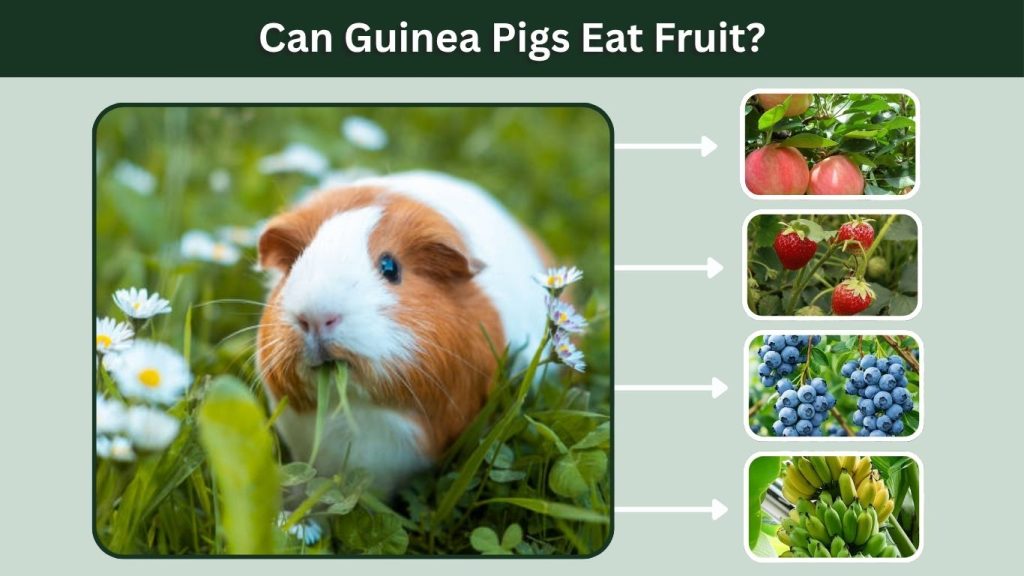
Guinea pigs can eat some fruits, but fruit should be treated as a small snack. Fruits contain natural sugar, and too much sugar can lead to weight gain, soft droppings, and digestive upset. Fruit should never replace hay or vegetables.
Safe Fruits in Small Amounts
Many fruits are safe when served in tiny portions. Always wash fruit first and remove seeds, pits, stems, or tough parts when needed. Start with a very small piece to see how your guinea pig reacts.
Safe fruits may include:
- Apple without seeds
- Strawberry
- Blueberry
- Banana
- Watermelon
- Orange
- Pear
- Peach without pit
- Cantaloupe
- Mango
- Kiwi
- Raspberry
- Blackberry
- Pineapple
Fruit should be given only sometimes. A small piece once or twice a week is enough for many guinea pigs. If droppings become soft after fruit, reduce or stop that fruit.
Can Guinea Pigs Eat Apples?
Yes, guinea pigs can eat apples in small amounts. Remove the seeds because apple seeds are not safe. The skin is usually fine if the apple is washed well. Apple is sweet, so it should be a treat, not a daily food.
A thin slice is enough for one serving. Too much apple can upset the stomach or add too much sugar to the diet.
Can Guinea Pigs Eat Strawberries and Blueberries?
Strawberries and blueberries can be given as occasional treats. They are soft, sweet, and often enjoyed by guinea pigs. Strawberries also contain vitamin C, but they should still be limited because of sugar.
Cut large strawberries into small pieces. Blueberries should also be served in small numbers. Do not feed moldy berries or fruit that has started to spoil.
Common Foods Guinea Pigs Can Eat
Many owners want quick answers about common foods. Some are safe, some are safe only in moderation, and some should be avoided completely. When unsure, it is better to skip food than risk illness.
Can Guinea Pigs Eat Tomatoes?
Yes, guinea pigs can eat ripe tomato flesh in small amounts. Remove the leaves and stems because the green parts of tomato plants are unsafe. Tomato is acidic, so too much may irritate the mouth or stomach.
Cherry tomatoes should be cut into smaller pieces. Feed tomato only occasionally and watch for soft droppings or mouth sensitivity.
Can Guinea Pigs Eat Celery and Cucumber?
Yes, guinea pigs can eat celery and cucumber. Celery should be chopped into small pieces because the strings can be difficult to chew. Cucumber is safe and hydrating, but it is mostly water, so it should not be the main vegetable.
Both foods are best served fresh and washed. If cucumber causes soft droppings, reduce the amount.
Can Guinea Pigs Eat Carrots and Bell Peppers?
Carrots are safe in small portions, but they are sweet. A small slice is enough. Bell peppers are one of the better vegetables because they provide vitamin C and are usually accepted well by many guinea pigs.
Red, green, yellow, and orange bell peppers can be offered. Remove seeds and stems before feeding. Bell peppers can be part of a regular vegetable mix.
Foods Guinea Pigs Should Not Eat
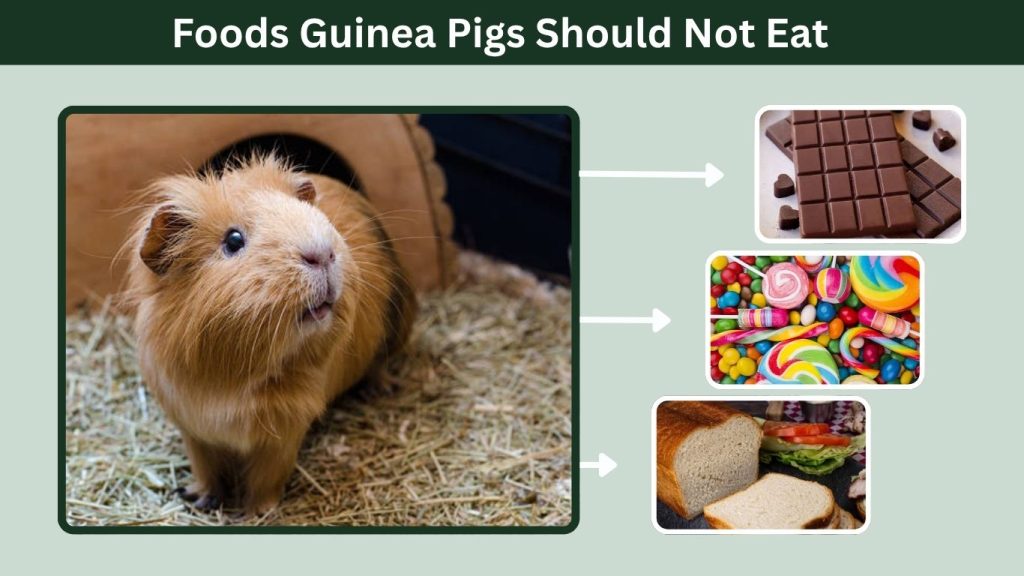
Some foods are dangerous for guinea pigs and should never be offered. Guinea pigs are herbivores with sensitive digestive systems, so processed human foods and animal-based foods are not suitable.
Unsafe Foods
Avoid feeding:
- Chocolate
- Candy
- Bread
- Cheese
- Milk
- Meat
- Eggs
- Onion
- Garlic
- Avocado
- Potato
- Green potato skin
- Rhubarb
- Mushrooms
- Processed snacks
- Salty foods
- Sugary treats
- Cooked meals
- Seeds and nuts
These foods can cause digestive problems, choking risks, toxicity, or unhealthy weight gain. Guinea pigs do not need human snacks, dairy, or cooked food.
Can Guinea Pigs Eat Onions or Avocado?
No, guinea pigs should not eat onions or avocado. Onion and related foods can be harmful, and avocado is too risky because of its fat content and possible toxicity concerns. It is safer to avoid them completely.
If a guinea pig eats a dangerous food, contact a vet for advice. Do not wait for severe symptoms if the food is known to be unsafe.
Can Guinea Pigs Eat Rabbit Food?
Guinea pigs should not depend on rabbit food. Rabbit pellets are made for rabbits, not guinea pigs. Guinea pigs need vitamin C every day, and rabbit food may not provide enough. Long-term use can lead to nutritional problems.
Always choose plain guinea pig pellets. Store pellets properly and use them while they are fresh because vitamin C can break down over time.
How Much Should Guinea Pigs Eat?
A healthy feeding routine helps prevent obesity, dental problems, and digestive upset. Guinea pigs should never be starved or placed on sudden diets. Hay should stay unlimited, while pellets, vegetables, and fruits should be measured.
Daily Feeding Routine
A simple routine can look like this:
- Morning: fresh vegetables and water check
- All day: unlimited hay
- Evening: small pellet serving and cage check
- Weekly: small fruit treat if tolerated
- Daily: remove old vegetables before they spoil
Pellet amounts depend on the product and the guinea pig’s age, weight, and health. Follow the package guide and ask a vet if the guinea pig is overweight, underweight, pregnant, young, or sick.
Baby Guinea Pig Diet
Baby guinea pigs need good nutrition for growth. They may need different pellet support than adults, depending on age and health. Hay should still be available, and fresh foods should be introduced carefully.
Young guinea pigs should be monitored closely. Sudden diet changes can upset their stomach. If a baby guinea pig is weak, not eating, or not gaining weight, a vet should check it quickly.
Signs of a Poor Diet
A poor diet may show through body weight, coat condition, droppings, and eating behavior. Guinea pigs can hide sickness, so small changes matter.
Warning signs include:
- Weight loss
- Soft droppings
- No droppings
- Drooling
- Refusing hay
- Swollen belly
- Low energy
- Rough coat
- Overgrown teeth
- Weakness
- Repeated diarrhea
A guinea pig that stops eating needs urgent care. Waiting too long can make the problem worse.
Vitamin C for Guinea Pigs
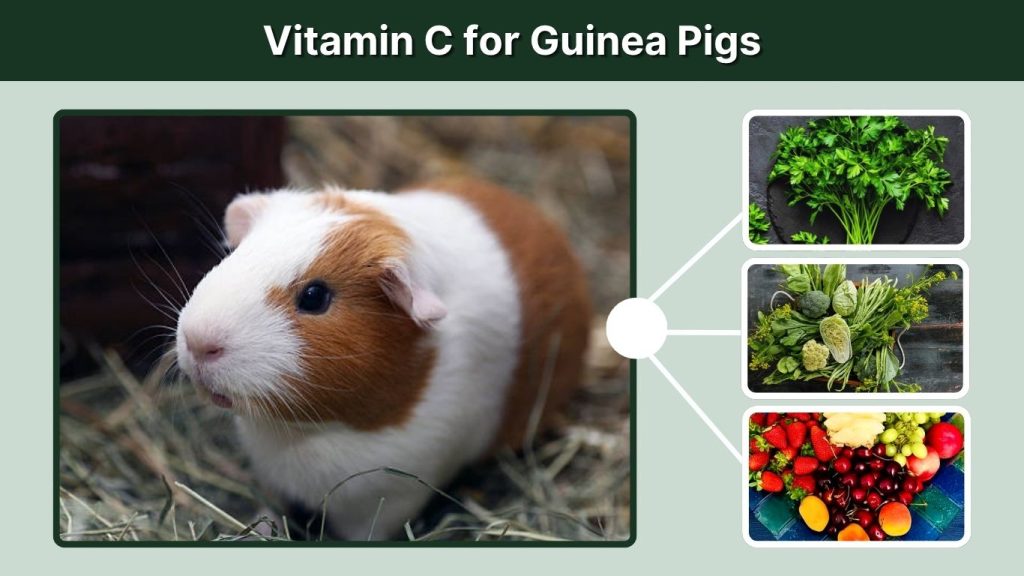
Vitamin C is ne of the most important parts of guinea pig nutrition. Guinea pigs cannot make their own vitamin C, so they must get it from food or a safe supplement. Without enough vitamin C, they may develop serious health problems.
Best Vitamin C Foods
Good vitamin C foods include bell peppers, certain leafy greens, parsley, cilantro, and small amounts of some fruits. Bell pepper is often one of the best daily choices because it is nutritious and not as sugary as fruit.
Vitamin C drops in water are not always reliable because they can break down and may change the taste of water. If supplementation is needed, a vet can suggest the safest option.
Signs of Vitamin C Deficiency
Vitamin C deficiency can cause weakness, swollen joints, poor coat condition, pain, poor appetite, and slow healing. A guinea pig may become less active or seem uncomfortable when moving.
If these signs appear, do not try to fix the problem only with extra fruit. A vet should check the guinea pig and recommend proper treatment.
Balanced Feeding Matters
A guinea pig diet should not depend on one vegetable or one fruit. Variety helps provide different nutrients. Still, changes should be gradual. Offer small portions of new foods and watch digestion.
Good feeding is not complicated: hay first, vegetables daily, pellets in small amounts, fruit rarely, and unsafe foods never.
FAQs
What do guinea pigs eat the most?
Guinea pigs should eat hay the most. Hay supports digestion and helps wear down their constantly growing teeth. Fresh vegetables, guinea pig pellets, and clean water are also important, but hay should always be the main part of the diet.
Can guinea pigs eat bananas?
Yes, guinea pigs can eat bananas, but only in very small amounts. Banana is soft and sweet, so too much can cause weight gain or digestive upset. A tiny slice once in a while is enough as a treat.
Can guinea pigs eat broccoli?
Yes, guinea pigs can eat broccoli in small amounts. However, broccoli can cause gas in some guinea pigs, so it should not be overfed. Start with a tiny piece and watch for bloating, discomfort, or soft droppings.
What vegetables can guinea pigs eat daily?
Good daily vegetables may include romaine lettuce, green leaf lettuce, bell pepper, cilantro, and cucumber in balanced amounts. Bell pepper is especially useful because it provides vitamin C. Rotate safe vegetables instead of feeding only one type every day.
What foods are poisonous to guinea pigs?
Guinea pigs should not eat onion, garlic, avocado, chocolate, dairy, meat, potato, processed snacks, or cooked human meals. These foods can be harmful or difficult to digest. When unsure about a food, do not feed it until you confirm it is safe.