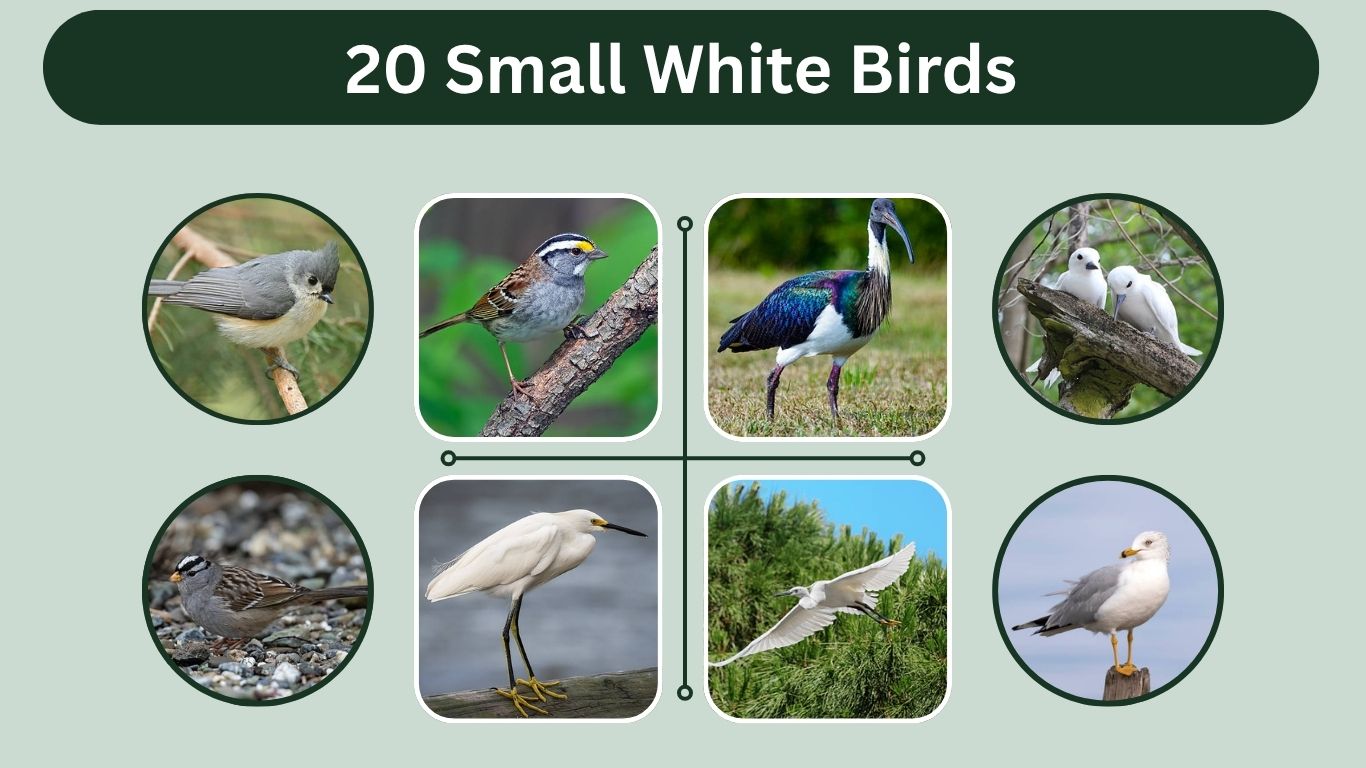
Small white birds can be beautiful but confusing to identify because many species share pale feathers, white bodies, gray wings, or bright white markings. Some live near wetlands and beaches, while others visit fields, forests, backyards, and snowy open areas. This guide covers 20 small white birds, including egrets, ibises, gulls, terns, sparrows, chickadees, and titmice. You will learn how to recognize each bird by size, color, bill shape, habitat, behavior, and similar species.
1. Snowy Egret
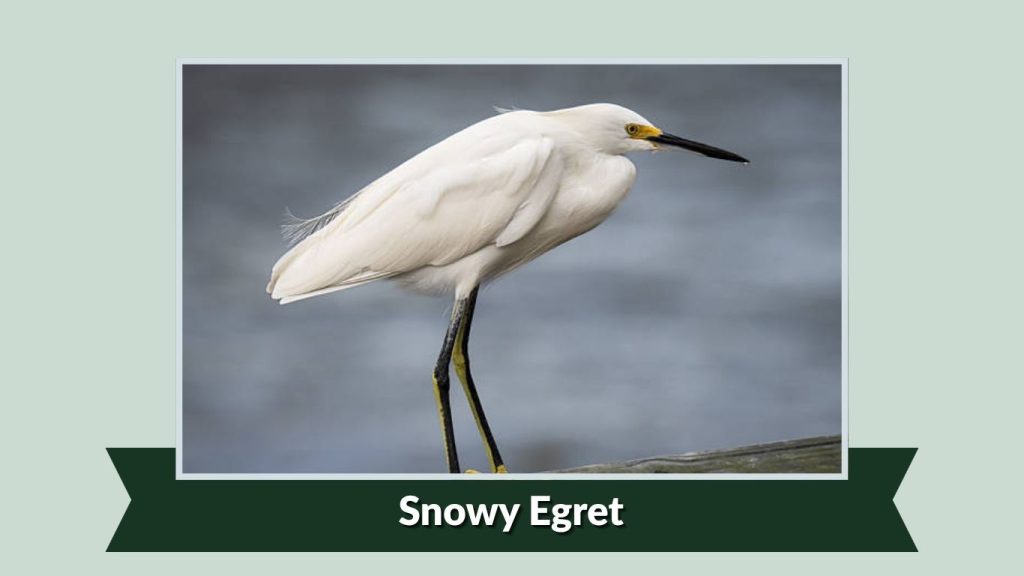
The Snowy Egret is a small white wading bird known for its slim body, long black legs, and bright yellow feet. It is often seen walking through shallow water while searching for fish, insects, frogs, and small aquatic animals. Its elegant white feathers make it easy to notice in wetlands and coastal areas.
Identification
- Pure white body
- Long black legs
- Bright yellow feet
- Thin black bill
- Slender neck and body
Habitat and Range
Snowy Egrets live in marshes, ponds, mudflats, lagoons, estuaries, and coastal wetlands. They are common in many parts of North America, especially along the Atlantic, Gulf, and Pacific coasts. They may also appear inland near lakes, rivers, and flooded fields.
Behavior and Diet
Snowy Egrets are active hunters. They often stir the water with their yellow feet to scare small prey into movement. Their diet includes small fish, shrimp, insects, frogs, worms, and crustaceans. They usually feed alone or in small groups.
Similar Birds
Snowy Egrets may be confused with Little Egrets, Cattle Egrets, or young Little Blue Herons. The best clues are their black bill, black legs, and bright yellow feet.
2. Cattle Egret
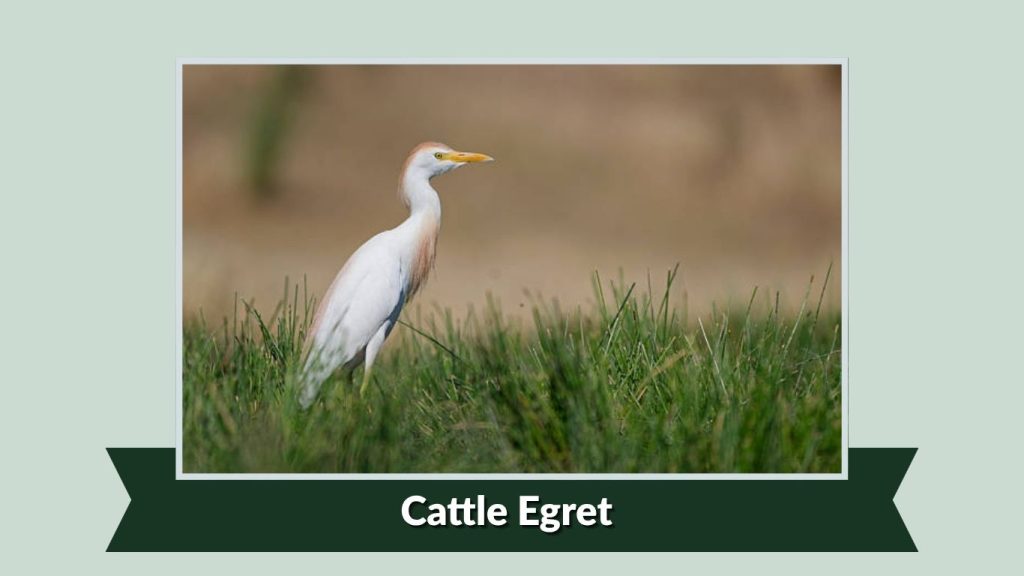
The Cattle Egret is a short, stocky white bird often seen in fields, pastures, and roadsides. Unlike many other white wading birds, it spends a lot of time away from water. During breeding season, it develops orange-buff feathers on the head, chest, and back.
Identification
- White body
- Shorter neck than other egrets
- Yellow or orange bill
- Short dark legs
- Orange-buff patches during breeding season
Habitat and Range
Cattle Egrets are common in grasslands, farms, pastures, fields, wetlands, and roadsides. They are often seen near cattle, horses, tractors, or lawn mowers because these animals and machines disturb insects and other small prey.
Behavior and Diet
Cattle Egrets feed mainly on insects, especially grasshoppers, crickets, flies, and beetles. They also eat frogs, lizards, and small animals. They often walk behind grazing animals and quickly grab prey that moves through the grass.
Similar Birds
Cattle Egrets can be confused with Snowy Egrets and Great Egrets. They are smaller and stockier, with a shorter neck and a thicker bill. Their field habitat also helps separate them from water-loving egrets.
3. Great Egret
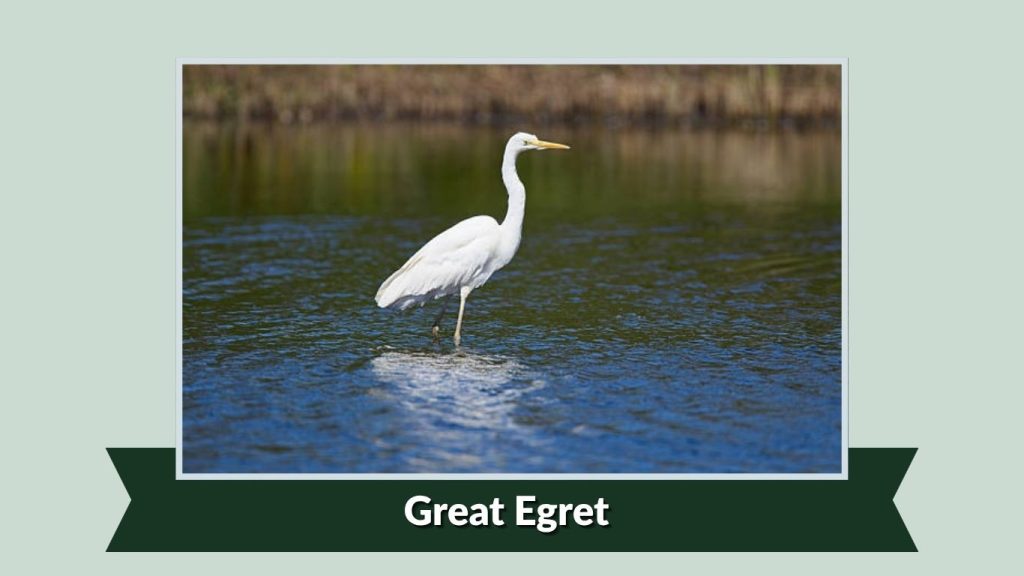
The Great Egret is a tall white wading bird with a long neck, long black legs, and a yellow bill. Although it is larger than many “small white birds,” people often include it when searching for white bird identification because it is common and easy to spot near water.
Identification
- Large white body
- Long S-shaped neck
- Yellow spear-like bill
- Long black legs
- Graceful, upright posture
Habitat and Range
Great Egrets live in marshes, lakes, ponds, rivers, swamps, mudflats, and coastal wetlands. They are widespread across much of North America and many other parts of the world. They often feed in shallow water and nest in colonies with other wading birds.
Behavior and Diet
Great Egrets hunt slowly and patiently. They stand still or walk carefully through shallow water before striking quickly with their sharp bill. Their diet includes fish, frogs, snakes, insects, crayfish, and small aquatic animals.
Similar Birds
Great Egrets may be confused with Snowy Egrets, Great Blue Herons in white form, or Cattle Egrets. The Great Egret is larger than Snowy and Cattle Egrets and has a yellow bill with black legs.
4. Little Egret
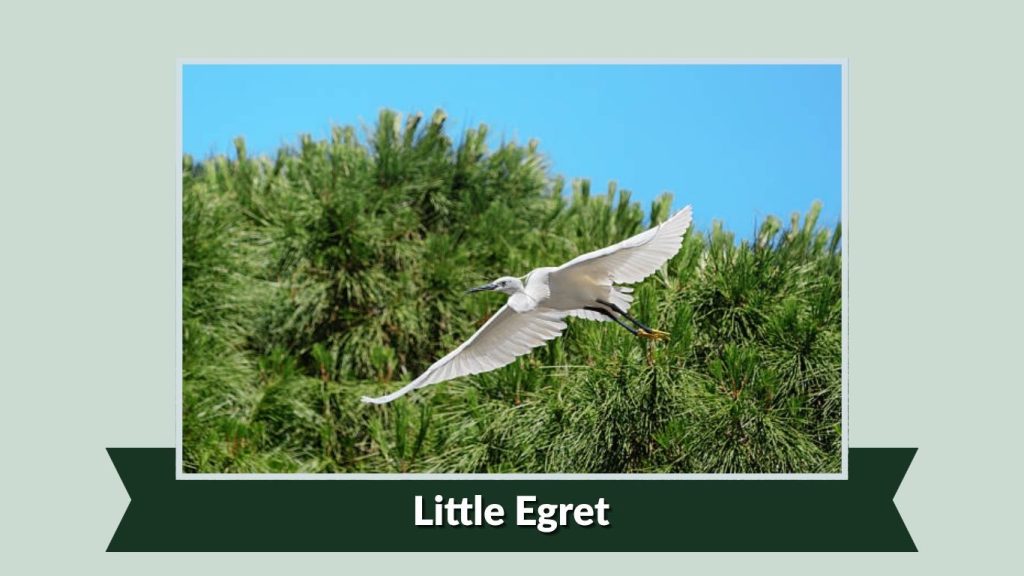
The Little Egret is a slim white wading bird with elegant feathers, a black bill, black legs, and yellow feet. It looks very similar to the Snowy Egret, but it is more common in Europe, Africa, Asia, and parts of Australia. It may appear rarely in North America.
Identification
- White body
- Slim black bill
- Black legs
- Yellow feet
- Delicate head and back plumes in breeding season
Habitat and Range
Little Egrets live in wetlands, estuaries, marshes, lagoons, rivers, mudflats, and coastal areas. They are widespread across Europe, Africa, and Asia. They usually prefer shallow water where they can walk and hunt for small aquatic prey.
Behavior and Diet
Little Egrets feed by walking through shallow water and catching small fish, insects, shrimp, worms, frogs, and other tiny animals. They may stir the water with their feet, chase prey quickly, or stand still before striking.
Similar Birds
Little Egrets are often confused with Snowy Egrets because both have black bills, black legs, and yellow feet. Range is one of the best clues. Snowy Egrets are common in the Americas, while Little Egrets are more common in Europe, Africa, and Asia.
5. White Ibis
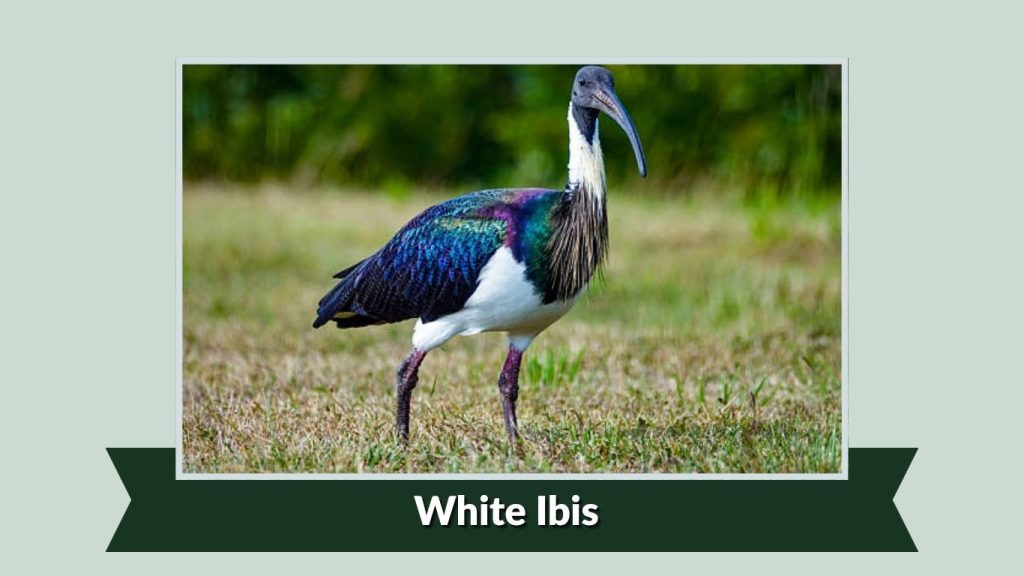
The White Ibis is a white wading bird with a long curved orange-red bill and pinkish-red legs. It is often seen walking in groups across lawns, marshes, mudflats, and shallow wetlands. Young birds are brown and white before becoming mostly white as adults.
Identification
- White body
- Long curved orange-red bill
- Pinkish-red legs
- Black wing tips visible in flight
- Juveniles are brown and white
Habitat and Range
White Ibises are common in the southeastern United States, the Gulf Coast, the Caribbean, and parts of Central and South America. They live in marshes, swamps, wetlands, beaches, lawns, ponds, and coastal areas.
Behavior and Diet
White Ibises feed by probing mud, sand, and shallow water with their curved bills. They eat insects, worms, crabs, crayfish, small fish, frogs, and other small animals. They often move in flocks and forage together.
Similar Birds
White Ibises may be confused with egrets, but their long curved bill makes them easy to separate. Egrets usually have straight bills, while ibises have strongly curved bills used for probing.
6. Snow Bunting
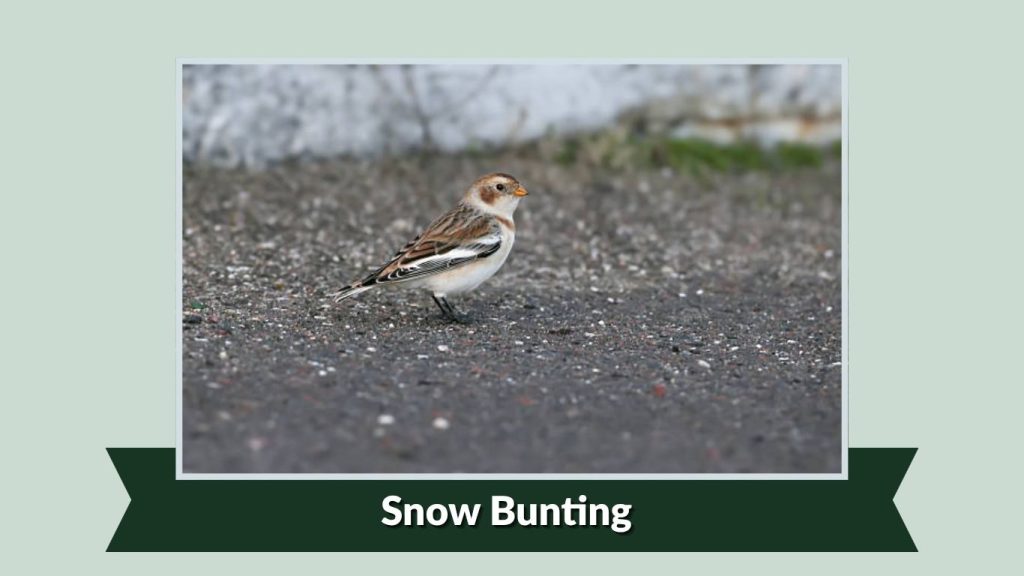
The Snow Bunting is a small white songbird often seen in open snowy fields, beaches, tundra, and winter grasslands. In winter, it looks mostly white with brownish markings, while breeding males become cleaner white with black on the wings and back. Its bright pale appearance helps it blend into snowy landscapes.
Identification
- Mostly white body
- Black-and-white wings
- Brownish markings in winter
- Small seed-eating bill
- Often seen in winter flocks
Habitat and Range
Snow Buntings breed in the Arctic tundra and move south during winter. In colder months, they may appear in open fields, beaches, roadsides, farms, dunes, and snowy grasslands. They prefer wide open areas with low vegetation.
Behavior and Diet
Snow Buntings feed mostly on seeds during winter. In the breeding season, they also eat insects and other small invertebrates. They often move in flocks, walking or hopping on the ground while searching for food.
Similar Birds
Snow Buntings may be confused with Horned Larks or pale sparrows in winter. Their mostly white body, black-and-white wings, and flocking behavior in open snowy places are useful identification clues.
7. White Wagtail
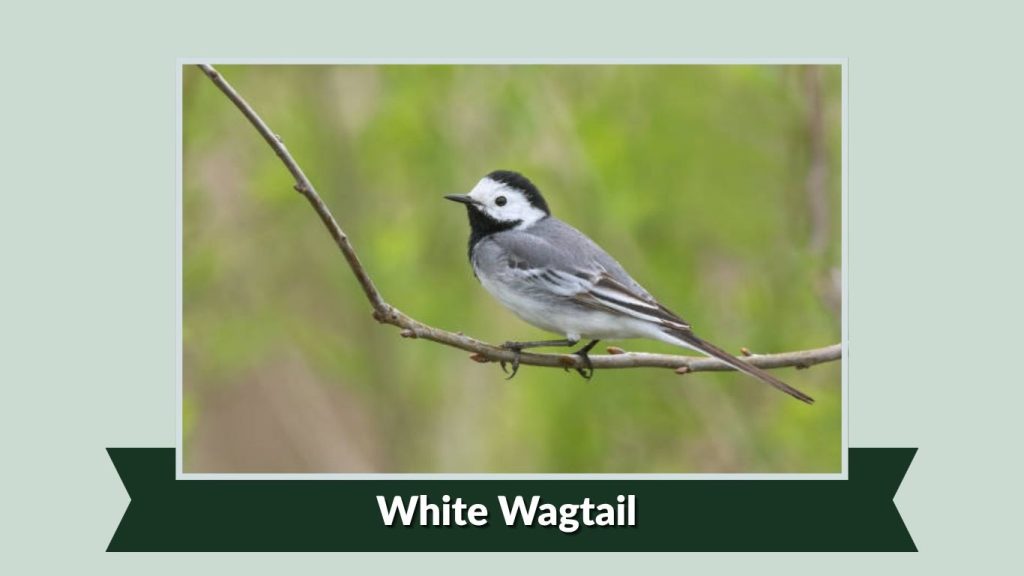
The White Wagtail is a small black, white, and gray bird known for its constantly wagging tail. It has a white face, dark cap or throat, gray back, and slender body. This bird is common across Europe and Asia and is often seen walking on the ground near water, farms, roads, and towns.
Identification
- White face and underparts
- Black cap or throat
- Gray back
- Long wagging tail
- Slim body and thin bill
Habitat and Range
White Wagtails live in Europe, Asia, parts of Africa, and occasionally appear as rare visitors in North America. They prefer open areas near water, including rivers, ponds, farms, lawns, roadsides, parks, and villages.
Behavior and Diet
White Wagtails are active ground-foragers. They walk quickly while wagging their tails and catching insects. Their diet includes flies, beetles, ants, small worms, and other tiny invertebrates. They may also feed near livestock or human activity.
Similar Birds
White Wagtails can be confused with other wagtail species or small black-and-white birds. The long tail, constant tail-wagging, white face, and habit of walking on open ground help identify them.
8. Ivory Gull
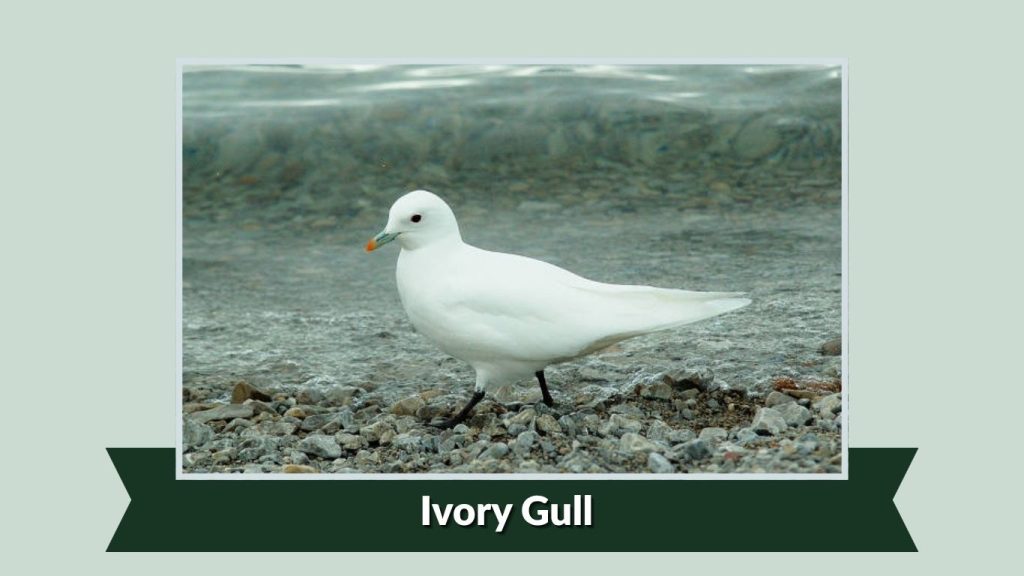
The Ivory Gull is a beautiful small white gull of the Arctic. Adults are almost completely white, giving them a clean, snowy appearance. They are strongly associated with sea ice and cold northern waters, making them very different from many common coastal gulls.
Identification
- All-white adult plumage
- Short dark legs
- Thick bluish-gray bill with yellow tip
- Rounded head
- Juveniles have dark speckling
Habitat and Range
Ivory Gulls live in high Arctic regions. They are found near sea ice, cold oceans, ice edges, and Arctic islands. They may rarely appear farther south during winter, but they are mainly birds of remote frozen habitats.
Behavior and Diet
Ivory Gulls feed on fish, marine invertebrates, carrion, and scraps from polar bear kills or marine mammals. They often forage near ice edges and follow opportunities for food in harsh Arctic environments.
Similar Birds
Ivory Gulls may be confused with other white gulls, but adults are much more completely white. Their Arctic range, pale body, dark legs, and thick bill help separate them from terns and more common gulls.
9. Ross’s Gull
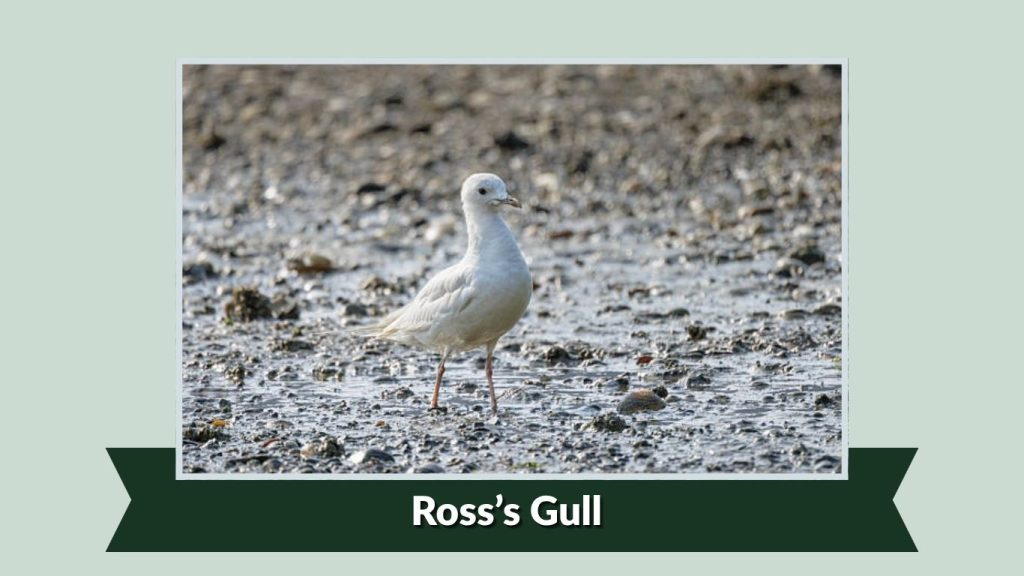
The Ross’s Gull is a small, delicate gull with pale plumage and a graceful shape. Adults often appear light gray and white, with a soft pinkish wash on the underparts during breeding season. It is rare and mostly connected to Arctic and sub-Arctic regions.
Identification
- Small, delicate gull shape
- Pale gray and white body
- Wedge-shaped tail
- Small black bill
- Pinkish underparts in breeding season
Habitat and Range
Ross’s Gulls breed in Arctic and sub-Arctic areas and are rarely seen farther south. They use tundra wetlands, coastal waters, lagoons, and sea ice edges. Birdwatchers often consider this species special because it is uncommon and difficult to find.
Behavior and Diet
Ross’s Gulls feed on small fish, insects, crustaceans, and other tiny aquatic animals. They may forage by picking food from the water surface or flying lightly over shallow areas. During breeding season, they nest in remote northern wetlands.
Similar Birds
Ross’s Gulls may be confused with Bonaparte’s Gulls or small terns. Their delicate shape, wedge-shaped tail, small bill, and pale pinkish tone in breeding adults are helpful identification features.
10. Forster’s Tern
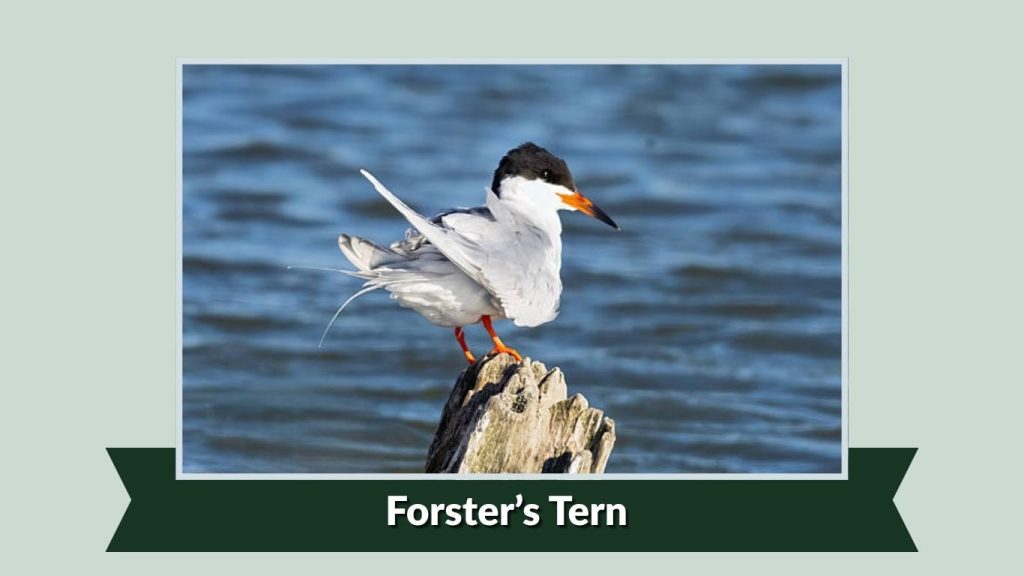
The Forster’s Tern is a slim white waterbird with long wings, a forked tail, and a sharp bill. In breeding plumage, it has a black cap, pale gray wings, and white underparts. In winter, the black cap fades, leaving a dark eye patch that helps identify it.
Identification
- White body with pale gray wings
- Long forked tail
- Sharp orange-red bill in breeding season
- Black cap in breeding plumage
- Dark eye patch in winter
Habitat and Range
Forster’s Terns live around marshes, lakes, bays, lagoons, estuaries, and coastal waters. They are found across much of North America depending on season. They often nest in freshwater marshes and feed over open water.
Behavior and Diet
Forster’s Terns fly gracefully over water while searching for small fish and aquatic insects. They may hover briefly before diving to catch prey. Their flight is light, quick, and elegant, making them easy to notice around wetlands.
Similar Birds
Forster’s Terns may be confused with Common Terns or Least Terns. The long forked tail, pale body, orange-red bill, and winter dark eye patch are useful clues for identification.
11. Least Tern
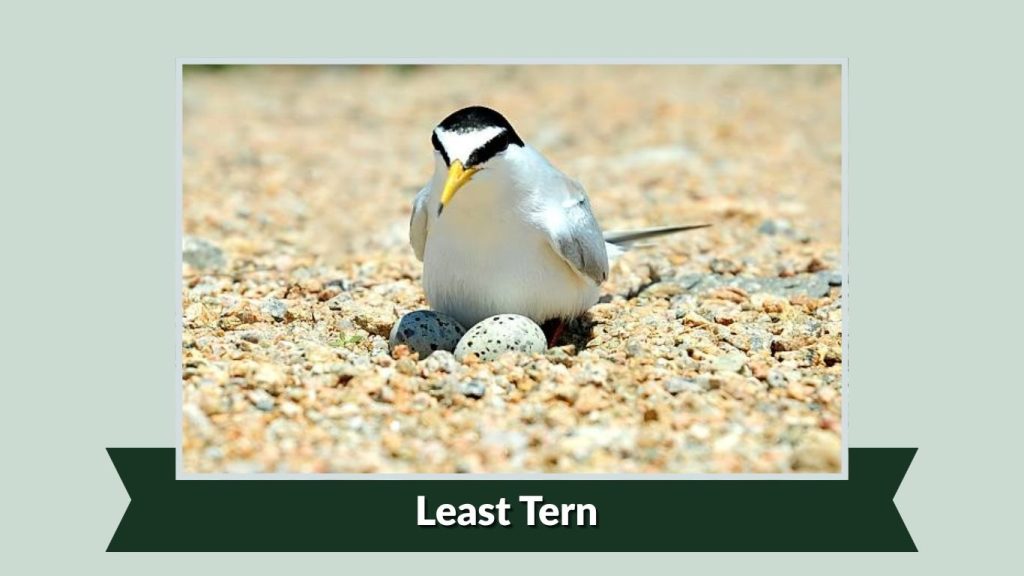
The Least Tern is a tiny white and gray seabird with narrow wings, a black cap, and a sharp yellow bill during breeding season. It is one of the smallest terns in North America and is often seen flying low over beaches, rivers, lakes, and shallow coastal waters.
Identification
- Small white body
- Pale gray wings
- Black cap on head
- Yellow bill with dark tip in breeding season
- Fast, fluttering flight
Habitat and Range
Least Terns live near sandy beaches, river sandbars, coastal flats, lakeshores, and shallow wetlands. They nest on open sand, gravel, or shell areas with little vegetation. In North America, they are common in coastal regions and along some inland river systems during breeding season.
Behavior and Diet
Least Terns feed mainly on small fish and aquatic insects. They fly over water, hover briefly, and dive quickly to catch prey. During nesting season, they can be very protective and may call loudly or dive toward intruders near colonies.
Similar Birds
Least Terns may be confused with Common Terns or Forster’s Terns. Their tiny size, yellow bill, black cap, and quick fluttering flight help separate them from larger tern species.
12. Common Tern
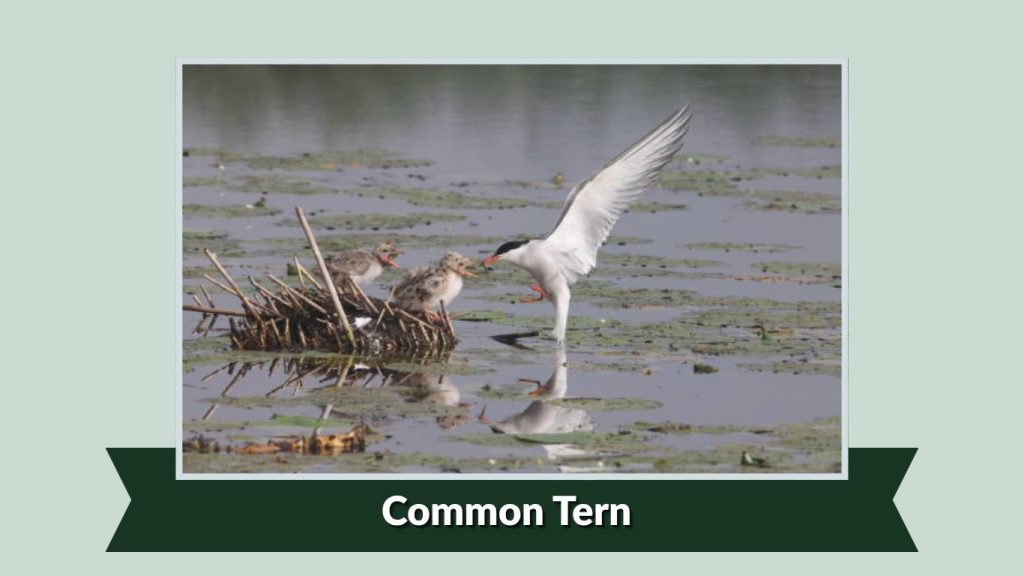
The Common Tern is a graceful white and gray bird with long wings, a forked tail, and a black cap. It is often seen flying over lakes, rivers, bays, and coastal waters. Its slim body and sharp bill give it a clean, elegant appearance.
Identification
- White underparts
- Pale gray wings and back
- Black cap in breeding season
- Orange-red bill with dark tip
- Long forked tail
Habitat and Range
Common Terns breed around lakes, islands, marshes, beaches, and coastal areas across parts of North America, Europe, and Asia. During migration and winter, they move along coasts, estuaries, and open waters.
Behavior and Diet
Common Terns feed mostly on small fish. They fly above water, hover briefly, and dive to catch prey. They may also eat insects and small aquatic animals. They often nest in colonies and can be noisy around breeding sites.
Similar Birds
Common Terns can be confused with Forster’s Terns, Arctic Terns, and Roseate Terns. The orange-red bill with a dark tip, black cap, and forked tail are useful identification clues.
13. White Tern
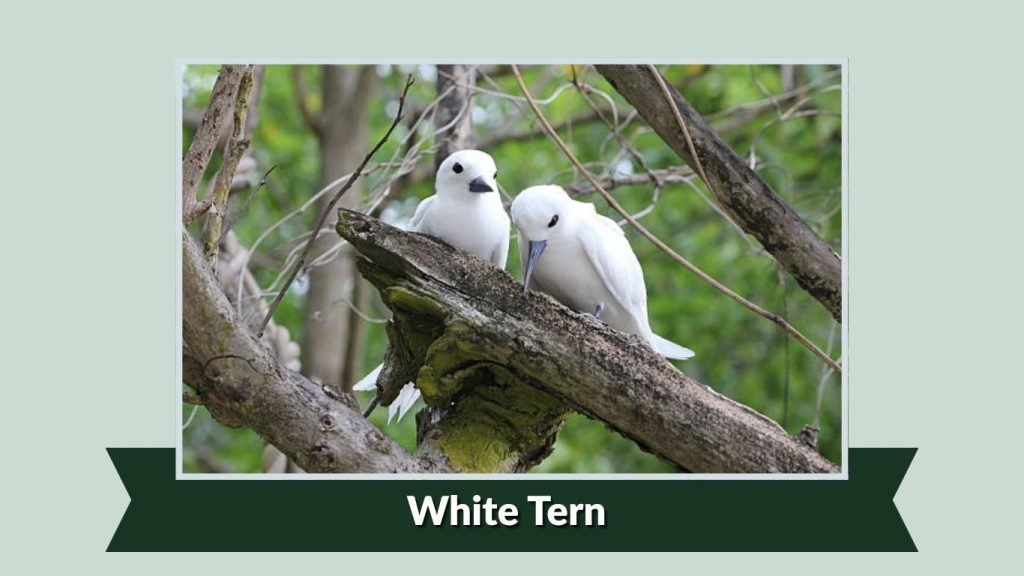
The White Tern is a delicate tropical seabird with an almost completely white body, dark eyes, and a slender black bill. It is sometimes called the “fairy tern” because of its soft, graceful appearance and floating flight style.
Identification
- Pure white body
- Black bill
- Dark eyes
- Pale bluish or grayish feet
- Smooth, graceful flight
Habitat and Range
White Terns live on tropical and subtropical islands across the Pacific, Indian, and South Atlantic oceans. They are often seen around coral islands, coastal forests, lagoons, and open ocean. In the United States, they are famously found in Hawaii.
Behavior and Diet
White Terns feed on small fish, squid, and tiny marine animals. They catch prey by dipping and picking food from the water surface. Unlike many birds, they often lay their single egg directly on a bare tree branch without building a traditional nest.
Similar Birds
White Terns may be confused with other small white seabirds, but adults are usually cleaner white than most terns. Their black bill, tropical island habitat, and graceful flight help with identification.
14. Black-legged Kittiwake
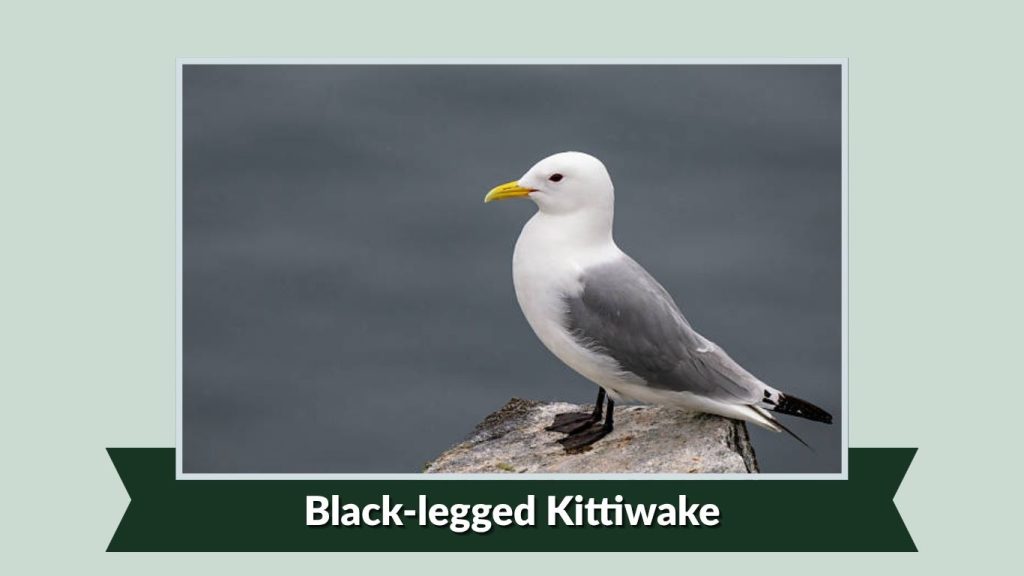
The Black-legged Kittiwake is a small gull with a white head and body, pale gray wings, and black legs. It is mostly a bird of cold oceans and northern coasts. Compared with many common gulls, it has a more delicate shape and spends much of its life at sea.
Identification
- White head and underparts
- Pale gray back and wings
- Black wing tips
- Black legs
- Short yellow bill
Habitat and Range
Black-legged Kittiwakes breed on sea cliffs in northern regions. They are found across the North Atlantic and North Pacific. Outside the breeding season, they spend much time over open ocean, often far from land.
Behavior and Diet
These birds feed on small fish, crustaceans, squid, and marine invertebrates. They often forage by dipping to the water surface or following fishing activity. During breeding season, they nest in noisy colonies on steep cliffs.
Similar Birds
Black-legged Kittiwakes may be confused with small gulls, but their black legs, delicate body, yellow bill, and oceanic habits help separate them from many common inland gulls.
15. Ring-billed Gull
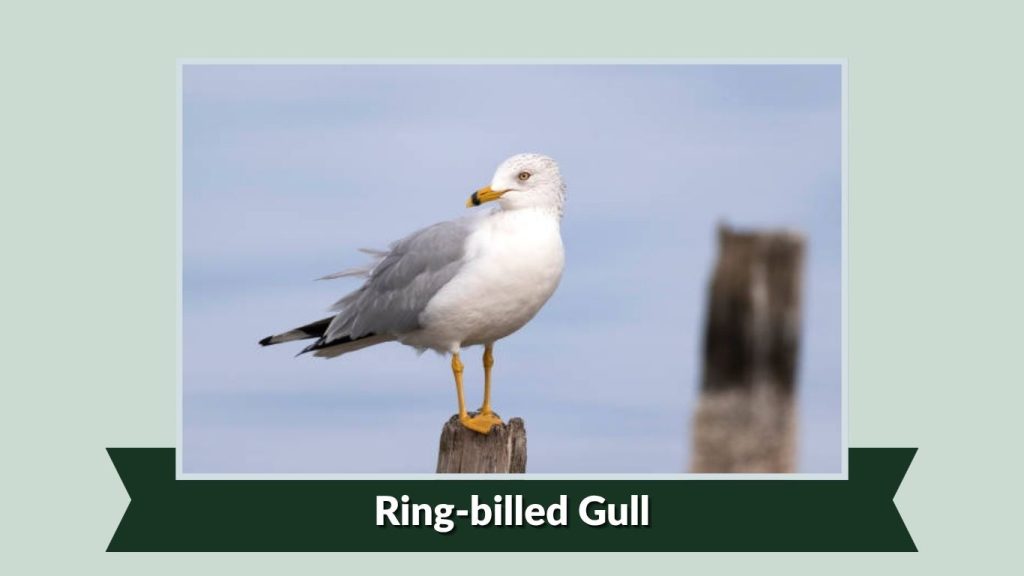
The Ring-billed Gull is a common white and gray gull often seen near lakes, rivers, beaches, parking lots, and fields. It has a white head and body, pale gray wings, yellow legs, and a yellow bill with a black ring near the tip.
Identification
- White head and body
- Pale gray wings and back
- Yellow bill with black ring
- Yellow legs
- Black wing tips with white spots
Habitat and Range
Ring-billed Gulls are widespread across North America. They use lakes, rivers, beaches, landfills, farms, parking lots, parks, and coastal areas. They are highly adaptable and often live close to people.
Behavior and Diet
Ring-billed Gulls eat fish, insects, worms, grains, small animals, and human food scraps. They forage on beaches, fields, parking lots, and water edges. They often gather in flocks and are comfortable around towns and cities.
Similar Birds
Ring-billed Gulls may be confused with Herring Gulls or California Gulls. The black ring on the yellow bill is the best field mark. They are also smaller and slimmer than many larger gulls.
16. Bonaparte’s Gull
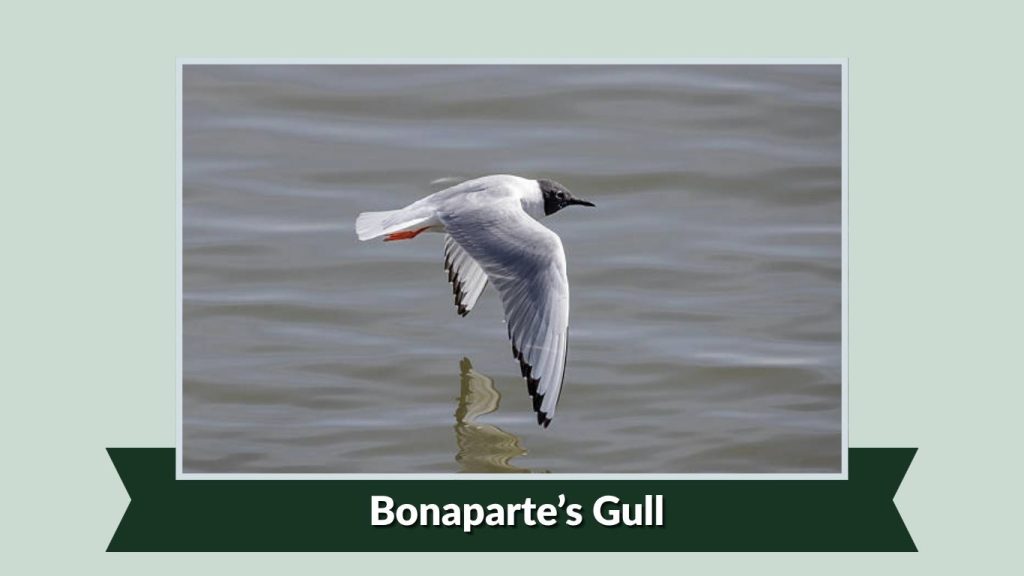
The Bonaparte’s Gull is a small, delicate gull with a white body, pale gray wings, and a thin black bill. In breeding season, adults have a black head, but in winter they usually show a white head with a dark ear spot. This bird is often seen around lakes, rivers, beaches, and coastal waters.
Identification
- Small white and gray gull
- Thin black bill
- Pale gray wings
- Dark ear spot in winter
- Black head during breeding season
Habitat and Range
Bonaparte’s Gulls breed in northern forests and wetlands, then migrate to lakes, rivers, reservoirs, bays, beaches, and coastal waters. In winter, they are often seen in flocks near open water, especially where small fish and insects are available.
Behavior and Diet
These gulls feed on small fish, insects, crustaceans, and aquatic invertebrates. They often pick food from the water surface while flying or swimming. Their flight is light and graceful compared with larger gulls.
Similar Birds
Bonaparte’s Gulls may be confused with Ross’s Gulls, Black-headed Gulls, or young terns. Their small size, thin black bill, pale wings, and dark winter ear spot are helpful identification clues.
17. White-crowned Sparrow
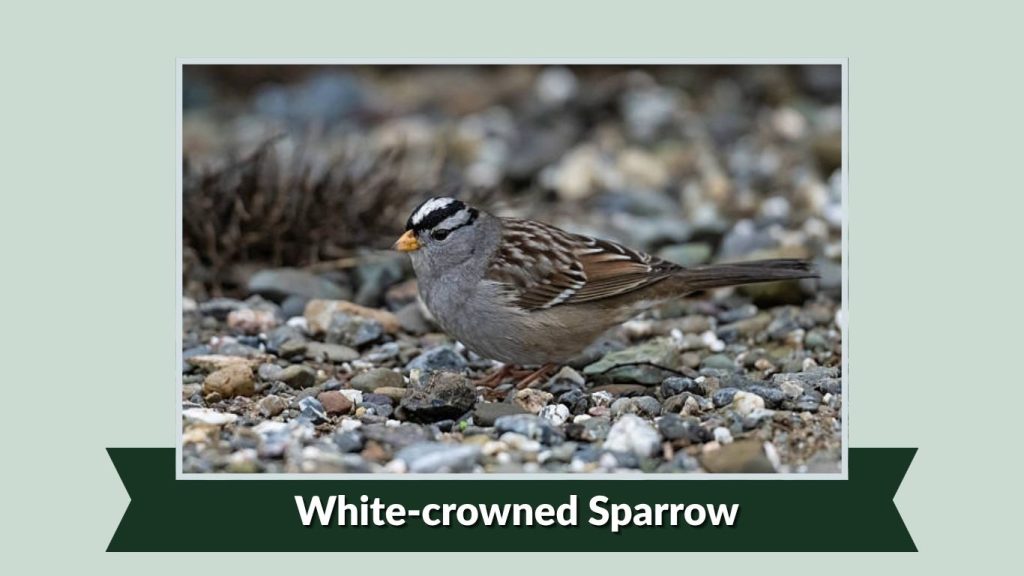
The White-crowned Sparrow is a small songbird with a gray body and bold black-and-white stripes on the head. It is not fully white, but it is often searched as a small white bird because of its bright white crown. It is common in brushy areas, fields, gardens, and backyards.
Identification
- Bold white crown stripes
- Black stripes on head
- Gray face and underparts
- Brown streaked back
- Pinkish or yellowish bill
Habitat and Range
White-crowned Sparrows live across much of North America depending on season. They prefer brushy fields, woodland edges, thickets, gardens, roadsides, parks, and shrubby yards. During migration and winter, they often visit feeders and weedy areas.
Behavior and Diet
These sparrows feed mostly on seeds, weeds, grains, berries, and insects. They often forage on the ground, scratching through leaves or hopping under shrubs. Their clear whistled song is another useful clue in areas where they breed.
Similar Birds
White-crowned Sparrows may be confused with White-throated Sparrows or young sparrows. The clean black-and-white head stripes and gray face are the best identification marks.
18. White-throated Sparrow
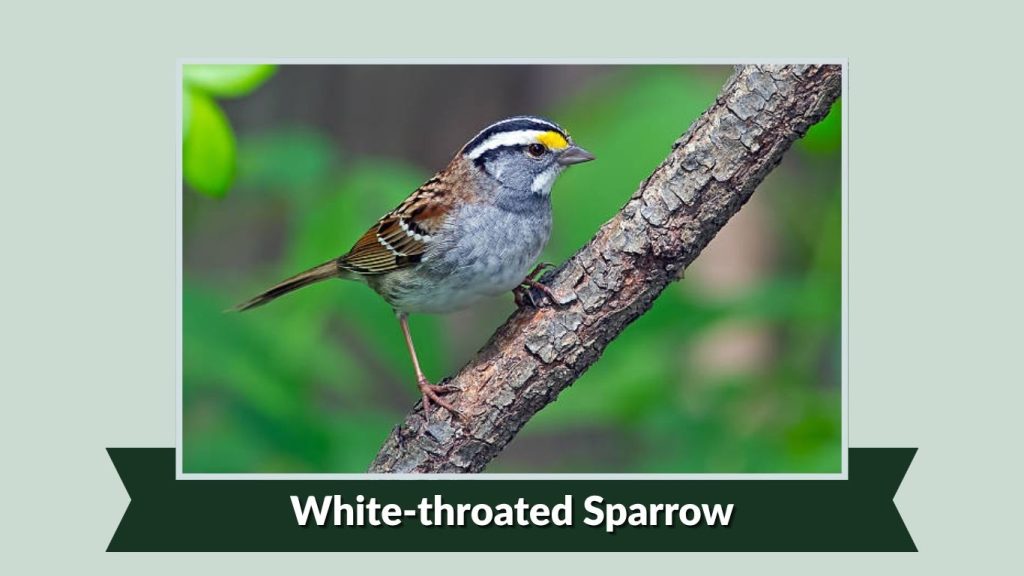
The White-throated Sparrow is a small brown, gray, black, and white songbird with a bright white throat patch. It is often seen in brushy yards, woodland edges, parks, and weedy areas, especially during migration and winter.
Identification
- White throat patch
- Striped black-and-white or tan head
- Yellow spot near the eye
- Gray chest
- Brown streaked back
Habitat and Range
White-throated Sparrows breed mostly in northern forests and move south for winter. They use woodland edges, thickets, brush piles, hedges, parks, gardens, and backyard areas. They often stay low in dense cover.
Behavior and Diet
These birds feed on seeds, berries, insects, and small plant material. They often scratch through leaf litter on the ground with both feet. In winter, they may visit feeders, especially where seed is scattered near shrubs.
Similar Birds
White-throated Sparrows may be confused with White-crowned Sparrows or other streaked sparrows. The bright white throat and yellow spot near the eye are the easiest clues.
19. Carolina Chickadee
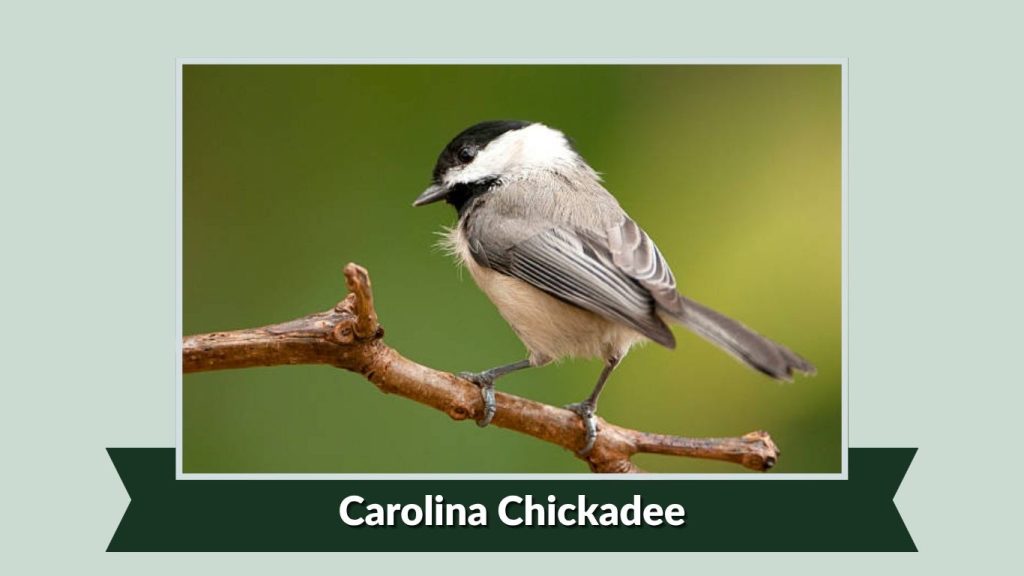
The Carolina Chickadee is a tiny gray, white, and black bird with a black cap, white cheeks, and a pale underside. It is common in the southeastern United States and is often seen in backyards, parks, gardens, and wooded neighborhoods.
Identification
- Black cap
- Black throat patch
- White cheeks
- Gray back and wings
- Pale white-gray underside
Habitat and Range
Carolina Chickadees live in the southeastern and south-central United States. They prefer deciduous forests, mixed woods, parks, suburbs, gardens, and yards with trees. They often visit feeders for sunflower seeds, peanuts, and suet.
Behavior and Diet
These birds are active, curious, and quick. They eat insects, spiders, seeds, berries, and suet. At feeders, they often grab one seed and fly to a nearby branch to open it. In winter, they may join mixed flocks with titmice, nuthatches, and woodpeckers.
Similar Birds
Carolina Chickadees are very similar to Black-capped Chickadees. Range is the best clue, with Carolina Chickadees more common in the Southeast. Their black cap, white cheeks, and tiny round body help identify them.
20. Tufted Titmouse
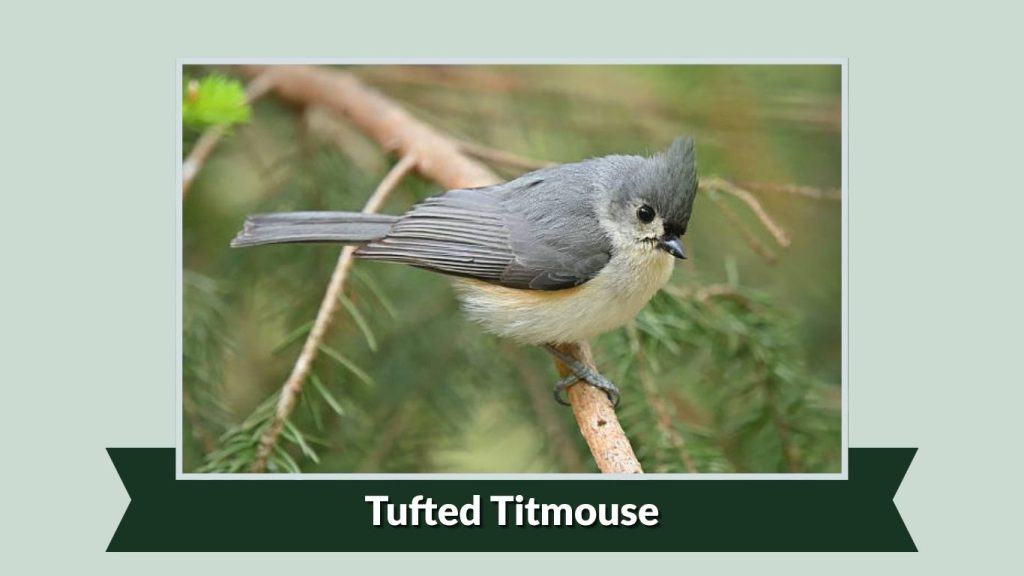
The Tufted Titmouse is a small gray and white bird with a pointed crest on its head. It is not fully white, but its pale underside and light face make it a useful match for people searching for small white backyard birds. It is common at feeders and in wooded areas.
Identification
- Gray upper body
- White or pale underside
- Pointed crest
- Black forehead mark
- Large dark eyes
Habitat and Range
Tufted Titmice are common in the eastern United States. They live in deciduous forests, mixed woodlands, parks, suburbs, orchards, and backyard areas. They are especially common where mature trees and feeders are available.
Behavior and Diet
Tufted Titmice eat insects, seeds, nuts, berries, and suet. They often visit feeders, take one seed, and fly to a branch to crack it open. They are active, bold birds and often travel with chickadees and nuthatches.
Similar Birds
Tufted Titmice may be confused with chickadees or small gray birds. The pointed crest, pale underside, gray body, and black forehead mark make them easy to recognize.