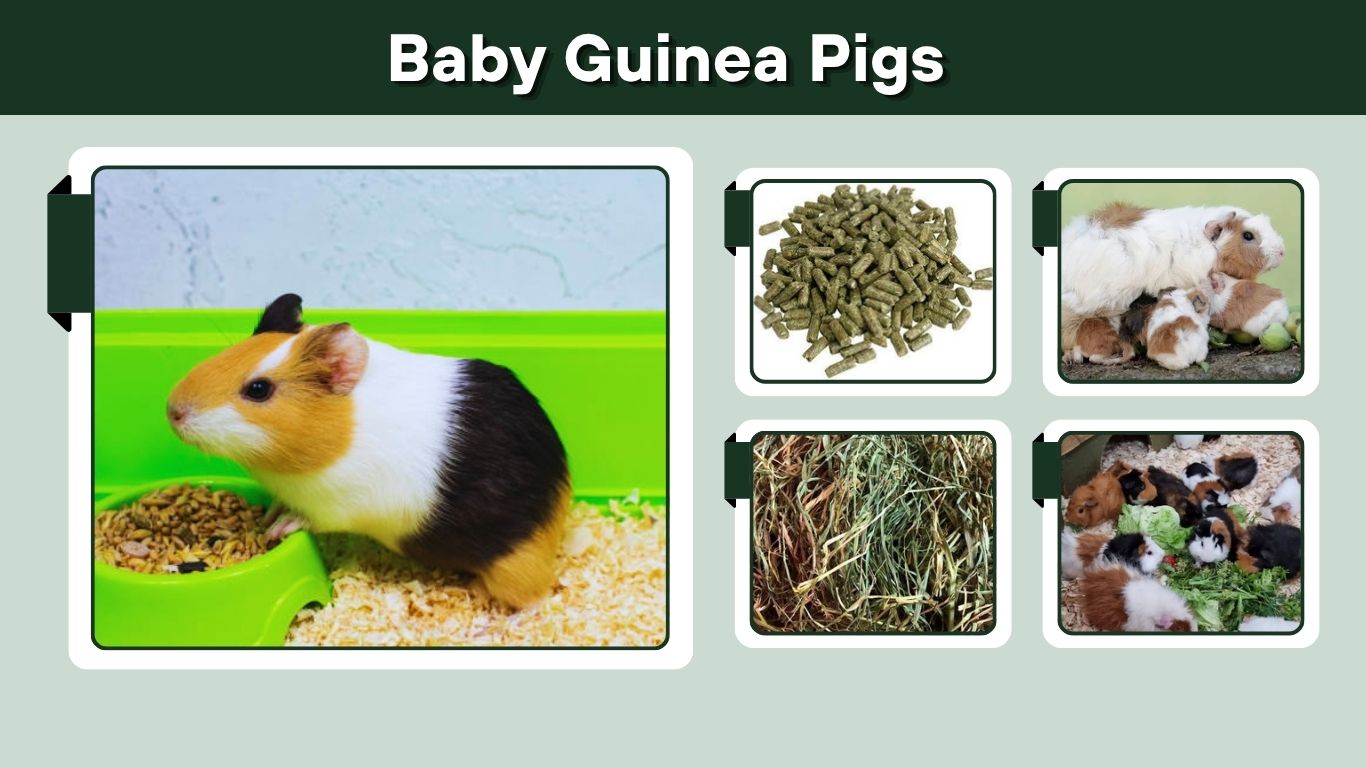
Baby guinea pigs are tiny, active, and surprisingly developed at birth. Unlike many baby animals, they are born with fur, open eyes, and the ability to move around soon after delivery. However, they still need their mother’s milk, a safe cage, proper food, and careful handling during the first few weeks. This guide explains what baby guinea pigs eat, when to separate them, how to handle them, and what warning signs owners should watch for.
What Are Baby Guinea Pigs Called?
Baby guinea pigs are called pups. A mother guinea pig is called a sow, and a male guinea pig is called a boar. Newborn pups are very different from newborn rabbits, kittens, or mice because they are born more mature and alert.
Newborn Appearance
- Born with fur
- Eyes open
- Ears functional
- Able to walk soon after birth
- May nibble solid food early
- Still need to nurse from their mother
Guinea pig pups are described as precocial, meaning they are highly developed at birth. Even though they may start exploring food quickly, they still depend on the mother for milk during the early weeks.
What Do Baby Guinea Pigs Eat?
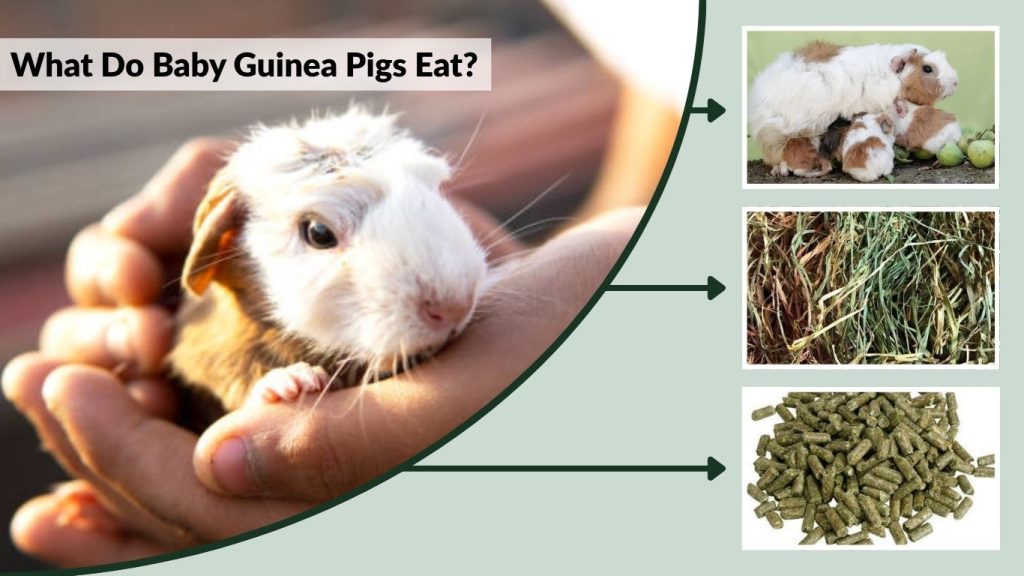
Baby guinea pigs mainly drink their mother’s milk at first, but they can also begin tasting hay, pellets, and vegetables very early. Their diet should support growth without causing digestive upset.
Best Foods for Baby Guinea Pigs
- Mother’s milk
- Unlimited grass hay
- Small amounts of alfalfa hay
- Guinea pig pellets made for young or growing guinea pigs
- Fresh water
- Small, safe portions of leafy vegetables
Young, pregnant, nursing, or underweight guinea pigs may benefit from alfalfa because it contains more calcium and nutrients, but adult guinea pigs should mainly eat grass hay such as timothy or orchard hay.
Can Baby Guinea Pigs Eat Timothy Hay?
Yes, baby guinea pigs can eat timothy hay. Grass hay should be available all the time because it helps digestion and keeps their constantly growing teeth worn down. Alfalfa can be added for growing pups, but it should not replace all grass hay unless a vet recommends it.
Do Baby Guinea Pigs Need Vitamin C?
Yes. Guinea pigs need vitamin C in their daily diet because they cannot make enough on their own. Fresh vegetables and good-quality guinea pig pellets can help provide it. Avoid sudden diet changes, because guinea pigs can be sensitive to new foods.
Can You Hold Baby Guinea Pigs After Birth?
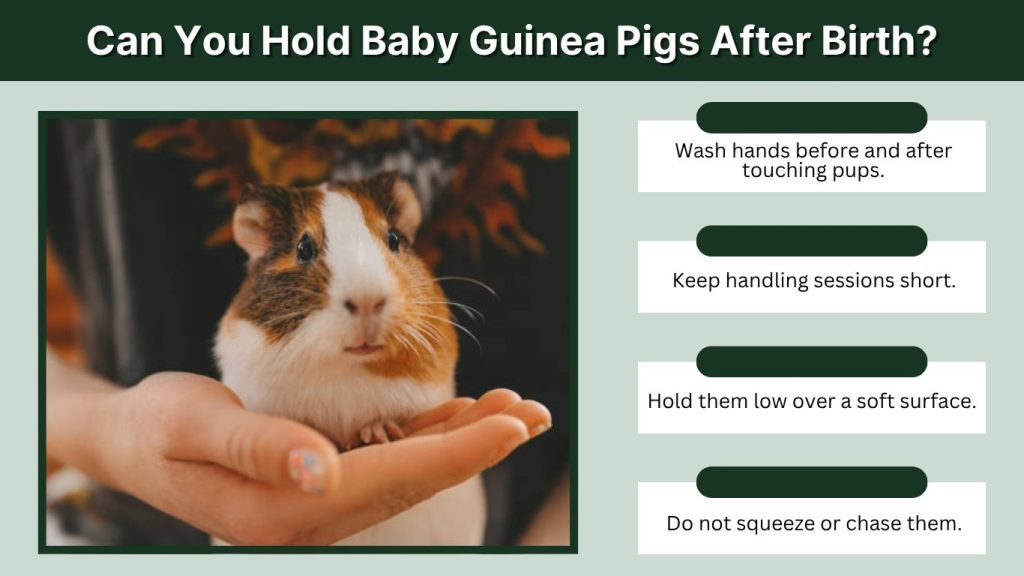
You can gently handle baby guinea pigs from birth, but handling should be calm, clean, and short. Wash your hands first, support the whole body, and avoid separating pups from the mother for too long.
Safe Handling Tips
- Wash hands before and after touching pups.
- Keep handling sessions short.
- Hold them low over a soft surface.
- Do not squeeze or chase them.
- Return them to the mother quickly.
- Handle regularly but gently for socialization.
The mother will not reject pups just because they smell like humans, but rough handling, stress, dirty hands, or too much disturbance can still cause problems.
Do Guinea Pigs Eat Their Babies?
This is a common question, but it is not normal everyday behavior. Cannibalism in guinea pigs is considered rare. When it happens, it is usually linked to stress, illness, a stillborn or weak pup, poor nutrition, inexperience, or an unsafe environment.
Why It May Happen
- Severe stress
- Malnutrition
- Overcrowding
- A sick or stillborn pup
- First-time mother confusion
- Lack of privacy
- Unsafe cage setup
If a mother seems aggressive, ignores the pups completely, or a pup is cold, weak, or not nursing, contact an exotic pet vet quickly.
When Can Baby Guinea Pigs Be Separated?
Baby guinea pigs are usually weaned around 3 to 4 weeks old. Male pups should be separated from the mother and sisters at weaning age because guinea pigs can become sexually mature very young. RVC guidance says male and female pups should be separated at weaning because they may reach sexual maturity from 3–4 weeks.
| Age | What Happens |
| Birth | Pups are furred, active, and may walk soon |
| First few days | Nursing and nibbling hay or food |
| 2 weeks | Growing fast, becoming more active |
| 3–4 weeks | Weaning age; separate males from females |
| 5–6 weeks | More independent and social |
How Many Babies Do Guinea Pigs Have?
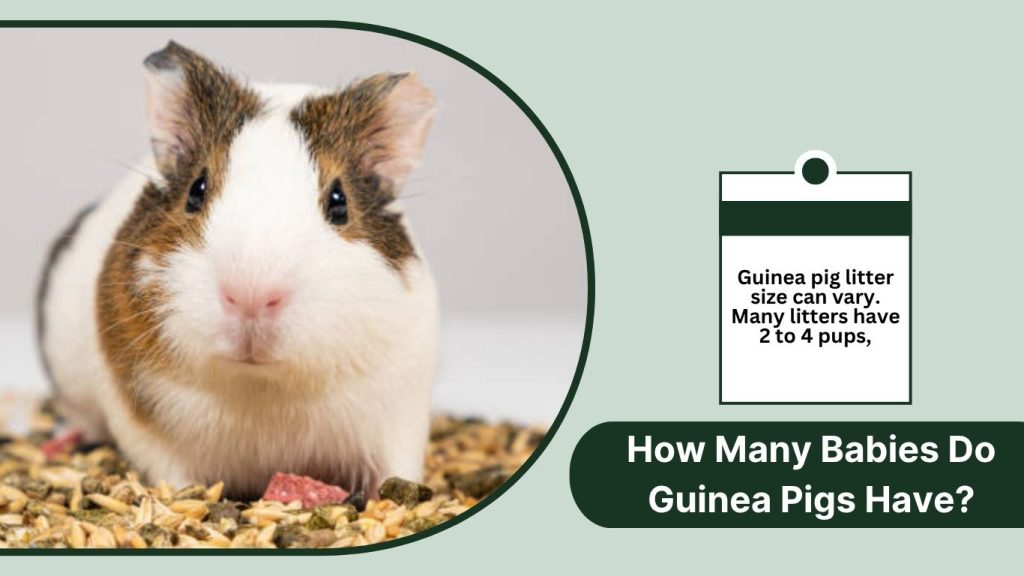
Guinea pig litter size can vary. Many litters have 2 to 4 pups, but smaller or larger litters can happen. A vet check is helpful if a guinea pig is pregnant because the vet can estimate the number of pups and check that birth has finished safely.
Common Baby Guinea Pig Problems
Baby guinea pigs should be active, warm, nursing, and gaining weight. A quiet pup is not always sick, but weakness or poor feeding should be taken seriously.
Warning Signs
- Not nursing
- Cold body
- Weak movement
- Weight loss
- Diarrhea
- Labored breathing
- Mother rejecting pups
- Bleeding or injury
- Bald patches with crusty skin
A balding spot on a baby guinea pig’s head can come from rubbing, barbering, mites, fungal infection, or injury. If the skin looks red, scabby, flaky, or itchy, a vet should check it.
Can You Put a Baby Guinea Pig With an Adult?
A baby guinea pig can live with its mother and female companions if the group is calm and safe. Be careful with adult males, because they may mate with the mother soon after birth or later mate with female pups. Male pups should not remain with female relatives once they reach weaning age.
FAQs
What do baby guinea pigs eat?
Baby guinea pigs drink their mother’s milk and also nibble hay, pellets, and safe vegetables. They should have constant access to hay and clean water. Young pups may benefit from alfalfa, but grass hay should still be part of the diet.
Can baby guinea pigs eat baby carrots?
Yes, baby guinea pigs can eat tiny pieces of carrot as an occasional treat. Carrots are higher in sugar than leafy greens, so they should not be a main food. Introduce carrots slowly and watch for soft stool.
When can baby guinea pigs be rehomed?
Baby guinea pigs are usually rehomed after they are weaned, healthy, eating well, and correctly sexed. Many owners wait until at least 4 to 6 weeks. Male pups must be separated from females around 3 to 4 weeks to prevent breeding.
Why do baby guinea pigs squeak so much?
Baby guinea pigs squeak to communicate. They may be hungry, looking for their mother, exploring, calling to siblings, or reacting to handling. Loud, repeated squeaking with weakness, coldness, or refusal to nurse can mean something is wrong.
Is baby shampoo safe for guinea pigs?
It is better not to use baby shampoo unless a vet approves it. Guinea pigs have sensitive skin, and unnecessary bathing can cause stress, dryness, or chilling. Use a guinea pig-safe product only when bathing is truly needed.