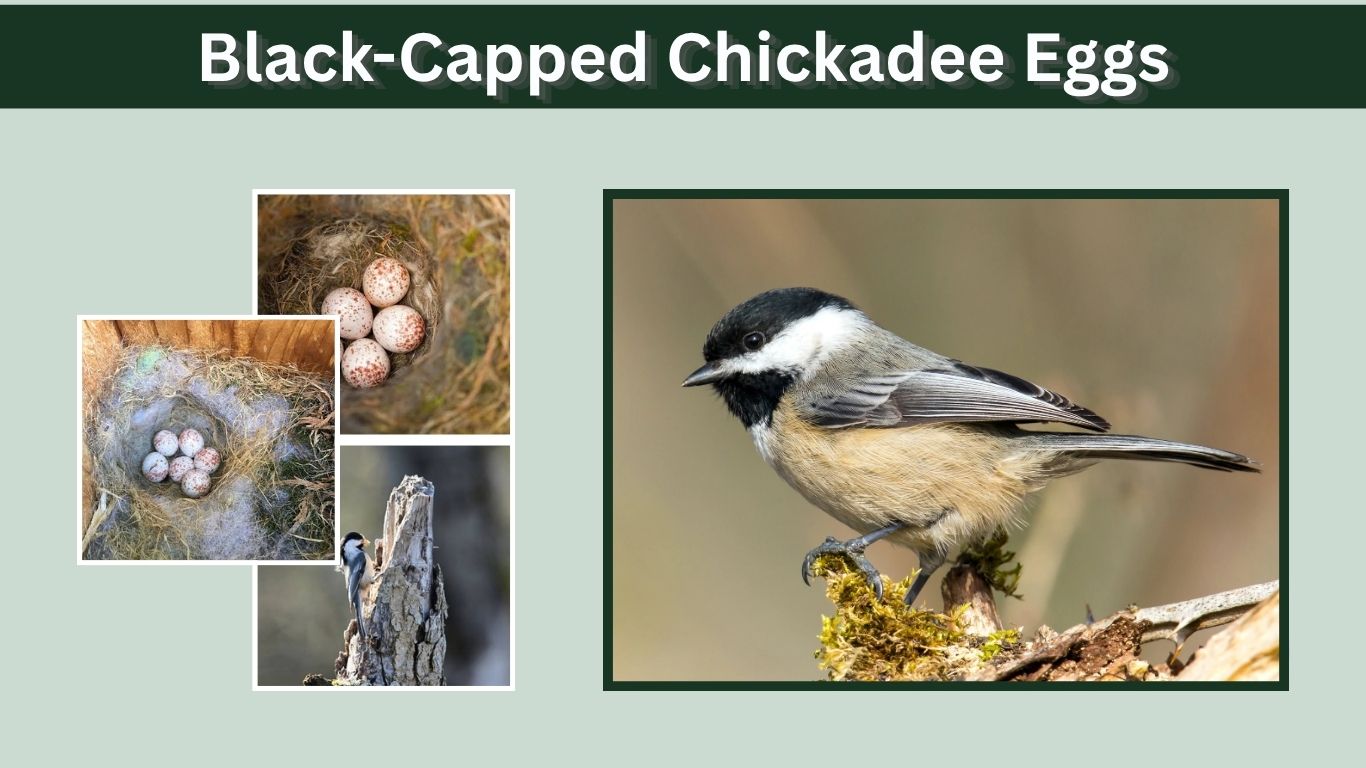
Black-capped Chickadee eggs are tiny, white eggs decorated with fine reddish-brown dots or spots. The female usually lays them inside a soft, well-hidden nest built in a tree cavity or nest box. A typical clutch contains six to eight eggs, although clutch size can vary. Once incubation begins, the eggs normally hatch in less than two weeks. Their color, size, nesting location, and markings can help distinguish them from the eggs of other backyard birds.
Black-Capped Chickadee Egg Facts
Black-capped Chickadees are cavity-nesting birds that generally raise one brood during the breeding season. Egg laying usually occurs during spring or early summer, although exact dates vary with location, temperature, and seasonal conditions.
| Feature | Black-capped Chickadee egg |
| Base color | White |
| Markings | Fine reddish-brown dots or spots |
| Length | About 0.6 inch or 1.5 cm |
| Width | About 0.5 inch or 1.2 cm |
| Typical clutch | Usually 6–8 eggs |
| Full recorded range | 1–13 eggs |
| Incubation | 12–13 days |
| Nestling period | 12–16 days |
| Number of broods | Usually one |
These measurements and nesting periods are averages. Individual eggs and breeding attempts can differ slightly.
What Do Black-Capped Chickadee Eggs Look Like?
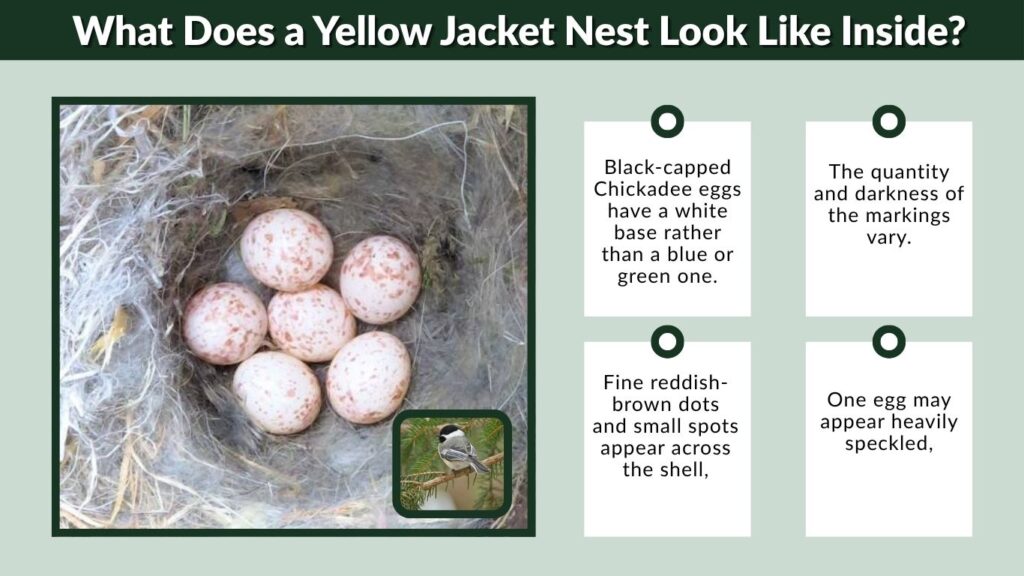
Their small size and spotted white shells are their most noticeable characteristics. However, identifying eggs from appearance alone is difficult because Carolina, Boreal, Mountain, and other chickadees produce similar-looking eggs.
Egg Color
Black-capped Chickadee eggs have a white base rather than a blue or green one. Fine reddish-brown dots and small spots appear across the shell, sometimes becoming more concentrated around the wider end.
The quantity and darkness of the markings vary. One egg may appear heavily speckled, while another in the same clutch may have only a few noticeable spots.
Are Black-Capped Chickadee Eggs Blue?
No. A normal Black-capped Chickadee egg is white with reddish-brown markings. Lighting, shadows, camera settings, or reflected colors inside a nest box can occasionally give photographs a pale bluish appearance.
Blue, blue-green, or plain white eggs found in an open nest are more likely to belong to another bird species. The nest’s location and construction should therefore be examined along with the eggs.
Why Are the Eggs Brown and White?
The white area is the shell’s primary background color, while the brown areas are pigment markings deposited as the egg forms. These spots create a broken pattern rather than a solid brown shell.
Because the eggs are laid deep inside a sheltered cavity, they do not require the strong camouflage associated with many exposed ground nests. The spots nevertheless make the eggs less visually uniform against the soft nest lining.
Black-Capped Chickadee Egg Size
A Black-capped Chickadee egg measures approximately 0.6 inch long and 0.5 inch wide, or about 1.5 by 1.2 centimetres. It is oval, delicate, and considerably smaller than a typical chicken egg.
How Big Are the Eggs?
The egg is roughly comparable in length to a small fingernail. Because it is so small and fragile, handling it can easily damage the shell or disturb the developing embryo.
Reliable bird guides commonly publish egg dimensions but do not always provide an average egg weight. A newly hatched Black-capped Chickadee weighs approximately one gram, but this refers to the chick after hatching rather than a standard measurement for the intact egg.
How Many Eggs Does a Black-Capped Chickadee Lay?
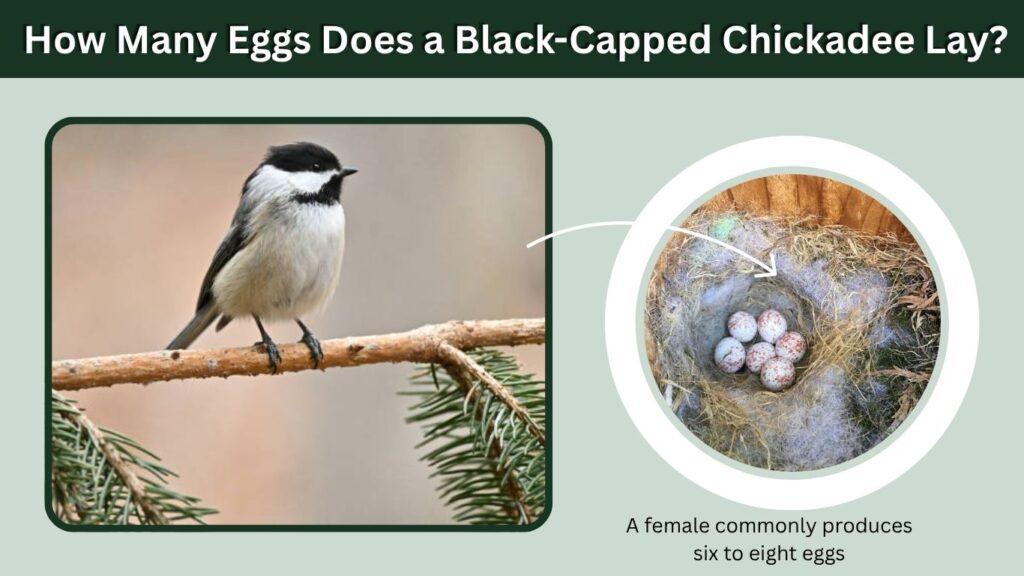
A female commonly produces six to eight eggs, usually laying approximately one egg each day until the clutch is complete. Cornell records an overall clutch range of one to thirteen, but very small or unusually large clutches are less typical.
Several factors may influence the number of eggs:
- The female’s age and physical condition
- Food availability during the breeding season
- Local weather and temperature
- The quality and safety of the nesting cavity
- The timing of the breeding attempt
Incubation normally begins when the clutch is complete or shortly before the final egg is laid. This delayed start helps the chicks hatch close together rather than over many separate days.
Black-Capped Chickadee Nest and Eggs
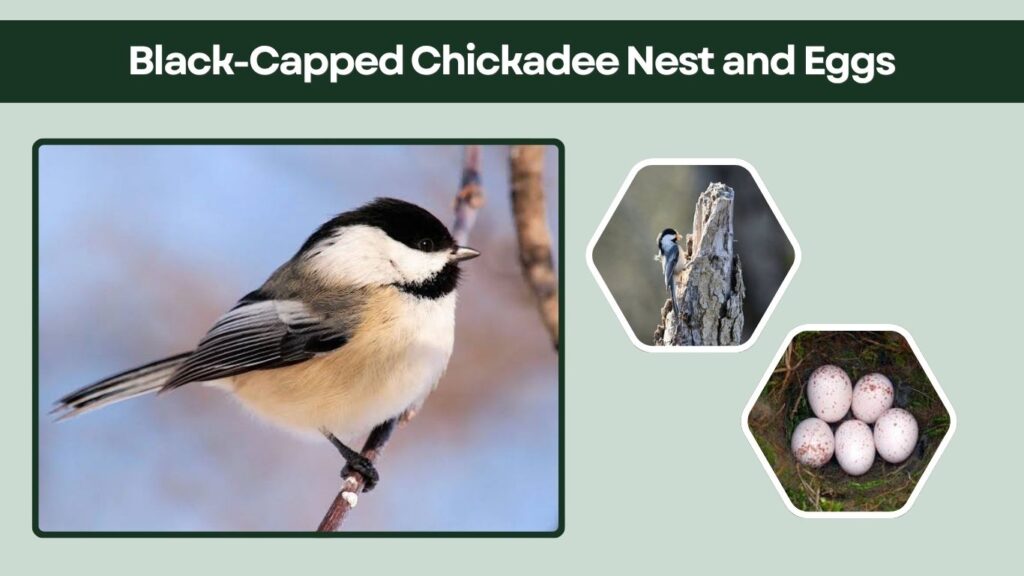
Black-capped Chickadees place their eggs inside cavities, not in exposed branch nests. They may excavate soft, decaying wood, enlarge a natural opening, occupy an old woodpecker hole, or use a suitable birdhouse. Nest sites are commonly several feet above the ground.
What Does the Nest Look Like?
The nest has two main layers. A lower foundation is built from comparatively coarse natural material, while the egg cup contains a much softer lining.
Common materials include:
- Moss
- Bark fibers
- Plant fibers
- Animal fur
- Feathers
- Plant down
The finished interior resembles a small, insulated cup. The soft lining cushions the eggs and helps the female maintain an appropriate incubation temperature.
When leaving during the laying stage, the female may pull animal fur over the eggs. This covering can conceal them and may help reduce heat loss. Therefore, a nest that appears empty may contain eggs beneath the lining.
Who Builds and Incubates the Nest?
Both members of a pair may help excavate or enlarge the cavity. However, the female performs the nest building and incubates the eggs. The male supports her by bringing food while she spends extended periods inside the cavity.
Black-Capped Chickadee Egg Hatching Time
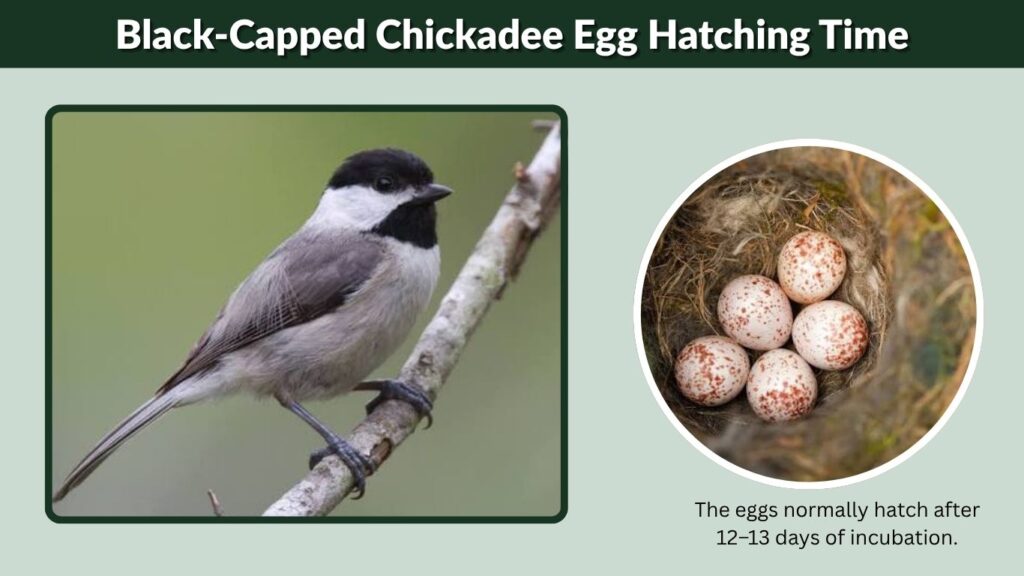
The eggs normally hatch after 12–13 days of incubation. Counting should begin when the female starts sitting consistently, not necessarily when the first egg appears.
What Happens During Hatching?
The chicks generally emerge close together because incubation begins near the completion of the clutch. Hatching across an entire chickadee clutch may occur over approximately 12–30 hours.
Newly hatched chicks are:
- Tiny and mostly naked
- Unable to regulate their temperature effectively
- Born with closed eyes
- Covered by only a few patches of gray down
- Completely dependent on their parents
The female broods the young closely during their first days. Both parents supply insects and other food as the chicks grow.
When Do the Young Leave the Nest?
Black-capped Chickadee nestlings usually remain inside the cavity for another 12–16 days after hatching. They grow rapidly during this period, developing feathers, opening their eyes, and becoming increasingly active.
After fledging, the young may remain near their parents and continue receiving food while they improve their flight and foraging skills.
Black-Capped Chickadee Abandoned Nest With Eggs
Seeing unattended eggs does not automatically mean the nest has been abandoned. The female must occasionally leave to feed, remove waste, or avoid drawing attention to the cavity. She may also remain away while a person stands close to the nest.
Observe from a considerable distance rather than repeatedly opening the box. Avoid touching the eggs, changing the nest material, or moving the nest box. Cornell recommends minimizing activity around an active nest until the young have fledged because repeated disturbance may prevent the adults from returning normally.
Possible warning signs include:
- No adult visits for a prolonged period
- Eggs remaining cold during consistently mild weather
- A damaged or raided nest
- Dead adults found nearby
- No change well beyond the expected incubation period
Do not remove eggs based only on a few hours of inactivity. Contact a licensed wildlife rehabilitator or local bird authority when the nest is damaged or the adults are known to be dead.
FAQs
What color are Black-capped Chickadee eggs?
Black-capped Chickadee eggs are white with fine reddish-brown dots or small spots. The markings may be scattered across the shell or concentrated near the wider end. They are not normally blue, although shadows and reflected light can change their appearance in photographs.
How many eggs does a Black-capped Chickadee lay?
A normal clutch commonly contains six to eight eggs. However, recorded clutches range from one to thirteen eggs. The female generally deposits one egg per day and begins consistent incubation near the end of the laying period.
How long do Black-capped Chickadee eggs take to hatch?
The eggs usually hatch after 12–13 days of incubation. This period begins when the female starts sitting consistently, which may be after most or all eggs have been laid. The chicks within one clutch generally hatch relatively close together.
How can I identify a Black-capped Chickadee nest?
Look for a small cavity in a decaying tree, stump, old woodpecker hole, or nest box. Inside, the nest usually has a mossy foundation and a soft cup lined with animal fur. White, reddish-speckled eggs provide another clue.
Should I touch a chickadee egg that has fallen out?
Avoid handling or relocating the egg unless a licensed wildlife professional advises you to do so. First, keep people and pets away and assess the situation from a distance. Local wildlife rehabilitators can provide instructions based on the egg’s condition and nesting location.