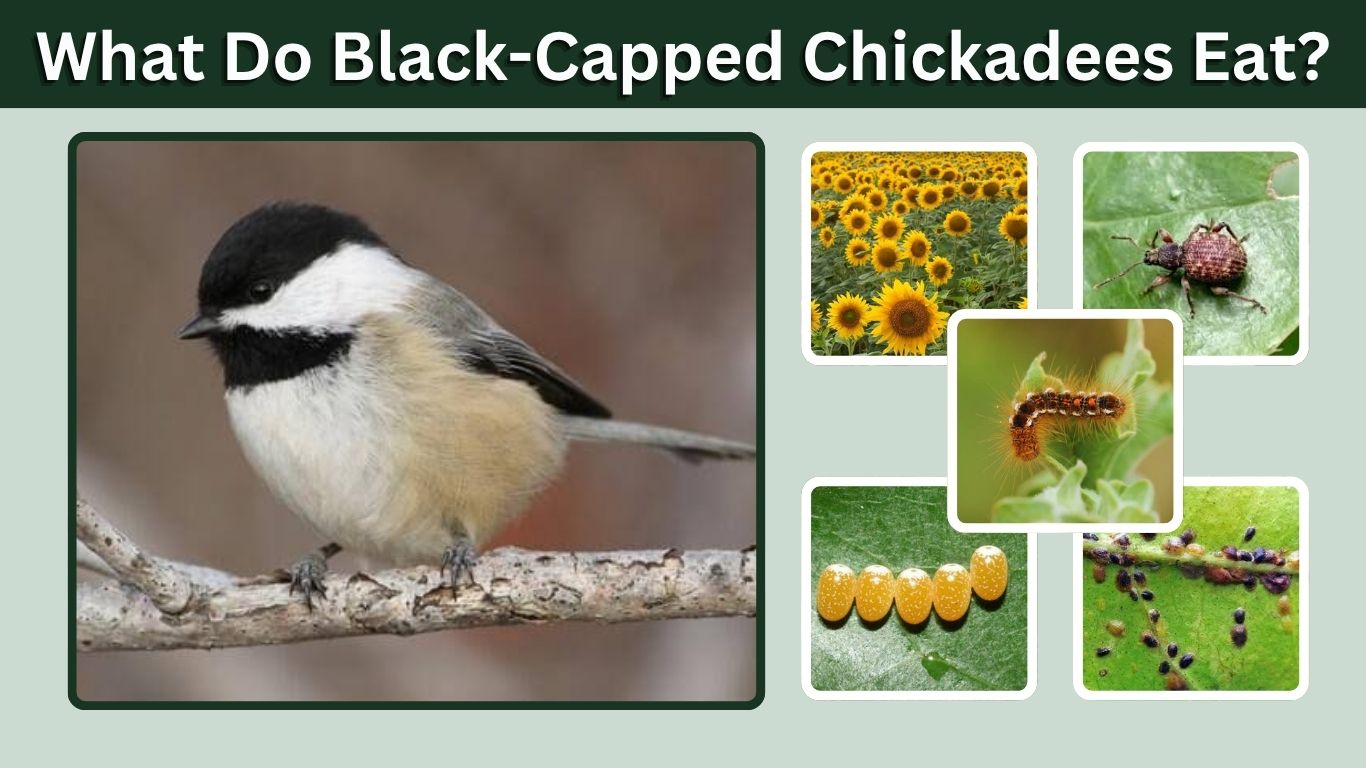
Black-capped Chickadees eat insects, spiders, seeds, nuts, berries, mealworms, and other energy-rich foods. Their diet changes throughout the year. During spring, summer, and fall, they rely heavily on insects and other invertebrates. In winter, seeds, berries, and feeder foods become increasingly important. These active little birds search leaves, bark, and branches for prey, and they regularly store extra food for later. Here are ten common foods Black-capped Chickadees eat in the wild and at backyard feeders.
Black-Capped Chickadee Diet at a Glance
Black-capped Chickadees are omnivores, meaning they eat both animal and plant matter. During the warmer months, insects, spiders, and similar foods can account for approximately 80–90% of their diet. In winter, their diet becomes more balanced, with roughly half coming from animal foods and half from seeds, berries, and other plant material.
| Season | Main foods |
| Spring | Caterpillars, insect eggs, spiders and seeds |
| Summer | Insects, larvae, spiders and berries |
| Fall | Insects, wild fruit, berries and seeds |
| Winter | Seeds, berries, dormant insects, suet and nuts |
10 Foods Black-Capped Chickadees Eat
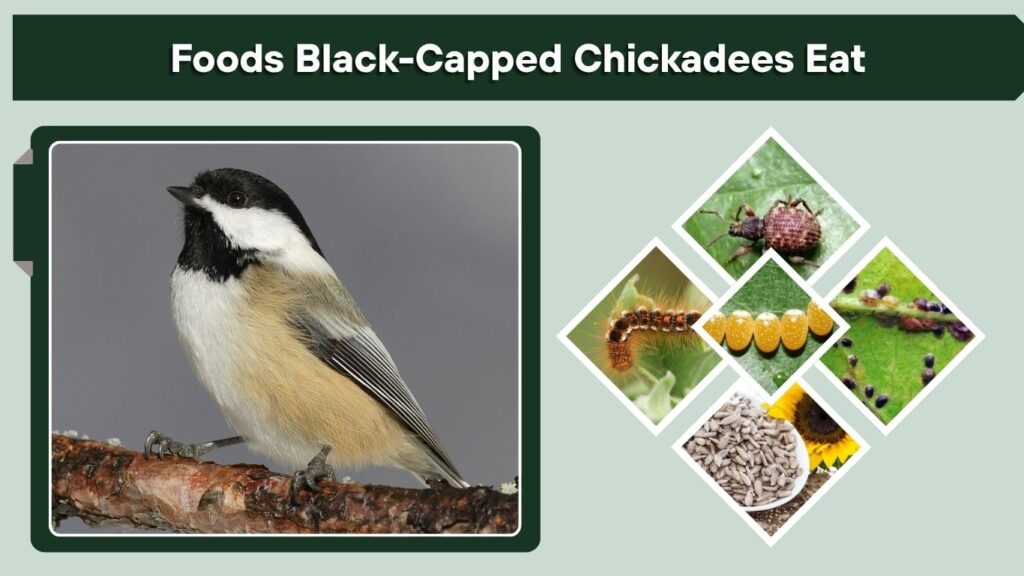
Black-capped Chickadees eat a varied diet that includes insects, spiders, seeds, nuts, berries, and other high-energy foods. Their food choices change with the seasons. In spring and summer, they depend heavily on protein-rich insects, while seeds, berries, peanuts, and suet become more important during fall and winter. Below are ten common foods these small birds regularly eat.
1. Caterpillars
Caterpillars are among the most important foods in a Black-capped Chickadee’s natural diet. The birds inspect leaves, twigs, bark, and small branches, sometimes hanging upside down to find hidden caterpillars.
Caterpillars are especially valuable during the breeding season because they provide the protein and nutrients needed by growing chicks. Parent chickadees make repeated trips to the nest carrying small caterpillars for their young. During this period, animal matter—primarily insects—forms most of the adults’ diet as well.
2. Moths and Insect Eggs
Black-capped Chickadees eat adult moths as well as moth eggs, larvae, and pupae. These foods may be hidden in bark crevices, curled leaves, flower heads, or underneath branches.
Insect eggs are particularly useful during cold weather when active insects are difficult to find. Chickadees carefully inspect bark and vegetation for these tiny food sources. They may remove the wings from larger moths before eating the body.
3. Beetles and Weevils
Beetles are another regular part of the Black-capped Chickadee’s diet. Chickadees eat small adult beetles as well as beetle larvae found inside decaying wood, beneath loose bark, or among leaves.
Weevils and their larvae may also be eaten when available. By consuming these insects, chickadees can help control some plant-feeding pests naturally. Their small bills allow them to pick prey from narrow spaces that larger birds cannot easily reach.
4. Aphids and Scale Insects
Aphids and scale insects are small enough for chickadees to collect quickly from plants. Aphids commonly gather on young stems and underneath leaves, while scale insects attach themselves to bark, twigs, or foliage.
Black-capped Chickadees move rapidly through trees and shrubs, searching nearby surfaces for these tiny prey animals. Although one insect provides little food, a bird can consume many during a single feeding session.
5. Spiders
Spiders form an important part of the chickadee’s animal-based diet. The birds find them among leaves, branches, bark, webs, and other sheltered places.
Adult chickadees eat spiders themselves and also carry them to their nestlings. Spiders provide protein and other nutrients required for growth. They remain available during portions of the year when some flying insects are scarce.
6. Sunflower Seeds
Sunflower seeds are one of the best foods for attracting Black-capped Chickadees to a backyard. Black-oil sunflower seeds are particularly suitable because their relatively thin shells are easier for small birds to open.
A chickadee will often take one seed from a feeder and fly to a nearby branch. It holds the seed between its feet and repeatedly strikes the shell with its bill to reach the kernel. Hulled sunflower chips are also convenient because the birds do not have to remove a shell.
7. Peanuts
Black-capped Chickadees readily eat unsalted peanuts offered at bird feeders. Peanut pieces are easier for them to carry and consume than whole peanuts in hard shells.
Peanuts contain concentrated energy, making them useful during winter when birds burn more calories to maintain body temperature. Only plain, fresh peanuts intended for birds should be provided. Salted, seasoned, sweetened, or moldy peanuts are inappropriate. Cornell lists peanuts among the common feeder foods taken by this species.
8. Mealworms
Mealworms resemble the insect larvae that chickadees naturally find in their habitat. Both live and dried mealworms can attract them, although live mealworms may be especially noticeable to birds because they move.
Mealworms provide a protein-rich supplemental food. They may be offered during the breeding season, when adults are collecting insects for their chicks, or during winter when natural insect activity is lower. They should supplement a varied diet rather than become the birds’ only available food.
9. Berries and Wild Fruit
Black-capped Chickadees eat berries and other small wild fruits, particularly during fall and winter. These plant foods become more important as insect numbers decline.
The birds may visit native fruiting trees and shrubs while searching for berries, seeds, and insects hiding on the same plants. Leaving native berry-producing vegetation in a yard can create a more dependable natural food supply than relying only on feeders.
10. Suet
Suet is a high-energy fat commonly offered in a cage-style feeder. Black-capped Chickadees frequently visit suet feeders, especially during cold weather.
Plain suet and cakes containing seeds, nuts, or insects can all attract chickadees. Suet should be kept fresh and placed in shade when temperatures are warm because heat can cause it to soften or spoil. The birds may also consume small amounts of natural animal fat when they encounter it in the wild.
What Do Black-Capped Chickadees Eat in Winter?
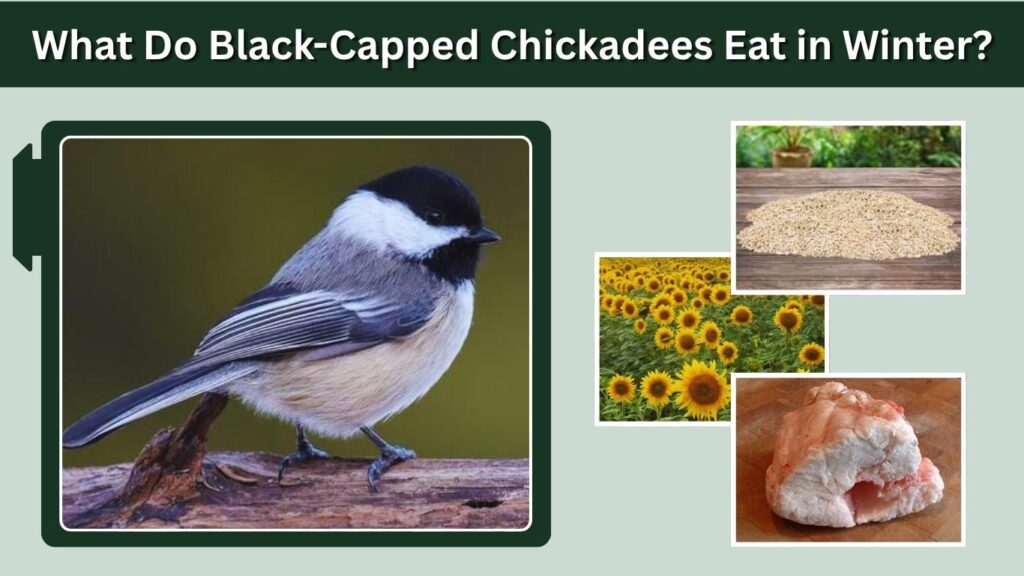
During winter, seeds, berries, and other plant material can form approximately half of a Black-capped Chickadee’s diet. The remaining portion may include spiders, dormant insects, eggs, larvae, pupae, suet, and other animal-based foods.
Chickadees also store individual food items in bark, dead leaves, tree holes, and other hidden locations. They later return to retrieve these supplies when fresh food is difficult to find.
Suitable winter feeder choices include:
- Black-oil sunflower seeds
- Hulled sunflower chips
- Unsalted peanut pieces
- Suet
- Mealworms
How Do Black-Capped Chickadees Find Food?
Black-capped Chickadees usually forage by hopping through shrubs and trees. They inspect leaves, bark, twigs, buds, and branch undersides, frequently hanging upside down to reach concealed insects.
They generally collect one food item at a time. A bird may eat it immediately, carry it to a safer perch, or hide it for later. Their food-caching behavior helps them survive periods of severe weather and limited food availability.
Foods You Should Not Feed Chickadees
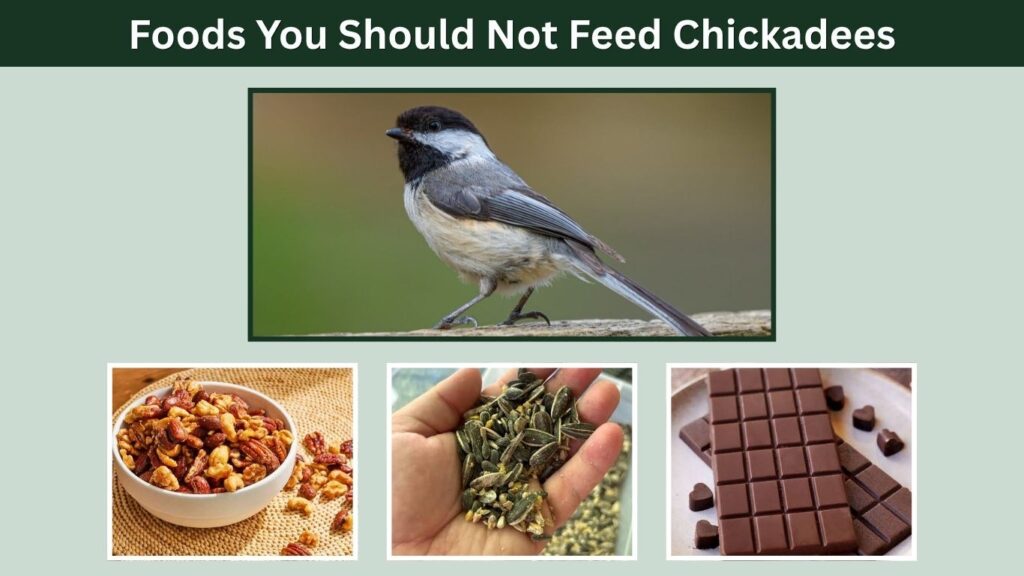
Avoid giving chickadees salty, heavily processed, spoiled, or moldy foods. Bread may fill the stomach without supplying the balanced nutrition available from insects, seeds, nuts, and berries.
Do not provide:
- Salted or flavored nuts
- Moldy birdseed
- Spoiled suet
- Chocolate
- Foods containing caffeine
- Heavily seasoned leftovers
Feeders should be cleaned regularly, and old food beneath them should be removed to reduce contamination and discourage rodents.
FAQs
What is a Black-capped Chickadee’s favorite food?
Black-oil sunflower seeds are among their most popular feeder foods. In natural habitats, however, caterpillars and other insects are especially important. Their preference changes by season, with animal foods dominating during warmer months and seeds becoming more important during winter.
Do Black-capped Chickadees eat fruit?
Yes. They eat berries and other small wild fruits, particularly during fall and winter. Native fruiting trees and shrubs provide natural food while also supporting the insects that chickadees consume throughout spring and summer.
Do Black-capped Chickadees eat mealworms?
Black-capped Chickadees eat both live and dried mealworms. Mealworms provide protein and resemble the insect larvae they naturally hunt. Offer them in small quantities alongside seeds, suet, and naturally occurring foods.
Do Black-capped Chickadees eat from bird feeders?
Yes. They readily visit tube, hopper, platform, window, and suet feeders. Popular offerings include sunflower seeds, peanut pieces, mealworms, and suet. They often grab one item and carry it to a nearby branch.
What do baby Black-capped Chickadees eat?
Baby chickadees are fed mostly insects and other small invertebrates. Caterpillars and spiders are particularly useful because they provide protein and nutrients needed for rapid development. Both parents collect food and carry it to the nestlings.