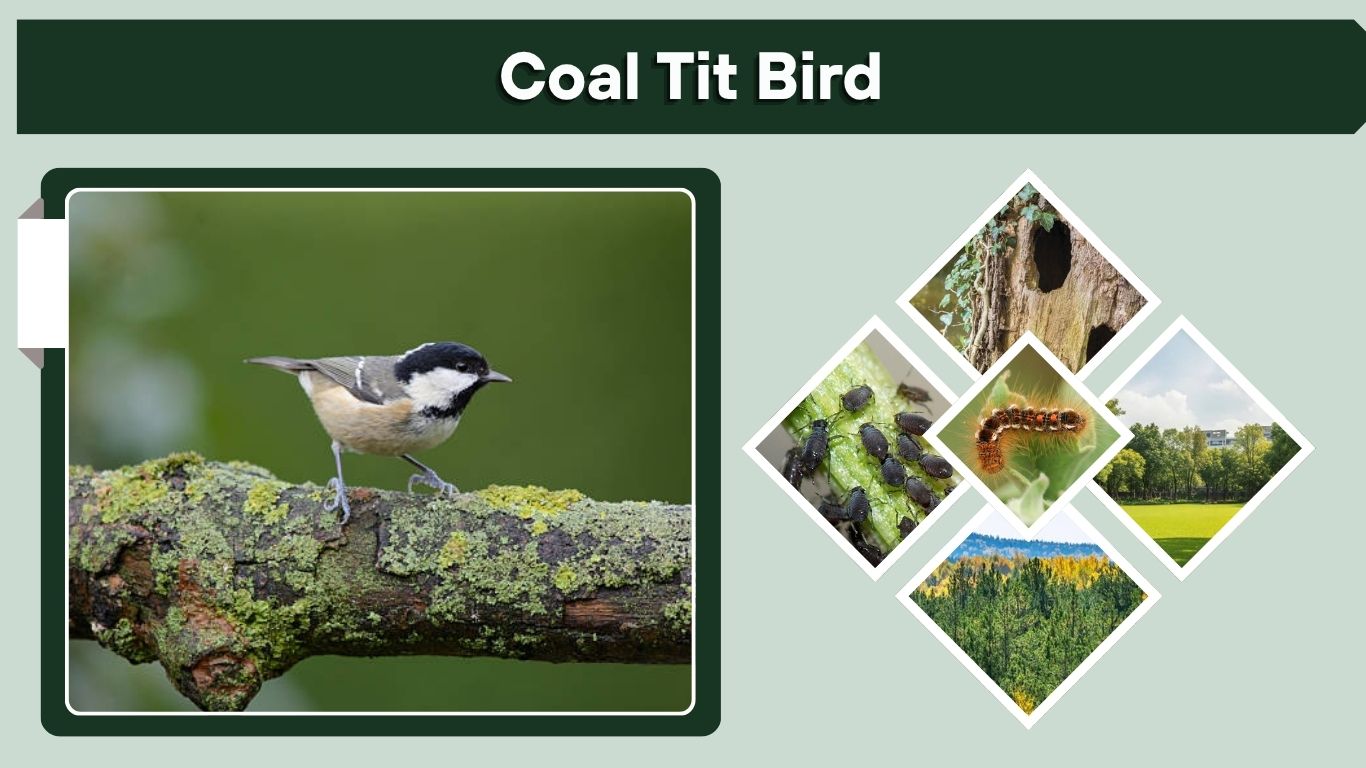
The coal tit is a tiny, energetic woodland bird recognized by its black cap, white cheeks, gray back, and distinctive white patch on the back of its head. Although closely related to great tits, blue tits, and North American chickadees, it has several unique markings that make identification easier. Coal tits are particularly associated with coniferous forests, but they also visit parks, gardens, and backyard feeders. Their acrobatic movements, high-pitched calls, and food-storing behavior make them fascinating birds to observe.
Coal Tit Facts at a Glance
The coal tit’s scientific name is Periparus ater. It belongs to the Paridae family, which includes tits, chickadees, and titmice. It is one of the smallest commonly encountered tit species in Britain and Ireland.
| Feature | Description |
| Scientific name | Periparus ater |
| Family | Paridae |
| Length | About 11.5 cm |
| Wingspan | Approximately 17–21 cm |
| Average weight | Around 9 grams |
| Diet | Insects, spiders, seeds, and nuts |
| Preferred habitat | Coniferous and mixed woodland |
| Typical clutch | 9–10 eggs |
| Typical lifespan | Around 2 years |
Coal tits generally measure about 11.5 cm long, with a wingspan of 17–21 cm. Adult birds weigh approximately 9 grams, although males are, on average, slightly larger than females.
How to Identify a Coal Tit
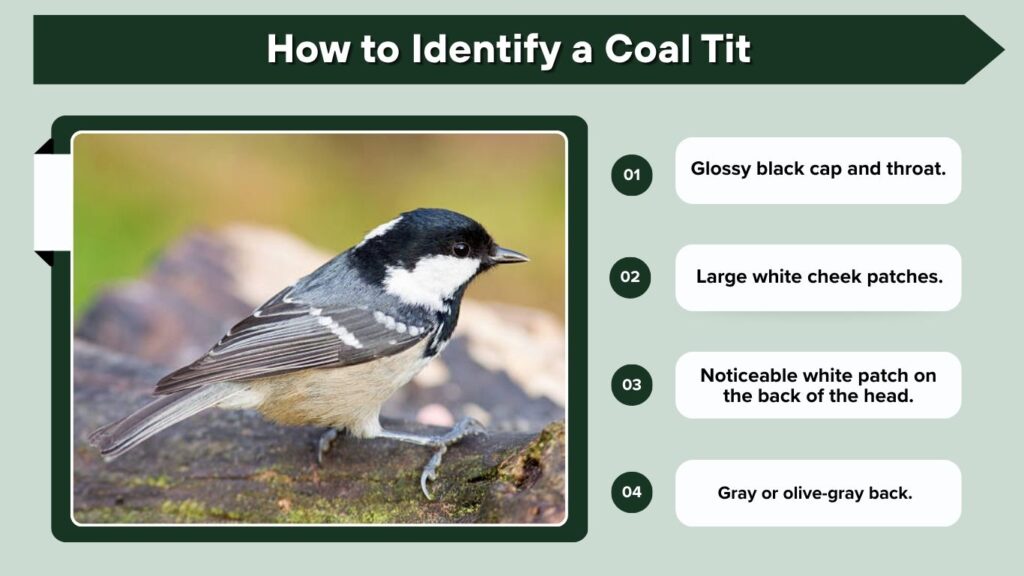
Coal tits have muted colors compared with blue tits and great tits. However, their contrasting black-and-white head pattern makes them distinctive when seen clearly.
Coal Tit Identification Features
- Glossy black cap and throat
- Large white cheek patches
- Noticeable white patch on the back of the head
- Gray or olive-gray back
- Pale buff or grayish underparts
- Two narrow white wing bars
- Small, pointed bill
- Compact body with a relatively large-looking head
The white nape patch is usually the most reliable identification feature. Marsh tits and willow tits also have black caps and white cheeks, but they lack the coal tit’s prominent white patch on the back of the head and normally have plainer wings.
Coal Tit Male vs Female
Male and female coal tits look extremely similar. Both sexes have the same black cap, white cheeks, gray back, pale underside, and white nape patch. Males average slightly longer in the wing and marginally heavier, but these differences are normally too small to use for field identification.
During the breeding season, behavior may provide better clues. Females incubate the eggs, while males regularly bring food to their mates and later help feed the chicks.
Juvenile and Young Coal Tits
Juvenile coal tits resemble adults but appear duller and softer in color. The white areas on the cheeks and nape may have a creamy or yellowish tint, while the black cap and bib are less glossy.
A fledgling may also have a shorter tail, a visible yellow edge around the bill, and slightly fluffy plumage. These features gradually disappear as the young bird completes its first molt.
Where Do Coal Tits Live?
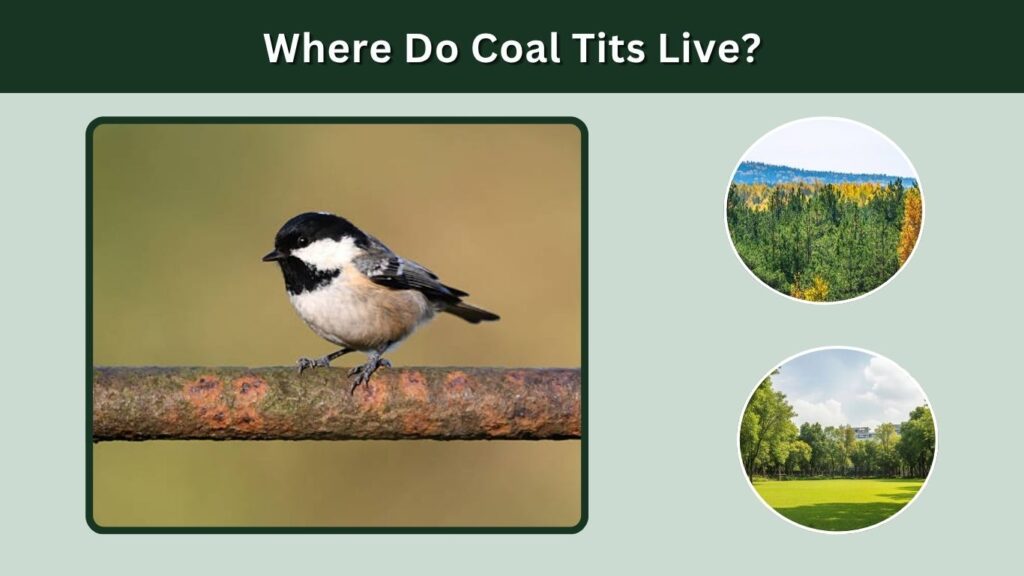
Coal tits have an extensive distribution across Europe and parts of Asia and North Africa. They are resident birds in much of Britain and Ireland, meaning that many remain within the same general region throughout the year.
Coal Tit Habitat
Coniferous woodland is the coal tit’s preferred habitat. Its slender bill allows it to search between closely packed pine, spruce, and fir needles, reaching insects and seeds that larger birds may overlook.
Coal tits also inhabit:
- Mixed deciduous and coniferous forests
- Mature parks
- Large gardens
- Wooded farmland
- Cemeteries with established trees
- Urban areas containing conifers
They are more likely to enter gardens during autumn and winter, particularly when natural food becomes difficult to find.
Irish Coal Tit
Ireland has its own native coal tit subspecies, Periparus ater hibernicus. It occurs in Irish woodland, parks, gardens, and other areas with suitable tree cover. The Irish coal tit is a regular visitor to garden feeders, especially during colder weather.
What Do Coal Tits Eat?
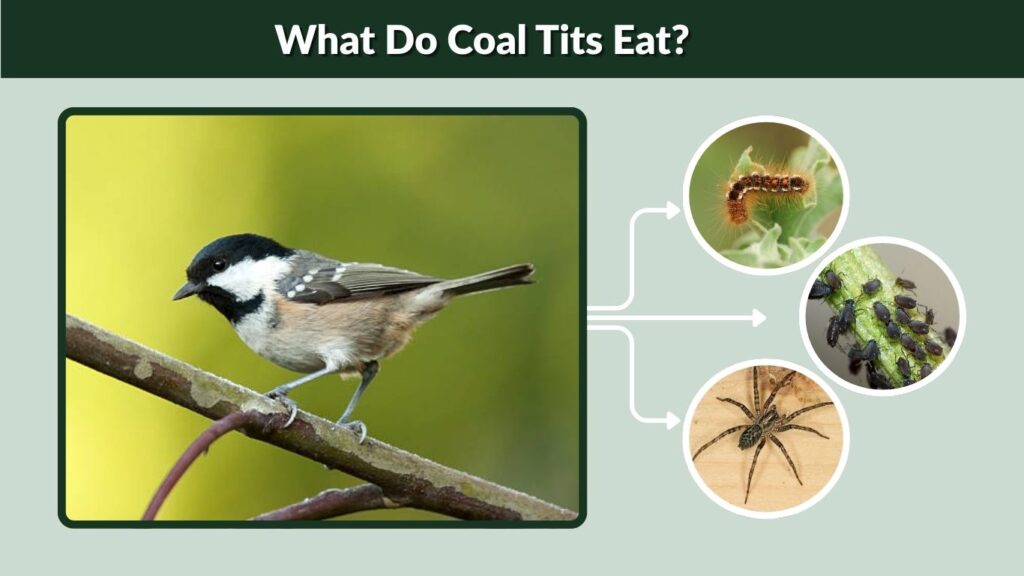
Coal tits eat a varied diet that changes with food availability. During spring and summer, they consume more animal prey because insects provide the protein needed for breeding and chick development.
Natural Coal Tit Diet
Their diet commonly includes:
- Caterpillars
- Beetles
- Aphids
- Small flies
- Insect eggs and larvae
- Spiders
- Pine and spruce seeds
- Other small tree seeds
Coal tits frequently forage near the outer branches of conifers. They may hang upside down or cling sideways while inspecting cones, needles, bark, and small twigs.
During autumn and winter, seeds and nuts become increasingly important. Coal tits also store food in bark cracks, under moss, or among tree branches, returning to these hidden supplies later.
Feeding Coal Tits in the Garden
Coal tits may visit feeders containing sunflower hearts, peanuts, suet, and mixed seeds. They often behave cautiously around larger birds, quickly taking one piece of food before flying to a nearby tree.
Placing several small feeders near shrubs or trees can reduce competition and give these tiny birds safer feeding opportunities.
Coal Tit Call and Song
The coal tit’s call is thin, high-pitched, and sometimes difficult to locate because the bird often calls from within dense conifer branches. Common contact notes sound sharp and repeated, helping birds remain connected while moving through woodland.
Its song usually consists of a rapid, repeated two- or three-note phrase. It may resemble the great tit’s song, but the coal tit generally sounds higher, quicker, and less powerful. Coal tits become particularly vocal during late winter and spring when males establish territories and attract mates.
Coal Tit Nesting Habits
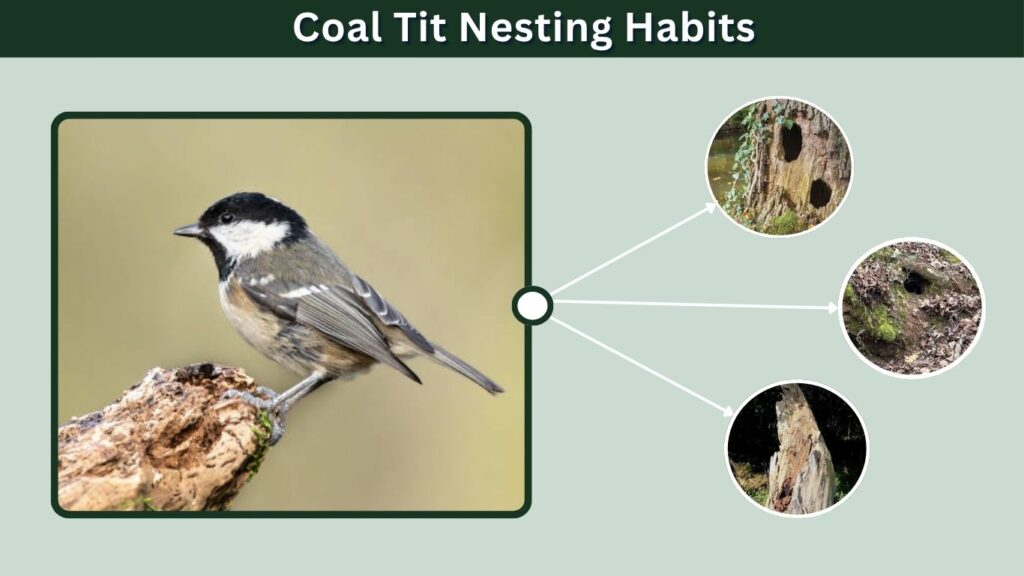
Coal tits are cavity nesters. They prefer small, sheltered spaces that protect their eggs and chicks from wind, rain, and predators.
Where Do Coal Tits Nest?
Natural nesting sites include:
- Holes in trees
- Decaying tree stumps
- Cracks between roots
- Holes in banks
- Spaces behind loose bark
- Abandoned rodent burrows
- Suitable nest boxes
The female builds the nest using moss, plant fibers, animal hair, wool, and feathers. Coal tits may sometimes choose cavities close to the ground, so nests can be difficult to notice.
Coal Tit Eggs and Chicks
A typical clutch contains nine or ten eggs, although recorded clutches range from seven to eleven. The eggs are small and pale, with reddish-brown speckles.
The female incubates them for approximately 14–16 days. Once the eggs hatch, both parents bring insects and spiders to the chicks. Young coal tits normally remain in the nest for 16–19 days before fledging. A pair may raise one or two broods in a breeding season.
Coal Tit Nest Box
A small, enclosed nest box can attract coal tits when it is installed close to suitable woodland or conifer trees. A box with an entrance hole of approximately 25 mm helps accommodate small tits while discouraging some larger birds.
Position the box about two to four metres above the ground in a quiet, shaded location. Facing it between north and east can reduce exposure to intense sunlight and wet prevailing winds. Avoid placing the box immediately beside a busy feeder because constant activity may disturb nesting birds.
Coal Tit vs Similar Birds
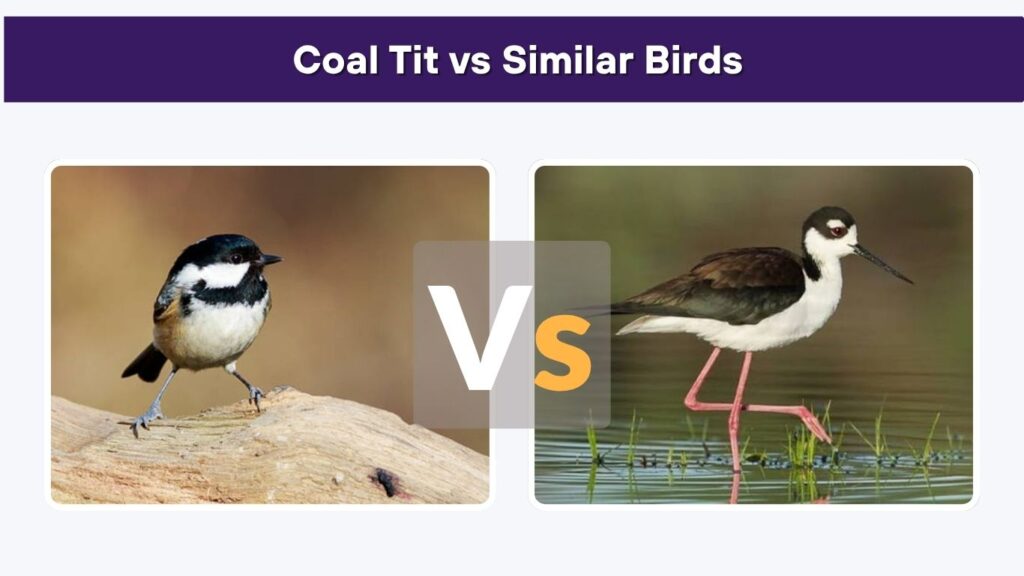
Coal tits are frequently confused with great tits, marsh tits, willow tits, and black-capped chickadees.
| Bird | Main Difference from a Coal Tit |
| Great tit | Larger, with yellow underparts and a bold black belly stripe |
| Marsh tit | No white nape patch and usually no obvious white wing bars |
| Willow tit | Plain wings and no clear white patch on the back of the head |
| Blue tit | Blue crown and wings with yellow underparts |
| Black-capped chickadee | North American species with no coal tit-style white nape patch |
Coal Tit vs Great Tit
A great tit is much larger and more colorful. It has a yellow belly divided by a black central stripe, an olive-green back, and a broader bill. The coal tit is smaller, grayer, and has a white patch on its nape. Great tits also tend to dominate coal tits at feeding stations.
Coal Tit vs Black-Capped Chickadee
Coal tits and black-capped chickadees belong to the same bird family but are different species. The black-capped chickadee is a North American bird with a black cap, black bib, white cheeks, gray back, and buff sides.
A coal tit is identified by its broad white nape patch and clearer white wing bars. It is also generally smaller than a black-capped chickadee.
How Long Do Coal Tits Live?
A coal tit that reaches breeding age has a typical life expectancy of around two years and usually begins breeding at one year old. Many young birds do not survive their first winter because of cold weather, food shortages, predators, disease, and competition.
Some individuals live considerably longer. BTO ringing records include a coal tit that survived for more than nine years, demonstrating that birds avoiding major threats can exceed the average lifespan by several years.
FAQs
Are coal tits rare?
Coal tits are not generally considered rare. They are widespread in suitable woodland and are classified as having a favorable conservation status in the UK. However, they may appear less common than blue or great tits because they are smaller, quieter, and strongly associated with coniferous trees.
Do coal tits migrate?
Most coal tits in Britain and Ireland are resident and remain in the same broad region throughout the year. However, young birds may disperse after breeding, and individuals from continental Europe may move farther during periods of food shortage or unusually harsh weather.
Do coal tits visit bird feeders?
Yes. Coal tits regularly visit feeders for sunflower hearts, peanuts, seeds, and suet. They usually take one item and quickly carry it into nearby cover. They may also hide food in trees and return to retrieve it when natural food is scarce.
Can coal tits use nest boxes?
Coal tits can use enclosed nest boxes with small entrance holes. A hole measuring about 25 mm is suitable. The box should be positioned in a quiet, sheltered location near mature trees, preferably where larger and more dominant birds are less likely to take over.
Are coal tits the same as chickadees?
No. Coal tits and chickadees are related members of the Paridae family, but they are different birds. Coal tits occur across Europe and parts of Asia and North Africa, while familiar chickadee species, including the black-capped chickadee, occur mainly in North America.