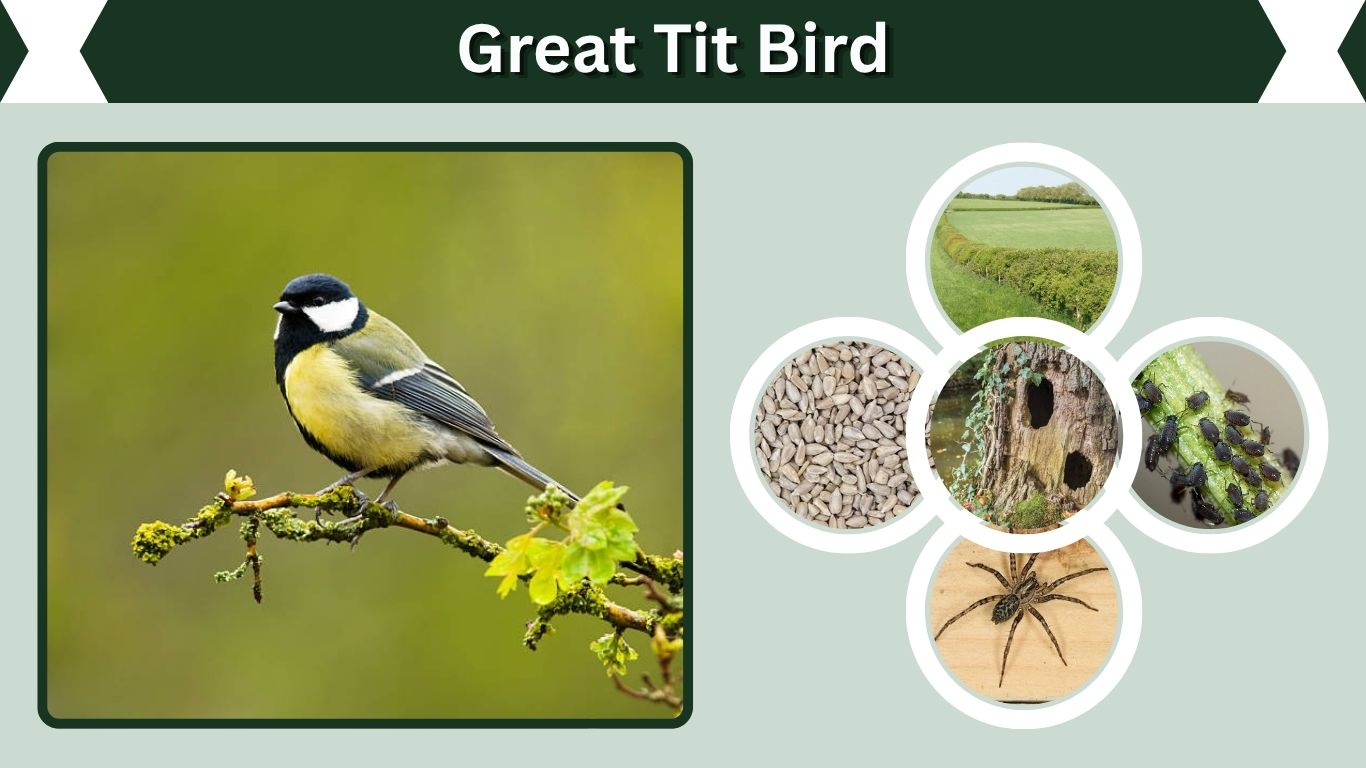
The great tit is a colorful and intelligent songbird commonly found across Europe, parts of North Africa, and much of Asia. Its black head, white cheeks, yellow underside, and bold black belly stripe make it one of the easiest garden birds to recognize. Great tits live in woodlands, parks, farmland, and urban gardens, where they search for insects, seeds, and nuts. They are also regular visitors to bird feeders and nest boxes.
Great Tit Facts at a Glance
The scientific name of the great tit is Parus major. It belongs to the Paridae family, which also includes chickadees, blue tits, coal tits, and marsh tits.
| Feature | Description |
| Common name | Great tit |
| Scientific name | Parus major |
| Family | Paridae |
| Length | Approximately 13–15 cm |
| Wingspan | Around 22–25 cm |
| Weight | About 14–22 grams |
| Diet | Insects, caterpillars, seeds, and nuts |
| Habitat | Woodland, gardens, parks, and farmland |
| Clutch size | Usually 5–12 eggs |
| Average lifespan | Around 3 years |
Great tits are among the largest and most dominant members of the tit family. They are active, curious birds that readily adapt to areas occupied by people.
How to Identify a Great Tit
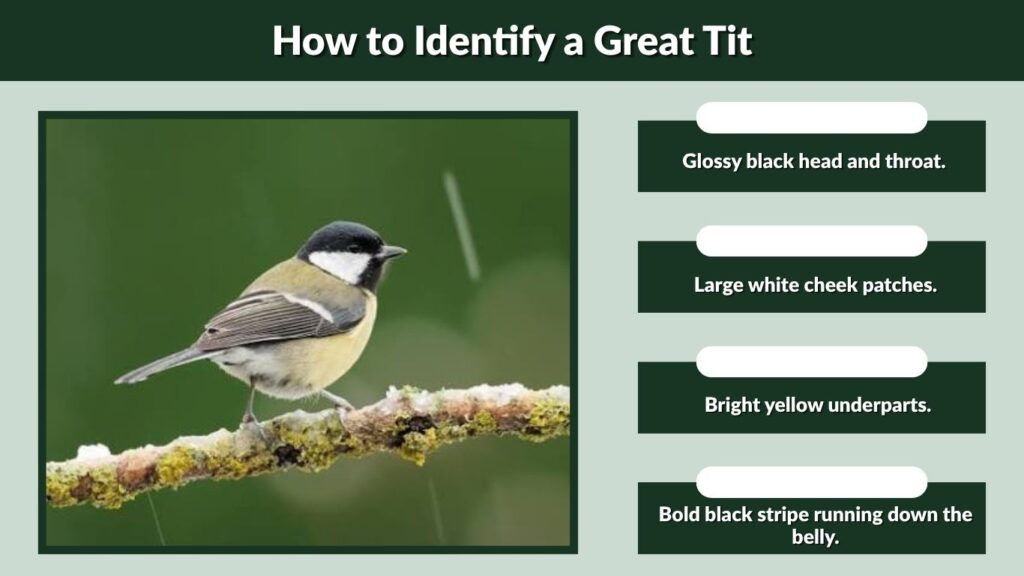
The great tit has a bold combination of black, white, yellow, green, and blue-gray feathers. Its striking head pattern and central belly stripe separate it from most similar garden birds.
Great Tit Identification Features
- Glossy black head and throat
- Large white cheek patches
- Bright yellow underparts
- Bold black stripe running down the belly
- Olive-green back
- Blue-gray wings and tail
- Pale wing bar
- Short, pointed black bill
- Strong legs adapted for clinging to branches
The great tit is larger than the blue tit and coal tit. Its black head and yellow belly are especially noticeable when the bird is feeding in an open area.
Male vs Female Great Tit
Male and female great tits have almost identical colors, but the belly stripe can help distinguish them. Males usually have a wider, darker black stripe that continues between the legs. The stripe on a female is generally narrower and may appear broken or less intense.
Male great tits may also look slightly brighter during the breeding season. However, differences can be difficult to see unless the birds are standing close together.
Juvenile Great Tit
Juvenile great tits are duller than adults. They have yellowish cheeks rather than bright white cheeks, and their head markings are less sharply defined. Their black belly stripe is usually weak or incomplete.
Young birds may continue begging for food after leaving the nest. They often follow their parents through trees and shrubs while learning how to locate insects and use garden feeders.
Great Tit Habitat and Range
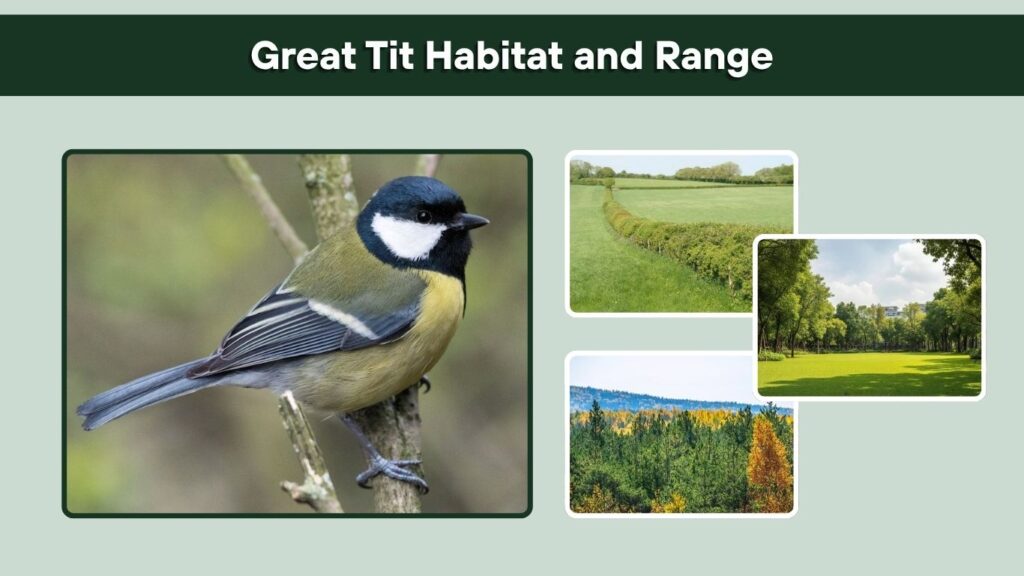
Great tits have an extensive range stretching from Western Europe across temperate Asia. They occupy several types of wooded environments and have adapted successfully to villages, towns, and cities.
Where Do Great Tits Live?
Great tits commonly live in:
- Deciduous woodland
- Mixed forests
- Parks and gardens
- Hedgerows
- Orchards
- Farmland with mature trees
- Urban neighborhoods
- Cemeteries and wooded public spaces
They need trees or other structures containing cavities for nesting. Gardens with shrubs, mature trees, feeders, and nest boxes can provide suitable year-round habitat.
Most great tits are resident birds, remaining within the same general region throughout the year. However, young birds may travel farther when searching for food or new breeding territories.
What Do Great Tits Eat?
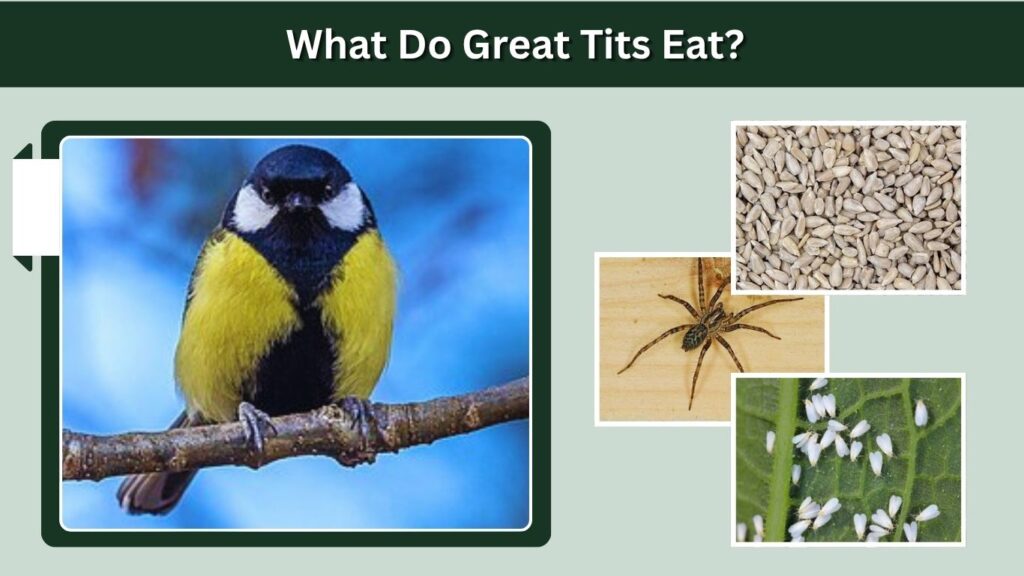
Great tits are omnivorous and adjust their diet according to the season. Animal prey is particularly important during spring and summer, while seeds and nuts become more important during autumn and winter.
Natural Diet
Great tits eat caterpillars, beetles, spiders, flies, insect larvae, and other small invertebrates. Caterpillars are especially important during the nesting season because parent birds need soft, protein-rich food for their chicks.
The birds search for prey on tree trunks, leaves, branches, and under loose bark. They may hang upside down while inspecting difficult-to-reach parts of a plant.
During colder months, great tits consume seeds, berries, beech mast, and nuts. They may hold a seed between their feet and repeatedly strike it with their bill to open it.
Foods for Garden Feeders
Suitable foods for great tits include:
- Sunflower hearts
- Unsalted peanuts
- Suet balls
- Mealworms
- Mixed birdseed
- Peanut granules
- High-quality fat blocks
Feeders should be cleaned regularly to reduce the spread of disease. Fresh water should also be available for drinking and bathing.
Great Tit Song and Calls
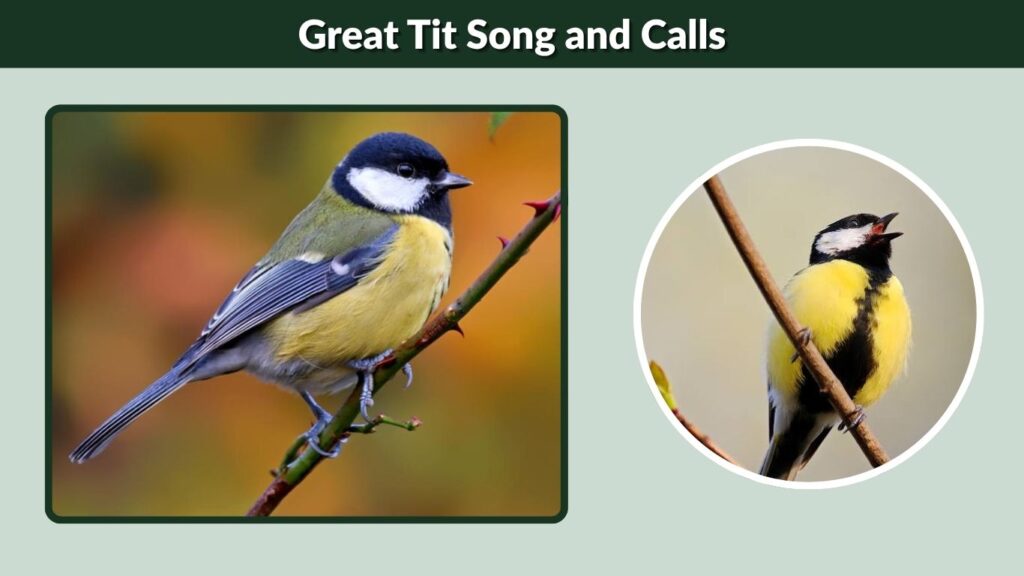
The great tit is an energetic and varied singer. Its most familiar song is a repeated two-note phrase often described as sounding like “teacher-teacher.” However, individuals can produce many different songs and calls.
Males sing most frequently during late winter and spring. Their song helps establish territory and attract a breeding partner. Because great tits have several song variations, inexperienced birdwatchers may occasionally mistake their sounds for those of other species.
Their everyday contact calls include sharp, ringing, scolding, and chattering notes. An alarm call may become faster and harsher when a predator is nearby.
Great Tit Nesting Habits
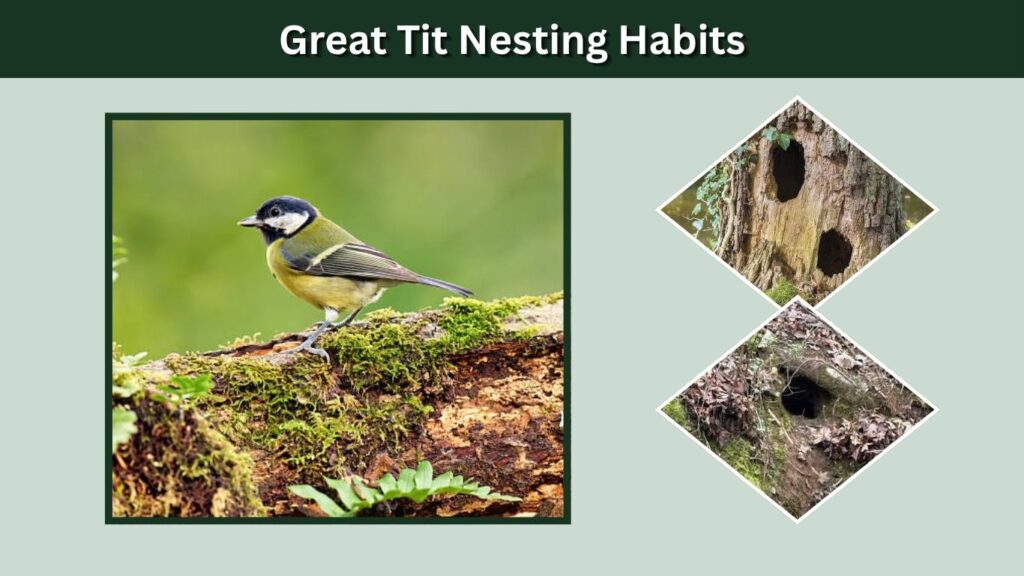
Great tits are cavity-nesting birds. They naturally use holes in trees but readily accept artificial nest boxes in gardens, parks, and woodland.
Where Do Great Tits Nest?
A pair may nest in:
- Natural tree cavities
- Old woodpecker holes
- Wall openings
- Gaps in buildings
- Fence posts
- Pipes
- Mailboxes
- Enclosed birdhouses
The female builds the nest using moss, grass, plant fibers, wool, hair, and feathers. She shapes the softer materials into a warm cup for the eggs.
Eggs and Incubation
Great tits generally lay between five and twelve eggs. The eggs are white with reddish-brown spots, which are often concentrated around the broader end.
The female incubates the eggs for approximately two weeks. During this period, the male provides her with food. After hatching, both parents collect caterpillars and other insects for the chicks.
Young great tits usually remain in the nest for around 16–22 days. After fledging, they stay near their parents while developing stronger flying and feeding skills.
Great Tit Nest Box
A nest box for great tits should have an entrance hole of approximately 28–32 mm. It should be securely attached to a tree, wall, or post in a sheltered location.
The entrance should not face strong sunlight or prevailing rain. A quiet position away from busy feeders may also reduce disturbance during nesting.
Great Tit vs Similar Birds
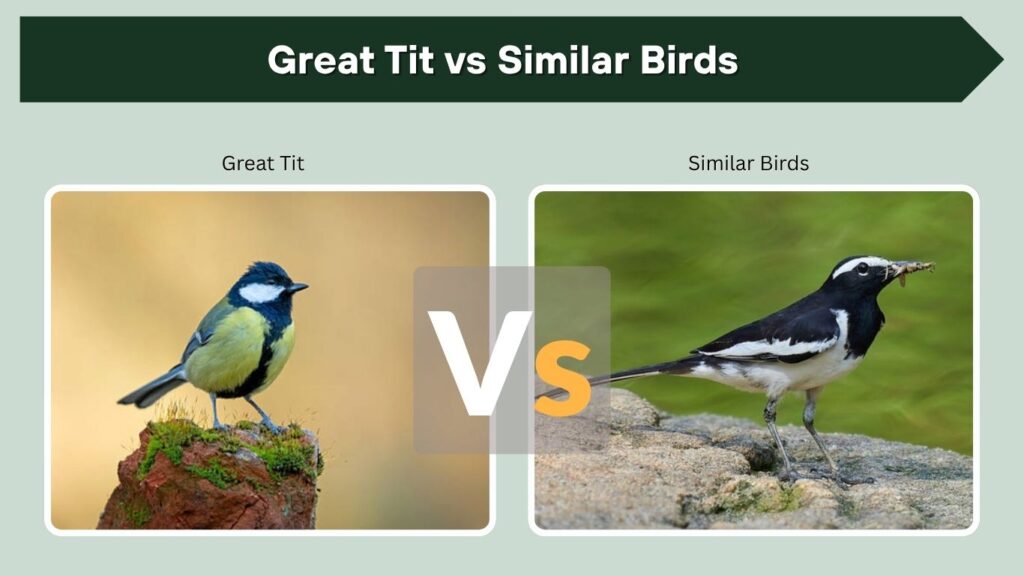
Several other small birds share parts of the great tit’s coloration, but size, head markings, and belly color make identification easier.
Great Tit vs Blue Tit
The blue tit is smaller and has a blue crown, blue wings, and a dark line passing through the eyes. It has a yellow belly but lacks the great tit’s solid black head and prominent central belly stripe.
Great tits are usually more dominant at feeders and may chase blue tits away from preferred feeding positions.
Great Tit vs Coal Tit
Coal tits are noticeably smaller and have grayish or buff underparts rather than a yellow belly. They also possess a white patch on the back of the head.
The great tit has a green back, yellow underside, and broad black belly stripe. These features are absent from the coal tit.
Great Tit vs Marsh Tit
Marsh tits have a black cap and white cheeks, but their bodies are mainly brown, gray, and buff. They do not have the great tit’s yellow belly or strong black central stripe.
Great Tit Lifespan
The average lifespan of a great tit is approximately three years, although many young birds die during their first year. Food shortages, cold weather, disease, window collisions, traffic, and predators all affect survival.
Individuals that survive their early years may live considerably longer. Some ringed great tits have reached ages of more than ten years.
Are Great Tits Endangered?
Great tits are widespread and are not generally considered endangered. Their ability to use gardens, parks, nest boxes, and bird feeders has helped them adapt to human-modified environments.
However, local populations can still be affected by habitat loss, pesticide use, reduced insect numbers, extreme weather, and poorly timed breeding seasons. Planting native trees and shrubs, avoiding unnecessary pesticides, and maintaining clean feeders can help support them.
FAQs
Are great tits aggressive?
Great tits can be assertive, especially around food, nesting cavities, and breeding territories. They frequently chase smaller birds from feeders. Most aggression is directed toward other birds and does not make great tits dangerous to people.
Do great tits migrate?
Most great tits remain in the same general area throughout the year. Some young birds disperse after leaving their parents, while northern populations may move when severe weather or food shortages make local conditions difficult.
What does a great tit sound like?
The best-known great tit song is a clear, repeated two-note phrase. The bird also produces whistles, scolding notes, alarm calls, and rapid chattering sounds. Its large vocal range can make identification by sound challenging.
Do great tits use birdhouses?
Yes. Great tits readily use enclosed birdhouses with appropriately sized entrance holes. A sturdy box installed in a shaded, sheltered position can provide a valuable nesting site, especially where natural tree cavities are limited.
How can you attract great tits?
Provide sunflower hearts, peanuts, suet, mealworms, fresh water, dense shrubs, and suitable nest boxes. Native plants also support insects and caterpillars, which are essential foods for adults and growing chicks during the breeding season.