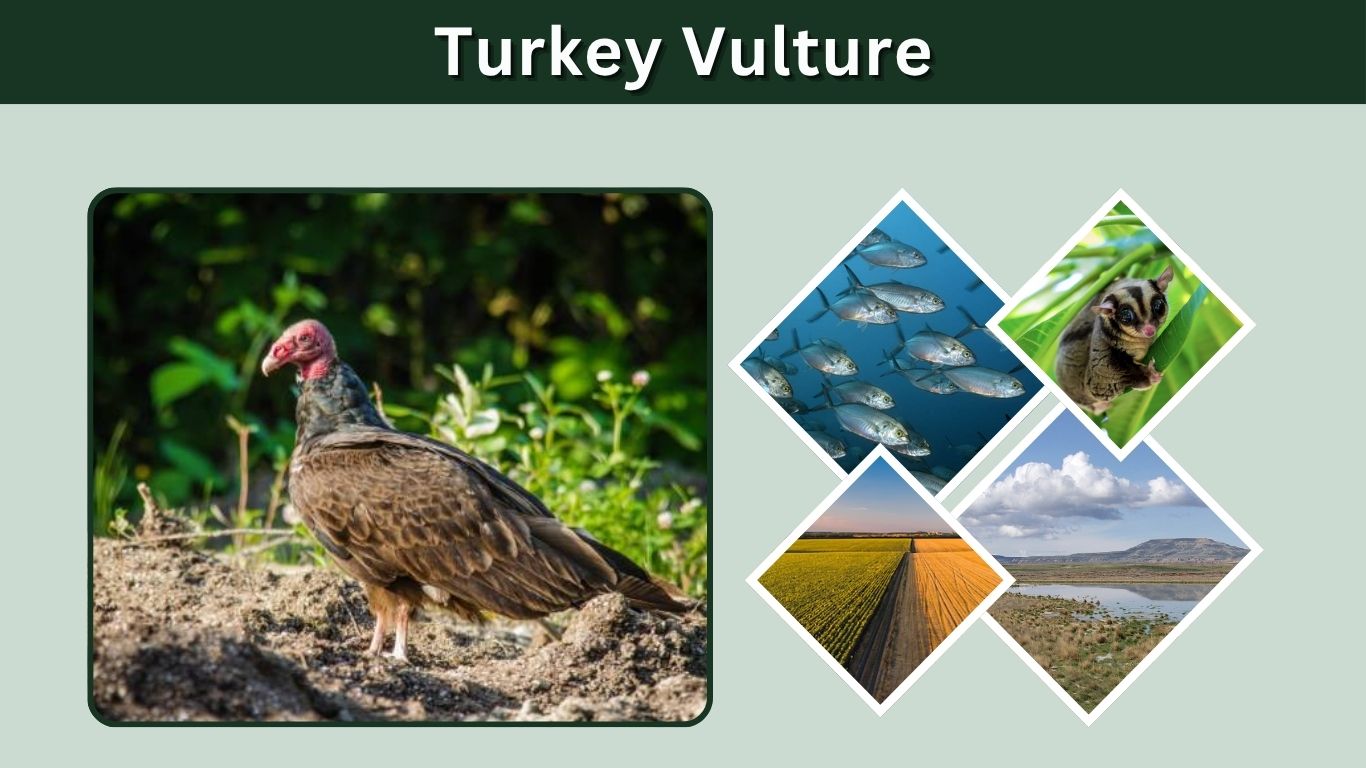
The Turkey Vulture is a large scavenging bird recognized by its bald red head, dark plumage, broad wings, and effortless soaring flight. Often seen circling over roads, fields, forests, and towns, it searches for dead animals using an unusually strong sense of smell. Although its appearance may seem intimidating, this vulture performs an essential environmental service by removing carcasses and recycling nutrients. Its scientific name is Cathartes aura, and it is one of the most widespread vultures in the Americas.
Turkey Vulture Quick Facts
| Feature | Description |
| Scientific name | Cathartes aura |
| Length | 25.2–31.9 inches |
| Wingspan | 66.9–70.1 inches |
| Weight | Around 70.5 ounces |
| Adult head color | Bright red |
| Juvenile head color | Gray or dark |
| Primary food | Carrion |
| Clutch size | 1–3 eggs |
| Habitat | Open woodland, farmland, roadsides and countryside |
Turkey Vultures are smaller than most eagles but larger than common hawks. Their wings can stretch nearly six feet from tip to tip.
What Does a Turkey Vulture Look Like?
Turkey Vultures appear almost black from a distance, but their feathers are actually dark brown. Adults have a small, featherless red head, a pale hooked bill, long wings, and a relatively long rounded tail.
Identification Features
Look for these characteristics:
- Bald red head on adults
- Gray or dark head on juveniles
- Dark brown body feathers
- Pale, silvery flight feathers beneath the wings
- Long tail extending beyond the feet
- Broad wings with finger-like tips
- Pale, strongly hooked bill
Juvenile Turkey Vultures are approximately the same size as adults, but their gray heads and darker bills can make them look like a different species. The head gradually becomes red as the bird matures. Male and female Turkey Vultures look extremely similar and are difficult to distinguish in the field.
Turkey Vulture Size and Wingspan
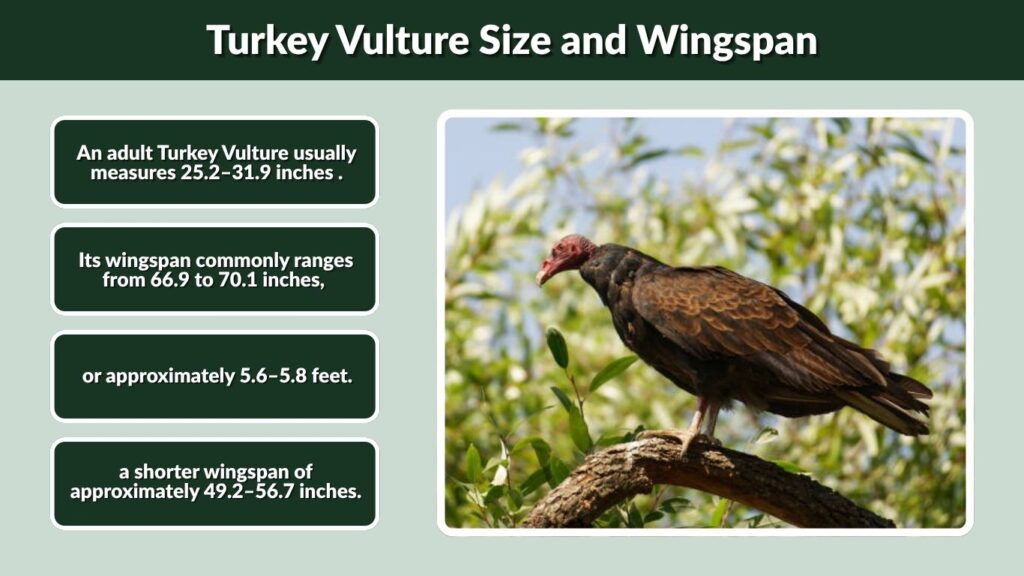
An adult Turkey Vulture usually measures 25.2–31.9 inches from its bill to the end of its tail. Its wingspan commonly ranges from 66.9 to 70.1 inches, or approximately 5.6–5.8 feet.
Despite this impressive wingspan, the bird weighs only around 4.4 pounds. Its lightweight body and broad wings allow it to remain airborne with very little effort.
Turkey Vulture vs. Wild Turkey Size
A Wild Turkey has a heavier body, stronger legs, and a shorter wingspan of approximately 49.2–56.7 inches. A Turkey Vulture is lighter, more slender, and better adapted for extended soaring. The two birds are unrelated; the vulture received its common name because its bald red head resembles that of a turkey.
How Does a Turkey Vulture Fly?
A flying Turkey Vulture holds its wings slightly above horizontal, forming a shallow V shape known as a dihedral. It frequently rocks or teeters from side to side while circling.
The bird rides rising columns of warm air called thermals. By moving between these air currents, it can remain in the sky for hours while using very few wingbeats. When viewed from below, its flight feathers look silvery, creating a two-toned pattern across the underside of each wing.
Why Do Turkey Vultures Circle?
Circling does not necessarily mean that an animal is dying below. The birds often circle simply because they are gaining altitude in a thermal. Once high enough, they glide toward another rising air current while searching for food.
Several vultures circling together in flight may be called a kettle. A group feeding at a carcass is commonly called a wake.
What Do Turkey Vultures Eat?
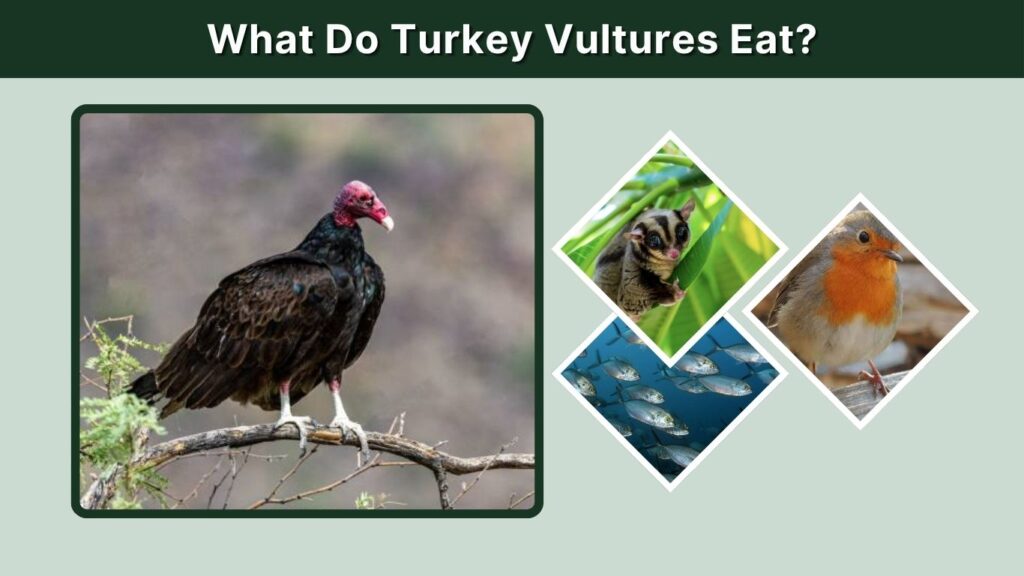
Turkey Vultures primarily eat carrion—the bodies of animals that are already dead. Their diet may include:
- Small and large mammals
- Birds
- Reptiles
- Amphibians
- Fish
- Invertebrates
- Roadkill and other animal remains
They usually prefer relatively fresh carcasses. Turkey Vultures locate food mainly through smell, although sight also helps them investigate potential feeding areas. Their highly acidic digestive system allows them to consume decaying flesh that could make many other animals sick.
Do Turkey Vultures Eat Live Animals?
Turkey Vultures almost never attack healthy living animals. Their feet and talons are comparatively weak and are not designed to seize and kill prey like those of hawks or eagles.
They may occasionally consume helpless or extremely vulnerable creatures, but scavenging remains their normal feeding behavior.
Turkey Vulture Habitat and Range
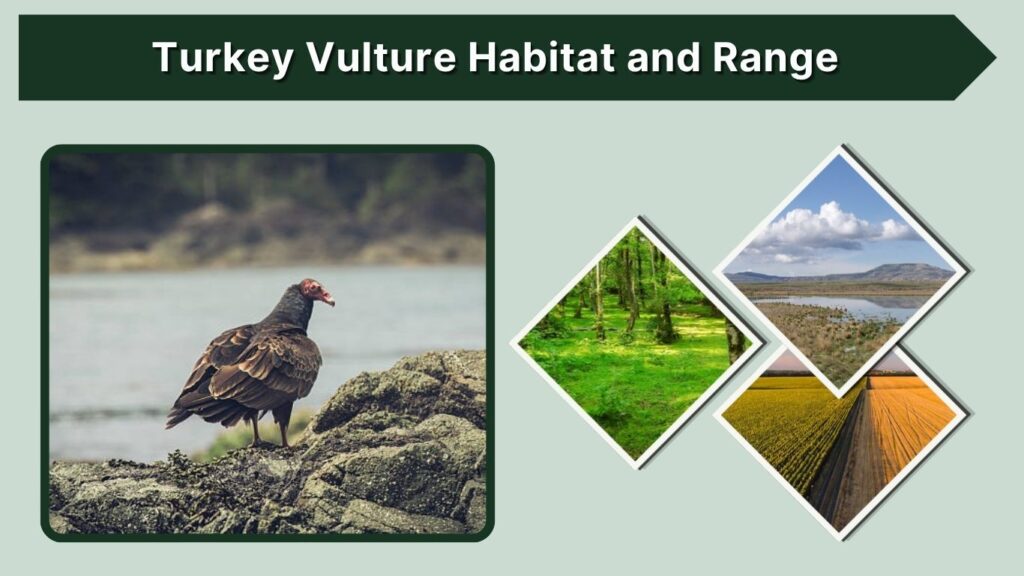
Turkey Vultures can live in many environments as long as they have suitable roosting locations and access to carrion. Common habitats include:
- Open woodlands
- Grasslands and rangelands
- Agricultural fields
- Forest edges
- Roadsides
- Suburban areas
- Landfills and waste sites
- Rocky cliffs and canyons
At night, they roost in trees, on cliffs, towers, rocks, poles, and other elevated structures. Communal roosts may contain dozens or even hundreds of birds outside the breeding season.
Do Turkey Vultures Migrate?
Some populations remain in the same region throughout the year, while others migrate. Many birds in the southern United States are permanent residents. Northeastern birds generally travel shorter distances south, while western populations may migrate through Central America into northern South America.
Turkey Vulture Nesting and Eggs
Turkey Vultures do not construct the large stick nests associated with eagles and hawks. Instead, they lay their eggs in protected, secluded locations such as:
- Caves and rock crevices
- Hollow logs
- Fallen trees
- Dense thickets
- Abandoned buildings
- Mammal burrows
- Sheltered cliff ledges
A nesting pair may clear a small area of leaves or debris, but it does not build a substantial nest. Suitable sites may be reused for many years.
Eggs and Young
A female normally lays one to three pale eggs marked with brown or purple spots. Both parents participate in incubation, which lasts approximately 28–40 days.
Young vultures remain at the nest site for about 60–84 days. Newly hatched chicks are covered in down and depend completely on their parents for warmth, protection, and regurgitated food.
What Sound Does a Turkey Vulture Make?
Turkey Vultures are generally quiet birds. Instead of producing musical calls, they make low hisses, grunts, or raspy sounds, particularly when frightened, threatened, or gathered around food.
Their quiet behavior distinguishes them from many hawks and eagles, which produce louder, more recognizable calls.
Turkey Vulture vs. Black Vulture
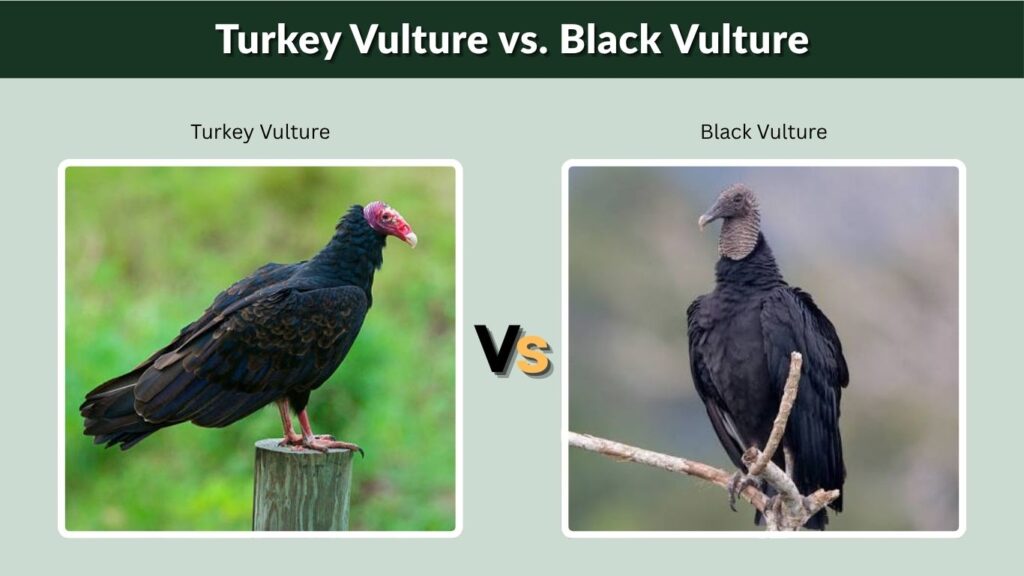
| Feature | Turkey Vulture | Black Vulture |
| Adult head | Red | Black |
| Tail | Relatively long | Short |
| Underwing | Silvery along most flight feathers | Pale patches mainly near wingtips |
| Flight posture | Wings held in a shallow V | Wings held flatter |
| Flight movement | Rocks and teeters | Stronger, more frequent wingbeats |
| Food detection | Strong sense of smell | Relies more heavily on sight |
Black Vultures may follow Turkey Vultures to food because Turkey Vultures are better at locating hidden carcasses by scent. Once both species arrive, the more aggressive Black Vultures sometimes push the Turkey Vultures away.
Are Turkey Vultures Dangerous?
Turkey Vultures generally avoid people and do not hunt humans, pets, or healthy livestock. A bird resting on a roof or circling overhead is usually searching for rising air currents, food, or a safe roosting place.
People should not handle, trap, poison, shoot, or disturb the birds or their active nests. Turkey Vultures are federally protected migratory birds in the United States, and unauthorized killing or capture may violate federal law.
FAQs
Is a Turkey Vulture the same as a turkey buzzard?
Yes. “Turkey buzzard” is a traditional North American nickname for the Turkey Vulture. However, the bird is a New World vulture rather than a true buzzard in the scientific sense.
Why is the Turkey Vulture’s head bald?
A featherless head is easier to keep clean when the bird reaches inside a carcass to feed. Feathers around the face would collect blood, tissue, and bacteria more easily.
Why do Turkey Vultures spread their wings?
They commonly spread their wings after sunrise or during damp weather. This posture may help warm the body, dry wet feathers, and maintain feathers used for efficient flight.
Can Turkey Vultures smell dead animals?
Yes. They possess an excellent sense of smell and can detect gases produced during the early stages of decomposition. This ability helps them locate carcasses hidden beneath vegetation or forest cover.
What is the scientific name of the Turkey Vulture?
The Turkey Vulture’s scientific name is Cathartes aura. It belongs to the family Cathartidae, which contains the New World vultures and condors.