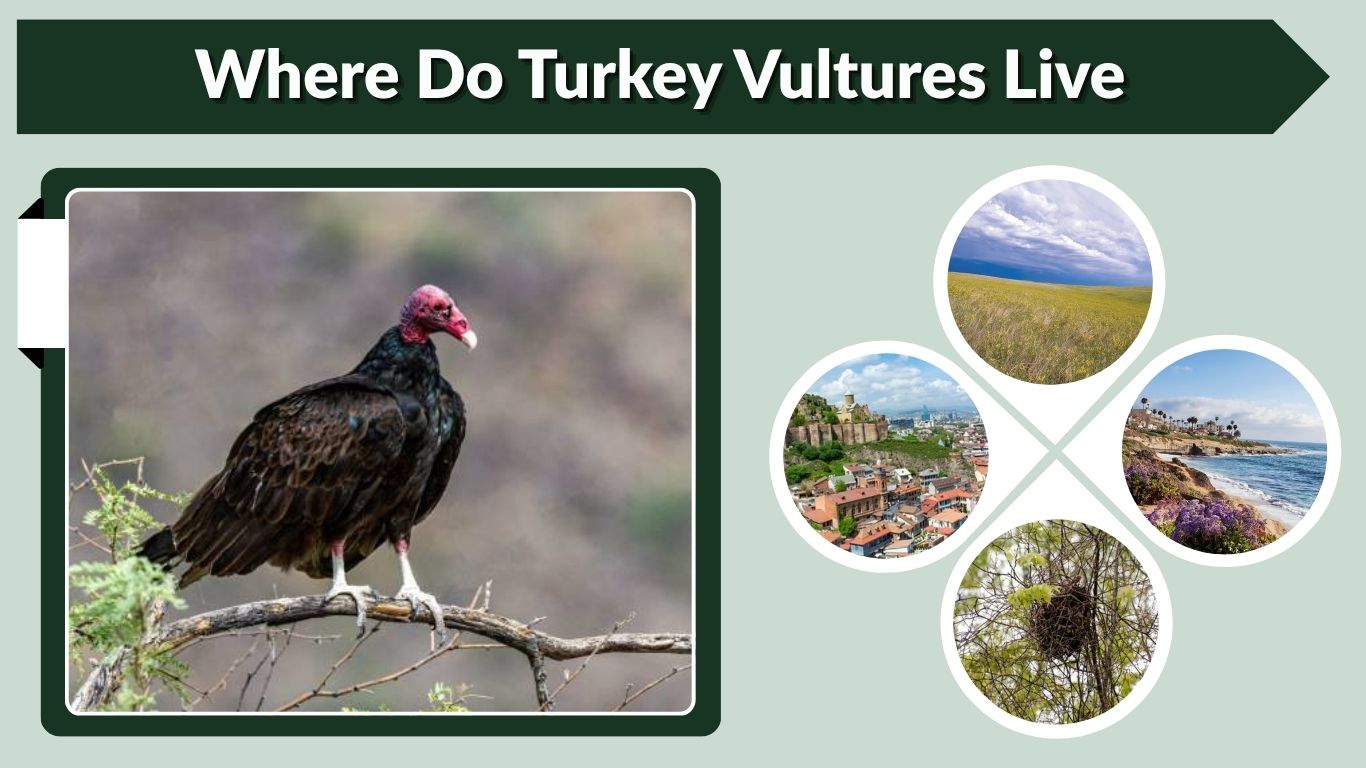
Turkey Vultures live throughout most of North, Central, and South America. Their range extends from southern Canada through the United States, Mexico, and Central America to Tierra del Fuego at the southern end of South America. These adaptable scavengers occupy deserts, grasslands, farms, forests, wetlands, mountains, and even developed areas. Northern populations usually migrate south for winter, while birds in warmer regions may remain in the same area throughout the year.
Turkey Vulture Range at a Glance
The Turkey Vulture’s scientific name is Cathartes aura. It is one of the most widely distributed vultures in the Western Hemisphere.
| Feature | Details |
| Geographic range | Southern Canada to southern South America |
| Main habitat | Open and semi-open landscapes |
| Common environments | Grasslands, farms, deserts, forests, and foothills |
| Northern populations | Usually migratory |
| Southern populations | Often permanent residents |
| Winter range | Southern U.S., Mexico, Central America, and South America |
| Roosting sites | Large trees, cliffs, towers, and buildings |
| Nesting sites | Caves, crevices, hollow trees, and abandoned structures |
| Wild longevity record | At least 16 years and 10 months |
| Diet | Primarily dead animals |
Where Do Turkey Vultures Live in the World?
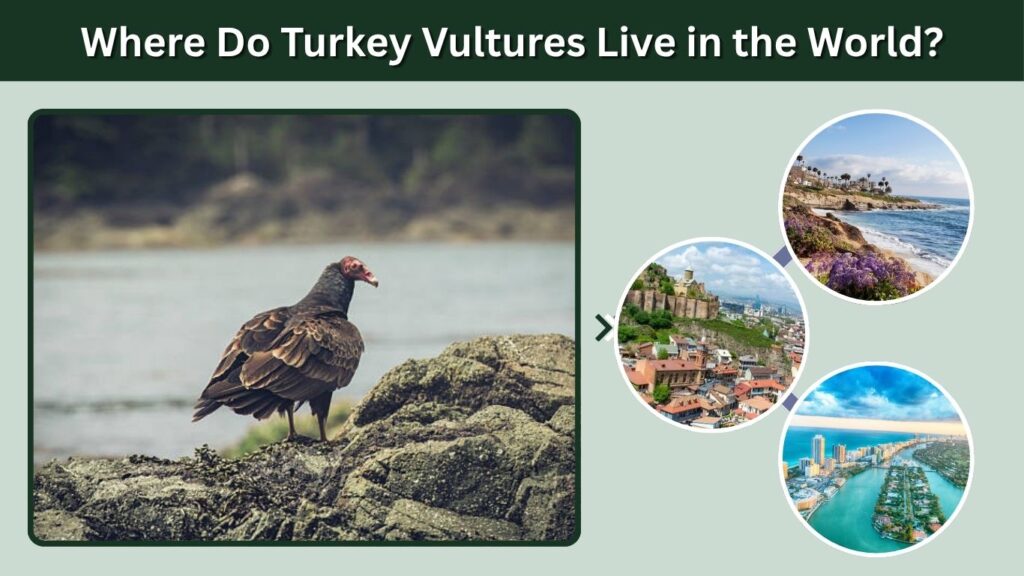
Turkey Vultures occur only in the Americas. Their enormous geographic range covers tropical, temperate, coastal, mountainous, and desert regions.
North America
In North America, Turkey Vultures live across most of the continental United States, Mexico, and southern Canada. They can be found in states and provinces such as:
- California
- Georgia
- Florida
- Pennsylvania
- Ohio
- Illinois
- Michigan
- Minnesota
- Montana
- Washington
- Alberta
- Ontario
They are year-round residents across much of the southern United States. Birds from Canada and colder northern states usually leave before winter and return during spring.
Central and South America
Turkey Vultures live throughout Mexico, Central America, the Caribbean, and much of South America. Their southern range reaches Tierra del Fuego.
Birds living in warm tropical regions generally have less need to migrate. Food remains available year-round, and freezing temperatures do not prevent carrion from producing the odors Turkey Vultures use to locate it.
Do Turkey Vultures Live in Africa?
No. Wild Turkey Vultures do not naturally occur in Africa, Europe, Asia, or Australia. They are New World vultures native to the Americas.
Africa has several unrelated Old World vulture species. These birds perform a similar scavenging role but belong to a different evolutionary group.
What Habitat Do Turkey Vultures Prefer?
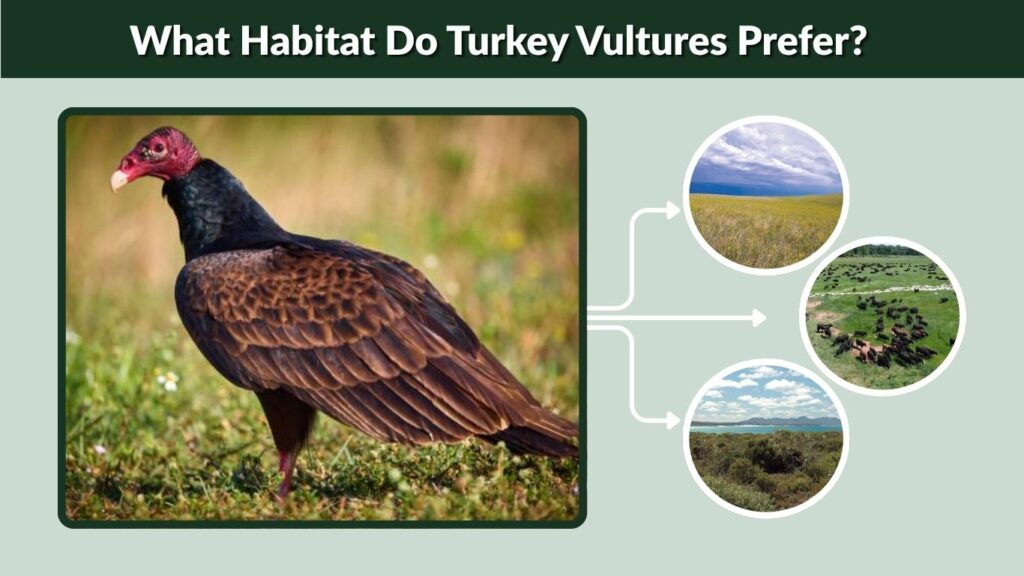
Turkey Vultures can use many environments, but they are most common where open feeding areas occur close to trees, cliffs, or other secure resting and nesting locations.
Open and Semi-Open Country
Common Turkey Vulture habitats include:
- Grasslands
- Farmland and pastures
- Open woodlands
- Shrublands
- Roadsides
- River valleys
- Coastal areas
- Foothills
- Deserts
- Forest clearings
Open landscapes allow the birds to spot carcasses and descend safely. Nearby wooded or rocky areas provide protected roosting and nesting sites. They generally avoid the interiors of extremely dense forests, where taking off and locating food can be more difficult.
Forests and Wetlands
Turkey Vultures may fly over forests and wetlands while searching for dead animals. They commonly use woodland edges, river corridors, swamps, and areas where forests meet fields.
Large trees are especially valuable as communal roosts. Birds may return to the same traditional roosting location for many years when it remains quiet and undisturbed.
Desert Habitat
Turkey Vultures can live in deserts when food, water, air currents, and suitable resting places are available. They often soar above canyons, rocky hills, desert roads, and open scrub.
Cliffs and rock formations provide shelter, while road-killed animals and naturally occurring carcasses supply food. Their soaring flight allows them to cover wide, dry landscapes without continuously flapping their wings.
Cities and Suburban Areas
Turkey Vultures can live near towns and cities, especially where wooded areas, communication towers, abandoned buildings, landfills, roads, and open land are nearby.
They may roost on roofs, electrical towers, water towers, trees, or other elevated structures. However, they usually feed in open areas and do not behave like typical urban birds that depend on people for food.
Where Do Turkey Vultures Nest?
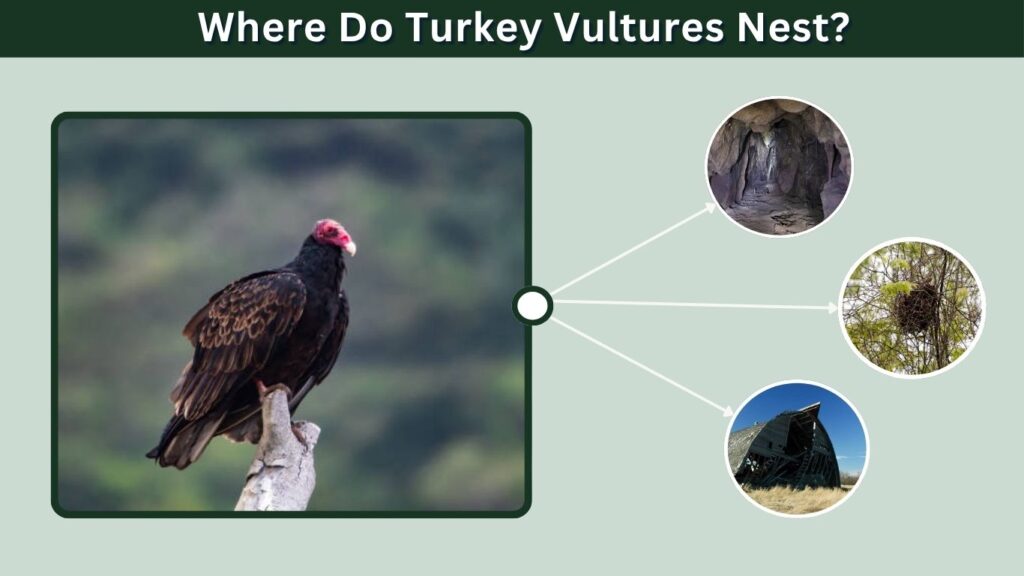
Turkey Vultures do not build traditional stick nests. Instead, they lay their eggs in protected, dark locations.
Common nesting sites include:
- Rocky caves
- Cliff crevices
- Hollow trees
- Fallen logs
- Dense thickets
- Abandoned buildings
- Old barns
- Empty animal burrows
They usually lay their eggs directly on soil, leaves, wood chips, or another existing surface. Nest sites are often isolated and concealed from predators and frequent human activity.
Where Do Turkey Vultures Sleep?
Turkey Vultures sleep at communal roosts. A roost may contain a few birds or dozens of individuals.
Typical roosting sites include tall trees, dead snags, cliffs, communication towers, rooftops, bridges, and other elevated structures. These locations give the birds protection and allow them to launch into the air after sunrise.
Turkey Vultures often wait for the sun to warm the ground and create rising columns of air called thermals. They then use these air currents to soar with little energy.
Where Do Turkey Vultures Live During Winter?
Their winter location depends on where they spend the breeding season.
Turkey Vultures living in southern parts of the United States may remain there all year. Those breeding in Canada and the northern United States commonly migrate into the southern U.S., Mexico, Central America, or South America.
Some migrants travel thousands of miles. Rather than crossing large areas of open ocean, they generally follow coastlines and land routes where rising air currents help support their flight.
Why Do They Migrate?
Northern Turkey Vultures migrate because cold weather reduces food availability. Frozen carcasses produce less odor and may be difficult to open.
Moving south gives the birds access to warmer conditions, reliable thermal currents, and more available carrion. They return north when temperatures rise and breeding conditions improve.
Do Turkey Vultures Live in Groups?
Turkey Vultures may search for food alone, but they commonly gather in groups around feeding sites and communal roosts.
A group of soaring vultures is sometimes called a kettle. Birds circle together in rising warm air before gliding toward another thermal. This behavior allows them to travel long distances without using much energy.
Turkey Vultures may also roost with Black Vultures where the ranges of the two species overlap. However, Black Vultures are generally more social and may dominate feeding sites through their larger group numbers.
How Long Do Turkey Vultures Live?
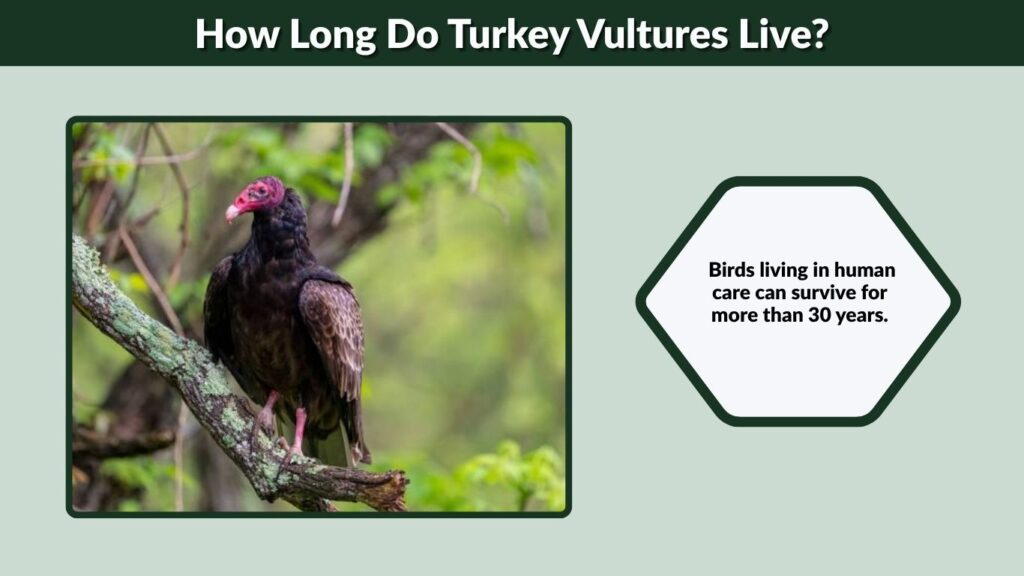
Turkey Vultures can live much longer than many people expect. The oldest well-documented banded wild individual was at least 16 years and 10 months old. Birds living in human care can survive for more than 30 years.
Their survival depends on food availability, disease, weather, nesting success, and human-related dangers. Common threats include vehicle collisions, lead poisoning, poisoned carcasses, electrocution, and disturbance at roosting or nesting sites.
Do Turkey Vultures Hunt Live Prey?
Turkey Vultures are overwhelmingly scavengers. They primarily eat animals that are already dead and almost never attack healthy living prey.
Their diet may include dead mammals, birds, reptiles, amphibians, fish, and invertebrates. They prefer relatively fresh carrion and use their exceptional sense of smell to locate it, sometimes beneath vegetation.
Turkey Vultures occasionally consume helpless or extremely vulnerable animals, but active hunting is unusual. Their feet are relatively weak and poorly suited for capturing prey like the feet of hawks and eagles.
Do Turkey Vultures Attack Chickens?
Turkey Vultures are unlikely to attack healthy adult chickens. They may investigate a dead chicken, an unhatched egg, or a severely weakened animal.
Reports of vultures attacking livestock or poultry more commonly involve Black Vultures, which are more likely to take vulnerable live animals. Correct identification is therefore important before blaming Turkey Vultures.
FAQs
Where do most Turkey Vultures live?
Turkey Vultures live throughout the Americas, from southern Canada to southern South America. They are most common in open or semi-open landscapes near woodland, cliffs, or other secure places where they can roost and nest.
Do Turkey Vultures live in trees?
They frequently roost in large trees, sometimes gathering in groups. However, they do not usually build nests in tree branches. They may place their eggs inside a hollow tree or beneath a fallen log.
Do Turkey Vultures live in cities?
Yes. They can live around cities and suburbs that provide open feeding areas and secure roosts. They may rest on tall trees, rooftops, water towers, communication towers, and abandoned buildings.
How long can a Turkey Vulture live in captivity?
A Turkey Vulture receiving professional care can live for more than 30 years. Captive birds avoid many dangers faced in the wild, including food shortages, vehicle strikes, poisoned carcasses, and severe weather.
Will Turkey Vultures attack live animals?
They almost never attack healthy live animals. Turkey Vultures specialize in finding and eating carrion. An extremely weak, injured, or helpless animal might occasionally attract their attention, but active hunting is not their normal feeding strategy.