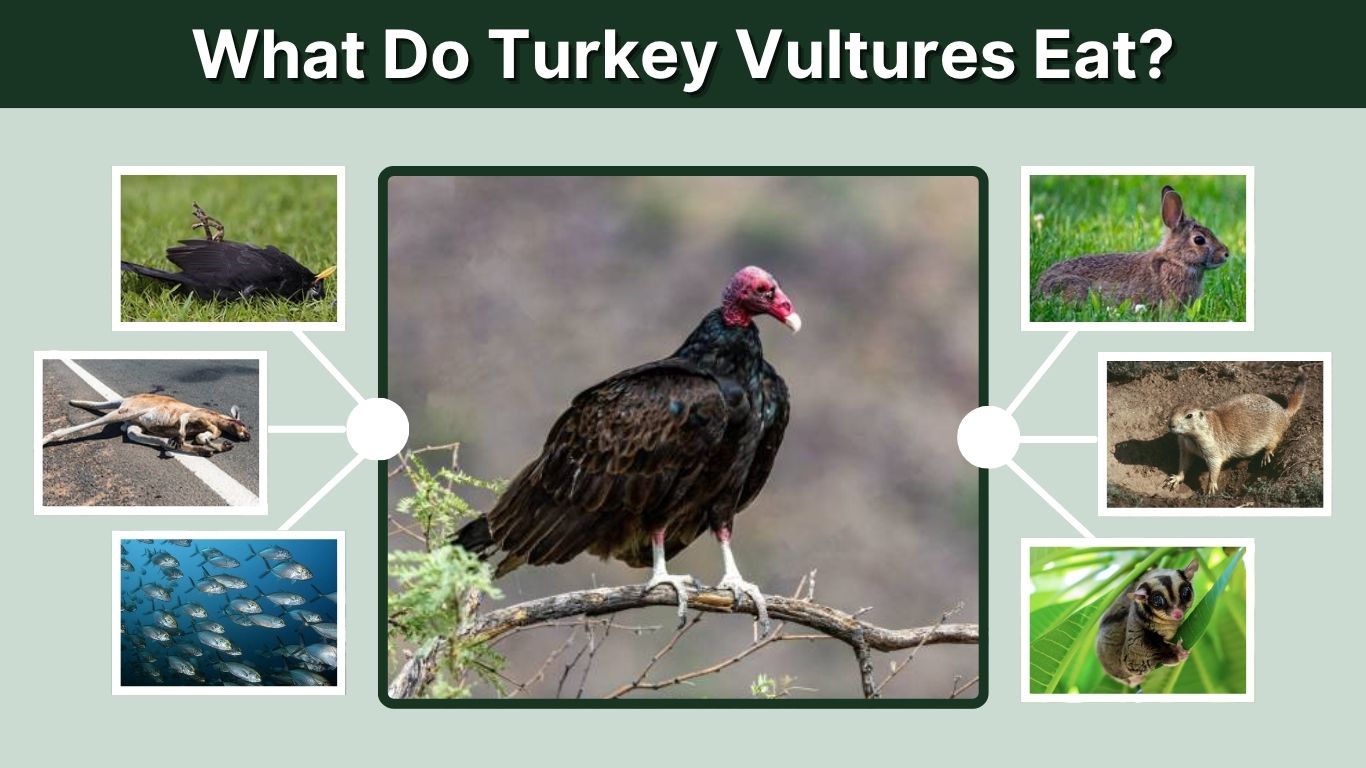
Turkey Vultures mainly eat carrion, meaning the bodies of animals that are already dead. They commonly search for roadkill, dead mammals, birds, reptiles, fish, and other animal remains. Their excellent sense of smell helps them detect carcasses hidden beneath trees or vegetation.
Although their bald red heads and large wings may look threatening, Turkey Vultures rarely kill healthy animals. They are specialized scavengers with relatively weak feet, so they depend far more on finding dead animals than capturing live prey.
What Do Turkey Vultures Eat in the Wild?
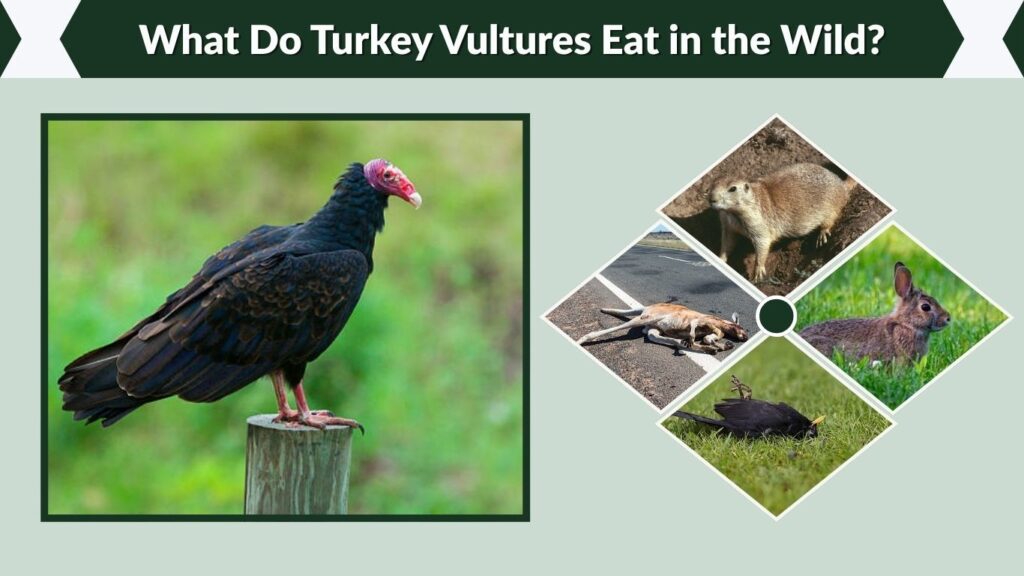
Turkey Vultures eat many kinds of animal remains. They usually prefer carcasses that are fresh enough to consume but soft enough for their hooked bills to tear apart.
Their diet changes depending on location, season, and available food. The following are 10 common foods eaten by Turkey Vultures.
1. Roadkill
Roadkill is one of the most familiar food sources for Turkey Vultures. They frequently search along highways and rural roads for animals killed by vehicles.
Common roadkill meals include rabbits, raccoons, opossums, squirrels, snakes, and deer. Turkey Vultures often circle over roads before landing near a carcass. They may wait beside the road until traffic becomes quiet enough to approach safely.
2. Deer Carcasses
Turkey Vultures commonly feed on dead deer, especially animals killed by vehicles, disease, harsh weather, or predators. A deer carcass can feed several vultures for multiple days.
They usually enter through an existing opening or begin feeding around softer areas. Their bills are effective for tearing flesh but may struggle to break through the thick skin of a completely intact large mammal.
3. Rabbits and Squirrels
Dead rabbits and squirrels are common food sources because these animals live in many of the same habitats as Turkey Vultures. They may be killed by vehicles, predators, disease, or environmental conditions.
Turkey Vultures do not normally chase healthy rabbits or squirrels. Their feet lack the powerful gripping talons that hawks and eagles use to capture active prey.
4. Rodents
Turkey Vultures eat dead rats, mice, prairie dogs, and other rodents. Agricultural fields, grasslands, roadsides, and landfills can provide plenty of rodent carcasses.
Rodents may die from predators, farm machinery, vehicles, poison, disease, or natural causes. However, consuming a poisoned animal can sometimes expose scavenging birds to harmful chemicals.
5. Dead Birds
Turkey Vultures eat the remains of many birds, including ducks, chickens, turkeys, pigeons, and smaller wild birds. They usually consume birds that are already dead rather than attacking healthy individuals.
They may find bird carcasses near farms, wetlands, roads, power lines, or buildings. Feathers are difficult to digest, so the vulture mainly consumes the soft tissues and internal organs.
6. Snakes and Other Reptiles
Dead snakes, lizards, turtles, and other reptiles can become part of a Turkey Vulture’s diet. Roads are especially productive feeding areas because reptiles are frequently struck by vehicles while crossing warm pavement.
Turkey Vultures may eat a snake regardless of whether it was venomous when alive. However, they are unlikely to capture and kill an active, healthy snake.
7. Frogs and Other Amphibians
Turkey Vultures occasionally eat dead frogs, toads, salamanders, and other amphibians. These smaller meals are more likely to be found near ponds, wetlands, drainage areas, or roads.
Amphibians are not usually a major part of their diet, but Turkey Vultures are opportunistic and may consume almost any accessible animal carcass.
8. Fish and Aquatic Animals
Dead fish are sometimes eaten by Turkey Vultures, especially near lakes, rivers, beaches, reservoirs, and drying ponds. They may also eat dead aquatic animals that wash onto shore.
Fish kills caused by low oxygen, pollution, extreme temperatures, or receding water can attract several scavengers. Turkey Vultures often feed alongside gulls, crows, and other birds.
9. Livestock Remains
Turkey Vultures may eat dead cattle, pigs, sheep, goats, and other livestock. They are particularly attracted to afterbirth, discarded animal remains, and animals that have died naturally.
The presence of vultures near livestock does not automatically mean they killed an animal. Turkey Vultures usually arrive after death and help remove remains that might otherwise attract insects or spread unpleasant odors.
10. Insects and Other Invertebrates
Carrion forms most of their diet, but Turkey Vultures may occasionally consume insects, worms, and other invertebrates. These foods are usually taken opportunistically rather than actively hunted.
They may swallow insects found around a carcass or consume larvae feeding within decomposing tissue. However, insects are a much smaller food source than dead vertebrate animals.
Do Turkey Vultures Eat Live Animals?
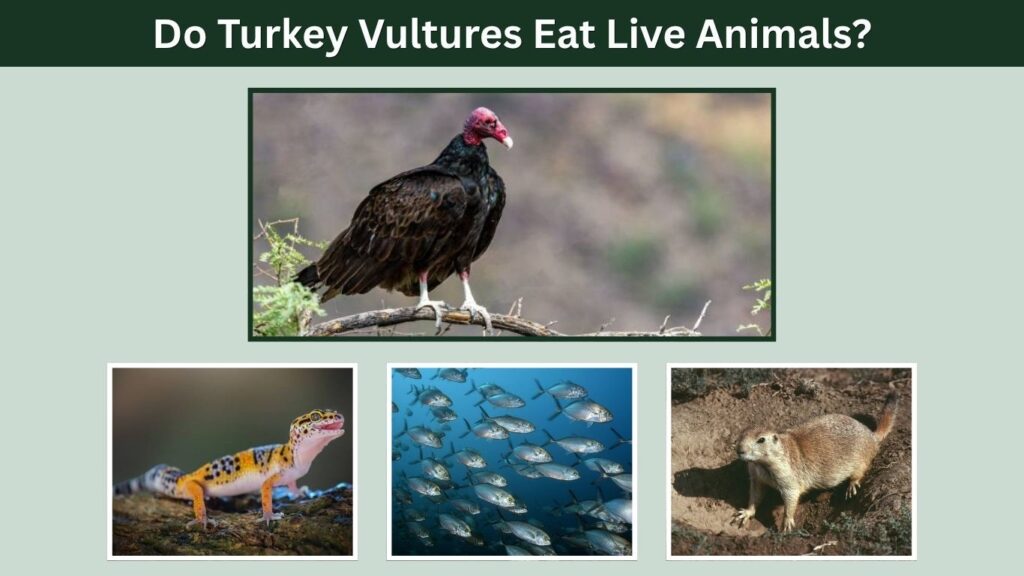
Turkey Vultures rarely eat healthy live animals. Their feet are relatively weak and poorly suited for killing, gripping, or carrying prey. Unlike hawks and eagles, they are not built to hunt fast-moving animals.
They may occasionally feed on extremely weak, injured, newborn, or helpless animals. However, such behavior is unusual and should not be considered their normal feeding strategy.
Black Vultures are more likely than Turkey Vultures to behave aggressively toward vulnerable livestock. Because the two species sometimes gather together, Turkey Vultures may be blamed for behavior primarily associated with Black Vultures.
Do Turkey Vultures Eat Chickens?
Turkey Vultures may eat a chicken that is already dead, but they are unlikely to attack a healthy adult chicken. They may investigate poultry areas if they smell a carcass, discarded remains, broken eggs, or afterbirth.
A farmer who sees vultures around a chicken coop should check for dead poultry, exposed waste, or another nearby carcass. Healthy chickens should still be kept in a secure enclosure to protect them from hawks, foxes, raccoons, dogs, and other predators.
Do Turkey Vultures Eat Cats or Dogs?
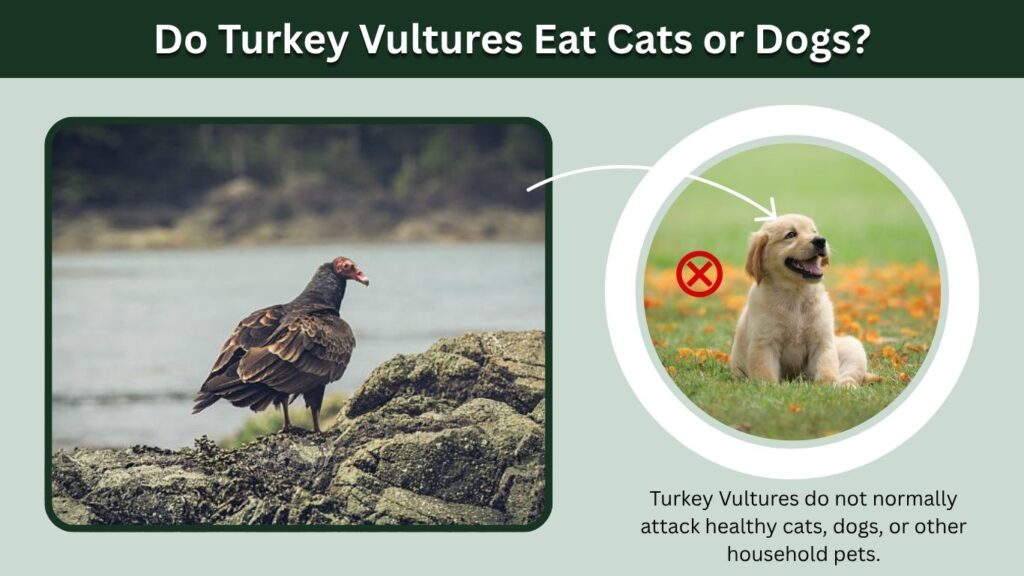
Turkey Vultures do not normally attack healthy cats, dogs, or other household pets. However, they may feed on the remains of a pet that has already died, particularly if the body is exposed outdoors.
A small dog or cat resting in a yard is not considered normal prey. Turkey Vultures are generally cautious around living animals and usually fly away when approached.
Do Turkey Vultures Eat Bones?
Turkey Vultures mainly eat flesh, organs, and other soft tissues. They may swallow very small pieces of bone, but they do not specialize in crushing or digesting large bones.
Larger bones, thick skin, fur, and feathers are often left behind after feeding. Other scavengers, insects, fungi, and bacteria complete the decomposition process.
How Do Turkey Vultures Find Food?
Turkey Vultures possess an unusually strong sense of smell for birds. They can detect gases released during the early stages of decomposition, allowing them to locate carcasses hidden under forest cover.
They also use vision while soaring. A circling Turkey Vulture may be searching for food, watching other scavengers, or simply using rising warm air to gain altitude.
Once one bird descends toward a carcass, others may notice and follow. Turkey Vultures can feed together in a group known as a wake.
How Can Turkey Vultures Eat Rotten Meat?
Turkey Vultures have extremely acidic digestive systems that destroy many harmful organisms found in decomposing flesh. This adaptation allows them to eat food that could make humans and many other animals seriously ill.
Their bald heads also help them remain cleaner while reaching inside carcasses. After feeding, they may spread their wings in sunlight, which helps dry their feathers and regulate body temperature.
How Much and How Often Do Turkey Vultures Eat?
Turkey Vultures do not follow a strict daily feeding schedule. Their meals depend on when and where they find suitable carcasses.
A bird may eat a large amount at one feeding and then go without another substantial meal for some time. After overeating, a Turkey Vulture can become temporarily too heavy to take off quickly.
Young birds are fed regurgitated food by both parents. Adults carry food in their crops and bring it back to their nesting site.
Can Humans Eat Turkey Vultures?
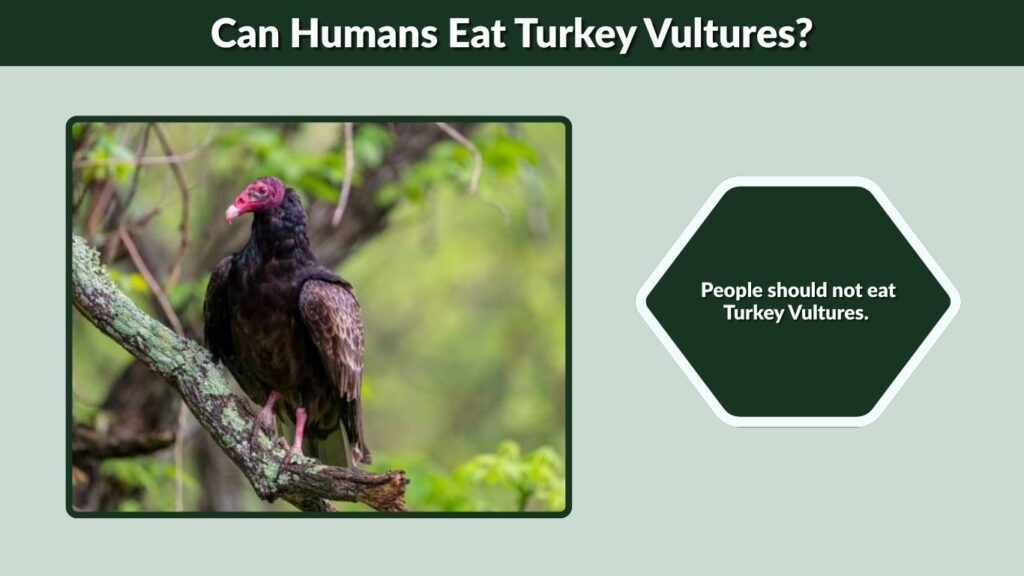
People should not eat Turkey Vultures. Their scavenging diet exposes them to decaying tissue, bacteria, chemicals, and possible environmental contaminants. Their meat is not considered a normal or safe food source.
Turkey Vultures also provide important ecological benefits. By consuming carcasses, they help remove dead animals, recycle nutrients, and reduce food available to certain pests and disease-carrying organisms.
What Animals Eat Turkey Vultures?
Healthy adult Turkey Vultures have relatively few natural predators. Their large size, ability to fly, and defensive behaviors discourage many attackers.
Eggs, chicks, and weakened adults may be eaten by:
- Raccoons
- Foxes
- Coyotes
- Bobcats
- Owls
- Eagles
- Snakes
- Feral dogs
When threatened, a Turkey Vulture may hiss, bite, or regurgitate foul-smelling stomach contents toward an attacker.
FAQs
Do Turkey Vultures only eat dead things?
Turkey Vultures eat almost entirely dead animals. They may occasionally consume helpless, seriously injured, or extremely weak animals, but active hunting is uncommon. Their bodies are designed for locating and consuming carrion rather than capturing healthy prey.
Do Turkey Vultures eat humans?
Turkey Vultures may consume exposed human remains, just as they would eat the remains of another mammal. However, they do not hunt or attack healthy people. A Turkey Vulture circling overhead is not waiting for a person to die.
Do Turkey Vultures eat eggs?
They may occasionally consume exposed or broken eggs, although eggs are not a major part of their diet. Turkey Vultures are much more likely to feed on animal carcasses, internal organs, afterbirth, fish, and roadkill.
Do Turkey Vultures eat other Turkey Vultures?
A Turkey Vulture may potentially scavenge the carcass of another vulture, but this is not a common or preferred food. Their opportunistic feeding habits mean they may investigate many types of dead animals when other food is limited.
Are Turkey Vultures dangerous to pets?
Turkey Vultures are generally not dangerous to healthy pets. They lack the powerful feet needed to capture dogs or cats. Their presence may indicate that a dead animal, discarded meat, or another strong-smelling food source is nearby.