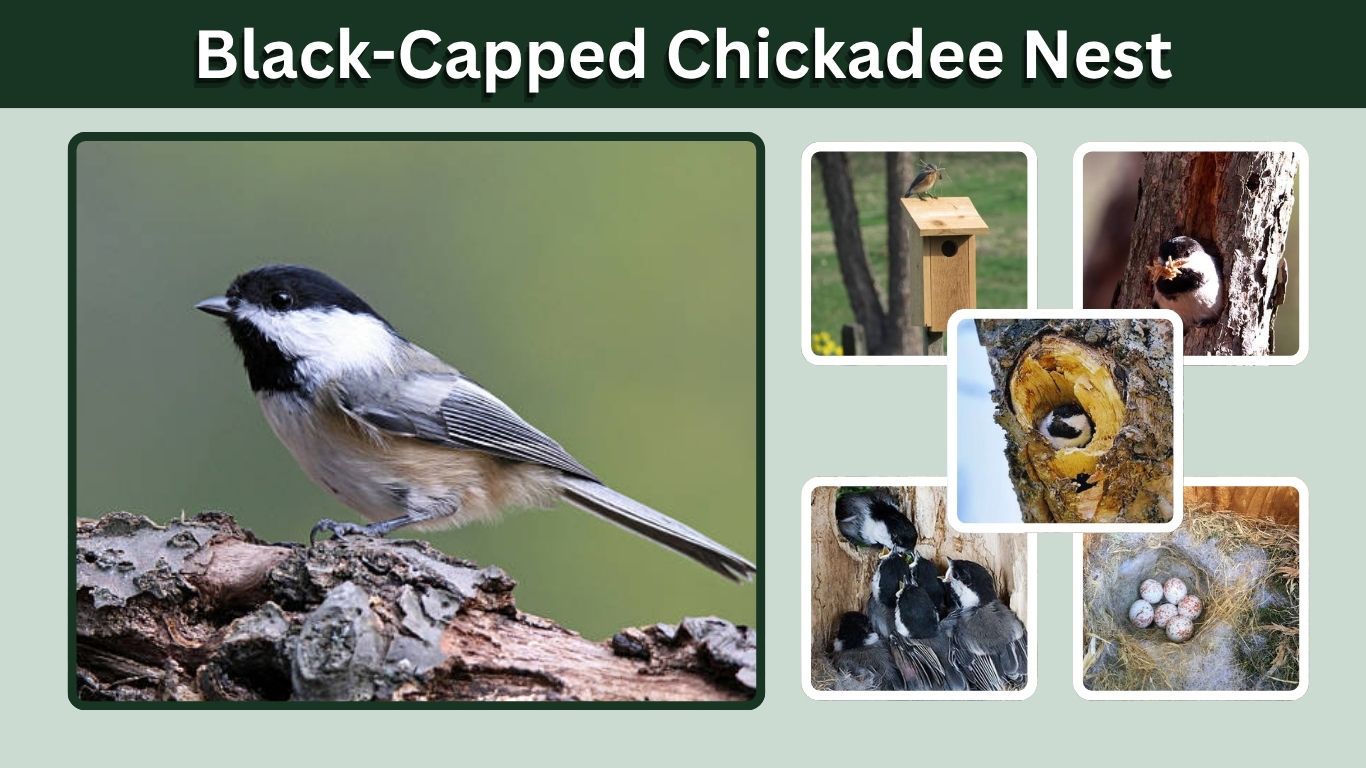
A Black-capped Chickadee nest is usually hidden inside a small tree cavity, rotten branch, old woodpecker hole, or properly designed nest box. Although the nest is difficult to see from outside, its interior is carefully built with moss and lined with soft animal hair. Understanding the bird’s nesting season, nest-building behavior, eggs, and fledging timeline can help backyard birdwatchers provide a safe place for these small cavity-nesting birds.
What Does a Black-Capped Chickadee Nest Look Like?
The visible entrance may appear to be nothing more than a small round hole in a tree. Inside, however, the female creates a compact, cup-shaped nest that provides insulation and protection for her eggs and young.
Nest Location
Black-capped Chickadees commonly nest in:
- Small natural tree cavities
- Rotten branches or dead tree trunks
- Abandoned Downy Woodpecker holes
- Decaying birch or alder trees
- Wooden birdhouses and nest boxes
Natural nests can occur from near ground level to more than 65 feet high, although most are approximately 5–23 feet above the ground. Chickadees prefer soft, decaying wood because their small bills can excavate it more easily.
Nest Shape and Size
The actual nest is a small cup built at the bottom of the cavity. A natural nest chamber averages about 8 inches deep, although its shape depends on the available space inside the tree.
Because the nest is enclosed, you normally cannot see its materials from outside. Adults enter through the opening and travel downward to the hidden nest cup.
Black-Capped Chickadee Nesting Materials
The female is primarily responsible for constructing the nest cup. She normally creates two distinct layers:
- Foundation: Moss, pieces of bark, coarse plant fibers and other sturdy materials
- Inner lining: Rabbit fur, animal hair, feathers, plant down and other soft fibers
The soft lining helps cushion the eggs and insulate the young. A completed chickadee nest often looks thick, warm and noticeably softer than the grass-filled nests of many other backyard birds.
Black-Capped Chickadee Nesting Behavior
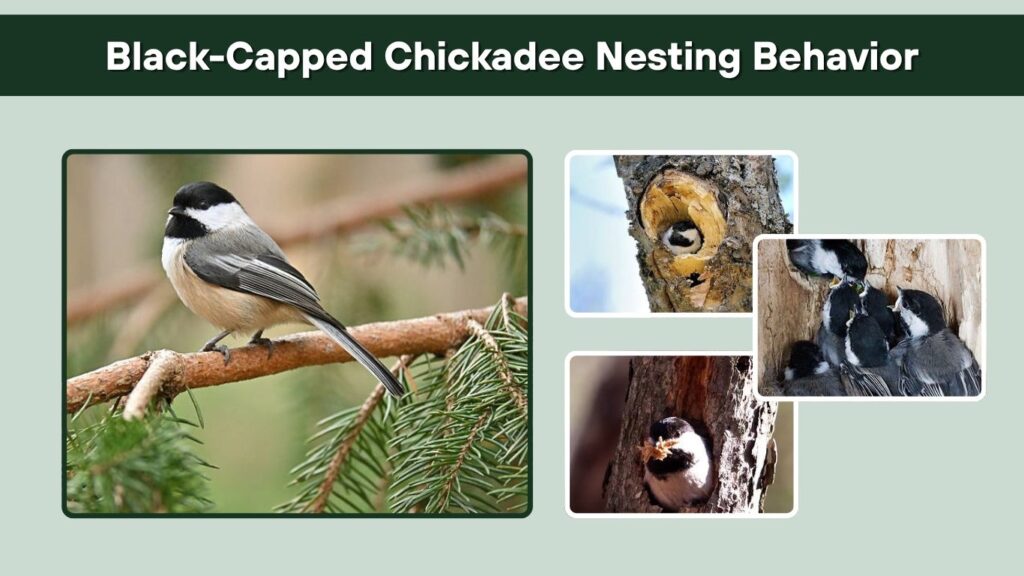
Pairs often form during fall and remain together as members of a winter flock. As winter ends, the flock separates, and each pair begins defending a breeding territory.
Choosing a Nesting Site
The female generally selects the nesting location, although both birds may inspect possible cavities. They may use an existing hole or excavate a new chamber in rotten wood.
Both the male and female can help enlarge or excavate a natural cavity. They carry small wood chips away from the entrance, gradually creating enough space for the nest. Once excavation is finished, the female builds the nest by herself.
Nesting Season
The exact nesting time varies according to latitude, weather and spring temperatures. Activity generally begins earlier in southern parts of the range and later in colder northern regions.
| Nesting stage | Typical activity |
| Late winter to early spring | Pairs separate from winter flocks |
| Early to mid-spring | Territory and nest-site selection |
| Spring | Cavity excavation and nest construction |
| Late spring | Egg laying and incubation |
| Late spring to summer | Feeding nestlings and fledging |
Black-capped Chickadees normally raise one brood each year. However, they may attempt another nest when their first nesting effort fails early in the season.
Behavior During Incubation
The female performs the incubation, while the male regularly brings her food. When she leaves the nest, she may pull soft nesting material over the eggs, temporarily hiding them beneath a fur-like covering.
This behavior may help conceal the clutch and reduce heat loss while the female is away. Incubation usually begins after most or all of the eggs have been laid.
Black-Capped Chickadee Nest and Eggs
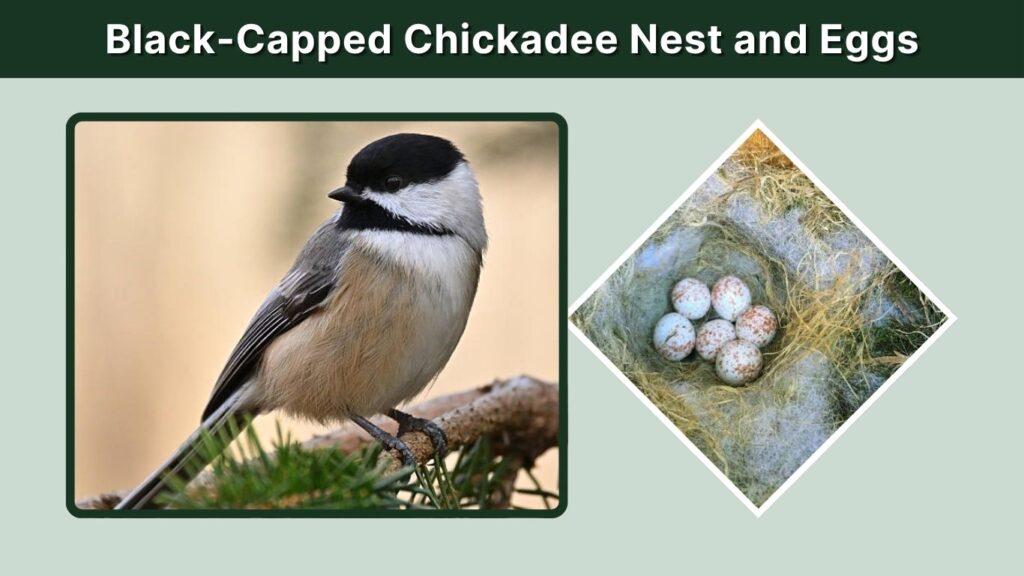
The eggs are very small and may be difficult to distinguish from those of closely related chickadees. Their markings and the moss-and-fur nest provide helpful identification clues.
What Do the Eggs Look Like?
Black-capped Chickadee eggs are white with fine reddish-brown dots or spots. Markings are sometimes more concentrated around the wider end of the egg.
Individual eggs measure approximately:
- Length: 0.6 inch
- Width: 0.5 inch
- Typical clutch: Around six to eight eggs
- Possible clutch range: One to 13 eggs
The female generally lays one egg per day until the clutch is complete. Clutch size can vary with the female’s age, food supply, geographic location and environmental conditions.
How Long Do the Eggs Take to Hatch?
The incubation period lasts approximately 12–13 days. The female incubates the eggs, while her mate supplies much of her food.
Newly hatched chicks have closed eyes and are almost completely naked. They have only a few small patches of gray down on their heads and backs, leaving them entirely dependent on their parents for warmth and food.
Caring for Baby Chickadees
During the first several days, the female spends considerable time brooding the young while the male delivers food. As the nestlings grow and need more food, both parents make repeated feeding trips.
The young receive protein-rich insects, including caterpillars and other small invertebrates. Their feathers develop rapidly inside the protected cavity.
When Do Baby Black-Capped Chickadees Leave the Nest?
The nestling period normally lasts 12–16 days. Near fledging time, young chickadees become active around the entrance and may appear fully feathered despite having short tails and slightly fluffy plumage.
Once they leave, the fledglings remain near their parents and continue receiving food while learning how to forage and avoid danger.
Black-Capped Chickadee Nest Box Guide
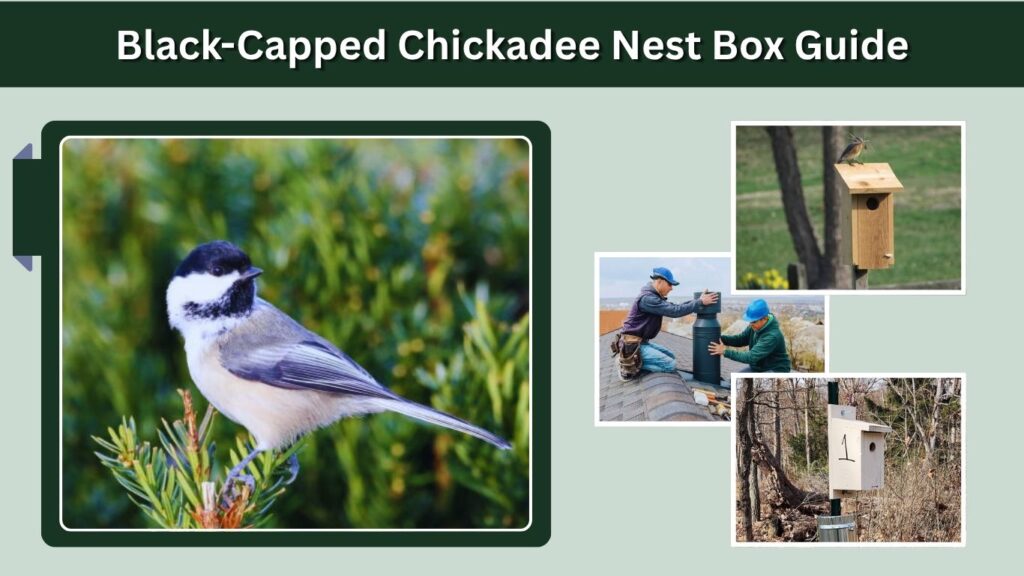
Chickadees readily accept birdhouses when suitable natural cavities are limited. The box must have appropriate dimensions, ventilation, drainage and protection from predators.
Recommended Nest Box Dimensions
| Nest-box feature | Recommended measurement |
| Entrance-hole diameter | 1⅛ inches |
| Interior floor | 5½ × 5½ inches |
| Interior depth | 8 inches |
| Installation height | 5–15 feet |
| Wood shavings | About 1 inch on the floor |
| Distance between boxes | Approximately 650 feet |
These measurements are designed specifically for Black-capped Chickadees. The small entrance helps limit access by larger competing birds.
Where to Place the Nest Box
Install the box in or near a forest, open woodland, wooded garden or tree-filled residential area. Face the opening away from prevailing winds and provide a clear flight path without branches blocking the entrance.
Placing a box at least 60 feet inside a wooded area may reduce competition from House Wrens. The box should ideally be installed well before nesting begins so chickadees have time to inspect it.
Making the Box Safe
A suitable chickadee birdhouse should include:
- Untreated wood at least ¾ inch thick
- A sloping, overhanging roof
- Ventilation near the top
- Drainage holes in the floor
- A rough interior below the entrance
- A hinged side for cleaning
- No outside perch
- A predator guard or pole baffle
Perches are unnecessary and may make it easier for predators or unwanted birds to reach the entrance. A properly installed predator guard can help protect the eggs, nestlings and adult birds.
What to Do With an Apparently Abandoned Nest
Do not assume a nest has been abandoned simply because the parents are temporarily absent. Adult chickadees leave to collect food, and an incubating female may remain away briefly between incubation sessions.
Observe from a distance rather than repeatedly opening the box. Avoid touching the eggs, moving the nest or blocking the entrance. When eggs or babies are clearly in danger, contact a licensed wildlife rehabilitator or local wildlife authority for guidance.
FAQs
Do Black-capped Chickadees reuse the same nest?
They may return to the same territory or nest box, but they usually build a fresh nest for each breeding attempt. After fledging, remove the old materials only when the nesting season has ended and the box is unquestionably empty.
Who builds the Black-capped Chickadee nest?
Both sexes may help excavate or enlarge the cavity. However, the female constructs the actual nest cup. She creates a mossy foundation and adds a soft lining made from fur, hair, feathers or plant fibers.
How high is a Black-capped Chickadee nest?
Natural cavities vary greatly in height, but many nests are approximately 5–20 feet above the ground. Cornell NestWatch recommends mounting a nest box between 5 and 15 feet high, preferably in a wooded or partly wooded location.
Should I put nesting material in a chickadee box?
Add approximately one inch of clean, untreated wood shavings to the bottom. Chickadees often prefer boxes containing material they can excavate. Do not fill the box with cotton, dryer lint, string or chemically treated sawdust.
How many babies do Black-capped Chickadees have?
A typical nest contains about six to eight eggs, although documented clutches range from one to 13. Not every egg necessarily hatches, and not every chick survives fledging. The species normally raises one brood per year.