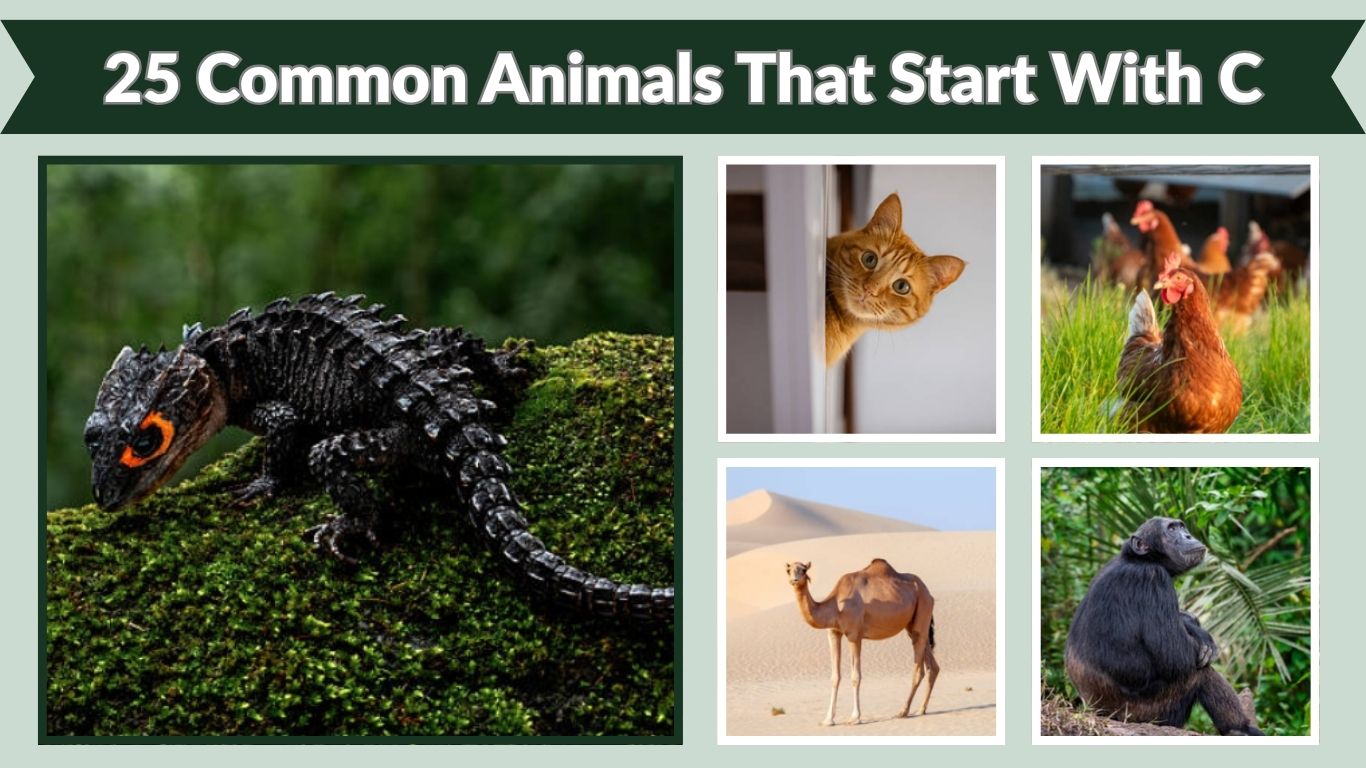
Animals that start with the letter C include a wide variety of mammals, birds, reptiles, insects, and sea creatures found across the world. Some are popular domestic animals, while others live in forests, deserts, oceans, and grasslands. From the fast-running cheetah to the colorful canary and the giant capybara, each animal has unique features, behaviors, and habitats. Learning about these animals can improve knowledge about wildlife and nature. This guide covers 25 common animals that begin with C, along with useful information about their identification, habitat, diet, behavior, and lifespan.
1. Cat

Cats are among the most loved domestic animals around the world. They are valued for their playful personality, intelligence, and ability to live comfortably with humans. Cats can adapt to small apartments, large houses, and even outdoor environments. Many people keep cats as pets because they are easy to care for and provide companionship. They are also known for keeping homes free from small pests like mice and insects.
Identification
- Small to medium-sized furry animal
- Sharp retractable claws
- Pointed ears and long tail
- Soft fur in many colors and patterns
- Makes meowing and purring sounds
Habitat
Domestic cats mainly live in homes with humans, but some also survive outdoors in cities, villages, and farms. Wild cat species may live in forests, mountains, deserts, and grasslands. Cats prefer warm and safe places where they can rest comfortably.
Behavior
Cats are curious, agile, and independent animals. They enjoy climbing, chasing moving objects, and exploring new areas. Most cats sleep for many hours each day and become more active during the morning and evening. They also communicate through body language and sounds.
Diet
Cats are carnivores, meaning they mainly eat meat. Domestic cats commonly eat fish, chicken, and specially prepared cat food. They require protein-rich meals to stay healthy and active throughout their lives.
Lifespan
The average domestic cat lives between 12 and 18 years. With good nutrition, regular exercise, and proper medical care, some cats can live beyond 20 years. Indoor cats usually live longer than outdoor cats because they face fewer dangers.
2. Cow

Cows are large domestic animals commonly raised for milk, meat, and farming purposes. They are gentle animals that have been closely connected with human life for thousands of years. Cows are important in agriculture because they help provide dairy products and support farming activities in many countries. They are found in different breeds, colors, and sizes across the world.
Identification
- Large body with four strong legs
- Covered with short hair or fur
- Long tail with a tuft of hair at the end
- Flat teeth suitable for chewing grass
- Usually has horns, though some breeds do not
Habitat
Cows mainly live on farms, grasslands, and open fields where there is enough food and water. They prefer calm environments with shelter from extreme heat, cold, and rain. Farmers often keep cows in barns or fenced areas for protection.
Behavior
Cows are social and peaceful animals that usually live in groups called herds. They spend much of their day grazing and resting. Cows communicate through sounds, body movements, and facial expressions. They are generally calm but can become protective of their young.
Diet
Cows are herbivores and mainly eat grass, hay, grains, and other plant materials. Their stomach system helps them digest tough plant fibers efficiently. They also need a regular supply of clean water to stay healthy.
Lifespan
The average cow lives between 15 and 20 years, depending on its breed, environment, and level of care. Farm cows may have shorter lives due to agricultural use, while well-cared-for cows can live much longer.
3. Camel
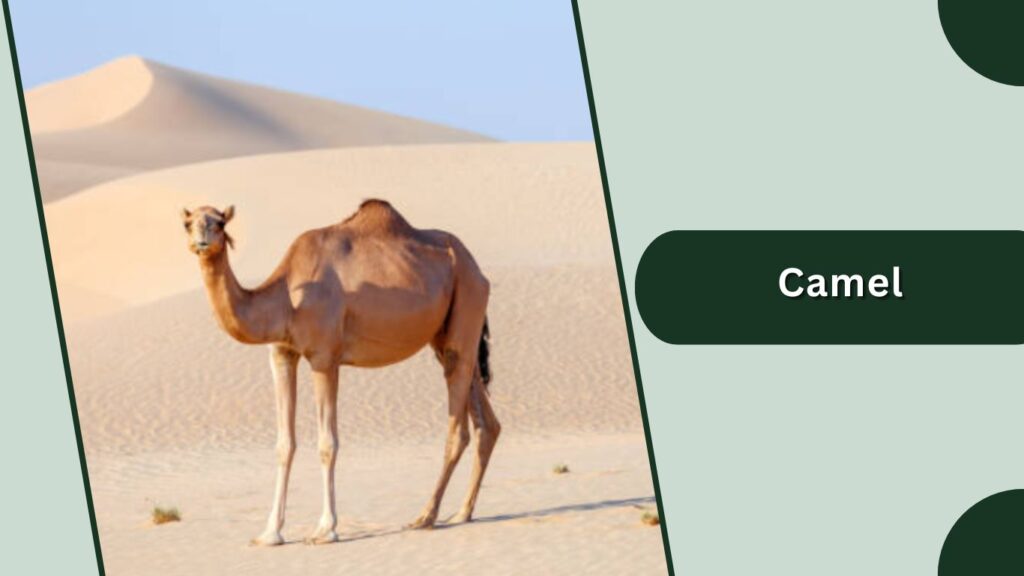
Camels are large mammals famous for their ability to survive in hot desert environments. They are often called the “ships of the desert” because they can travel long distances carrying heavy loads. Camels are highly valuable in many desert regions for transportation, milk, meat, and wool. Their bodies are specially adapted to handle extreme heat and limited water supplies.
Identification
- Large body with one or two humps on the back
- Long legs and broad feet for walking on sand
- Thick eyelashes and closable nostrils
- Long neck with a small head
- Covered with short to thick fur depending on the climate
Habitat
Camels mainly live in deserts, dry grasslands, and semi-arid regions of Asia, Africa, and the Middle East. They are well adapted to hot and dry climates where water sources may be limited for long periods.
Behavior
Camels are calm and hardy animals that can travel many miles without rest. They usually live and move in groups. Camels can carry heavy loads and are known for their patience and endurance in difficult weather conditions.
Diet
Camels are herbivores that eat dry grass, leaves, grains, and desert plants. They can survive on tough and thorny vegetation that many other animals avoid. Camels also drink large amounts of water when it becomes available.
Lifespan
Camels generally live between 40 and 50 years. With proper care, food, and protection from disease, they can remain strong and useful for many years in farming and transportation work.
4. Cheetah
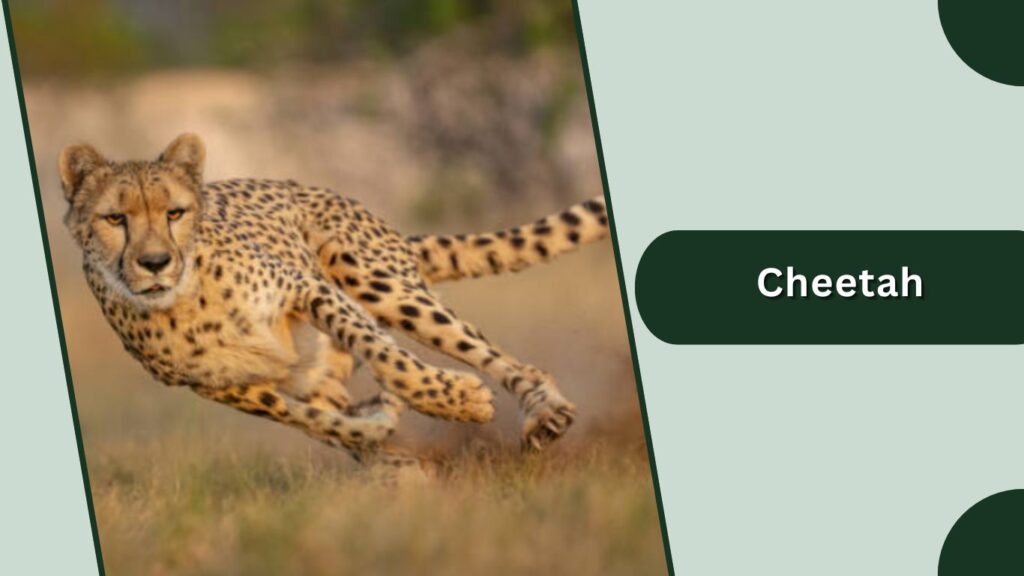
The cheetah is a wild cat known as the fastest land animal in the world. It is famous for its incredible speed, slim body, and sharp eyesight. Cheetahs mainly hunt during the daytime and rely on quick bursts of speed to catch prey. Unlike many other big cats, cheetahs are less aggressive and usually avoid direct conflict with larger predators.
Identification
- Slim and lightweight body
- Yellowish fur covered with black spots
- Long tail for balance while running
- Small head with black tear-like marks near the eyes
- Long legs built for speed
Habitat
Cheetahs mainly live in grasslands, open savannas, and dry regions of Africa. A small number of cheetahs can also be found in parts of Iran. They prefer open spaces where they can run freely while hunting.
Behavior
Cheetahs are active hunters that depend on speed rather than strength. They usually hunt small animals such as gazelles and rabbits. Cheetahs are generally shy and often avoid larger predators like lions and hyenas.
Diet
Cheetahs are carnivores and mainly eat meat. Their diet includes gazelles, antelopes, hares, and other small to medium-sized animals. They usually hunt fresh prey and eat soon after catching it.
Lifespan
Wild cheetahs usually live between 10 and 12 years, while cheetahs in protected environments may live longer. Proper care, food, and safety from predators can help increase their lifespan.
5. Crocodile
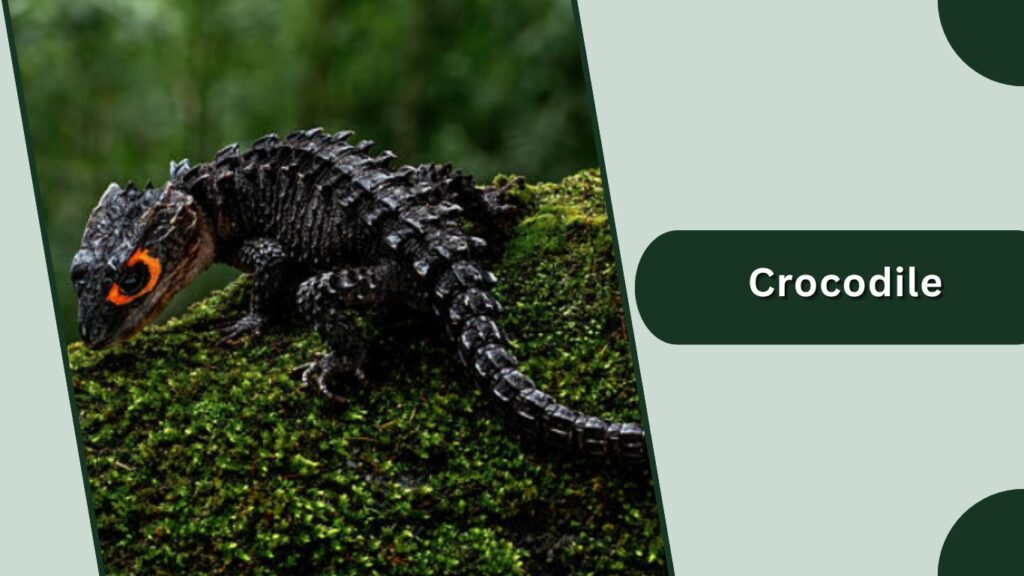
Crocodiles are large reptiles known for their powerful jaws, sharp teeth, and strong swimming abilities. They are ancient animals that have existed for millions of years. Crocodiles are skilled hunters and spend much of their time in or near water. They are considered dangerous predators and are found in tropical regions around the world.
Identification
- Long, powerful body covered with tough scales
- Strong tail used for swimming
- Sharp teeth and powerful jaws
- Short legs with webbed feet
- Eyes and nostrils located on top of the head
Habitat
Crocodiles mainly live in rivers, lakes, wetlands, swamps, and coastal areas. They prefer warm tropical climates and are commonly found in Africa, Asia, Australia, and the Americas. Some species can survive in saltwater environments.
Behavior
Crocodiles are patient hunters that often wait quietly for prey near the water’s edge. They are strong swimmers and can stay underwater for long periods. Crocodiles are usually solitary and can become highly aggressive when threatened.
Diet
Crocodiles are carnivores that eat fish, birds, reptiles, and mammals. Larger crocodiles may hunt bigger animals such as deer and wild pigs. They use their strong jaws to capture and tear apart prey.
Lifespan
Crocodiles generally live between 40 and 70 years, depending on the species and environment. Some large species in protected conditions may live even longer with proper care and a stable habitat.
6. Chicken
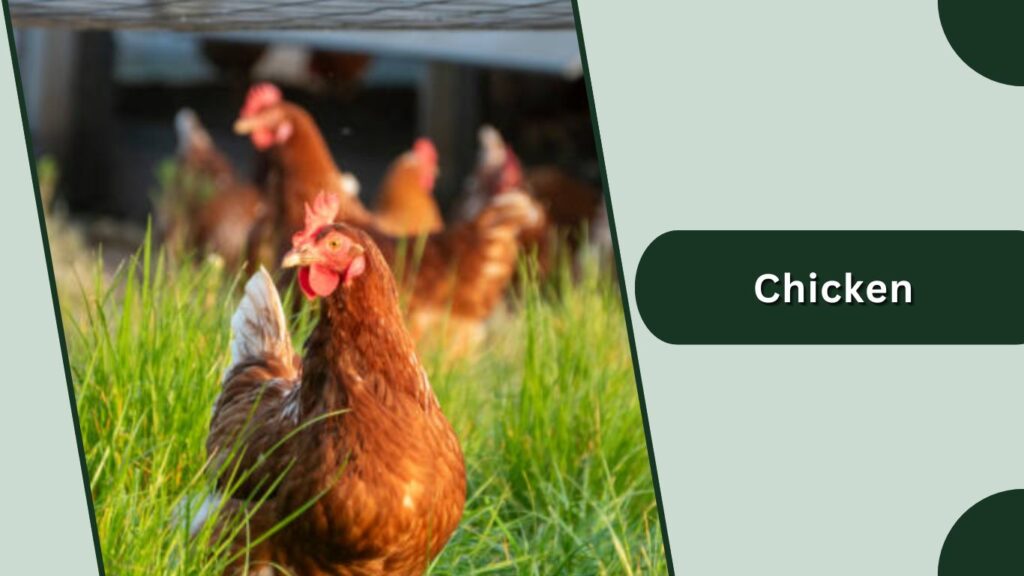
Chickens are common domestic birds raised around the world for eggs, meat, and farming purposes. They are one of the most widely kept animals because they are easy to raise and reproduce quickly. Chickens come in many breeds, sizes, and colors. They are important in agriculture and provide food for millions of people every day.
Identification
- Small to medium-sized bird with feathers
- Short beak and two legs with claws
- Red comb and wattles on the head
- Wings for short flights
- Comes in various feather colors and patterns
Habitat
Chickens usually live on farms, in backyards, and in poultry houses. They prefer safe and dry environments with enough space to move around. Farmers often keep them in coops to protect them from predators and harsh weather.
Behavior
Chickens are social birds that often live in groups called flocks. They spend much of their time scratching the ground in search of food. Chickens communicate through clucking sounds and body movements. Hens are also protective of their chicks.
Diet
Chickens are omnivores and eat grains, seeds, insects, vegetables, and small worms. Domestic chickens are commonly fed specially prepared poultry feed to support healthy growth and egg production.
Lifespan
Most chickens live between 5 and 10 years, depending on their breed and living conditions. Chickens raised for farming purposes may have shorter lifespans, while pet chickens can live much longer with proper care.
7. Chimpanzee
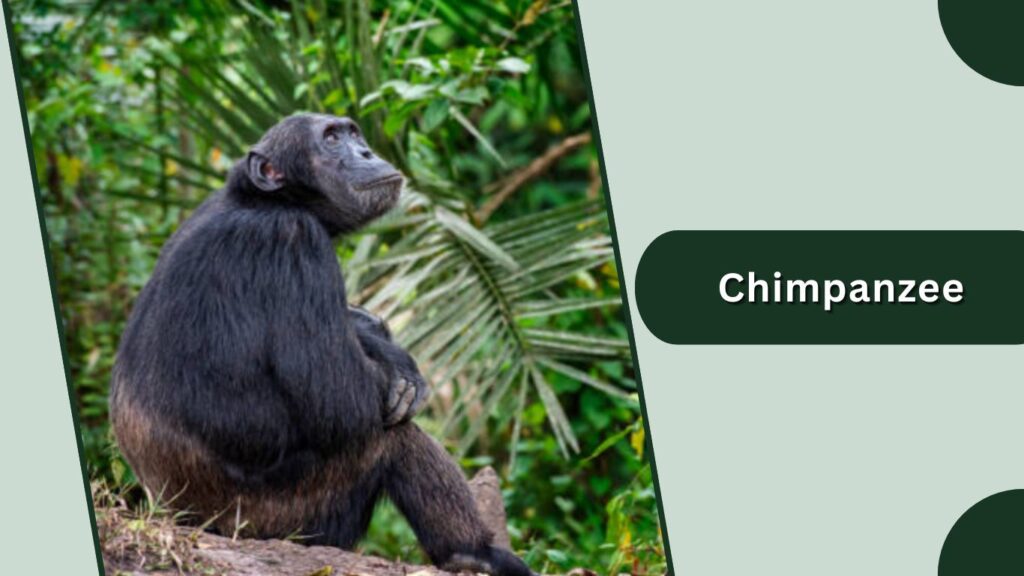
Chimpanzees are intelligent primates closely related to humans. They are known for their problem-solving abilities, social behavior, and use of simple tools. Chimpanzees live in groups and communicate through sounds, facial expressions, and gestures. They are highly active animals and spend much of their time climbing trees or searching for food.
Identification
- Covered with black or dark brown hair
- Long arms and strong hands for climbing
- Flat face with expressive eyes
- No tail
- Walks on knuckles while moving on the ground
Habitat
Chimpanzees mainly live in tropical forests, woodlands, and grasslands of central and western Africa. They prefer areas with plenty of trees, water, and food sources. Forest environments also provide shelter and protection from predators.
Behavior
Chimpanzees are social animals that live in communities led by dominant members. They work together while searching for food and protecting their group. Chimpanzees are known to use sticks and stones as tools and can learn from observation and experience.
Diet
Chimpanzees are omnivores and eat fruits, leaves, seeds, nuts, insects, and small animals. Fruit makes up a large part of their diet. They may also hunt small mammals in groups when food is available.
Lifespan
Chimpanzees usually live between 30 and 40 years in the wild. In protected environments with proper care and medical attention, some chimpanzees can live beyond 50 years.
8. Cougar

The cougar is a large wild cat known for its strength, agility, and ability to adapt to different environments. It is also called a mountain lion, puma, or panther in some regions. Cougars are skilled hunters that rely on stealth and powerful leaps to catch prey. They are usually solitary animals and avoid human contact whenever possible.
Identification
- Large muscular body with short fur
- Tawny or light brown coat color
- Long tail with a dark tip
- Strong legs and sharp claws
- Rounded ears and pale underside
Habitat
Cougars live in forests, mountains, deserts, grasslands, and swamps across North and South America. They are highly adaptable and can survive in both cold and warm climates. Cougars prefer areas with enough cover for hunting.
Behavior
Cougars are solitary and mostly active during the night or early morning. They are excellent climbers and jumpers, capable of leaping long distances. Cougars quietly stalk their prey before attacking with speed and strength.
Diet
Cougars are carnivores that mainly eat deer, rabbits, and other medium-sized animals. They may also hunt smaller mammals and birds when necessary. Cougars depend entirely on meat for survival and energy.
Lifespan
Wild cougars usually live between 8 and 13 years. In protected environments with proper care and fewer threats, they may live up to 20 years or more.
9. Cobra
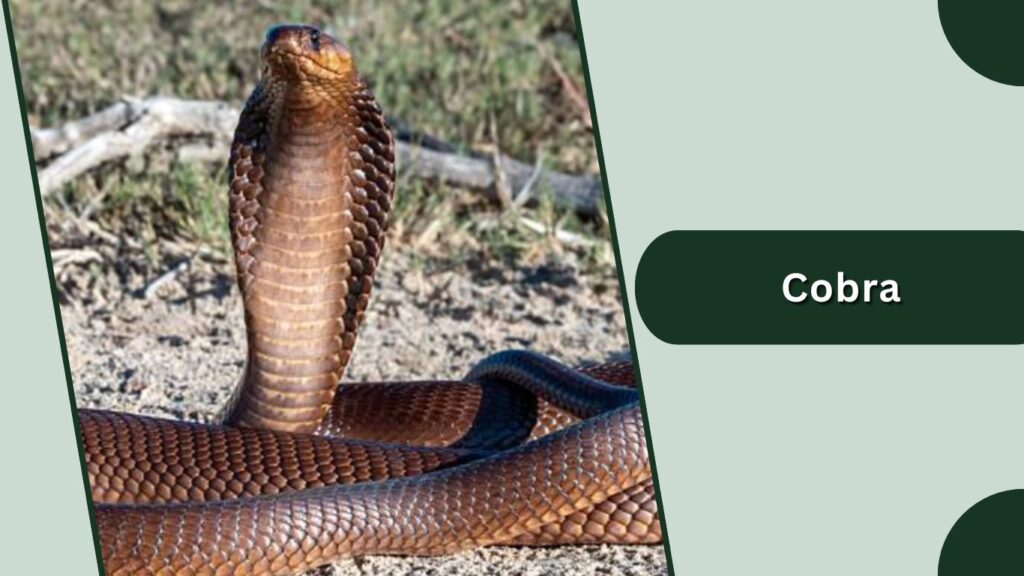
Cobras are venomous snakes known for their hooded necks and powerful venom. They are among the most recognized snake species in the world and are often associated with forests, grasslands, and tropical regions. Cobras use their venom mainly for hunting and self-defense. Many species of cobras can raise the front part of their body and spread their hood when they feel threatened.
Identification
- Long, slender body covered with scales
- Expandable hood around the neck
- Forked tongue used for sensing surroundings
- Sharp fangs that inject venom
- Usually brown, black, or yellowish in color
Habitat
Cobras mainly live in forests, grasslands, wetlands, and agricultural areas across Asia and Africa. Some species also live near villages and water sources where food is available. They prefer warm climates with places to hide.
Behavior
Cobras are generally shy and avoid humans when possible. When threatened, they raise their body, spread their hood, and hiss loudly as a warning. Cobras are skilled hunters and mostly active during the night or cooler parts of the day.
Diet
Cobras are carnivores that mainly eat rodents, frogs, birds, eggs, and other small reptiles. Some larger cobras may also hunt other snakes. They swallow their prey whole after capturing it with venom.
Lifespan
Cobras usually live between 15 and 20 years, depending on the species and living conditions. In protected environments with proper care and food, some cobras may live even longer.
10. Crab
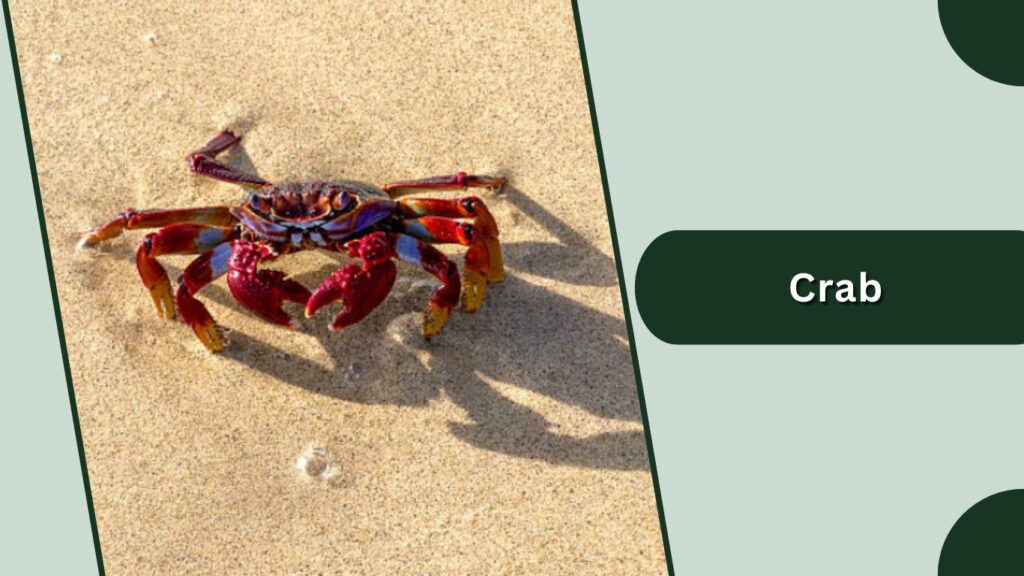
Crabs are crustaceans that live in oceans, rivers, and coastal areas around the world. They are known for their hard outer shells and sideways walking style. Crabs play an important role in aquatic ecosystems by helping clean the environment through feeding on dead plants and animals. Many crab species are also used as food in different countries.
Identification
- Hard outer shell called an exoskeleton
- Ten legs, including two strong claws
- Wide and flat body shape
- Eyes located on short stalks
- Usually walks sideways instead of forward
Habitat
Crabs mainly live in oceans, beaches, mangroves, rivers, and wetlands. Some species live entirely underwater, while others spend time both on land and in water. They often hide under rocks, sand, or mud for protection.
Behavior
Crabs are active scavengers that search for food along the ground or underwater. They use their claws for defense, digging, and capturing food. Many crabs are territorial and may fight with other crabs over shelter or food.
Diet
Crabs are omnivores and eat plants, algae, small fish, worms, and dead animals. Some species also feed on shellfish and tiny aquatic organisms. Their diet depends on their habitat and available food sources.
Lifespan
The lifespan of crabs varies greatly by species. Small crabs may live only a few years, while larger species can survive for 20 years or more in suitable environments with enough food and protection.
11. Crow
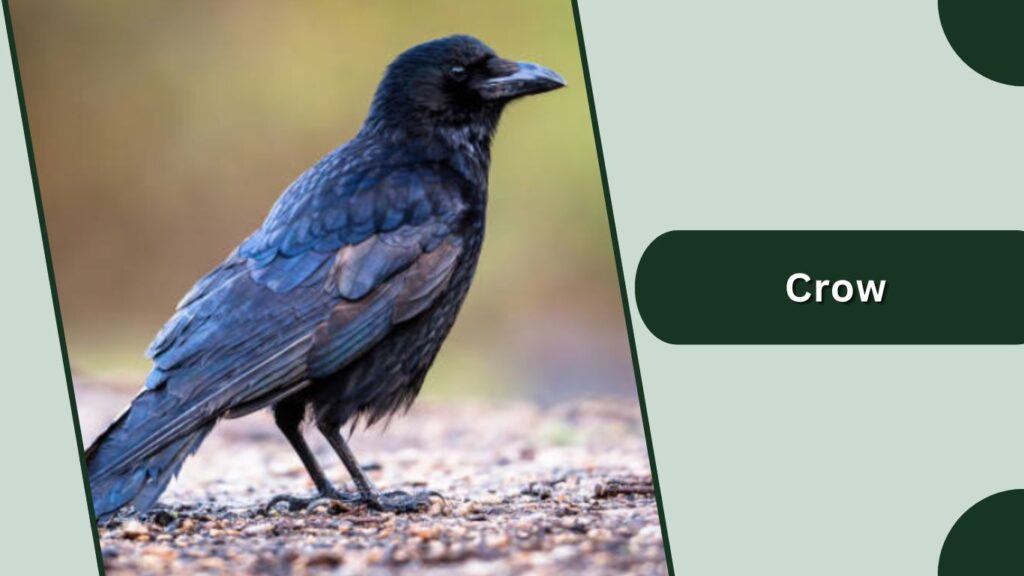
Crows are highly intelligent birds found in many parts of the world. They are known for their problem-solving skills, loud calls, and ability to adapt to different environments. Crows often live close to humans and can survive in cities, forests, farms, and villages. They are social birds that usually move and feed in groups.
Identification
- Medium-sized black bird
- Strong black beak and legs
- Glossy feathers with a dark shine
- Sharp eyesight and alert behavior
- Loud “caw” sound used for communication
Habitat
Crows live in forests, grasslands, farmlands, cities, and suburban areas. They can adapt to almost any environment as long as food and shelter are available. Trees, rooftops, and tall structures are common nesting places for crows.
Behavior
Crows are extremely intelligent and can recognize faces, use tools, and remember locations. They often work together in groups to search for food and warn each other about danger. Crows are active during the day and communicate through different calls and body movements.
Diet
Crows are omnivores and eat insects, grains, fruits, small animals, eggs, and food scraps. They are also scavengers and help clean the environment by feeding on dead animals and waste materials.
Lifespan
Wild crows generally live between 7 and 15 years. In safe environments with enough food and fewer predators, some crows can survive for more than 20 years.
12. Canary

Canaries are small colorful birds famous for their beautiful singing voices. They are popular pets because of their cheerful nature and attractive appearance. Originally found in the Canary Islands, these birds are now kept in homes around the world. Canaries are easy to care for and are often kept in cages or aviaries.
Identification
- Small bird with a slim body
- Bright yellow feathers are most common
- Short pointed beak
- Smooth feathers and small wings
- Known for sweet and melodic singing sounds
Habitat
Wild canaries live in forests, gardens, and shrublands in island regions. Domestic canaries usually live in cages, aviaries, or indoor bird shelters. They prefer clean and quiet environments with enough space to fly.
Behavior
Canaries are active and social birds that enjoy hopping, flying, and singing. Male canaries are especially known for their strong singing ability. They are generally peaceful birds and can become stressed in noisy or crowded conditions.
Diet
Canaries mainly eat seeds, grains, fruits, and vegetables. Pet canaries are often fed special birdseed mixes along with fresh greens and clean water. A balanced diet helps maintain healthy feathers and strong singing ability.
Lifespan
Canaries usually live between 8 and 12 years with proper care. Good nutrition, a clean environment, and regular attention can help them stay healthy and active for many years.
13. Caribou

Caribou are large deer-like mammals that live in cold northern regions. They are well known for their long migrations and ability to survive harsh winter climates. In North America, they are called caribou, while in Europe and Asia they are often known as reindeer. Caribou are important to Arctic ecosystems and have cultural value for many indigenous communities.
Identification
- Large body covered with thick fur
- Both males and females can grow antlers
- Broad hooves for walking on snow and soft ground
- Long legs and short tail
- Fur color ranges from brown to grayish white
Habitat
Caribou mainly live in tundra, boreal forests, and Arctic regions of North America, Europe, and Asia. They prefer cold environments with open land for migration and access to seasonal food sources.
Behavior
Caribou are social animals that often travel in large herds. They migrate long distances to find food and suitable breeding grounds. These animals are strong swimmers and can survive extreme cold weather conditions.
Diet
Caribou are herbivores that eat grasses, mosses, leaves, shrubs, and lichens. During winter, lichens become an important part of their diet because other vegetation may be covered by snow.
Lifespan
Caribou generally live between 10 and 15 years in the wild. Their lifespan depends on food availability, climate conditions, predators, and overall health within their environment.
14. Caterpillar
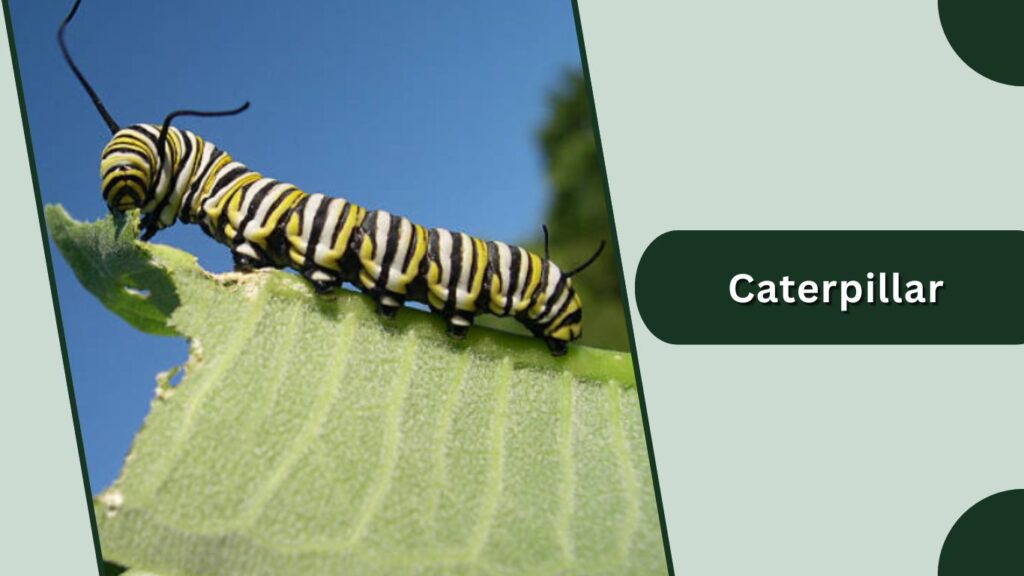
Caterpillars are the larval stage of butterflies and moths. They are soft-bodied insects mainly known for their eating habits and transformation into adult insects through metamorphosis. Caterpillars come in many colors, sizes, and patterns, with some species covered in tiny hairs or spines for protection. They play an important role in nature as both plant feeders and a food source for other animals.
Identification
- Long, soft-bodied insect
- Multiple small legs along the body
- Often brightly colored or patterned
- Small head with strong jaws for chewing leaves
- Some species have hairs or spines for defense
Habitat
Caterpillars live in gardens, forests, grasslands, farms, and areas with plenty of plants. They are usually found on leaves, branches, and stems where food is easily available. Different species prefer different types of plants.
Behavior
Caterpillars spend most of their time eating and growing. They move slowly and may hide under leaves to avoid predators. As they grow, they shed their skin several times before forming a cocoon or chrysalis.
Diet
Most caterpillars are herbivores and mainly eat leaves, flowers, fruits, and plant stems. Some species feed only on specific plants, while others can eat many types of vegetation.
Lifespan
The caterpillar stage usually lasts from a few weeks to several months, depending on the species and environmental conditions. After this stage, the caterpillar transforms into a butterfly or moth.
15. Clam
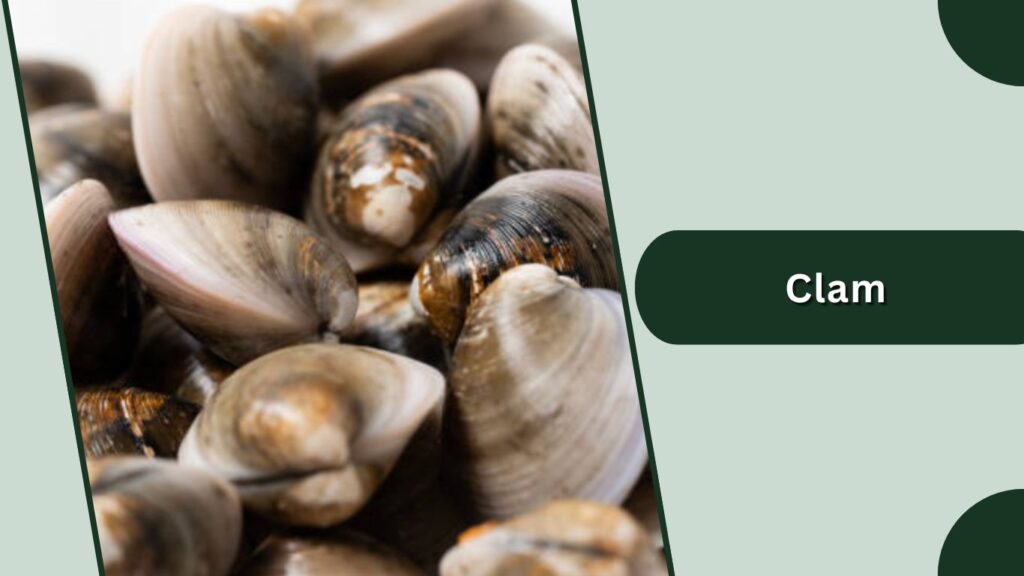
Clams are shellfish that live in oceans, rivers, and freshwater environments. They are soft-bodied animals protected by two hard shells connected by a hinge. Clams spend most of their lives buried in sand or mud, where they filter tiny food particles from the water. Many clam species are also used as food in different parts of the world.
Identification
- Soft body protected by two hard shells
- Oval or rounded shell shape
- No visible head or limbs
- Muscular foot used for digging into sand or mud
- Shell colors vary from white and gray to brown
Habitat
Clams mainly live in coastal waters, riverbeds, lakes, and muddy ocean floors. They prefer sandy or soft-bottom environments where they can easily bury themselves for protection and feeding.
Behavior
Clams are generally slow-moving animals that spend much of their time buried under sand or mud. They open their shells slightly to filter water for food and oxygen. Clams usually remain hidden to avoid predators.
Diet
Clams are filter feeders that eat tiny plankton, algae, and organic particles found in water. They pull water through their bodies and trap food using specialized organs called gills.
Lifespan
The lifespan of clams varies widely depending on the species. Some small clams live only a few years, while larger species may survive for several decades in healthy aquatic environments.
16. Cod

Cod is a type of fish widely known for its importance in commercial fishing and human food supply. It is commonly found in cold ocean waters and is valued for its mild flavor and white meat. Cod has been an important part of fishing industries for centuries and is used in many traditional dishes around the world.
Identification
- Medium to large fish with a streamlined body
- Usually gray, green, or brown in color
- Light-colored belly
- Small barbel located under the chin
- Three dorsal fins along the back
Habitat
Cod mainly live in cold and deep waters of the Atlantic and Pacific Oceans. They are commonly found near the seafloor in coastal and offshore regions. Cod prefer cool environments with plenty of smaller fish and marine life for food.
Behavior
Cod are active swimmers that often travel in groups called schools. They spend much of their time searching for food near the ocean floor. Cod migrate seasonally to find suitable breeding and feeding areas.
Diet
Cod are carnivorous fish that eat smaller fish, squid, worms, and crustaceans. Young cod feed mainly on tiny marine organisms, while adult cod hunt larger prey as they grow.
Lifespan
Cod generally live between 15 and 25 years, depending on the species and environmental conditions. Healthy ocean habitats and controlled fishing practices help support longer lifespans and stable populations.
17. Coyote
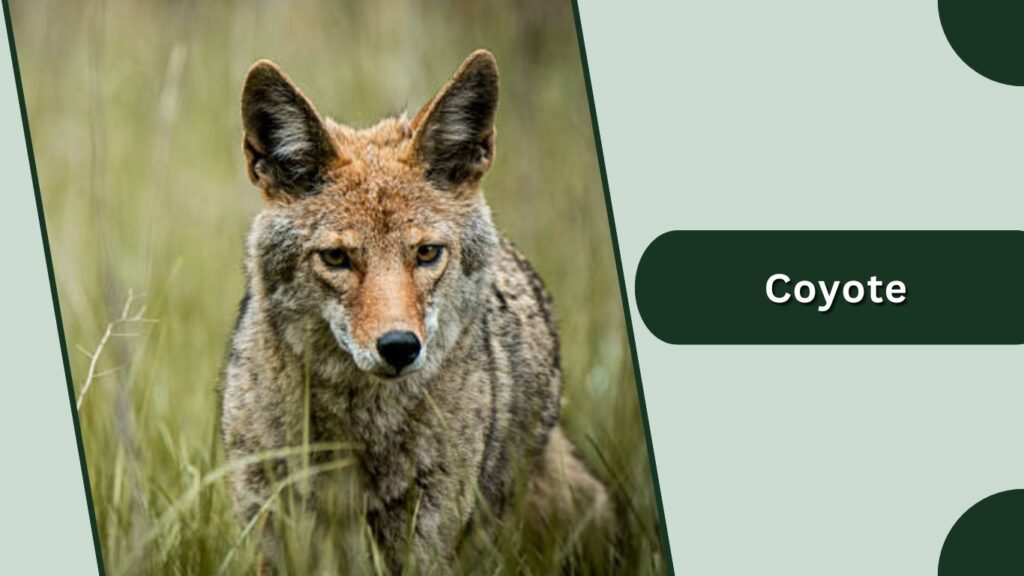
Coyotes are wild members of the dog family known for their intelligence, adaptability, and survival skills. They are commonly found across North and Central America and can live in forests, deserts, mountains, and even urban areas. Coyotes are skilled hunters and scavengers that can survive in many different environments.
Identification
- Medium-sized body with thick fur
- Pointed ears and narrow snout
- Bushy tail with a dark tip
- Fur color usually gray, brown, or reddish
- Long legs built for running and hunting
Habitat
Coyotes live in grasslands, forests, deserts, mountains, and suburban areas. They are highly adaptable animals and can survive near human settlements if food and shelter are available. Open areas with places to hide are ideal for them.
Behavior
Coyotes are intelligent and cautious animals that are often active during the night. They may live alone, in pairs, or in small family groups. Coyotes communicate through howls, barks, and body language to mark territory and contact others.
Diet
Coyotes are omnivores and eat rabbits, rodents, birds, insects, fruits, and carrion. They may also consume human food waste when living near cities or towns. Their flexible diet helps them survive in many habitats.
Lifespan
Wild coyotes usually live between 6 and 10 years. In protected environments with fewer predators and access to food, some coyotes may live much longer.
18. Cockatoo
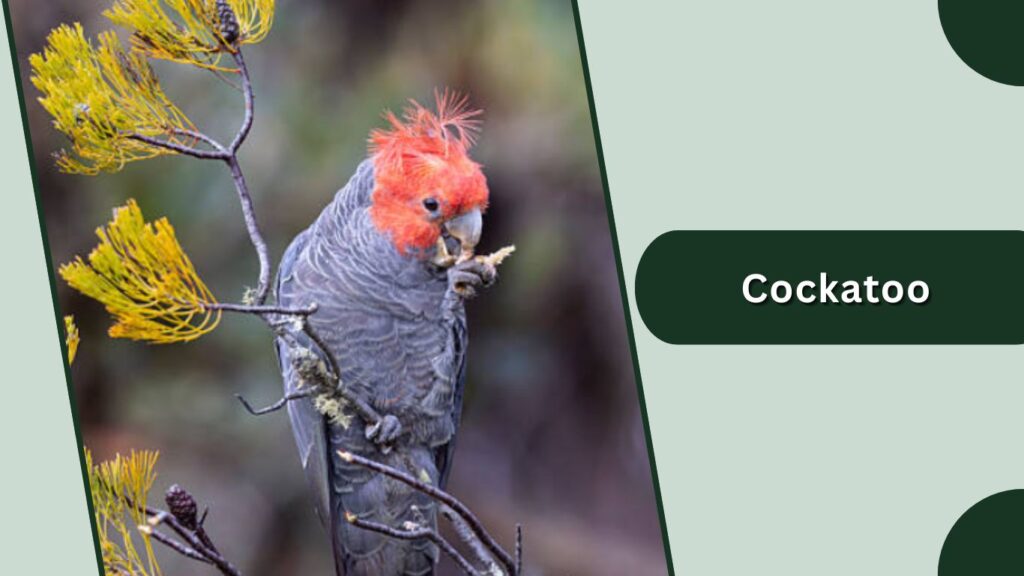
Cockatoos are intelligent and social birds known for their beautiful crests and loud vocal sounds. They belong to the parrot family and are popular as pets because of their playful personalities and ability to interact with humans. Cockatoos are native mainly to Australia and nearby islands, where they live in forests and open woodlands.
Identification
- Medium to large bird with curved beak
- Distinctive feather crest on the head
- Strong claws for climbing and holding objects
- Mostly white, gray, black, or pink feathers
- Loud and expressive vocal sounds
Habitat
Cockatoos live in forests, woodlands, grasslands, and coastal regions. Some species also adapt to farms and urban areas. They prefer places with tall trees for nesting and access to water and food.
Behavior
Cockatoos are highly social birds that often live in flocks. They are playful, curious, and capable of learning tricks and sounds. These birds need regular social interaction and mental stimulation to remain healthy and active.
Diet
Cockatoos are mainly herbivores that eat seeds, nuts, fruits, berries, roots, and flowers. Some species also eat insects and larvae when available. Their strong beaks help them crack hard seeds and nuts easily.
Lifespan
Cockatoos are long-living birds and can survive between 40 and 70 years depending on the species and level of care. Pet cockatoos with proper nutrition and attention may live even longer.
19. Corgi

Corgis are small herding dogs known for their short legs, long bodies, and friendly personalities. They were originally bred for working on farms, especially for herding cattle and sheep. Today, corgis are popular pets because they are intelligent, loyal, and energetic companions. The two main breeds are the Pembroke Welsh Corgi and the Cardigan Welsh Corgi.
Identification
- Small dog with a long body and short legs
- Thick double coat with various colors
- Large upright ears and bright eyes
- Strong body despite small size
- Often has a short or docked tail
Habitat
Corgis can live comfortably in homes, apartments, farms, and suburban areas. They adapt well to different living conditions as long as they receive enough exercise and attention. They prefer environments where they can stay active and interact with people.
Behavior
Corgis are intelligent, playful, and highly energetic dogs. They enjoy learning commands and participating in games or activities. Because of their herding background, they may try to guide people or other animals by gently nipping at heels.
Diet
Corgis eat high-quality dog food, meat, vegetables, and specially prepared pet meals. They need balanced nutrition to maintain a healthy weight, as they can easily become overweight if overfed.
Lifespan
Corgis generally live between 12 and 15 years. Proper exercise, healthy food, and regular veterinary care can help them remain active and healthy throughout their lives.
20. Chinchilla
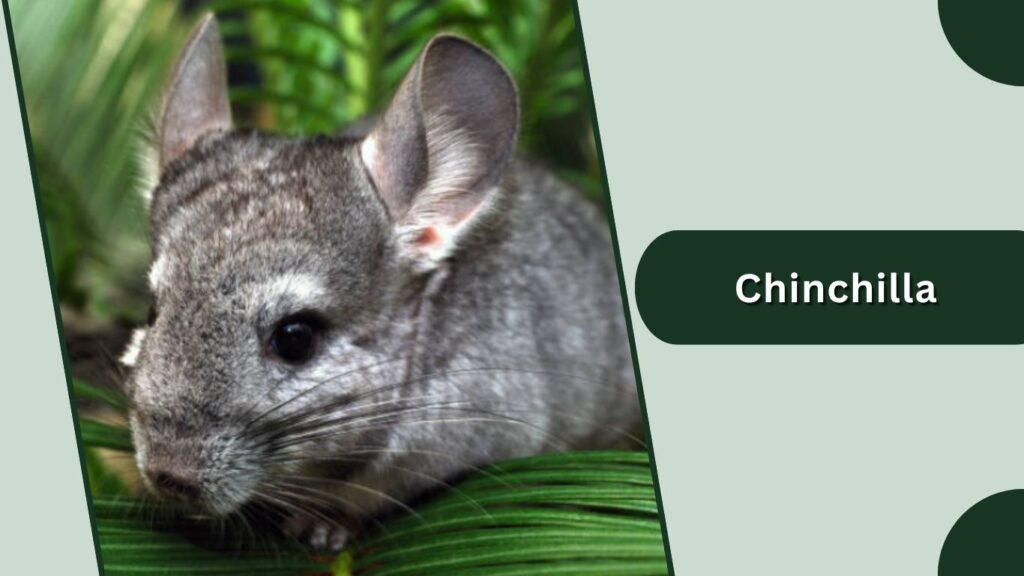
Chinchillas are small furry mammals known for their extremely soft fur and active behavior. They are native to the Andes Mountains in South America and are popular as pets because of their gentle and playful nature. Chinchillas are sensitive animals that require cool environments and careful handling to stay healthy.
Identification
- Small body covered with very soft dense fur
- Large round ears and big dark eyes
- Long bushy tail
- Strong hind legs for jumping
- Usually gray, white, black, or beige in color
Habitat
Wild chinchillas live in rocky mountain regions with cool and dry climates. Pet chinchillas are usually kept indoors in large cages with enough space for climbing and jumping. They prefer clean and cool living conditions.
Behavior
Chinchillas are energetic and curious animals that are mostly active during the evening and night. They enjoy climbing, jumping, and exploring their surroundings. Chinchillas are social creatures and can become stressed if they feel lonely or unsafe.
Diet
Chinchillas are herbivores that mainly eat hay, grasses, and specially prepared pellets. They may also eat small amounts of dried herbs and safe vegetables. A high-fiber diet is important for their digestive health.
Lifespan
Chinchillas generally live between 10 and 20 years with proper care. Good nutrition, a clean environment, and regular attention help them stay healthy and active for a long time.
21. Chipmunk
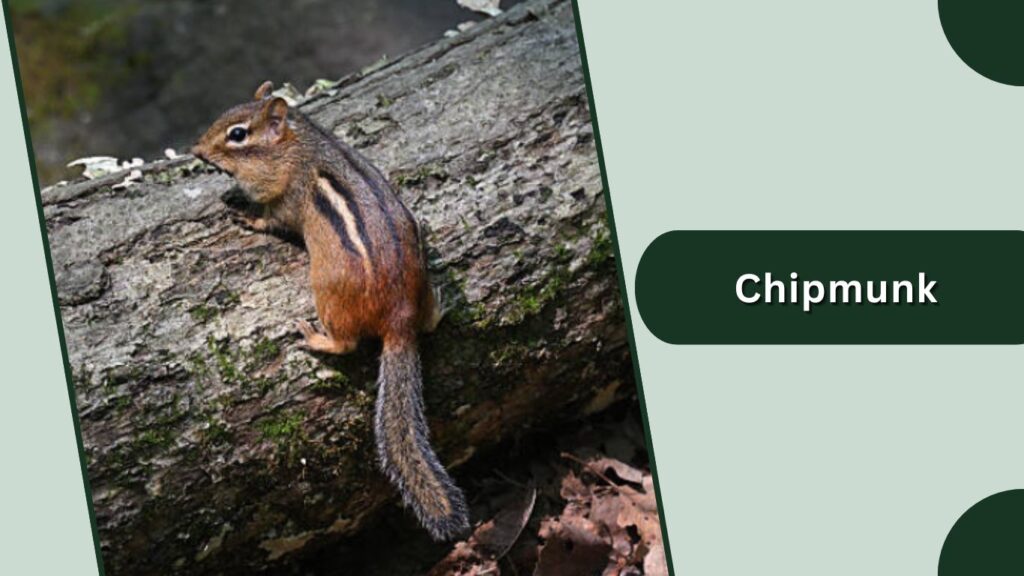
Chipmunks are small striped rodents that belong to the squirrel family. They are known for their quick movements, cheek pouches, and playful behavior. Chipmunks are commonly found in forests, gardens, and parks, where they gather and store food for colder seasons. These animals are active during the daytime and are skilled climbers and diggers.
Identification
- Small body with brown or reddish fur
- Distinct black and white stripes on the back
- Large cheek pouches for carrying food
- Bushy tail and short legs
- Bright eyes and small rounded ears
Habitat
Chipmunks mainly live in forests, woodlands, gardens, and grassy areas. They build burrows underground for shelter, sleeping, and storing food. These burrows help protect them from predators and harsh weather conditions.
Behavior
Chipmunks are active and energetic animals that spend much of their time searching for food. They are usually solitary and communicate through chirping sounds and body movements. Chipmunks store food in their burrows to prepare for winter months.
Diet
Chipmunks are omnivores and eat seeds, nuts, berries, fruits, insects, and small plants. They gather and store large amounts of food during warmer seasons for future use.
Lifespan
Chipmunks generally live between 2 and 5 years in the wild. In safer environments with proper care and fewer predators, they may survive longer.
22. Cuttlefish
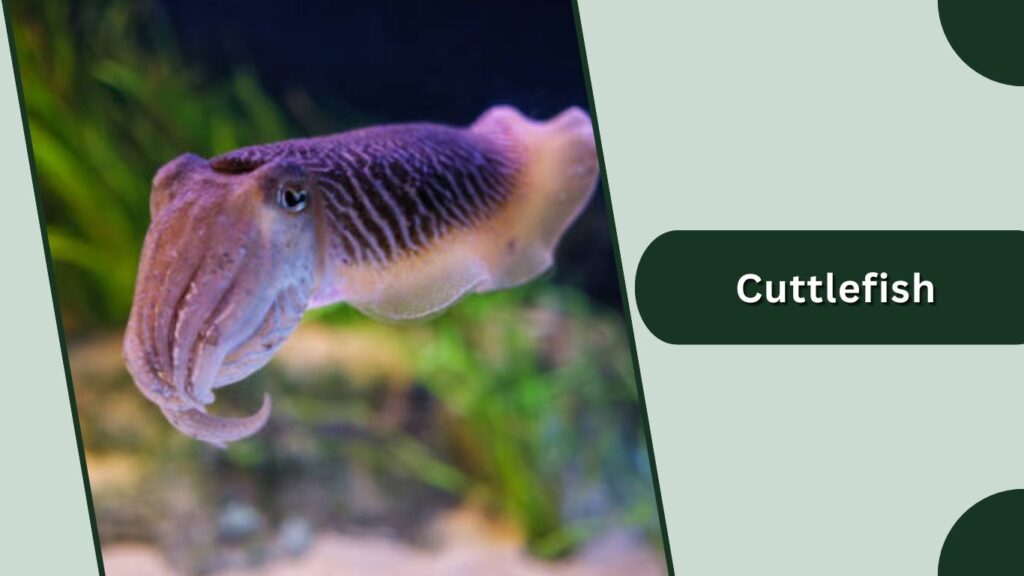
Cuttlefish are marine animals related to squid and octopuses. They are famous for their intelligence, color-changing abilities, and unique internal shell called a cuttlebone. Cuttlefish use camouflage to hide from predators and communicate with other cuttlefish. These fascinating sea creatures are found in oceans around the world and are known for their quick movements underwater.
Identification
- Soft body with eight arms and two tentacles
- Large eyes with excellent vision
- Internal shell called a cuttlebone
- Ability to change color and skin patterns
- Fins along the sides of the body for swimming
Habitat
Cuttlefish mainly live in shallow coastal waters, coral reefs, and sandy ocean floors. They prefer warm and temperate seas where they can hide among rocks, plants, and underwater structures.
Behavior
Cuttlefish are intelligent and skilled hunters. They use camouflage to blend into their surroundings and escape danger. These animals communicate through changing colors and body patterns. They are usually active during the day and hunt quietly in the water.
Diet
Cuttlefish are carnivores that eat small fish, crabs, shrimp, and other marine animals. They capture prey using their tentacles and strong beak-like mouth.
Lifespan
Most cuttlefish live between 1 and 2 years. Although their lifespan is short, they grow quickly and spend much of their lives hunting and reproducing in ocean environments.
23. Cricket

Crickets are small insects known for the chirping sounds made by males, especially during the night. These insects belong to the grasshopper family and are found in many parts of the world. Crickets are important in nature because they help recycle plant material and serve as food for many animals such as birds, frogs, and reptiles.
Identification
- Small insect with a slim body
- Long antennae and strong hind legs
- Usually brown, black, or green in color
- Wings used for producing chirping sounds
- Capable of jumping long distances
Habitat
Crickets live in grasslands, forests, gardens, farms, and sometimes inside homes. They prefer warm environments with hiding places such as rocks, soil, wood piles, and thick grass. Many species stay active during the night.
Behavior
Crickets are mostly nocturnal insects, meaning they are active after sunset. Male crickets create chirping sounds by rubbing their wings together to attract females. Crickets are quick jumpers and often hide when they sense danger nearby.
Diet
Crickets are omnivores that eat plants, seeds, fruits, fungi, and small insects. Some species also feed on decaying organic matter, helping keep the environment clean.
Lifespan
Most crickets live between a few weeks and several months, depending on the species and environmental conditions. Warm temperatures and enough food help support their growth and survival.
24. Capybara
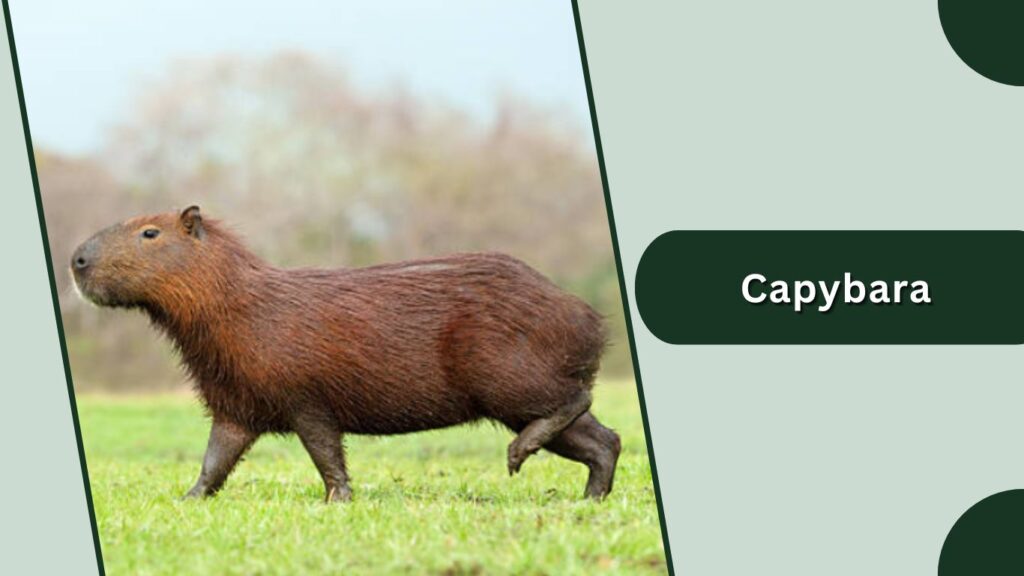
Capybaras are the largest rodents in the world and are known for their calm and social nature. They are native to South America and are often found near water. Capybaras are excellent swimmers and spend a lot of time resting in groups. Their friendly behavior and unique appearance have made them popular animals in zoos and wildlife parks.
Identification
- Large rodent with a heavy body
- Short brown or reddish fur
- Small ears and blunt nose
- Webbed feet that help with swimming
- Short tail that is barely visible
Habitat
Capybaras mainly live near rivers, lakes, swamps, and wetlands in South America. They prefer areas with plenty of water and vegetation because water helps them stay cool and escape from predators.
Behavior
Capybaras are highly social animals that usually live in groups. They are gentle and spend much of their time grazing, swimming, and resting. These animals are excellent swimmers and can stay underwater for several minutes when hiding from danger.
Diet
Capybaras are herbivores that mainly eat grasses, aquatic plants, fruits, and bark. They spend many hours grazing each day to meet their nutritional needs.
Lifespan
Capybaras generally live between 8 and 12 years. In protected environments with proper food and care, they may live even longer.
25. Cassowary
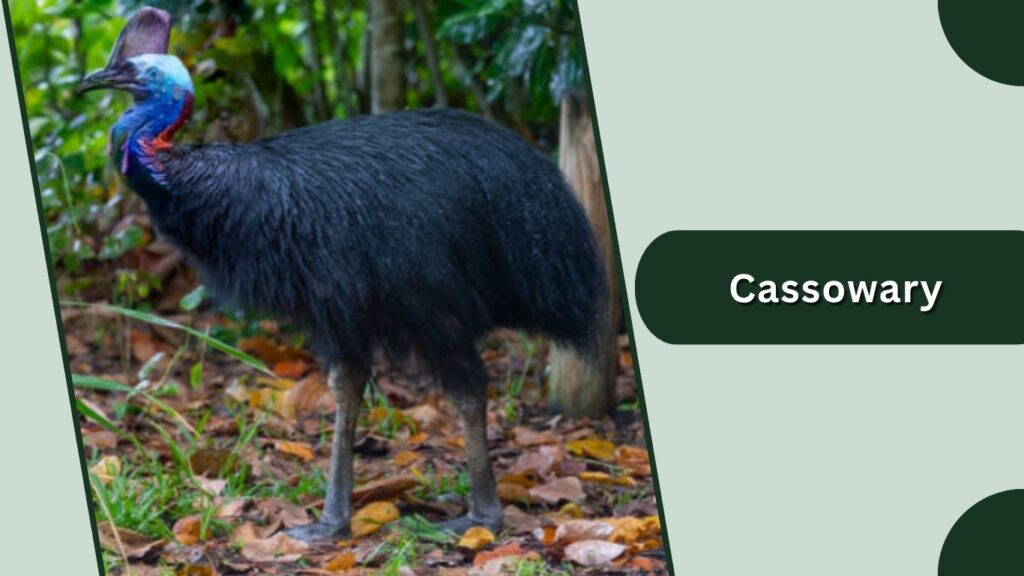
Cassowaries are large flightless birds native to the tropical forests of Australia and New Guinea. They are known for their striking appearance, powerful legs, and protective behavior. Cassowaries play an important role in forest ecosystems because they help spread seeds through the fruits they eat. Although they usually avoid humans, they can become dangerous if threatened.
Identification
- Large flightless bird with a strong body
- Black feathers that look like hair
- Bright blue and red skin on the neck
- Hard helmet-like casque on top of the head
- Powerful legs with sharp claws
Habitat
Cassowaries mainly live in tropical rainforests, wetlands, and dense forest areas. They prefer habitats with thick vegetation and access to fruits, water, and shelter. Most cassowaries are found in northeastern Australia and New Guinea.
Behavior
Cassowaries are generally solitary birds that spend much of their time searching for food in the forest. They are excellent runners and can move quickly through dense vegetation. When threatened, cassowaries may kick with their powerful legs for defense.
Diet
Cassowaries are mainly frugivores, meaning they mostly eat fruits. They also consume seeds, fungi, insects, and small animals when available. Their diet helps spread plant seeds across forest areas.
Lifespan
Cassowaries usually live between 30 and 40 years, depending on their environment and level of protection. In safe and well-managed habitats, they may survive for many years.
FAQs
What is the fastest animal that starts with C?
The cheetah is the fastest animal that starts with the letter C. It can run at speeds of up to 70 miles per hour for short distances while hunting prey in open grasslands.
Which animal starting with C is the largest rodent?
The capybara is the largest rodent in the world. It is a gentle and social animal that mainly lives near rivers, lakes, and wetlands in South America.
Are cobras dangerous to humans?
Yes, cobras are venomous snakes and can be dangerous if they feel threatened. However, they usually avoid humans and only attack when they need to defend themselves.
Which bird starting with C cannot fly?
The cassowary is a large flightless bird found in tropical forests. Although it cannot fly, it is a powerful runner and can defend itself with strong legs and sharp claws.
What do domestic cats usually eat?
Domestic cats mainly eat meat-based foods such as fish, chicken, and prepared cat food. Since cats are carnivores, they need protein-rich meals to stay healthy and active.