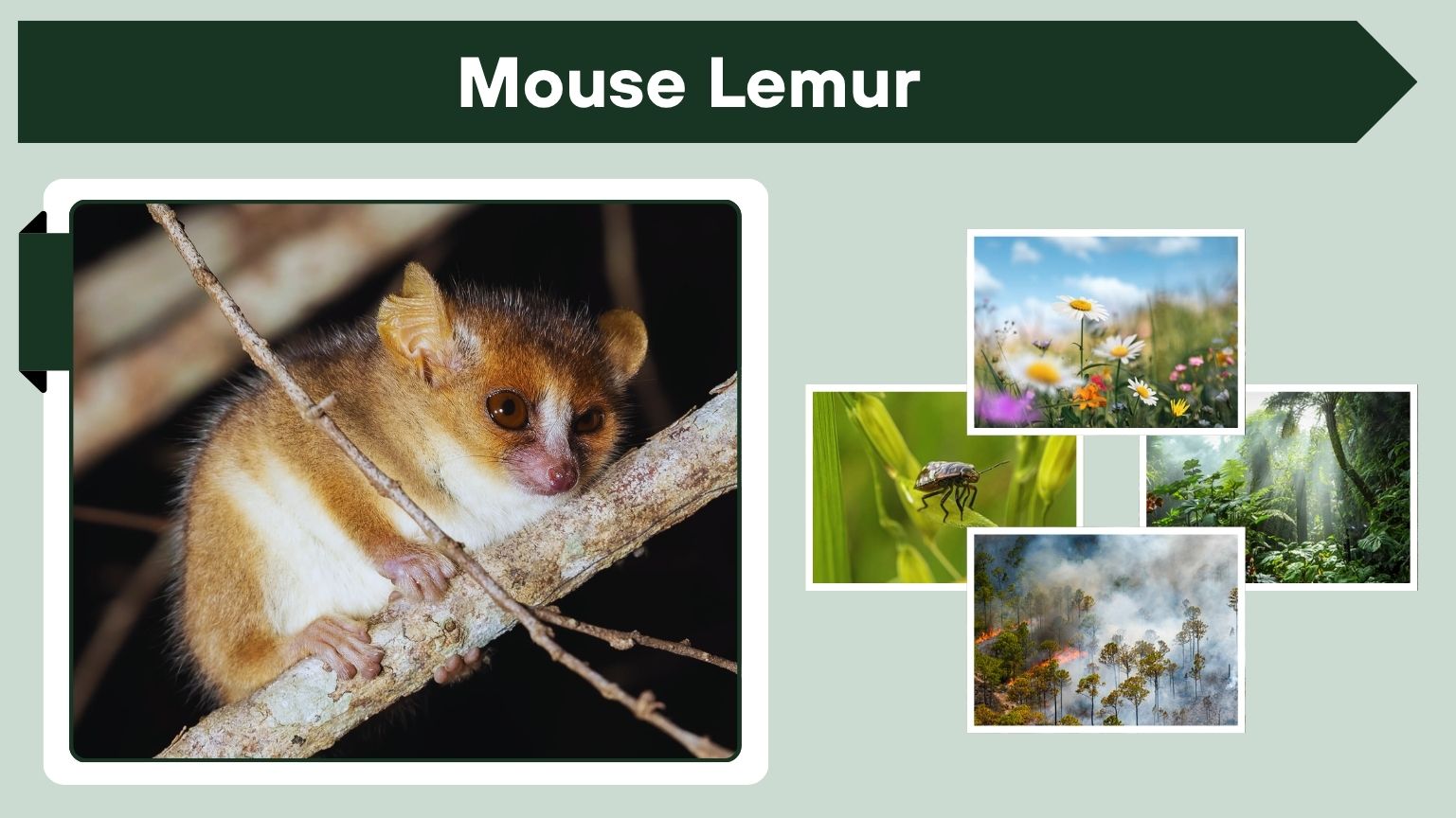
Mouse lemurs are tiny primates that live only in Madagascar. Known for their large eyes, soft fur, and nighttime lifestyle, these animals are among the smallest primates in the world. Scientists continue discovering new mouse lemur species, making them one of the most fascinating groups of mammals on Earth. From the gray mouse lemur to Madame Berthe’s mouse lemur, each species has unique traits and behaviors. Their small size, tree-dwelling habits, and role in forest ecosystems make mouse lemurs important animals for conservation and scientific research.
What Is a Mouse Lemur?
Mouse lemurs are small nocturnal primates belonging to the genus Microcebus. They are part of the lemur family and are found naturally only in Madagascar. Despite their tiny appearance, mouse lemurs are agile climbers and highly adaptable animals that survive in different forest habitats.
Mouse Lemur vs Lemur
Many people confuse mouse lemurs with larger lemur species. While both belong to the same primate group, mouse lemurs are much smaller and more active at night. Ring-tailed lemurs and sifakas are larger, social, and often active during the day, while mouse lemurs usually forage alone after sunset.
Mouse lemurs also have faster movements and rely heavily on their night vision. Their huge eyes help them move through trees in darkness, allowing them to locate insects, fruits, and nectar efficiently. Unlike larger lemurs, mouse lemurs can hide easily in dense vegetation because of their tiny body size.
Why Mouse Lemurs Are Special
Several characteristics make mouse lemurs unique among primates:
- They are among the world’s smallest primates.
- Most species are active only at night.
- Their large eyes improve low-light vision.
- They can leap quickly between tree branches.
- Some species store fat in their tails during food shortages.
These adaptations help mouse lemurs survive in Madagascar’s changing forest environments.
Types of Mouse Lemurs
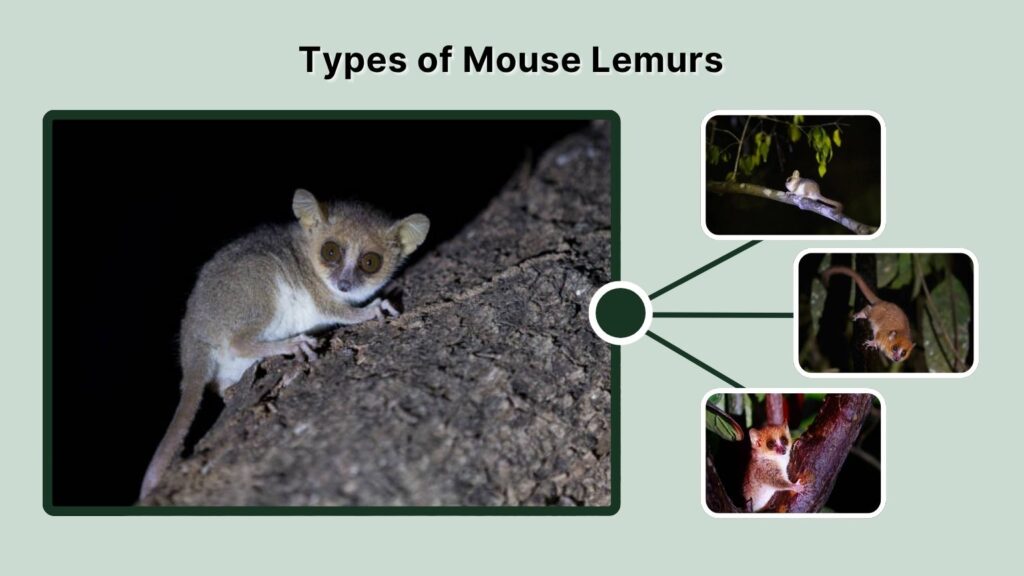
More than 20 mouse lemur species have been identified by scientists. Many species look similar, but they differ in habitat, size, and genetic makeup. Madagascar’s isolated forests allowed these tiny primates to evolve into multiple unique species over time.
Gray Mouse Lemur
The gray mouse lemur, also called the grey mouse lemur, is one of the best-known species. It has soft gray-brown fur, large ears, and bright eyes that reflect light at night. This species mainly lives in western and southern Madagascar forests.
Gray mouse lemurs are omnivores that eat insects, fruits, flowers, and tree sap. They are excellent climbers and spend most of their lives in trees. In the wild, they usually live for several years, while individuals in captivity may survive longer with proper care and protection.
Goodman’s Mouse Lemur
Goodman’s mouse lemur was named after scientist Steven Goodman for his contributions to Madagascar wildlife research. This species lives in eastern Madagascar forests and prefers dense vegetation for shelter and feeding.
Like other mouse lemurs, Goodman’s mouse lemur is nocturnal and highly active after dark. It uses its sharp hearing and strong sense of smell to locate food and avoid predators. Habitat destruction remains one of the biggest threats to this species.
Madame Berthe’s Mouse Lemur
Madame Berthe’s mouse lemur is famous for being the smallest primate in the world. Adults are extremely tiny and weigh only a few ounces. Their small body allows them to move quickly through narrow branches and forest vegetation.
Unfortunately, this species is also highly threatened because of deforestation in Madagascar. As forests disappear, the available habitat for Madame Berthe’s mouse lemur continues shrinking. Conservation programs are important for protecting this rare primate.
Mouse Lemur Habitat
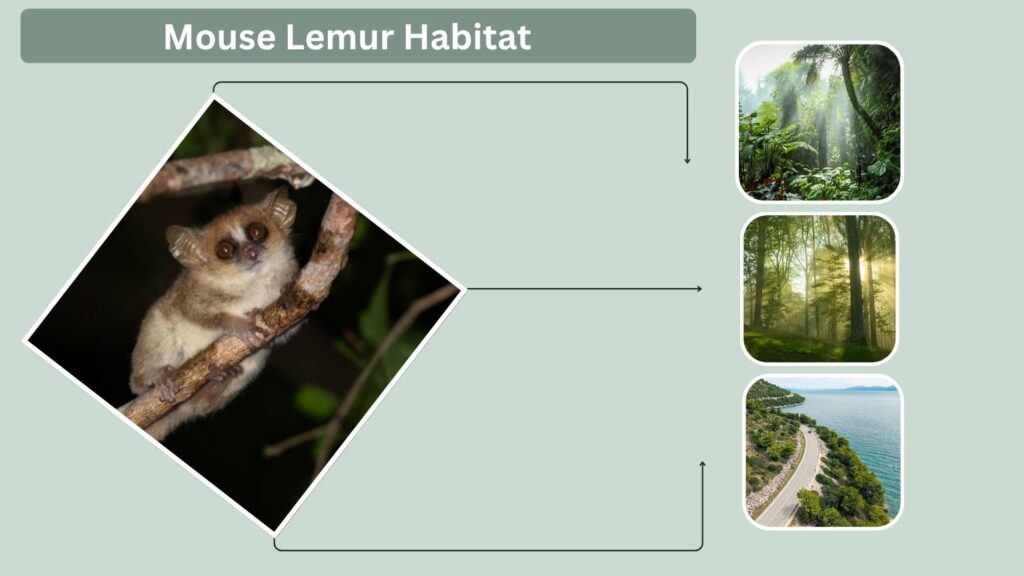
Mouse lemurs live only in Madagascar, an island known for its unusual wildlife and rich biodiversity. Different species occupy rainforests, dry deciduous forests, and coastal woodland areas. Most mouse lemurs spend nearly all their time in trees.
Where Do Mouse Lemurs Live?
Mouse lemurs are distributed across various regions of Madagascar. Some species prefer humid rainforests, while others survive in dry forests with seasonal weather conditions. Their habitats usually contain dense trees, vines, and hidden sleeping spots.
During the daytime, mouse lemurs rest in tree holes, leaf nests, or thick vegetation. At night, they become active and travel through the forest searching for food. Their climbing ability allows them to move rapidly between branches while avoiding predators.
Mouse Lemur Adaptations
Mouse lemurs have several important survival adaptations that help them live in Madagascar forests:
- Large eyes for improved night vision
- Sharp hearing to detect predators
- Long tails for balance while climbing
- Flexible fingers for gripping branches
- Fast movement through dense vegetation
These features make mouse lemurs highly effective nocturnal animals.
What Do Mouse Lemurs Eat?
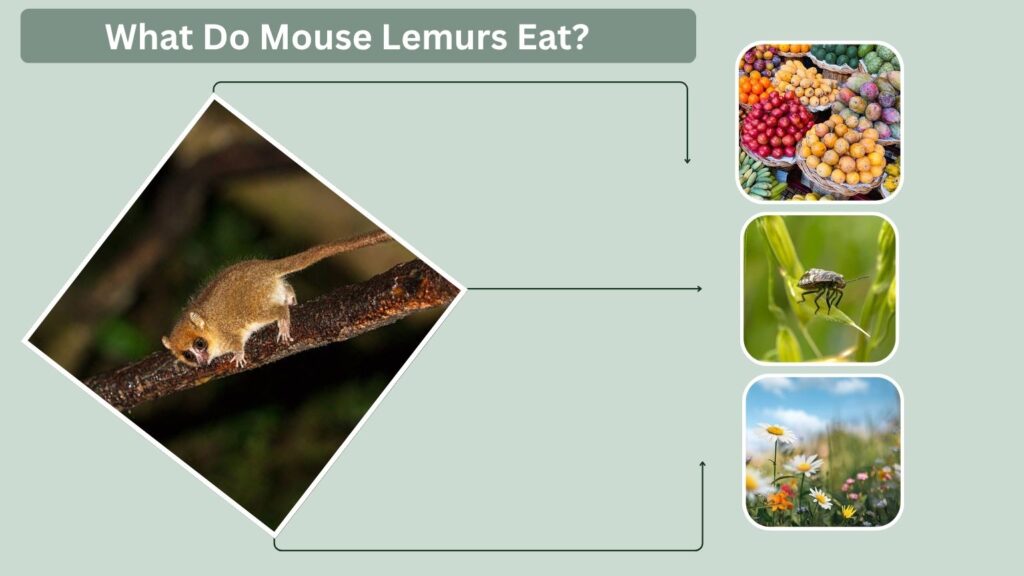
Mouse lemurs are omnivores, meaning they consume both plant and animal food sources. Their diet changes depending on the season and food availability within their habitat. Because Madagascar forests experience seasonal shifts, mouse lemurs must adapt their feeding habits throughout the year.
Mouse Lemur Diet
Common foods eaten by mouse lemurs include:
- Fruits
- Insects
- Nectar
- Flowers
- Tree sap
- Small invertebrates
Insects provide important protein, while fruits and nectar supply energy. Some species also lick tree sap or feed on flowers during dry seasons when fruit is limited.
Hunting and Feeding Behavior
Mouse lemurs usually forage alone at night. They move carefully through trees while searching for insects hidden in bark or leaves. Their strong sense of smell helps them locate ripe fruit and nectar-producing flowers.
These tiny primates are active feeders and may travel long distances during the night to find enough food. During colder or drier periods, some mouse lemurs conserve energy by entering short periods of torpor, which lowers their body activity temporarily.
Mouse Lemur Behavior
Mouse lemurs are active, intelligent, and highly adaptable animals. Their nocturnal lifestyle helps them avoid predators and compete for food in Madagascar’s forests. Although they are small, mouse lemurs display complex behaviors that allow them to survive in challenging environments.
Are Mouse Lemurs Nocturnal?
Mouse lemurs spend most of the daytime resting inside tree holes or hidden nests. After sunset, they become active and begin searching for food throughout the forest canopy. Their large reflective eyes are specially adapted for seeing in low-light conditions.
Because they are nocturnal, mouse lemurs rely heavily on sound and smell while moving through trees at night. This behavior reduces competition with daytime animals and helps them avoid some predators.
Social Behavior
Mouse lemurs are usually solitary foragers, but they still communicate with one another using vocal calls and scent marking. Females sometimes share sleeping nests, especially during colder periods when body warmth is important.
Their communication methods include:
- High-pitched vocal sounds
- Scent marking on branches
- Physical body movements
- Warning calls for danger
These behaviors help mouse lemurs recognize territory boundaries and avoid conflicts.
Mouse Lemur Predators
Despite their speed and climbing skills, mouse lemurs face many natural predators in Madagascar forests. Their small size makes them vulnerable to both ground and tree-dwelling hunters.
Common predators include:
- Owls and other birds of prey
- Snakes
- Fossas
- Wild cats
- Large reptiles
To survive, mouse lemurs depend on camouflage, fast movement, and nighttime activity.
Mouse Lemur Lifespan and Reproduction
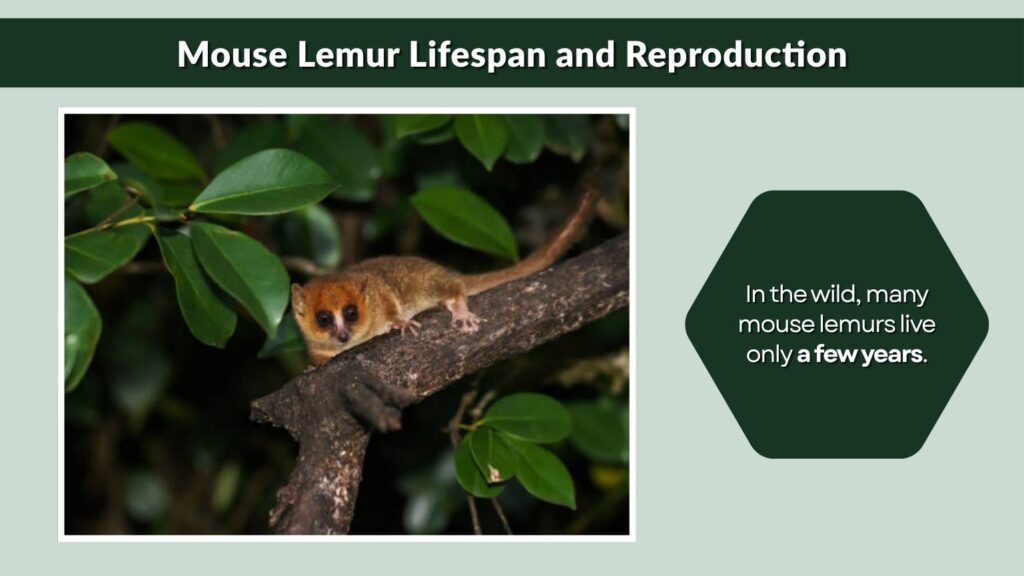
Mouse lemurs have relatively short lives in the wild because of predators, habitat loss, and environmental challenges. However, they reproduce quickly, helping populations recover when conditions remain stable.
How Long Do Mouse Lemurs Live?
The lifespan of a mouse lemur depends on species, habitat quality, and predator pressure. In the wild, many mouse lemurs live only a few years, although some survive much longer in protected conditions.
Mouse lemurs in captivity often live longer because they receive regular food, veterinary care, and protection from predators. Scientists study their aging process because mouse lemurs share certain biological traits with humans.
Reproduction and Babies
Mouse lemurs breed seasonally, usually during warmer months when food becomes more available. Females give birth to small litters after a short gestation period.
Young mouse lemurs develop quickly and rely on their mothers during early life. Important reproductive traits include:
- Seasonal breeding cycles
- Fast growth of babies
- Maternal protection in nests
- Early independence after development
Rapid reproduction helps maintain populations despite environmental threats.
Are Mouse Lemurs Endangered?
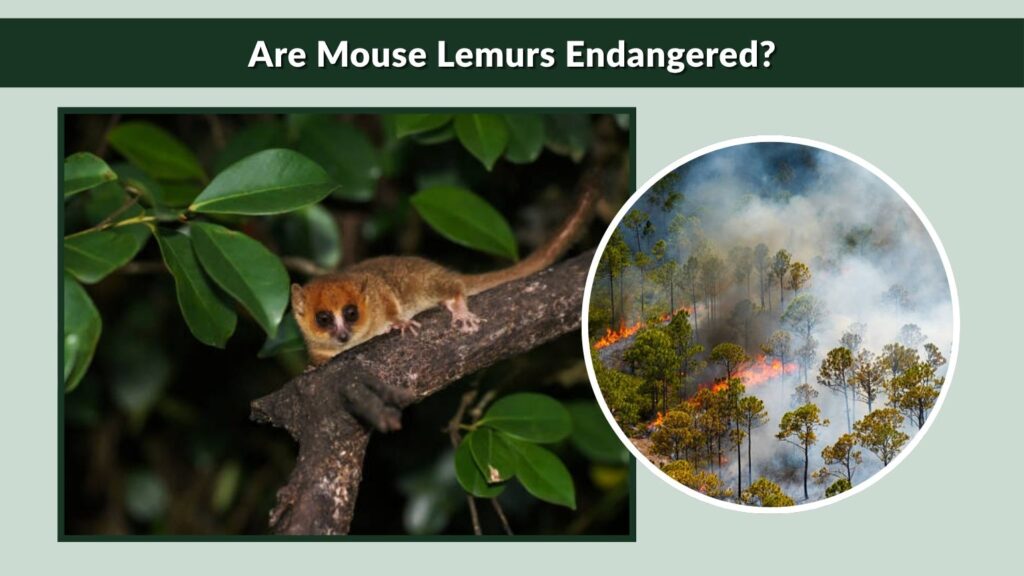
Many mouse lemur species are threatened because Madagascar continues losing large areas of forest habitat. Although some species remain widespread, others have very small populations and limited geographic ranges.
Conservation Status
Scientists classify several mouse lemur species as vulnerable or endangered. Conservation status varies depending on habitat size and environmental conditions. Species with smaller forest ranges face greater risks of extinction.
Madame Berthe’s mouse lemur is considered especially threatened because it survives only in a restricted area of Madagascar. Continued habitat destruction could severely affect its population.
Why Mouse Lemurs Are Threatened
Mouse lemurs face several environmental dangers that continue reducing their populations:
- Deforestation for farming
- Illegal logging
- Forest fires
- Climate change
- Habitat fragmentation
These problems limit food sources, nesting areas, and safe travel routes through forests.
Conservation Efforts
Wildlife organizations and conservation groups work to protect Madagascar’s forests and endangered species. Protected national parks provide safe habitats where mouse lemurs can survive with reduced human disturbance.
Researchers also study mouse lemurs to understand biodiversity and improve conservation planning. Ecotourism programs in Madagascar help raise awareness about the importance of preserving these unique primates.
Can You Have a Mouse Lemur as a Pet?
Many people search online for mouse lemur pets because these animals appear cute and harmless. However, mouse lemurs are wild primates with specialized needs that make them unsuitable for home environments.
Is It Legal to Own a Mouse Lemur?
In many countries, owning a mouse lemur is illegal or heavily restricted. Wildlife protection laws exist to prevent illegal animal trade and reduce pressure on wild populations.
Importing exotic primates often requires special permits, veterinary documentation, and government approval. Laws vary by country, but conservation authorities generally discourage private ownership.
Why Mouse Lemurs Are Poor Pets
Mouse lemurs do not adapt well to typical household environments. Their nocturnal behavior means they remain active during the night and sleep during the day. They also require specialized diets and large climbing spaces.
Keeping mouse lemurs as pets may cause:
- Stress and anxiety
- Nutritional problems
- Limited natural behavior
- Health complications
- Reduced lifespan
For these reasons, conservation experts strongly recommend leaving mouse lemurs in protected natural habitats.
Interesting Mouse Lemur Facts
Mouse lemurs are among the most fascinating mammals in Madagascar. Scientists continue discovering new information about their biology, behavior, and evolution.
Fun Facts About Mouse Lemurs
- Some species are among the smallest primates on Earth.
- Mouse lemurs can enter torpor to conserve energy.
- They communicate using sounds beyond normal human hearing.
- Madagascar is the only place where they live naturally.
- Many species were discovered only in recent decades.
Their unique characteristics make mouse lemurs important animals for scientific research and wildlife conservation.
FAQs
What is a mouse lemur?
A mouse lemur is a tiny nocturnal primate found only in Madagascar. It belongs to the lemur family and is known for its large eyes, small body size, and tree-dwelling lifestyle. Mouse lemurs are among the smallest primates in the world.
What do mouse lemurs eat?
Mouse lemurs are omnivores that eat fruits, insects, nectar, flowers, and tree sap. Their diet changes depending on seasonal food availability in Madagascar forests. Insects are especially important because they provide protein and energy for active nighttime behavior.
How long do mouse lemurs live?
Mouse lemurs usually live several years in the wild, although lifespan varies by species and habitat conditions. In captivity, some mouse lemurs live longer because they receive veterinary care, regular food, and protection from predators and environmental threats.
Are mouse lemurs endangered?
Many mouse lemur species are considered vulnerable or endangered because of deforestation and habitat loss in Madagascar. Some species have very limited populations and restricted forest ranges, making conservation efforts important for their long-term survival.
Can you own a mouse lemur as a pet?
In many countries, owning a mouse lemur is illegal or highly restricted. Mouse lemurs are wild primates that require specialized diets, large climbing spaces, and natural environments. Conservation experts generally discourage keeping them as pets because captivity can harm their health and behavior.