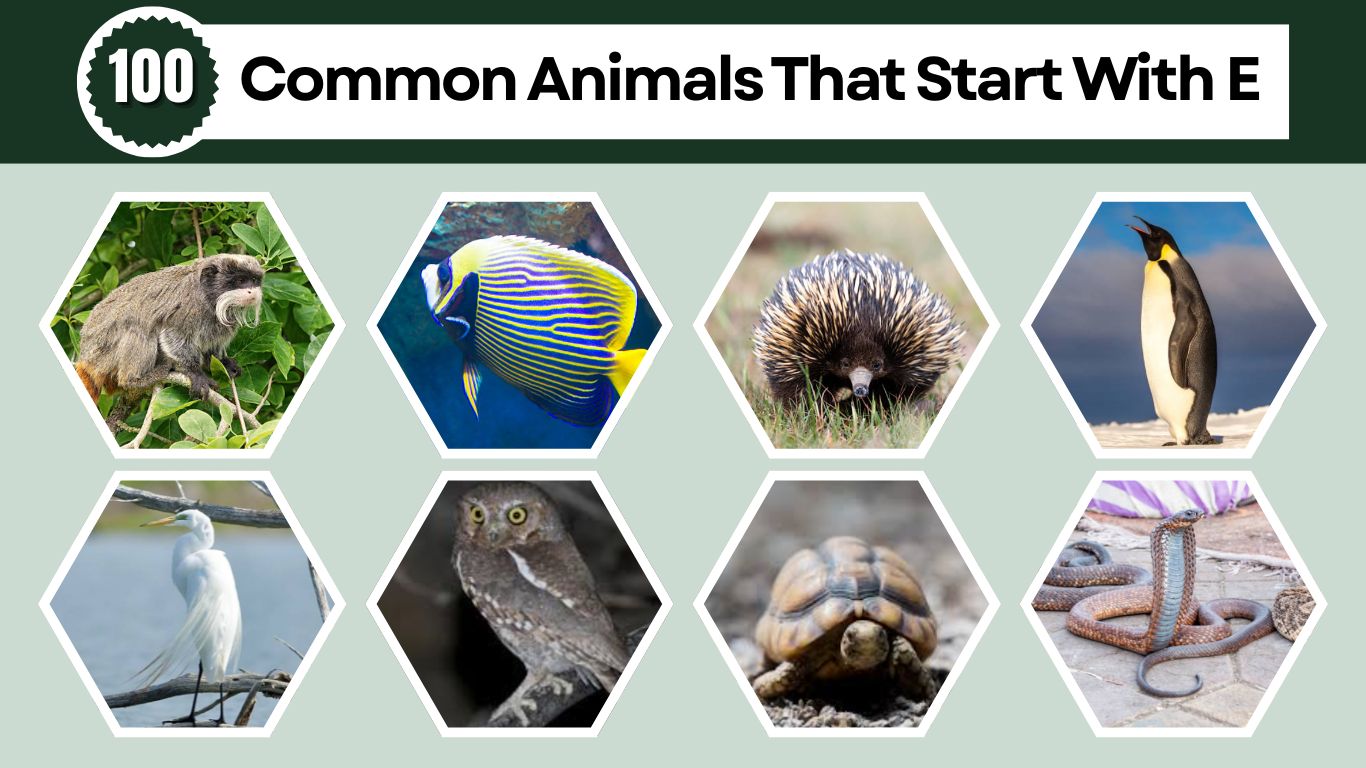
Animals that start with the letter “E” include some of the most interesting creatures in the world. From the giant Elephant to the colorful Eastern Rosella, these animals live in forests, deserts, oceans, wetlands, and icy regions. Some are fast hunters, while others are gentle herbivores or small nocturnal creatures. Learning about these animals is a fun way to explore nature and discover unique species from around the globe. This guide features 100 common animals that begin with the letter “E,” grouped into different categories for easier reading and learning.
Birds of Prey
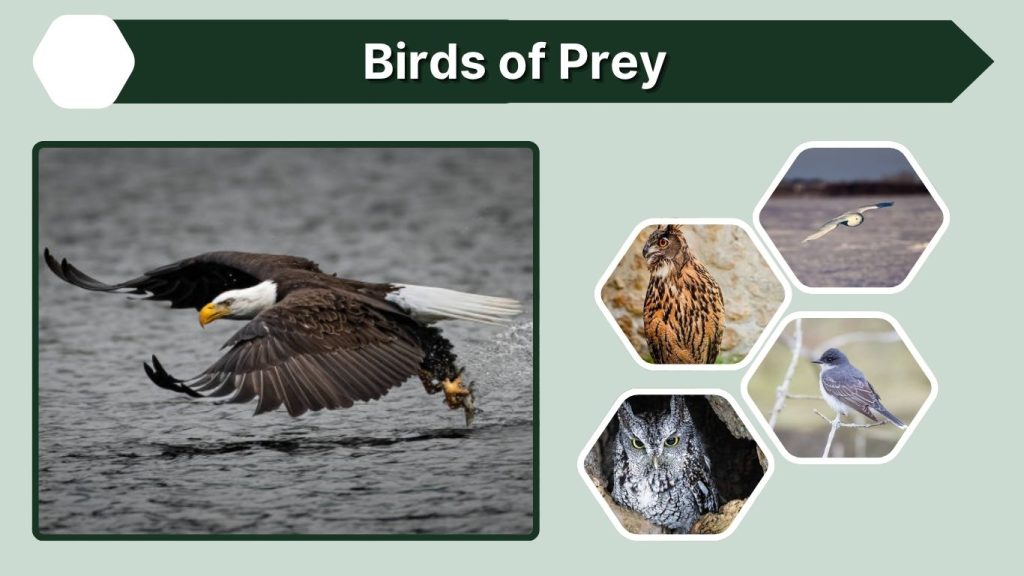
Birds of prey are strong hunters with sharp claws, curved beaks, and excellent eyesight. These birds usually hunt small mammals, reptiles, fish, and other birds. Many birds of prey are active during the day, while some hunt at night. They play an important role in nature by controlling animal populations. Eagles, owls, and hawks are some of the most well-known birds in this group because of their speed, power, and hunting skills.
1. Eagle
The Eagle is a large and powerful bird found in mountains, forests, and open lands around the world. Eagles are famous for their sharp vision and strong wings. They can spot prey from very high in the sky and quickly dive to catch it. Most eagles eat fish, rabbits, snakes, and small mammals. They build large nests on cliffs or tall trees and often return to the same nesting place every year. Eagles are also symbols of strength and freedom in many cultures.
2. Eurasian Eagle-Owl
The Eurasian Eagle-Owl is one of the largest owl species in the world. It has bright orange eyes, large ear tufts, and powerful talons. This owl lives in forests, rocky hills, and mountain areas across Europe and Asia. It hunts mostly at night and feeds on rabbits, rodents, birds, and other small animals. Its deep hooting call can be heard from far away. The Eurasian Eagle-Owl is known for being a quiet and skilled nighttime hunter.
3. Eagle Owl
The Eagle Owl is a strong nocturnal bird with broad wings and thick feathers. Eagle owls are active mainly at night and rest during the daytime. They are excellent hunters and can silently fly toward prey without making much noise. These owls often eat mice, rats, birds, and reptiles. Their large size and sharp claws make them one of the top predators among owl species. Eagle owls usually live in forests, rocky cliffs, and remote natural areas.
4. Eastern Screech Owl
The Eastern Screech Owl is a small owl commonly found in wooded areas of North America. It has excellent camouflage that helps it blend into tree bark during the day. Despite its name, this owl mostly makes soft trills and whistles instead of loud screeches. It feeds on insects, mice, frogs, and small birds. Eastern Screech Owls often nest inside tree holes and are active during the night when searching for food.
5. Eastern Kingbird
The Eastern Kingbird is a medium-sized bird known for its bold and fearless behavior. It has dark feathers with a white belly and often catches insects while flying through the air. Eastern Kingbirds are very protective of their nests and may chase away much larger birds. They usually live near open fields, rivers, and forest edges. During migration, they travel long distances between North and South America each year.
Water Animals

Water animals live in oceans, rivers, lakes, and other wet habitats. Some breathe through gills, while others come to the surface for air. These animals have special body shapes that help them swim easily in water. Many water animals are predators and feed on fish, insects, or smaller sea creatures. From electric fish to powerful sharks, this group includes many interesting species that survive in freshwater and saltwater environments around the world.
1. Eel
The Eel is a long, snake-shaped fish that lives in both freshwater and saltwater habitats. Eels are smooth and slippery, which helps them move through water and muddy areas. Many species hunt small fish, insects, and crustaceans at night. Some eels can grow very large and travel long distances during migration. They often hide in rocks, sand, or underwater holes during the daytime.
2. Electric Eel
The Electric Eel is a famous freshwater fish known for producing electric shocks. It lives mainly in rivers and swamps of South America. Electric eels use electricity to defend themselves and to catch prey. They feed on fish, amphibians, and small animals in the water. Although called an eel, it is actually more closely related to knifefish. Electric eels usually come to the surface often to breathe air.
3. Electric Catfish
The Electric Catfish is a unique fish found mostly in African rivers and lakes. It can produce strong electric charges to stun prey and protect itself from predators. This catfish has a smooth body and small eyes. It hunts mainly at night and feeds on smaller fish and water animals. Electric catfish often stay hidden in muddy water or near the bottom during the daytime.
4. Eagle Ray
The Eagle Ray is a graceful sea animal with wide fins that look like wings when swimming. Eagle rays are commonly found in warm oceans and coastal waters. They feed on shellfish, crabs, and small marine animals by crushing them with strong teeth. These rays can jump above the water surface and are known for their smooth and elegant movement in the sea.
5. Epaulette Shark
The Epaulette Shark is a small shark species found near coral reefs in shallow ocean waters. It is famous for its ability to “walk” along the sea floor using its fins. Epaulette sharks mostly eat worms, shrimp, and tiny fish. They can survive in low-oxygen water for short periods, which helps them live in tidal reef areas. Their spotted body pattern helps them blend into rocky ocean habitats.
Large Mammals
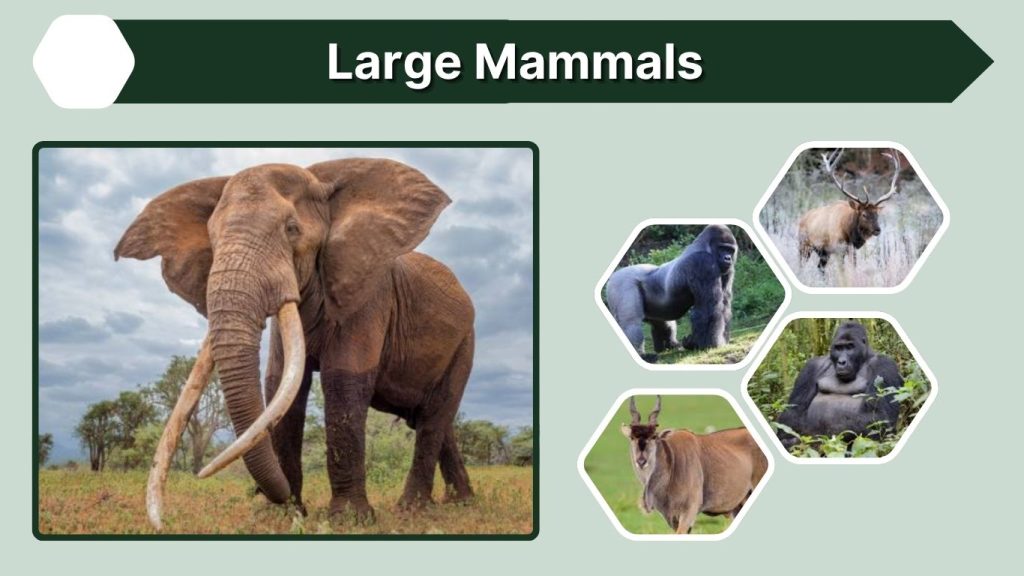
Large mammals are powerful animals that often live in forests, grasslands, mountains, and open plains. Many of them are herbivores that eat plants, leaves, and grasses, while some are strong predators. These animals usually have large bodies, strong legs, and impressive survival skills. Large mammals play an important role in maintaining natural ecosystems. Some species travel in groups for protection, while others prefer living alone in the wild.
1. Elephant
The Elephant is the largest land animal in the world. Elephants are known for their long trunks, large ears, and strong tusks. They live mainly in Africa and Asia and usually travel in family groups led by females. Elephants eat grass, leaves, bark, and fruit every day. Their trunks help them drink water, pick up food, and communicate with other elephants in the herd.
2. Elk
The Elk is one of the largest members of the deer family. Elk are found in forests, mountains, and grasslands of North America and Asia. Male elk grow large antlers that are used during fights in the breeding season. They feed mainly on grasses, leaves, and tree bark. Elk are strong runners and often live in large groups called herds for protection against predators.
3. Eland
The Eland is a large antelope native to Africa. It has a heavy body, spiral horns, and strong legs that allow it to move quickly across grasslands and open woodlands. Elands feed on grasses, leaves, and fruits. Despite their large size, they can jump surprisingly high. These peaceful animals often travel in small groups and are active during cooler parts of the day.
4. Eastern Gorilla
The Eastern Gorilla is one of the largest primates on Earth. It lives in the forests of central Africa and spends most of its time on the ground. Eastern gorillas eat leaves, stems, fruit, and plants. They usually live in family groups led by a strong male called a silverback. These gorillas are intelligent, social animals that communicate through sounds, body movements, and facial expressions.
5. Eastern Lowland Gorilla
The Eastern Lowland Gorilla is the largest gorilla subspecies in the world. It lives in tropical forests and feeds mainly on plants, fruit, and tree leaves. Eastern Lowland Gorillas are gentle animals that spend time grooming, resting, and caring for their young. Sadly, habitat loss and hunting have reduced their population in the wild, making them one of the endangered great apes today.
Snakes
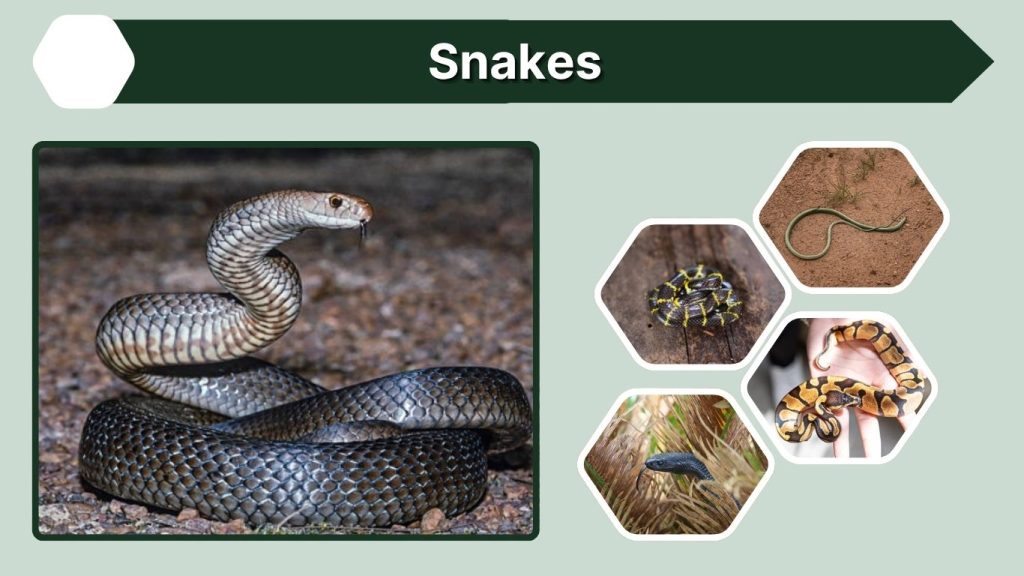
Snakes are legless reptiles found in forests, deserts, wetlands, and grasslands around the world. They move by sliding their bodies across the ground and use their tongues to sense smells in the air. Some snakes are venomous, while others kill prey by squeezing it tightly. Snakes usually feed on rodents, birds, frogs, and insects. These reptiles are important predators that help control small animal populations and maintain balance in nature.
1. Eastern Brown Snake
The Eastern Brown Snake is a fast and highly venomous snake found mainly in Australia. It usually lives in grasslands, farms, and dry forests. This snake has a slender body and can vary in color from light brown to dark brown. Eastern Brown Snakes mainly feed on rodents and small reptiles. Although dangerous, they usually avoid humans unless they feel threatened or trapped.
2. Eastern Coral Snake
The Eastern Coral Snake is a brightly colored snake with red, yellow, and black bands along its body. It lives in forests, sandy areas, and wetlands of the southeastern United States. The Eastern Coral Snake is shy and spends much of its time hidden underground or under leaves. It feeds on smaller snakes, lizards, and amphibians. Its venom is powerful, but bites are uncommon because of its secretive behavior.
3. Eastern Green Mamba
The Eastern Green Mamba is a beautiful green snake native to eastern Africa. It spends most of its life in trees and bushes, where its bright green color provides excellent camouflage. Eastern Green Mambas feed on birds, eggs, rodents, and bats. They are quick-moving snakes and use venom to stop their prey. Despite their venom, they are generally shy and avoid contact with humans whenever possible.
4. Eastern Indigo Snake
The Eastern Indigo Snake is the longest native snake species in North America. It has smooth, shiny black-blue scales that give it an indigo appearance. This nonvenomous snake lives in forests, sandy habitats, and grasslands. Eastern Indigo Snakes eat frogs, rodents, birds, and even other snakes. They are calm by nature and help farmers by reducing harmful rodent populations in natural areas.
5. Enchi Ball Python
The Enchi Ball Python is a colorful variety of ball python known for its bright orange and golden patterns. It is popular among reptile keepers because of its calm behavior and manageable size. Like other ball pythons, it is nonvenomous and kills prey by constriction. Enchi Ball Pythons usually feed on small rodents and prefer warm, quiet environments where they can hide safely during the day.
Small Mammals

Small mammals are tiny animals that live in forests, grasslands, farms, and even near human homes. Many of them are quick runners, skilled climbers, or expert diggers. These animals usually feed on seeds, plants, insects, or small prey. Small mammals are important in nature because they spread seeds and serve as food for larger predators. Despite their size, they are highly adaptable and can survive in many different environments around the world.
1. Eastern Chipmunk
The Eastern Chipmunk is a small rodent with brown fur and dark stripes along its back. It lives in forests, gardens, and wooded areas of North America. Eastern Chipmunks store seeds, nuts, and berries in underground burrows for later use. They are active during the daytime and are known for their quick movements and cheek pouches, which help them carry food back to their nests.
2. Eastern Mole
The Eastern Mole is a small underground mammal that spends most of its life digging tunnels. It has soft gray fur, tiny eyes, and strong front paws designed for digging through soil. Eastern Moles feed mainly on insects, worms, and grubs found underground. They help improve soil by creating tunnels, although their digging can sometimes damage lawns and gardens.
3. Ermine
The Ermine is a slender mammal closely related to weasels. It has brown fur during warmer months and white fur in winter snowy regions. Ermines are fast hunters that feed on rabbits, mice, birds, and small animals. They are skilled climbers and excellent runners. These animals usually live in forests, grasslands, and rocky habitats across northern regions.
4. European Rabbit
The European Rabbit is a social animal that lives in underground burrows called warrens. It has soft fur, long ears, and powerful hind legs for jumping and running. European Rabbits feed mainly on grass, leaves, and vegetables. They reproduce quickly and often live in groups for safety. These rabbits are found in grasslands, farmland, and open countryside areas.
5. Eurasian Red Squirrel
The Eurasian Red Squirrel is a small squirrel known for its reddish fur and bushy tail. It lives in forests and woodlands across Europe and Asia. Eurasian Red Squirrels feed on nuts, seeds, mushrooms, and tree bark. They are excellent climbers and spend much of their time jumping between branches. Their fluffy tails help them balance while moving through trees.
Wild Cats
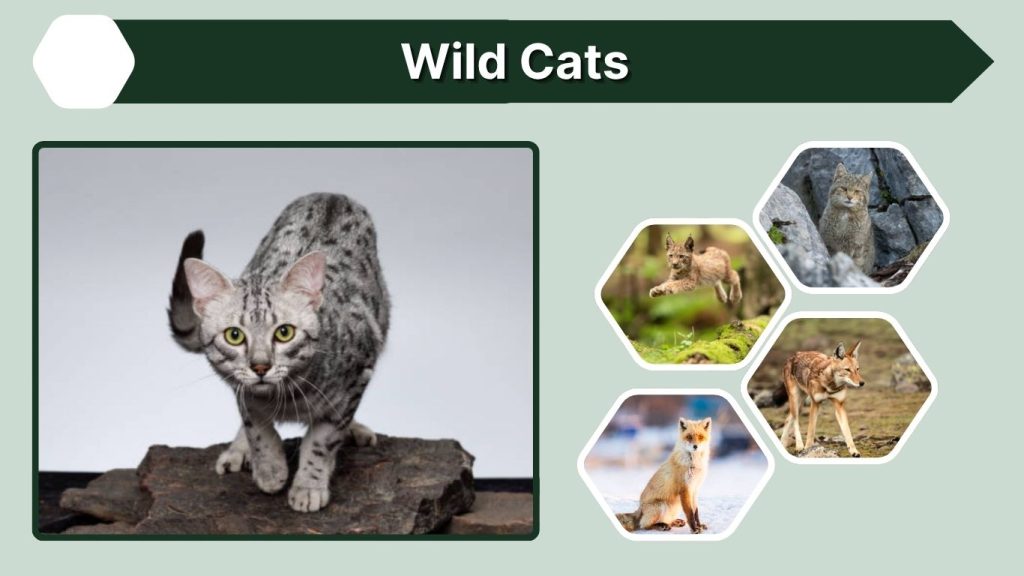
Wild cats are skilled hunters found in forests, mountains, grasslands, and deserts around the world. They have sharp claws, strong teeth, and excellent night vision that help them catch prey. Some wild cats are large predators, while others are small and secretive hunters. These animals usually hunt alone and feed on rodents, birds, rabbits, or larger mammals. Wild cats are important predators that help maintain balance in natural ecosystems.
1. Egyptian Mau
The Egyptian Mau is a beautiful spotted cat breed known for its speed and graceful movement. It has a slim body, green eyes, and naturally spotted fur. Egyptian Maus are active, intelligent, and enjoy climbing and exploring. Although they are domestic cats, their appearance closely resembles wild feline species. They are friendly with humans and are considered one of the oldest known cat breeds in history.
2. European Wildcat
The European Wildcat is a strong and secretive wild cat found in forests across Europe. It has thick striped fur and looks similar to a large domestic cat. European Wildcats mainly hunt rodents, birds, and rabbits during the night. They prefer quiet forest habitats where they can hide easily. These cats are solitary animals and usually avoid human contact whenever possible.
3. Eurasian Lynx
The Eurasian Lynx is one of the largest lynx species in the world. It has thick fur, long legs, pointed ears with black tufts, and a short tail. Eurasian Lynxes live in forests and mountainous regions across Europe and Asia. They are skilled hunters that prey on deer, rabbits, and birds. Their excellent hearing and stealth help them move quietly through snowy and wooded habitats.
4. Ethiopian Wolf
The Ethiopian Wolf is a rare predator found in the high mountains of Ethiopia. Although called a wolf, it has features similar to both foxes and wolves. Ethiopian Wolves mainly hunt rodents and other small animals in grasslands. They are social animals that live in groups and communicate through sounds and body movements. Habitat loss has made them one of the rarest wild canids in the world.
5. Ezo Red Fox
The Ezo Red Fox is a red fox subspecies native to northern Japan. It has thick reddish fur and a bushy tail that helps it stay warm during cold winters. Ezo Red Foxes feed on rodents, birds, insects, and fruits. They are intelligent and adaptable animals that can survive in forests, grasslands, and snowy environments. These foxes are mostly active during the evening and nighttime hours.
Farm and Working Dogs

Farm and working dogs are strong, intelligent, and active animals trained to help humans with different tasks. These dogs often guard livestock, herd animals, protect homes, or assist hunters. Many working dog breeds are loyal, brave, and easy to train because they learn commands quickly. They usually need regular exercise and enjoy outdoor activities. For many years, working dogs have played an important role on farms, in villages, and in mountain regions around the world.
1. English Shepherd
The English Shepherd is a hardworking farm dog known for its intelligence and loyalty. It has a medium-sized body, thick fur, and excellent herding skills. English Shepherds help farmers manage sheep, cattle, and other livestock. They are energetic dogs that enjoy running and working outdoors. These dogs are also friendly family companions and are quick learners during training.
2. English Foxhound
The English Foxhound is a strong hunting dog originally bred for tracking foxes. It has long legs, a lean body, and excellent stamina for running over long distances. English Foxhounds are social animals that often work in packs during hunts. They have a strong sense of smell and are known for their loud barking voices. These dogs need plenty of exercise to stay healthy and active.
3. Estrela Mountain Dog
The Estrela Mountain Dog is a large guardian dog from the mountains of Portugal. It has a thick coat that protects it from cold weather and rough outdoor conditions. Estrela Mountain Dogs are brave and protective, often guarding sheep and livestock from predators. They are loyal to their families and naturally cautious around strangers. Their calm but watchful nature makes them excellent guard dogs.
4. Entlebucher Mountain Dog
The Entlebucher Mountain Dog is the smallest of the Swiss mountain dog breeds. It has a muscular body, short coat, and lots of energy. These dogs were originally used for herding cattle in mountain regions. Entlebucher Mountain Dogs are intelligent, confident, and highly active. They enjoy outdoor work and require regular physical activity and mental challenges to stay happy.
5. Elkhound
The Elkhound is a strong hunting dog breed from northern Europe. It has thick gray fur, pointed ears, and a curled tail. Elkhounds were traditionally used to hunt large animals like elk and moose. They are fearless, loyal, and able to survive in cold climates. These dogs are also known for their alert behavior and make excellent watchdogs for families and farms.
Pet Dog Breeds

Pet dog breeds are friendly and loyal animals that live closely with humans. Many of these dogs are known for their playful behavior, intelligence, and strong connection with families. Some breeds were originally developed for hunting or working, but today they are popular companions in homes around the world. Pet dogs need proper care, exercise, training, and attention to stay healthy and happy. Different breeds have unique personalities, body sizes, and activity levels.
1. English Bulldog
The English Bulldog is a muscular dog breed with a wrinkled face and short nose. English Bulldogs are calm, gentle, and known for their friendly personalities. They enjoy relaxing with their owners and usually adapt well to apartment living. Although they look tough, these dogs are affectionate and loyal companions. Bulldogs need moderate exercise and extra care during hot weather because of their short breathing passages.
2. English Cocker Spaniel
The English Cocker Spaniel is an energetic and cheerful dog with long ears and soft fur. It was originally bred for bird hunting but is now a popular family pet. English Cocker Spaniels are intelligent and easy to train. They enjoy playing outdoors and spending time with people. Regular grooming is important to keep their coats clean and healthy.
3. English Pointer
The English Pointer is a graceful hunting dog known for its speed and excellent sense of smell. These dogs are athletic and active, making them great companions for outdoor activities. English Pointers were bred to locate birds for hunters and often “point” toward prey with their bodies. They are friendly, intelligent, and require daily exercise to remain healthy and well-behaved.
4. English Springer Spaniel
The English Springer Spaniel is a lively dog breed with floppy ears and a friendly nature. It was originally developed to flush birds out of bushes during hunting trips. English Springer Spaniels are highly intelligent and enjoy learning commands and games. They are social dogs that form strong bonds with families and usually get along well with children and other pets.
5. English Toy Spaniel
The English Toy Spaniel is a small dog breed with a soft coat and sweet personality. These dogs are gentle, affectionate, and enjoy staying close to their owners. English Toy Spaniels are often quiet and adapt well to indoor living. Despite their small size, they are playful and enjoy short walks and attention from family members. Their charming appearance makes them popular companion pets.
Birds With Colorful Feathers
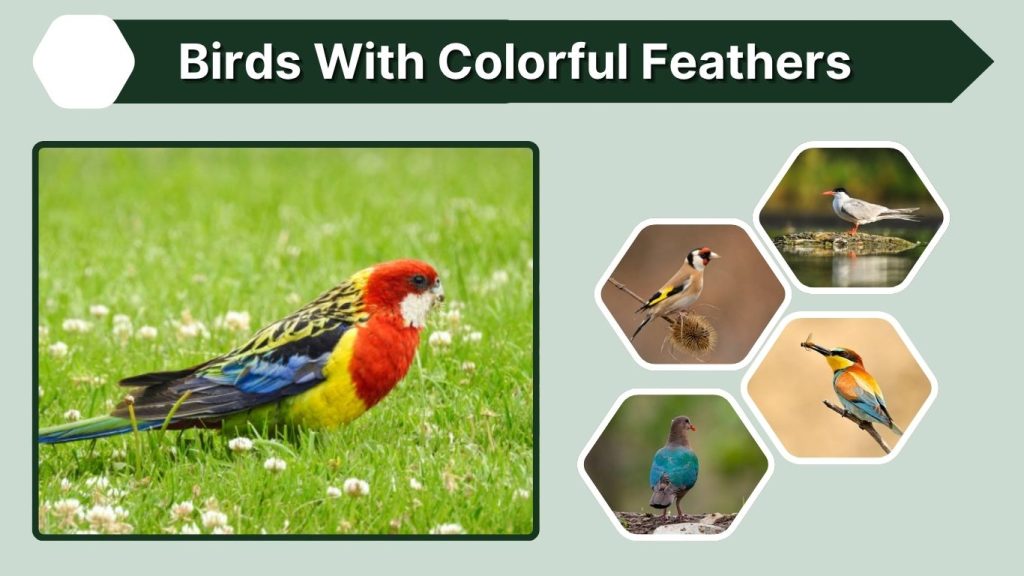
Colorful birds are some of the most beautiful animals in nature. Their bright feathers help them attract mates, communicate, and sometimes hide in flowers or forests. These birds live in different habitats such as forests, wetlands, coastal regions, and grasslands. Many colorful birds feed on fruits, seeds, insects, or nectar. Their unique feather patterns and songs make them popular among bird watchers and nature lovers around the world.
1. Eastern Rosella
The Eastern Rosella is a bright parrot native to Australia. It has red, yellow, blue, and green feathers that make it easy to recognize. Eastern Rosellas live in forests, gardens, and open woodlands. They feed mainly on seeds, fruits, flowers, and insects. These birds are social and often seen in pairs or small groups while flying or feeding on the ground.
2. European Goldfinch
The European Goldfinch is a small bird known for its red face and yellow wing markings. It lives in gardens, woodlands, and farmland across Europe and parts of Asia. European Goldfinches feed mainly on seeds, especially thistles. They are active and cheerful birds with pleasant songs. Their colorful appearance and gentle calls make them popular among bird enthusiasts.
3. Elegant Tern
The Elegant Tern is a graceful seabird with a slim body, orange beak, and black crest on its head. It lives along coastal regions and feeds mainly on small fish caught near the ocean surface. Elegant Terns are fast fliers and often travel in groups above the sea. During breeding season, they gather in large colonies on sandy beaches and islands.
4. Emerald Dove
The Emerald Dove is a peaceful bird with shining green wings and soft brown feathers. It lives in tropical forests and woodlands across Asia and Australia. Emerald Doves usually feed on seeds, berries, and fallen fruits found on the forest floor. These birds are quiet and shy, often hiding among dense trees and plants for protection.
5. European Bee-Eater
The European Bee-Eater is a colorful bird with blue, yellow, green, and brown feathers. It is famous for catching bees and flying insects in midair. European Bee-Eaters live in warm regions with open landscapes and sandy riverbanks. They build nests inside tunnels dug into soft ground. These birds are highly social and often gather in large flocks during migration.
Reptiles
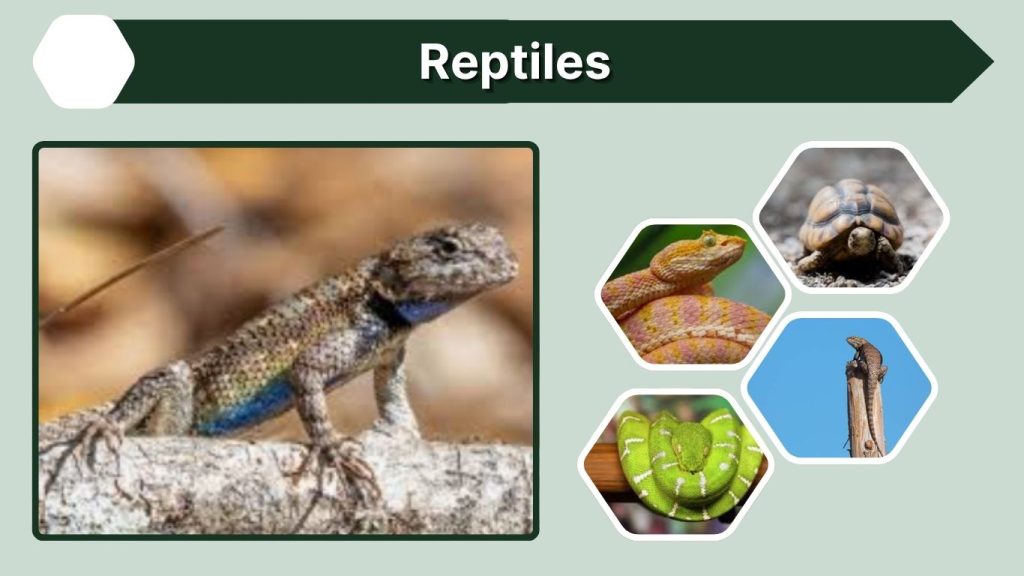
Reptiles are cold-blooded animals covered with scales or hard shells. They live in deserts, forests, wetlands, and grasslands across the world. Most reptiles lay eggs, and many are active during warm weather. Some reptiles are excellent climbers, while others spend most of their time on the ground or in water. These animals feed on insects, plants, rodents, or other small animals. Reptiles play an important role in nature by helping control insect and rodent populations.
1. Eastern Fence Lizard
The Eastern Fence Lizard is a small gray or brown lizard commonly found in forests and wooded areas. It often rests on tree trunks, fences, and rocks where it can warm itself in the sun. Eastern Fence Lizards feed mainly on insects and spiders. They are quick climbers and can escape predators by running rapidly across rough surfaces and hiding among trees.
2. Eyelash Viper
The Eyelash Viper is a colorful venomous snake found in tropical forests of Central and South America. It is named for the small scale “eyelashes” above its eyes. Eyelash Vipers can be green, yellow, orange, or pink, helping them blend into plants and flowers. They feed on frogs, birds, and small rodents while waiting quietly for prey to approach.
3. Emerald Tree Boa
The Emerald Tree Boa is a bright green snake that lives in rainforests of South America. It spends most of its life coiled around tree branches high above the ground. Emerald Tree Boas hunt birds, bats, and small mammals during the night. Their green color provides perfect camouflage among leaves, helping them stay hidden from both prey and predators.
4. Emerald Swift
The Emerald Swift is a colorful lizard native to Central America. It has shiny green scales and a slim body that helps it move quickly among rocks and tree branches. Emerald Swifts feed mainly on insects and small invertebrates. They enjoy warm sunny environments and are active during the daytime when searching for food and basking in sunlight.
5. Egyptian Tortoise
The Egyptian Tortoise is one of the smallest tortoise species in the world. It lives in dry desert habitats of North Africa and feeds on grasses, flowers, and small plants. Egyptian Tortoises have light-colored shells that help reflect heat from the sun. Because of habitat loss and illegal pet trade, this species has become rare and is protected in many regions.
Nocturnal Animals
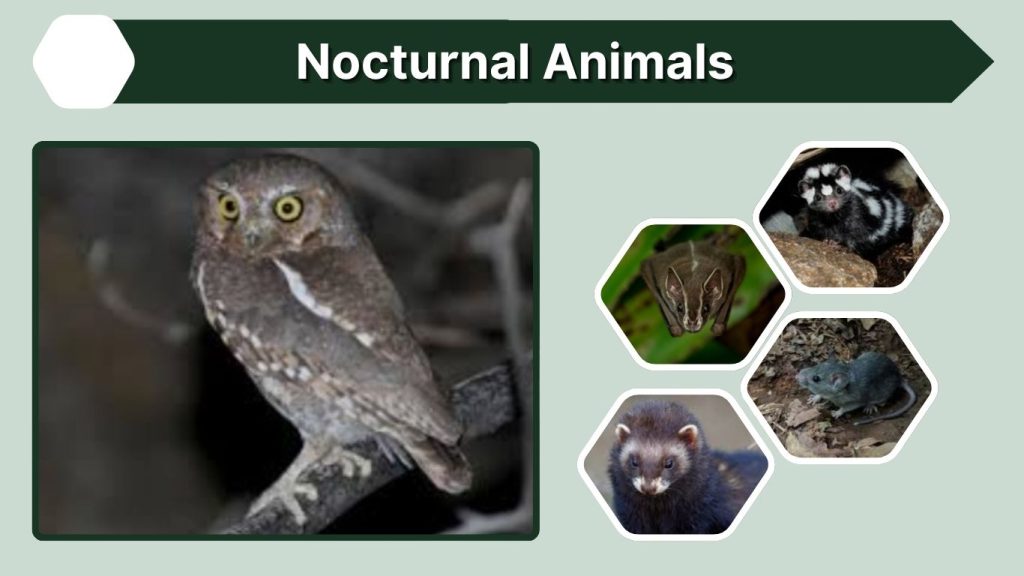
Nocturnal animals are active mainly during the night and rest during the daytime. Many of them have excellent hearing, sharp eyesight, or a strong sense of smell that helps them survive in darkness. These animals hunt, search for food, and avoid predators after sunset. Nocturnal creatures live in forests, deserts, wetlands, and even near human homes. Their nighttime behavior helps them stay safe from heat and daytime predators while exploring their habitats quietly.
1. Elf Owl
The Elf Owl is the smallest owl in the world. It lives in desert regions and woodlands of North America. Elf Owls are tiny birds with round heads and large yellow eyes that help them see at night. They feed mainly on insects such as moths, beetles, and crickets. These owls often nest inside old woodpecker holes in cactus plants or trees.
2. Evening Bat
The Evening Bat is a small bat species found in forests and near rivers in North America. It becomes active at dusk and spends the night catching flying insects like mosquitoes and moths. Evening Bats use echolocation to move through darkness and locate prey. During the daytime, they rest inside hollow trees, buildings, or hidden shelters where they stay protected from predators.
3. Eastern Spotted Skunk
The Eastern Spotted Skunk is a small skunk with black fur covered in white spots and stripes. It is mostly active during the night and feeds on insects, rodents, eggs, and fruits. Eastern Spotted Skunks are good climbers and can move quickly through forests and grasslands. Like other skunks, they spray a strong-smelling liquid to defend themselves from danger.
4. European Polecat
The European Polecat is a nocturnal mammal related to ferrets and weasels. It has dark fur, a slender body, and sharp teeth for hunting small prey. European Polecats feed mainly on rodents, frogs, birds, and rabbits. They are quiet hunters that move carefully through forests, farmland, and wetlands during nighttime hours while searching for food.
5. Eastern Woodrat
The Eastern Woodrat is a nocturnal rodent found in forests, rocky hills, and wooded regions of North America. It builds nests using sticks, leaves, and other collected materials. Eastern Woodrats feed on seeds, nuts, fruits, and plants. These animals are sometimes called “pack rats” because they often collect and carry shiny or unusual objects back to their nests during nighttime activity.
Wetland Animals
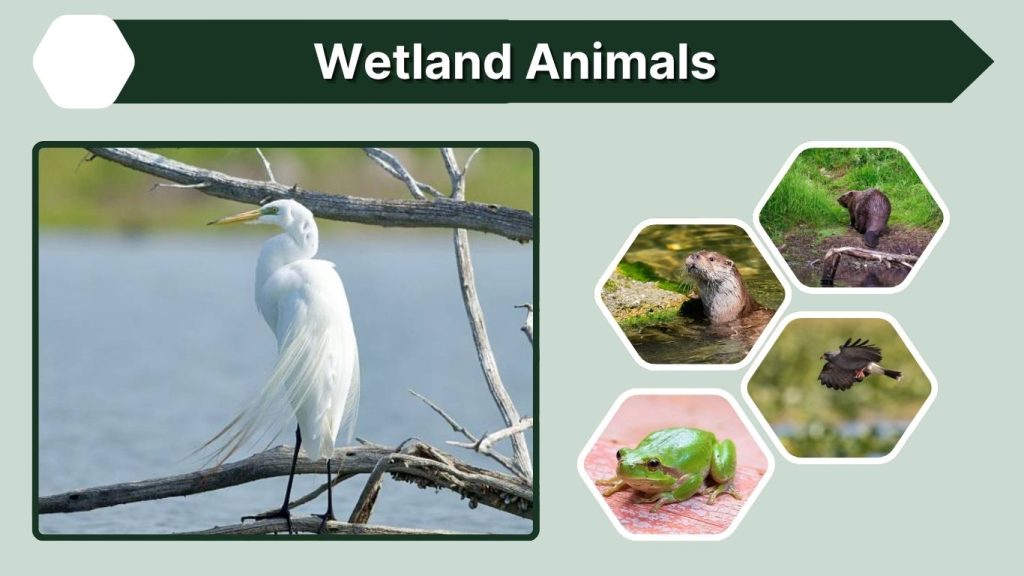
Wetland animals live in marshes, swamps, rivers, ponds, and other watery habitats. These environments provide food, shelter, and protection for many birds, mammals, fish, and amphibians. Wetland animals are often excellent swimmers, divers, or waders. Many feed on fish, insects, plants, or small aquatic animals. Wetlands are important ecosystems because they support rich biodiversity and help clean water naturally. Animals living there play key roles in maintaining balance in these habitats.
1. Egret
The Egret is a tall white bird commonly found near wetlands, rivers, and lakes. It has long legs and a sharp beak that help it catch fish, frogs, and insects in shallow water. Egrets move slowly and carefully while hunting prey. These elegant birds often nest in colonies with other water birds and are known for their graceful appearance during flight.
2. Everglades Snail Kite
The Everglades Snail Kite is a rare bird that lives mainly in wetlands of Florida and parts of Central and South America. It has curved beaks specially adapted for eating snails, which are its main food source. Everglades Snail Kites fly low over marshes while searching for prey. Habitat loss and water changes have made this species vulnerable in many wetland regions.
3. Eurasian Otter
The Eurasian Otter is a playful mammal that lives near rivers, lakes, and coastal wetlands. It has thick waterproof fur and a streamlined body that helps it swim easily. Eurasian Otters feed mainly on fish, frogs, and crabs. They are excellent swimmers and spend much of their time hunting underwater. These otters often rest in hidden dens near the water’s edge.
4. Eurasian Beaver
The Eurasian Beaver is a large rodent famous for building dams and lodges in rivers and wetlands. It uses strong teeth to cut trees and branches for construction. Eurasian Beavers feed mainly on bark, leaves, and aquatic plants. Their dams create ponds that provide habitats for many other animals. Beavers are mostly active during the evening and nighttime hours.
5. Edible Frog
The Edible Frog is a common frog found in ponds, marshes, and wetlands across Europe. It has green or brown skin that helps it blend into watery environments. Edible Frogs feed on insects, worms, and small invertebrates. They are strong jumpers and spend much of their time near water. During breeding season, males produce loud croaking sounds to attract mates.
Penguin and Flightless Birds
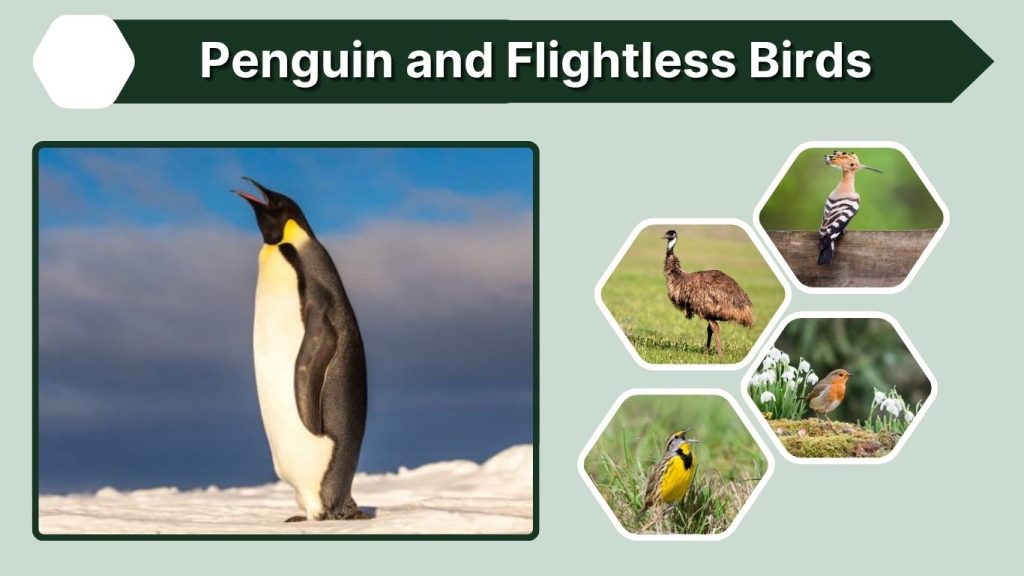
Flightless and ground-living birds are unique animals adapted for life on land or in water instead of flying long distances. Many have strong legs for running, swimming, or walking across rough terrain. Some species live in cold climates, while others survive in forests, grasslands, or wetlands. These birds feed on fish, insects, seeds, or plants depending on their habitats. Their unusual behaviors and body shapes make them some of the most fascinating birds in nature.
1. Emperor Penguin
The Emperor Penguin is the tallest and heaviest penguin species in the world. It lives in the icy regions of Antarctica and is an excellent swimmer. Emperor Penguins feed mainly on fish, squid, and krill caught underwater. They survive freezing temperatures by gathering closely together in groups. Male penguins protect and warm the eggs during winter while females search for food in the ocean.
2. Emu
The Emu is a tall flightless bird native to Australia. It has long legs, soft brown feathers, and can run at high speeds across open grasslands. Emus feed on seeds, fruits, insects, and plants. They are curious birds that travel long distances in search of food and water. Despite having wings, they cannot fly because of their heavy bodies and small wing size.
3. Eurasian Hoopoe
The Eurasian Hoopoe is a colorful bird recognized by its fan-shaped crest and long curved beak. It lives in open forests, grasslands, and farmland across Europe, Asia, and Africa. Eurasian Hoopoes feed mainly on insects and worms found in the ground. They use their long beaks to search for food in soil and grass. Their unique appearance and calls make them easy to identify.
4. Eastern Meadowlark
The Eastern Meadowlark is a medium-sized bird commonly found in grasslands and open fields of North America. It has a bright yellow chest marked with a black “V” pattern. Eastern Meadowlarks feed on insects, seeds, and grains. Their beautiful whistling songs are often heard during spring and summer. These birds usually build nests hidden among tall grasses for protection.
5. European Robin
The European Robin is a small songbird famous for its orange-red chest and friendly behavior. It lives in gardens, forests, and parks throughout Europe. European Robins feed on insects, worms, berries, and seeds. They are active birds that often stay close to people while searching for food. Their sweet singing voice makes them one of the most loved garden birds in many countries.
Insects and Small Creatures
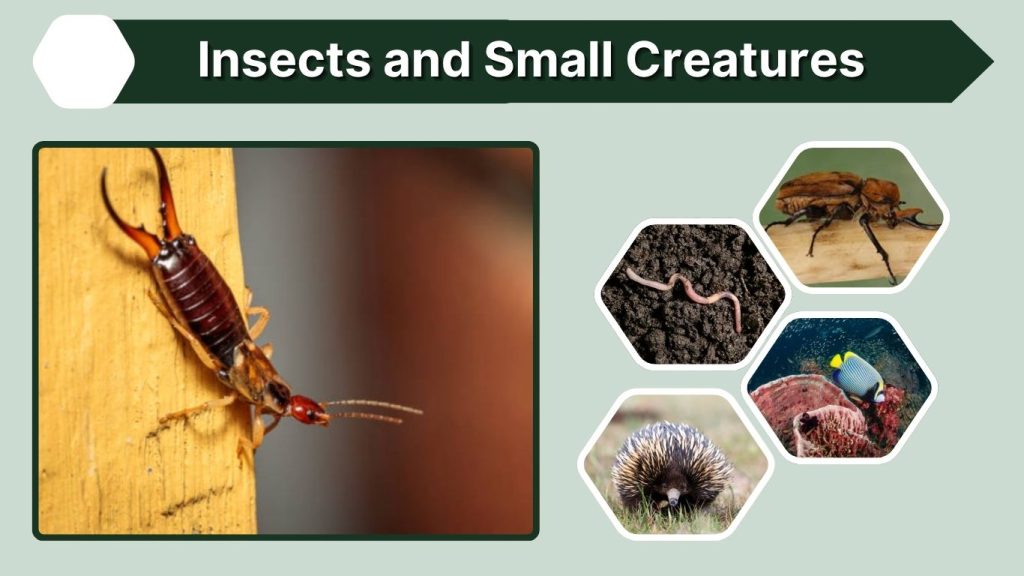
Small creatures and insects are found in almost every habitat on Earth, from forests and gardens to deserts and wetlands. Many are tiny but play huge roles in nature by breaking down waste, pollinating plants, or serving as food for larger animals. Some crawl underground, while others fly or live near water. These creatures have special adaptations that help them survive in different environments and contribute greatly to healthy ecosystems around the world.
1. Earwig
The Earwig is a slender insect recognized by the pincers at the end of its body. Earwigs are usually active at night and hide in dark, damp places during the daytime. They feed on plants, insects, and decaying material. Although their pincers may look dangerous, earwigs are mostly harmless to humans. These insects are commonly found in gardens, under rocks, and near fallen leaves.
2. Earthworm
The Earthworm is a soft-bodied animal that lives underground in moist soil. Earthworms help improve soil quality by breaking down dead plants and creating tunnels that allow air and water to move through the ground. They feed mainly on decaying organic matter. Earthworms are important for healthy gardens and farms because they naturally enrich the soil for plant growth.
3. Elephant Beetle
The Elephant Beetle is one of the largest beetle species in the world. Male elephant beetles have long horn-like structures used during fights with other males. These beetles live in tropical forests and feed mainly on fruit and tree sap. Despite their large size and strong appearance, elephant beetles are harmless to humans and spend much of their lives hidden among trees and forest plants.
4. Echidna
The Echidna is a small mammal covered with sharp spines for protection. It is native to Australia and nearby regions. Echidnas feed mainly on ants and termites using their long sticky tongues. They are unusual mammals because they lay eggs instead of giving birth to live young. Echidnas are slow-moving animals that often dig into soil when they sense danger nearby.
5. Emperor Angelfish
The Emperor Angelfish is a brightly colored fish found in coral reefs of the Indian and Pacific Oceans. It has blue, yellow, and black patterns that become more colorful as it grows older. Emperor Angelfish feed on sponges, algae, and small marine organisms. These fish are popular in aquariums because of their striking appearance and graceful swimming behavior.
Forest Animals
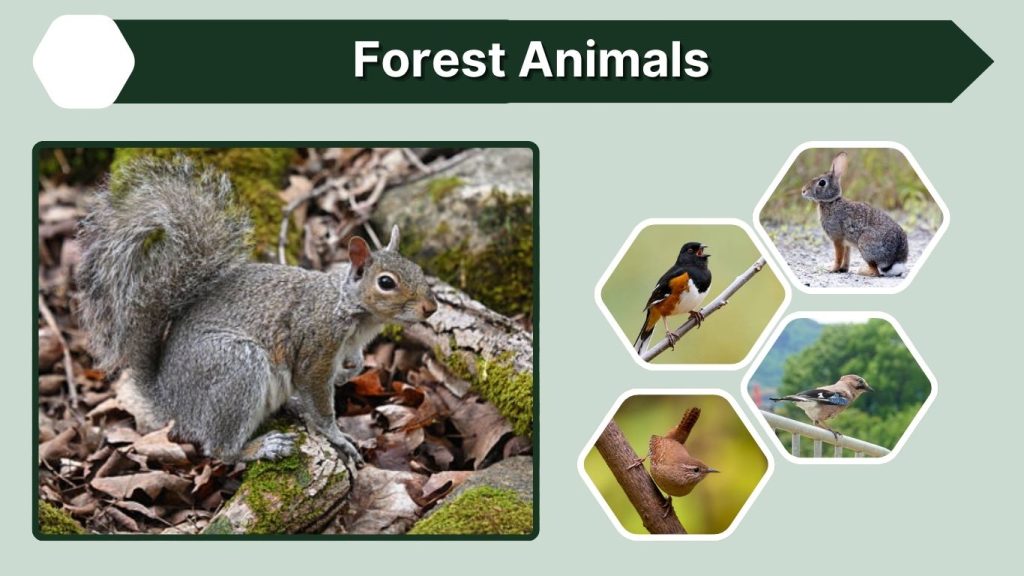
Forest animals live in wooded habitats filled with trees, plants, and natural shelters. These animals survive by climbing, hiding, digging, or searching for food among forest plants and branches. Some feed on nuts, seeds, and fruits, while others hunt insects or smaller animals. Forest ecosystems provide protection and food for many different species. These animals are important because they help spread seeds, control insects, and maintain balance within forest environments around the world.
1. Eastern Gray Squirrel
The Eastern Gray Squirrel is a common squirrel found in forests, parks, and neighborhoods across North America. It has gray fur, a bushy tail, and strong claws for climbing trees. Eastern Gray Squirrels feed on nuts, seeds, fruits, and tree bark. They often store food in hidden places for winter. Their tails help them balance while jumping between branches.
2. Eastern Cottontail
The Eastern Cottontail is a small rabbit known for the white fluffy tail that looks like cotton. It lives in forests, fields, and grassy areas where it can hide from predators. Eastern Cottontails feed on grass, leaves, flowers, and bark. They are fast runners and use zigzag movements to escape danger. These rabbits are most active during early morning and evening hours.
3. Eastern Towhee
The Eastern Towhee is a colorful bird with black, white, and reddish feathers. It lives in forests, shrubs, and woodland edges across North America. Eastern Towhees feed mainly on seeds, berries, and insects found on the ground. They often scratch through leaves while searching for food. Their loud songs and calls are commonly heard in wooded habitats during spring and summer.
4. Eurasian Jay
The Eurasian Jay is a clever bird with pinkish-brown feathers and bright blue wing patches. It belongs to the crow family and is known for its intelligence. Eurasian Jays feed on acorns, nuts, insects, and eggs. They often store food underground for future use. These birds are excellent mimics and can copy sounds from other birds and animals.
5. Eurasian Wren
The Eurasian Wren is a very small bird with brown feathers and a short upright tail. It lives in forests, gardens, and hedges throughout Europe and Asia. Eurasian Wrens feed mainly on insects and spiders hidden among leaves and tree bark. Despite their tiny size, they produce surprisingly loud songs. These birds are active and quick-moving while searching for food in dense vegetation.
Desert and Dry Region Animals
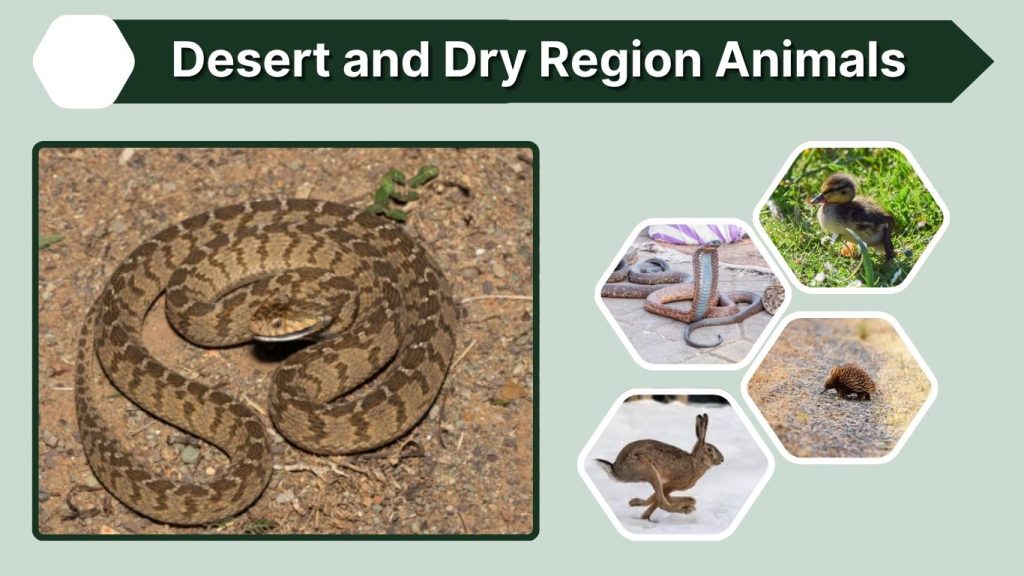
Desert and dry region animals are specially adapted to survive in hot climates with little water. Many of these animals are active during cooler parts of the day or night to avoid extreme heat. They often have light-colored bodies, excellent water-saving abilities, and strong survival skills. Some live in sandy deserts, while others survive in dry grasslands or rocky areas. These animals are important parts of harsh ecosystems where only well-adapted species can thrive.
1. Ethiopian Mountain Adder
The Ethiopian Mountain Adder is a rare snake found in high mountain regions of Ethiopia. It has a thick body and patterned scales that help it blend into rocky environments. Ethiopian Mountain Adders feed mainly on small rodents and reptiles. They are slow-moving snakes that rely on camouflage for protection. Because of habitat loss and limited range, this species is considered uncommon in the wild.
2. Egyptian Cobra
The Egyptian Cobra is one of the most famous cobra species in Africa. It lives in deserts, grasslands, and dry rocky regions. Egyptian Cobras are known for spreading their neck hoods when threatened. They feed on rodents, birds, frogs, and other small animals. These snakes are powerful predators and have strong venom used for hunting and defense against danger.
3. Egyptian Goose
The Egyptian Goose is a colorful bird native to Africa. Although often seen near rivers and lakes, it can also survive in dry environments close to water sources. Egyptian Geese feed on grasses, seeds, and small insects. They are strong fliers and are known for their loud calls. These birds were respected in ancient Egypt and often appeared in historical artwork.
4. Ethiopian Highlands Hare
The Ethiopian Highlands Hare is a fast-moving hare found in grasslands and dry highland regions of Ethiopia. It has long ears, strong back legs, and soft brown fur that helps it hide among dry vegetation. Ethiopian Highlands Hares feed mainly on grasses and plants. They rely on speed and sharp hearing to escape predators in open landscapes.
5. Echidna
The Echidna is a unique mammal that can survive in dry forests, grasslands, and desert regions of Australia. It is covered in protective spines and feeds mainly on ants and termites. Echidnas use their long sticky tongues to catch insects hidden underground. They are slow-moving animals but can quickly dig into soil or curl into a ball when threatened by predators.
Arctic and Cold Climate Animals
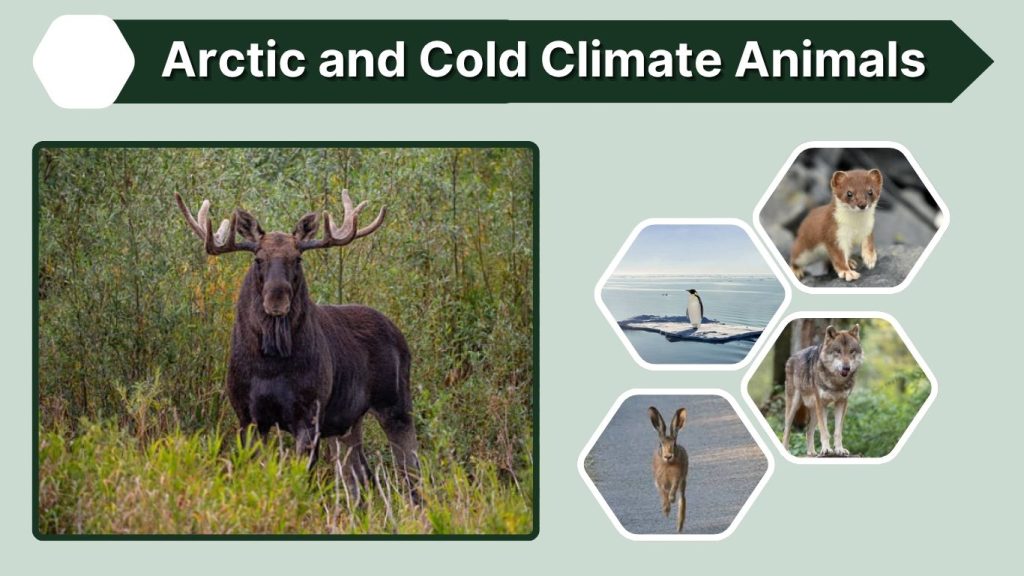
Arctic and cold climate animals are adapted to survive in freezing temperatures, snow, and icy environments. Many have thick fur, layers of fat, or dense feathers that help keep them warm. These animals often live in mountains, tundras, forests, or polar regions where food can be difficult to find. Some migrate during harsh seasons, while others remain active all year. Their special adaptations allow them to survive and thrive in some of the coldest places on Earth.
1. Emperor Penguin
The Emperor Penguin is the largest penguin species and lives in the icy regions of Antarctica. It has thick feathers and a layer of fat that protect it from freezing temperatures. Emperor Penguins are excellent swimmers and feed mainly on fish and squid. They gather closely together in large groups during winter to stay warm while protecting their eggs from the cold Antarctic winds.
2. Ermine
The Ermine is a small carnivorous mammal found in northern forests and snowy regions. During winter, its fur turns white to help it blend into snow-covered landscapes. Ermines are fast hunters that feed on rodents, rabbits, and birds. Their slim bodies allow them to enter narrow burrows while searching for prey. These animals are active and skilled predators despite their small size.
3. European Hare
The European Hare is a large hare found in grasslands and open countryside across Europe. It has long ears and strong legs that help it run quickly to escape predators. In colder regions, its thick fur provides warmth during winter. European Hares feed mainly on grasses, plants, and bark. They are mostly active during dawn and dusk while searching for food.
4. Eurasian Wolf
The Eurasian Wolf is a powerful predator found in forests, mountains, and cold regions across Europe and Asia. It has thick fur that protects it from freezing weather. Eurasian Wolves hunt deer, wild boar, and other large animals in packs. These wolves communicate through howls and body language. Their teamwork and intelligence make them highly successful hunters in cold environments.
5. Elk
The Elk is a strong mammal commonly found in forests and mountain regions with cold winters. Elk have thick fur that helps them survive snowy conditions. Males grow large antlers that are used during breeding season battles. They feed mainly on grass, leaves, bark, and shrubs. Elk often travel in herds and migrate seasonally to find food and safer habitats during winter months.
Colorful Fish
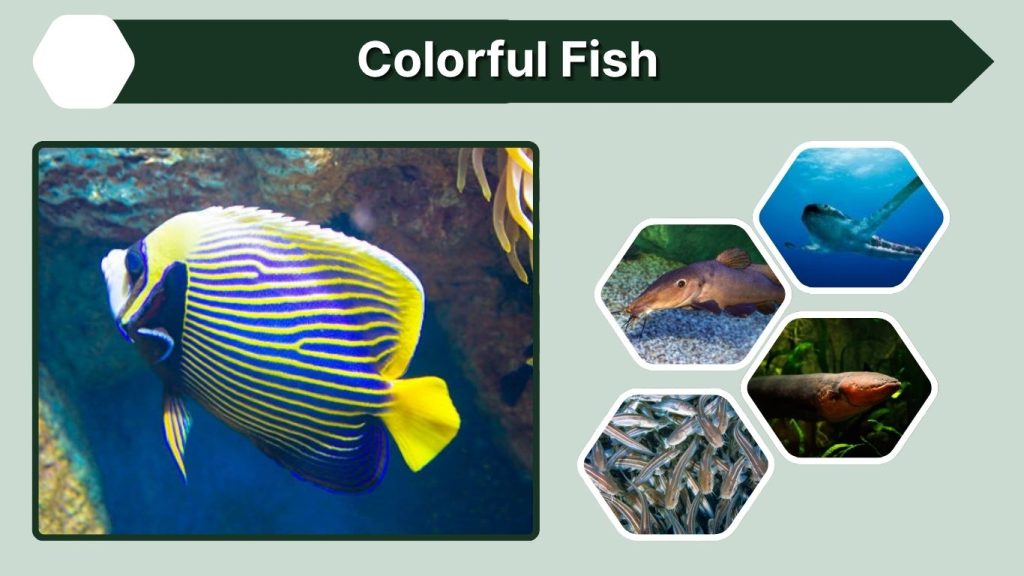
Colorful fish are beautiful aquatic animals found in oceans, coral reefs, rivers, and lakes around the world. Their bright colors and unique patterns help them attract mates, warn predators, or blend into underwater environments. Some colorful fish are peaceful swimmers, while others are skilled hunters. These fish feed on algae, insects, smaller fish, or tiny sea creatures. Many colorful fish are popular in aquariums because of their striking appearance and graceful movement.
1. Emperor Angelfish
The Emperor Angelfish is one of the most beautiful fish found in tropical coral reefs. It has bright blue, yellow, and black stripes that become more colorful as it matures. Emperor Angelfish feed on sponges, algae, and small marine organisms. These fish usually live near coral reefs where they can hide among rocks and plants while searching for food.
2. Electric Catfish
The Electric Catfish is a unique fish capable of producing electric shocks. It lives mainly in rivers and lakes of Africa. Electric Catfish use electricity to hunt prey and defend themselves from predators. They feed on smaller fish and aquatic animals. Despite their plain appearance, their unusual electric ability makes them one of the most fascinating freshwater fish species.
3. Eagle Shark
The Eagle Shark is a lesser-known shark species found in ocean waters. It has a streamlined body that helps it swim quickly through the sea. Like many sharks, it feeds on smaller fish and marine creatures. Eagle Sharks are strong swimmers and play an important role as predators in marine ecosystems by helping control fish populations.
4. Eel Catfish
The Eel Catfish is a freshwater fish with a long body that resembles an eel. It lives in muddy rivers and lakes where it hides near the bottom. Eel Catfish feed on insects, worms, and smaller aquatic animals. Their flexible bodies help them move easily through narrow spaces and underwater vegetation while searching for food.
5. Electric Eel
The Electric Eel is a famous fish known for generating powerful electric shocks. It lives in slow-moving rivers and swamps of South America. Electric Eels use electricity to stun prey and protect themselves from danger. They feed mainly on fish, amphibians, and small animals. Although they spend most of their time underwater, they regularly come to the surface to breathe air.
Tree-Dwelling Animals
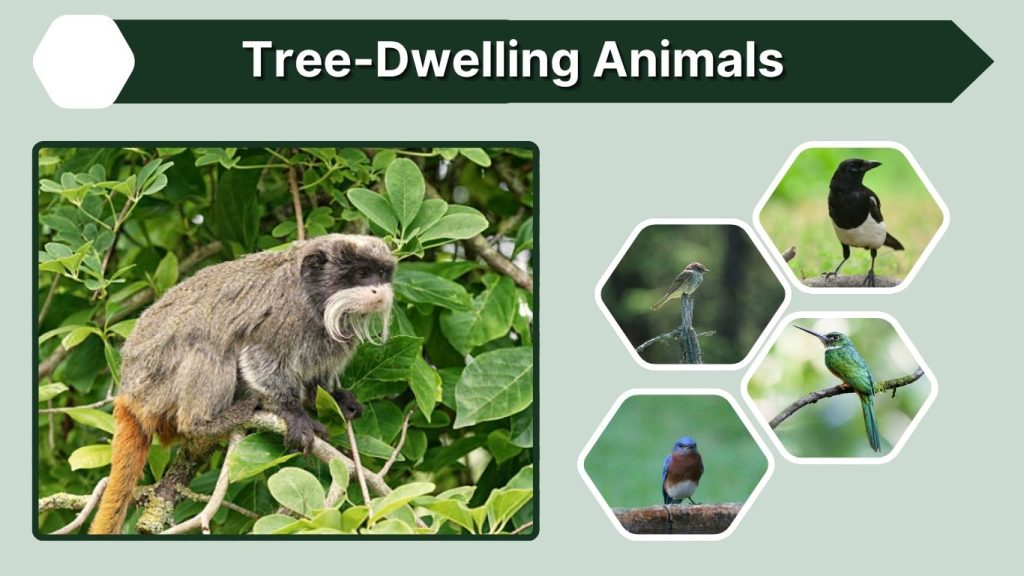
Tree-dwelling animals spend much of their lives climbing, resting, or searching for food among branches and leaves. These animals often have strong claws, gripping feet, or long tails that help them move safely through trees. Forest canopies provide shelter, nesting areas, and protection from predators. Some tree-dwelling animals feed on fruits and leaves, while others hunt insects or small animals. Their climbing abilities allow them to survive successfully in forest environments around the world.
1. Emperor Tamarin
The Emperor Tamarin is a tiny monkey famous for its long white mustache. It lives in tropical rainforests of South America and spends most of its time in trees. Emperor Tamarins feed on fruits, insects, nectar, and small animals. They are social monkeys that live in groups and communicate using sounds and body movements while moving through forest branches.
2. Eastern Phoebe
The Eastern Phoebe is a small bird commonly found near forests, rivers, and woodland edges in North America. It often sits on branches while watching for flying insects. Eastern Phoebes catch prey in midair and return to the same perch repeatedly. These birds build cup-shaped nests on tree branches, cliffs, and sometimes human-made structures like bridges or buildings.
3. Eurasian Magpie
The Eurasian Magpie is a black-and-white bird known for its intelligence and long tail. It lives in forests, parks, and open countryside across Europe and Asia. Eurasian Magpies feed on insects, seeds, fruits, and small animals. They are curious birds that can recognize objects and solve simple problems. Their large nests are usually built high in trees for safety.
4. Eastern Bluebird
The Eastern Bluebird is a colorful bird with bright blue feathers and a reddish chest. It lives in open woodlands, orchards, and forest edges across North America. Eastern Bluebirds feed on insects, berries, and fruits. They often perch on tree branches while searching for prey on the ground. These birds commonly nest in tree holes or specially designed birdhouses.
5. Emerald Tree Boa
The Emerald Tree Boa is a bright green snake found in South American rainforests. It spends most of its life coiled around tree branches high above the ground. Emerald Tree Boas hunt birds, bats, and small mammals during the night. Their green scales help them blend perfectly into leafy environments, making them difficult for predators and prey to notice in the forest canopy.
Fast and Agile Animals
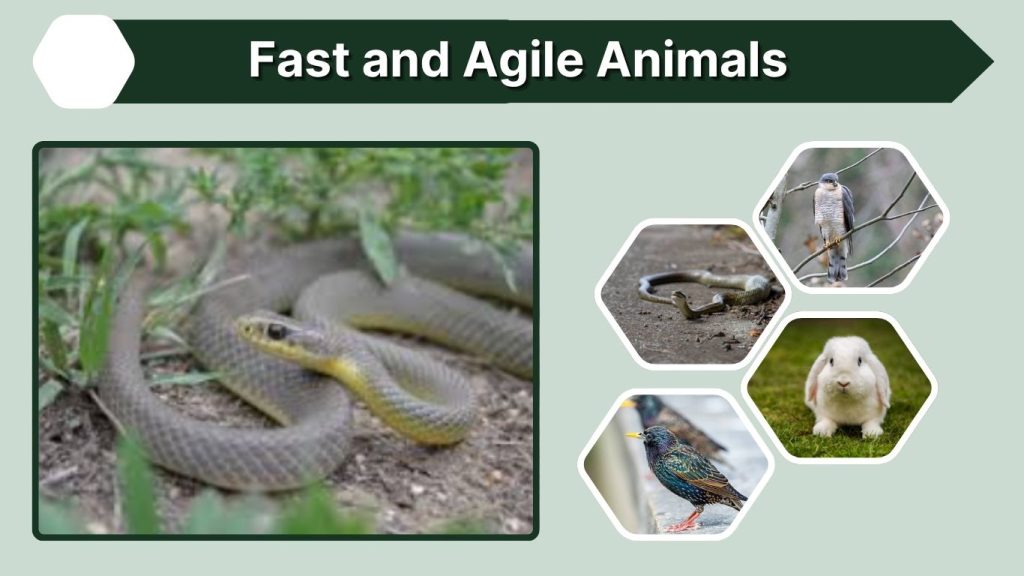
Fast and agile animals are built for speed, quick movement, and rapid reactions. These animals often rely on running, flying, or swift body movements to escape predators or catch prey. Many have slim bodies, strong muscles, and excellent balance that help them move efficiently through forests, grasslands, or open skies. Their speed and agility are important survival tools in the wild. These animals are known for their energy, alertness, and impressive hunting or escaping abilities.
1. Eastern Racer
The Eastern Racer is a slender nonvenomous snake found in forests, grasslands, and open areas of North America. It is known for its speed and quick reactions when escaping danger. Eastern Racers feed on insects, rodents, frogs, and small reptiles. They are active during the daytime and rely on excellent eyesight to spot prey and predators while moving rapidly across the ground.
2. Eastern Rat Snake
The Eastern Rat Snake is a strong snake commonly found in forests and farmland. It is an excellent climber and can quickly move through trees while hunting birds, eggs, and rodents. Eastern Rat Snakes are nonvenomous and help farmers by controlling rat populations. Their calm behavior and adaptability allow them to survive in both wild and human-populated areas.
3. Eurasian Sparrowhawk
The Eurasian Sparrowhawk is a small bird of prey known for its speed and sharp flying skills. It lives in forests and woodlands across Europe and Asia. Eurasian Sparrowhawks hunt small birds by flying quickly through trees and surprising prey. Their short wings and long tails help them make fast turns while chasing targets in dense forest habitats.
4. European Starling
The European Starling is a highly active bird famous for flying in large coordinated groups called murmurations. It has dark glossy feathers with shiny spots that reflect sunlight beautifully. European Starlings feed on insects, seeds, and fruits. These birds are fast fliers and adapt well to cities, farms, and forests. Their group flying patterns create amazing shapes in the sky.
5. English Lop
The English Lop is a rabbit breed known for its extremely long floppy ears. Despite its gentle appearance, it is an agile and active animal that enjoys running and exploring open spaces. English Lops feed on grass, vegetables, and rabbit pellets. They are social pets that require space, proper care, and regular exercise to remain healthy and comfortable.
FAQs
What are animals that start with the letter “E”?
Animals that start with “E” include many different species such as Elephant, Eagle, Eel, and Emu. These animals can be mammals, birds, reptiles, fish, or insects found in many habitats around the world.
Which is the largest animal that starts with “E”?
The Elephant is the largest land animal that starts with the letter “E.” African elephants are bigger than Asian elephants and can weigh several tons. They are famous for their trunks, tusks, intelligence, and strong family groups.
Are there dangerous animals that start with “E”?
Yes, some animals beginning with “E” can be dangerous. Examples include the Eastern Brown Snake, Egyptian Cobra, and Electric Eel. These animals may use venom or electricity for hunting and protection.
What habitats do “E” animals live in?
Animals starting with “E” live in many habitats such as forests, deserts, oceans, rivers, mountains, and wetlands. For example, the Emperor Penguin lives in Antarctica, while the Echidna survives in dry Australian regions.
Which “E” animals are popular pets?
Several animals that start with “E” are kept as pets or companion animals. Popular examples include the English Bulldog, English Cocker Spaniel, and English Lop. These animals are known for their friendly personalities and close relationships with humans.