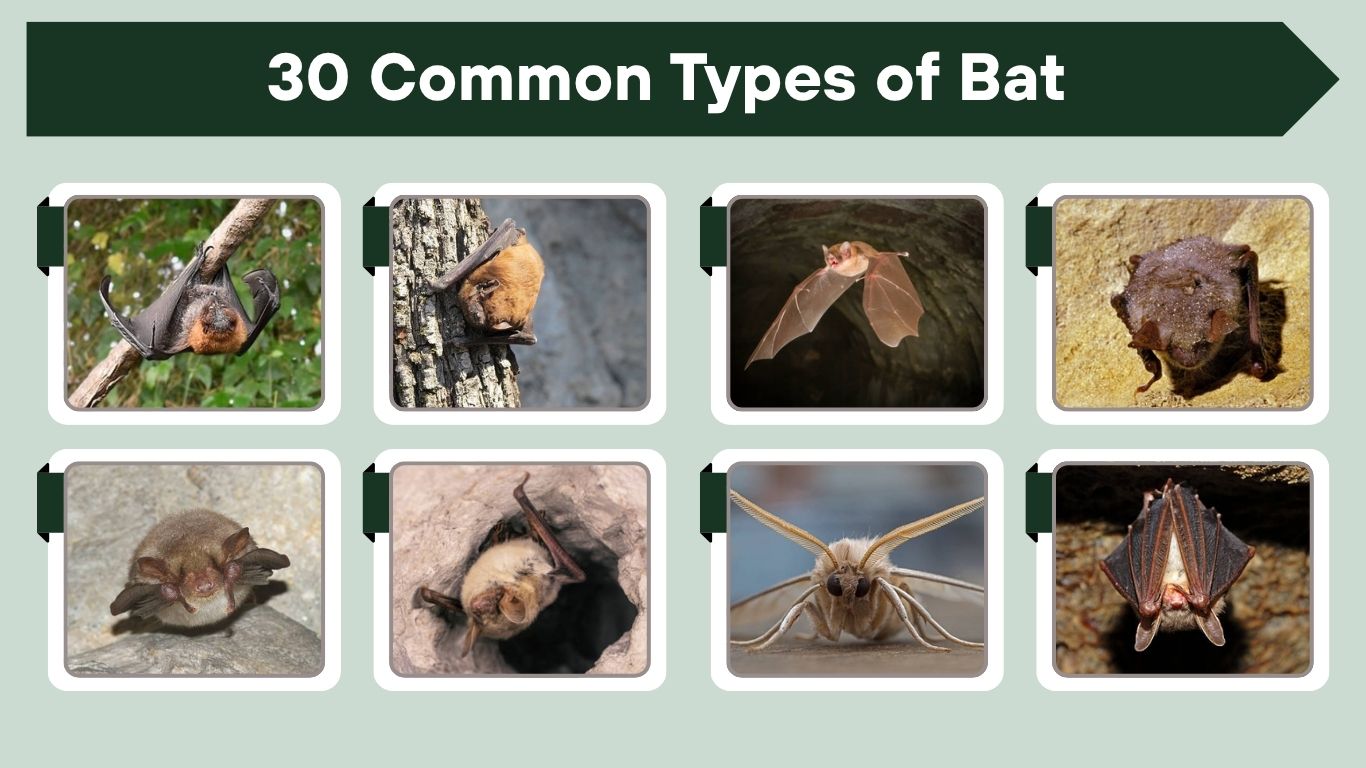
Bats are some of the most diverse and fascinating mammals in the world, ranging from tiny insect-eating species to large fruit bats with impressive wingspans. Each type has its own shape, color, habitat, and feeding behavior, which makes identification easier when you know what to look for. This guide covers 30 common types of bats, from small species like the Little Brown Bat to large species like the Large Flying Fox, with simple identification details for each one.
1. Little Brown Bat
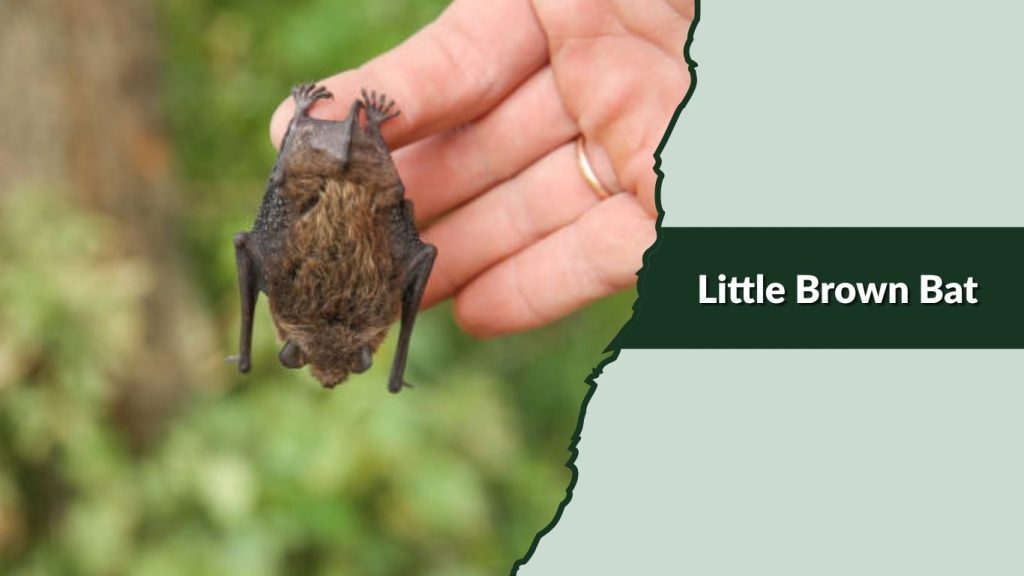
The Little Brown Bat is one of the most familiar small bat species in North America. It is known for its compact body, glossy brown fur, and quick, fluttering flight at dusk. Although it was once very common, its population has declined in many areas because of white-nose syndrome and habitat disturbance.
Identification
- Small-sized bat with a body length of about 3 to 4 inches.
- Fur is usually glossy brown, with a lighter underside.
- Wings are narrow and dark, helping it fly quickly while catching insects.
- Ears are short to medium in size compared with many other bat species.
- Feet are relatively large for its body size and often have noticeable hair on the toes.
- Commonly seen flying near water, forests, buildings, and open spaces at night.
Habitat
Little Brown Bats live in forests, wetlands, farms, towns, and areas near lakes or rivers. During warmer months, they often roost in tree cavities, buildings, barns, bridges, and bat houses. In winter, they hibernate in caves, mines, and other cool, humid places where temperatures stay stable.
Diet and Feeding Behavior
The Little Brown Bat is an insect-eating bat. It feeds mostly at night, using echolocation to find flying insects in the dark. Its diet often includes mosquitoes, moths, beetles, flies, and other small insects. This makes it helpful for natural pest control in many habitats.
Size and Behavior
Despite its name, the Little Brown Bat is not weak or slow. It is an active flyer and can catch insects while flying over water, fields, or forest edges. It usually becomes active around dusk and may return to the same roosting areas year after year. During cold months, it survives by entering hibernation and greatly slowing its body functions.
Sources checked for factual details: U.S. Fish & Wildlife Service, National Wildlife Federation, National Park Service, and Virginia Department of Wildlife Resources.
2. Big Brown Bat
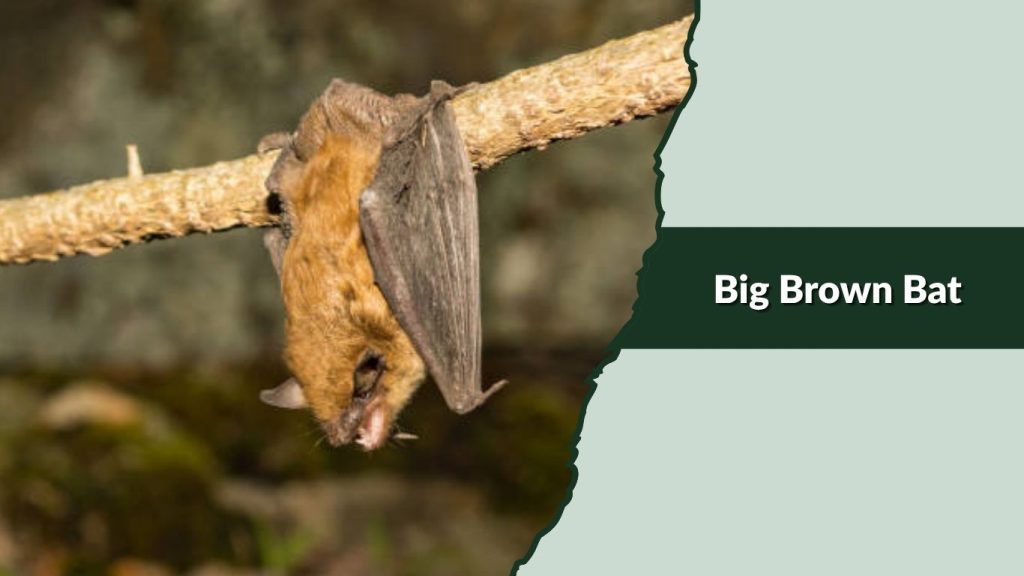
The Big Brown Bat is a medium-sized bat species commonly found across North America. It is larger and more robust than many small house-roosting bats. This species is known for its dark brown fur, broad wings, and strong flight, often appearing around buildings, forests, farms, and city areas at dusk.
Identification
- Medium-sized bat with a sturdy body shape.
- Fur is usually dark brown to glossy copper-brown.
- Wings are broad, dark, and leathery.
- Ears are short, rounded, and darker than the body fur.
- Face and wing membranes are usually blackish or dark brown.
- Larger than the Little Brown Bat, with a heavier body and wider wings.
- Often seen flying around streetlights, yards, barns, and buildings at night.
Habitat
Big Brown Bats are highly adaptable and can live in forests, grasslands, farms, suburbs, and cities. They commonly roost in buildings, attics, barns, bridges, tree cavities, and bat houses. During winter, they may hibernate in caves, mines, walls, basements, or other protected spaces.
Diet and Feeding Behavior
The Big Brown Bat mainly eats insects. It is especially known for feeding on beetles, but it also catches moths, flies, wasps, ants, and other night-flying insects. It uses echolocation to hunt in the dark and often feeds around lights where insects gather.
Size and Behavior
The Big Brown Bat is a strong and steady flyer. It usually becomes active shortly after sunset and may return to the same roost for many seasons. Compared with smaller bats, it can tolerate colder conditions better and may remain active later into the year before entering hibernation.
3. Mexican Free-tailed Bat
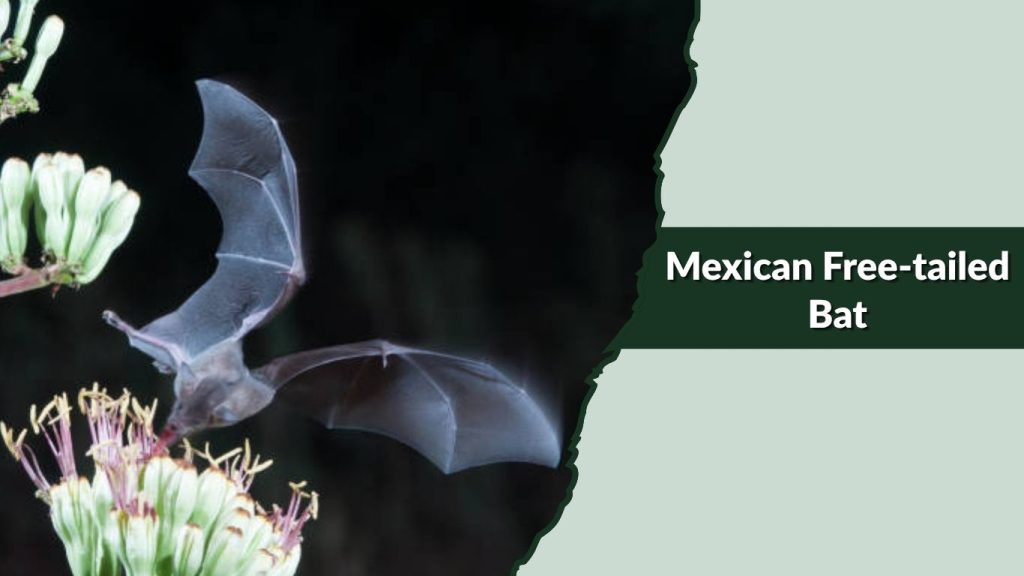
The Mexican Free-tailed Bat is a small to medium-sized bat known for its long, narrow wings and fast flight. It is one of the most widespread bats in the Americas and often forms very large colonies. This species gets its name from its tail, which extends beyond the tail membrane.
Identification
- Small to medium-sized bat with a slim body.
- Fur is usually dark brown, grayish brown, or reddish brown.
- The tail extends noticeably beyond the tail membrane.
- Wings are long and narrow, built for fast, direct flight.
- Ears are broad and rounded, often set close together.
- Face may look wrinkled compared with many other bats.
- Often seen flying high and fast in open areas at dusk or night.
Habitat
Mexican Free-tailed Bats live in caves, bridges, tunnels, buildings, and other sheltered roosting sites. They are especially famous for forming huge colonies in caves and under bridges. This bat is commonly found in warm regions, open landscapes, towns, farms, and areas near water.
Diet and Feeding Behavior
The Mexican Free-tailed Bat mainly eats flying insects. It often hunts high above the ground and may travel long distances in search of food. Its diet includes moths, beetles, flies, true bugs, and other night-flying insects, making it useful for controlling agricultural pests.
Size and Behavior
This bat is a powerful and fast flyer. It may leave its roost in large groups after sunset, creating dramatic evening flights. Mexican Free-tailed Bats are social animals and often live in colonies ranging from hundreds to millions of individuals, depending on the roosting site.
4. Hoary Bat
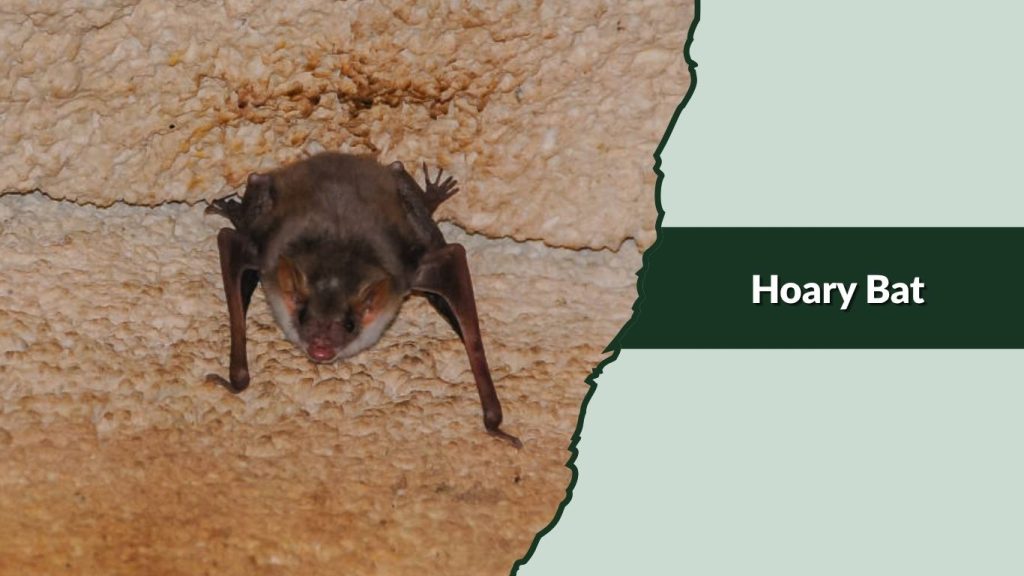
The Hoary Bat is one of the largest tree-roosting bats in North America. It is easy to recognize because of its frosted-looking fur, which gives it a silvery or “hoary” appearance. This bat is mostly solitary and is often found in forests, woodland edges, and open areas where it hunts flying insects at night.
Identification
- Large bat with thick, long fur.
- Fur is brownish gray with white-tipped hairs, creating a frosted look.
- Ears are short, rounded, and edged with dark coloring.
- Wings are long and narrow, helping it fly strongly in open spaces.
- Tail membrane is heavily furred, unlike many other bat species.
- Face often appears dark with lighter markings around the neck and shoulders.
- Usually roosts alone in trees rather than in large colonies.
Habitat
Hoary Bats mainly live in forests, wooded areas, parks, and tree-lined landscapes. They often roost in the foliage of trees, where their frosted fur helps them blend in with leaves and bark. During migration, they may also appear near coastlines, farms, grasslands, and urban green spaces.
Diet and Feeding Behavior
The Hoary Bat feeds mostly on moths, but it also eats beetles, flies, mosquitoes, wasps, and other flying insects. It usually hunts after dark, flying along forest edges, clearings, streams, and open areas. Its strong flight allows it to cover wide feeding areas in a single night.
Size and Behavior
The Hoary Bat is a solitary species and is not usually found in large roosting groups. It is a strong migrant and may travel long distances between summer and winter ranges. Females often give birth to twins, which is less common among many bat species.
5. Silver-haired Bat
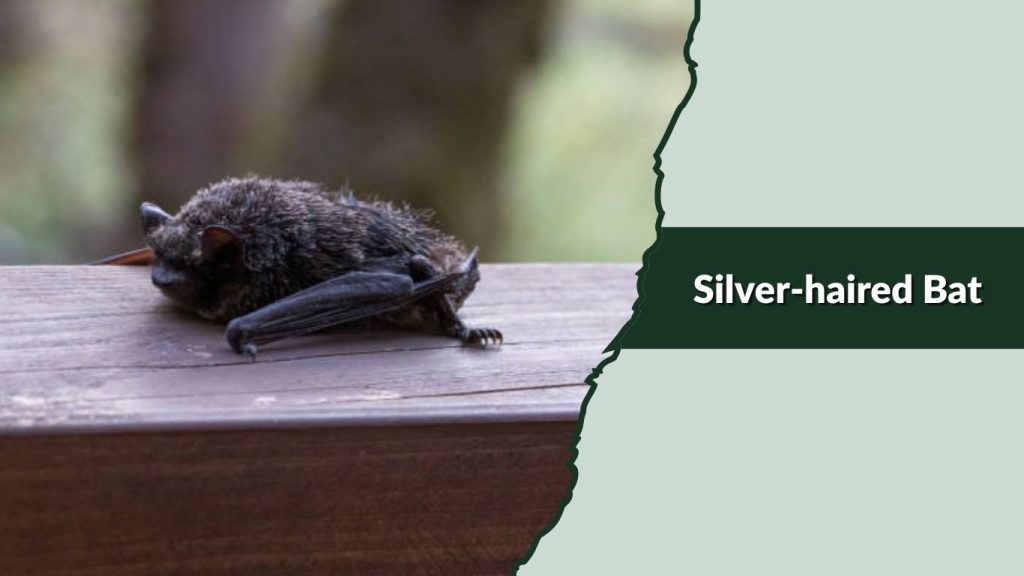
The Silver-haired Bat is a small to medium-sized bat known for its dark fur with pale silver tips. This gives the bat a frosted or silvery appearance, especially along the back. It is usually a solitary, tree-roosting species and is most often seen around forests, woodland edges, wetlands, and streams.
Identification
- Small to medium-sized bat with dark brown or blackish fur.
- Fur has silver-white tips, creating a frosted look.
- Wings are dark, broad, and suited for slow, steady flight.
- Ears are short, rounded, and mostly dark.
- Tail membrane is partly furred.
- Body looks more compact than many long-winged bat species.
- Often flies slowly near trees, forest edges, and water.
Habitat
Silver-haired Bats are commonly found in forests, wooded wetlands, riparian areas, and places with mature trees. They often roost under loose bark, in tree cavities, or sometimes in woodpiles and buildings. During migration, they may appear in a wider range of habitats, including towns, parks, and open landscapes.
Diet and Feeding Behavior
The Silver-haired Bat feeds on flying insects at night. It commonly eats moths, flies, beetles, mosquitoes, midges, and other small insects. This species often hunts near forest openings, streams, ponds, and woodland edges, using echolocation to locate prey in the dark.
Size and Behavior
The Silver-haired Bat is generally solitary or found in small numbers rather than large colonies. It has a slower, more fluttering flight compared with fast-flying species like free-tailed bats. It is also a migratory bat, moving between seasonal habitats as temperatures and food availability change.
6. Eastern Red Bat
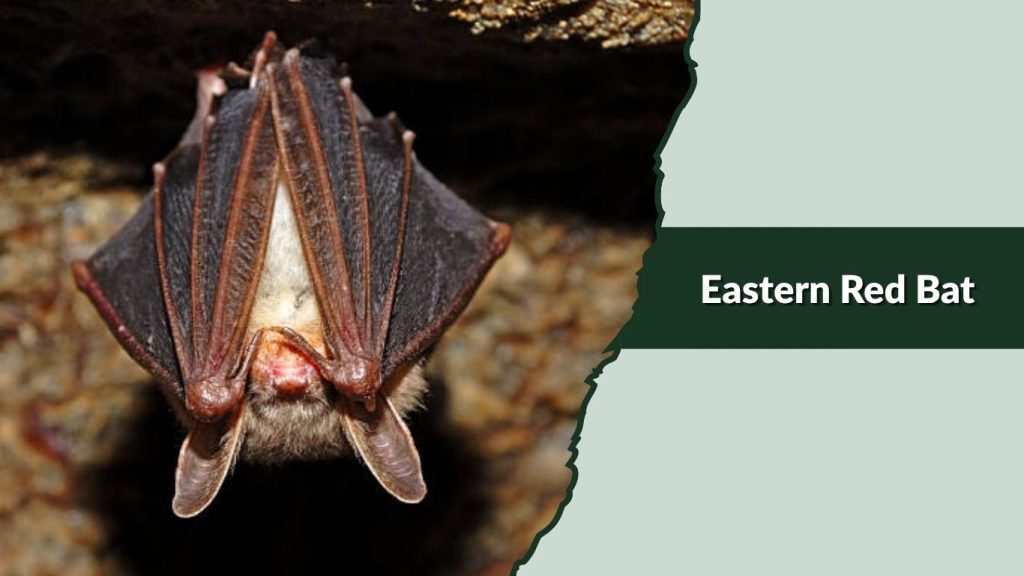
The Eastern Red Bat is a medium-sized tree-roosting bat known for its bright reddish-orange fur. It is one of the most colorful bat species in North America and is often found hanging alone in tree foliage. Its fur helps it blend with dead leaves, making it difficult to spot during the day.
Identification
- Medium-sized bat with soft reddish-orange to rusty-red fur.
- Fur may have white or pale tips, giving it a slightly frosted look.
- Wings are long, narrow, and dark brown to blackish.
- Tail membrane is heavily furred.
- Ears are short and rounded.
- Males are usually brighter red, while females may look duller or more yellowish.
- Often roosts alone in trees, where it can resemble a dry leaf.
Habitat
Eastern Red Bats live in forests, woodland edges, orchards, parks, and tree-lined neighborhoods. They usually roost in the leaves of trees rather than caves or buildings. During migration, they may travel through open areas, coastal regions, and urban landscapes with suitable trees.
Diet and Feeding Behavior
The Eastern Red Bat eats night-flying insects. Its diet includes moths, beetles, flies, mosquitoes, leafhoppers, and other small insects. It usually hunts around forest edges, clearings, streams, and lights where insects gather. Like other bats, it uses echolocation to find prey in the dark.
Size and Behavior
The Eastern Red Bat is mostly solitary and does not usually form large colonies. It becomes active around dusk and is a strong, agile flyer. Females can give birth to multiple young at once, sometimes more than two, which is unusual compared with many other bat species.
7. Western Red Bat
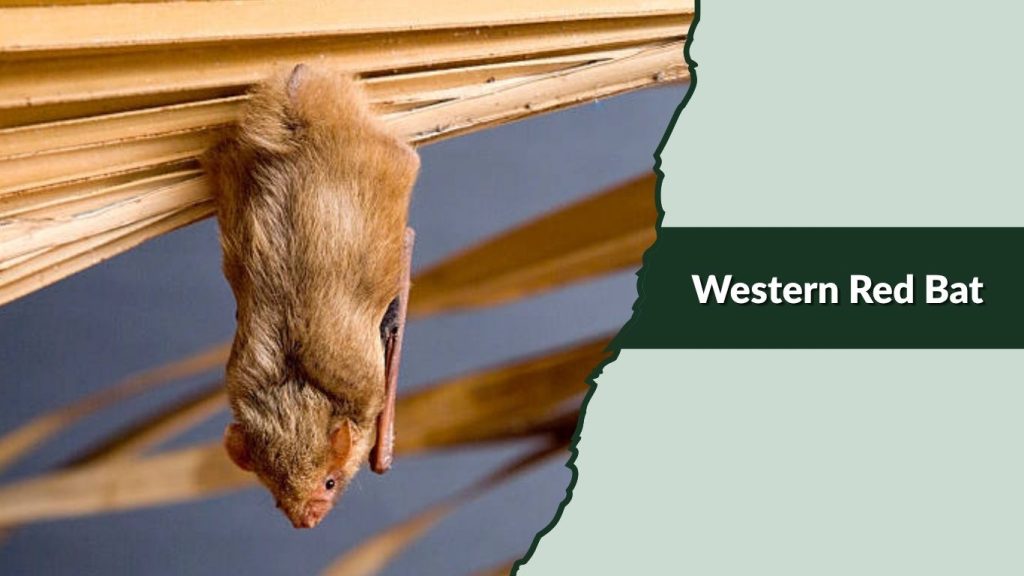
The Western Red Bat is a colorful tree-roosting bat closely related to the Eastern Red Bat. It is usually found in western parts of North America and is known for its reddish to orange-brown fur. This bat often roosts alone in tree foliage, where its leaf-like appearance helps it stay hidden during the day.
Identification
- Medium-sized bat with reddish, orange-brown, or rusty-colored fur.
- Fur may have pale or whitish tips, giving it a slightly frosted look.
- Wings are dark and fairly long.
- Tail membrane is heavily covered with fur.
- Ears are short, rounded, and partly hidden by fur.
- Often looks like a dry leaf when hanging in tree branches.
- Similar to the Eastern Red Bat but generally found farther west.
Habitat
Western Red Bats live in forests, woodlands, orchards, riparian areas, parks, and tree-lined neighborhoods. They are often associated with cottonwoods, sycamores, willows, and other trees near water. Instead of roosting in caves, they usually hang in foliage, using tree cover for protection and camouflage.
Diet and Feeding Behavior
The Western Red Bat feeds on flying insects at night. Its diet includes moths, beetles, flies, mosquitoes, and other small insects. It commonly hunts along forest edges, streams, rivers, open fields, and around lights where insects gather. Echolocation helps it locate prey while flying in darkness.
Size and Behavior
The Western Red Bat is mostly solitary and is not known for forming large colonies. It is active around dusk and can fly skillfully through open spaces and along wooded edges. Like other red bats, females may give birth to multiple young, and the species may migrate seasonally depending on weather and food availability.
8. Evening Bat
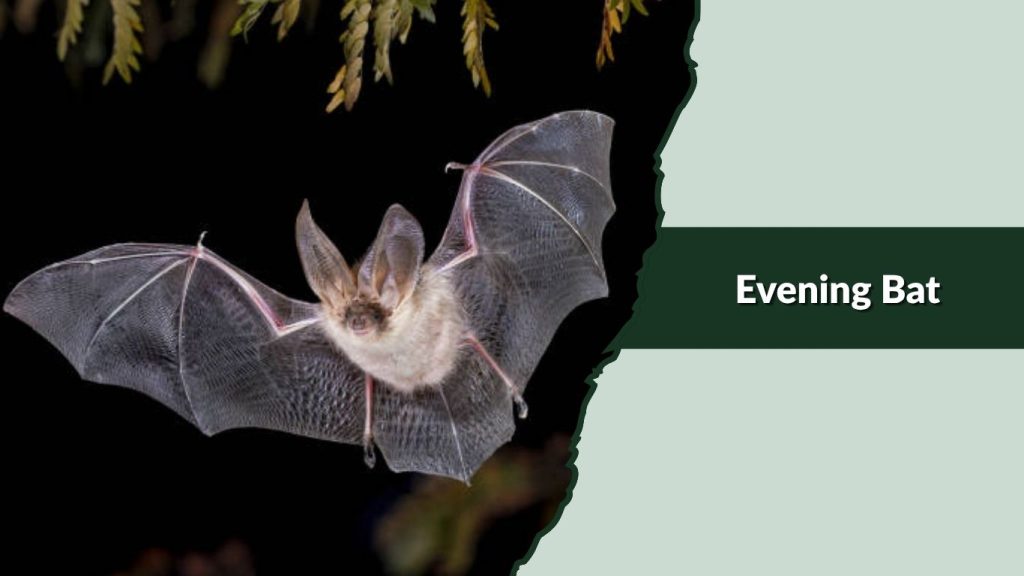
The Evening Bat is a small bat species commonly found in the eastern and central United States. It has dark brown fur, short ears, and a compact body. This bat often roosts in trees, buildings, barns, and bat houses, and it becomes active around dusk to hunt insects.
Identification
- Small bat with a compact body shape.
- Fur is usually dark brown to reddish brown.
- Underparts may look slightly lighter than the back.
- Ears are short, rounded, and dark.
- Wings are dark and relatively broad.
- Face is dark and simple, without large ears or unusual markings.
- Often confused with the Big Brown Bat but is smaller in size.
Habitat
Evening Bats live in forests, woodland edges, wetlands, farms, suburbs, and towns. They often roost in tree cavities, under loose bark, in buildings, and in bat houses. Unlike many cave-roosting bats, this species usually does not rely heavily on caves for roosting or hibernation.
Diet and Feeding Behavior
The Evening Bat feeds on flying insects after sunset. Its diet includes moths, beetles, flies, mosquitoes, leafhoppers, and other small insects. It often hunts over fields, forest edges, streams, ponds, and around lights where insects are common.
Size and Behavior
The Evening Bat is active in warm months and usually emerges soon after dusk. Females may form maternity colonies in buildings, trees, or bat houses during the breeding season. This species is a steady flyer and is often seen feeding in groups near good insect-rich areas.
9. Pallid Bat
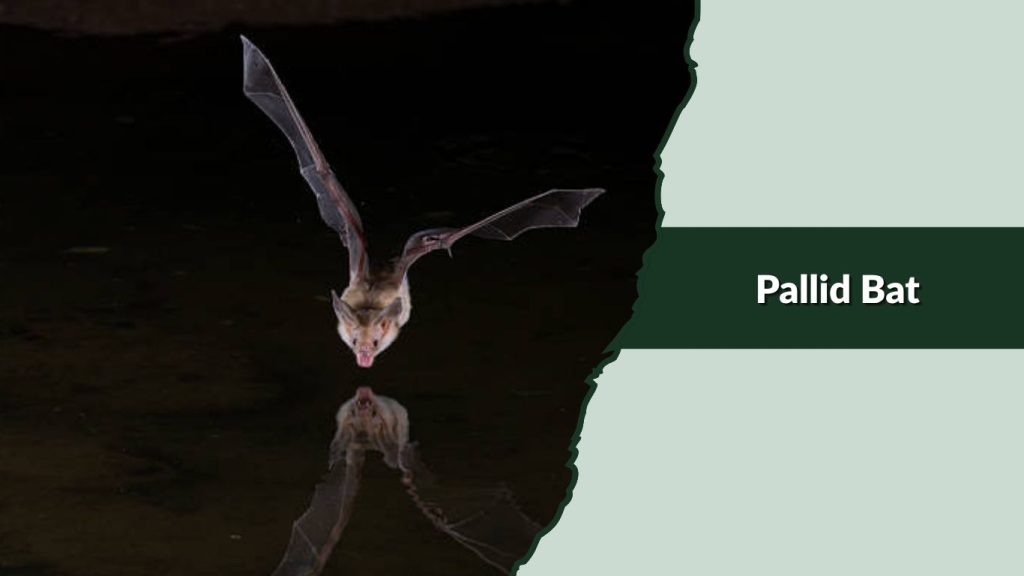
The Pallid Bat is a medium to large bat known for its pale coloring, large ears, and unusual hunting style. Unlike many bats that catch insects only in flight, the Pallid Bat often hunts on the ground. It is commonly found in dry regions, rocky areas, deserts, grasslands, and open woodlands.
Identification
- Medium to large bat with a pale tan, cream, or light brown body.
- Underparts are usually much lighter than the back.
- Ears are very large and easy to notice.
- Face has a broad, blunt appearance.
- Wings are light brown to grayish and fairly broad.
- Eyes are larger than those of many small insect-eating bats.
- Often recognized by its pale color and oversized ears.
Habitat
Pallid Bats live in deserts, grasslands, shrublands, rocky canyons, dry forests, and open woodland areas. They often roost in rock crevices, caves, mines, hollow trees, bridges, and buildings. They prefer warm, dry habitats with good places to hide during the day.
Diet and Feeding Behavior
The Pallid Bat eats many types of insects and other small arthropods. It is especially known for catching prey from the ground, including crickets, beetles, grasshoppers, scorpions, and spiders. It can listen for movement sounds made by prey, then swoop down to capture them.
Size and Behavior
The Pallid Bat is a strong but relatively slow flyer compared with some fast open-air bats. It often hunts close to the ground and may land to grab prey. This species may roost alone or in small groups, and females can form maternity colonies during the breeding season.
10. Spotted Bat
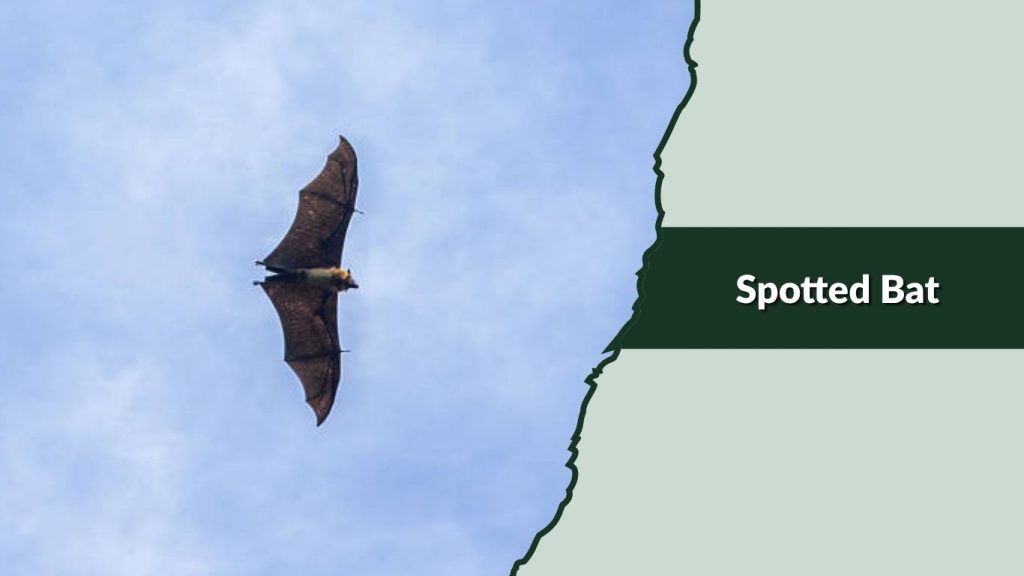
The Spotted Bat is a medium-sized bat known for its striking black-and-white pattern and very large ears. It is one of the most distinctive-looking bats in North America. This species is usually found in dry, rocky landscapes, cliffs, canyons, deserts, and open habitats where it roosts in high rock crevices.
Identification
- Medium-sized bat with a black body and bold white spots.
- Usually has one white spot on each shoulder and one on the rump.
- Ears are extremely large and pinkish or pale in color.
- Underparts are lighter than the back.
- Wings are dark and fairly broad.
- Fur pattern makes it easier to identify than many plain brown bats.
- Often associated with cliffs, rocky canyons, and desert landscapes.
Habitat
Spotted Bats live in arid and semi-arid regions, especially around cliffs, rocky canyons, deserts, grasslands, and open woodlands. They usually roost alone in narrow rock crevices high on cliff faces. These roosting sites help protect them from predators and harsh daytime conditions.
Diet and Feeding Behavior
The Spotted Bat mainly feeds on flying insects, especially moths. It usually hunts at night over open areas, canyon bottoms, meadows, and water sources. Unlike many bats, its echolocation calls can sometimes be heard by people because they are lower in frequency than those of many other species.
Size and Behavior
The Spotted Bat is generally solitary and is not commonly found in large colonies. It has a slow, steady flight and may travel from cliff roosts to feeding areas after dark. Because it often roosts in remote rocky habitats, it is seen less often than many bats that live near buildings or towns.
11. Townsend’s Big-eared Bat
Townsend’s Big-eared Bat is a medium-sized bat best known for its extremely large ears. It has a gentle brown to grayish-brown appearance and is often linked with caves, mines, old buildings, and rocky shelters. This bat is sensitive to disturbance, especially while roosting or hibernating.
Identification
- Medium-sized bat with very large, long ears.
- Ears may curl back when the bat is resting.
- Fur is usually pale brown, grayish brown, or buff-colored.
- Face has two noticeable glandular lumps on the nose.
- Wings are broad and dark brown.
- Body looks fairly slender compared with its ear size.
- Often recognized quickly by its oversized ears and calm roosting posture.
Habitat
Townsend’s Big-eared Bat lives in caves, mines, rocky areas, forests, deserts, grasslands, and old buildings. It often uses caves and abandoned mines for roosting, maternity colonies, and hibernation. Because it can be disturbed easily, protected roosting sites are very important for this species.
Diet and Feeding Behavior
Townsend’s Big-eared Bat mainly eats moths, though it may also feed on beetles, flies, and other small night-flying insects. It uses echolocation to hunt in darkness and often forages near vegetation, forest edges, canyons, and open areas where moths are common.
Size and Behavior
This bat is usually slow and maneuverable in flight, which helps it hunt near trees and other obstacles. It may roost alone or in groups, depending on the season. During winter, it hibernates in cool, quiet places and is especially vulnerable if disturbed during this period.
12. Rafinesque’s Big-eared Bat
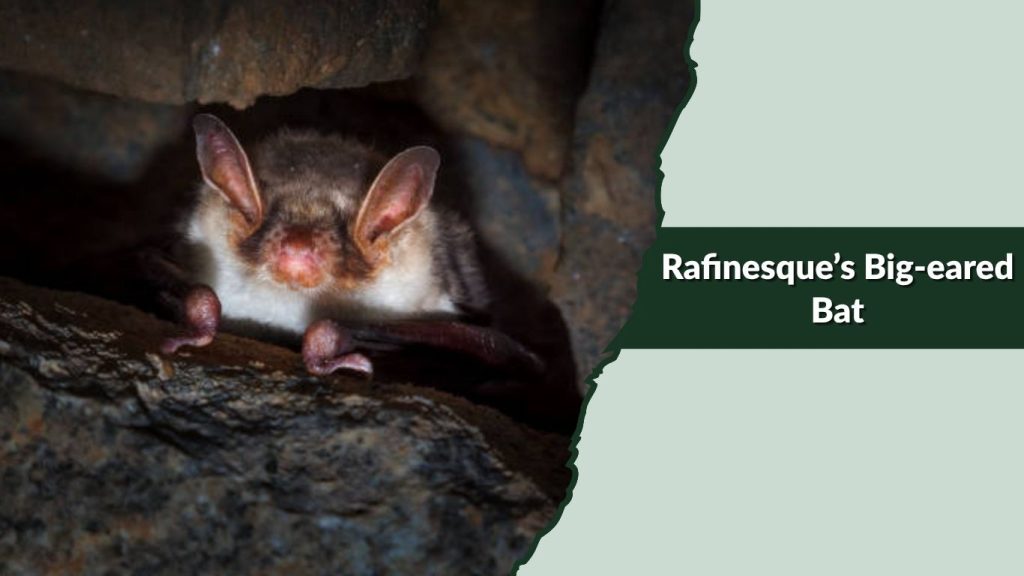
Rafinesque’s Big-eared Bat is a medium-sized bat known for its very large ears and soft grayish-brown fur. It is mostly found in the southeastern United States and is strongly associated with forests, wetlands, old buildings, hollow trees, and cave-like shelters. Its oversized ears make it one of the easier bats to recognize.
Identification
- Medium-sized bat with very large ears.
- Ears are long, broad, and may curl backward when resting.
- Fur is usually grayish brown to brown on the back.
- Underparts are usually lighter, often pale gray or whitish.
- Face has two noticeable bumps on the nose.
- Wings are broad and dark brown.
- Similar to Townsend’s Big-eared Bat but more strongly linked with southeastern forests and wetlands.
Habitat
Rafinesque’s Big-eared Bat lives in bottomland hardwood forests, swamps, river valleys, caves, mines, old buildings, bridges, and hollow trees. It often roosts in large hollow trees, especially in forested wetland areas. Abandoned buildings and other quiet shelters may also be used for day roosting or maternity colonies.
Diet and Feeding Behavior
Rafinesque’s Big-eared Bat mainly feeds on moths, but it may also eat beetles, flies, mosquitoes, and other small insects. It usually hunts at night in wooded areas, forest openings, wetlands, and along waterways. Its large ears help it detect prey and navigate through cluttered habitats.
Size and Behavior
This bat is usually a slow, maneuverable flyer, which helps it move through forests and around vegetation. It may roost alone or in small groups, though maternity colonies can form during the breeding season. Like other big-eared bats, it can be sensitive to disturbance at roosting sites.
13. Northern Long-eared Bat
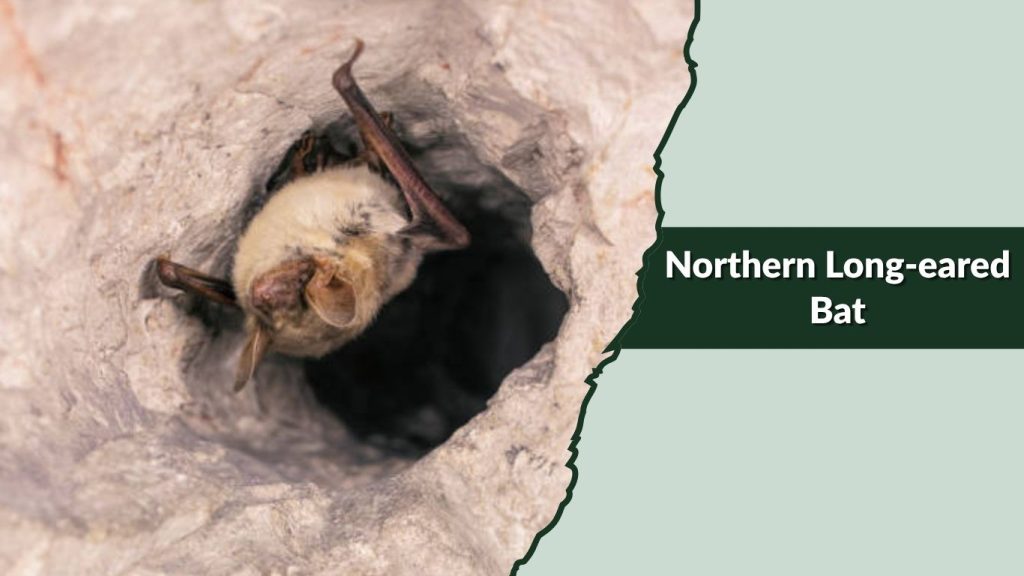
The Northern Long-eared Bat is a small bat known for its longer ears and slender body. It is usually found in forests, where it roosts in tree cavities, under loose bark, and sometimes in buildings. This species has declined sharply in many areas because of white-nose syndrome.
Identification
- Small bat with noticeably long ears.
- Fur is usually medium brown to dark brown on the back.
- Underparts are often lighter brown or tan.
- Wings are dark and fairly narrow.
- Body is slim and delicate compared with larger brown bats.
- Ears extend beyond the nose when gently laid forward.
- Often associated with forested habitats and tree roosts.
Habitat
Northern Long-eared Bats live mainly in forests and wooded landscapes. During summer, they roost under loose bark, in tree cavities, crevices, and sometimes in buildings or bat boxes. In winter, they hibernate in caves and mines with cool, humid conditions that help them conserve energy.
Diet and Feeding Behavior
The Northern Long-eared Bat feeds on insects at night. It eats moths, beetles, flies, leafhoppers, caddisflies, and other small insects. It often hunts within forests, along trails, near water, and around woodland edges, using echolocation to find prey in dark and cluttered spaces.
Size and Behavior
This bat is a quiet, agile flyer that can maneuver well through trees and dense vegetation. It may catch insects in flight or pick them from leaves and bark. During the breeding season, females form small maternity colonies, while males are more likely to roost alone or in small numbers.
14. Indiana Bat
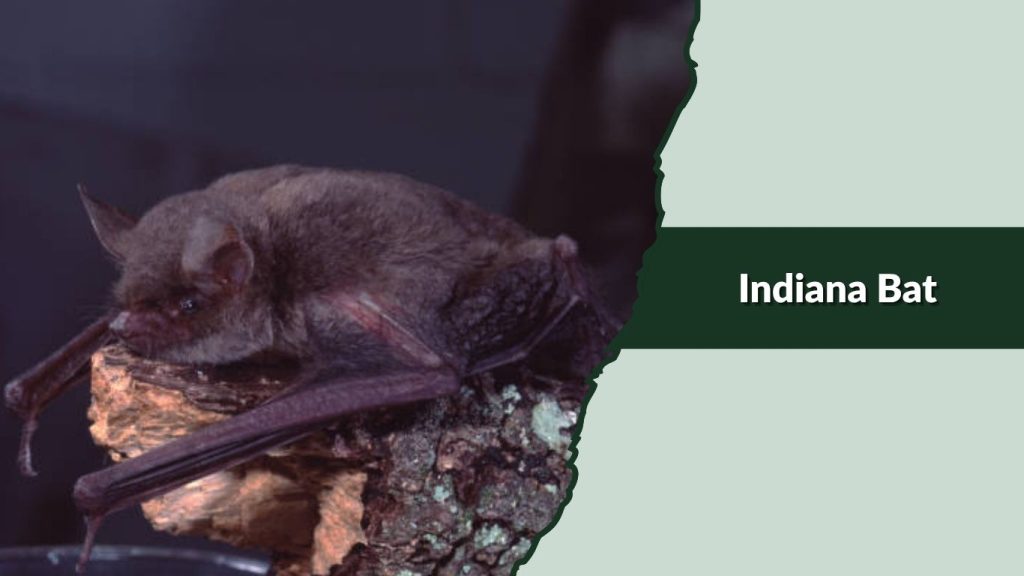
The Indiana Bat is a small bat species with soft brownish-gray fur and a delicate body shape. It is closely associated with forests in summer and caves or mines in winter. This species is well known because it is endangered in the United States and has been heavily affected by habitat loss and white-nose syndrome.
Identification
- Small bat with dull brown to grayish-brown fur.
- Underparts are usually lighter than the back.
- Wings are dark and thin.
- Ears are short to medium in size.
- Feet are small and delicate compared with some similar bats.
- Fur often looks less glossy than the Little Brown Bat.
- Often identified by experts using close details of the feet, toe hairs, and facial features.
Habitat
Indiana Bats use different habitats depending on the season. In summer, they roost under loose bark, in tree cavities, and sometimes in dead or dying trees within forests. In winter, they hibernate in caves and mines with stable, cool temperatures and suitable humidity.
Diet and Feeding Behavior
The Indiana Bat feeds on flying insects at night. Its diet includes moths, beetles, flies, mosquitoes, caddisflies, and other small insects. It usually hunts along forest edges, streams, rivers, and open areas near wooded habitats, using echolocation to locate prey in darkness.
Size and Behavior
The Indiana Bat is a social species, especially during hibernation and maternity season. Females form maternity colonies in summer, while large groups may gather in winter hibernation sites. Because it depends on specific roosting and hibernation habitats, disturbance or habitat changes can strongly affect its survival.
15. Gray Bat
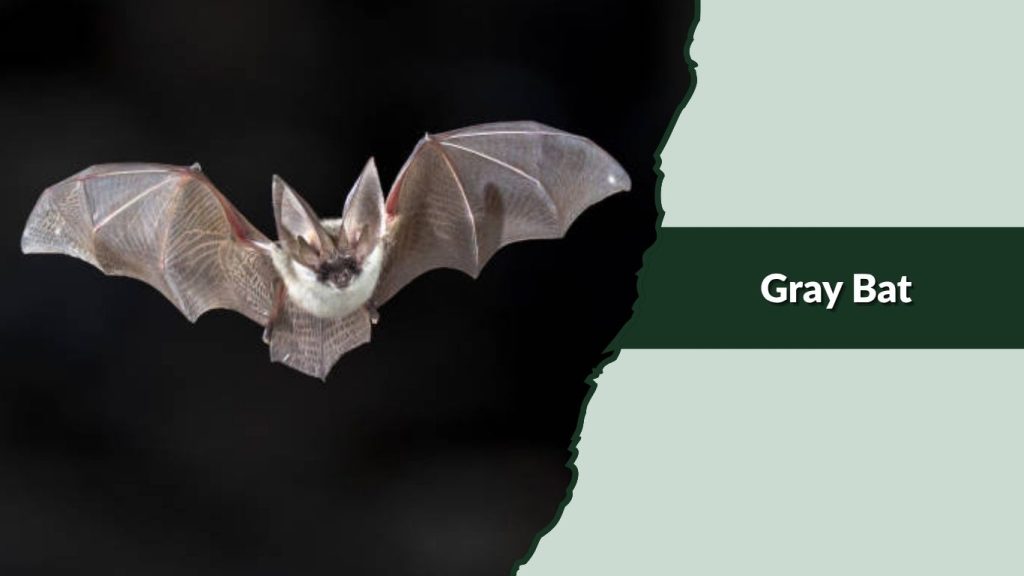
The Gray Bat is a medium-sized bat known for its grayish-brown fur and strong connection to caves. Unlike many bats that use trees or buildings for roosting, this species depends heavily on caves throughout the year. It is mostly found near rivers, lakes, reservoirs, and forested waterways where insects are abundant.
Identification
- Medium-sized bat with grayish-brown to dark gray fur.
- Fur often appears uniform in color from base to tip.
- Wings are dark and fairly broad.
- Ears are short to medium in size.
- Face is dark and simple without large nose folds.
- Usually found in or near caves rather than tree foliage or buildings.
- Often associated with water-rich areas such as rivers, lakes, and reservoirs.
Habitat
Gray Bats are strongly linked to caves and usually use different caves for summer roosting and winter hibernation. They often live near rivers, streams, lakes, and reservoirs because these areas provide many flying insects. Suitable cave conditions are very important for their survival.
Diet and Feeding Behavior
The Gray Bat feeds on night-flying insects, especially those found near water. Its diet includes mayflies, caddisflies, beetles, moths, flies, and other aquatic or flying insects. It usually hunts over rivers, lakes, streams, and forested waterways after sunset.
Size and Behavior
The Gray Bat is a highly social species and may gather in large colonies inside caves. During winter, it hibernates in caves with stable temperatures. Because it depends so strongly on specific cave habitats, disturbance at roosting or hibernation sites can greatly affect its population.
16. Eastern Small-footed Bat
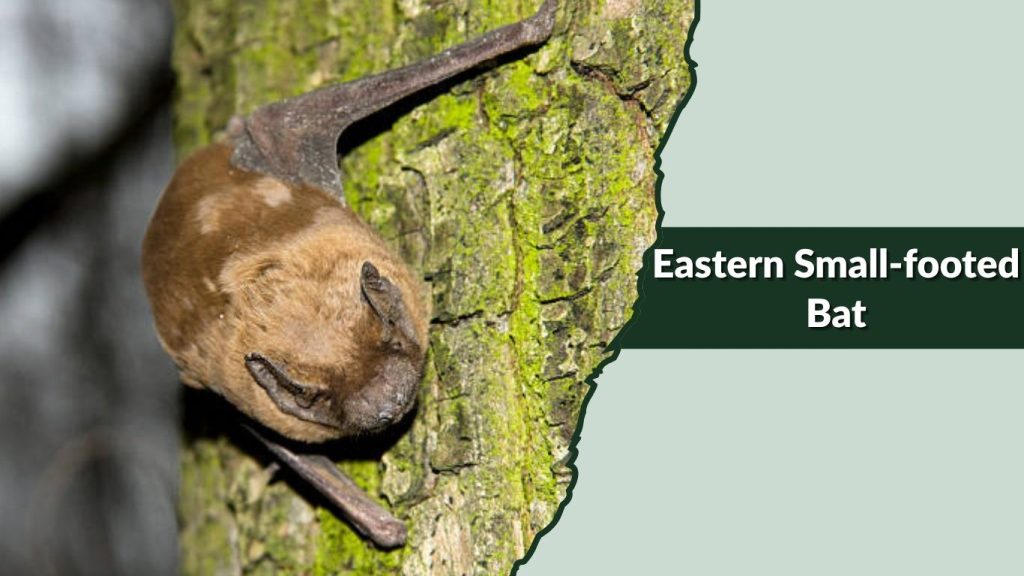
The Eastern Small-footed Bat is a small bat species known for its tiny feet, dark facial features, and golden-brown fur. It is one of the smallest bats in North America and is usually associated with rocky habitats, caves, mines, forests, and mountain areas. Because of its small size and quiet behavior, it is not often seen.
Identification
- Very small bat with a delicate body shape.
- Fur is usually golden brown, yellowish brown, or light brown on the back.
- The face, ears, and wing membranes are dark brown to blackish.
- Feet are very small compared with many similar bat species.
- The ears are medium-sized and dark.
- The wings are narrow and dark.
- Often identified by its small feet and dark facial mask.
Habitat
Eastern Small-footed Bats live in rocky forests, mountain slopes, caves, mines, talus fields, cliffs, and sometimes buildings. During summer, they may roost in rock crevices, under stones, in buildings, or near cave entrances. In winter, they hibernate in caves and mines, often choosing cold areas near entrances.
Diet and Feeding Behavior
The Eastern Small-footed Bat feeds on small flying insects at night. Its diet includes moths, beetles, flies, mosquitoes, and other tiny insects. It usually hunts close to forests, rocky areas, streams, and open spaces near roosting sites, using echolocation to find prey in darkness.
Size and Behavior
This bat is generally solitary or found in small numbers rather than large colonies. It is a quiet and secretive species, often roosting in hidden rocky spaces. During hibernation, it may choose colder spots than many other bats, which can make it harder to notice inside caves or mines.
17. California Myotis
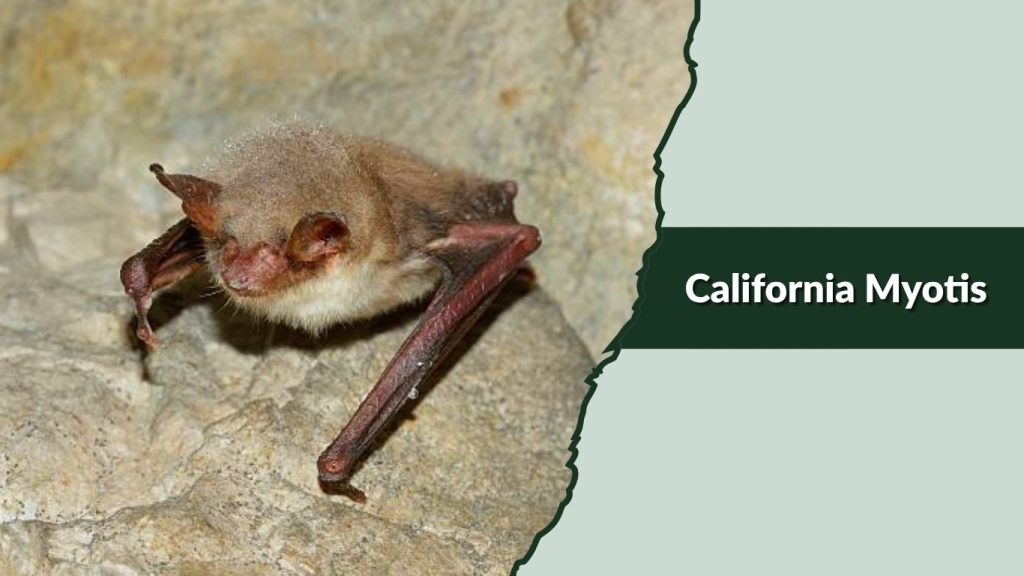
The California Myotis is a small bat species with a slender body, short ears, and brown to pale brown fur. It is commonly found in western North America and can live in many different habitats, from forests and deserts to rocky areas and towns. This bat is active at night and feeds on small flying insects.
Identification
- Small bat with a slim, delicate body.
- Fur is usually light brown, dull brown, or grayish brown.
- Underparts are often paler than the back.
- The ears are short to medium in size and dark brown.
- The wings are dark and relatively narrow.
- The face is usually dark with a simple, plain appearance.
- Similar to several other small myotis bats, so exact identification can be difficult.
Habitat
California Myotis bats live in forests, woodlands, deserts, shrublands, grasslands, rocky areas, and urban edges. They may roost in rock crevices, tree bark, buildings, bridges, caves, mines, and bat houses. Their ability to use many roost types helps them survive in different environments.
Diet and Feeding Behavior
The California Myotis feeds mostly on small flying insects. It eats moths, flies, beetles, mosquitoes, midges, and other tiny insects found at night. It usually hunts near vegetation, streams, ponds, forest edges, and open areas where insects are active.
Size and Behavior
This bat is usually active soon after sunset and has a quick, fluttering flight. It may roost alone or in small groups, while females can form maternity colonies during the breeding season. Because it is small and plain-looking, it is often hard to identify without close observation.
18. Yuma Myotis
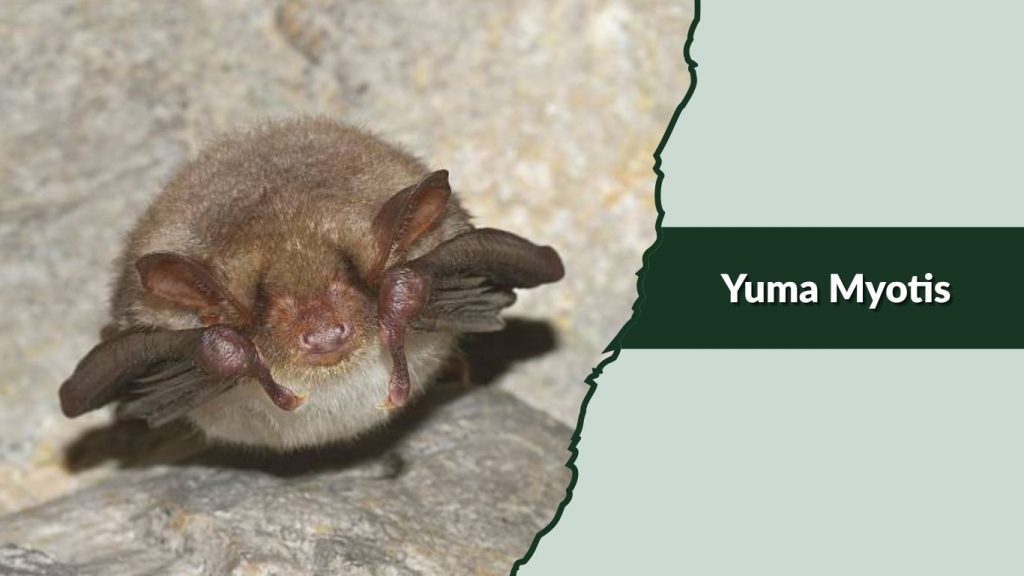
The Yuma Myotis is a small bat species commonly found near water. It has short ears, a slim body, and brown to grayish-brown fur. This bat is often seen around ponds, rivers, lakes, and wetlands, where it hunts small flying insects during the evening and night.
Identification
- Small bat with a slender body shape.
- Fur is usually light brown, grayish brown, or dull brown.
- Underparts are often paler than the back.
- Ears are short to medium in length.
- Wings are dark and fairly narrow.
- Feet are relatively large compared with some similar small bats.
- Commonly found flying low over water while feeding.
Habitat
Yuma Myotis bats are strongly associated with water-rich habitats. They live near rivers, streams, lakes, ponds, wetlands, and irrigation areas. During the day, they may roost in buildings, bridges, caves, mines, rock crevices, tree cavities, and bat houses.
Diet and Feeding Behavior
The Yuma Myotis feeds on small flying insects, especially those found near water. It eats mosquitoes, midges, flies, moths, beetles, caddisflies, and other aquatic insects. It often hunts low over the surface of water, using echolocation to catch prey in flight.
Size and Behavior
This bat is active around dusk and may feed in groups near ponds, rivers, or wetlands. It has a quick, fluttering flight and often stays close to water while hunting. Females may form maternity colonies in warm roosting sites during the breeding season.
19. Fringed Myotis
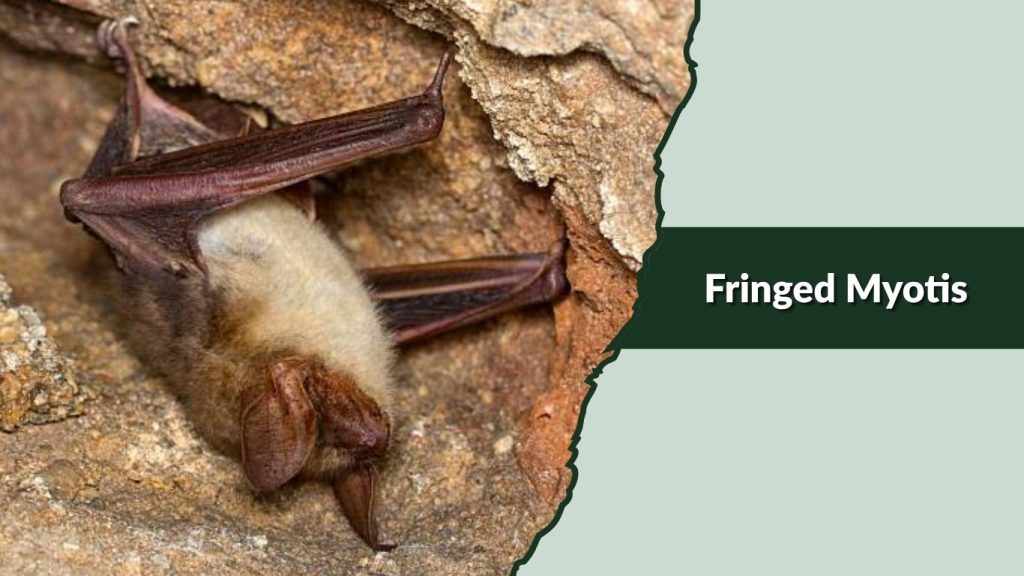
The Fringed Myotis is a small to medium-sized bat known for the tiny fringe of stiff hairs along the edge of its tail membrane. It is usually found in western North America and is often linked with forests, woodlands, deserts, grasslands, and rocky habitats. This bat is active at night and feeds mainly on insects.
Identification
- Small to medium-sized bat with soft brown to yellowish-brown fur.
- Underparts are usually lighter than the back.
- Ears are relatively long compared with some other myotis bats.
- Wings are dark and moderately broad.
- Tail membrane has a noticeable fringe of short, stiff hairs along the edge.
- Face is plain and dark, without large nose folds.
- Often requires close observation to separate it from similar myotis species.
Habitat
Fringed Myotis bats live in dry forests, oak woodlands, desert scrub, grasslands, canyons, and rocky areas. They may roost in caves, mines, buildings, bridges, rock crevices, and tree cavities. They often choose protected roosts that provide shelter during the day and suitable conditions for raising young.
Diet and Feeding Behavior
The Fringed Myotis feeds mostly on insects, especially beetles and moths. It may catch insects in flight or pick them from leaves, branches, and other surfaces. This bat usually hunts near vegetation, forest edges, streams, and open areas where insects are active after dark.
Size and Behavior
This bat is a maneuverable flyer and can move well through cluttered habitats such as woodlands and forest edges. It may roost alone, in small groups, or in maternity colonies during the breeding season. Like many myotis bats, it hibernates during colder months when insects are less available.
20. Long-legged Myotis
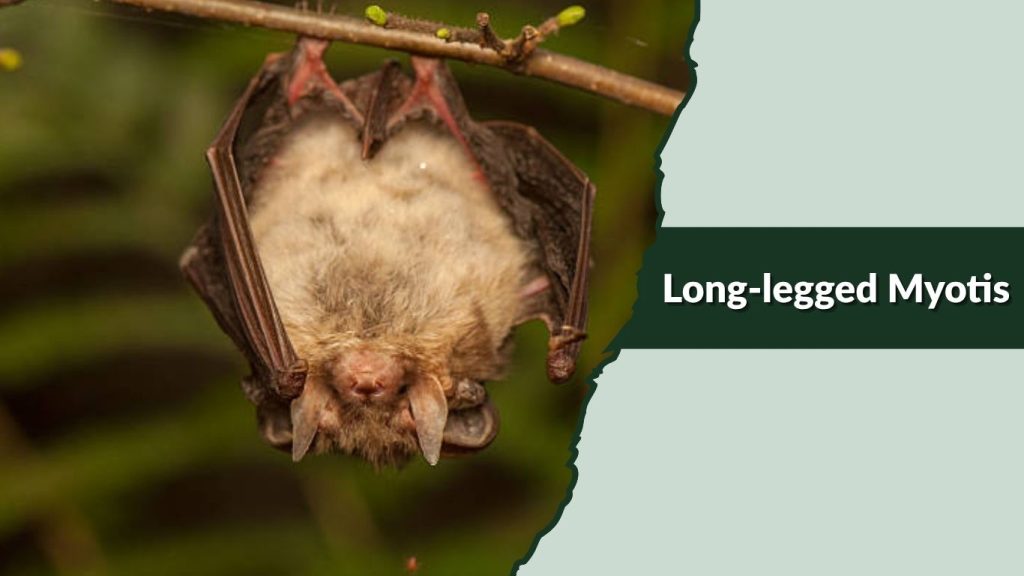
The Long-legged Myotis is a small to medium-sized bat known for its relatively long legs, dark wings, and brownish fur. It is mostly found in western North America and is often associated with forests, mountain areas, cliffs, and other rugged habitats. This bat is active at night and feeds mainly on flying insects.
Identification
- Small to medium-sized bat with a slim body.
- Fur is usually dark brown, reddish brown, or grayish brown.
- Underparts are often slightly lighter than the back.
- Legs appear relatively long compared with many similar myotis bats.
- Wings are dark and narrow.
- Ears are medium-sized and dark.
- Often difficult to separate from other myotis bats without close details.
Habitat
Long-legged Myotis bats live in forests, woodlands, mountains, cliffs, canyons, and rocky areas. They may roost in tree cavities, under loose bark, rock crevices, caves, mines, buildings, and bridges. Forested areas with nearby water and open spaces are especially useful for feeding and roosting.
Diet and Feeding Behavior
The Long-legged Myotis feeds mainly on flying insects, especially moths. It also eats beetles, flies, mosquitoes, and other small insects. It usually hunts over forest openings, along woodland edges, near streams, and around meadows where insects are active after sunset.
Size and Behavior
This bat is a fast and agile flyer that often feeds in open or semi-open habitats. It may roost alone, in small groups, or in maternity colonies during the breeding season. Like many bats in cooler regions, it may hibernate during winter when insect activity drops.
21. Long-eared Myotis
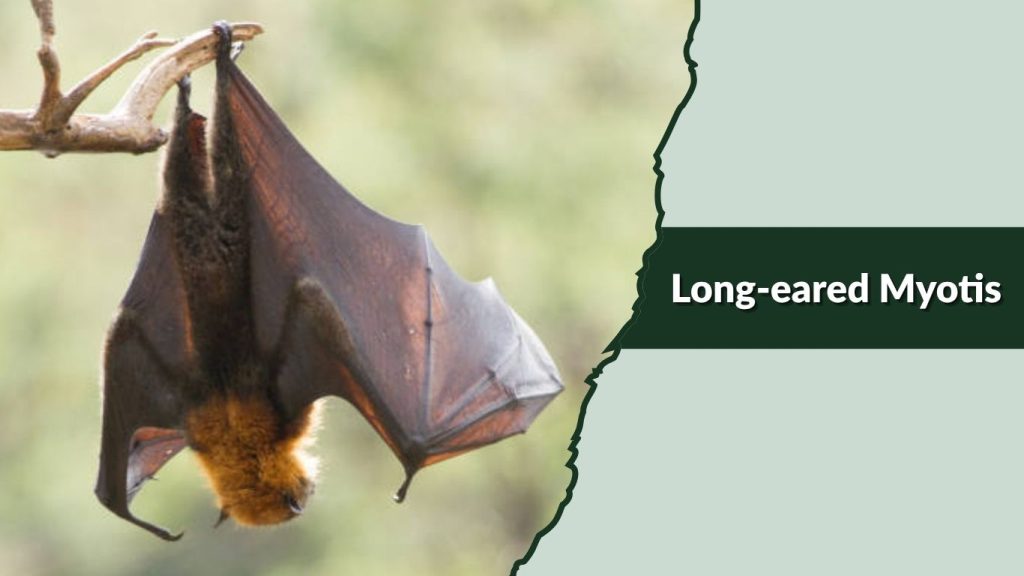
The Long-eared Myotis is a small bat species known for its noticeably long ears and delicate body. It is mostly found in western North America, especially in forests, woodlands, rocky areas, and mountainous habitats. This bat is active at night and uses its agile flight to hunt insects around trees and vegetation.
Identification
- Small bat with a slim body shape.
- Fur is usually light brown, dark brown, or grayish brown.
- Underparts are often paler than the back.
- Ears are long and extend well beyond the nose when laid forward.
- Wings are dark and fairly narrow.
- Face is plain and dark without large nose folds.
- Similar to other myotis bats, but the longer ears are an important clue.
Habitat
Long-eared Myotis bats live in forests, woodlands, mountains, caves, mines, cliffs, and rocky landscapes. They may roost under loose bark, in tree cavities, rock crevices, buildings, and other sheltered spaces. Forested habitats with nearby water and insect-rich feeding areas are especially useful for this species.
Diet and Feeding Behavior
The Long-eared Myotis feeds mainly on insects at night. It eats moths, beetles, flies, mosquitoes, and other small insects. It may catch prey in flight or pick insects from leaves, branches, and bark while moving through forested or cluttered habitats.
Size and Behavior
This bat is a slow, maneuverable flyer compared with some open-air bat species. Its long ears help it detect prey sounds and navigate around trees and vegetation. It may roost alone or in small groups, while females can form maternity colonies during the breeding season.
22. Cave Bat
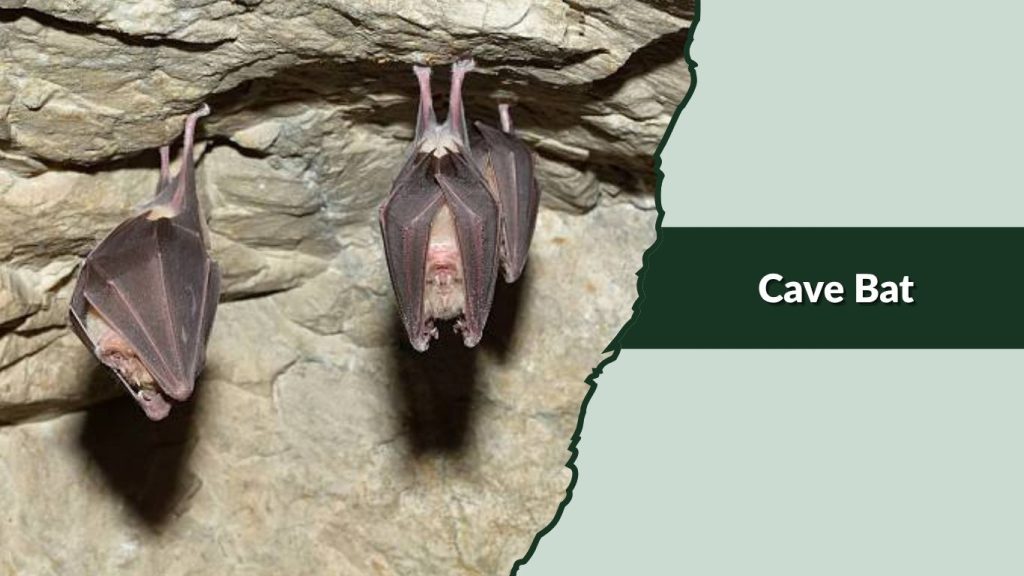
The Cave Bat is a small to medium-sized bat commonly found in warm regions of the southwestern United States, Mexico, and Central America. As its name suggests, it often roosts in caves, but it may also use mines, tunnels, buildings, bridges, and other sheltered spaces. This bat is active at night and feeds mainly on flying insects.
Identification
- Small to medium-sized bat with a compact body.
- Fur is usually brown, grayish brown, or yellowish brown.
- Underparts are often lighter than the back.
- Ears are short to medium in size and slightly rounded.
- The wings are dark and fairly narrow.
- The face is plain and dark without large nose folds.
- Often associated with caves, mines, tunnels, and warm roosting sites.
Habitat
Cave Bats live in deserts, grasslands, shrublands, forests, rocky areas, and places near water. They commonly roost in caves, mines, tunnels, bridges, buildings, and other protected shelters. Warm roosting places are especially important for maternity colonies during the breeding season.
Diet and Feeding Behavior
The Cave Bat feeds on night-flying insects such as moths, beetles, flies, mosquitoes, and small true bugs. It usually hunts after sunset in open areas, near vegetation, around water, and close to roosting sites. Like other insect-eating bats, it uses echolocation to find prey in darkness.
Size and Behavior
The Cave Bat may roost in groups, and maternity colonies can contain many individuals. It often emerges after sunset to feed and may return to the same roosting sites repeatedly. In cooler periods, it may reduce activity or move to more suitable seasonal shelters.
23. Canyon Bat
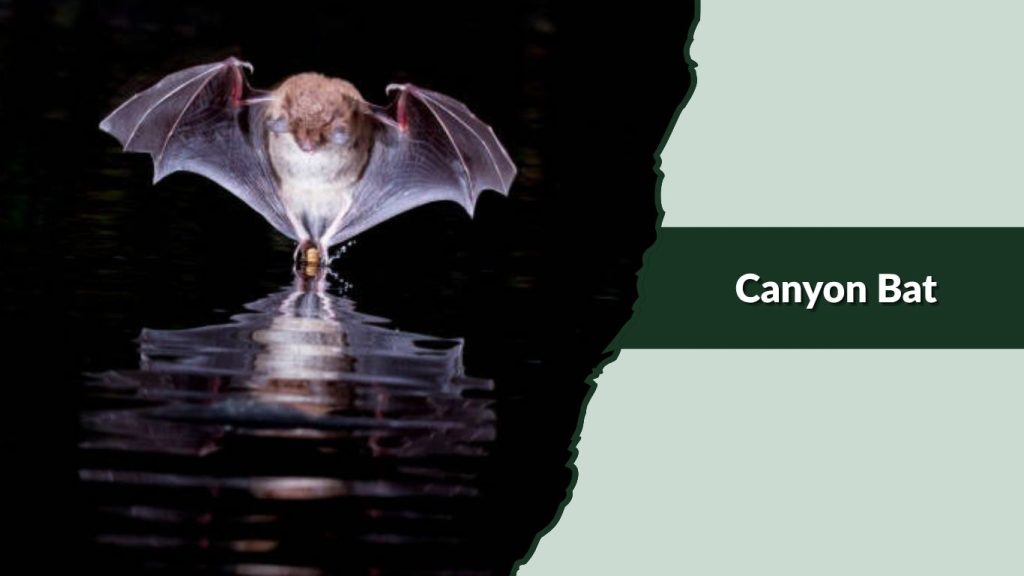
The Canyon Bat is a very small bat species found in dry and rocky regions of western North America. It is often seen flying early in the evening around cliffs, canyons, deserts, and washes. Because of its tiny size and pale coloring, it can sometimes look more delicate than many other bats.
Identification
- Very small bat with a compact body.
- Fur is usually pale brown, sandy brown, or grayish brown.
- Underparts are lighter than the back.
- Ears are short, rounded, and dark.
- The wings are dark and fairly narrow.
- The face is small and plain without large nose folds.
- Often seen flying low and early around canyons, cliffs, and desert washes.
Habitat
Canyon Bats live in deserts, canyons, cliffs, rocky hillsides, dry washes, and open shrublands. They often roost in rock crevices, cracks in cliffs, caves, mines, and sometimes buildings. Their pale color helps them blend with dry rocky landscapes where they rest during the day.
Diet and Feeding Behavior
The Canyon Bat feeds on small flying insects at night. Its diet includes flies, mosquitoes, moths, beetles, leafhoppers, and other tiny insects. It often hunts near rocky slopes, desert washes, water sources, and open spaces where insects gather after sunset.
Size and Behavior
This bat is one of the smallest bats in North America. It usually becomes active around dusk and may be seen earlier in the evening than many other bat species. Its flight is quick and fluttering, allowing it to catch small insects close to the ground or near rocky surfaces.
24. Seminole Bat
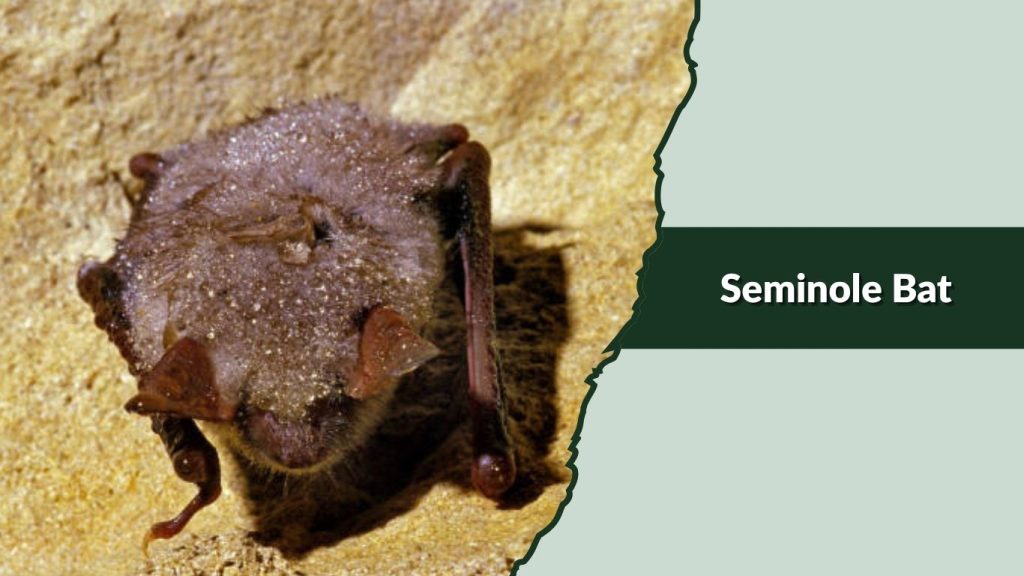
The Seminole Bat is a medium-sized tree-roosting bat known for its rich reddish-brown to mahogany-colored fur. It is mostly found in the southeastern United States and is closely associated with forests, pine woodlands, wetlands, and Spanish moss. This species often roosts alone or in small groups among tree foliage.
Identification
- Medium-sized bat with reddish-brown, mahogany, or dark chestnut fur.
- Fur often has pale or frosted tips.
- Underparts are usually slightly lighter than the back.
- Wings are dark brown to blackish.
- Tail membrane is heavily furred.
- Ears are short, rounded, and partly hidden by fur.
- Often resembles a darker version of the Eastern Red Bat.
Habitat
Seminole Bats live in pine forests, mixed woodlands, swamps, wetlands, river bottoms, parks, and tree-lined neighborhoods. They often roost in Spanish moss, tree foliage, pine needles, and loose bark. Forested areas with water nearby are especially useful because they provide both shelter and insects.
Diet and Feeding Behavior
The Seminole Bat feeds on night-flying insects. Its diet includes moths, beetles, flies, mosquitoes, leafhoppers, and other small insects. It usually hunts along forest edges, over wetlands, near streams, around open fields, and sometimes near lights where insects gather.
Size and Behavior
The Seminole Bat is usually solitary, though small groups may occur in good roosting areas. It becomes active around dusk and flies strongly while searching for insects. Like other tree bats, it does not usually depend on caves and may move seasonally in response to weather and food availability.
25. Tricolored Bat
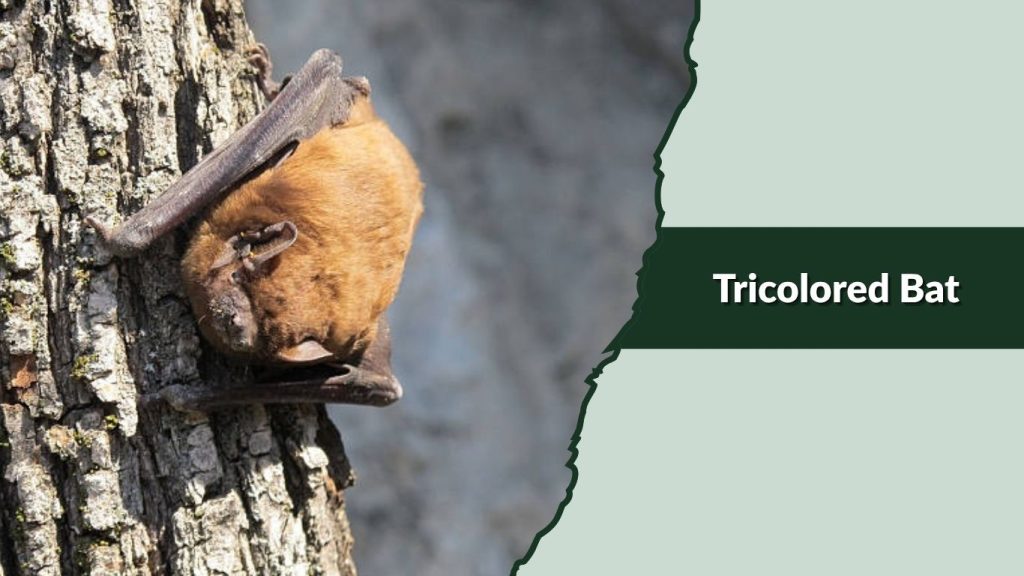
The Tricolored Bat is a very small bat species known for its unique three-toned fur. Each hair is usually dark at the base, lighter in the middle, and darker again at the tip. This bat is often found near forests, caves, wetlands, and streams, where it hunts small flying insects at night.
Identification
- Very small bat with a delicate body.
- Fur appears yellowish brown, reddish brown, or pale brown.
- Individual hairs often have three color bands.
- Wings are dark and fairly narrow.
- Ears are short to medium in size.
- Face and wing membranes are usually dark.
- Often recognized by its tiny size and tricolored fur pattern.
Habitat
Tricolored Bats live in forests, woodland edges, wetlands, caves, mines, barns, bridges, and tree foliage. During summer, they may roost in trees, buildings, and other sheltered places. In winter, they hibernate in caves and mines where the temperature and humidity remain suitable.
Diet and Feeding Behavior
The Tricolored Bat feeds on very small night-flying insects. Its diet includes moths, flies, mosquitoes, beetles, midges, and tiny wasps. It usually hunts over water, forest edges, trails, and open spaces, using echolocation to find insects in the dark.
Size and Behavior
This bat is one of the smallest bats in eastern North America. It usually has a slow, fluttering flight and may be seen feeding around trees or water shortly after dusk. During winter, it hibernates alone or in small numbers, often hanging separately from other bats.
26. Brazilian Free-tailed Bat
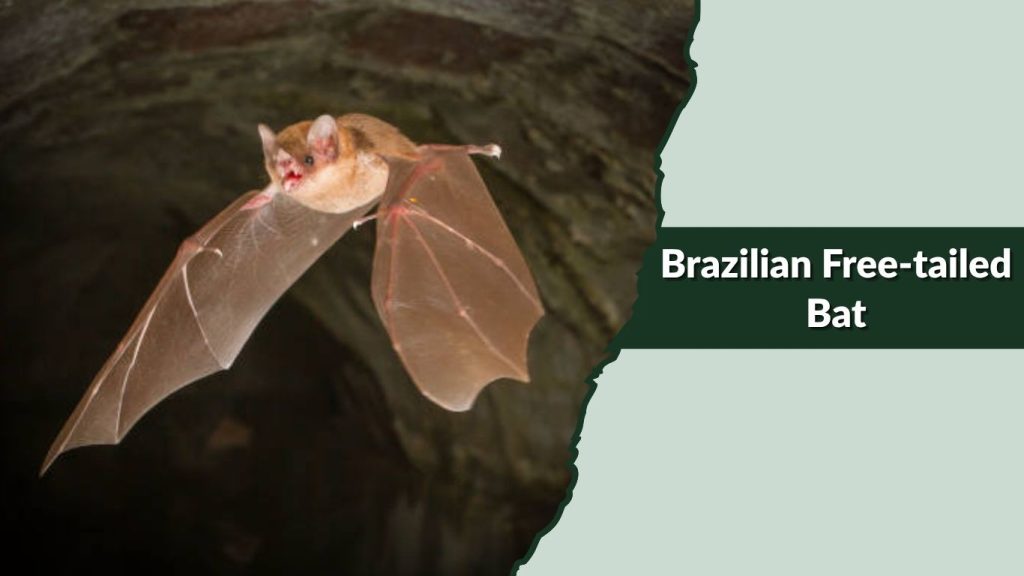
The Brazilian Free-tailed Bat is a small to medium-sized bat known for its fast flight, narrow wings, and tail that extends beyond the tail membrane. It is closely related to the Mexican Free-tailed Bat and is found in parts of Central America, South America, and nearby regions. This bat often roosts in large groups and feeds on flying insects at night.
Identification
- Small to medium-sized bat with a slim body.
- Fur is usually brown, grayish brown, or reddish brown.
- The tail extends clearly beyond the tail membrane.
- Wings are long, narrow, and built for fast flight.
- Ears are broad and often close together.
- Face may appear wrinkled or blunt.
- Often recognized by its free tail and swift, direct flying style.
Habitat
Brazilian Free-tailed Bats live in caves, rock crevices, buildings, bridges, tunnels, and other sheltered roosting sites. They are adaptable and may occur in forests, grasslands, agricultural areas, towns, and open landscapes. Roosting colonies can range from small groups to very large gatherings, depending on the location.
Diet and Feeding Behavior
The Brazilian Free-tailed Bat feeds mainly on night-flying insects. Its diet includes moths, beetles, flies, true bugs, and other small insects. It often hunts in open air and may fly high above the ground while searching for prey. Its fast flight helps it cover wide feeding areas.
Size and Behavior
This bat is a strong and speedy flyer compared with many smaller bats. It often leaves the roost after sunset and may travel long distances to feed. Brazilian Free-tailed Bats are social animals and commonly roost in groups, especially in warm, protected shelters.
27. Greater Bulldog Bat
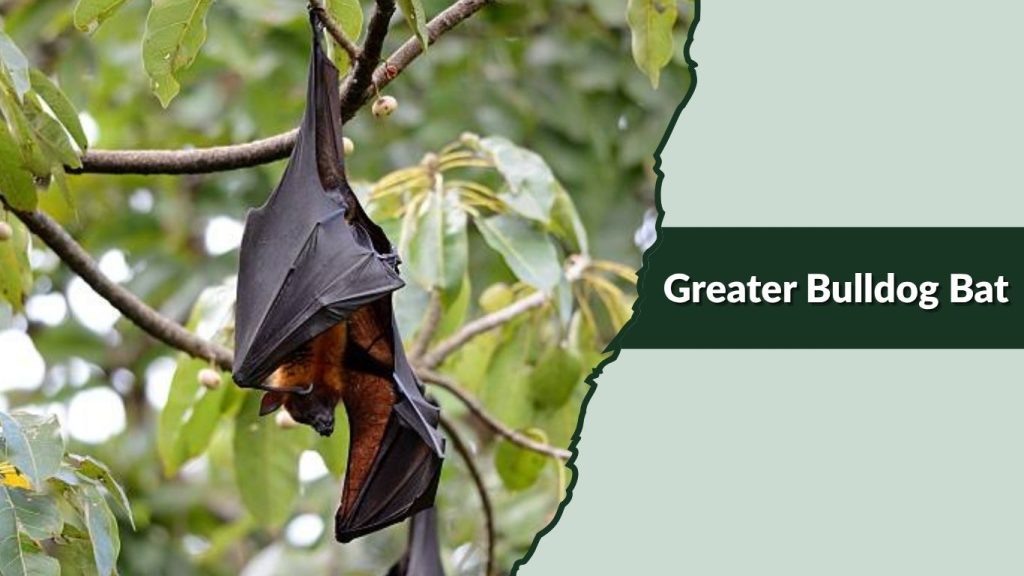
The Greater Bulldog Bat is a large fishing bat known for its strong body, long legs, and oversized feet. It is found in parts of Central and South America, usually near rivers, lakes, lagoons, and coastal waters. This bat is famous for catching fish from the water surface using its sharp claws.
Identification
- Large bat with a strong, muscular body.
- Fur is usually orange-brown, reddish brown, or grayish brown.
- Underparts are often lighter than the back.
- Feet are very large with long, curved claws.
- Legs are long compared with many other bats.
- Wings are long and broad, giving it powerful flight.
- Often recognized by its large feet and fishing behavior near water.
Habitat
Greater Bulldog Bats live near freshwater and coastal habitats, including rivers, lakes, ponds, lagoons, mangroves, estuaries, and sheltered bays. They usually roost in hollow trees, caves, rock crevices, and sometimes buildings. Areas with calm water and good fish availability are especially important for this species.
Diet and Feeding Behavior
The Greater Bulldog Bat is best known for eating fish, though it may also feed on insects, crustaceans, and other small aquatic animals. At night, it flies low over the water and uses echolocation to detect ripples made by fish. It then drags its large claws through the surface to grab prey.
Size and Behavior
This bat is one of the larger insect- and fish-eating bats in the Americas. It is a strong flyer and often hunts over water after dark. Greater Bulldog Bats may roost in groups and usually stay close to aquatic habitats where they can find enough food.
28. Spectral Bat
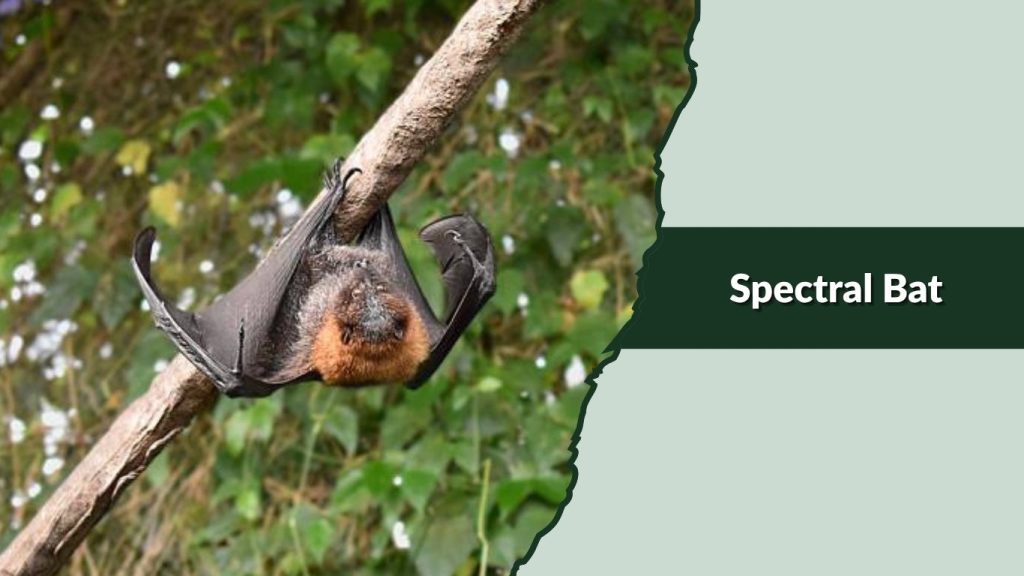
The Spectral Bat is one of the largest bats in the Americas and is known for its powerful body, broad wings, and pale brown to reddish fur. Unlike many smaller bats that mainly eat insects, this species is a carnivorous bat. It is found in tropical forests and hunts a variety of small animals at night.
Identification
- Very large bat with a strong, heavy body.
- Fur is usually pale brown, reddish brown, or grayish brown.
- Wings are broad and powerful.
- Ears are large and rounded.
- Nose has a visible leaf-shaped structure.
- Face looks strong and fox-like compared with many smaller bats.
- Often recognized by its large size and carnivorous feeding habits.
Habitat
Spectral Bats live in tropical forests, lowland rainforests, forest edges, plantations, and wooded areas near water. They usually roost in hollow trees, dense vegetation, and other sheltered places. Forest cover is important because it provides both safe roosting sites and hunting areas.
Diet and Feeding Behavior
The Spectral Bat is a carnivorous species. It feeds on birds, rodents, smaller bats, lizards, frogs, and large insects. It hunts at night using strong senses and careful flight, often capturing prey from branches, roosts, or other surfaces rather than only catching insects in open air.
Size and Behavior
The Spectral Bat is a powerful nocturnal hunter and is usually seen alone or in small family groups. It has strong jaws and broad wings that help it handle larger prey. Because it depends on forest habitats and suitable roosts, habitat loss can affect local populations.
29. Indian Flying Fox
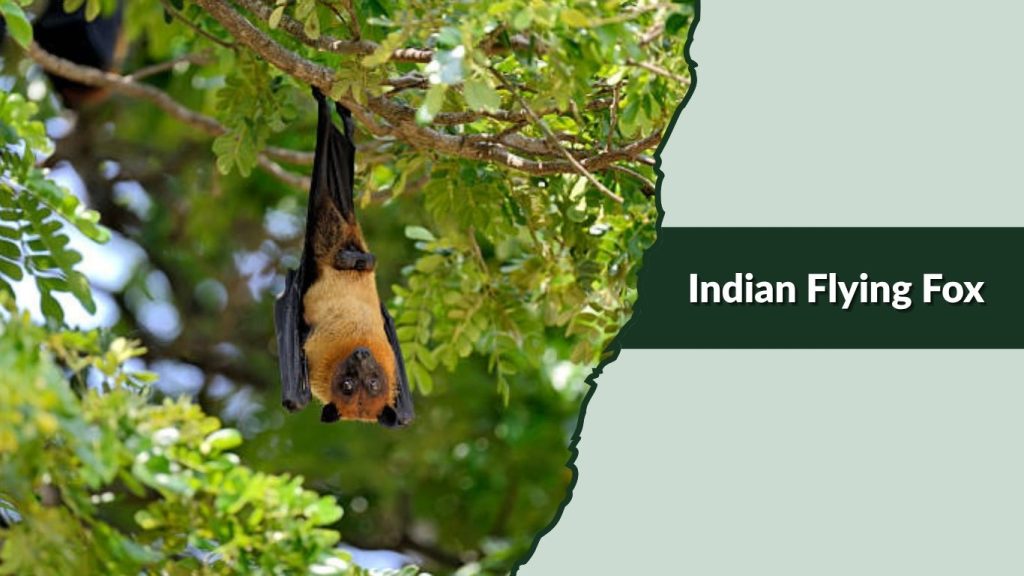
The Indian Flying Fox is a very large fruit bat known for its fox-like face, broad wings, and impressive wingspan. It is commonly found in South Asia and often roosts in large colonies in tall trees. Unlike insect-eating bats, this species mainly feeds on fruits, flowers, and nectar.
Identification
- Very large bat with a fox-like face.
- Fur is usually dark brown, blackish brown, or reddish brown.
- Neck and shoulder area may appear golden, yellowish, or rusty.
- Wings are long, broad, and dark.
- Ears are small to medium and pointed.
- Eyes are large compared with many insect-eating bats.
- Often seen hanging in large groups from tall trees during the day.
Habitat
Indian Flying Foxes live in forests, villages, cities, gardens, orchards, wetlands, and agricultural areas. They usually roost in large trees, often near water, farms, or human settlements. Large daytime colonies may return to the same roosting trees for many years.
Diet and Feeding Behavior
The Indian Flying Fox mainly eats fruit, nectar, and flowers. It feeds on mangoes, bananas, figs, guavas, and other soft fruits when available. While feeding, it can help spread seeds and pollinate plants, making it important for many natural and agricultural ecosystems.
Size and Behavior
The Indian Flying Fox is one of the largest bats in the region. It is highly social and often roosts in noisy colonies that may include hundreds or thousands of bats. At dusk, individuals leave the roost to search for food and may travel long distances during the night.
30. Large Flying Fox
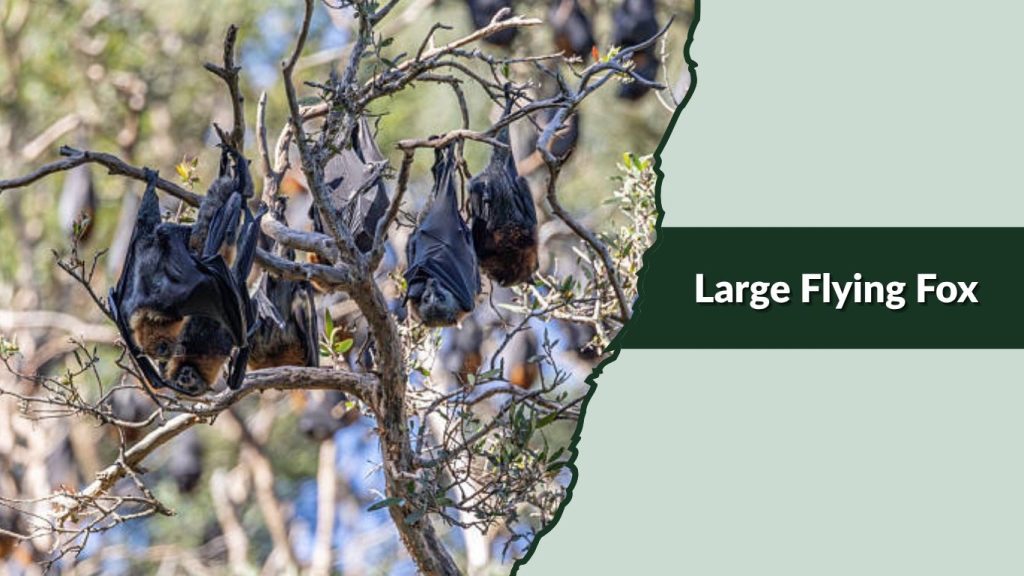
The Large Flying Fox is one of the largest bat species in the world. It is a fruit bat known for its long wings, fox-like face, and strong flying ability. This species is found in parts of Southeast Asia and often roosts in large colonies in tall trees near forests, rivers, mangroves, and villages.
Identification
- Very large bat with an impressive wingspan.
- Face looks fox-like, with a long muzzle and large eyes.
- Fur is usually dark brown, blackish brown, or reddish brown.
- Neck and shoulder area may appear lighter, golden, or rusty.
- Wings are long, broad, and dark.
- Ears are pointed and relatively small compared with the head.
- Often seen hanging upside down in large daytime colonies.
Habitat
Large Flying Foxes live in tropical forests, mangroves, coastal areas, orchards, wetlands, and wooded villages. They usually roost in tall trees, often near water or food sources. Large colonies may use the same roosting sites repeatedly, especially where trees provide safety and enough space.
Diet and Feeding Behavior
The Large Flying Fox mainly feeds on fruits, nectar, and flowers. It may eat figs, mangoes, bananas, and other soft fruits when available. While feeding, it helps spread seeds and pollinate plants, making it important for forest regeneration and healthy tropical ecosystems.
Size and Behavior
The Large Flying Fox is highly social and often roosts with many other bats. At sunset, it leaves the roost to search for food and may travel long distances during the night. Because of its large size and tree-roosting colonies, it is easier to notice than many small insect-eating bats.
FAQs
What is a Large Flying Fox?
The Large Flying Fox is a very large fruit bat found in parts of Southeast Asia. It has a fox-like face, long wings, and dark fur. Unlike many small bats that eat insects, this species mainly feeds on fruits, nectar, and flowers.
Where does the Large Flying Fox live?
The Large Flying Fox lives in tropical forests, mangroves, coastal areas, wetlands, orchards, and wooded villages. It usually roosts in tall trees, often near water or food sources. Large colonies may return to the same roosting trees again and again.
What does the Large Flying Fox eat?
The Large Flying Fox mainly eats fruits, nectar, and flowers. It may feed on figs, mangoes, bananas, and other soft fruits. While feeding, it can spread seeds and pollinate plants, which helps support forest growth and healthy ecosystems.
Is the Large Flying Fox dangerous?
The Large Flying Fox is not aggressive toward people and usually avoids direct contact. However, like any wild animal, it should not be touched or handled. It is best observed from a safe distance, especially in areas where large colonies roost.
Why is the Large Flying Fox important?
The Large Flying Fox plays an important ecological role as a seed disperser and pollinator. By eating fruit and visiting flowers, it helps plants reproduce and forests regenerate. This makes it valuable for tropical ecosystems, even when it sometimes feeds near farms or orchards.