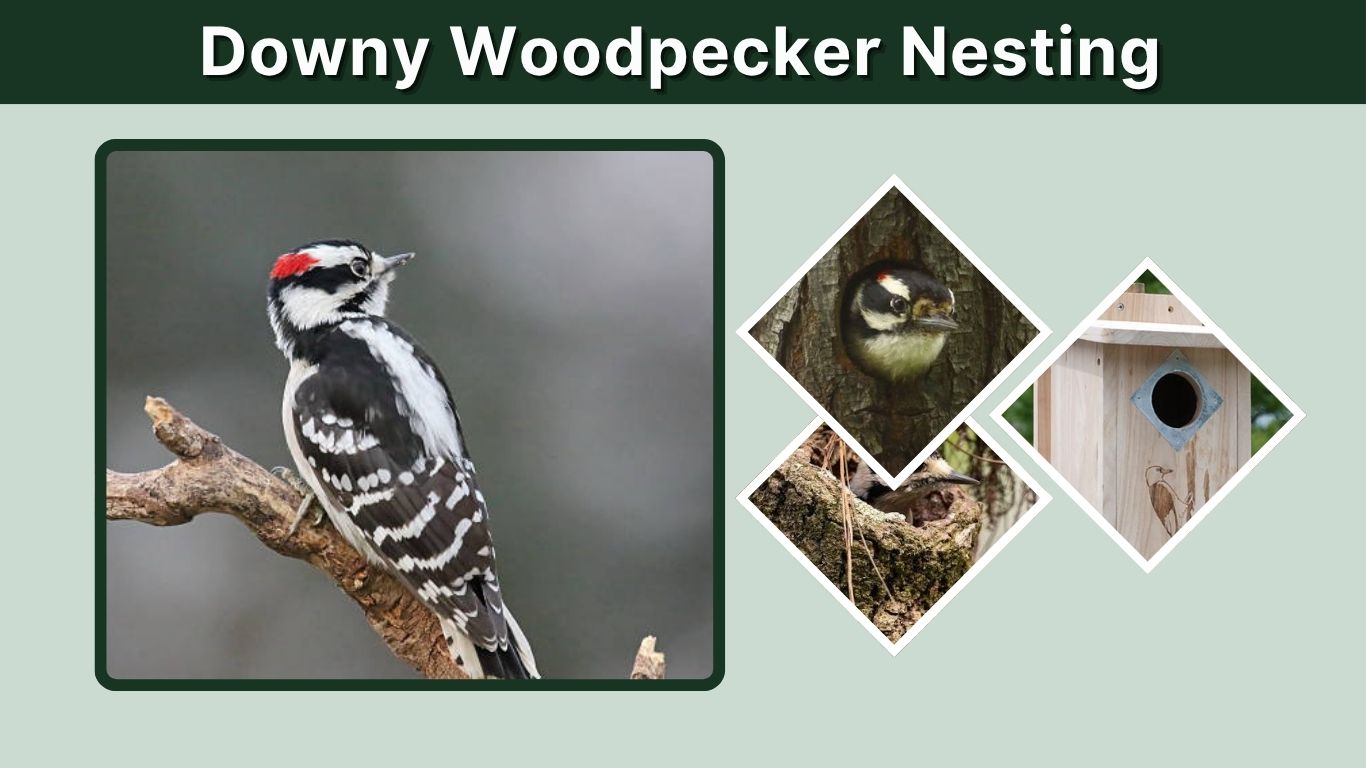
Downy Woodpecker nesting begins with the excavation of a small cavity in a dead tree, decaying branch, or other piece of soft wood. These tiny woodpeckers do not build open cup-shaped nests like songbirds. Instead, they create protected chambers where their eggs and chicks remain hidden from weather and many predators. Both parents help prepare the nest, incubate the eggs, and feed the young. Homeowners can also attract them with a properly designed nest box, although natural cavities are usually preferred.
Where Do Downy Woodpeckers Nest?
Downy Woodpeckers are cavity-nesting birds. They usually select soft, dead, or partially decayed wood that can be excavated without requiring excessive energy. A suitable nesting site must also provide enough protection from rain, wind, predators, and competing birds.
Natural Nesting Locations
Common Downy Woodpecker nest locations include:
- Dead tree trunks called snags
- Decaying branches on living trees
- Broken tree limbs
- Old orchards and woodland edges
- Trees near rivers, ponds, and wetlands
- Suburban parks, gardens, and backyards
- Wooden fence posts or utility poles in rare cases
The nest is often located approximately 6 to 20 feet above the ground, although some cavities may be considerably higher. Downy Woodpeckers frequently choose aspens, birches, willows, maples, alders, and other trees with soft or damaged wood.
What Does a Downy Woodpecker Nest Look Like?
From outside, the nest appears as a small, round entrance hole in a tree trunk or branch. The opening is usually just large enough for the adult bird to enter.
Inside the tree, the cavity widens into a deeper chamber. The parents do not carry grass, feathers, or twigs into the nest. Instead, a thin layer of wood chips left from excavation forms the nesting surface.
The entrance may be positioned beneath a branch or on the underside of a leaning trunk, helping prevent rainwater from entering.
Downy Woodpecker Nest Hole Size
A typical nest entrance is approximately 1 to 1¼ inches in diameter. The small opening helps prevent larger birds from entering the cavity.
The internal chamber may be around 6 to 12 inches deep, depending on the condition and thickness of the tree. Natural cavity measurements vary because the birds adjust their excavation to the available wood.
Downy Woodpecker Nesting Season
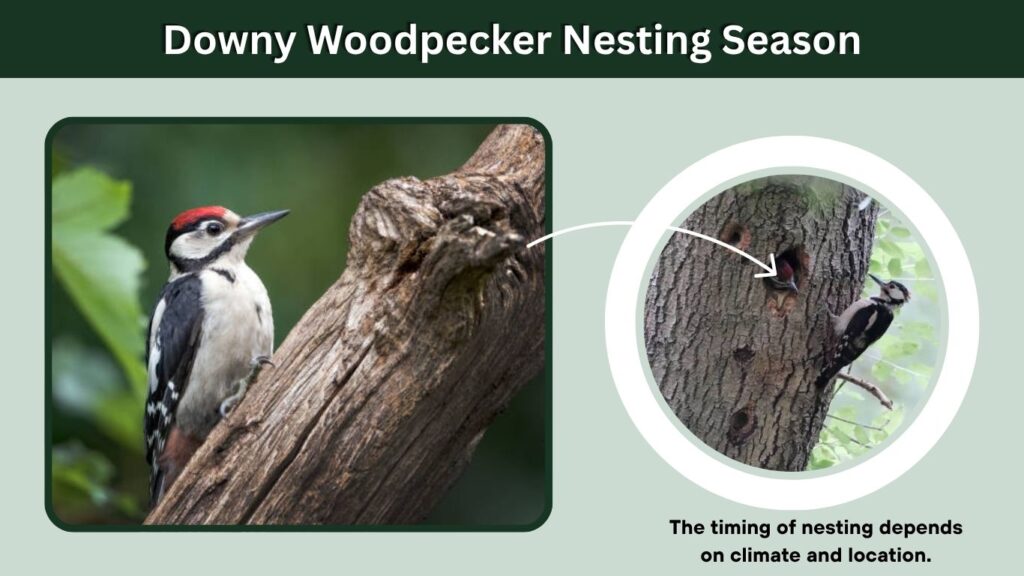
The timing of nesting depends on climate and location. Birds in warmer southern regions may begin nesting earlier than those living in northern areas.
When Do Downy Woodpeckers Nest?
Courtship and territorial activity commonly increase during late winter and early spring. Nest excavation may begin between March and May, with egg laying following after the cavity is completed.
In many parts of North America, the main nesting period occurs from April through July. In northern areas, cold weather may delay nesting by several weeks. Downy Woodpeckers generally raise one brood per year.
Winter cavities are usually used for sleeping and shelter rather than raising young. A bird seen entering a hole during winter may be using it as a roosting site.
Nest Excavation
Both the male and female may participate in cavity excavation. However, the male often performs a larger share of the work. Excavating a complete cavity can take one to three weeks.
The birds repeatedly strike the wood with their bills, removing small pieces and carrying or throwing the debris outside. Fresh wood chips beneath a tree can be an important sign that a nest cavity is being prepared.
Courtship and Mating Behavior
Before nesting, males may drum rapidly on resonant branches, dead trees, gutters, or wooden structures. Drumming is not primarily an attempt to find food. It helps advertise territory and attract a mate.
Courtship may also include:
- Short display flights
- Calling between partners
- Chasing around branches
- Wing spreading
- Raised head feathers
- Shared visits to a potential cavity
Pairs usually defend the area surrounding their nest from other woodpeckers.
Downy Woodpecker Eggs and Young
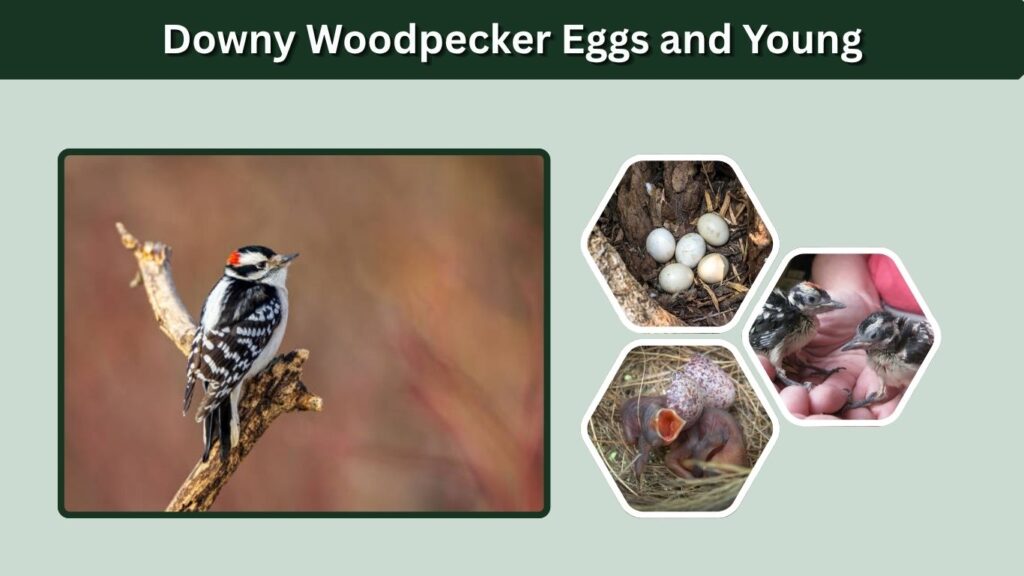
Once excavation is finished, the female lays her eggs directly on the wood chips at the bottom of the cavity. The enclosed chamber keeps the eggs hidden and helps maintain a stable temperature.
Eggs and Clutch Size
A normal clutch contains approximately three to eight eggs, although four or five is common. The eggs are plain white, smooth, and slightly glossy.
White eggs are typical among cavity-nesting birds because camouflage is less important inside a dark chamber. The female usually lays one egg per day until the clutch is complete.
Incubation Period
Both parents incubate the eggs. The male commonly takes a larger share of nighttime incubation, while the female handles many daytime periods.
Incubation generally lasts around 11 to 13 days. The adults regularly exchange places so each bird can feed and maintain the surrounding territory.
Feeding the Nestlings
Newly hatched chicks are nearly featherless, helpless, and dependent on their parents. Both adults bring food to the cavity throughout the day.
The chicks are commonly fed:
- Beetle larvae
- Caterpillars
- Ants
- Spiders
- Small insects
- Other soft-bodied invertebrates
As the chicks grow, they become increasingly noisy and may be heard calling from inside the tree. Adults may make frequent feeding trips, especially shortly before the young leave the nest.
When Do Young Downy Woodpeckers Leave the Nest?
Young Downy Woodpeckers generally remain inside the cavity for approximately 18 to 21 days after hatching. Near fledging time, they may look through the entrance hole and respond loudly when a parent approaches.
After leaving the cavity, the fledglings may remain near their parents for several weeks. The adults continue feeding them while they learn to climb trees and search for insects.
Downy Woodpecker Nest Box Guide
Downy Woodpeckers occasionally use birdhouses, especially where dead trees and natural cavities are limited. A suitable box should imitate the narrow entrance and deep chamber of a natural nest.
Recommended Nest Box Dimensions
The following measurements provide a practical starting point:
| Nest Box Feature | Recommended Measurement |
| Interior floor | About 4 × 4 inches |
| Interior height | 10–12 inches |
| Entrance diameter | 1¼ inches |
| Entrance above floor | 7–9 inches |
| Placement height | 6–15 feet |
| Ventilation | Small openings near the top |
| Drainage | Small holes in the floor |
Measurements can vary slightly, but the entrance should remain small enough to discourage larger cavity-nesting birds.
Nest Box Placement
Mount the box on a tree trunk, sturdy post, or building in a quiet location. Woodland edges, orchards, mature gardens, and backyards with native trees are suitable places.
Choose a site that:
- Receives partial shade
- Has a clear flight path
- Is protected from strong afternoon sunlight
- Faces away from prevailing rain
- Is not close to a busy doorway
- Has nearby trees for feeding and shelter
Place the box before the nesting season, preferably during fall or late winter. This gives birds time to discover it before courtship begins.
Nesting Material
Downy Woodpeckers do not build nests with grass or leaves. Adding two or three inches of coarse wood shavings may make the box feel more like a natural cavity.
Do not use treated sawdust, cedar dust, fabric, cotton, or fine powder. Fine material can hold moisture or create breathing problems. Untreated pine or aspen shavings are safer choices.
Encouraging Birds to Use the Box
A box may be more appealing when it resembles an unfinished cavity. Some people fill it loosely with wood shavings, allowing the birds to remove material as if they were excavating.
Avoid opening or checking the box repeatedly during active nesting. Frequent disturbance may cause the adults to delay entry or abandon the site.
Nest Predators and Competition
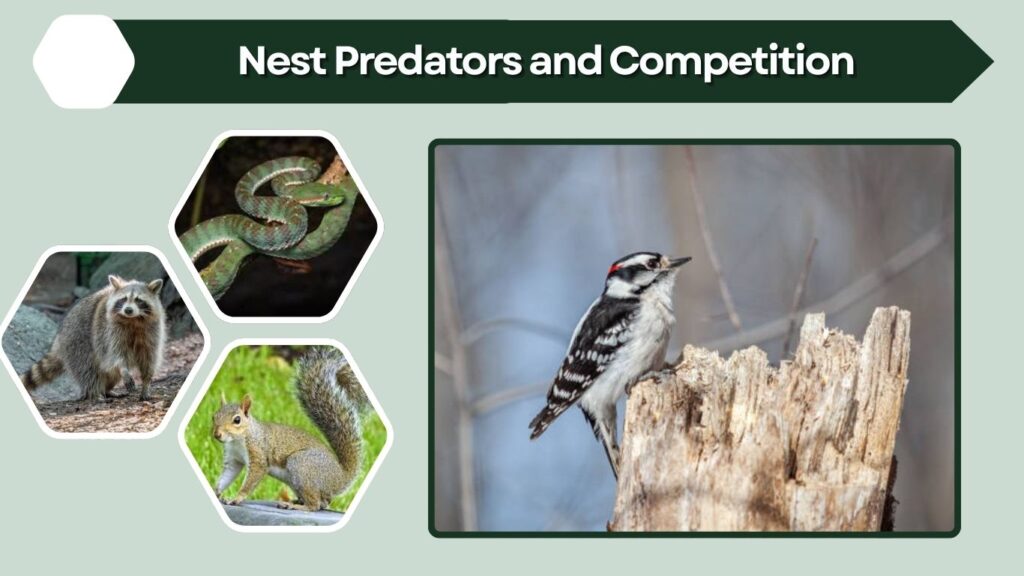
A cavity offers strong protection, but Downy Woodpecker nests are not completely safe. Predators and competing birds may attempt to enter or take control of the nesting site.
Common Nest Predators
Potential threats include:
- Snakes
- Squirrels
- Raccoons
- Domestic cats
- Larger woodpeckers
- Climbing mammals
- Birds capable of reaching through the entrance
A properly sized entrance and predator guard can reduce some risks. Keeping cats indoors during nesting season also protects fledglings after they leave the cavity.
Do Downy Woodpeckers Steal Nests?
Downy Woodpeckers usually excavate their own nesting cavities rather than stealing an active nest. However, they may inspect old cavities made by other birds and occasionally use an abandoned hole.
They can also be displaced by aggressive cavity nesters, including House Sparrows and European Starlings. A 1¼-inch entrance helps exclude starlings, but House Sparrows may still investigate the box.
Do They Return to the Same Nest?
Downy Woodpeckers typically create a new nesting cavity each year. Excavating fresh cavities may reduce parasites and provide a cleaner environment for the chicks.
However, a pair may return to the same territory or excavate near the previous year’s site. Old cavities can later provide shelter for chickadees, wrens, nuthatches, flying squirrels, and other small animals.
FAQs
Do Downy Woodpeckers nest in birdhouses?
Downy Woodpeckers may use birdhouses when natural cavities are limited. They are more likely to accept a deep wooden box with a 1¼-inch entrance, wood shavings inside, and placement near mature trees. However, they may still choose to excavate a natural cavity.
How can you tell if a Downy Woodpecker nest is active?
Signs include repeated adult visits, fresh wood chips beneath the tree, calling chicks, and a parent carrying insects into the hole. During incubation, activity may appear limited because the adults quietly exchange places inside the cavity.
Where do Downy Woodpeckers nest in winter?
Downy Woodpeckers do not normally raise chicks during winter. They may sleep in old nest holes, natural tree cavities, or specially excavated roosting cavities. These sheltered spaces protect them from wind, snow, rain, and freezing nighttime temperatures.
Should you clean a Downy Woodpecker nest box?
Clean the box after the nesting season has ended and the birds are no longer using it. Remove old shavings, insects, and debris. Allow the box to dry completely before adding a fresh layer of untreated wood shavings.
Will Downy Woodpeckers use the same nest box again?
They may return to the same box, but reuse is not guaranteed. Downy Woodpeckers often prefer making a new cavity. Cleaning the box, repairing damaged wood, and adding fresh shavings can improve the likelihood of future use.