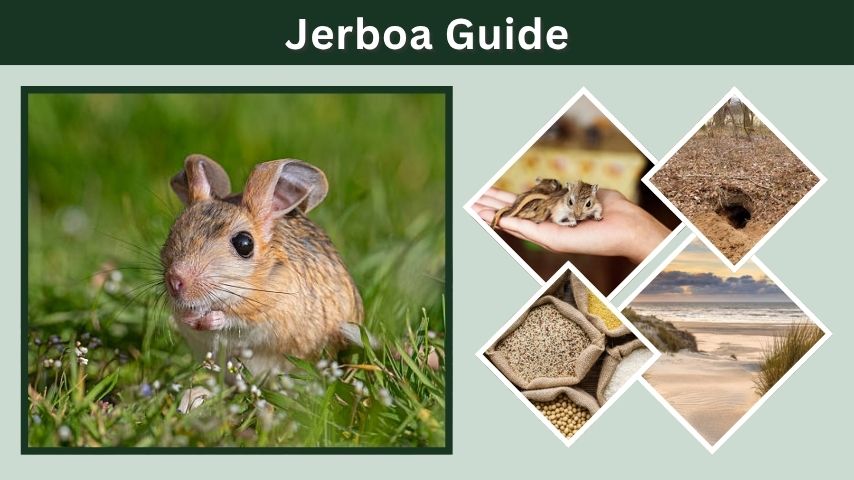
Jerboas are fascinating small rodents known for their long hind legs, oversized ears, and remarkable jumping abilities. Native to deserts in Africa and Asia, they have evolved unique adaptations for survival in extreme heat and arid conditions. Often compared to kangaroo rats, jerboas play crucial roles in their ecosystems, feeding on seeds and insects while serving as prey for desert predators.
This guide explores jerboa species, habitats, diets, behaviors, and care as pets. It also highlights interesting facts, their ecological roles, and cultural significance in games and memes, making them one of the most intriguing desert rodents.
Overview of Jerboas
Jerboas are desert specialists, uniquely adapted to survive harsh climates. They possess physical and behavioral traits that help them avoid predators, find food, and manage extreme temperatures.
What Is a Jerboa?
Jerboas are small rodents with long hind legs that allow them to leap extraordinary distances. They have oversized ears to dissipate heat and keen senses for nighttime activity. Typically nocturnal, they spend the day in burrows and emerge at night to forage. Their tails help balance while jumping, and species vary in size, toe count, and habitat.
Jerboa Adaptations
- Long hind legs for hopping and escaping predators
- Burrowing behavior to avoid heat and predators
- Nocturnal lifestyle to conserve water and energy
- Oversized ears for thermoregulation and detecting danger
Jerboa Species (List)
- Long-eared Jerboa – Found in Mongolia and northern China, noted for enormous ears.
- Baluchistan Pygmy Jerboa – Tiny desert rodent from Pakistan and Iran.
- Egyptian Jerboa – Common in North African deserts.
- Gobi Jerboa – Inhabits Gobi Desert, specialized for sandy terrain.
- Greater Egyptian Jerboa – Larger version of the Egyptian species.
- Embertailed Jerboa – Recognizable by its thick, ember-like tail.
- Lesser Egyptian Jerboa – Small and nocturnal, adapted to arid regions.
- Thick-tailed Pygmy Jerboa – Compact, desert-adapted, efficient hopper.
- Four-toed Jerboa – Named for having four toes on its hind feet.
- Three-toed Pygmy Jerboa – Tiny, agile, and excellent at hopping.
Jerboas Habitat and Distribution

Jerboas live in arid regions across Africa and Asia. They are nocturnal burrowers, often occupying sandy deserts and semi-arid steppes with sparse vegetation.
Typical Habitats
- Sandy dunes and desert plains
- Loose soil for burrow construction
- Areas with scattered seeds and insects
Geographical Range
- North Africa (Egypt, Sahara)
- Arabian Peninsula deserts
- Central Asia, including Mongolia and the Gobi Desert
Jerboas Behavior and Diet
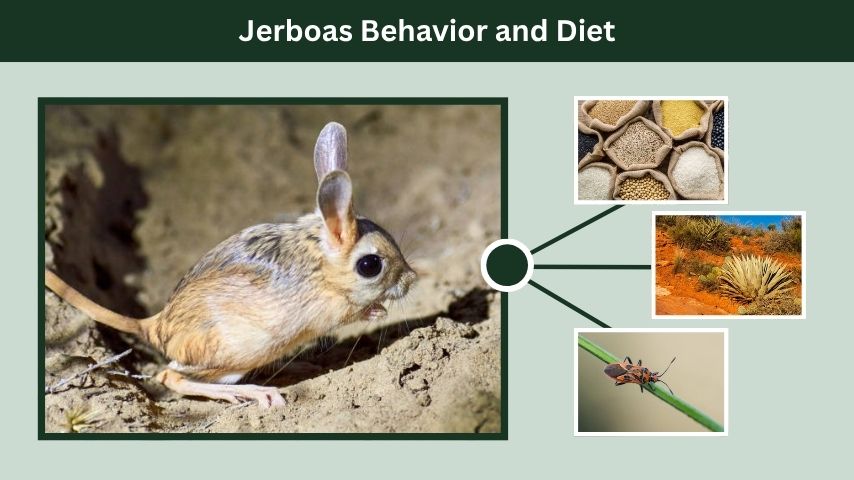
Jerboas are nocturnal foragers that eat seeds, plants, and insects. Their activity patterns and diet reflect adaptations to life in extreme deserts.
Diet
- Seeds and grains as main food source
- Desert plants for moisture and nutrients
- Occasional insects for protein
- Minimal water consumption; obtain moisture from food
Behavior
- Primarily solitary animals
- Active at night to avoid daytime heat
- Use long tails for balance while hopping
- Escape predators with rapid, zigzag jumps
Jerboas Lifespan and Reproduction
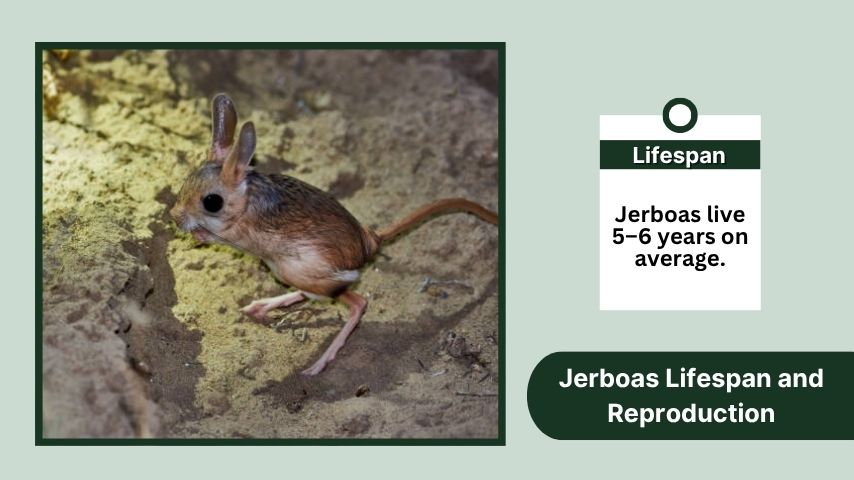
Jerboas have relatively short lifespans and reproduce multiple times a year. Their reproductive strategies are adapted to harsh desert environments, ensuring species survival despite predation and extreme conditions.
Lifespan
- In captivity, jerboas live 5–6 years on average.
- In the wild, survival is shorter due to predators and desert hazards.
- Small body size makes them vulnerable, but agility helps evade threats.
Reproduction
- Breed several times annually, depending on species and resources.
- Litter size ranges from 2–6 pups.
- Young are born blind and hairless, relying on parental care.
- Quick development ensures survival in unpredictable desert conditions.
Jerboas as Pets
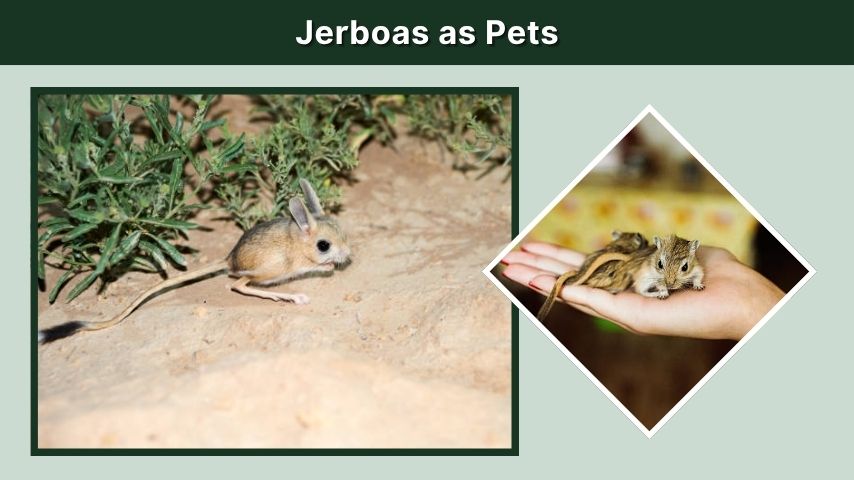
Keeping jerboas as pets requires careful attention to their desert-adapted needs. Proper habitat, diet, and handling are crucial to their wellbeing.
Housing and Environment
- Deep sand or fine substrate for burrowing
- Quiet, nocturnal-friendly environment
- Avoid high humidity or direct sunlight
- Provide hiding areas to reduce stress
Feeding
- Mix of seeds, grains, and desert plants
- Mealworms or other insects for protein
- Fresh water in shallow dishes; minimal consumption needed
- Regular feeding schedule to mimic natural foraging
Handling and Socialization
- Limit handling; jerboas are nocturnal and easily stressed
- Gentle interaction to prevent injury
- Avoid loud noises or sudden movements
- Best for experienced rodent or exotic pet owners
Fun Facts and Cultural References
Jerboas are not only interesting in the wild but also appear in popular culture, online memes, and even video games, highlighting their unique jumping behavior and “cute” appearance.
Trivia
- Featured in ARK: Survival Evolved as a tameable creature
- Popular in memes for their hopping and oversized ears
- Jellycat plush jerboas are a collectible item
- Often confused with kangaroo rats or desert mice
- Some species, like the long-eared jerboa, inspire artwork and animations
FAQs
What do jerboas eat?
Jerboas mainly feed on seeds, grains, and desert plants. They occasionally eat insects for protein. They rarely drink water, getting moisture from their food. Their diet varies slightly depending on the species and habitat.
How long do jerboas live?
In captivity, jerboas typically live 5–6 years. Wild jerboas have shorter lifespans due to predation and harsh desert conditions. Some species may survive slightly longer in protected environments.
Can jerboas be kept as pets?
Yes, certain species can be kept as pets, but they require specialized care, including deep burrowing substrate, a quiet nocturnal environment, and proper diet. They are sensitive and best suited for experienced exotic pet owners.
Where do jerboas live?
Jerboas inhabit arid and desert regions across North Africa, the Middle East, and Central Asia. Common habitats include the Sahara, Gobi Desert, and Arabian deserts. They typically live in burrows to escape heat and predators.
How do jerboas avoid predators?
Jerboas evade predators by using rapid, zigzag jumps and burrowing. Their nocturnal lifestyle also helps them avoid daytime hunters. Some species have long tails to balance while hopping, enhancing agility and survival.