
The Siberian weasel is a small but fierce carnivorous mammal known for its long body, quick movements, and golden-brown fur. Also called the kolonok, this Asian weasel is often searched for its diet, habitat, fur, pet suitability, and defensive behavior. This guide explains what Siberian weasels look like, where they live, what they eat, and whether they are dangerous.
What Is a Siberian Weasel?
The Siberian weasel is a medium-sized member of the weasel family. Its scientific name is Mustela sibirica. It belongs to the family Mustelidae, the same broad family that includes weasels, ferrets, mink, martens, otters, and badgers.
This animal is native to Asia and is known by several names, including Siberian weasel, kolonok, and sometimes kolinsky. It is a wild predator, not a domesticated pet. Although it may look cute in photos, it is built for hunting small animals and surviving in forests, mountains, grasslands, and cold regions.
Siberian Weasel Description
A Siberian weasel has a long, flexible body, short legs, rounded ears, sharp teeth, and a bushy tail. Its coat is usually yellowish, golden, reddish-brown, or pale brown, with a darker face and sometimes a darker tail tip. The body shape helps it move through grass, rocks, burrows, roots, and narrow hiding places while hunting.
Its appearance can vary slightly by region and season. In colder areas, the fur may look denser and fluffier during winter. In warmer seasons, the coat may appear sleeker.
Siberian Weasel Size and Weight
Siberian weasels are larger than some small weasel species but still compact compared with many carnivores. Males are generally larger than females.
| Feature | Typical Siberian Weasel Details |
|---|---|
| Scientific name | Mustela sibirica |
| Family | Mustelidae |
| Common name | Siberian weasel or kolonok |
| General color | Yellowish-brown, golden, or reddish-brown |
| Body type | Long, slender, short-legged |
| Diet type | Carnivorous |
| Main prey | Rodents, birds, eggs, amphibians, insects |
| Conservation status | Least Concern |
| Pet suitability | Not recommended as a pet |
Siberian Weasel Habitat

The Siberian weasel habitat includes forests, open woodland, mountains, river valleys, grasslands, farmland edges, and cold northern regions. Despite its name, it is not limited to Siberia. It has a wide Asian range and can live in several habitat types.
This adaptability is one reason the species remains widespread. It can hunt in dense cover, rocky ground, snowy landscapes, and areas near human settlements when food is available.
Where Do Siberian Weasels Live?
Siberian weasels are found across large parts of Asia. Their range includes parts of Russia, China, Korea, northern India, Nepal, Pakistan, Myanmar, Thailand, Taiwan, and nearby regions. Some populations are also associated with Japan, where related and introduced populations have caused taxonomic confusion in older sources.
They prefer areas with enough cover and prey. Forest edges, riversides, brushy slopes, old burrows, rock piles, tree hollows, and farmland margins can all provide shelter.
Siberian Weasel Biome
The Siberian weasel can live in several biomes, including temperate forest, boreal forest, mountain habitats, grasslands, and agricultural landscapes. In snowy areas, its slim body helps it move through low vegetation and sheltered spaces while tracking rodents.
Because it is a flexible predator, it can survive in places where prey is abundant and hiding spots are available.
Siberian Weasel Diet
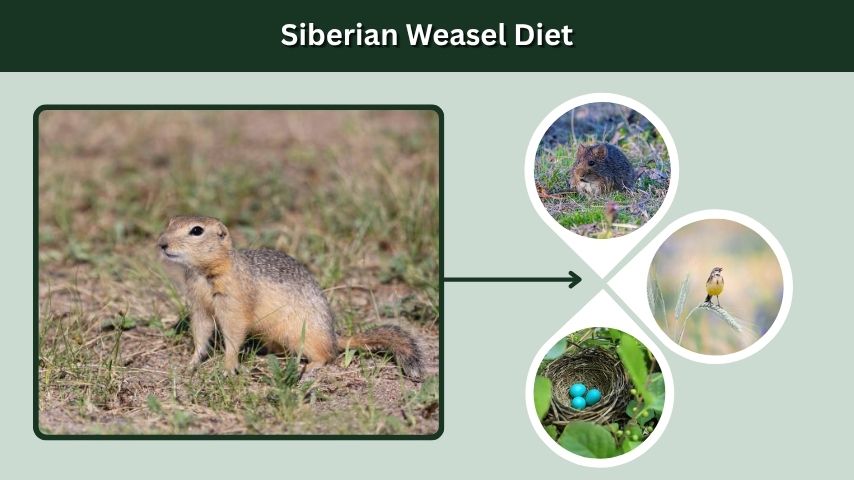
The Siberian weasel diet is mainly carnivorous. It feeds heavily on small mammals, especially rodents. This makes it an important predator in ecosystems where mice, voles, and other small animals reproduce quickly.
What Do Siberian Weasels Eat?
Siberian weasels may eat:
- Mice, voles, and other rodents
- Small birds
- Bird eggs
- Amphibians
- Reptiles
- Insects
- Small mammals in burrows
- Carrion when available
- Occasionally poultry or human-associated food sources near settlements
Rodents are especially important because they are common and fit the weasel’s hunting style. The Siberian weasel’s long, narrow body lets it follow prey into burrows and tight spaces that larger predators cannot enter.
Hunting Behavior
Siberian weasels are active, energetic hunters. They use smell, hearing, speed, and flexible movement to locate prey. Once they find a target, they may chase it through grass, snow, roots, rocks, or underground tunnels.
They are not large animals, but they are bold predators for their size. Like many mustelids, they may kill prey quickly with a bite and may store food when prey is abundant.
Siberian Weasel Behavior
Siberian weasels are generally solitary. They spend much of their time searching for food, patrolling shelter areas, and avoiding larger predators. They may be active during the day or night depending on location, season, human disturbance, and prey availability.
Daily Activity
Their activity can change with weather and food supply. In colder regions, they may hunt more intensely when prey is available. Around human settlements, they may become more secretive and active at quieter times.
They are quick, alert, and hard to observe for long. A Siberian weasel may appear suddenly, cross a trail or field edge, and disappear into cover within seconds.
Siberian Weasel in a Nest
Siberian weasels do not build nests like birds, but they use dens or sheltered resting sites. These may include abandoned burrows, tree hollows, rock crevices, root spaces, and hidden cavities. Females use protected den sites to raise young.
A den provides shelter from weather, predators, and disturbance. In cold habitats, secure shelter is especially important for survival.
Siberian Weasel Adaptations
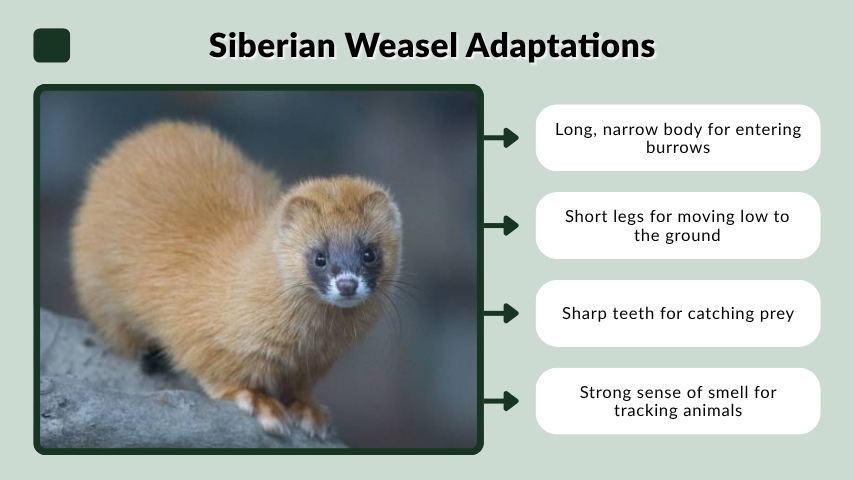
The Siberian weasel has several adaptations that help it survive as a small predator. Its body is designed for speed, flexibility, and hunting in tight spaces.
Structural Adaptations
Important Siberian weasel structural adaptations include:
- Long, narrow body for entering burrows
- Short legs for moving low to the ground
- Sharp teeth for catching prey
- Strong sense of smell for tracking animals
- Dense fur for cold conditions
- Agile movement for chasing prey
- Bushy tail for balance and body control
- Camouflaged coat that blends with grass, soil, and leaves
These features make it effective in forests, fields, rocky slopes, and snowy habitats.
Strengths and Weaknesses
The Siberian weasel’s strengths include agility, persistence, sharp senses, and hunting skill. Its weaknesses include small body size, vulnerability to larger predators, and dependence on available prey.
It can defend itself well for its size, but it is still prey for larger carnivores and birds of prey.
Siberian Weasel Defense Mechanisms
Siberian weasels defend themselves through speed, agility, hiding, biting, and scent. Like other mustelids, they may release a strong-smelling secretion from scent glands when threatened.
How Do Siberian Weasels Defend Themselves?
They protect themselves by:
- Running quickly into cover
- Hiding in burrows, rocks, or vegetation
- Biting if grabbed or cornered
- Twisting their flexible bodies to escape
- Using strong scent as a warning
- Staying alert to predators
- Avoiding open areas when unsafe
Their first defense is usually escape. If trapped, however, they can be aggressive and should not be handled.
Siberian Weasel Predators
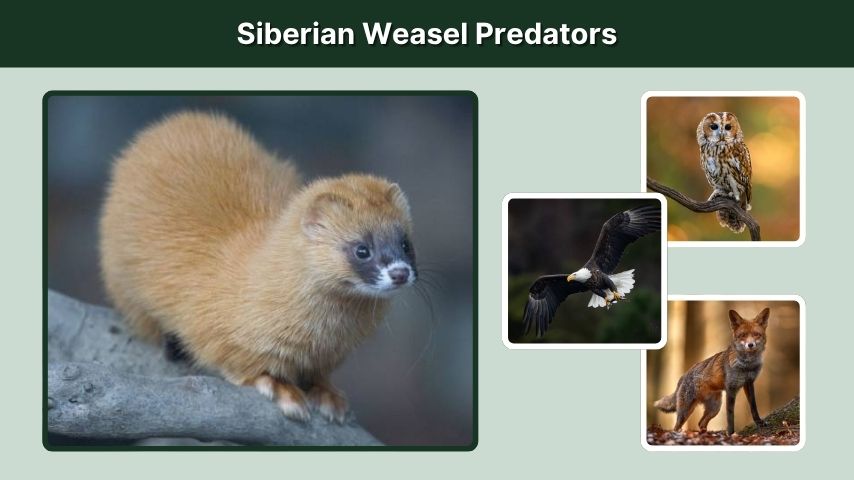
Siberian weasels are predators, but they are also prey. Larger animals may hunt them, especially young or injured individuals.
What Eats Siberian Weasels?
Possible Siberian weasel predators include:
- Eagles and large hawks
- Owls
- Foxes
- Wolves or wild dogs in some regions
- Larger mustelids
- Wild cats
- Snakes that take young animals
- Humans through trapping or hunting
Predation risk depends on habitat. In open areas, birds of prey may be a major threat. In forests, foxes, cats, and larger carnivores may be more important.
Siberian Weasel Fur and Hair
Siberian weasel fur is one of the reasons this animal appears in commercial searches. Its soft, golden or reddish-brown fur has historically been used in the fur trade. The word “kolinsky” is also connected with fine brush hair, though trade names and species sources can be complicated.
Siberian Weasel Winter Coat
In colder regions, the Siberian weasel’s coat becomes denser for winter. This helps insulate the body and allows the animal to hunt in low temperatures. Unlike some weasel species that turn white in winter, the Siberian weasel is generally known for yellowish to reddish-brown tones rather than a full white winter coat.
Siberian Weasel Fur Industry
Siberian weasel fur has been used for garments, trim, and other products. However, wildlife trade and fur use can be regulated by country. Buyers should be cautious about legality, sourcing, animal welfare, and mislabeling.
For ethical and conservation reasons, many people choose synthetic or plant-based alternatives instead of real fur.
Is the Siberian Weasel Dangerous?
Siberian weasels are not dangerous to most people when left alone. They are small wild carnivores and usually avoid humans. However, they can bite if handled, trapped, injured, or cornered.
Siberian Weasel Attack
A Siberian weasel attack on a person would be unusual and would most likely happen if someone tried to capture or touch the animal. Their teeth are sharp, and wild mammals can carry diseases or parasites, so direct contact should be avoided.
They may be more of a concern for poultry keepers because small predators can enter coops and attack birds or eggs. Secure housing is the best prevention.
Are Siberian Weasels Dangerous to Pets?
They are not usually a major threat to larger pets, but small animals such as chicks, small birds, rabbits, or rodents could be vulnerable. Dogs and cats may also injure or kill weasels, creating risk for both animals.
If a Siberian weasel is seen near a home, the safest response is to keep pets indoors, secure poultry, and avoid trying to catch it by hand.
Siberian Weasel Pet: Is It a Good Idea?
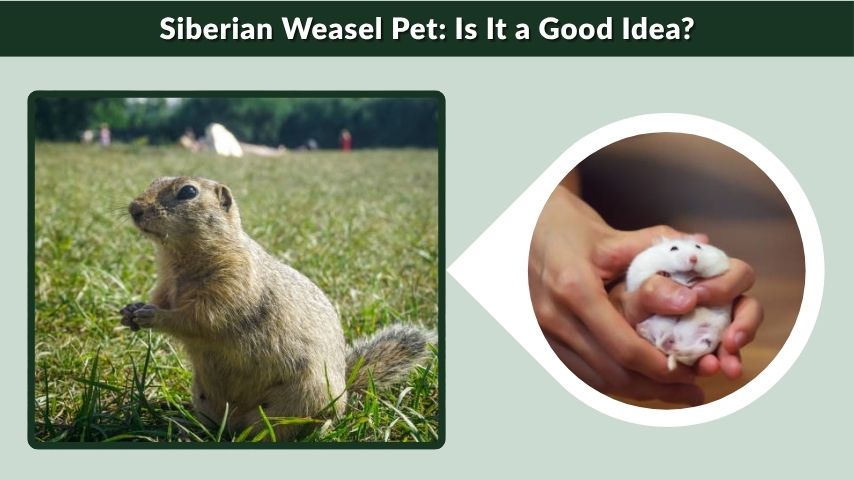
The Siberian weasel is not a good pet for most people. It is a wild animal with strong hunting instincts, sharp teeth, high energy, scent-marking behavior, and specialized care needs. It is not domesticated like a ferret.
Siberian Weasel for Sale
Searches for “Siberian weasel for sale” or “Siberian weasel price” may lead to exotic animal listings. However, buying one may be illegal or restricted depending on where you live. It may also support wildlife capture or poor animal welfare.
Before considering any exotic mammal, check local wildlife laws, import rules, veterinary access, and long-term care needs. In most cases, a domesticated ferret is a more suitable legal pet than a Siberian weasel.
Siberian Weasel Lifespan and Reproduction
Siberian weasel lifespan varies between wild and captive conditions. In the wild, many small carnivores face high risks from predators, disease, harsh weather, and food shortages. Captive animals may live longer if properly cared for, but this does not mean they are easy pets.
Young and Family Life
Females give birth in sheltered dens. The young are born helpless and depend on their mother for warmth, milk, and protection. As they grow, they begin exploring and learning hunting skills.
Like other weasels, young Siberian weasels must become independent predators quickly to survive.
Interesting Facts About Siberian Weasels
Siberian weasels are fascinating animals with several unusual traits.
Fun Facts
- The Siberian weasel is also called the kolonok.
- Its scientific name is Mustela sibirica.
- It is part of the same family as ferrets and otters.
- It is a skilled rodent hunter.
- Its long body helps it enter burrows.
- It can live in forests, mountains, grasslands, and farmland edges.
- It has historically been used in the fur trade.
- It is listed as a species of Least Concern.
- It can release a strong scent when threatened.
- It is wild, not domesticated.
FAQs
What does a Siberian weasel eat?
A Siberian weasel mainly eats small mammals, especially rodents such as mice and voles. It may also eat birds, eggs, amphibians, reptiles, insects, and carrion. Near farms or settlements, it may sometimes target poultry, eggs, or food scraps.
Where does the Siberian weasel live?
The Siberian weasel lives across much of Asia, including parts of Russia, China, Korea, northern South Asia, Southeast Asia, and nearby regions. It uses forests, mountains, grasslands, river valleys, farmland edges, and sheltered areas with enough prey and cover.
Is a Siberian weasel dangerous?
A Siberian weasel is not usually dangerous to people if left alone. It is a small wild predator that prefers to avoid humans. However, it can bite if cornered or handled, and it may threaten poultry or small captive animals if it enters a coop.
Can you keep a Siberian weasel as a pet?
A Siberian weasel is not recommended as a pet. It is wild, energetic, predatory, and may be illegal or restricted to own. It also has specialized care needs and strong scent behavior. A domesticated ferret is usually a more suitable choice.
What is Siberian weasel fur used for?
Siberian weasel fur has historically been used in the fur trade, including garments, trim, and hair products associated with “kolinsky” naming. Laws, sourcing, and ethics vary by region, so buyers should be cautious and consider animal welfare and legal restrictions.