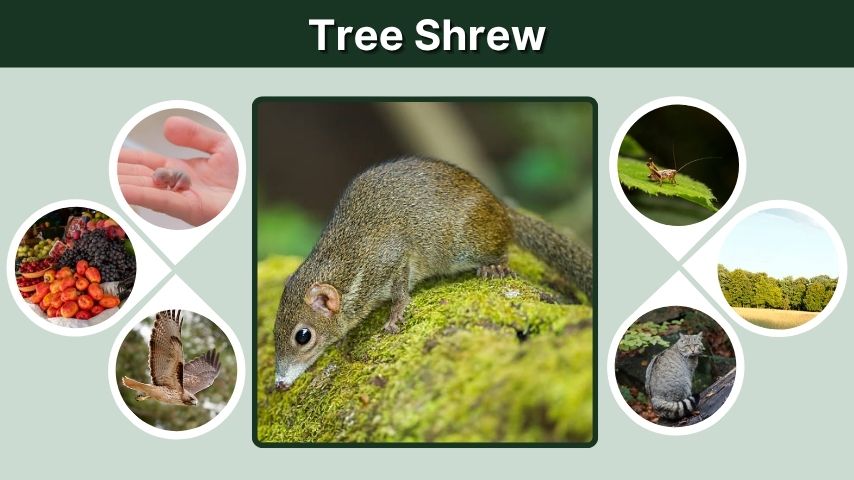
Tree shrews are small mammals known for their fast movements, long snouts, and squirrel-like appearance. Despite their name, they are not true shrews and are actually part of a unique mammal group called Scandentia. These animals live mainly in Southeast Asia and are famous for their intelligence, climbing skills, and unusual relationship with pitcher plants.
Many people search for tree shrew facts because scientists often study these animals for brain research and evolutionary studies. From their diet and habitat to their behavior and adaptations, tree shrews are fascinating mammals with many unique survival traits.
What Is a Tree Shrew?
Tree shrews are small omnivorous mammals found mostly in tropical forests of Southeast Asia. They are active during the day and spend time both on the ground and in trees. Although they resemble squirrels or rodents, tree shrews belong to their own scientific order. Researchers consider them important because of their close evolutionary links to primates and their advanced sensory abilities.
Scientific Classification
- Order: Scandentia
- Mammal group: Tree shrews
- Main genus: Tupaia
- Native region: Southeast Asia
- Related to primates more than rodents
Are Tree Shrews Rodents or Primates?
- Not true rodents
- Not actual primates
- Share some traits with primates
- Have advanced brain structures
- Classified in their own order
Types of Tree Shrews
| Species | Region | Special Feature |
| Common Tree Shrew | Southeast Asia | Most widespread species |
| Northern Tree Shrew | Thailand region | Forest adaptation |
| Pen-tailed Tree Shrew | Malaysia and Borneo | Unique tail shape |
Tree Shrew Identification
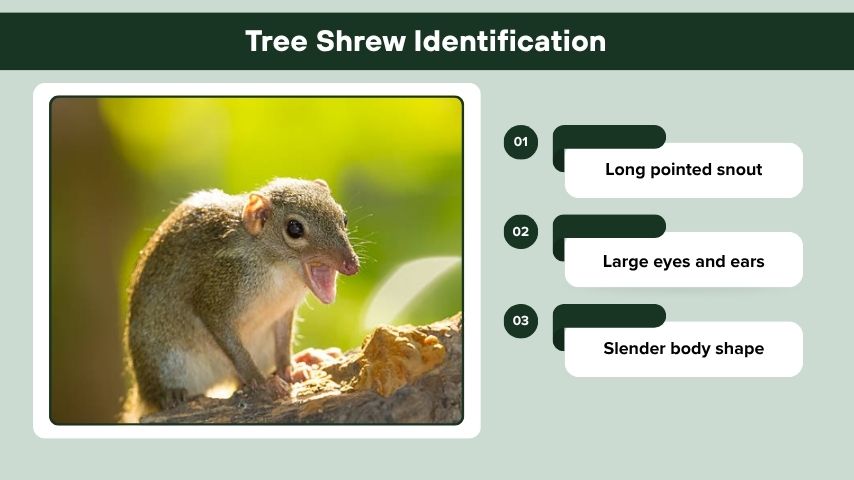
Tree shrews are small mammals with pointed snouts, large eyes, and long tails. Their appearance often causes people to mistake them for squirrels or rats. However, their body shape and movement patterns are quite different. Most species have soft brown or gray fur that helps them blend into forest habitats.
Physical Appearance
- Long pointed snout
- Large eyes and ears
- Slender body shape
- Sharp claws
- Soft brown or gray fur
Tree Shrew Size and Weight
Most tree shrews are relatively small animals. Depending on the species, adults may measure between 6 and 12 inches long, excluding the tail. Their lightweight bodies help them move quickly through trees and dense vegetation.
Tree Shrew vs Squirrel
| Feature | Tree Shrew | Squirrel |
| Snout Shape | Long and pointed | Shorter face |
| Diet | Omnivorous | Mostly plant-based |
| Classification | Scandentia | Rodentia |
| Movement | Fast climber and runner | Agile jumper |
Tree Shrew Habitat and Distribution
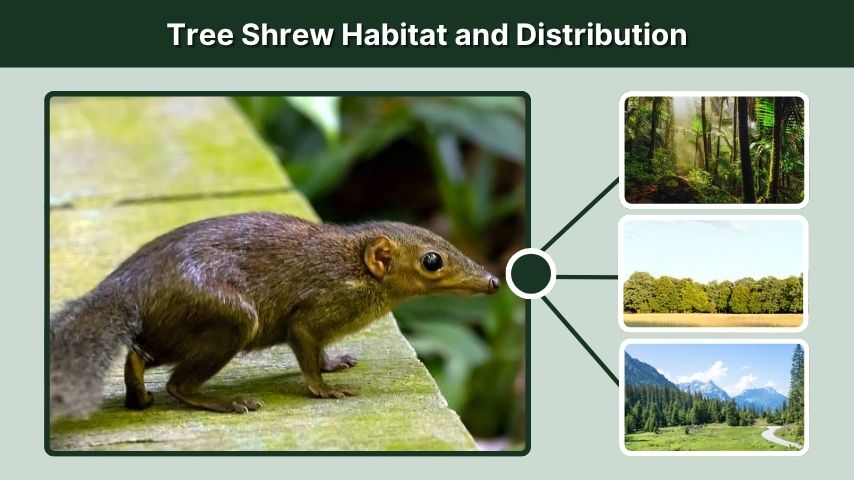
Tree shrews live mainly in tropical and subtropical forests across Southeast Asia. They prefer areas with dense vegetation, plenty of insects, and access to fruits and seeds. Some species spend more time in trees, while others forage mostly on the forest floor.
Where Do Tree Shrews Live?
- Malaysia
- Thailand
- Borneo
- Singapore
- Indonesia
Preferred Habitat
Tree shrews thrive in rainforests, forest edges, mountain forests, and dense tropical vegetation. Areas with fallen leaves and thick plant cover provide protection from predators and access to food sources.
Tree Shrews in Malaysia and Borneo
Malaysia and Borneo contain several important tree shrew species, including the famous pen-tailed tree shrew. These regions provide ideal rainforest conditions with warm temperatures, thick vegetation, and abundant insects.
Tree Shrew Diet and Feeding Habits
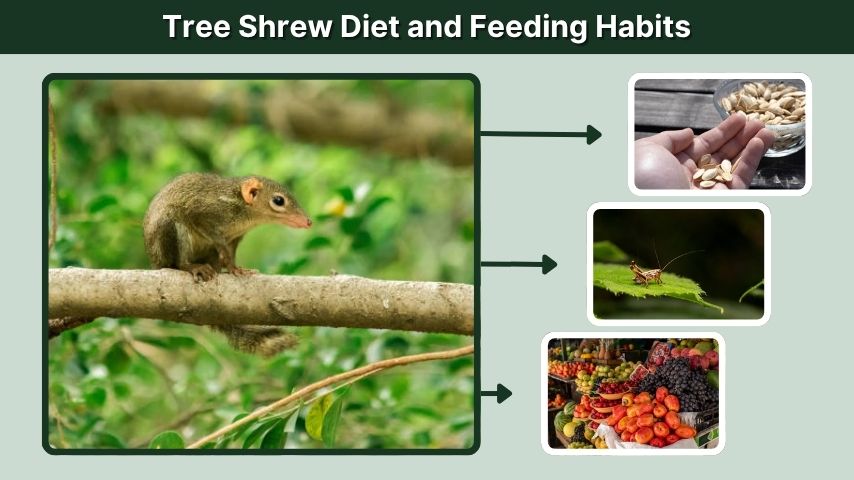
Tree shrews are omnivorous animals with a varied diet that helps them survive in changing forest environments. They spend much of the day searching for insects, fruits, and nectar among trees and leaf litter.
What Do Tree Shrews Eat?
- Fruits
- Insects
- Nectar
- Seeds
- Small animals
Tree Shrew Feeding Behavior
- Active daytime feeders
- Search both trees and ground
- Quick and energetic movement
- Use sharp teeth for insects
- Fast metabolism requires frequent feeding
Tree Shrew and Pitcher Plants
Some tree shrews have a unique relationship with tropical pitcher plants such as Nepenthes lowii. The animals feed on sweet nectar produced by the plant while leaving waste behind, which helps provide nutrients for the pitcher plant.
Tree Shrew Behavior and Intelligence
Tree shrews are highly active mammals with strong senses and quick reflexes. Scientists study them because they show advanced behaviors and brain functions compared to many small mammals. Their intelligence and adaptability help them survive in competitive rainforest environments.
Are Tree Shrews Smart?
Tree shrews have relatively large brains compared to their body size. Researchers use them in scientific studies involving memory, vision, and neurological behavior because their brain structures share similarities with primates.
Tree Shrew Adaptations
- Sharp claws for climbing
- Fast reflexes
- Excellent balance
- Strong sense of smell
- Flexible feeding habits
Daily Activity Patterns
Most tree shrews are active during daylight hours. They spend the day climbing, searching for food, defending territory, and avoiding predators in dense forest habitats.
Tree Shrew Reproduction and Life Cycle
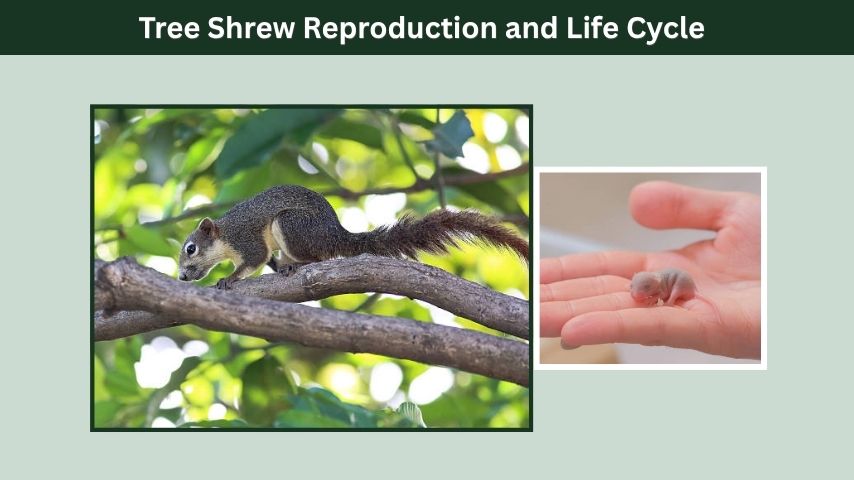
Tree shrews reproduce quickly compared to many larger mammals. Their short breeding cycles help maintain populations in forest habitats where predators and environmental dangers are common. Females usually raise their young in hidden nests built among vegetation, tree hollows, or forest debris.
Mating and Breeding
Tree shrews may breed several times each year depending on food availability and climate conditions. Males and females communicate through scent markings and vocal sounds during the breeding season.
Tree Shrew Babies
- Small litter sizes
- Babies born blind and helpless
- Mothers provide milk and protection
- Rapid growth during early weeks
- Young become independent quickly
Tree Shrew Lifespan
Most tree shrews live only a few years in the wild because of predators and habitat risks. In protected captivity, some species may survive longer with proper food and veterinary care.
Pen-Tailed Tree Shrew Facts
The pen-tailed tree shrew is one of the most unusual species in the tree shrew family. It is famous for its feather-like tail tip and remarkable ability to consume naturally fermented nectar containing alcohol without becoming intoxicated.
What Is a Pen-Tailed Tree Shrew?
The pen-tailed tree shrew lives mainly in Malaysia and Borneo. It is smaller and more nocturnal than many other tree shrew species. Its tail has a distinctive tufted appearance that inspired its common name.
Tree Shrew Alcohol Consumption
Scientists discovered that pen-tailed tree shrews regularly drink fermented nectar from palm flowers. This nectar contains natural alcohol levels that would affect many animals, yet tree shrews appear highly tolerant because of specialized metabolism.
Pen-Tailed Tree Shrew and Pitcher Plants
Pen-tailed tree shrews also interact with tropical pitcher plants. While feeding on nectar from the plant lid, they often leave droppings inside the pitcher, which supplies nutrients for the plant. This unusual relationship benefits both species.
Tree Shrew Predators and Threats
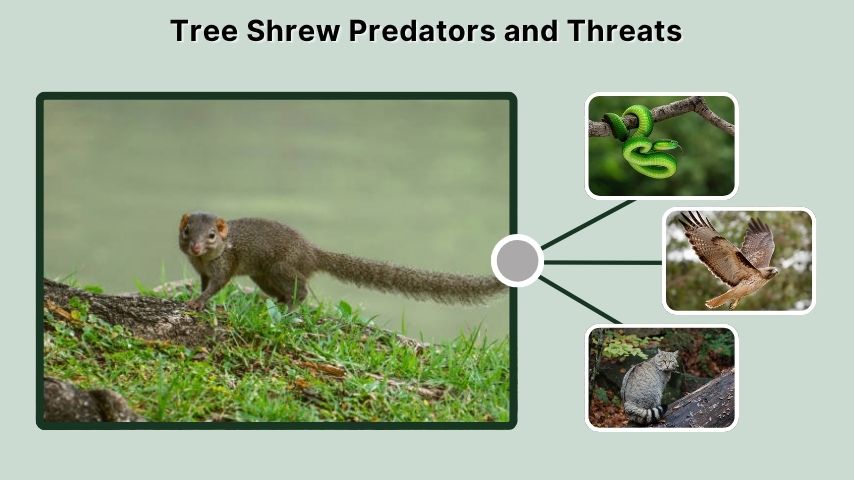
Tree shrews face many natural dangers because of their small size and active daytime lifestyle. Forest destruction and habitat loss have also increased risks for several species.
Natural Predators
- Snakes
- Birds of prey
- Wild cats
- Monitor lizards
- Larger carnivorous mammals
Human-Related Threats
Deforestation and agricultural expansion reduce the tropical forest habitats needed by tree shrews. Illegal wildlife trade and habitat fragmentation also threaten certain local populations.
Conservation Status
Some tree shrew species remain common, while others face declining populations because of forest loss. Protected rainforest reserves in Southeast Asia play an important role in conserving these unique mammals.
Interesting Tree Shrew Facts
Tree shrews are fascinating animals with unusual biological features and behaviors. Their intelligence, rapid movements, and evolutionary importance continue to interest scientists around the world.
Fascinating Facts About Tree Shrews
- Tree shrews are not true shrews
- Some species tolerate natural alcohol
- Related more closely to primates than rodents
- Extremely fast metabolism
- Important animals in brain research
- Active mostly during daytime
- Excellent climbers and runners
Tree Shrews and Human Research
Scientists often study tree shrews because their brains and vision systems share similarities with primates. Their biology makes them valuable for medical and neurological research.
Tree Shrew Brain Research
Researchers use tree shrews in studies related to memory, stress, vision, and brain function. Their brain-to-body ratio is relatively high for a small mammal, making them useful for scientific analysis.
Tree Shrews and Human Evolution
Tree shrews provide insight into early mammal evolution and possible evolutionary links connected to primates. Studying them helps scientists better understand how certain mammal groups developed over time.
FAQs
Are tree shrews rodents?
No, tree shrews are not rodents. They belong to their own mammal order called Scandentia and are biologically different from rats, mice, and squirrels.
Are tree shrews primates?
Tree shrews are not true primates, but they share some evolutionary similarities with primates. Scientists study them because of certain brain and sensory traits.
What do tree shrews eat?
Tree shrews eat fruits, insects, nectar, seeds, and small animals. Their omnivorous diet helps them survive in tropical forest habitats.
Where do tree shrews live?
Tree shrews live mainly in Southeast Asia, including Malaysia, Thailand, Borneo, Singapore, and nearby tropical forest regions.
Are tree shrews good pets?
Tree shrews are generally not suitable pets because they are highly active wild animals that require specialized diets, space, and tropical environmental conditions.