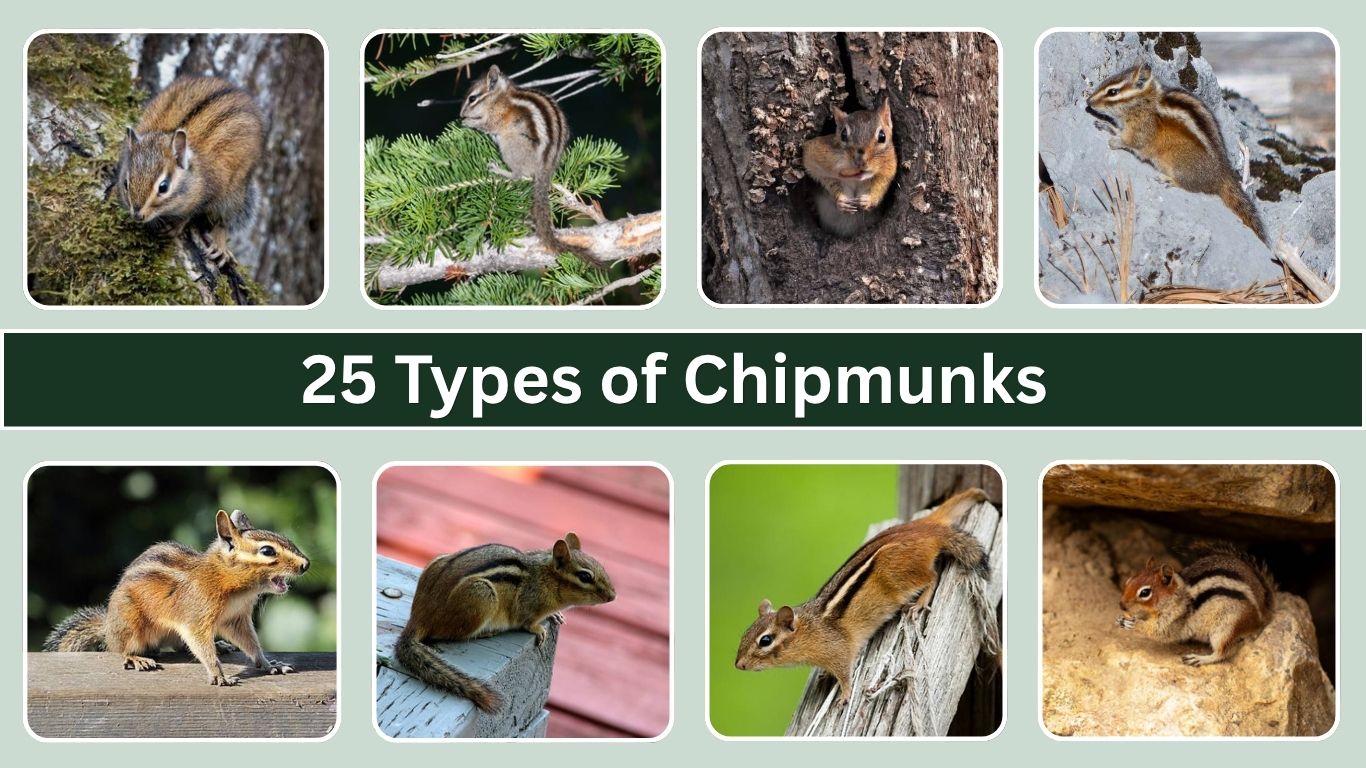
Chipmunks are small, striped rodents known for their quick movements, cheek pouches, and busy food-gathering habits. Different types of chipmunks live in forests, mountains, rocky slopes, deserts, and brushy areas. Each species has its own range, color pattern, and habitat preference, making chipmunks a diverse and interesting group of animals.
1. Eastern Chipmunk
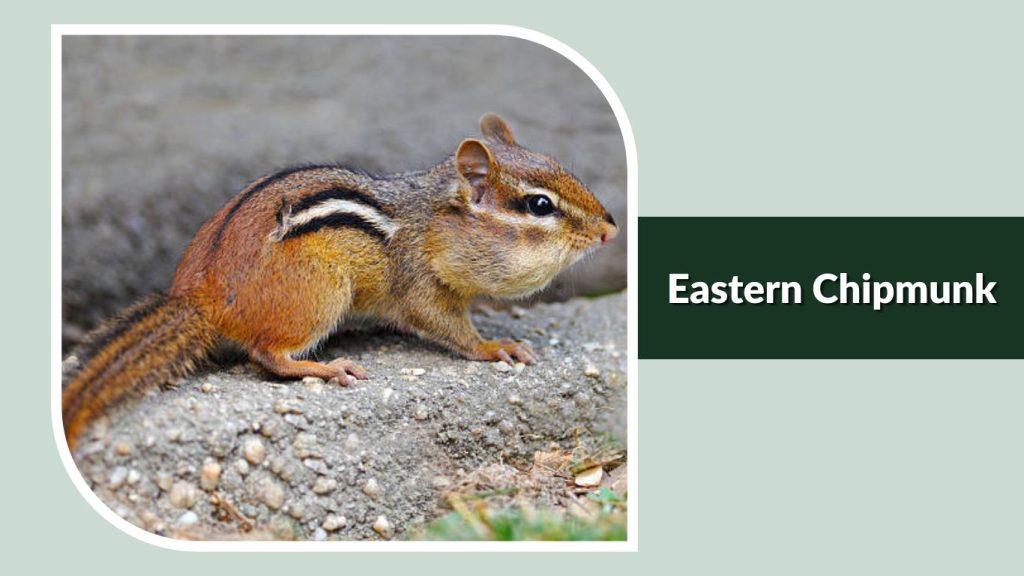
The Eastern Chipmunk is one of the most familiar chipmunk species in North America. It is small, quick, and easily recognized by its striped back and lively behavior. This chipmunk is often seen in forests, gardens, parks, and yards where it searches for seeds, nuts, fruits, and insects.
Identification
- Small body with a bushy tail
- Reddish-brown fur on the upper body
- Five dark stripes running along the back
- Light-colored stripes between the darker lines
- White or pale belly
- Rounded ears and bright eyes
- Usually about 8 to 12 inches long, including the tail
Habitat
Eastern Chipmunks prefer wooded areas with plenty of cover. They are commonly found in deciduous forests, forest edges, brushy areas, and rocky places. They also adapt well to suburban yards, especially where shrubs, logs, or stone walls provide hiding spots. Their burrows are usually built underground and may include tunnels, nesting chambers, and food storage areas.
Diet
The Eastern Chipmunk eats a wide variety of foods. Its diet includes seeds, nuts, berries, mushrooms, insects, and sometimes small eggs. During warmer months, it gathers food and stores it in underground chambers. This stored food helps it survive colder seasons when fresh food is harder to find.
Behavior
Eastern Chipmunks are active during the day and spend much of their time foraging. They are usually solitary and may defend their burrows from other chipmunks. When alarmed, they make sharp chirping sounds and quickly run to cover. Although they do not truly hibernate, they stay inside their burrows for long periods during winter.
2. Least Chipmunk
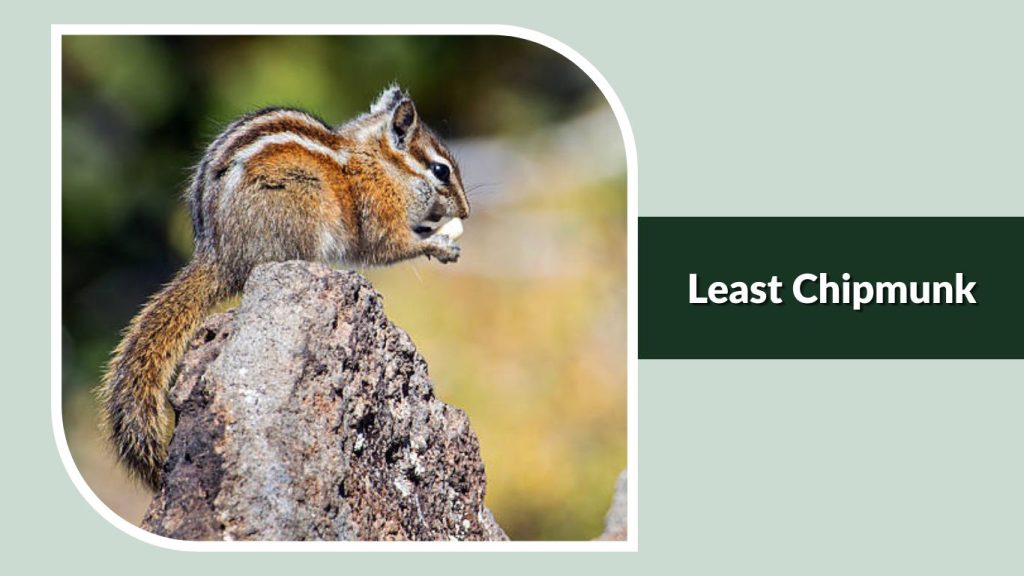
The Least Chipmunk is the smallest chipmunk species in North America. It is active, alert, and often seen running quickly across rocks, logs, and open ground. This chipmunk is known for its narrow body, long tail, and clear stripes that help it blend into dry grasslands, forests, and shrub-covered areas.
Identification
- Smallest chipmunk species in North America
- Slender body with a long, thin tail
- Brownish-gray to reddish-brown fur
- Dark and pale stripes along the back
- Light-colored belly
- Pointed face with small rounded ears
- Usually about 6 to 9 inches long, including the tail
Habitat
Least Chipmunks live in many types of habitats, including open forests, sagebrush areas, rocky slopes, grasslands, and mountain regions. They are very adaptable and can survive in both dry and cool environments. They often use logs, rocks, bushes, and burrows for shelter and protection.
Diet
The Least Chipmunk eats seeds, berries, nuts, grasses, flowers, and insects. It often collects food in its cheek pouches and carries it back to a safe place. Stored food is important during colder months when fresh food becomes limited.
Behavior
Least Chipmunks are active during the day and spend much of their time searching for food. They are quick climbers and can move easily through shrubs and low branches. When threatened, they give sharp warning calls and hide in burrows, rock cracks, or thick vegetation.
3. Alpine Chipmunk
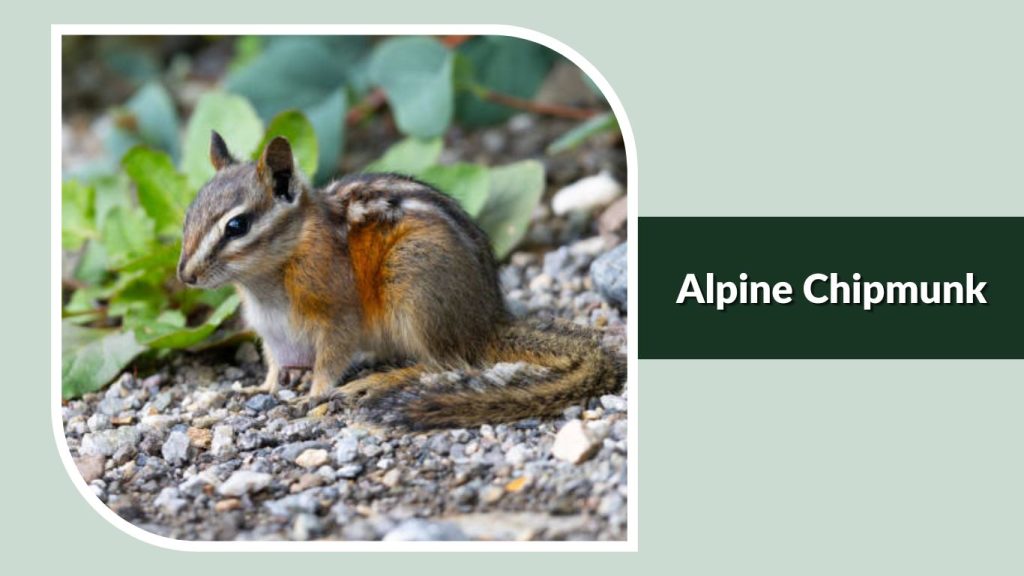
The Alpine Chipmunk is a small mountain chipmunk found in high-elevation areas. It is adapted to cool climates and rocky landscapes. This species is usually seen among rocks, slopes, and mountain meadows, where it searches for food and uses natural cover to escape predators.
Identification
- Small chipmunk with a compact body
- Grayish-brown fur with darker back stripes
- Pale stripes along the face and body
- Light underside
- Short rounded ears
- Bushy tail with darker edges
- Usually smaller than many lowland chipmunks
Habitat
Alpine Chipmunks live mainly in high mountain areas, especially rocky slopes, talus fields, and alpine meadows. They prefer places with stones, shrubs, and low vegetation. These habitats provide shelter, nesting areas, and protection from birds of prey and other predators.
Diet
The Alpine Chipmunk feeds on seeds, grasses, berries, flowers, and small insects. During the short mountain summer, it spends much time gathering food. It may store food in hidden spaces or burrows to help survive colder periods when food is scarce.
Behavior
Alpine Chipmunks are active during daylight hours. They move quickly across rocks and often pause to watch for danger. Because they live in exposed mountain areas, they rely on speed, camouflage, and hiding places. In cold seasons, they remain underground for long periods.
4. Cliff Chipmunk
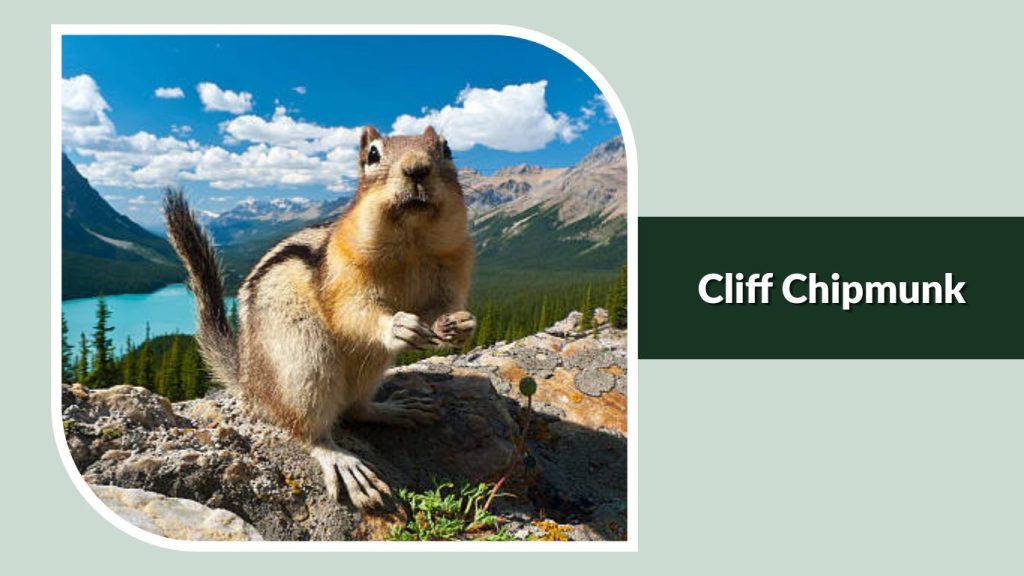
The Cliff Chipmunk is a small, agile chipmunk commonly found in rocky canyons, cliffs, and dry woodland areas. It is well adapted to climbing and moving across rough stone surfaces. Its striped body and earthy colors help it blend into rocky surroundings.
Identification
- Small chipmunk with a slim body
- Grayish-brown or reddish-brown upper fur
- Dark stripes running along the back
- Pale facial stripes
- Light belly and sides
- Medium-length bushy tail
- Quick movements over rocks and cliffs
Habitat
Cliff Chipmunks prefer rocky habitats such as canyon walls, cliffs, dry slopes, and woodland edges. They are often found in areas with pinyon pine, juniper, oak, or other dry-region plants. Rock cracks and crevices provide safe hiding places and nesting sites.
Diet
The Cliff Chipmunk eats seeds, nuts, berries, fruits, and insects. It may also feed on plant parts such as buds and leaves. Like many chipmunks, it stores food for later use. This habit helps it survive when seasonal food is limited.
Behavior
Cliff Chipmunks are active during the day and are often seen climbing rocks or moving through low vegetation. They are alert animals and quickly hide when disturbed. Their sharp calls may warn nearby chipmunks of danger. They usually live alone outside the breeding season.
5. Colorado Chipmunk
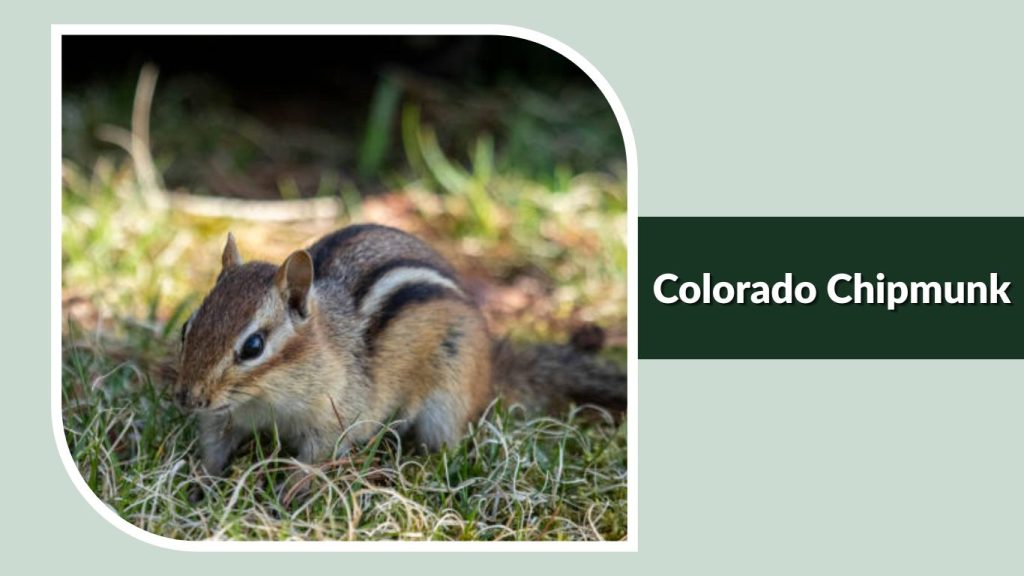
The Colorado Chipmunk is a medium-sized chipmunk found mainly in the southwestern United States. It is known for its attractive striped pattern and active foraging habits. This species often lives in rocky woodlands and brushy areas where food and shelter are easy to find.
Identification
- Medium-sized chipmunk with a sturdy body
- Brownish or grayish upper fur
- Clear dark stripes along the back
- Pale stripes on the face and sides
- Whitish or light gray belly
- Bushy tail with darker shading
- Rounded ears and bright eyes
Habitat
Colorado Chipmunks are commonly found in rocky hillsides, woodlands, brushlands, and forest edges. They often live near pinyon pine, juniper, oak, and pine forests. Their habitat usually includes rocks, logs, shrubs, and underground spaces that provide shelter and protection.
Diet
The Colorado Chipmunk eats seeds, nuts, berries, fruits, insects, and green plant material. It uses its cheek pouches to carry food to storage sites. This stored food becomes useful when weather changes or when fresh food is harder to find.
Behavior
Colorado Chipmunks are daytime animals and are most active in mild weather. They spend much of the day searching for food, grooming, and watching for predators. When frightened, they run quickly to rocks, burrows, or thick cover. They are generally solitary and may defend feeding areas.
6. Durango Chipmunk
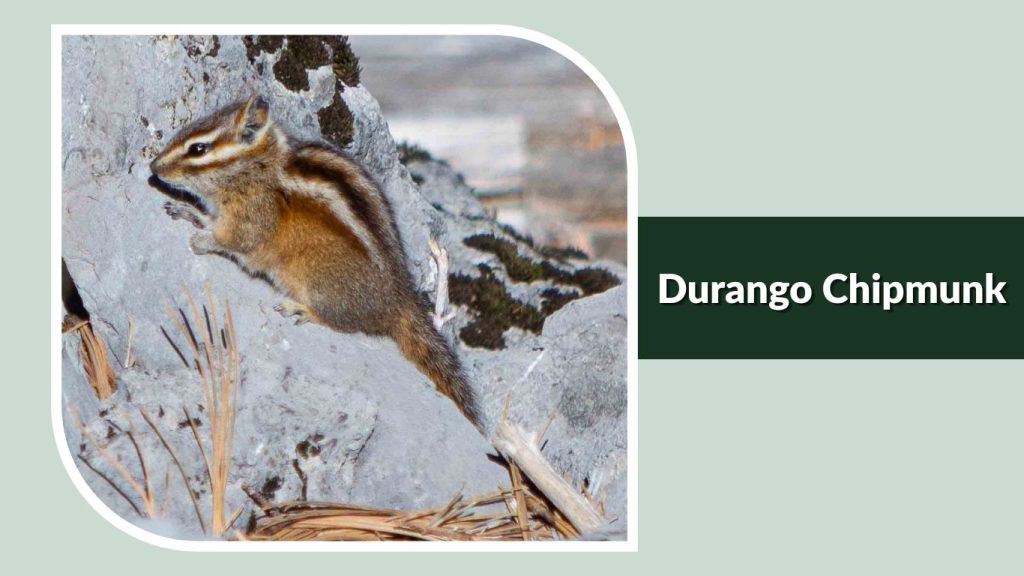
The Durango Chipmunk is a small striped chipmunk found mainly in parts of Mexico. It is less commonly known than many North American chipmunks, but it has the same active nature and quick movements. This species usually lives in forested mountain areas where trees, rocks, and ground cover provide food and protection.
Identification
- Small body with a striped back
- Brownish-gray fur on the upper body
- Dark stripes along the back and sides
- Pale stripes between the darker markings
- Light-colored underside
- Short rounded ears
- Bushy tail used for balance
Habitat
Durango Chipmunks are usually found in mountain forests and wooded areas. They prefer places with trees, shrubs, rocks, and natural ground cover. These areas give them safe spaces to hide from predators and build nests. Their habitat may include pine, oak, and mixed forest regions.
Diet
The Durango Chipmunk eats seeds, nuts, berries, fruits, insects, and other small plant materials. It searches for food on the ground and may also climb low plants or logs. Like other chipmunks, it can carry food in its cheek pouches and store it for later use.
Behavior
Durango Chipmunks are active during the day and spend much of their time foraging. They are alert and quick to hide when they sense danger. Their striped fur helps them blend into forest floors and rocky areas. They are generally solitary and depend on hidden shelters for safety.
7. Gray-collared Chipmunk
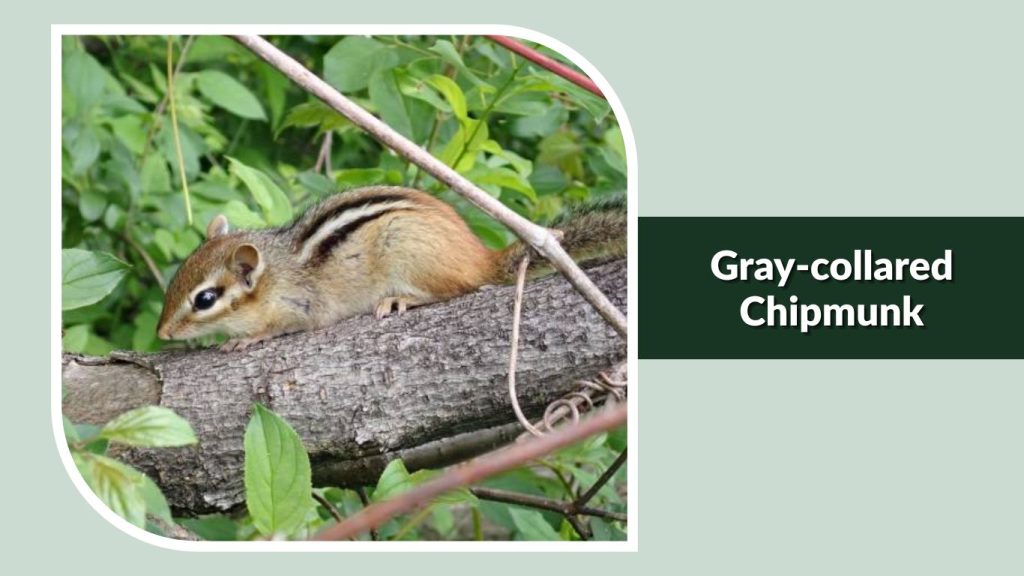
The Gray-collared Chipmunk is a small chipmunk known for the grayish color around its neck and shoulders. It is found mainly in forested mountain areas of the southwestern United States and nearby regions. This species is active, shy, and usually stays close to cover while searching for food.
Identification
- Small chipmunk with a neat striped pattern
- Grayish fur around the neck and shoulders
- Brown or reddish-brown back
- Dark stripes running along the back
- Pale stripes on the face and body
- Light underside
- Bushy tail with darker shading
Habitat
Gray-collared Chipmunks usually live in mountain forests, especially areas with pine, fir, spruce, or mixed woodland. They prefer cool, shaded habitats with logs, rocks, shrubs, and fallen branches. These features provide shelter, nesting places, and safe routes for moving through the forest.
Diet
The Gray-collared Chipmunk feeds on seeds, berries, nuts, fungi, insects, and green plant parts. It gathers food during warmer months and may store some of it in burrows or hidden spaces. This food storage helps it survive when winter limits fresh food sources.
Behavior
Gray-collared Chipmunks are daytime animals and are often seen moving along logs, rocks, or the forest floor. They are cautious and quickly retreat into cover when disturbed. Their calls can warn of danger. They usually live alone, except during the breeding season.
8. Gray-footed Chipmunk
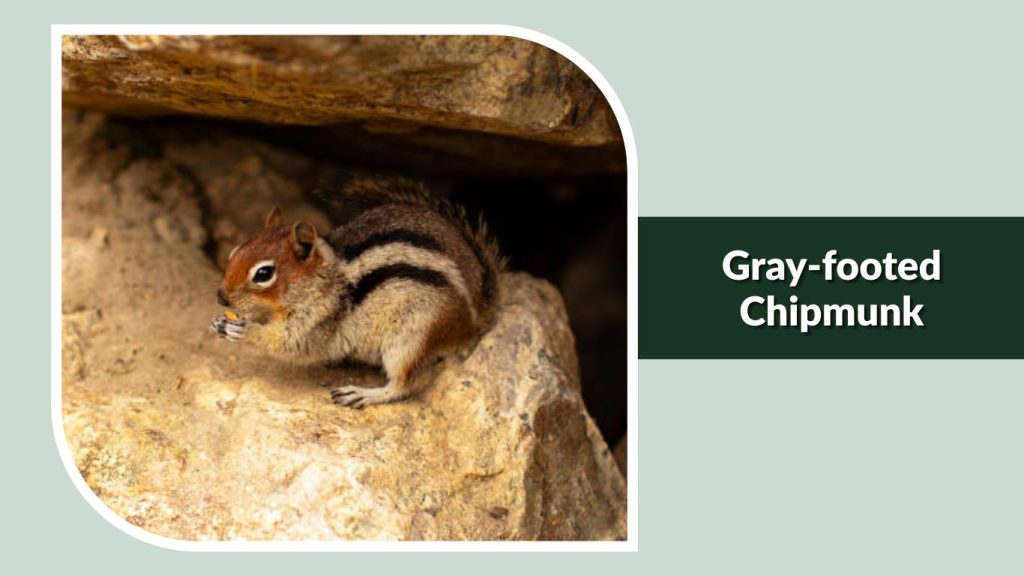
The Gray-footed Chipmunk is a small chipmunk species named for its grayish feet. It has a striped body, soft earthy coloring, and a quick, alert nature. This chipmunk is usually found in forested and rocky areas where it can easily find food and shelter.
Identification
- Small chipmunk with grayish feet
- Brownish or grayish upper fur
- Dark stripes along the back
- Pale stripes between dark markings
- Light-colored belly
- Small rounded ears
- Bushy tail with darker edges
Habitat
Gray-footed Chipmunks are commonly found in wooded mountain regions, rocky slopes, and forest edges. They prefer habitats with trees, shrubs, logs, and stones. These areas offer both food and protection. Rock crevices, burrows, and thick vegetation are important hiding places for this chipmunk.
Diet
The Gray-footed Chipmunk eats seeds, nuts, berries, fruits, fungi, insects, and tender plant parts. It spends much of the day searching for food on the ground. Its cheek pouches help it carry food to storage sites, where it can save supplies for colder or less productive seasons.
Behavior
Gray-footed Chipmunks are active in daylight and usually stay close to protective cover. They move quickly and may pause often to watch for predators. When threatened, they hide in burrows, rock cracks, or thick plants. They are mostly solitary and keep separate home areas.
9. Hopi Chipmunk
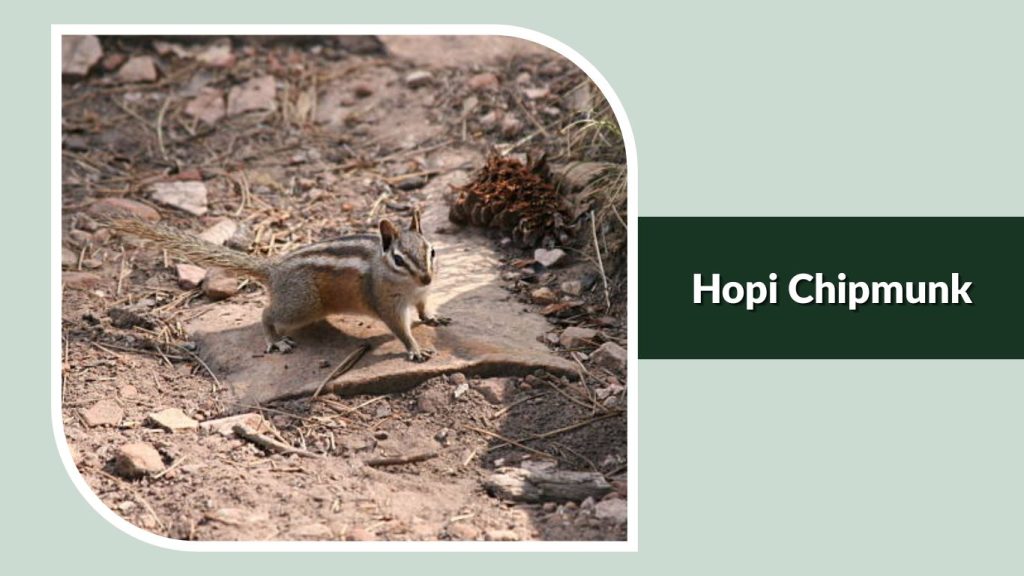
The Hopi Chipmunk is a small desert and canyon chipmunk found in parts of the southwestern United States. It is well adapted to dry, rocky landscapes. Its striped body and sandy-brown coloring help it blend into the ground, cliffs, and shrub-covered areas where it lives.
Identification
- Small chipmunk with a slim body
- Sandy-brown or grayish-brown fur
- Dark stripes running along the back
- Pale stripes on the face and sides
- Light belly
- Medium-length bushy tail
- Quick movements across rocks and dry ground
Habitat
Hopi Chipmunks often live in dry rocky areas, canyons, desert edges, and pinyon-juniper woodlands. They use rock cracks, shrubs, and burrows for shelter. Their habitat usually has enough seeds, fruits, and insects to support them even in dry conditions.
Diet
The Hopi Chipmunk eats seeds, nuts, berries, fruits, insects, and green plant material. In dry areas, it depends heavily on seasonal seeds and fruits. It may collect and store food in safe places so it can use it when fresh food becomes harder to find.
Behavior
Hopi Chipmunks are active during the day, especially in cooler parts of the morning. They are fast, alert, and skilled at moving over rocks. When danger appears, they quickly hide in crevices or burrows. Their cautious behavior helps them survive in open desert habitats.
10. Lodgepole Chipmunk
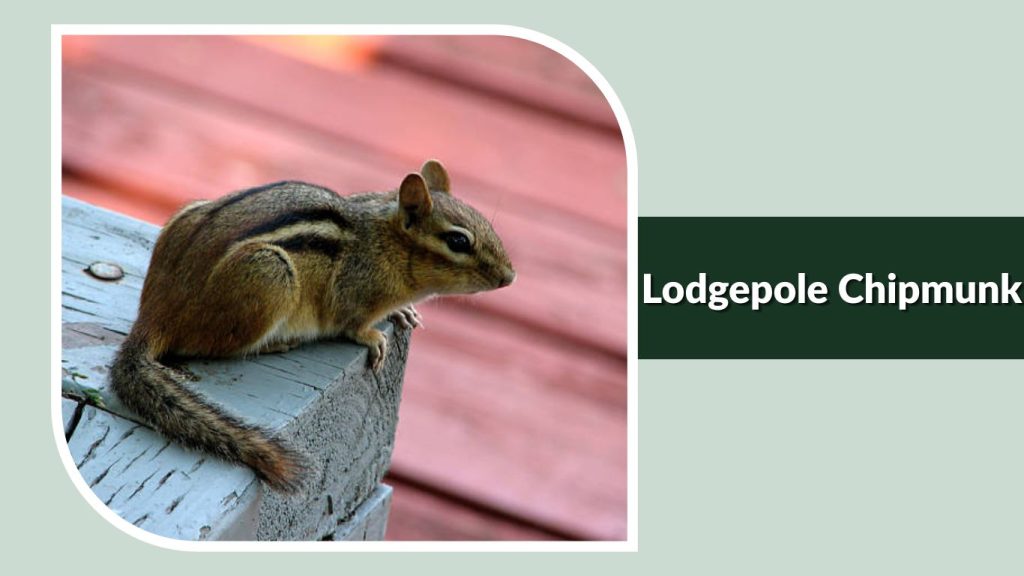
The Lodgepole Chipmunk is a small, active chipmunk found in western North America. It is often linked with lodgepole pine forests, but it may also live in other woodland areas. This chipmunk is quick, alert, and well adapted to forest floors where logs, shrubs, and rocks provide cover.
Identification
- Small chipmunk with a slim body
- Brownish-gray fur on the back
- Dark stripes running along the body
- Pale stripes between the dark lines
- Light-colored belly
- Small rounded ears
- Bushy tail with darker shading
Habitat
Lodgepole Chipmunks usually live in coniferous forests, especially areas with lodgepole pine. They may also be found near mixed forests, brushy slopes, and rocky woodland edges. These habitats give them shelter, nesting places, and plenty of seeds, berries, and insects to eat.
Diet
The Lodgepole Chipmunk feeds on seeds, nuts, berries, fungi, insects, and green plant parts. It spends much of its day searching for food on the ground and around fallen logs. During warmer months, it stores food in hidden places to use when fresh food becomes limited.
Behavior
Lodgepole Chipmunks are active during the day and usually stay close to cover. They move quickly through forest debris and may climb logs or low branches. When threatened, they hide in burrows, rock gaps, or thick vegetation. They are mostly solitary outside the breeding season.
11. Merriam’s Chipmunk
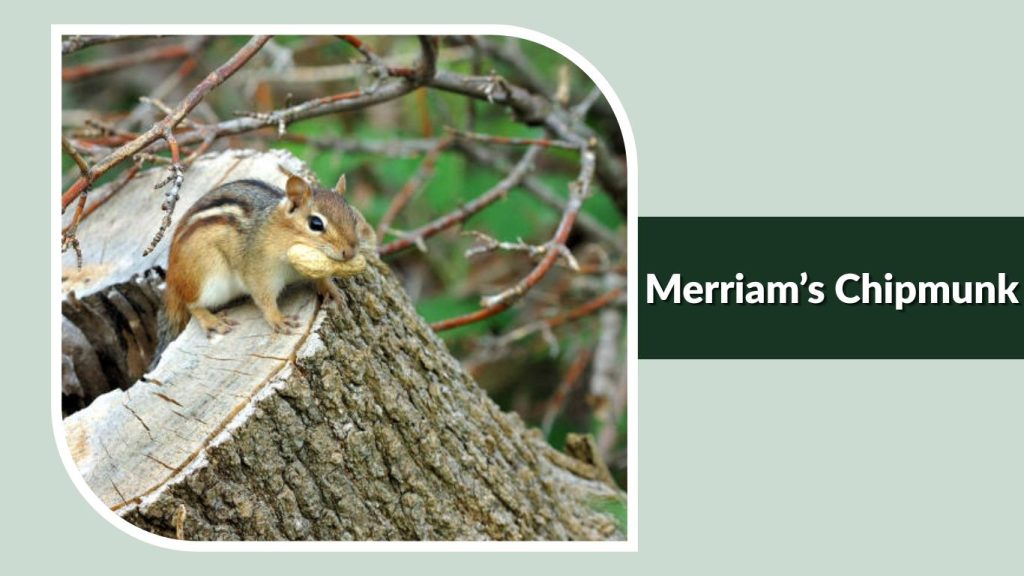
Merriam’s Chipmunk is a small chipmunk species found mainly in parts of California and nearby regions. It has a striped back, soft brown coloring, and a quick, cautious nature. This chipmunk often lives in dry woodland and chaparral habitats where shrubs and trees provide food and shelter.
Identification
- Small chipmunk with a compact body
- Brownish-gray or reddish-brown fur
- Dark stripes along the back
- Pale stripes on the face and sides
- Light underside
- Short rounded ears
- Bushy tail used for balance
Habitat
Merriam’s Chipmunks are commonly found in chaparral, oak woodland, pine forest, and brushy hillsides. They prefer areas with thick shrubs, rocks, logs, and leaf litter. These features help protect them from predators and provide safe places for nesting and food storage.
Diet
The Merriam’s Chipmunk eats seeds, acorns, berries, fruits, fungi, insects, and tender plant parts. It often gathers food in its cheek pouches and carries it to a hidden storage place. Acorns and seeds are especially important foods in woodland areas.
Behavior
Merriam’s Chipmunks are active in daylight and spend much of their time foraging near cover. They are shy and usually run to safety when approached. Their sharp calls may be used when danger is nearby. Like most chipmunks, they are generally solitary animals.
12. Palmer’s Chipmunk
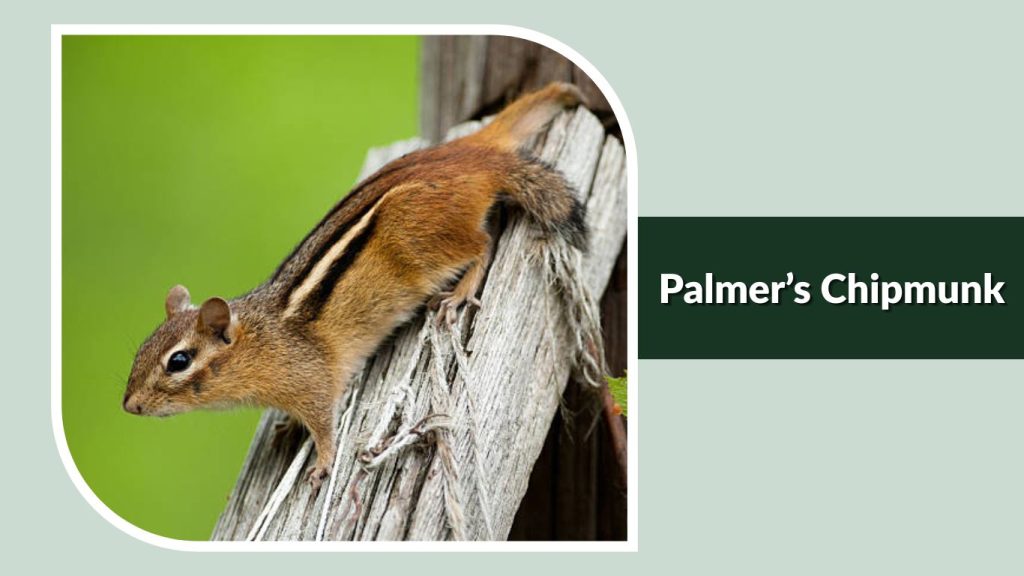
Palmer’s Chipmunk is a rare chipmunk species found mainly in mountain areas of Nevada. It has a striped body, soft grayish-brown fur, and a secretive nature. Because of its limited range, it is considered one of the more specialized chipmunks in North America.
Identification
- Small chipmunk with clear body stripes
- Grayish-brown fur on the upper body
- Dark stripes along the back
- Pale facial and side stripes
- Light-colored belly
- Small rounded ears
- Bushy tail with darker edges
Habitat
Palmer’s Chipmunks live mostly in high-elevation forests and mountain slopes. They are often associated with pine, fir, and mixed conifer forests. Rocks, fallen logs, shrubs, and underground spaces are important parts of their habitat because they provide shelter and protection.
Diet
The Palmer’s Chipmunk feeds on seeds, nuts, berries, fungi, insects, and green vegetation. It gathers food during the warmer season and may store supplies in burrows or hidden places. These stored foods help it survive colder months when mountain food sources are scarce.
Behavior
Palmer’s Chipmunks are active during the day but can be difficult to spot because they stay near cover. They move quickly over rocks, logs, and forest ground. When alarmed, they hide in burrows or thick vegetation. Their limited range makes suitable habitat very important for their survival.
13. Panamint Chipmunk
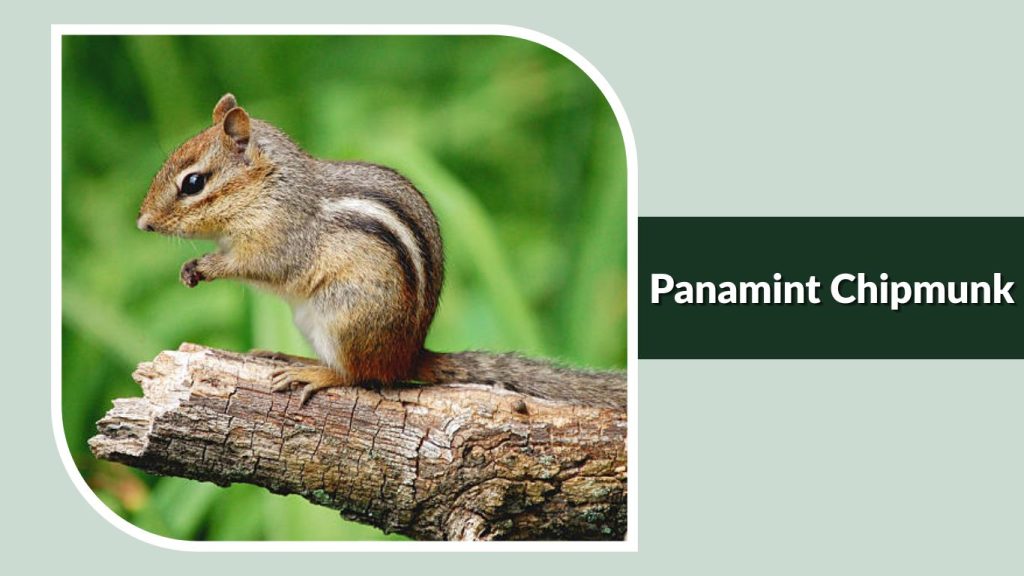
The Panamint Chipmunk is a small chipmunk found in dry mountain and desert-edge regions of the western United States. It is well adapted to rocky slopes, open woodland, and shrub-covered land. Its striped body and earthy colors help it blend into dry surroundings.
Identification
- Small chipmunk with a slender body
- Grayish-brown or sandy-brown fur
- Dark stripes running along the back
- Pale stripes on the face and sides
- Light belly
- Medium-length bushy tail
- Quick movement across rocks and shrubs
Habitat
Panamint Chipmunks usually live in rocky hills, desert mountains, pinyon-juniper woodland, and brushy slopes. They prefer places with stones, shrubs, and scattered trees. These areas provide food, shade, and safe hiding places from predators such as snakes, hawks, and foxes.
Diet
The Panamint Chipmunk eats seeds, nuts, berries, fruits, insects, and plant material. In dry habitats, seeds are especially important. It may collect food during productive seasons and store it in hidden spaces so it can use the supply when food becomes harder to find.
Behavior
Panamint Chipmunks are active during the day, often in cooler morning hours. They are alert and fast-moving, especially around rocks and shrubs. When disturbed, they quickly retreat to crevices, burrows, or thick cover. They usually live alone and depend on stored food during harsh seasons.
14. Red-tailed Chipmunk
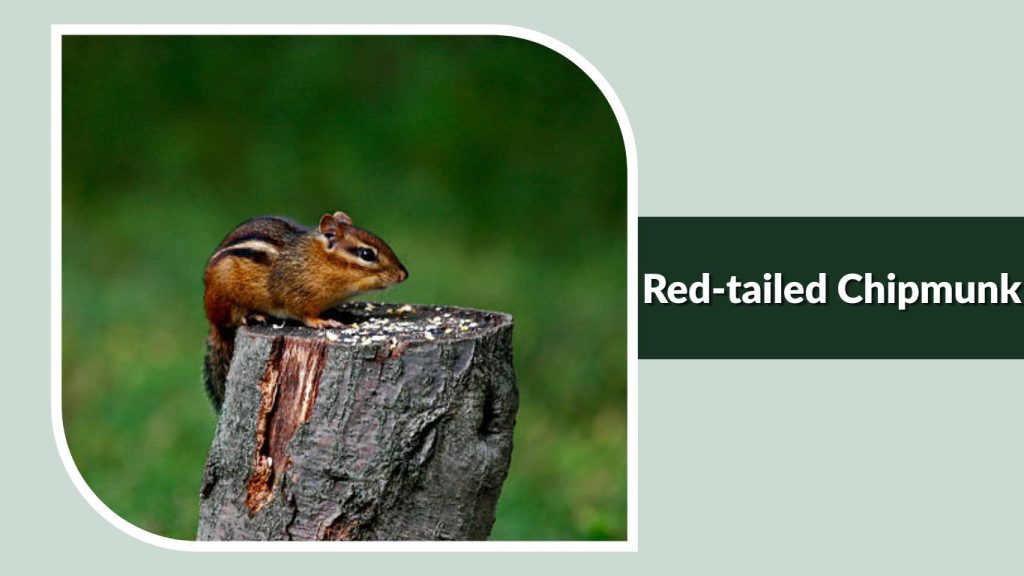
The Red-tailed Chipmunk is a colorful chipmunk species found in parts of western North America. It is named for the reddish color often seen on its tail. This chipmunk is active, quick, and commonly lives in forested mountain areas where trees, shrubs, and fallen logs provide shelter.
Identification
- Small chipmunk with a striped body
- Reddish coloring on the tail
- Brownish or grayish fur on the back
- Dark stripes running along the body
- Pale stripes on the face and sides
- Light-colored underside
- Bushy tail with reddish tones
Habitat
Red-tailed Chipmunks usually live in mountain forests, especially areas with conifer trees such as pine, fir, and spruce. They also use brushy forest edges, rocky slopes, and areas with fallen logs. These habitats provide safe hiding places, nesting areas, and steady food sources throughout the active season.
Diet
The Red-tailed Chipmunk eats seeds, nuts, berries, fungi, insects, and green plant material. It spends much of the day searching for food on the forest floor. During warmer months, it may store seeds and other foods in hidden places to use when fresh food becomes harder to find.
Behavior
Red-tailed Chipmunks are active during the day and usually remain close to cover. They move quickly over logs, rocks, and low branches. When they sense danger, they give sharp calls and retreat into burrows or thick vegetation. They are mostly solitary and may defend their small home areas.
15. Shadow Chipmunk
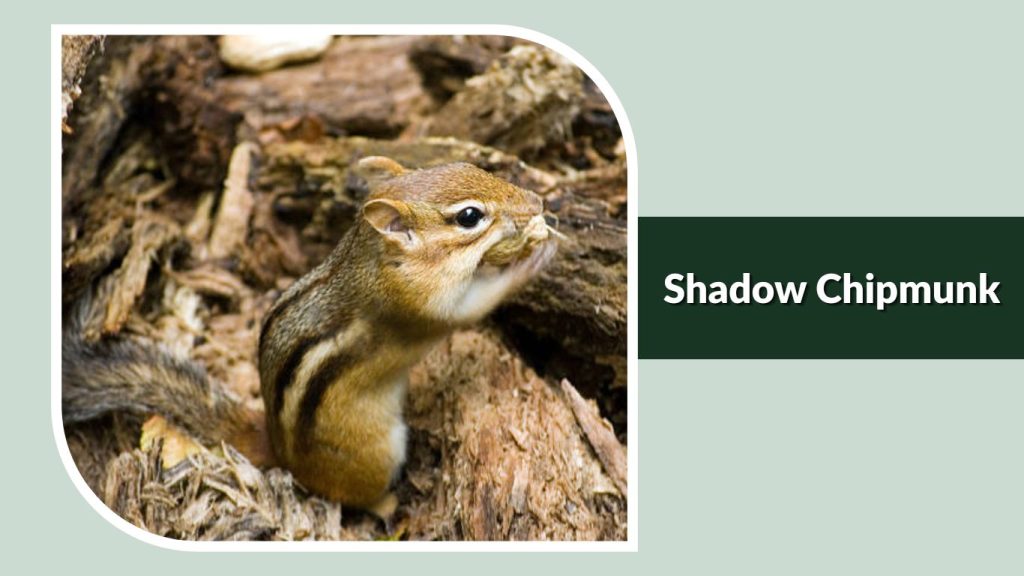
The Shadow Chipmunk is a small chipmunk species found in parts of the western United States. It has a striped back, soft earthy colors, and a shy nature. This chipmunk often lives in forested or rocky areas where shade, logs, shrubs, and stones help protect it from predators.
Identification
- Small chipmunk with a slim body
- Brownish-gray upper fur
- Dark stripes along the back
- Pale stripes between the darker lines
- Light belly and sides
- Small rounded ears
- Bushy tail used for balance
Habitat
Shadow Chipmunks are usually found in wooded areas, rocky slopes, forest edges, and brushy habitats. They prefer places with enough cover, such as shrubs, logs, stones, and leaf litter. These features allow them to move safely while searching for food and provide protected spaces for nesting.
Diet
The Shadow Chipmunk feeds on seeds, nuts, fruits, berries, fungi, insects, and tender plant parts. It gathers food during active seasons and may store extra supplies in burrows or hidden spaces. Stored food helps it survive periods when fresh food is not easy to find.
Behavior
Shadow Chipmunks are active in daylight and spend much of their time foraging close to shelter. They are alert animals and quickly hide when disturbed. Their striped pattern helps them blend into shaded forest floors and rocky ground. Like most chipmunks, they usually live alone outside the breeding season.
16. Siskiyou Chipmunk
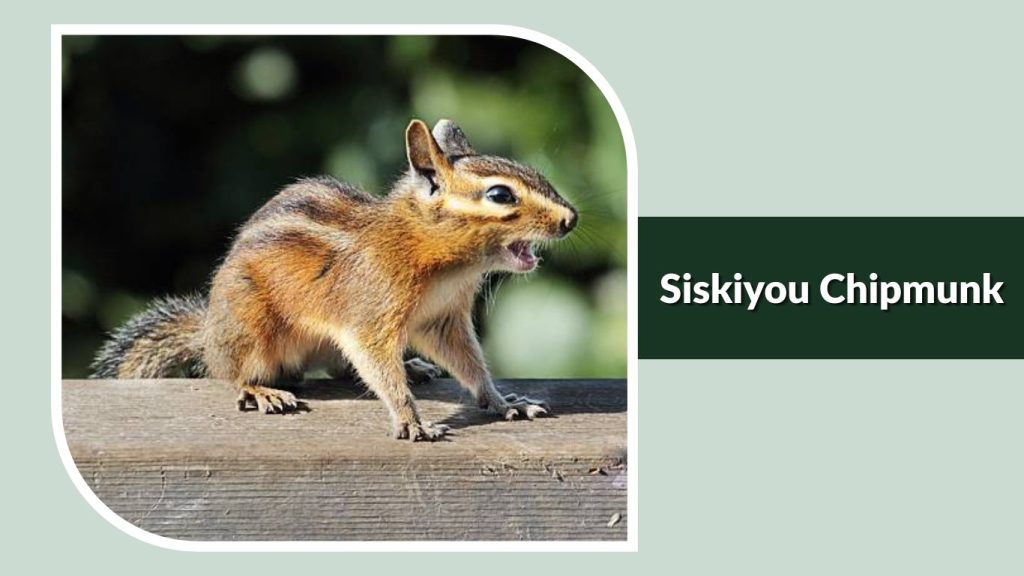
The Siskiyou Chipmunk is a small striped chipmunk found in parts of the Pacific Northwest. It is often associated with forests, rocky slopes, and brushy mountain areas. This species is active during the day and depends on thick cover and natural hiding places for safety.
Identification
- Small chipmunk with clear back stripes
- Brownish or grayish-brown fur
- Dark stripes along the back
- Pale stripes on the face and body
- Light-colored underside
- Rounded ears
- Bushy tail with darker edges
Habitat
Siskiyou Chipmunks usually live in forests, mountain slopes, rocky areas, and brush-covered habitats. They may be found near conifer forests, mixed woodlands, and forest edges. Rocks, fallen logs, shrubs, and underground spaces are important because they provide shelter and safe nesting places.
Diet
The Siskiyou Chipmunk eats seeds, nuts, berries, fruits, fungi, insects, and green vegetation. It searches for food on the ground and around logs or shrubs. During seasons when food is plentiful, it may store extra food in hidden places for later use.
Behavior
Siskiyou Chipmunks are active during the day and are usually cautious around open spaces. They move quickly between rocks, logs, and plants. When threatened, they retreat to burrows, crevices, or thick cover. Their alert behavior and natural camouflage help them avoid predators in forest environments.
17. Sonoma Chipmunk
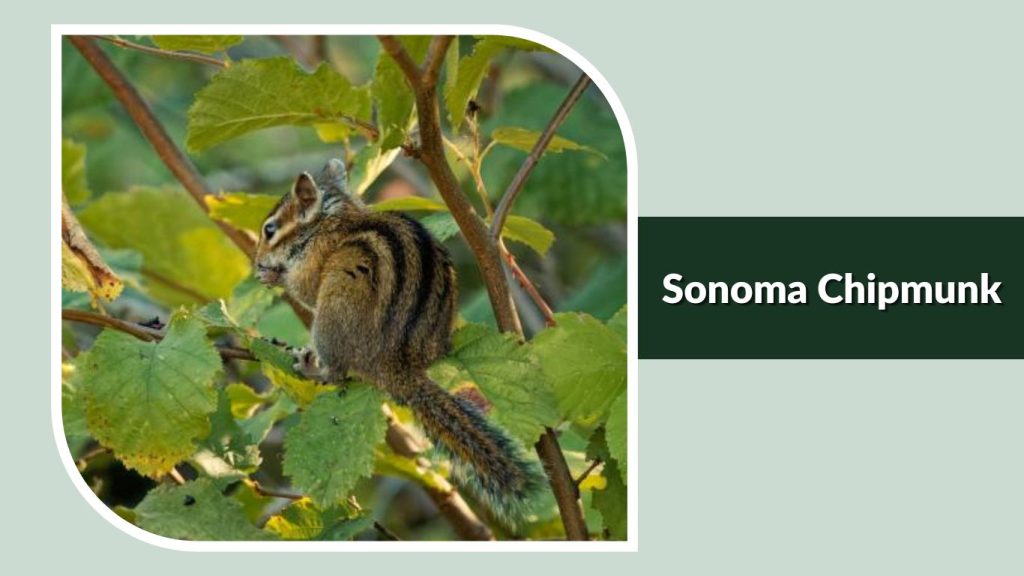
The Sonoma Chipmunk is a small chipmunk species found mainly in parts of California. It has a striped body, warm brown coloring, and a quick, energetic nature. This chipmunk often lives in wooded and brushy habitats where food, shelter, and nesting spaces are easy to find.
Identification
- Small chipmunk with a compact body
- Brownish or reddish-brown upper fur
- Dark stripes running along the back
- Pale stripes on the face and sides
- Light-colored belly
- Short rounded ears
- Bushy tail with darker shading
Habitat
Sonoma Chipmunks are commonly found in forests, chaparral, brushlands, and woodland edges. They prefer areas with shrubs, logs, rocks, and leaf litter. These features provide protection from predators and useful places for nesting, hiding, and storing food.
Diet
The Sonoma Chipmunk eats seeds, nuts, acorns, berries, fruits, fungi, insects, and green plant material. In oak woodland areas, acorns may be an important food source. Like other chipmunks, it can carry food in its cheek pouches and store supplies for later.
Behavior
Sonoma Chipmunks are active during daylight hours and spend much of their time searching for food. They are cautious and often stay near cover while moving through their habitat. When alarmed, they quickly hide in burrows, rocks, or thick vegetation. They are generally solitary outside mating periods.
18. Townsend’s Chipmunk
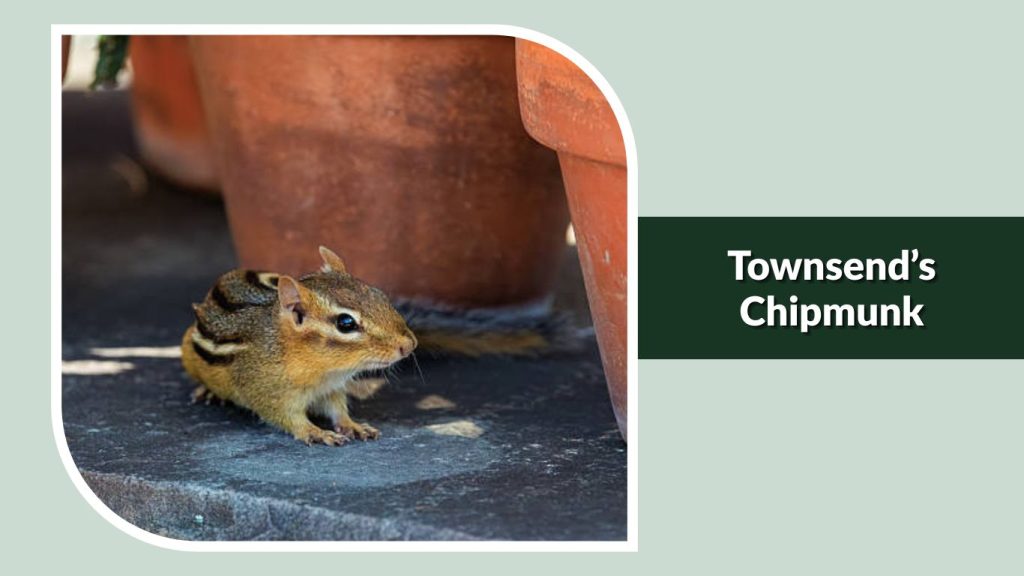
Townsend’s Chipmunk is a small striped chipmunk found mainly in the Pacific Northwest. It is active, quick, and often seen in forests with thick cover. This chipmunk prefers moist woodland areas where logs, shrubs, and fallen leaves provide food, nesting sites, and protection from predators.
Identification
- Small chipmunk with a sturdy body
- Brownish or grayish-brown fur
- Dark stripes running along the back
- Pale stripes on the face and sides
- Light-colored underside
- Small rounded ears
- Bushy tail with darker shading
Habitat
Townsend’s Chipmunks usually live in dense forests, especially moist coniferous and mixed woodlands. They are often found near fallen logs, shrubs, ferns, and thick ground cover. These places give them safe routes for movement and many hiding spots. Forest edges and brushy areas may also support this species.
Diet
The Townsend’s Chipmunk eats seeds, nuts, berries, fruits, fungi, insects, and green plant parts. It searches for food on the forest floor and may climb low branches or logs. During seasons when food is plentiful, it stores extra food in hidden places for later use.
Behavior
Townsend’s Chipmunks are active during the day and spend much time foraging near cover. They are cautious animals and quickly hide when they sense danger. Their sharp calls may alert others nearby. They are mostly solitary and rely on burrows, logs, and dense vegetation for safety.
19. Uinta Chipmunk
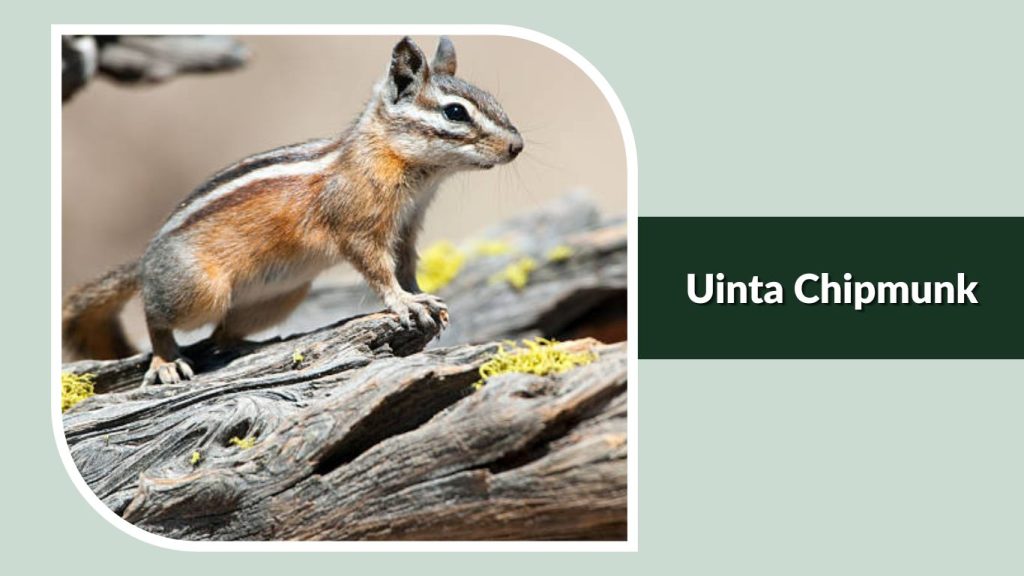
The Uinta Chipmunk is a small mountain chipmunk found in parts of the western United States. It has a striped body, soft earthy colors, and an active nature. This species is commonly connected with forests, rocky slopes, and highland areas where food and shelter are available.
Identification
- Small chipmunk with a slim body
- Grayish-brown or reddish-brown upper fur
- Dark stripes along the back
- Pale stripes between the dark lines
- Light-colored belly
- Rounded ears and bright eyes
- Bushy tail with darker edges
Habitat
Uinta Chipmunks usually live in mountain forests, rocky hillsides, and brushy woodland edges. They are often found in areas with pine, fir, spruce, or aspen trees. Rocks, logs, shrubs, and underground burrows are important because they provide shelter from predators and harsh weather.
Diet
The Uinta Chipmunk feeds on seeds, nuts, berries, fruits, fungi, insects, and green vegetation. It spends active months gathering food and may store some of it underground. These stored supplies help it survive when cold weather reduces fresh food sources.
Behavior
Uinta Chipmunks are daytime animals and are often seen moving quickly across rocks, logs, and forest floors. They stay alert for predators such as hawks, snakes, and foxes. When threatened, they escape into burrows or thick cover. They usually live alone outside the breeding season.
20. Yellow-cheeked Chipmunk
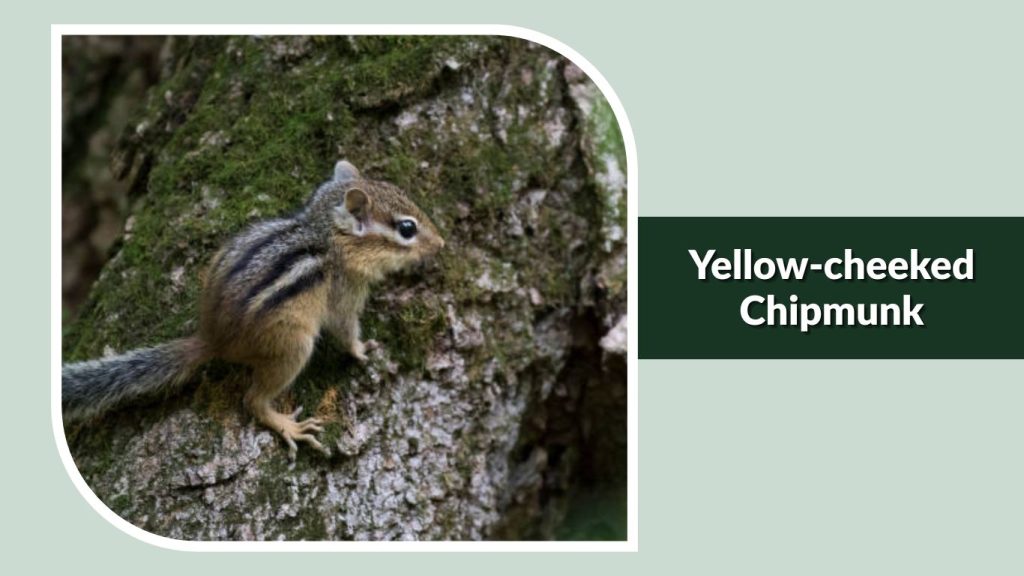
The Yellow-cheeked Chipmunk is a small chipmunk species known for the yellowish coloring on its cheeks. It is found mainly in parts of California and is associated with forested and brushy habitats. This chipmunk is active during the day and often stays close to cover for protection.
Identification
- Small chipmunk with yellowish cheek patches
- Brownish upper fur with dark stripes
- Pale stripes along the face and body
- Light-colored underside
- Short rounded ears
- Bushy tail with darker shading
- Quick and alert movement
Habitat
Yellow-cheeked Chipmunks usually live in forests, brushlands, chaparral, and woodland edges. They prefer areas with shrubs, logs, rocks, and thick ground cover. These features help them avoid predators and provide safe places for nesting, resting, and storing food.
Diet
The Yellow-cheeked Chipmunk eats seeds, nuts, berries, fruits, fungi, insects, and soft plant material. It searches for food mainly on the ground, often near shrubs or fallen branches. Like many chipmunks, it can carry food in its cheek pouches and store it for later.
Behavior
Yellow-cheeked Chipmunks are active in daylight and are usually cautious around open areas. They move quickly through brush and forest cover. When alarmed, they may give sharp calls before hiding in burrows, logs, or dense plants. They are generally solitary except during mating periods.
21. Yellow-pine Chipmunk
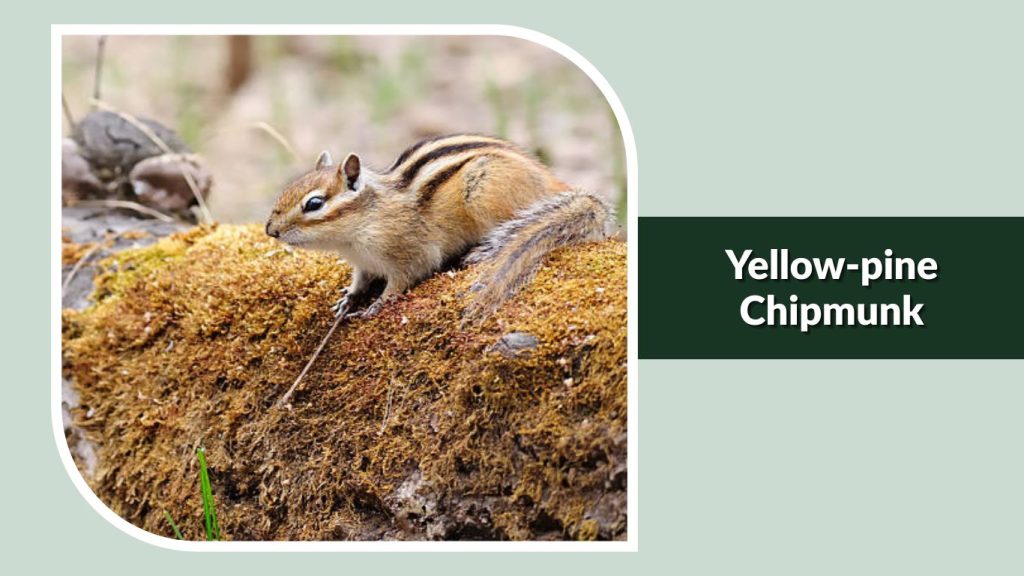
The Yellow-pine Chipmunk is a small and lively chipmunk found in western North America. It is often linked with pine forests and dry woodland habitats. This species has a striped back, warm brown coloring, and a quick movement style that helps it avoid predators.
Identification
- Small chipmunk with a narrow body
- Brownish or yellowish-brown upper fur
- Dark stripes running along the back
- Pale stripes on the face and sides
- Light belly
- Small rounded ears
- Bushy tail with darker edges
Habitat
Yellow-pine Chipmunks commonly live in pine forests, open woodlands, brushy slopes, and rocky areas. They often use logs, stumps, shrubs, and burrows for shelter. Their habitat usually includes enough seeds, insects, and plant material to support them through the active season.
Diet
The Yellow-pine Chipmunk eats seeds, nuts, berries, fruits, fungi, insects, and green plant parts. Pine seeds can be an important food source in some areas. It gathers food during warmer months and may store supplies in hidden spaces for later use.
Behavior
Yellow-pine Chipmunks are active during the day and spend much of their time searching for food. They are fast and alert, often running between cover spots. When threatened, they hide in burrows, logs, or rock cracks. They are mostly solitary and may defend feeding areas.
22. Buller’s Chipmunk
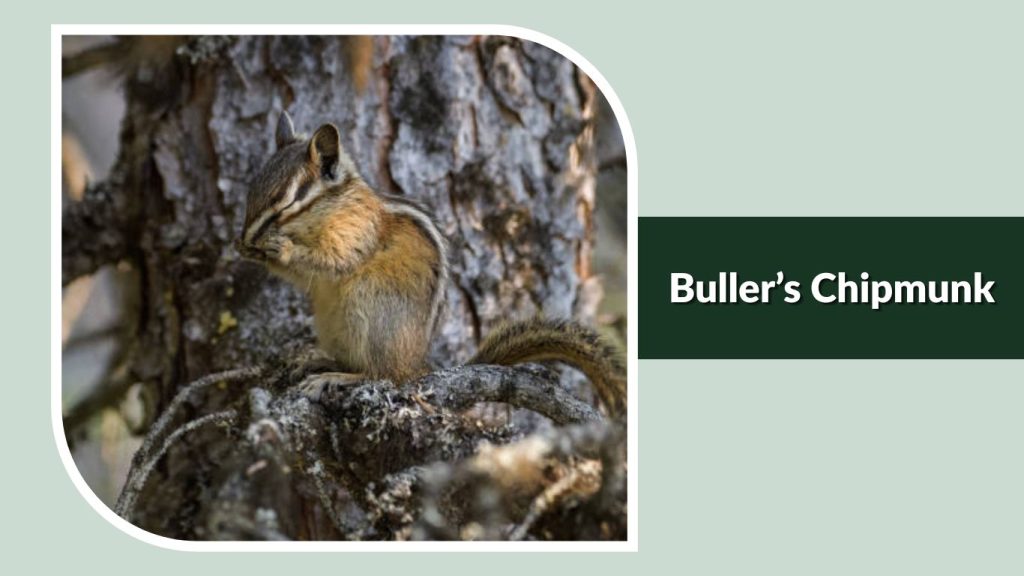
Buller’s Chipmunk is a small chipmunk species found in Mexico. It has a striped body, earthy fur color, and quick movements like other chipmunks. This species is usually connected with forested and rocky areas where it can find seeds, fruits, insects, and safe hiding places.
Identification
- Small chipmunk with a compact body
- Brownish-gray fur on the upper body
- Dark stripes running along the back
- Pale stripes between the darker lines
- Light-colored underside
- Short rounded ears
- Bushy tail with darker shading
Habitat
Buller’s Chipmunks usually live in mountain forests, wooded slopes, and rocky areas. They prefer places with trees, shrubs, fallen branches, and natural cover. These habitats give them protection from predators and provide nesting spaces. Forest floors with seeds, fruits, and insects are important for their daily survival.
Diet
The Buller’s Chipmunk eats seeds, nuts, fruits, berries, insects, fungi, and soft plant material. It searches for food mainly on the ground but may also climb over logs and low plants. Like many chipmunks, it can carry food in its cheek pouches and store some for later use.
Behavior
Buller’s Chipmunks are active during the day and spend much of their time foraging. They are alert and usually stay close to cover. When disturbed, they quickly escape into burrows, rocks, or thick vegetation. They are mostly solitary and depend on speed, camouflage, and hiding places for safety.
23. Siberian Chipmunk
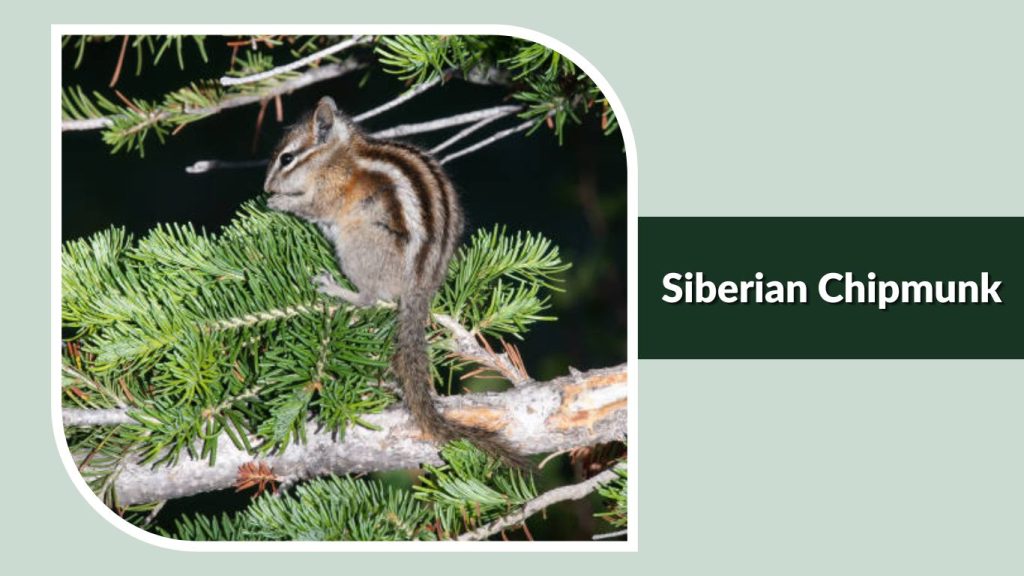
The Siberian Chipmunk is a small striped chipmunk native to northern Asia and parts of eastern Europe. It is known for its neat body stripes, active behavior, and ability to live in cold forest regions. This chipmunk often stays near trees, shrubs, and ground cover for safety.
Identification
- Small chipmunk with a striped back
- Brownish or yellowish-brown upper fur
- Five dark stripes along the back
- Pale stripes between the dark lines
- Light-colored belly
- Small rounded ears
- Bushy tail with darker edges
Habitat
Siberian Chipmunks commonly live in forests, woodland edges, shrublands, and rocky areas. They are often found in coniferous and mixed forests where seeds, berries, and shelter are available. Burrows, tree roots, logs, and dense plants provide protection from predators and harsh weather.
Diet
The Siberian Chipmunk eats seeds, nuts, berries, grains, mushrooms, insects, and green plant parts. It gathers food during warmer months and stores it in underground chambers. These stored supplies are important because cold seasons can make fresh food difficult to find.
Behavior
Siberian Chipmunks are active during the day and spend much time collecting food. They are quick, cautious, and good at disappearing into cover when threatened. In colder regions, they stay in burrows for long periods during winter, waking at times to feed on stored food.
24. Long-eared Chipmunk
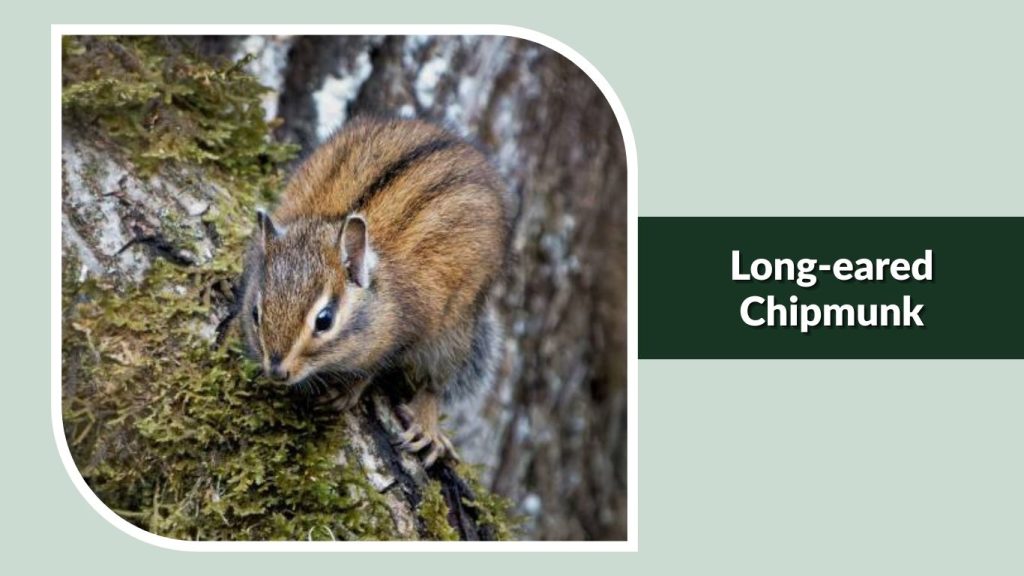
The Long-eared Chipmunk is a small chipmunk species known for its relatively long ears compared with many other chipmunks. It has a striped body, soft brownish fur, and a lively nature. This chipmunk is usually found in forested areas where trees, logs, and shrubs offer cover.
Identification
- Small chipmunk with noticeably longer ears
- Brownish-gray or reddish-brown fur
- Dark stripes along the back
- Pale stripes on the face and sides
- Light-colored belly
- Slim body shape
- Bushy tail with darker shading
Habitat
Long-eared Chipmunks usually live in coniferous forests, mixed woodlands, brushy slopes, and rocky forest edges. They prefer habitats with logs, stumps, shrubs, and thick ground cover. These features help them hide from predators and provide suitable places for nesting and food storage.
Diet
The Long-eared Chipmunk feeds on seeds, nuts, berries, fruits, fungi, insects, and tender plant material. It forages mainly on the ground, often near trees or fallen logs. During food-rich seasons, it may store extra seeds and nuts in hidden spaces for later use.
Behavior
Long-eared Chipmunks are active during daylight hours and are usually cautious in open areas. They move quickly through forest cover and often stop to watch for danger. When alarmed, they escape into burrows, logs, or thick vegetation. They are generally solitary except during the breeding season.
25. Allen’s Chipmunk
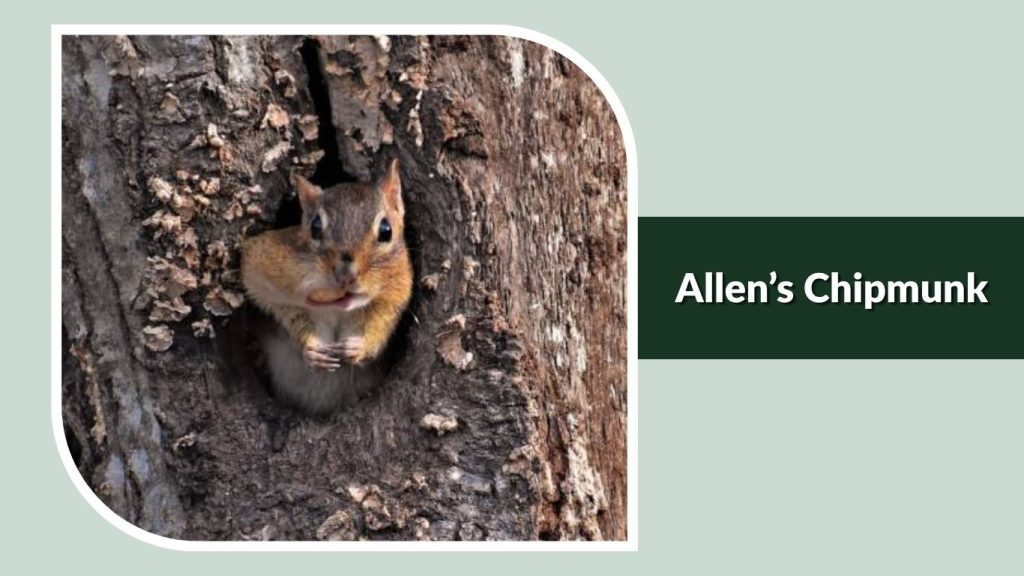
Allen’s Chipmunk is a small striped chipmunk found in parts of western North America. It has a neat striped pattern, warm brown fur, and quick movements. This species usually lives in woodland, brushy, and rocky habitats where it can find food, shelter, and safe nesting places.
Identification
- Small chipmunk with a compact body
- Brownish or reddish-brown upper fur
- Dark stripes running along the back
- Pale stripes between the dark markings
- Light-colored underside
- Small rounded ears
- Bushy tail used for balance
Habitat
Allen’s Chipmunks are commonly found in forests, woodland edges, chaparral, brushlands, and rocky slopes. They prefer areas with shrubs, logs, rocks, and leaf litter. These natural features provide hiding places from predators and useful spaces for nesting or storing food.
Diet
The Allen’s Chipmunk eats seeds, nuts, acorns, berries, fruits, fungi, insects, and soft plant material. It uses its cheek pouches to carry food from feeding areas to safer storage spots. Stored food can help it survive during colder or drier periods when food is limited.
Behavior
Allen’s Chipmunks are active during the day and spend much of their time searching for food. They are alert and usually stay close to cover. When threatened, they run quickly into burrows, rocks, logs, or thick plants. They are mostly solitary and may defend small feeding areas.