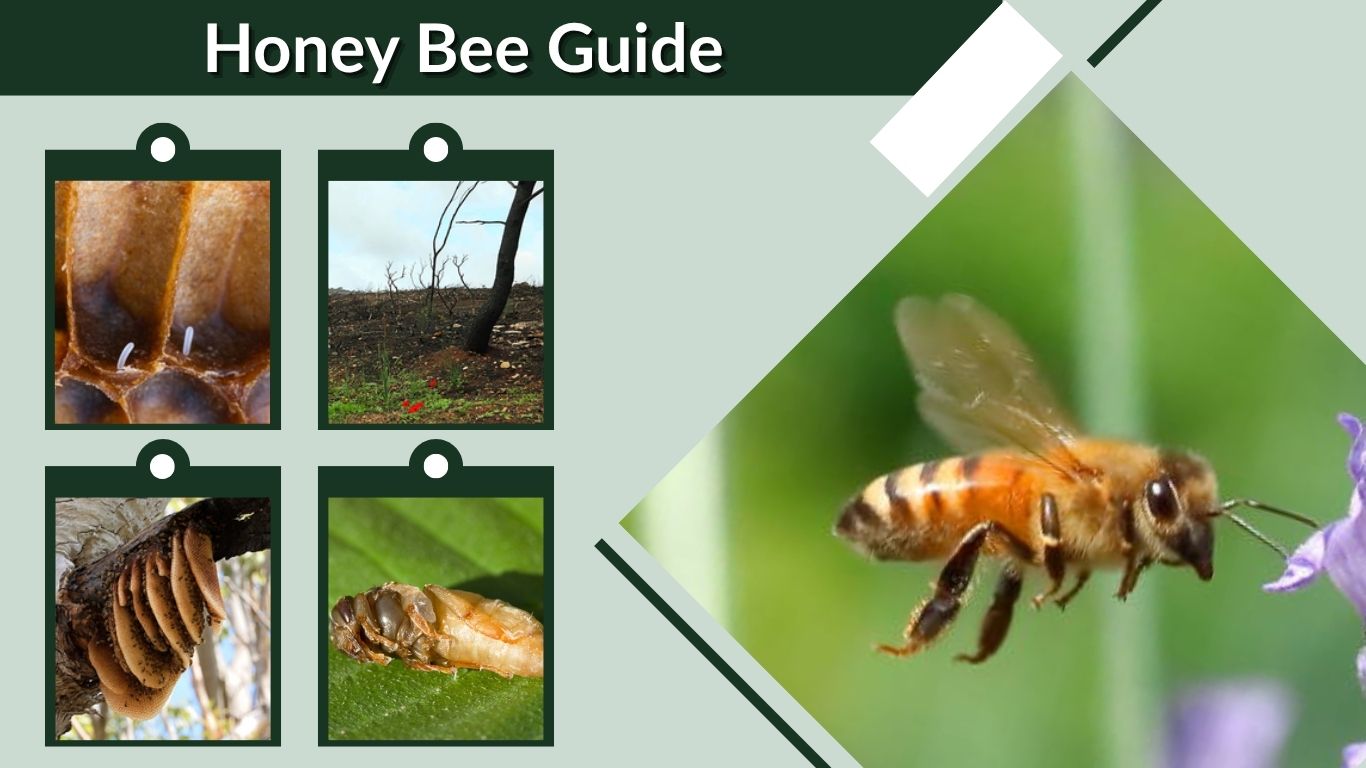
Honey bees are among the most important insects in the world because they help pollinate plants, flowers, fruits, and crops. These social insects are best known for producing honey and living in highly organized colonies with queens, workers, and drones. Beyond honey production, honey bees play a major role in supporting ecosystems and global agriculture.
Millions of plants depend on pollination, and honey bees are among the most efficient pollinators in nature. Their complex hive structure, communication methods, and teamwork make them one of the most fascinating insect species. In this guide, you’ll learn about honey bee anatomy, hive roles, behavior, honey production, and why these insects are so important.
What Is a Honey Bee?
Honey bees are social flying insects belonging to the genus Apis. They live together in colonies and work cooperatively to gather food, raise young, and defend the hive. Honey bees are famous for producing honey from flower nectar and storing it inside wax honeycombs.
Scientific Classification
The most common honey bee species worldwide is Apis mellifera, also called the western honey bee. It belongs to the insect order Hymenoptera, which also includes ants and wasps.
There are several species of honey bees found in different regions of the world, but Apis mellifera is the primary species used in beekeeping and agriculture.
Honey bees are classified as social insects because they live in large colonies with specialized roles and cooperative behavior.
Key Characteristics
Honey bees have several features that make them easy to recognize:
- Golden-brown fuzzy bodies
- Black abdominal stripes
- Transparent wings
- Pollen-carrying hind legs
- Branched body hairs for collecting pollen
Their fuzzy bodies help trap pollen grains while visiting flowers. Honey bees also possess specialized structures on their legs called pollen baskets that carry pollen back to the hive. Unlike wasps, honey bees usually appear thicker and hairier.
Honey Bee Anatomy
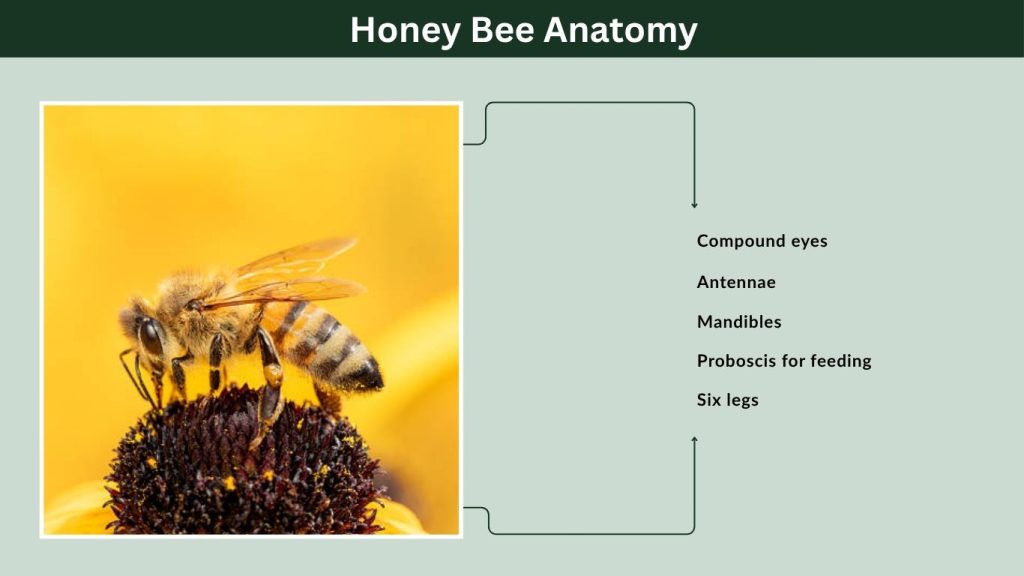
Honey bees have highly specialized body structures that help them collect nectar, communicate, fly efficiently, and survive within colonies.
Head and Antennae
The honey bee’s head contains important sensory organs used for navigation and communication.
Key structures include:
- Compound eyes
- Antennae
- Mandibles
- Proboscis for feeding
The large compound eyes help bees detect movement, sunlight, and flower patterns. Antennae are especially important because they allow bees to smell flowers, recognize hive members, and detect pheromones.
Honey bees also use a long tongue-like structure called a proboscis to drink nectar from flowers.
Thorax and Wings
The thorax is the middle section of the bee’s body and contains the muscles responsible for movement and flight.
Attached to the thorax are:
- Six legs
- Two pairs of wings
- Powerful flight muscles
Honey bees can beat their wings extremely rapidly, allowing them to hover, maneuver, and travel long distances while searching for nectar and pollen.
The hind legs contain pollen baskets used to transport collected pollen back to the hive.
Abdomen and Stinger
The abdomen contains several important organs and structures related to digestion, defense, and honey production.
Important abdominal features include:
- Honey stomach
- Wax-producing glands
- Digestive organs
- Stinger in female bees
Worker bees possess barbed stingers used mainly for colony defense. Unlike many other stinging insects, a honey bee usually dies after stinging because the barbed stinger becomes lodged in skin. The abdomen also stores nectar collected from flowers before it is converted into honey.
Types of Honey Bees in a Hive
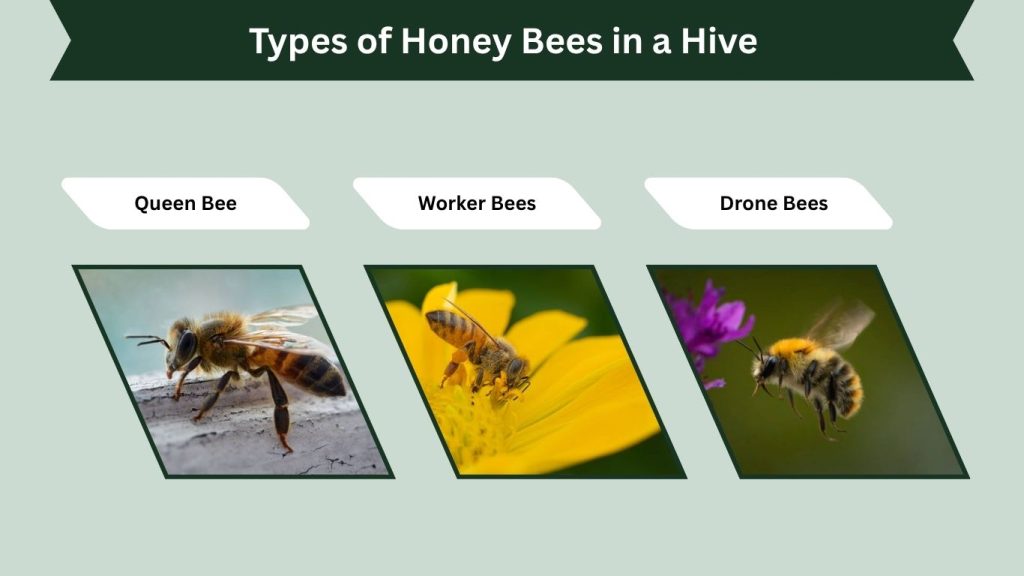
A honey bee colony contains three main types of bees, each with specialized responsibilities that help the hive function efficiently.
Queen Bee
The queen bee is the reproductive center of the colony and is usually the only fertile female in the hive. Her primary responsibility is laying eggs to maintain the colony population.
Important queen bee characteristics include:
- Largest bee in the hive
- Long abdomen
- Egg-laying specialist
- Produces pheromones controlling colony behavior
A healthy queen may lay thousands of eggs per day during peak seasons. She also releases pheromones that help organize colony activity and maintain social structure.
Despite her importance, the queen does not rule the hive consciously. Instead, colony behavior depends on cooperation among thousands of worker bees.
Worker Bees
Worker bees are female bees responsible for nearly all daily tasks within the hive. They are the most numerous bees in the colony and perform different jobs depending on age.
Worker bee responsibilities include:
- Collecting nectar and pollen
- Feeding larvae
- Cleaning hive cells
- Producing wax
- Guarding the hive
- Regulating hive temperature
Young workers usually remain inside the hive caring for brood and cleaning cells, while older workers become foragers that gather food outside.
Worker bees are highly organized and cooperate constantly to maintain colony survival.
Drone Bees
Drones are male honey bees whose primary role is mating with queens from other colonies.
Drone characteristics include:
- Larger eyes
- Thicker bodies
- No stinger
- Cannot collect pollen or nectar
Drones do not participate in hive maintenance, defense, or food collection. Their main purpose is reproduction during mating flights.
After mating, drones die naturally. Drones that remain in the hive during winter are often removed by worker bees because they consume resources without contributing to colony survival.
Honey Bee Life Cycle
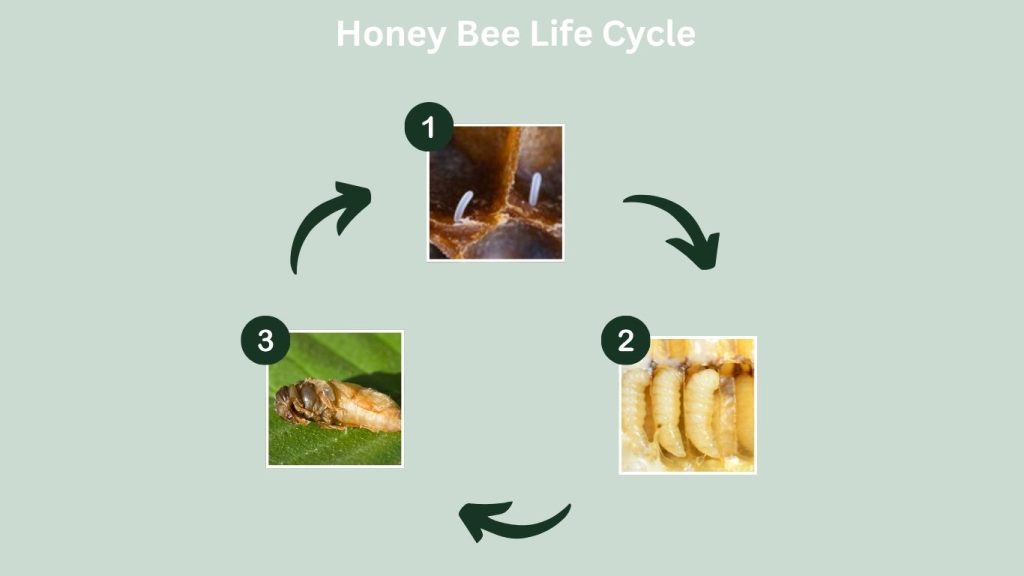
Honey bees undergo complete metamorphosis with four major developmental stages: egg, larva, pupa, and adult bee.
Egg Stage
The life cycle begins when the queen lays tiny white eggs inside wax honeycomb cells.
Each egg is carefully placed into an individual cell. Worker bees monitor and care for the developing eggs continuously. Eggs usually hatch within a few days into larvae.
Larva Stage
After hatching, the larva resembles a small white worm-like insect. During this stage, worker bees feed the larvae constantly with nutrient-rich food.
Young larvae grow rapidly and molt several times before entering the next stage of development.
Worker bee larvae, drone larvae, and queen larvae receive slightly different diets that determine their future roles within the colony.
Pupa Stage
Once fully grown, the larva enters the pupal stage inside a capped honeycomb cell. During this stage, major transformation occurs as the body develops wings, legs, eyes, and adult features.
The pupa gradually changes into a fully developed adult honey bee while protected inside the sealed cell. This transformation stage is critical because the insect reorganizes completely into its adult form.
Honey Bee Hive Structure
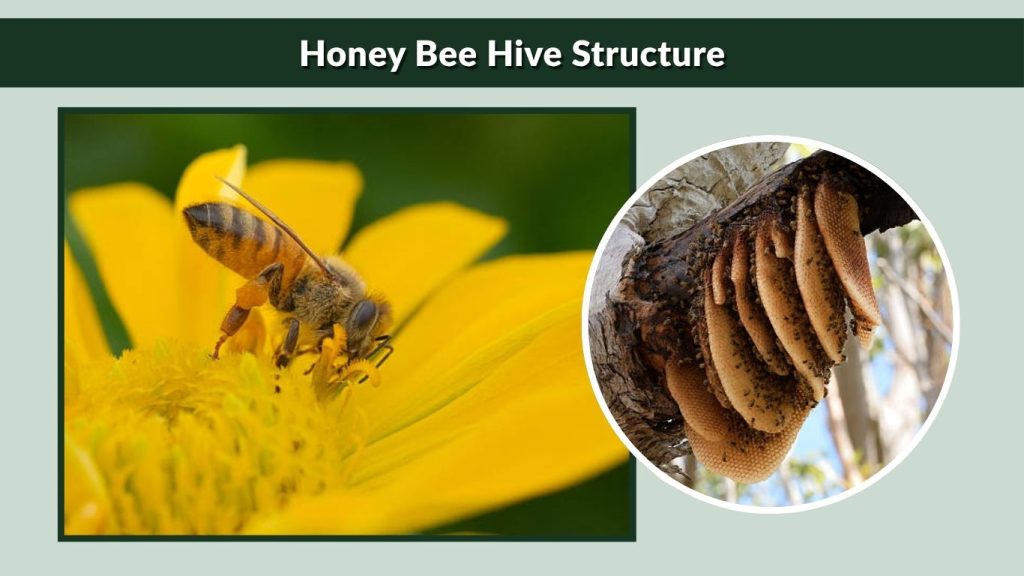
Honey bee colonies live inside organized hives made primarily of wax honeycomb structures. These hives are carefully designed to maximize storage space, brood care, and colony efficiency.
Honeycomb Structure
Honeycomb consists of tightly packed hexagonal wax cells built by worker bees using wax produced from glands on their abdomen.
The hexagonal shape is highly efficient because it:
- Maximizes storage space
- Uses less wax material
- Provides strong structural support
- Allows compact organization
Honeycomb cells are used for storing honey, pollen, and developing brood.
The precise geometry of honeycomb is considered one of nature’s most remarkable engineering achievements.
Areas Inside the Hive
Different sections of the hive serve different functions depending on colony needs.
Major hive areas include:
- Brood nest for eggs and larvae
- Honey storage zones
- Pollen storage cells
- Queen activity areas
The brood nest is usually located near the center where temperatures remain stable for developing larvae. Honey and pollen are stored nearby to provide easy access for feeding young bees.
Worker bees constantly maintain hive cleanliness, repair damaged comb, and regulate temperature throughout the colony.
How Honey Bees Make Honey
Honey production is one of the most remarkable behaviors in the insect world. Honey bees collect nectar from flowers, process it inside their bodies, and store it inside honeycomb cells where it eventually becomes honey.
Nectar Collection
Worker bees leave the hive to search for flowers rich in nectar. Using their long proboscis, they suck nectar from blossoms and store it in a special organ called the honey stomach.
During foraging trips, bees may visit hundreds of flowers before returning to the hive. While collecting nectar, they also transfer pollen between plants, helping pollinate crops and wild flowers.
Important nectar collection features include:
- Long-distance flower searching
- Specialized honey stomach
- Pollen transfer during feeding
- Communication with other workers about food sources
Once a worker bee returns to the hive, the nectar is passed to other worker bees for processing.
Honey Production Process
Inside the hive, worker bees repeatedly pass nectar between one another. During this process, enzymes break down complex sugars into simpler sugars that form honey.
The bees then place the processed liquid into honeycomb cells. At first, the liquid still contains a high amount of water.
To thicken the honey, worker bees fan their wings rapidly to evaporate excess moisture. Once the honey reaches the proper consistency, the cell is sealed with a wax cap for storage.
This process allows honey to remain stable and edible for extremely long periods.
Why Bees Make Honey
Honey acts as the colony’s long-term food supply, especially during winter or periods when flowers are unavailable.
The stored honey provides:
- Energy for adult bees
- Food during cold weather
- Nutrients during shortages
- Survival support for the colony
Without honey reserves, colonies would struggle to survive seasons with limited nectar availability.
What Do Honey Bees Eat?
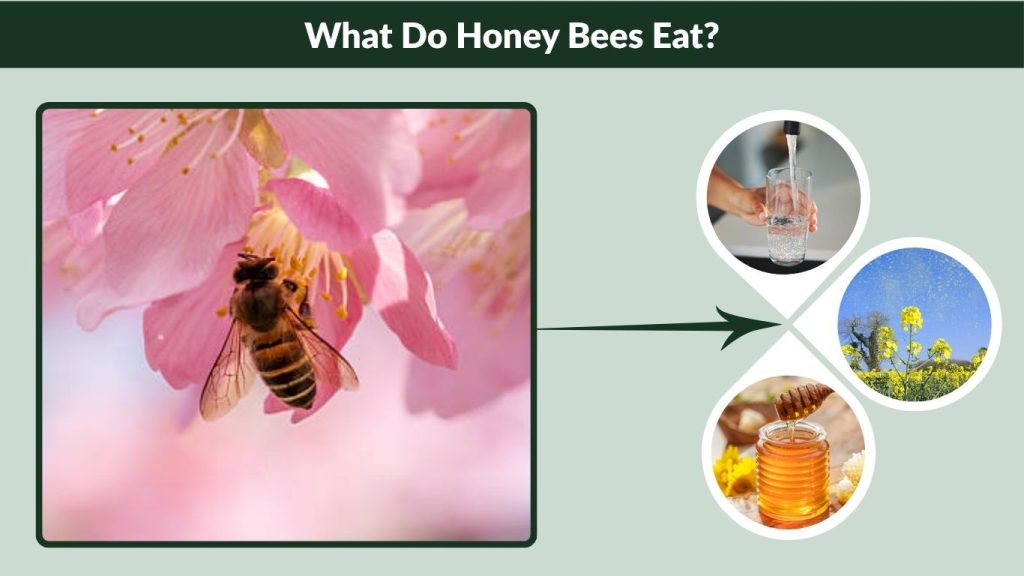
Honey bees depend heavily on plant-based food sources for survival and colony growth.
- Nectar for carbohydrates and energy
- Pollen for protein and nutrients
- Water for cooling and hydration
- Honey during winter months
- Royal jelly for developing larvae and queens
Nectar supplies energy because it contains natural sugars. Pollen provides protein, vitamins, and minerals needed for larval growth and worker bee health.
Worker bees also collect water to help regulate hive temperature during hot weather.
Royal jelly is a nutrient-rich substance produced by worker bees and fed to all young larvae during early development. Queen larvae continue receiving royal jelly throughout development, allowing them to become fertile queens.
Honey Bee Behavior and Communication
Honey bees use sophisticated communication methods that allow thousands of individuals to cooperate efficiently within a colony.
Waggle Dance
One of the most famous honey bee behaviors is the waggle dance. Worker bees perform this movement inside the hive to communicate the location of food sources.
The dance provides information about:
- Direction of flowers
- Distance to nectar sources
- Food quality
The angle and duration of the dance help other workers locate flowers accurately, even when food sources are far from the hive.
This communication system is considered one of the most advanced examples of symbolic communication in insects.
Pheromone Communication
Honey bees also communicate through chemical signals called pheromones.
Different pheromones help regulate:
- Queen recognition
- Colony organization
- Alarm responses
- Worker coordination
When danger threatens the hive, guard bees release alarm pheromones that alert nearby workers to defend the colony. Queen pheromones help maintain colony stability and influence worker behavior.
Swarming Behavior
Swarming is the natural process through which honey bee colonies reproduce and expand.
During swarming:
- The old queen leaves with part of the colony
- Thousands of workers follow her
- A new hive location is selected
- Remaining bees raise a replacement queen
Swarming usually occurs during warm seasons when colonies become overcrowded or highly productive.
Although large swarms may appear intimidating, swarming bees are generally less aggressive because they are focused on relocating rather than defending a hive.
Honey Bee vs Bumble Bee
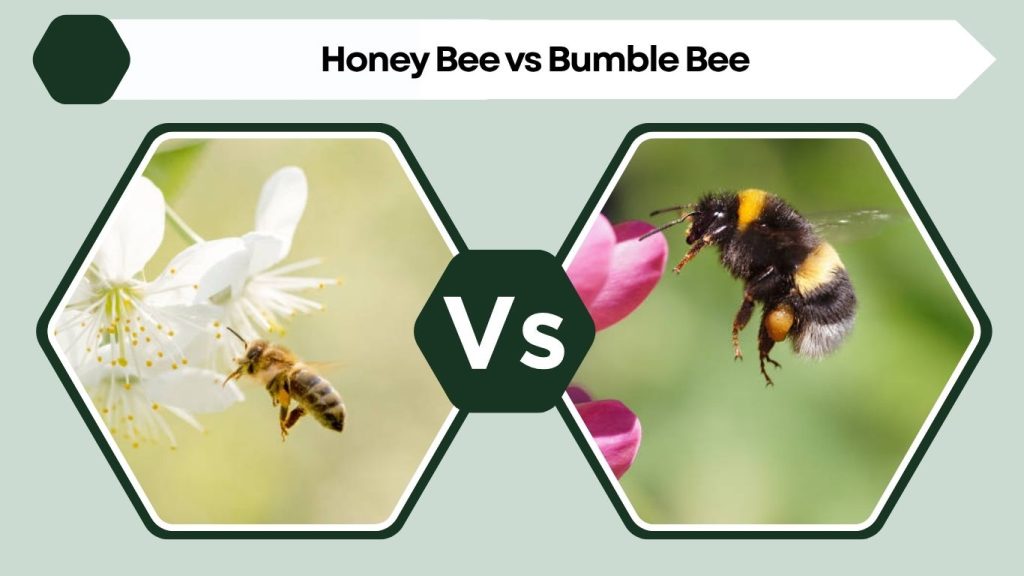
Honey bees and bumble bees are often confused because both are fuzzy pollinators. However, they differ in body shape, colony size, and behavior.
| Feature | Honey Bee | Bumble Bee |
| Body Shape | Slimmer | Rounder and fuzzier |
| Hive Size | Large colonies | Smaller colonies |
| Honey Production | Produces excess honey | Produces little honey |
| Temperament | Usually calm | Generally calm |
| Nest Location | Hives and cavities | Underground or sheltered nests |
Bumble bees appear larger and fuzzier than honey bees. They also form much smaller colonies and produce only small amounts of honey.
Honey bees are more specialized for long-term honey storage and large social colonies.
Honey Bee vs Wasp
Honey bees and wasps may appear similar at first glance, but they differ greatly in body structure, diet, and behavior.
| Feature | Honey Bee | Wasp |
| Body Texture | Fuzzy | Smooth |
| Waist Shape | Thick | Narrow |
| Diet | Nectar and pollen | Insects and sugary foods |
| Aggression | Defensive only | Often more aggressive |
| Honey Production | Yes | No |
Wasps usually have smoother bodies and more defined narrow waists. Unlike honey bees, many wasp species are predators that hunt insects.Honey bees are generally less aggressive and sting mainly when defending their hive.
Why Honey Bees Are Important
Honey bees play a major role in maintaining ecosystems and supporting agriculture through pollination.
Pollination Benefits
As bees travel between flowers collecting nectar and pollen, they transfer pollen grains from one flower to another.
This pollination process helps plants:
- Produce fruits and seeds
- Reproduce successfully
- Maintain biodiversity
- Support wildlife food chains
Many flowering plants rely heavily on insect pollinators like honey bees.
Agricultural Importance
Honey bees are essential for many important crops grown worldwide.
Crops benefiting from bee pollination include:
- Apples
- Almonds
- Blueberries
- Cucumbers
- Pumpkins
Without pollinators, food production would decrease significantly for many fruits, vegetables, and nuts.
The economic value of honey bee pollination is enormous because agriculture depends heavily on healthy pollinator populations.
Common Honey Bee Predators
Honey bees face many predators and threats in both natural and managed environments.
- Birds
- Spiders
- Wasps and hornets
- Bears
- Varroa mites
Birds and spiders may capture individual bees during foraging trips, while hornets and wasps sometimes attack entire colonies.
Varroa mites are among the most serious modern threats because they weaken bees and spread diseases within hives.
Threats to Honey Bees
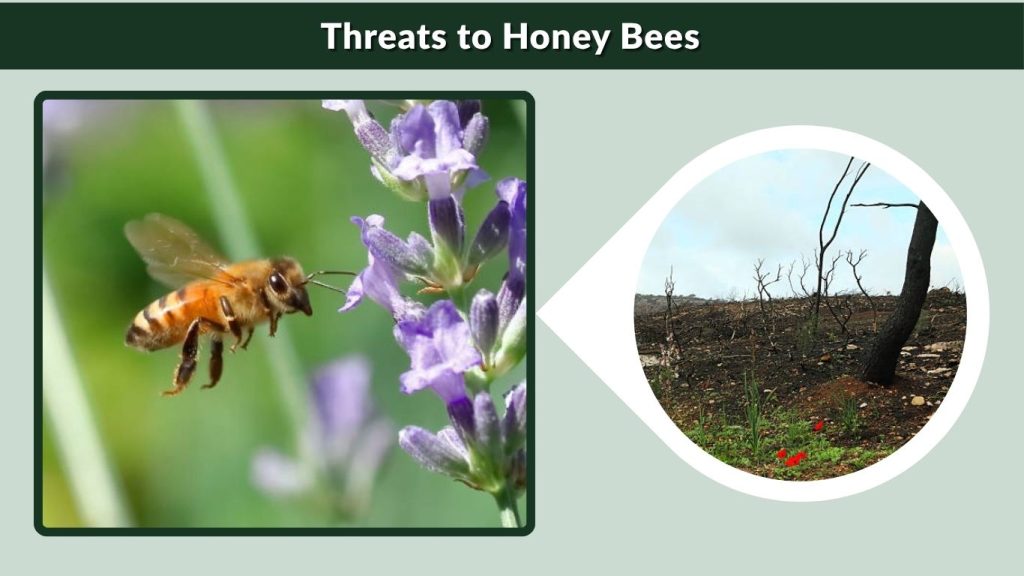
Honey bee populations face increasing environmental challenges that affect colony survival worldwide.
Pesticides
Chemical pesticides can harm bees directly or interfere with navigation and communication abilities.
Exposure may lead to:
- Disorientation
- Reduced foraging success
- Weakened immune systems
- Colony decline
Reducing harmful pesticide use is considered important for protecting pollinator populations.
Habitat Loss
Urban development and agricultural changes have reduced the natural flowering habitats available to bees.
Fewer flowering plants mean:
- Less nectar availability
- Reduced pollen sources
- Fewer nesting opportunities
Habitat loss can make it harder for colonies to gather enough food throughout the year.
Parasites and Diseases
Honey bees also face numerous biological threats including parasites, viruses, and fungal infections.
Serious threats include:
- Varroa mites
- Nosema fungal infections
- Viral diseases
- Hive beetles
These problems can weaken colonies significantly, especially when combined with environmental stress.
How to Attract Honey Bees to Your Garden
Creating a bee-friendly garden can help support local pollinators and improve pollination for flowers and vegetables.
- Plant native flowering plants
- Grow nectar-rich flowers
- Avoid harmful pesticides
- Provide shallow water sources
- Maintain blooming plants throughout seasons
Gardens containing diverse flowers with continuous blooming periods provide bees with reliable food sources across much of the year.
Interesting Facts About Honey Bees
Honey bees possess many remarkable adaptations and social behaviors.
- Bees can recognize human faces
- Worker bees are female
- Honey never spoils naturally
- Bees communicate through dancing
- One hive may contain tens of thousands of bees
A single worker bee may visit thousands of flowers during its lifetime while producing only a small amount of honey. Despite their small size, honey bees are among the most ecologically important insects on Earth.
FAQs
What is a honey bee?
A honey bee is a social pollinating insect known for producing honey and living in organized colonies.
Do all honey bees make honey?
Worker bees help produce honey, but the entire colony contributes to storing and protecting it for survival.
What do honey bees eat?
Honey bees primarily eat nectar, pollen, honey, and water depending on the colony’s needs.
How long do honey bees live?
Worker bees usually live several weeks, while queen bees may survive for several years.
Why are honey bees important?
Honey bees are vital pollinators that help plants reproduce and support food production worldwide.