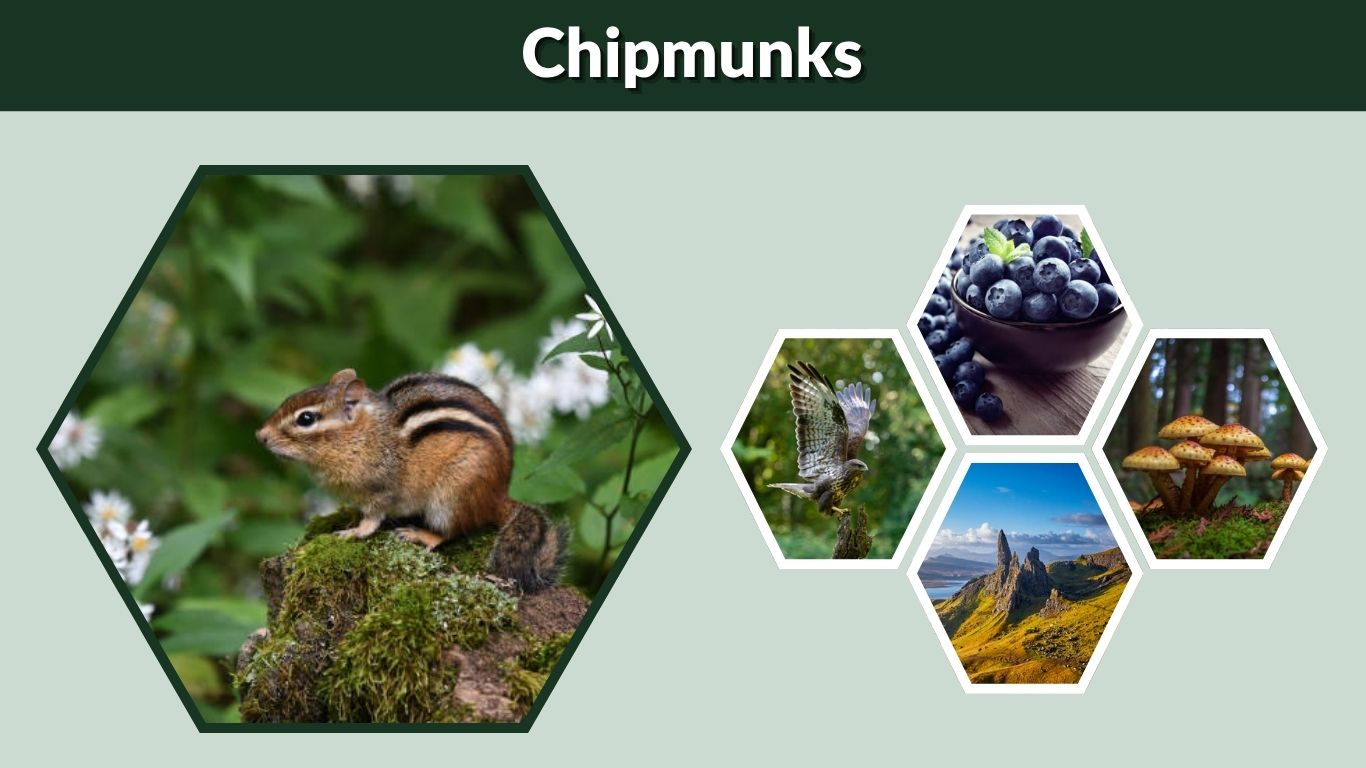
Chipmunks are small, striped rodents of the squirrel family, native primarily to North America and parts of Asia. Known for their energetic movements and cheek pouches for food storage, they play an essential role in forest ecosystems, dispersing seeds and aiding soil health. Their lively behavior, distinctive stripes, and curious nature make them fascinating both to wildlife observers and to those who encounter them in gardens and parks.
This article explores chipmunk species, physical characteristics, habitats, behaviors, diet, and their interactions with humans, providing a detailed guide to understanding these remarkable creatures.
Classification and Species Overview
Chipmunks belong to the genus Tamias, comprising several species divided between North America and Asia. They are closely related to squirrels but are distinguished by their small size and distinct striped patterns. Understanding species variation helps identify them and appreciate their ecological roles.
Notable Species
- Eastern Chipmunk (Tamias striatus) – Most common in eastern North America, inhabiting forests and suburban areas.
- Siberian Chipmunk (Eutamias sibiricus) – Found in northeastern Asia, often kept as a small pet.
- Least Chipmunk (Neotamias minimus) – Smallest North American species, widely distributed in Canada and the northern U.S.
- Red-tailed Chipmunk (Neotamias ruficaudus) – Recognizable by its reddish tail, found in mountainous regions of the western U.S.
Chipmunks Physical Characteristics
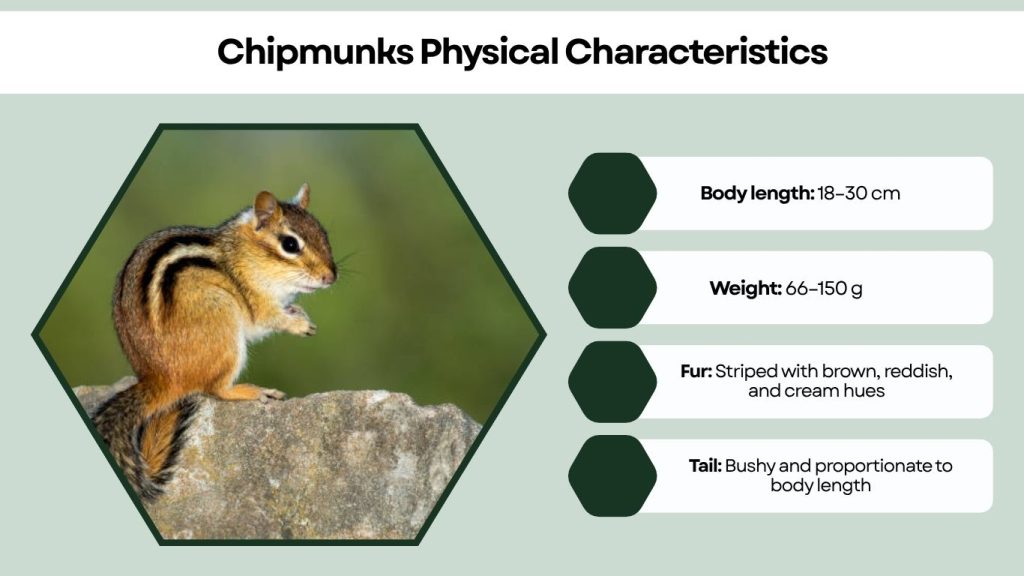
Chipmunks are small rodents, typically 18–30 cm long including the tail, and weighing 66–150 grams. Their defining feature is the pattern of dark and light stripes running down their backs. Large, dark eyes and rounded ears give them keen vision and hearing, helping them detect predators. Their long tails assist in balance while climbing and running across uneven terrain.
Identification Features
- Body length: 18–30 cm
- Weight: 66–150 g
- Fur: Striped with brown, reddish, and cream hues
- Tail: Bushy and proportionate to body length
- Eyes and ears: Large, adapted for predator detection
Chipmunks Habitat and Distribution
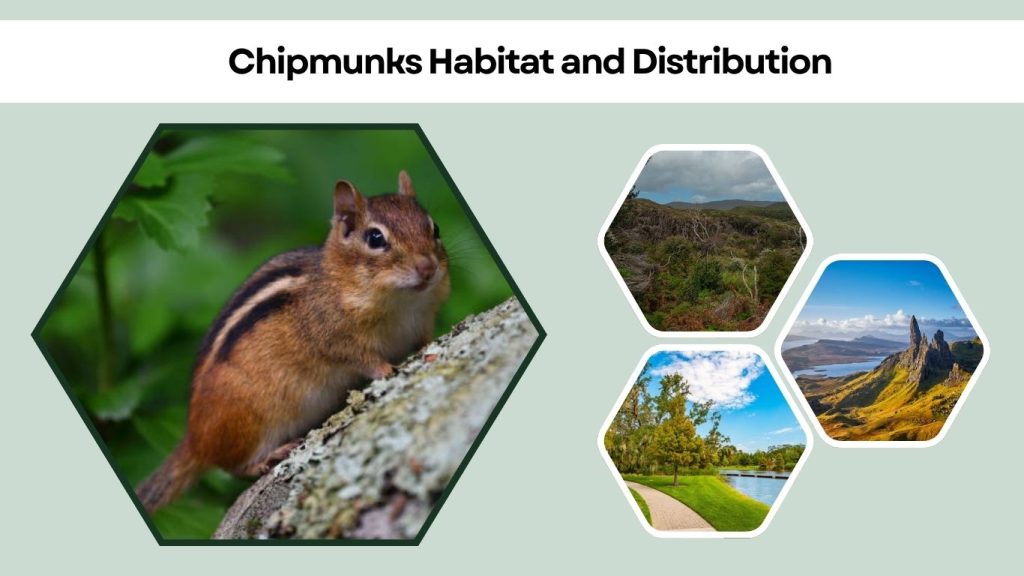
Chipmunks thrive in diverse habitats ranging from dense forests to urban parks. They prefer areas with abundant cover, such as shrubs, rocky outcrops, and fallen logs, which provide protection from predators. Underground burrows allow them to store food and shelter from harsh weather, making them highly adaptable to both natural and human-altered environments.
Common Habitats
- Deciduous and mixed forests
- Rocky hillsides and outcrops
- Gardens, parks, and suburban yards
- Underground burrows with multiple chambers
Chipmunks Behavior and Social Structure
Chipmunks are primarily diurnal, being active during daylight hours. They are solitary but maintain overlapping territories, often marked with scent glands. Their burrows are elaborate, serving as homes, food storage, and nesting sites. Vocalizations such as chirps and trills warn nearby chipmunks of predators or other dangers. These behaviors ensure survival and efficient food management.
Key Behaviors
- Diurnal activity – Most active during morning and late afternoon.
- Burrowing habits – Complex tunnels with multiple chambers.
- Vocal communication – High-pitched chirps alert others to danger.
- Territorial defense – Scent marking and defensive postures deter intruders.
Chipmunks Diet and Foraging
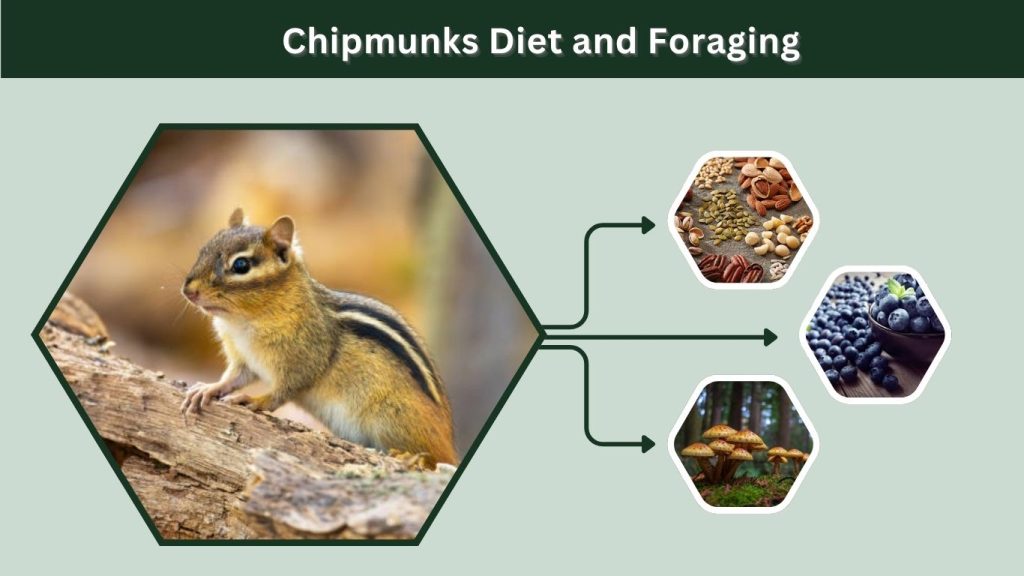
Chipmunks are omnivores with a diet varying by season. They forage on the forest floor and trees, gathering seeds, fruits, and insects. Food is often stored in cheek pouches and brought back to burrows for winter. Their foraging behavior not only sustains them but also aids in seed dispersal, benefiting the surrounding ecosystem.
Typical Foods
- Seeds and nuts – Acorns, sunflower seeds, pine nuts.
- Fruits and berries – Apples, cherries, and wild berries.
- Insects – Grasshoppers, beetles, and larvae.
- Fungi and grains – Mushrooms and small grains for nutrition.
Chipmunks Burrows and Nesting
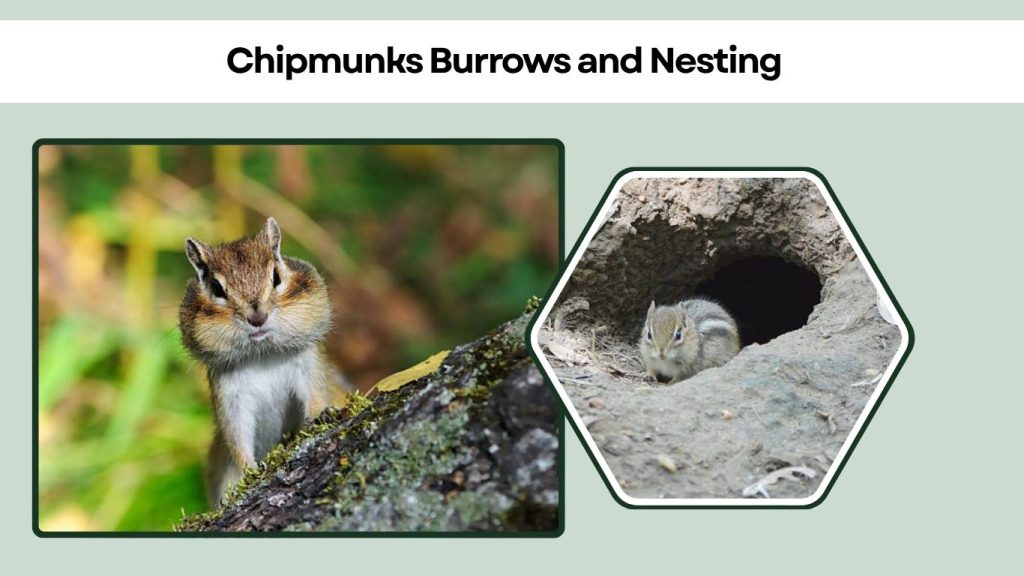
Chipmunks construct elaborate underground burrows that serve multiple purposes: protection from predators, shelter from weather, and storage of food. Burrows can be up to several meters long, with separate chambers for nesting, food, and waste. During winter, some species enter a state of torpor but do not fully hibernate like squirrels, periodically waking to eat stored food.
Burrow Structure
- Main entrance and escape tunnels
- Nest chambers lined with leaves and grass
- Food storage areas for seeds and nuts
- Seasonal modifications for winter survival
Chipmunks Reproduction and Life Cycle
Chipmunks breed primarily twice a year, in spring and late summer. Mating occurs within their territories, and males may compete for access to females. Gestation lasts about 30 days, after which the female gives birth to a litter of 2–8 pups. Young are born blind and hairless, relying entirely on the mother for warmth and nutrition. Juveniles become independent after six to eight weeks, gradually learning to forage and avoid predators.
Life Stages
- Breeding season – Spring (March–May) and late summer (July–August).
- Gestation period – Around 30 days.
- Litter size – Typically 2–8 pups.
- Juvenile development – Fully independent by 6–8 weeks.
Predators and Threats
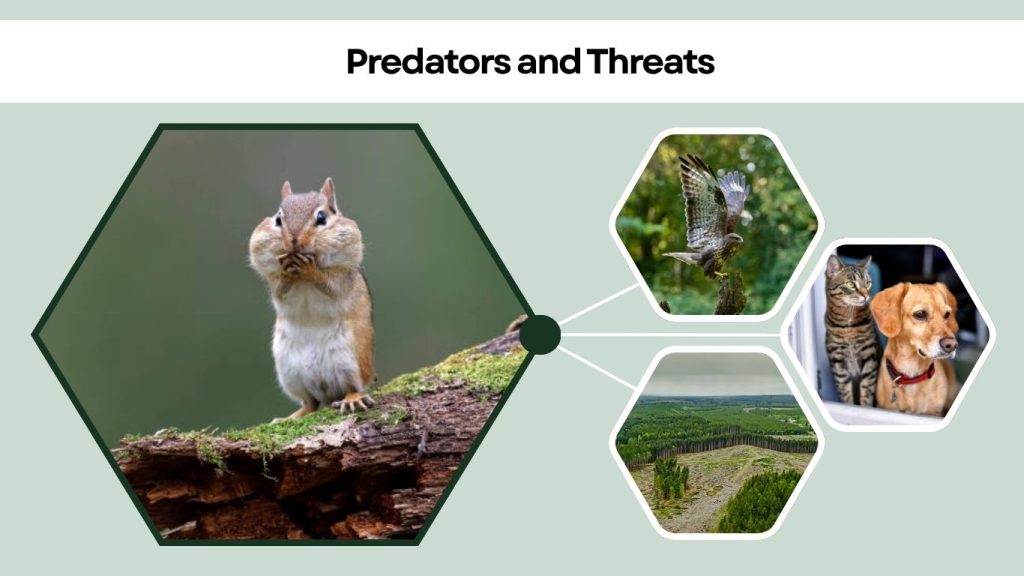
Chipmunks face many natural predators and human-induced dangers. Birds of prey such as hawks and owls hunt chipmunks during the day, while snakes, foxes, raccoons, and domestic cats can ambush them. Habitat loss due to deforestation and urban expansion poses long-term threats. Road traffic and accidental trapping in human areas also contribute to mortality.
Main Threats
- Natural predators – Hawks, owls, snakes, foxes.
- Domestic animals – Cats and dogs.
- Habitat loss – Deforestation and urbanization.
- Human-related dangers – Roadkill and garden traps.
Adaptations and Survival Strategies
Chipmunks have evolved several adaptations to survive in varied environments. Their cheek pouches allow them to transport large quantities of food quickly. Striped fur provides camouflage in forested habitats, and their agility helps escape predators. Some species enter torpor during cold months, reducing energy needs without full hibernation. These traits ensure chipmunks remain effective foragers and resilient survivors.
Survival Traits
- Cheek pouches for food storage
- Camouflaged fur with stripes
- Quick reflexes and agility
- Seasonal torpor for winter survival
Interaction with Humans
Chipmunks often coexist with humans, especially in gardens, parks, and suburban areas. While they are entertaining to watch, they can sometimes raid bird feeders or dig up bulbs, earning a reputation as minor pests. Wildlife enthusiasts enjoy observing their behavior, but it is important to avoid feeding them excessively. Chipmunks have also been featured in cartoons, books, and cultural references, further cementing their appeal.
Human Interaction
- Garden and feeder raiding
- Observation and photography by enthusiasts
- Avoid feeding to prevent dependency
- Representation in media and folklore
Conservation and Environmental Importance
Chipmunks play a vital role in ecosystems through seed dispersal and soil aeration. Although most species are currently not endangered, habitat fragmentation and urbanization can threaten local populations. Conservation efforts focus on preserving forest habitats, maintaining ecological corridors, and promoting public awareness about the species’ importance. Protecting chipmunks also benefits other forest wildlife.
Key Points
- Seed dispersal and soil aeration
- Monitoring population trends
- Mitigating habitat fragmentation
- Conservation programs and education
Fun Facts and Trivia
Chipmunks exhibit a range of fascinating behaviors that make them unique and engaging to observe.
Interesting Facts
- Can carry multiple times their body weight in food using cheek pouches
- Communicate with chirps and trills to alert others of danger
- Lifespan: 2–3 years in the wild, up to 8 years in captivity
- Popular in cartoons, movies, and children’s books
- Some species store enough food in burrows to last through winter
FAQs
Do chipmunks hibernate during winter?
Most chipmunks do not fully hibernate but enter a state of torpor, periodically waking to eat stored food. This allows them to survive cold months while conserving energy.
Are chipmunks harmful to gardens?
They can dig for bulbs or raid bird feeders, but generally, their impact is minor and does not cause significant damage.
How can you tell different chipmunk species apart?
Species are distinguished by fur color, stripe patterns, size, tail color, and geographic distribution. For example, the Eastern chipmunk has prominent dark stripes and a reddish tail.
What do chipmunks eat in urban areas?
They feed on seeds, nuts, fruits, and sometimes human food scraps. Cheek pouches allow them to store food for later use in burrows.
Are chipmunks endangered?
Most chipmunk species are not endangered, though habitat loss and urbanization can threaten local populations. Conservation efforts aim to protect forests and maintain natural corridors.