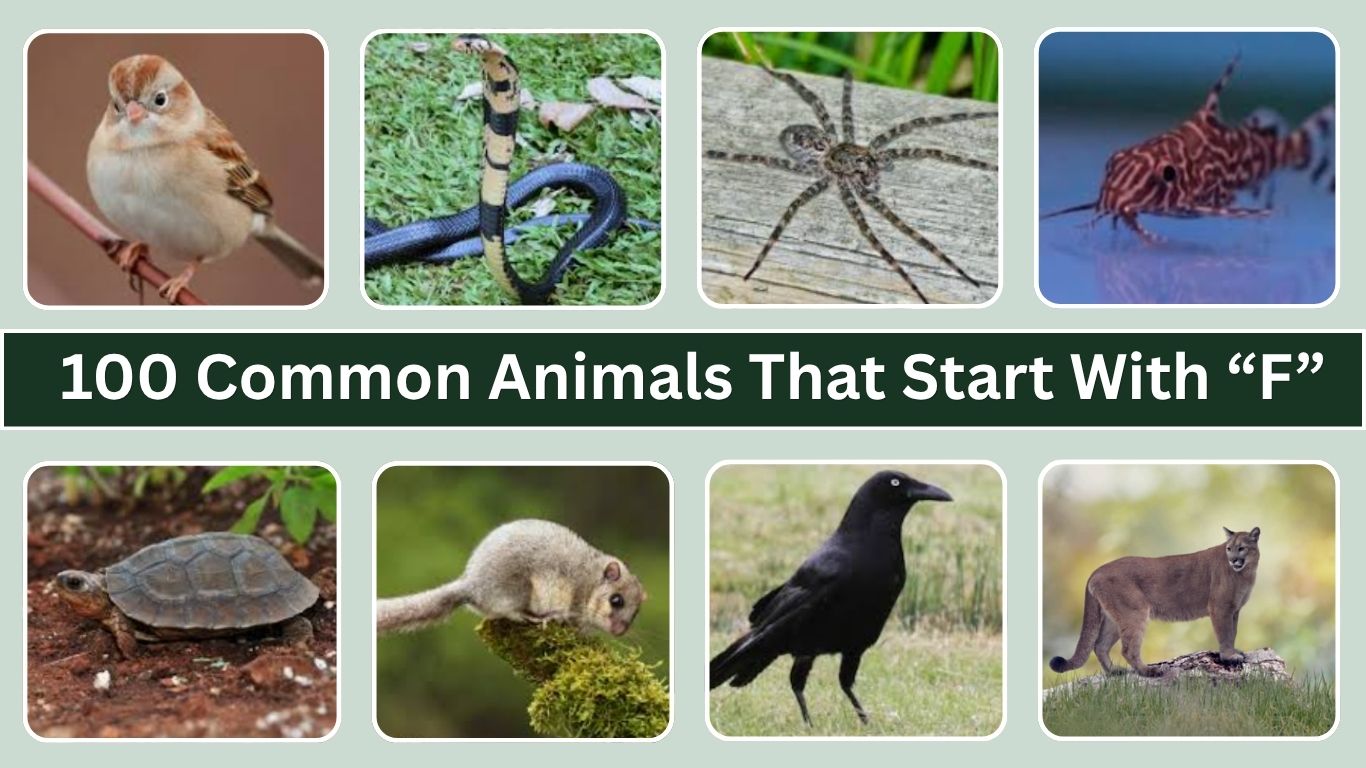
Animals that start with the letter “F” include many fascinating species from around the world. From the fast-flying Falcon to the playful Ferret and the colorful Flamingo, these animals live in forests, oceans, deserts, wetlands, and grasslands. Some are powerful predators, while others are tiny insects or peaceful herbivores. Learning about these creatures is a fun way to explore wildlife and nature. This guide features 100 common animals that begin with “F,” organized into different groups for easy reading and discovery.
Birds of the Sky
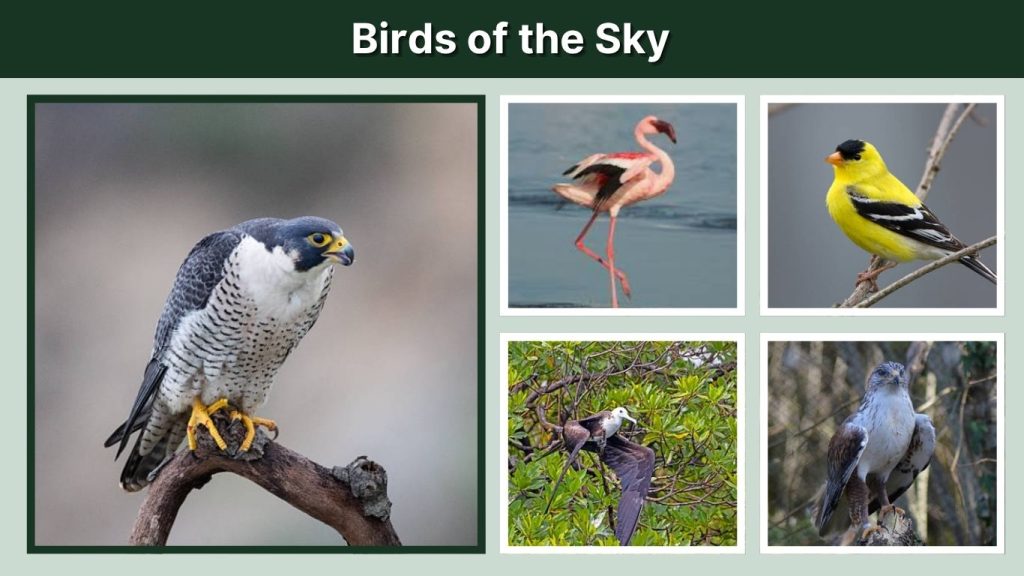
Birds of the sky are known for their strong wings, sharp eyesight, and excellent flying abilities. Some are powerful hunters, while others are graceful water birds or colorful songbirds. These birds live in forests, wetlands, mountains, and open grasslands around the world. Many feed on fish, insects, or small animals, and some migrate long distances each year. Their flying skills and unique feather patterns make them some of the most fascinating birds in nature.
1. Falcon
The Falcon is a fast-flying bird of prey known for its speed and sharp hunting skills. Falcons have long pointed wings and excellent eyesight that help them spot prey from high in the sky. They mainly feed on smaller birds and rodents. Some falcon species can dive at incredible speeds while hunting. Falcons are found in mountains, deserts, forests, and even cities around the world.
2. Flamingo
The Flamingo is a tall water bird famous for its bright pink feathers and long legs. Flamingos live near lakes, lagoons, and wetlands where they feed on algae and tiny aquatic animals. Their curved beaks help filter food from muddy water. Flamingos often gather in large groups, creating beautiful pink flocks. Their color comes from pigments found in the food they eat.
3. Finch
The Finch is a small songbird commonly found in forests, gardens, and grasslands. Finches have short strong beaks designed for cracking seeds. Many species are colorful and known for their cheerful songs. These birds feed on seeds, fruits, and insects. Finches are active and social birds that often travel in small flocks while searching for food.
4. Frigatebird
The Frigatebird is a large ocean bird with long wings and a forked tail. It is known for its ability to stay in the air for long periods without landing. Frigatebirds feed mainly on fish and sometimes steal food from other birds in midair. Males have bright red throat pouches that inflate during breeding season to attract females.
5. Ferruginous Hawk
The Ferruginous Hawk is the largest hawk species in North America. It has broad wings, rusty-colored feathers, and strong hunting abilities. Ferruginous Hawks feed mainly on rabbits, ground squirrels, and other small mammals. They are excellent gliders and can soar high above grasslands and open plains while searching for prey. These hawks usually build nests on cliffs, trees, or rocky areas.
Forest Mammals
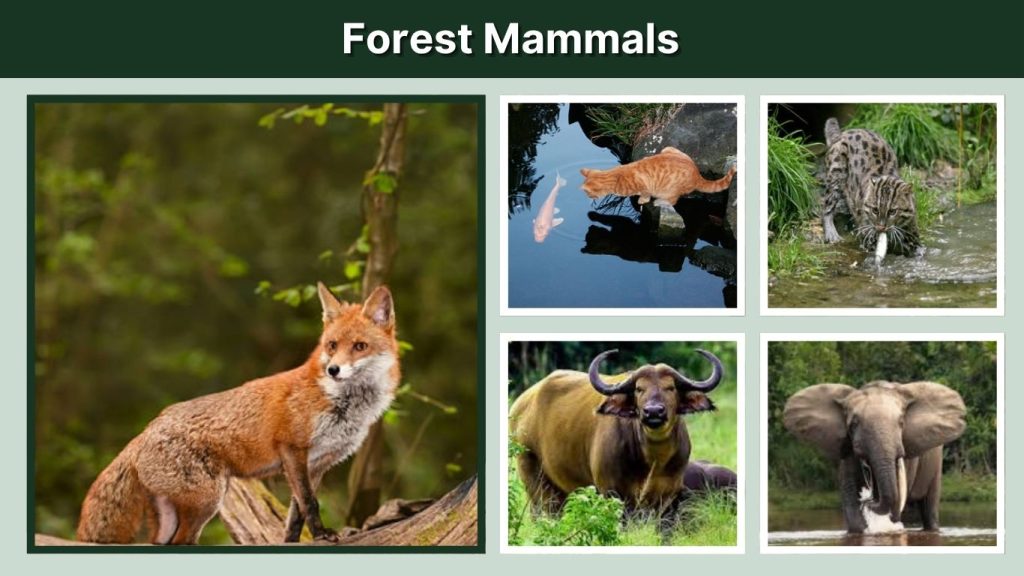
Forest mammals are animals that live mainly in wooded habitats filled with trees, plants, and natural shelters. These mammals use forests for food, protection, and nesting areas. Some are skilled hunters, while others feed on fruits, leaves, or grasses. Forest mammals often have sharp senses, strong bodies, or climbing abilities that help them survive in dense environments. They play important roles in nature by spreading seeds, controlling prey populations, and maintaining healthy forest ecosystems.
1. Fox
The Fox is a clever and adaptable mammal found in forests, grasslands, deserts, and even cities. Foxes have pointed ears, bushy tails, and sharp senses that help them hunt small animals. They feed on rodents, birds, insects, fruits, and berries. Foxes are mostly active during the evening and nighttime hours. Their intelligence and quick movements help them survive in many different environments.
2. Fisher Cat
The Fisher Cat is a carnivorous mammal related to weasels. It lives in forests of North America and is known for its climbing and hunting abilities. Fisher Cats feed on rabbits, rodents, birds, and sometimes porcupines. They have long bodies, thick fur, and strong claws that help them move through wooded habitats. Despite the name, they rarely hunt fish.
3. Fishing Cat
The Fishing Cat is a medium-sized wild cat that lives near wetlands and forested rivers in Asia. It has short legs, spotted fur, and partially webbed feet that help it swim. Fishing Cats mainly hunt fish, frogs, and small water animals. They are excellent swimmers and often wait quietly near water before catching prey with quick movements.
4. Forest Buffalo
The Forest Buffalo is a smaller buffalo species found in the forests of central and western Africa. It has reddish-brown fur and curved horns. Forest Buffaloes feed mainly on grasses, leaves, and forest plants. They often travel in groups for protection against predators. These strong animals are important herbivores that help shape vegetation within forest ecosystems.
5. Forest Elephant
The Forest Elephant is a smaller elephant species that lives in dense African rainforests. It has straighter tusks and rounder ears than the larger savanna elephant. Forest Elephants feed on fruits, leaves, bark, and plants. They help spread seeds through forests, supporting plant growth and biodiversity. Because of habitat loss and poaching, this species faces serious threats in the wild.
Small Mammals and Pets
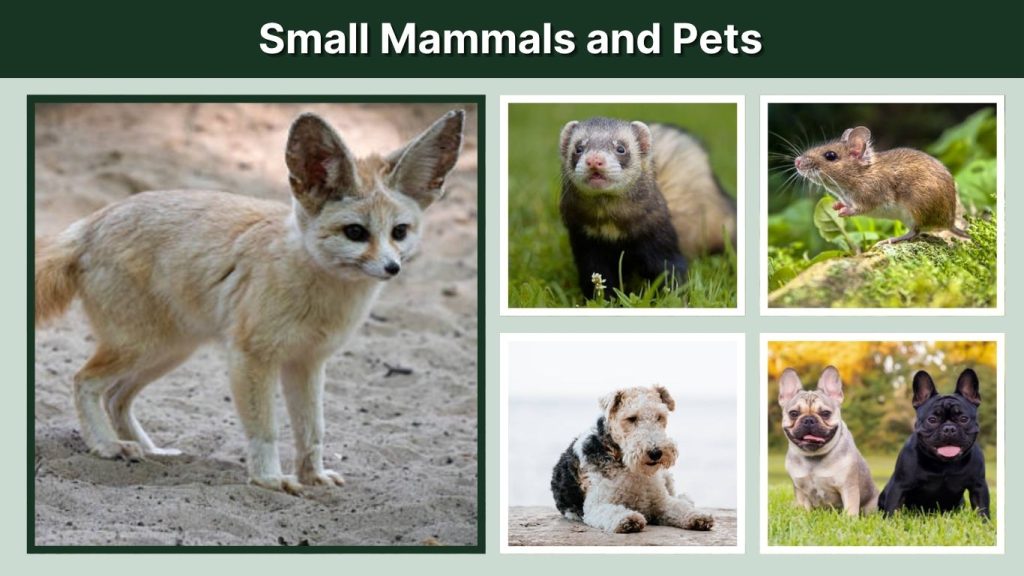
Small mammals and pet animals are popular because of their friendly behavior, manageable size, and close relationship with humans. Some of these animals are active hunters in the wild, while others are gentle domestic companions. They can live in forests, deserts, grasslands, or human homes. Many small mammals are intelligent, playful, and adaptable. These animals often feed on meat, plants, insects, or mixed diets depending on their species and natural habitats.
1. Ferret
The Ferret is a playful and curious animal related to weasels. Ferrets have long flexible bodies, soft fur, and sharp teeth. They are popular pets because of their energetic and social personalities. Ferrets enjoy exploring tunnels, playing games, and interacting with people. In the wild, they hunt small animals, but pet ferrets usually eat specially prepared food rich in protein.
2. Fennec Fox
The Fennec Fox is a tiny fox species known for its extremely large ears. It lives in desert regions of North Africa where the weather is hot and dry. Fennec Foxes feed on insects, rodents, fruits, and small reptiles. Their large ears help release body heat and improve hearing. These foxes are active mainly at night and spend daytime hours resting in underground burrows.
3. Field Mouse
The Field Mouse is a tiny rodent commonly found in grasslands, forests, and farmland. Field Mice feed on seeds, grains, fruits, and insects. They are quick runners and excellent at hiding from predators in grass or underground burrows. These mice are mostly active during the night and play an important role in spreading seeds and serving as food for larger animals.
4. Fox Terrier
The Fox Terrier is a small energetic dog originally bred for fox hunting. It has a slim body, alert expression, and lots of energy. Fox Terriers are intelligent, playful, and loyal pets that enjoy exercise and outdoor activities. They are quick learners and often perform well in dog sports and training activities. Their lively personalities make them popular family companions.
5. French Bulldog
The French Bulldog is a compact dog breed known for its bat-like ears and friendly personality. French Bulldogs are affectionate pets that enjoy spending time with people. They adapt well to apartment living and usually require moderate exercise. These dogs are playful and social but can be sensitive to hot weather because of their short noses and breathing structure.
Reptiles
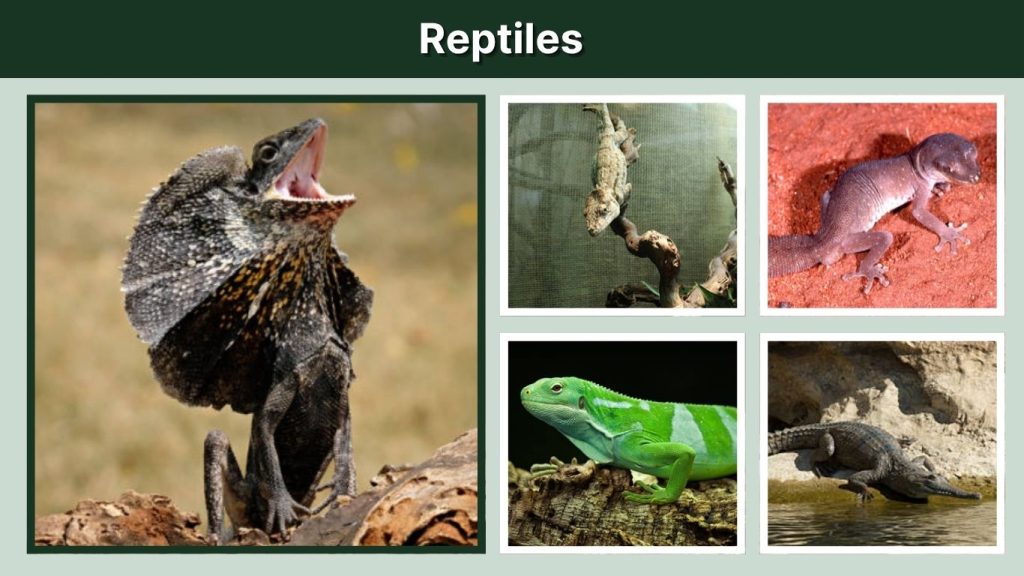
Reptiles are cold-blooded animals covered with scales or armored skin. They live in forests, deserts, wetlands, and rocky environments around the world. Many reptiles are excellent climbers, swimmers, or hunters that rely on camouflage and quick movements for survival. Some feed on insects, while others hunt larger prey such as rodents or birds. Reptiles play an important role in ecosystems by helping control populations of insects and small animals in nature.
1. Frilled Lizard
The Frilled Lizard is a unique reptile famous for the large frill around its neck. When threatened, it opens the frill to appear larger and scare predators away. Frilled Lizards live in forests and woodlands of Australia and New Guinea. They feed mainly on insects, spiders, and small animals. These lizards are fast runners and can move on their back legs when escaping danger.
2. Frill-Necked Lizard
The Frill-Necked Lizard is another name for the frilled lizard species known for its dramatic neck display. It spends much of its time climbing trees and searching for insects. Frill-Necked Lizards rely on camouflage to blend into bark and forest surroundings. During hot weather, they rest in shaded areas and become more active during cooler parts of the day.
3. Fat-Tailed Gecko
The Fat-Tailed Gecko is a small reptile native to dry regions of Africa. It has a thick tail used for storing fat and energy. Fat-Tailed Geckos are gentle reptiles that feed mainly on insects such as crickets and worms. They are active during nighttime hours and spend the day hiding in rock crevices or underground shelters to stay cool and safe.
4. Fijian Iguana
The Fijian Iguana is a colorful reptile found on islands in Fiji. It has bright green skin with light markings that help it blend into tropical forests. Fijian Iguanas feed mainly on leaves, flowers, and fruits. They spend much of their time in trees and are excellent climbers. Habitat loss and invasive animals have made this species rare in the wild.
5. Freshwater Crocodile
The Freshwater Crocodile is a smaller crocodile species found in rivers and wetlands of northern Australia. It has a narrow snout and sharp teeth designed for catching fish and small animals. Freshwater Crocodiles are usually shy around humans and prefer quiet waterways. They are strong swimmers and spend long periods resting near riverbanks or floating in the water.
Amphibians
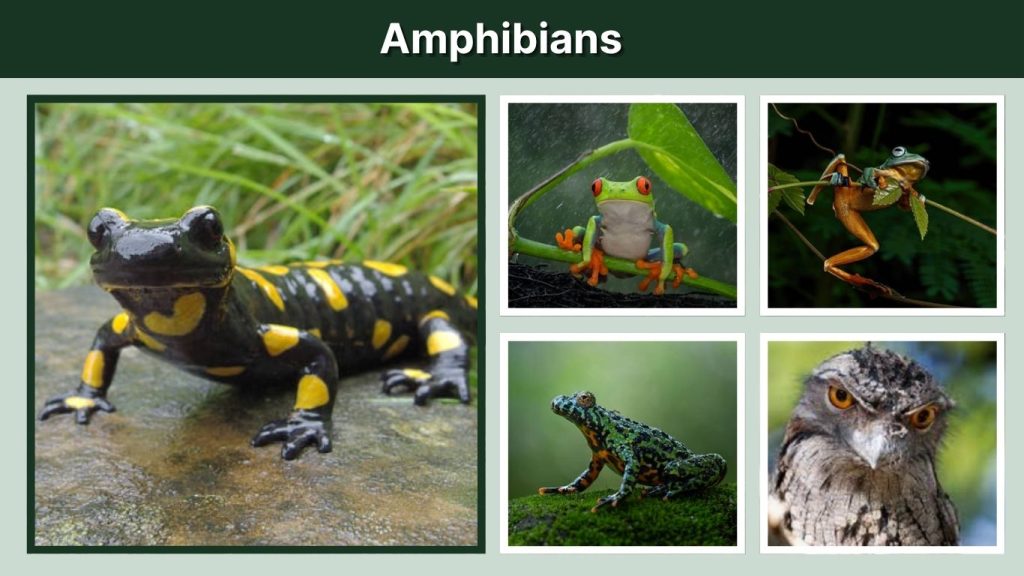
Amphibians are animals that usually live both in water and on land during different stages of their lives. They often have moist skin and lay eggs in water or damp environments. Many amphibians feed on insects and small invertebrates, helping control pest populations in nature. Frogs, salamanders, and toads are common examples of amphibians. These animals are sensitive to environmental changes, making them important indicators of healthy ecosystems around the world.
1. Frog
The Frog is one of the most common amphibians found in ponds, forests, wetlands, and gardens. Frogs have strong back legs that help them jump long distances and swim quickly in water. They feed mainly on insects, worms, and small invertebrates. Frogs begin life as tadpoles living in water before changing into adult frogs through metamorphosis.
2. Fire Salamander
The Fire Salamander is a black amphibian with yellow or orange markings found in forests of Europe. It prefers damp environments near streams and woodland areas. Fire Salamanders feed on insects, worms, and slugs. Their bright colors warn predators that they can produce toxic substances through their skin for protection against danger in the wild.
3. Fire Bellied Toad
The Fire Bellied Toad is a small amphibian known for its bright orange or red belly. It lives in ponds, marshes, and wetlands across Asia and Europe. Fire Bellied Toads feed mainly on insects and tiny aquatic animals. When threatened, they display their colorful undersides as a warning to predators. These toads are active swimmers and spend much of their time near water.
4. Flying Frog
The Flying Frog is a tree-dwelling amphibian found in tropical forests of Asia. It has large webbed feet that help it glide between trees. Flying Frogs feed mainly on insects and other small invertebrates. Their bright green color provides camouflage among leaves and branches. These frogs are excellent climbers and usually stay high above the forest floor.
5. Frogmouth
The Frogmouth is a nighttime bird known for its wide frog-like mouth and excellent camouflage. Frogmouths live in forests and woodlands of Australia and Asia. They feed mainly on insects, spiders, and small animals caught during the night. Their feathers help them blend into tree branches, making them difficult for predators to spot during daytime resting hours.
Ocean Fish
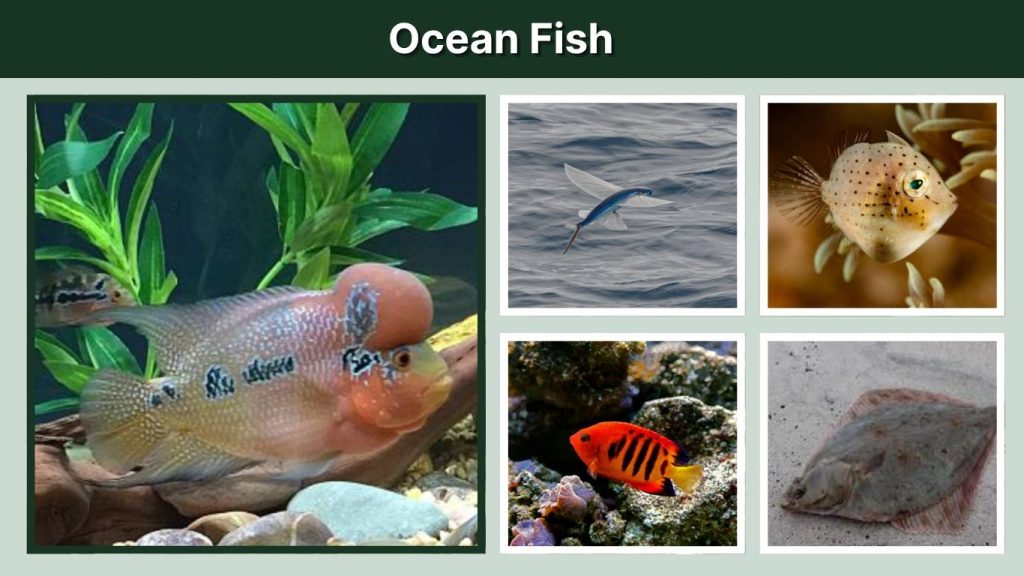
Ocean fish are aquatic animals that live in seas, coral reefs, and deep ocean waters around the world. These fish come in many colors, shapes, and sizes. Some are fast swimmers that travel long distances, while others hide among reefs and rocks for protection. Ocean fish feed on plankton, algae, smaller fish, or marine insects depending on their species. They are important parts of marine ecosystems and help maintain balance within underwater food chains.
1. Flounder
The Flounder is a flat-bodied fish that lives near the ocean floor. Both of its eyes are located on one side of its body, allowing it to lie flat while watching for prey. Flounders use camouflage to blend into sandy or muddy seabeds. They feed on smaller fish, shrimp, and worms. These fish are excellent at hiding from predators and hunting quietly.
2. Flying Fish
The Flying Fish is a unique fish capable of gliding above the ocean surface. It uses large wing-like fins to escape predators by leaping out of the water and gliding through the air for short distances. Flying Fish live in warm ocean waters and feed mainly on plankton and small marine organisms. Their unusual movement helps them avoid larger fish and sea predators.
3. Filefish
The Filefish is a small tropical fish found in coral reefs and coastal waters. It has rough skin and a narrow body shape. Filefish feed on algae, coral polyps, and small invertebrates. Many species have colors and patterns that help them blend into reef environments. These fish are slow swimmers and often rely on camouflage for protection from predators.
4. Flame Angelfish
The Flame Angelfish is a colorful fish with bright orange-red scales and black stripes. It lives in coral reefs of the Pacific Ocean and feeds on algae and tiny marine organisms. Flame Angelfish are popular in aquariums because of their beautiful appearance and active swimming behavior. They usually hide among rocks and coral structures during times of danger.
5. Flowerhorn Fish
The Flowerhorn Fish is a brightly colored freshwater fish popular among aquarium owners. It is known for the large bump on its forehead and vivid patterns on its body. Flowerhorn Fish are intelligent and can recognize their owners. They are active swimmers and often display territorial behavior. These fish require spacious tanks and proper care to stay healthy and colorful.
Dangerous Creatures
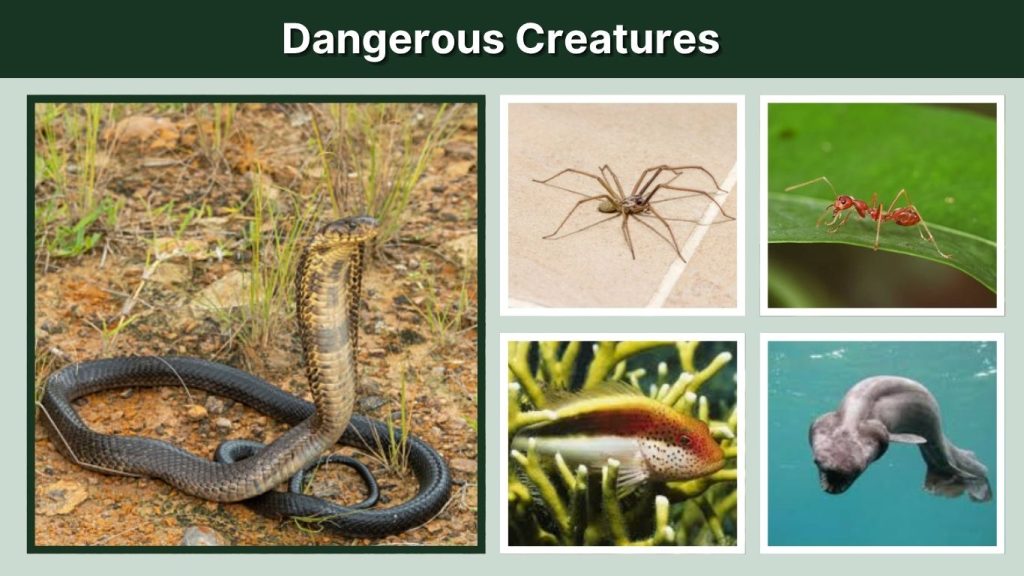
Dangerous creatures are animals that use venom, sharp teeth, stingers, or powerful hunting skills to survive. Some defend themselves from predators, while others use special abilities to catch prey. These animals can live in forests, oceans, deserts, and underground habitats. Although many dangerous creatures look frightening, they usually attack only when threatened or disturbed. They are important parts of ecosystems because they help control populations of insects, rodents, and other small animals.
1. Forest Cobra
The Forest Cobra is one of the largest cobra species in Africa. It lives in forests, grasslands, and wooded areas. Forest Cobras have powerful venom and can raise the front part of their bodies when threatened. They feed on rodents, birds, frogs, and other small animals. Despite their dangerous reputation, these snakes usually avoid humans and prefer escaping rather than fighting.
2. Funnel-Web Spider
The Funnel-Web Spider is a highly venomous spider found mainly in Australia. It builds funnel-shaped webs in moist soil, logs, or gardens. Funnel-Web Spiders feed on insects and small animals that enter their webs. They have strong fangs and quick movements. Although dangerous, modern medical treatment has greatly reduced serious injuries caused by their bites.
3. Fire Ant
The Fire Ant is a small aggressive ant known for its painful sting. Fire Ants build large underground colonies in warm regions around the world. They attack in groups when their nests are disturbed. These ants feed on insects, seeds, and small animals. Their stings can cause burning pain and irritation, which is why they are called “fire” ants.
4. Fire Coral
The Fire Coral is a marine organism that looks like coral but is closely related to jellyfish. It lives in tropical oceans and coral reefs. Fire Coral contains tiny stinging cells that can cause painful skin irritation when touched. It feeds on small marine organisms drifting in the water. Despite its dangerous sting, it helps provide shelter for many reef animals.
5. Frilled Shark
The Frilled Shark is a rare shark that lives deep in the ocean. It has a long eel-like body and rows of sharp teeth designed for catching fish and squid. Frilled Sharks are sometimes called “living fossils” because they have ancient features seen in prehistoric sharks. These deep-sea predators are rarely seen by humans because they live far below the ocean surface.
Insects and Tiny Creatures
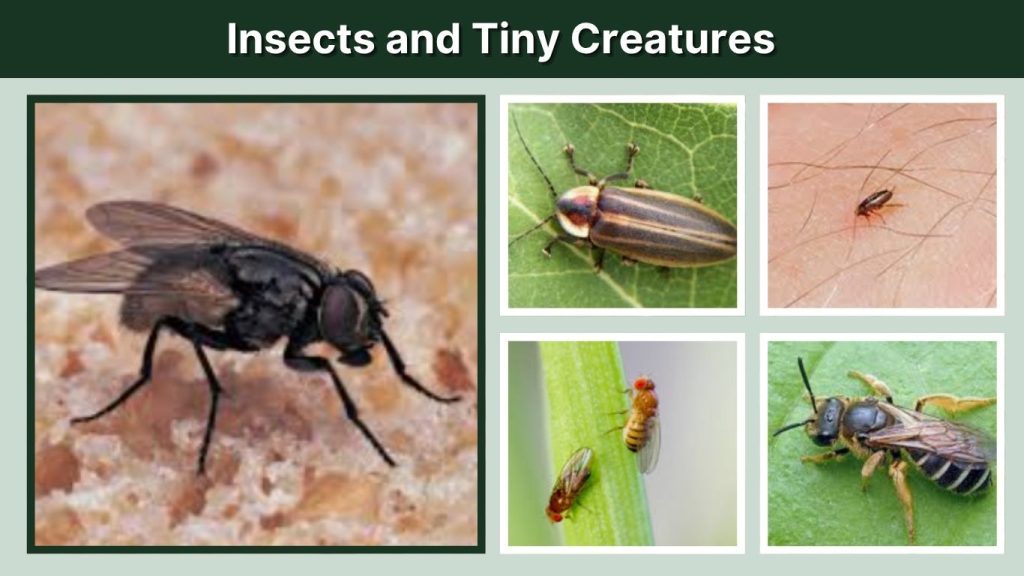
Insects and tiny creatures are small animals found in nearly every habitat on Earth. They live in forests, gardens, wetlands, deserts, and even inside homes. Many of these tiny animals play important roles in nature by pollinating plants, breaking down waste, or serving as food for larger animals. Some fly through the air, while others crawl underground or on plants. Despite their small size, these creatures are essential for maintaining healthy ecosystems.
1. Fly
The Fly is a small insect found all around the world. Flies have one pair of wings and large compound eyes that help them react quickly to danger. Many flies feed on decaying matter, nectar, or food scraps. Some species help break down waste in nature, while others can spread germs. Flies reproduce quickly and are active mainly during warm weather.
2. Firefly
The Firefly is a glowing insect famous for producing light from its body during nighttime. Fireflies use their flashing lights to attract mates and communicate with each other. They are commonly found in forests, grasslands, and near wetlands. Firefly larvae feed on snails and small insects. Their glowing ability comes from a natural chemical reaction inside their bodies.
3. Flea
The Flea is a small wingless insect known for its powerful jumping ability. Fleas live on mammals and birds, feeding on blood. They are common parasites on pets such as dogs and cats. Fleas reproduce rapidly and can become household pests if not controlled. Their flattened bodies help them move easily through animal fur and feathers.
4. Fruit Fly
The Fruit Fly is a tiny insect commonly found near ripe fruits and vegetables. Fruit Flies feed on sugary liquids and decaying organic matter. They reproduce very quickly and are often seen in kitchens and markets. Scientists frequently study fruit flies in laboratories because of their short life cycles and simple genetics.
5. Furrow Bee
The Furrow Bee is a small bee species that nests in soil. Furrow Bees are important pollinators that help flowers, fruits, and crops grow. They feed on nectar and pollen collected from flowering plants. Unlike honeybees, many furrow bees live alone instead of in large colonies. These gentle insects are active during warm seasons and are beneficial for gardens and farms.
Water and Wetland Animals
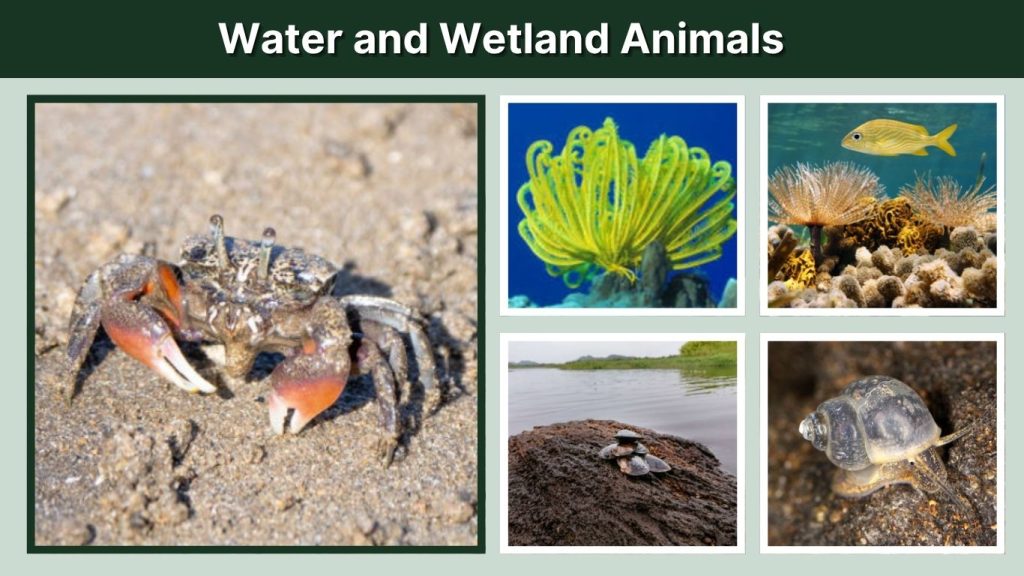
Water and wetland animals live in rivers, lakes, ponds, marshes, and coastal habitats. These environments provide food, shelter, and breeding areas for many unique species. Some animals swim freely in water, while others live partly buried in mud or attached to underwater surfaces. Wetland creatures are important because they help clean water, recycle nutrients, and support aquatic ecosystems. Many of these animals feed on tiny organisms, algae, or smaller aquatic creatures.
1. Fiddler Crab
The Fiddler Crab is a tiny crab known for the male’s oversized claw, which looks like a violin. Fiddler Crabs live in muddy coastal wetlands, mangroves, and beaches. They feed on algae and organic material found in mud. These crabs use their large claws to attract mates and defend territory. They often move quickly sideways across wet sand and muddy shorelines.
2. Feather Star
The Feather Star is a sea animal related to starfish and sea urchins. It has many feather-like arms used for catching tiny food particles drifting in the water. Feather Stars are commonly found in coral reefs and deep ocean habitats. They attach themselves to rocks or coral and sometimes swim slowly by waving their arms through the water.
3. Fan Worm
The Fan Worm is a colorful sea worm that lives inside protective tubes underwater. Its fan-shaped crown collects tiny food particles from the water. Fan Worms quickly pull back into their tubes when disturbed by predators. They are commonly found in coral reefs, rocky coasts, and ocean floors where water currents bring plenty of food.
4. Freshwater Pearl Mussel
The Freshwater Pearl Mussel is a shellfish that lives in clean rivers and streams. It filters tiny food particles from the water and helps improve water quality naturally. Some freshwater pearl mussels can live for many decades. These animals spend most of their lives partly buried in riverbeds and are sensitive to pollution and environmental changes.
5. Freshwater Snail
The Freshwater Snail is a small shelled animal commonly found in ponds, lakes, and slow-moving rivers. Freshwater Snails feed on algae, plants, and decaying organic matter. They move slowly using a muscular foot and often cling to rocks or underwater plants. These snails are important in aquatic ecosystems because they help recycle nutrients and clean surfaces underwater.
Arctic and Cold Region Animals
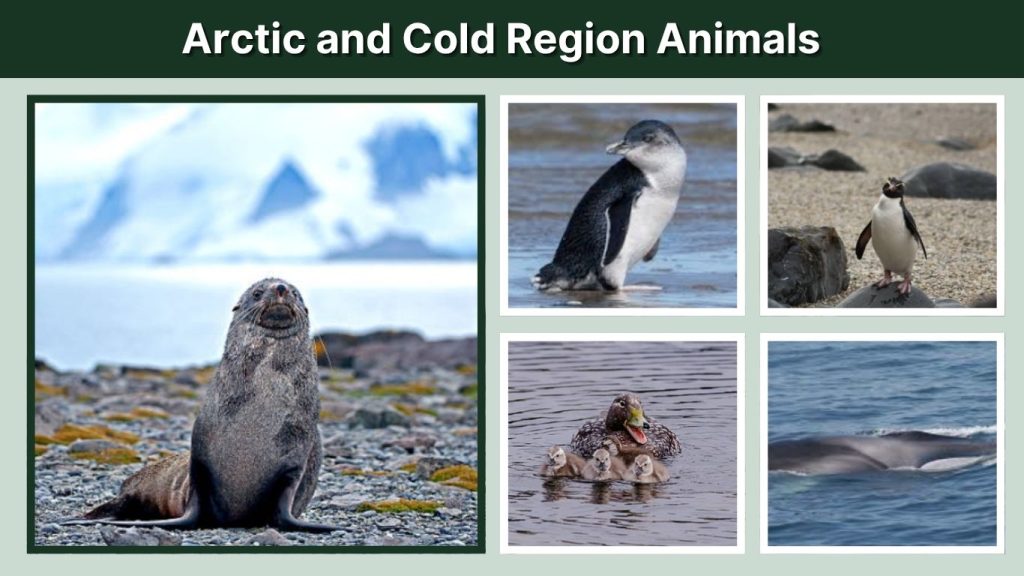
Arctic and cold region animals are specially adapted to survive freezing temperatures, icy waters, and snowy landscapes. Many have thick fur, dense feathers, or layers of fat that help keep their bodies warm. These animals live in polar oceans, cold islands, mountain regions, and icy coastlines. Some are excellent swimmers, while others rely on strong migration patterns. Their unique adaptations allow them to survive in some of the harshest environments on Earth.
1. Fur Seal
The Fur Seal is a seal species known for its thick fur and strong swimming abilities. Fur Seals live in cold ocean waters and rocky coastlines. They feed mainly on fish, squid, and krill. Their dense fur helps protect them from icy temperatures while swimming in cold seas. Fur Seals are social animals that often gather in large colonies during breeding seasons.
2. Fairy Penguin
The Fairy Penguin is the smallest penguin species in the world. It is also called the little penguin and lives along the coasts of Australia and New Zealand. Fairy Penguins feed on small fish and squid caught underwater. They are excellent swimmers and usually return to land at night after searching for food in the ocean during the day.
3. Fiordland Penguin
The Fiordland Penguin is a rare penguin found in New Zealand’s cold coastal forests and rocky shores. It has yellow eyebrow-like crests above its eyes and thick waterproof feathers. Fiordland Penguins feed mainly on fish, squid, and crustaceans. They spend much of their lives in cold ocean waters and return to land during breeding season to raise their chicks.
4. Falkland Steamer Duck
The Falkland Steamer Duck is a heavy duck species native to the Falkland Islands. It cannot fly but is a powerful swimmer. Falkland Steamer Ducks feed on shellfish, crabs, and small marine animals found near rocky coastlines. Their strong legs and wings help them move quickly across the water surface while searching for food in cold coastal environments.
5. Fin Whale
The Fin Whale is the second-largest animal on Earth after the blue whale. It lives in cold and temperate oceans around the world. Fin Whales feed mainly on krill, fish, and squid by filtering food through baleen plates. These whales are fast swimmers and can travel long distances during migration. Their streamlined bodies help them move efficiently through deep ocean waters.
Flying Mammals
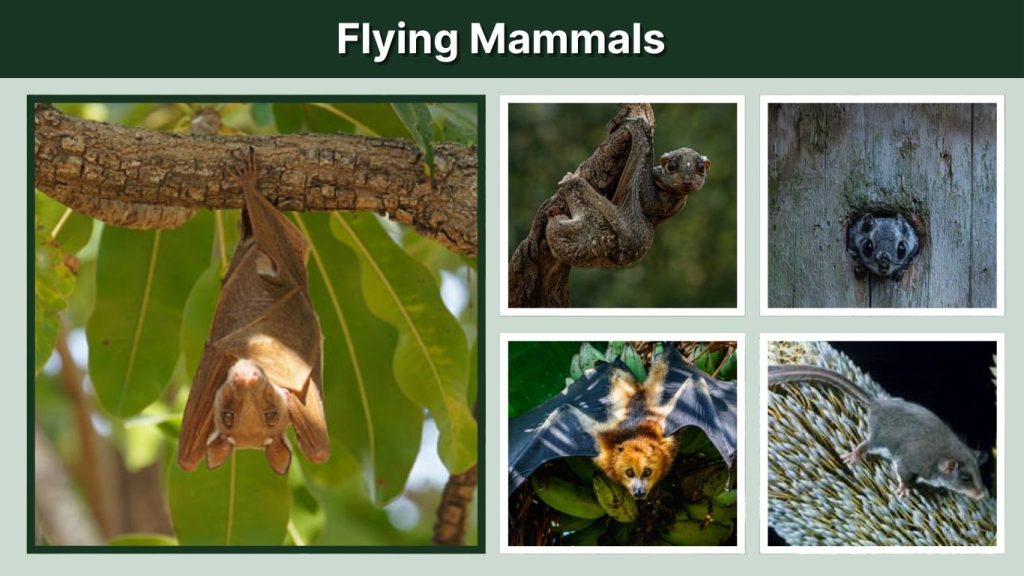
Flying mammals are unique animals that can glide or truly fly through the air. Most of these creatures live in forests, caves, or tropical environments where trees provide shelter and food. Some use wings for powered flight, while others glide between branches using skin flaps. Flying mammals feed on fruits, insects, nectar, or leaves depending on their species. Their special movement abilities help them escape predators and travel easily through forest habitats.
1. Fruit Bat
The Fruit Bat is a flying mammal commonly found in tropical forests and islands. Fruit Bats feed mainly on fruits, nectar, and flowers. They play an important role in pollinating plants and spreading seeds across forests. These bats have excellent eyesight and strong wings for long-distance flight. Many species rest upside down in large colonies during daytime hours.
2. Flying Lemur
The Flying Lemur is a tree-dwelling mammal found in Southeast Asia. Despite its name, it is not a true lemur and cannot truly fly. It uses large skin membranes between its limbs to glide from tree to tree. Flying Lemurs feed mainly on leaves, fruits, and flowers. Their gliding ability helps them move safely through forests while avoiding predators on the ground.
3. Flying Squirrel
The Flying Squirrel is a small squirrel capable of gliding through the air using a skin membrane stretched between its legs. Flying Squirrels live in forests and are mostly active at night. They feed on nuts, seeds, fruits, and insects. These squirrels can glide long distances between trees while using their fluffy tails for balance and steering during movement.
4. Flying Fox
The Flying Fox is one of the largest bat species in the world. It has fox-like facial features and large wings that allow smooth flight over forests and islands. Flying Foxes feed mainly on fruits and flowers. They are important pollinators that help tropical plants reproduce. During the daytime, they gather in large hanging colonies within trees.
5. Feathertail Glider
The Feathertail Glider is a tiny nocturnal mammal native to Australia. It has a feather-like tail and thin skin membranes that allow it to glide between trees. Feathertail Gliders feed on nectar, insects, and pollen. They are quick climbers and spend most of their lives in forests where they hide inside tree hollows during daylight hours.
Farm and Domestic Animals
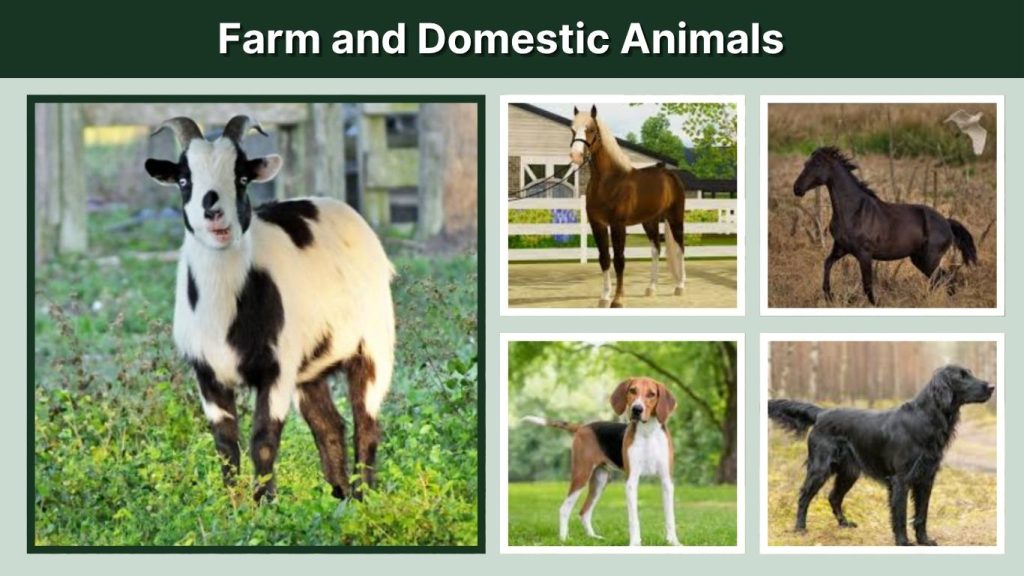
Farm and domestic animals are species that live closely with humans and often help with transportation, protection, work, or food production. Many of these animals are strong, intelligent, and easy to train. They are commonly found on farms, ranches, and in homes around the world. Some provide companionship, while others assist with herding or carrying loads. Domestic animals have been important to human life for thousands of years and continue to support farming and daily activities.
1. Fainting Goat
The Fainting Goat is a unique goat breed known for temporarily stiffening and falling over when startled. This unusual reaction is caused by a genetic condition affecting the muscles. Fainting Goats are friendly farm animals that feed mainly on grass, hay, and plants. They are raised for meat, milk, and companionship on farms and are popular because of their unusual behavior.
2. Finnhorse
The Finnhorse is a strong and versatile horse breed from Finland. It has been used for farming, transportation, racing, and riding for many years. Finnhorses are known for their calm personalities, endurance, and ability to work in cold climates. These horses feed on hay, grass, and grains. Their strength and reliability make them valuable working animals.
3. Florida Cracker Horse
The Florida Cracker Horse is a rare horse breed developed in the southeastern United States. It is small, agile, and well adapted to hot climates and rough terrain. Florida Cracker Horses were traditionally used by cattle ranchers for herding livestock. These horses are energetic, intelligent, and able to travel long distances while working outdoors.
4. Foxhound
The Foxhound is a strong and energetic dog breed originally developed for hunting foxes. Foxhounds have excellent senses of smell and great stamina for running over long distances. They are social dogs that often work in groups during hunts. Foxhounds require regular exercise and enjoy active outdoor lifestyles. Their friendly nature also makes them loyal companions.
5. Flat-Coated Retriever
The Flat-Coated Retriever is a cheerful and intelligent dog breed with a shiny black or liver-colored coat. It was originally bred for retrieving birds during hunting trips. Flat-Coated Retrievers are playful, friendly, and excellent family pets. They enjoy swimming, running, and outdoor games. Their energetic personalities and eagerness to learn make them easy to train and enjoyable companions.
Colorful Birds
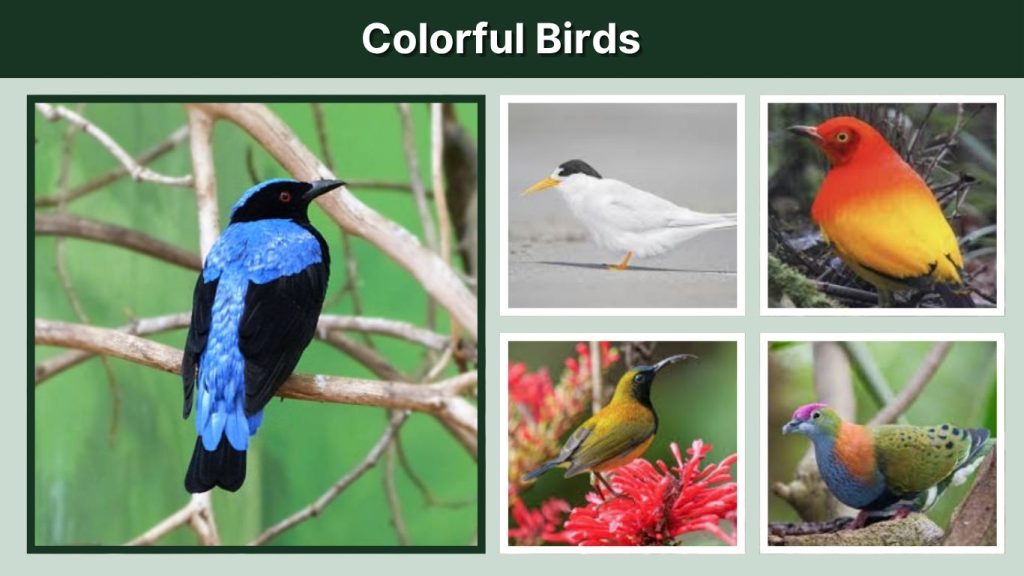
Colorful birds are admired for their bright feathers, beautiful songs, and graceful movements. These birds live in forests, wetlands, tropical islands, and coastal regions around the world. Their colorful plumage helps attract mates and sometimes provides camouflage among flowers and trees. Many feed on fruits, insects, seeds, or nectar. These birds are important for pollination and seed spreading, helping forests and plants grow naturally in different ecosystems.
1. Fairy Bluebird
The Fairy Bluebird is a beautiful bird with shining blue and black feathers found in forests of Southeast Asia. Fairy Bluebirds feed mainly on fruits, berries, and insects. They are active birds that move through tree branches while searching for food. Their bright blue colors stand out in sunlight, making them one of the most striking forest birds in tropical regions.
2. Fairy Tern
The Fairy Tern is a graceful white seabird found near tropical islands and coastlines. It has long wings, a black eye patch, and smooth flight patterns above the ocean. Fairy Terns feed mainly on small fish caught near the water surface. These birds often nest on tree branches or sandy coastal areas and are known for their elegant appearance and calm behavior.
3. Flame Bowerbird
The Flame Bowerbird is a bright orange and yellow bird native to rainforests of New Guinea. Male Flame Bowerbirds are famous for building decorated structures called bowers to attract females. They feed on fruits, insects, and small forest animals. Their vivid feather colors and unique courtship displays make them one of the most fascinating tropical bird species.
4. Flaming Sunbird
The Flaming Sunbird is a small colorful bird with bright red and orange feathers. It feeds mainly on flower nectar using its long curved beak. Flaming Sunbirds live in tropical forests and gardens where flowers are abundant. These birds also eat insects for extra nutrition. Their fast flight and glowing colors make them resemble tiny flying jewels among plants.
5. Fruit Dove
The Fruit Dove is a small tropical bird known for its bright green, yellow, purple, and orange feathers. Fruit Doves live in forests and island habitats where they feed mainly on fruits and berries. They spend much of their time in trees and are excellent flyers. Their colorful plumage helps them blend into tropical forest vegetation while searching for food.
Aquatic Predators
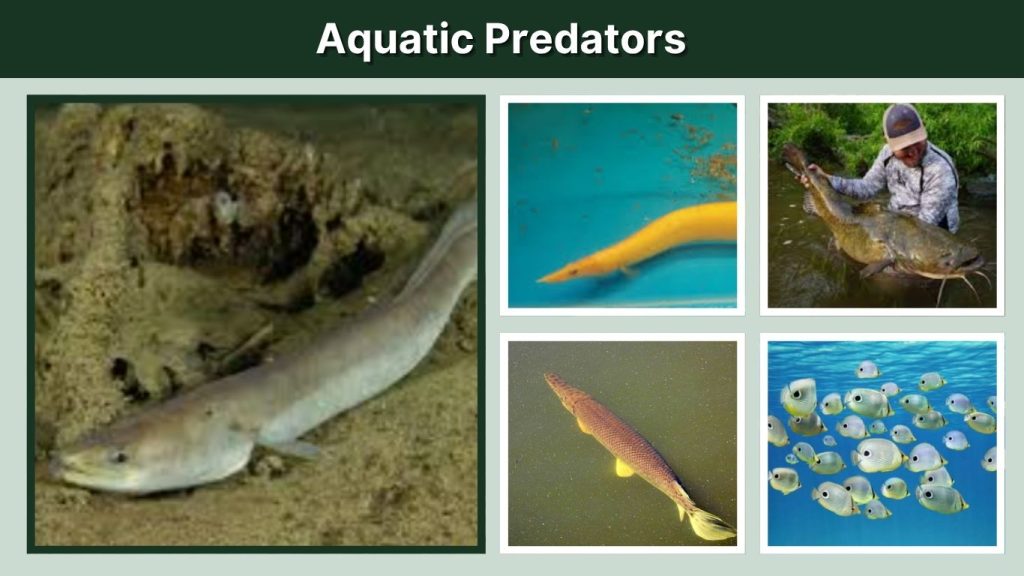
Aquatic predators are animals that hunt and feed on other creatures in rivers, lakes, wetlands, and oceans. These predators often have sharp teeth, quick movements, and excellent hunting skills that help them catch prey underwater. Some rely on speed, while others hide quietly before attacking. Aquatic predators are important for keeping fish and aquatic populations balanced in nature. They live in many different water habitats and vary greatly in size and appearance.
1. Freshwater Eel
The Freshwater Eel is a snake-shaped fish that lives in rivers, lakes, and streams. Freshwater Eels are active hunters that feed on fish, insects, worms, and crustaceans. They have slippery bodies that help them move through muddy water and narrow spaces. Many eel species migrate long distances between freshwater and ocean habitats during different stages of their lives.
2. Fire Eel
The Fire Eel is a colorful eel-like fish known for the bright red markings along its body. It lives in rivers and swamps of Southeast Asia. Fire Eels feed mainly on worms, insects, and small fish. They often hide in sand or mud during the daytime and become more active at night while searching for food in shallow waters.
3. Flathead Catfish
The Flathead Catfish is a powerful freshwater fish found in rivers and lakes of North America. It has a broad flat head and sharp hunting instincts. Flathead Catfish feed mainly on smaller fish, crayfish, and frogs. These fish are mostly active at night and often hide near logs or deep water during the daytime hours.
4. Florida Gar
The Florida Gar is a freshwater predator with a long narrow snout filled with sharp teeth. It lives in rivers, lakes, and wetlands of the southeastern United States. Florida Gars feed on fish, insects, and small aquatic animals. Their streamlined bodies allow them to move quickly through water while hunting prey near underwater plants and shallow habitats.
5. Four-Eyed Fish
The Four-Eyed Fish is a unique fish known for its unusual eyes that allow it to see above and below water at the same time. It lives in rivers and coastal waters of Central and South America. Four-Eyed Fish feed on insects and small aquatic creatures found near the water surface. Their special eyesight helps them detect both predators and prey efficiently.
Wild Cats and Predators
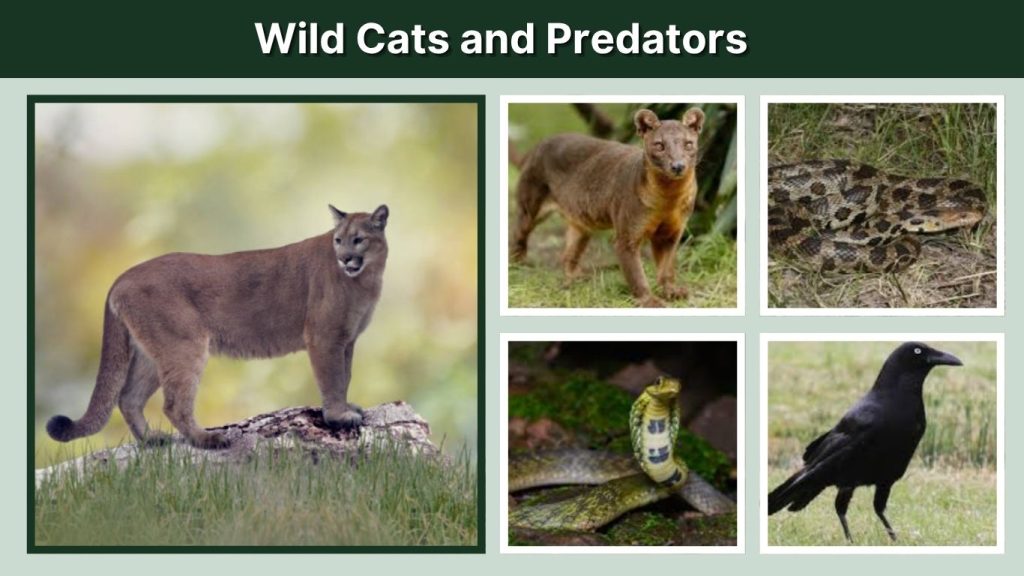
Wild cats and predators are powerful animals known for their hunting skills, sharp senses, and strong survival instincts. These animals live in forests, grasslands, mountains, and wetlands around the world. Some hunt alone, while others rely on stealth and speed to catch prey. Predators help maintain balance in ecosystems by controlling populations of smaller animals. Their sharp claws, strong teeth, and excellent eyesight make them highly successful hunters in the wild.
1. Florida Panther
The Florida Panther is a rare large cat found in forests and swamps of Florida. It has a sleek body, strong legs, and excellent hunting abilities. Florida Panthers feed mainly on deer, wild pigs, and smaller mammals. These solitary cats need large territories to survive. Habitat loss and road accidents have made them one of the most endangered wild cats in North America.
2. Fossa
The Fossa is the largest predator native to Madagascar. It has a long body, sharp claws, and excellent climbing abilities. Fossas hunt lemurs, birds, and small mammals in forests. Although they look similar to cats, they are more closely related to mongooses. Their flexible bodies allow them to move quickly through trees while searching for prey.
3. Fox Snake
The Fox Snake is a large snake found in grasslands, forests, and wetlands of North America. It feeds mainly on rodents, birds, and eggs. Fox Snakes are nonvenomous and help control pest populations naturally. When threatened, they sometimes shake their tails and hiss loudly to scare predators away. Their patterned scales help them blend into dry vegetation and forest floors.
4. False Cobra
The False Cobra is a snake species that mimics the defensive behavior of true cobras. When threatened, it flattens its neck to appear larger. False Cobras feed on frogs, rodents, and small reptiles. They are fast-moving hunters found in forests and grasslands. Although mildly venomous to prey, they are generally not considered highly dangerous to humans.
5. Forest Raven
The Forest Raven is a highly intelligent bird found in forests and coastal regions of Australia. It feeds on insects, small animals, eggs, and carrion. Forest Ravens are skilled problem-solvers and communicate using deep croaking calls. Their strong beaks and adaptable diets allow them to survive in many environments. These birds often work together while searching for food.
Tree and Forest Animals
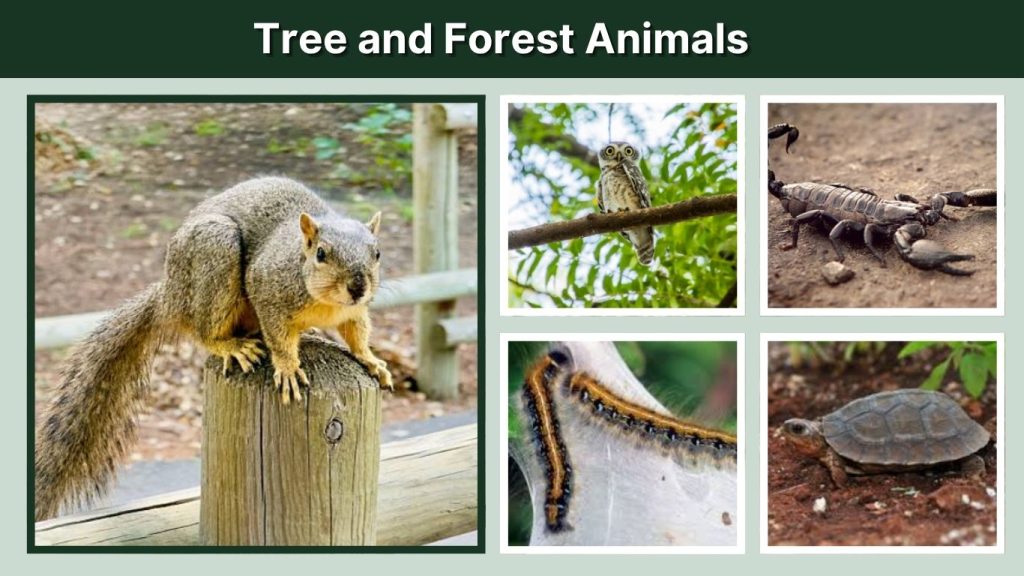
Tree and forest animals are species that spend much of their lives in wooded habitats filled with trees, branches, and dense vegetation. Many are excellent climbers or skilled at hiding among leaves and bark. Forest environments provide food, shelter, and nesting places for these animals. Some feed on nuts and fruits, while others hunt insects or smaller creatures. These animals help forests stay healthy by spreading seeds, controlling insects, and supporting natural ecosystems.
1. Fox Squirrel
The Fox Squirrel is one of the largest squirrel species in North America. It has reddish-brown fur and a bushy tail that helps with balance while climbing trees. Fox Squirrels feed on nuts, seeds, fruits, and tree buds. They often store food underground for later use. These squirrels are active during the daytime and spend much of their time jumping between branches.
2. Forest Owlet
The Forest Owlet is a small owl found in forest regions of India. It has round yellow eyes, spotted feathers, and strong claws for catching prey. Forest Owlets feed mainly on insects, lizards, and small mammals. They are active during both day and evening hours. Because of habitat loss, this rare owl species is considered endangered in the wild.
3. Forest Scorpion
The Forest Scorpion is a dark-colored scorpion that lives in humid forests and tropical environments. It hides under logs, rocks, and leaf litter during the daytime. Forest Scorpions feed on insects, spiders, and small creatures. They use their pincers to catch prey and their tails for defense. Most species prefer avoiding danger rather than attacking larger animals.
4. Forest Tent Caterpillar
The Forest Tent Caterpillar is a fuzzy caterpillar commonly found in forests across North America. It feeds on leaves from trees such as oak, maple, and aspen. Large groups of these caterpillars can sometimes strip trees of leaves during outbreaks. They later transform into moths after completing their life cycle inside protective cocoons.
5. Furrowed Wood Turtle
The Furrowed Wood Turtle is a freshwater turtle found in tropical forests and wetland regions. It has a rough shell with deep grooves and strong legs for moving across muddy ground. Furrowed Wood Turtles feed on fruits, plants, insects, and small aquatic animals. These turtles spend time both in water and on land while searching for food and safe resting places.
Rare and Unusual Animals
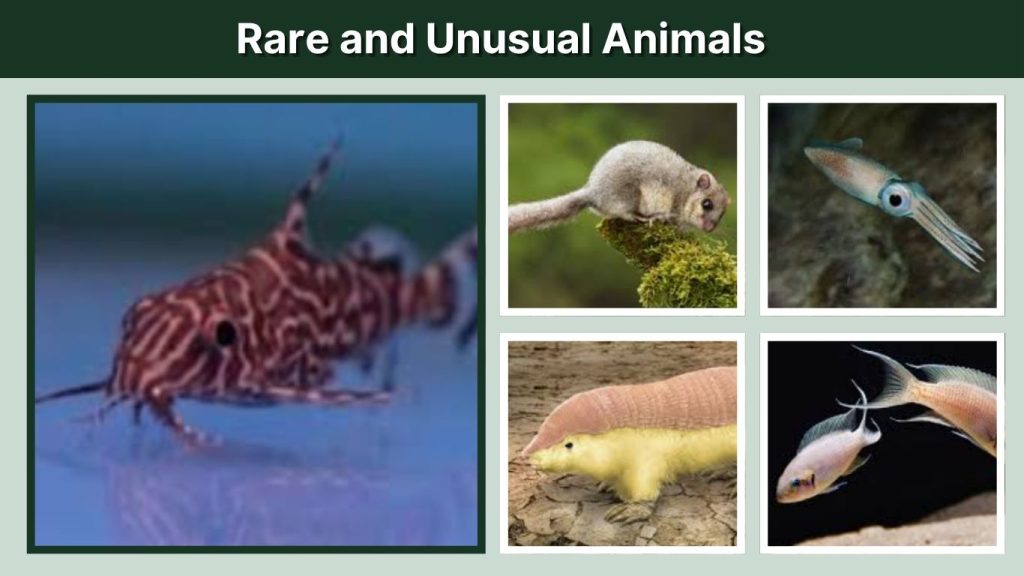
Rare and unusual animals are species with unique appearances, behaviors, or habitats that make them stand out in nature. Some are difficult to find because they live in remote forests, deserts, or underwater environments. Others have strange body shapes, rare colors, or uncommon survival abilities. These animals are important parts of biodiversity and help scientists better understand wildlife and ecosystems. Many rare species face threats from habitat loss and environmental changes around the world.
1. Fairy Armadillo
The Fairy Armadillo is the smallest armadillo species in the world. It lives in sandy grasslands of Argentina and spends most of its life underground. Fairy Armadillos have pale pink armor plates and strong claws for digging tunnels. They feed mainly on insects, worms, and plant material. Because they are rarely seen, very little is known about their behavior in the wild.
2. Fat Dormouse
The Fat Dormouse is a small furry rodent found in forests of Europe and parts of Asia. It has large eyes, soft fur, and a bushy tail. Fat Dormice feed on fruits, nuts, seeds, and insects. They are known for storing body fat before entering long periods of hibernation during colder months. These animals spend much of their time climbing trees at night.
3. Featherfin Catfish
The Featherfin Catfish is a unique fish known for its long flowing fins and spotted body patterns. It lives in African rivers and lakes where it feeds on insects, small fish, and plant material. Featherfin Catfish are popular in aquariums because of their unusual appearance and active behavior. They often hide near rocks and driftwood during the daytime.
4. Finchfish
The Finchfish is a lesser-known fish species found in ocean waters. It has a slim body and quick swimming movements that help it escape predators. Finchfish feed on plankton and tiny aquatic organisms. These fish often travel in groups and play an important role in marine food chains by providing food for larger ocean predators.
5. Firefly Squid
The Firefly Squid is a glowing squid species found in deep ocean waters near Japan. It produces bright blue light using special organs called photophores. Firefly Squids use their glowing bodies for communication, camouflage, and attracting prey. These small squids rise closer to the ocean surface at night, creating beautiful glowing displays in dark seawater.
Coastal and Reef Animals
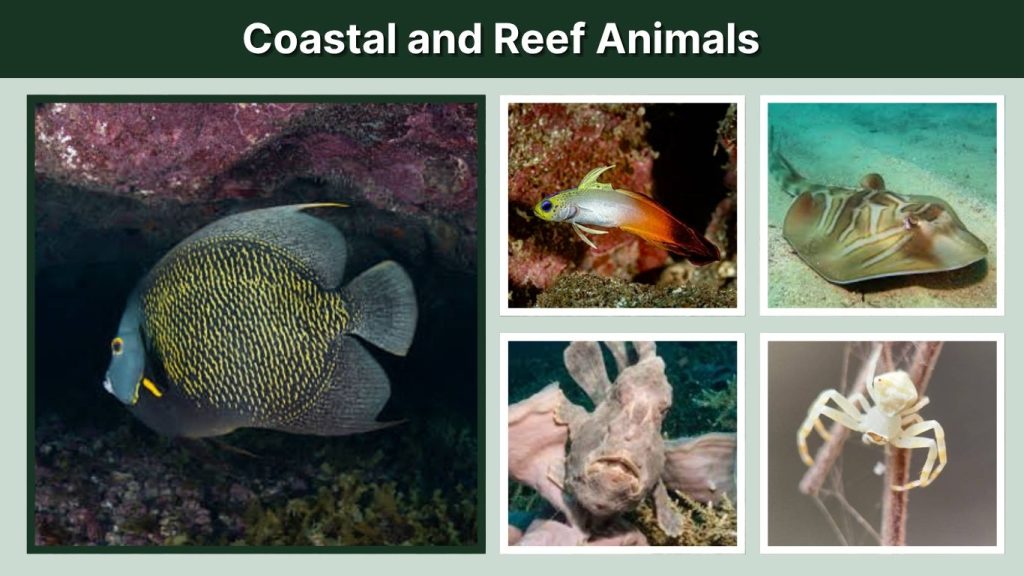
Coastal and reef animals live in warm ocean waters, coral reefs, and shallow coastal habitats. These environments are filled with colorful fish, marine predators, and unique sea creatures. Many reef animals depend on coral structures for shelter and protection from predators. Some feed on algae and tiny organisms, while others hunt smaller fish. Coastal ecosystems are among the richest habitats in the world and support a wide variety of marine life.
1. French Angelfish
The French Angelfish is a colorful fish found in coral reefs of the Atlantic Ocean and Caribbean Sea. It has dark scales with yellow edges that create a spotted appearance. French Angelfish feed on sponges, algae, and small marine organisms. These fish are commonly seen swimming near coral reefs and rocky underwater areas where they search for food and shelter.
2. Fire Goby
The Fire Goby is a small tropical fish known for its bright red, orange, and white colors. It lives in coral reefs where it feeds on tiny plankton floating in the water. Fire Gobies are peaceful fish that quickly hide inside reef holes when frightened. Their vivid colors and graceful swimming make them popular in saltwater aquariums.
3. Fiddler Ray
The Fiddler Ray is a flat-bodied marine animal related to sharks and rays. It lives in sandy coastal waters where it feeds on crabs, shellfish, and small fish. Fiddler Rays often rest partly buried in sand to hide from predators and surprise prey. Their wide fins help them glide smoothly through shallow ocean habitats.
4. Frogfish
The Frogfish is an unusual fish known for its excellent camouflage abilities. It lives in coral reefs and blends perfectly with rocks, coral, and sponges. Frogfish use a small lure near their mouths to attract prey before quickly swallowing it. These fish are slow swimmers and rely on camouflage rather than speed to survive in reef environments.
5. Flower Crab Spider
The Flower Crab Spider is a small spider often found on flowers near coastal and garden habitats. It can change color to match flowers, helping it hide from predators and surprise insects. Flower Crab Spiders feed mainly on bees, butterflies, and other pollinators that land nearby. Their side-walking movement and strong front legs resemble the movements of crabs.
Hunting and Fast Animals
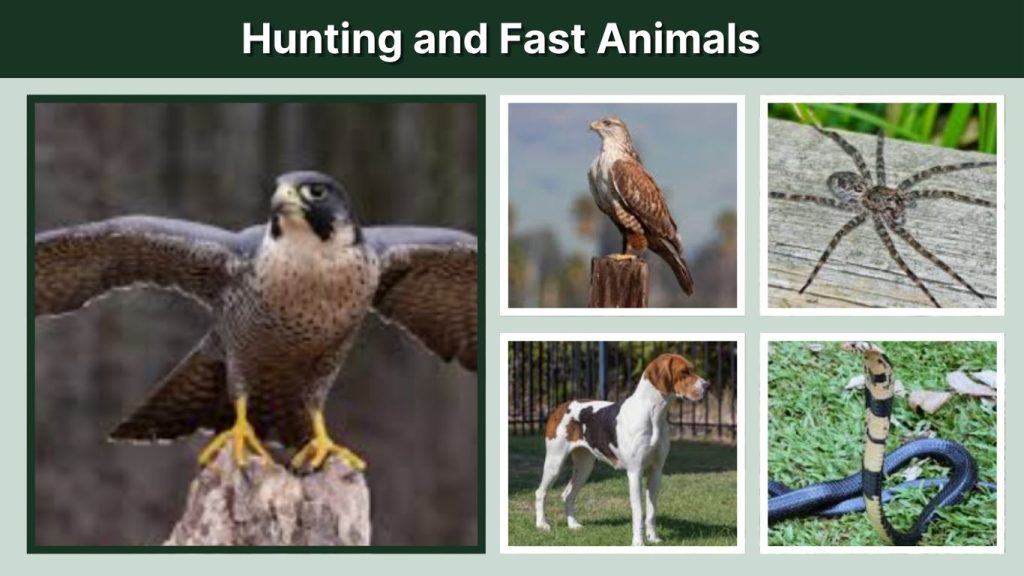
Hunting and fast animals are known for their speed, sharp senses, and strong survival instincts. These animals often rely on quick movements, powerful eyesight, or stealth to catch prey or escape danger. Some are skilled fliers, while others hunt on land or among trees. Fast and active animals are important predators that help control populations of smaller creatures. Their agility and intelligence make them highly successful hunters in many different environments.
1. Falcon
The Falcon is one of the fastest animals in the world. Falcons have long pointed wings and excellent eyesight that help them hunt birds and small animals from the sky. Some falcon species can dive at incredible speeds while chasing prey. They live in mountains, forests, grasslands, and cities. Falcons are powerful hunters known for their quick attacks and strong flying abilities.
2. Ferruginous Hawk
The Ferruginous Hawk is a strong bird of prey found in open grasslands and plains of North America. It has broad wings and sharp talons for catching rabbits, squirrels, and other small mammals. Ferruginous Hawks often soar high above fields while searching for prey below. Their excellent vision and quiet flight make them effective daytime hunters.
3. Fishing Spider
The Fishing Spider is a large spider known for hunting near ponds, rivers, and wetlands. Unlike many spiders, Fishing Spiders can walk on water surfaces and even dive underwater to catch prey. They feed mainly on insects, tadpoles, and small fish. Their fast movements and sensitive legs help them detect vibrations made by nearby animals in the water.
4. Foxhound
The Foxhound is an energetic dog breed developed for long-distance hunting. Foxhounds have strong legs, powerful noses, and excellent stamina. They were traditionally used to chase foxes across fields and forests. These dogs are social, active, and enjoy running in groups. Their speed and endurance make them successful tracking and hunting companions.
5. Forest Cobra
The Forest Cobra is a fast-moving snake found in African forests and woodlands. It uses venom to hunt rodents, birds, and reptiles. Forest Cobras can move quickly through dense vegetation and are excellent climbers. Although highly dangerous, they usually avoid confrontation and prefer escaping when threatened. Their speed and powerful venom make them skilled predators in forest ecosystems.
Grassland and Field Animals
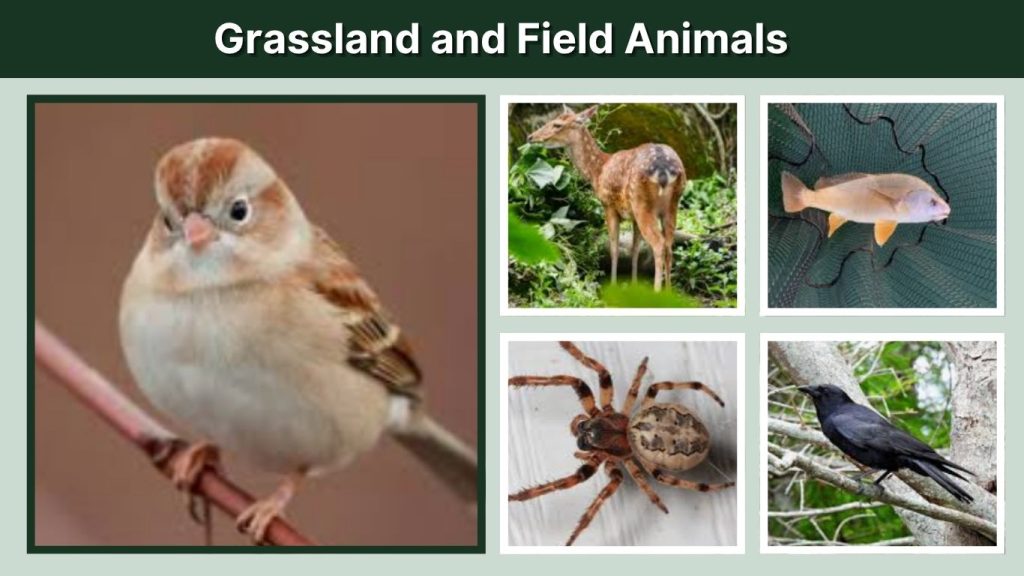
Grassland and field animals live in open landscapes filled with grasses, shrubs, and scattered trees. These habitats provide food, nesting areas, and open space for movement. Many grassland animals are fast runners or excellent at hiding among tall plants to avoid predators. Some feed on seeds and plants, while others hunt insects or smaller animals. Grassland ecosystems support a wide variety of wildlife and are important natural habitats across many regions of the world.
1. Field Sparrow
The Field Sparrow is a tiny songbird commonly found in grassy fields, meadows, and open woodland edges. It has soft brown feathers and a pink beak. Field Sparrows feed mainly on seeds and insects. Their sweet whistling songs are often heard during spring and summer. These birds usually build small nests hidden among grasses or low shrubs for protection.
2. Formosan Deer
The Formosan Deer is a deer species native to Taiwan. It lives in grasslands and forest edges where it feeds on grass, leaves, and plants. Formosan Deer are gentle herbivores with slim bodies and alert senses. They were once rare in the wild because of hunting but have been protected through conservation programs aimed at restoring their populations.
3. Freshwater Drum
The Freshwater Drum is a freshwater fish found in rivers and lakes of North America. It feeds on insects, small fish, and aquatic animals near muddy or sandy bottoms. Freshwater Drums are known for producing drumming sounds using muscles near their swim bladders. These fish are adaptable and can survive in many freshwater environments.
4. Furrow Orb Weaver
The Furrow Orb Weaver is a small spider commonly found in gardens, grasslands, and fields. It creates circular webs to catch flying insects such as flies and mosquitoes. Furrow Orb Weavers are harmless to humans and play an important role in controlling insect populations naturally. Their body colors and patterns often help them blend into plants and tree bark.
5. Fish Crow
The Fish Crow is a medium-sized black bird found near rivers, wetlands, and coastal grasslands. Fish Crows feed on insects, fish, eggs, fruits, and food scraps. They are intelligent birds known for their problem-solving skills and loud calls. These adaptable birds often gather in groups while searching for food near water and open fields.
FAQs
What are some common animals that start with “F”?
Some common animals that start with “F” include the Falcon, Fox, Frog, Flamingo, and Ferret. These animals can be mammals, birds, reptiles, fish, or insects found in different habitats around the world.
Which animal starting with “F” is the fastest?
The Falcon is considered the fastest animal starting with “F.” Some falcons, especially peregrine falcons, can dive at extremely high speeds while hunting prey. Their strong wings, sharp eyesight, and quick movements make them excellent aerial hunters in nature.
Are there dangerous animals that start with “F”?
Yes, several animals beginning with “F” can be dangerous. Examples include the Forest Cobra, Funnel-Web Spider, and Frilled Shark. These animals may use venom, sharp teeth, or powerful hunting abilities for defense and survival.
What habitats do “F” animals live in?
Animals starting with “F” live in many habitats such as forests, deserts, oceans, rivers, grasslands, wetlands, and polar regions. For example, the Fennec Fox lives in deserts, while the Fin Whale lives in cold ocean waters around the world.
Which “F” animals are popular pets?
Popular pets that start with “F” include the French Bulldog, Ferret, and Flat-Coated Retriever. These animals are known for their friendly personalities, playful behavior, and strong relationships with humans.