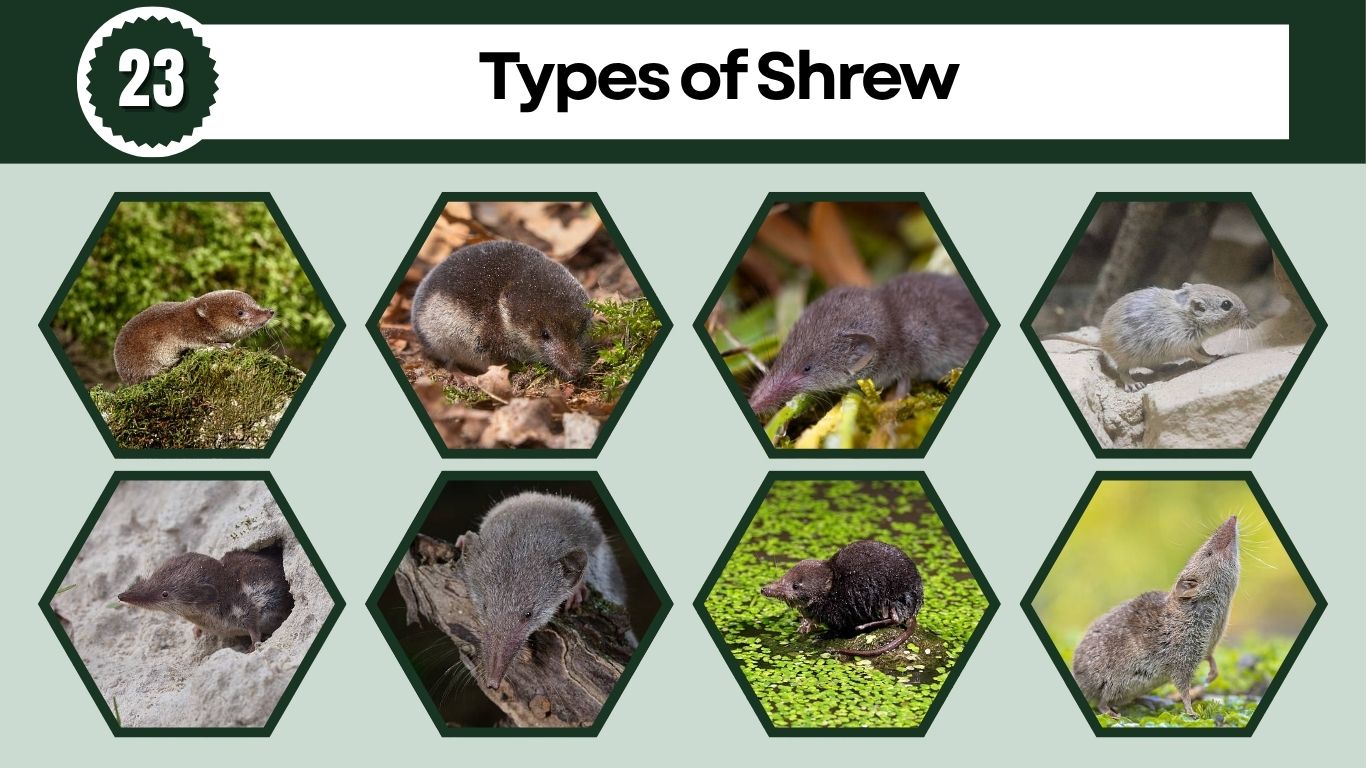
Shrews are tiny, active mammals known for their pointed snouts, quick movements, and insect-eating habits. Although they may look like mice, shrews are not rodents. They belong to a different group of small mammals and are usually more closely linked with insects, worms, spiders, and other invertebrates. Different types of shrews live in forests, grasslands, wetlands, deserts, mountains, and even near human homes. This guide covers 23 types of shrews with simple identification details to help readers recognize each species more easily.
1. Eurasian Pygmy Shrew
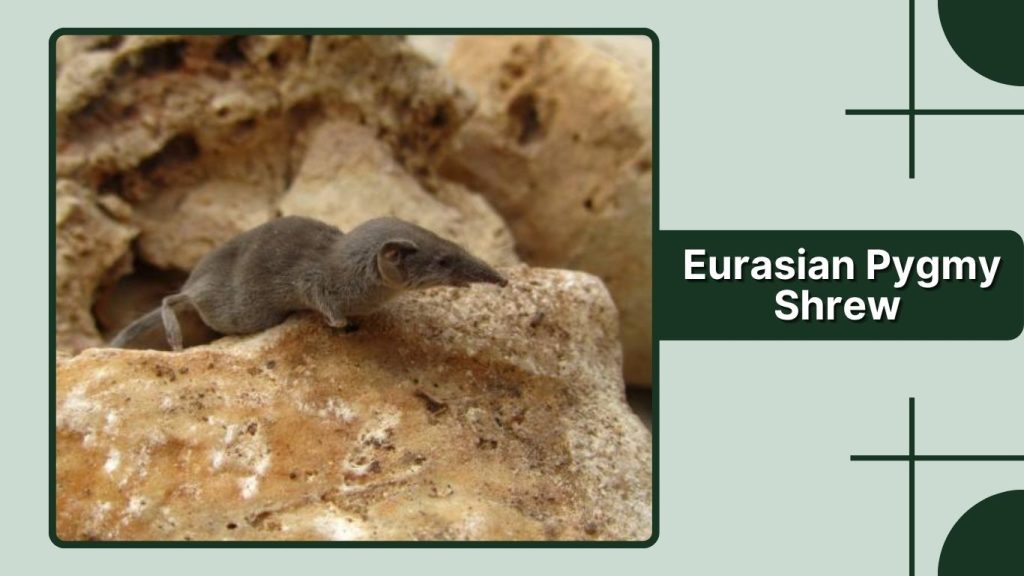
The Eurasian Pygmy Shrew is a tiny insect-eating mammal found across much of Europe and northern Asia. Its scientific name is Sorex minutus. Although very small, it is highly active and spends much of its time searching for food in dense vegetation, leaf litter, grasslands, wetlands, and woodland edges.
Identification
- Very small body with a long, pointed snout
- Short, dense fur, usually grey-brown to brown on the back
- Pale greyish-white underside
- Tiny eyes and small ears, often partly hidden by fur
- Long tail compared with its body size
- Fast-moving and usually seen close to ground cover
Habitat
The Eurasian Pygmy Shrew lives in places with plenty of cover. It can be found in forests, grasslands, heathlands, marshes, bogs, coastal dunes, and rocky areas. Dense vegetation helps protect it from predators and gives it good hunting space.
Diet
This shrew mainly eats small insects, spiders, worms, and other tiny invertebrates. Because it has a very high metabolism, it must feed often throughout the day and night. It is an important small predator in the ecosystem.
Behavior
The Eurasian Pygmy Shrew is usually solitary and very active. It moves through hidden pathways in grass and leaf litter while searching for prey. Due to its tiny size, it avoids open spaces and depends on thick ground cover for safety.
2. Common Shrew
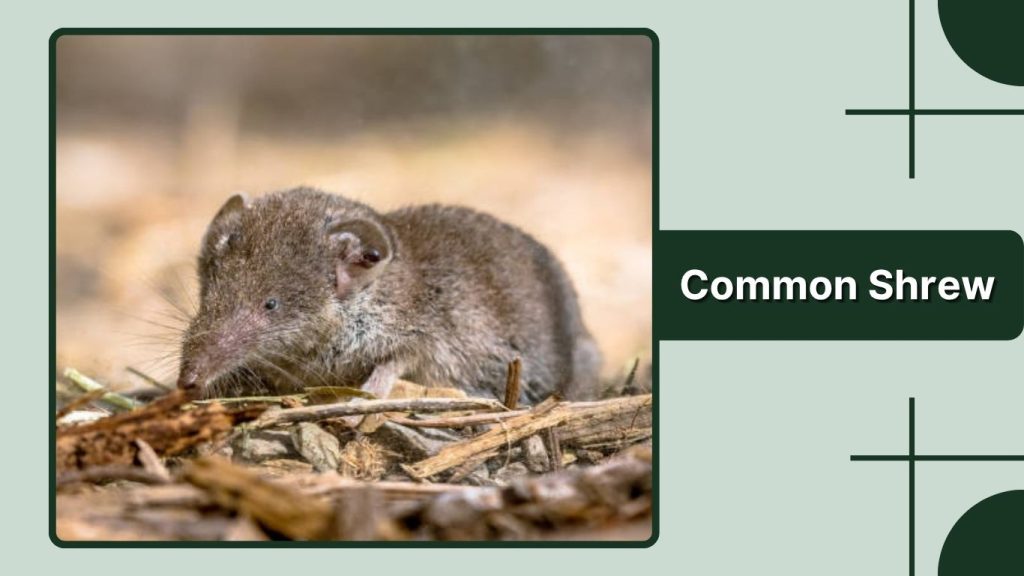
The Common Shrew is a small, active mammal found widely across Europe and parts of Asia. Its scientific name is Sorex araneus. This tiny animal is often seen in gardens, grasslands, woodlands, hedgerows, and damp areas. Although it looks similar to a mouse, it is not a rodent. It belongs to a group of insect-eating mammals and spends most of its life hunting for small prey.
Identification
- Small body with a long, pointed nose
- Brown fur on the back and lighter fur underneath
- Tiny eyes and small rounded ears
- Long whiskers used for sensing surroundings
- Short legs and a quick, nervous movement
- Tail is medium-length and covered with fine hair
Habitat
The Common Shrew prefers places with thick ground cover. It lives in forests, meadows, gardens, farmland edges, and hedgerows. It often hides under leaves, grass, logs, and stones to stay safe from predators.
Diet
The Common Shrew mainly eats insects, spiders, worms, slugs, and other small invertebrates. It has a very fast metabolism, so it must eat frequently. It may search for food both during the day and night.
Behavior
This shrew is usually solitary and territorial. It moves quickly through tunnels and hidden pathways in vegetation. Because of its small size, it avoids open areas and depends on cover for protection.
3. American Pygmy Shrew
The American Pygmy Shrew is one of the smallest mammals in North America. Its scientific name is Sorex hoyi. This tiny shrew is difficult to spot because of its small size and secretive lifestyle. It usually lives close to the ground, moving through leaf litter, moss, grasses, and hidden plant cover. Although it is very small, it is an active hunter and plays an important role in controlling tiny insects and invertebrates.
Identification
- Extremely small body size
- Long, narrow, pointed snout
- Soft brownish or grey-brown fur
- Lighter underside than the back
- Very small eyes and ears
- Short legs with quick movements
- Thin tail covered with fine hair
Habitat
The American Pygmy Shrew lives in forests, wetlands, grasslands, bogs, and areas with thick ground cover. It prefers damp places where insects and other small prey are common. Leaf litter, moss, and fallen logs provide shelter and hunting space.
Diet
This shrew mainly feeds on insects, spiders, worms, mites, and other small invertebrates. Because of its fast metabolism, it must eat often. It spends much of its time searching for food under leaves, soil, and plant debris.
Behavior
The American Pygmy Shrew is shy, fast, and mostly hidden from view. It is usually solitary and active during both day and night. Its small size helps it move through narrow spaces where larger animals cannot reach.
4. Masked Shrew
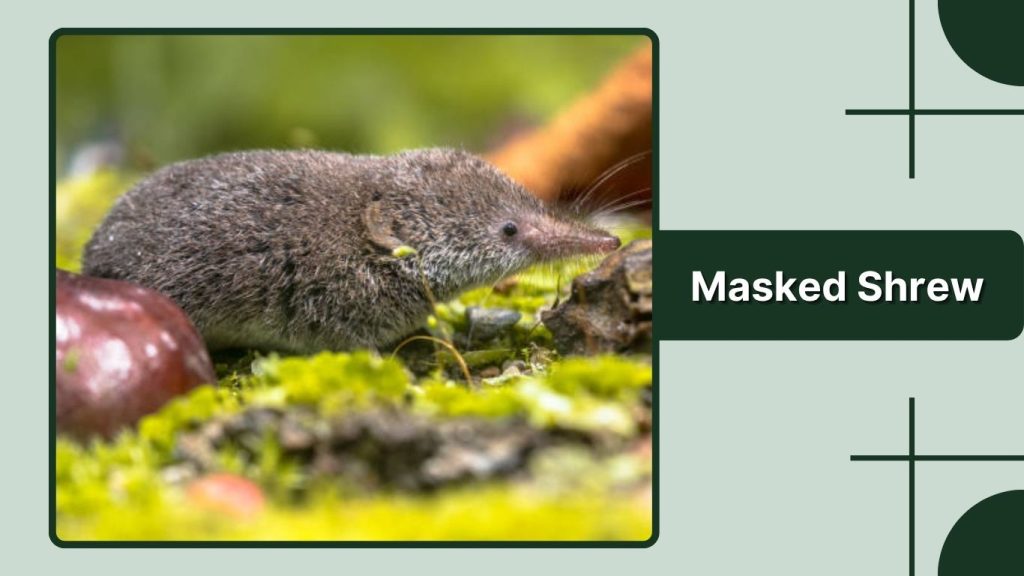
The Masked Shrew is a small insect-eating mammal found across northern North America. Its scientific name is Sorex cinereus. It gets its common name from the darker fur around its face, which can look like a light mask. This shrew is active, quick, and usually hidden under grass, leaves, and low vegetation. It is often mistaken for a mouse, but its pointed snout and insect-based diet make it clearly different.
Identification
- Small body with a pointed nose
- Grey-brown to brown fur on the back
- Paler grey or whitish underside
- Darker face area, giving a masked look
- Tiny eyes and small ears
- Long whiskers for sensing prey
- Slender tail with fine hair
Habitat
The Masked Shrew lives in many types of habitats, including forests, meadows, marshes, grasslands, gardens, and river edges. It prefers places with moist soil and thick cover, where it can hide from predators and find food easily.
Diet
This shrew eats insects, spiders, worms, snails, and other small invertebrates. It hunts close to the ground and uses its sharp senses to find prey. Since it burns energy quickly, it needs to feed many times each day.
Behavior
The Masked Shrew is usually solitary and very active. It moves through hidden trails in grass and leaf litter. It avoids open spaces and depends on dense ground cover for safety from birds, snakes, and larger mammals.
5. Least Shrew
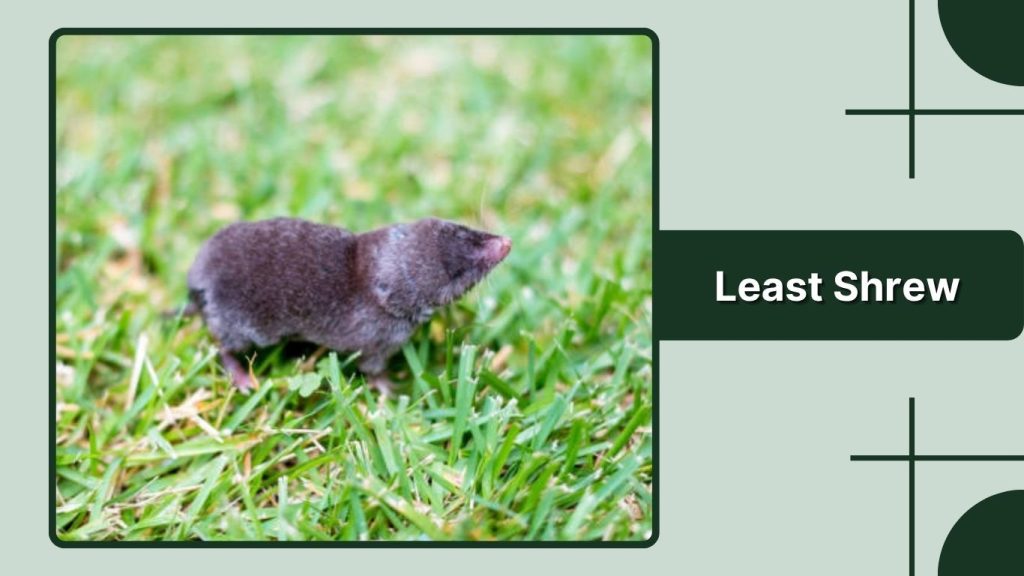
The Least Shrew is a tiny mammal found mainly in North America. Its scientific name is Cryptotis parva. Unlike many long-tailed shrews, this species has a short tail and a compact body. It is often found in grassy places, open fields, and areas with thick ground cover. Though small, it is an active predator that helps control insects and other tiny animals in its habitat.
Identification
- Very small, compact body
- Short tail compared with many other shrews
- Pointed snout with long whiskers
- Grey-brown to brown fur
- Lighter fur on the underside
- Tiny eyes and small hidden ears
- Quick movement through grass and leaf litter
Habitat
The Least Shrew commonly lives in grasslands, meadows, fields, gardens, and woodland edges. It prefers areas with thick vegetation, where it can hide from predators and search for food safely.
Diet
This shrew eats insects, spiders, worms, snails, and other small invertebrates. It may also feed on tiny animal remains when available. Because of its fast metabolism, it must search for food frequently.
Behavior
The Least Shrew is active and secretive. It often moves through small tunnels or hidden trails under grass. Unlike many shrews, it may sometimes live near other Least Shrews, especially where food and shelter are plentiful.
6. Cinereus Shrew
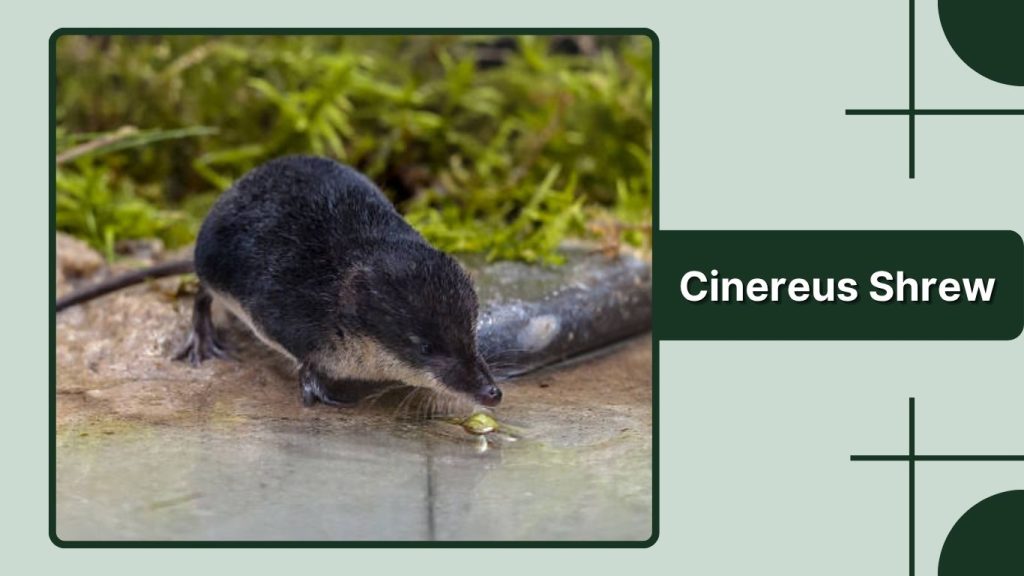
The Cinereus Shrew is a small insect-eating mammal found across much of North America. Its scientific name is Sorex cinereus. It is also commonly known as the Masked Shrew, but it is often listed separately in animal identification guides. This shrew is very active and usually stays hidden under leaves, grasses, moss, and other ground cover. Its tiny size and quick movement make it difficult to observe in the wild.
Identification
- Small, slender body
- Long, pointed snout
- Grey-brown fur on the back
- Paler grey or whitish underside
- Tiny eyes and small ears
- Long whiskers for sensing surroundings
- Thin tail with fine hair
Habitat
The Cinereus Shrew lives in forests, grasslands, wetlands, meadows, gardens, and riverbanks. It prefers moist places with thick vegetation or leaf litter, where it can hide from predators and search for food safely.
Diet
This shrew mainly feeds on insects, spiders, worms, snails, larvae, and other small invertebrates. It has a fast metabolism, so it must eat often throughout the day and night.
Behavior
The Cinereus Shrew is usually solitary and secretive. It moves quickly through hidden pathways in grass, moss, and fallen leaves. It avoids open spaces and relies on dense cover for protection from birds, snakes, and larger mammals.
7. Northern Short-tailed Shrew
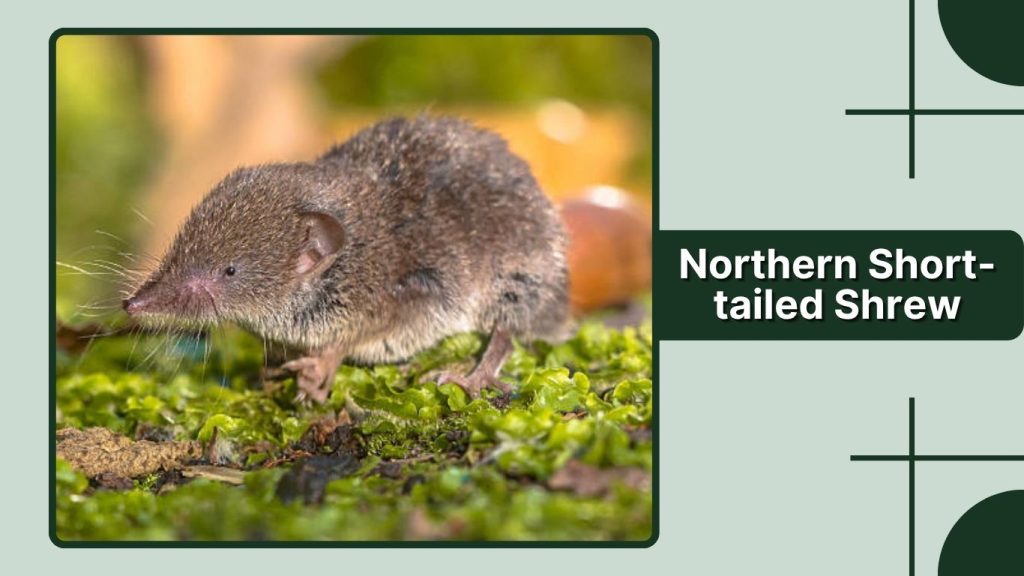
The Northern Short-tailed Shrew is a small but powerful shrew found in North America. Its scientific name is Blarina brevicauda. It has a chunky body, short tail, and dense fur, making it easy to separate from many long-tailed shrews. This species is also known for having venomous saliva, which helps it capture prey.
Identification
- Compact, heavy-looking body
- Very short tail
- Dense grey to dark grey fur
- Long, pointed snout
- Tiny eyes and small hidden ears
- Short legs with strong front feet
- Often looks more mole-like than mouse-like
Habitat
The Northern Short-tailed Shrew lives in forests, fields, wetlands, gardens, and grassy areas. It prefers moist soil with plenty of leaf litter, logs, roots, and ground cover. These places help it hide and search for food.
Diet
This shrew eats insects, worms, snails, spiders, centipedes, and other small animals. It may also eat seeds, fungi, and carrion. Its venomous saliva helps weaken prey, allowing it to store food for later.
Behavior
The Northern Short-tailed Shrew is active during both day and night. It often travels through tunnels under leaves, grass, and soil. It is mostly solitary and can be aggressive when defending its space.
8. Southern Short-tailed Shrew
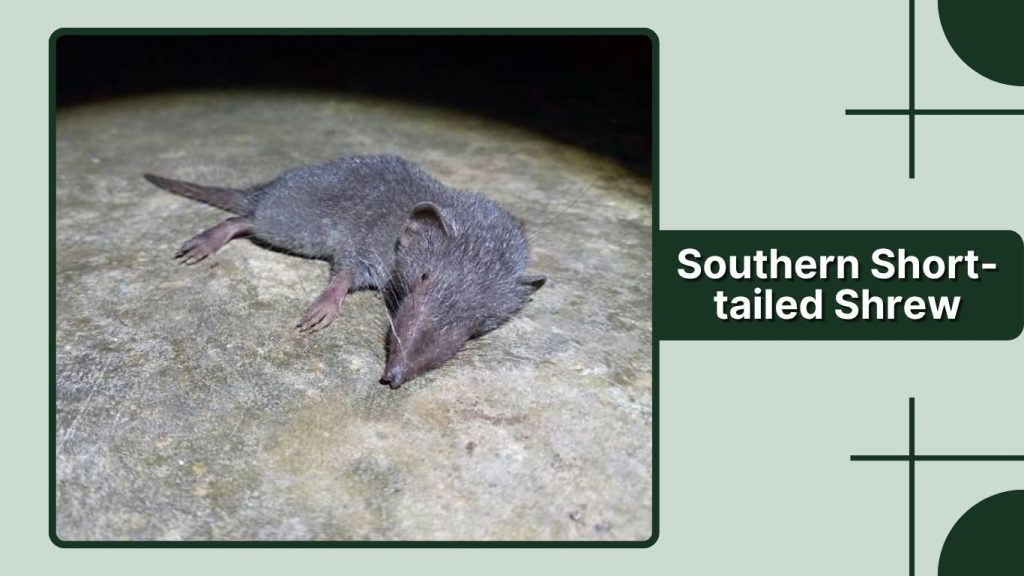
The Southern Short-tailed Shrew is a small, stocky mammal found in the southeastern United States. Its scientific name is Blarina carolinensis. It looks similar to the Northern Short-tailed Shrew but is generally smaller. This shrew has a short tail, dense fur, and a pointed snout. It spends much of its time moving through leaf litter, soil, grass, and hidden tunnels while searching for food.
Identification
- Small, compact body shape
- Very short tail
- Grey to dark grey fur
- Long, pointed snout
- Tiny eyes and small ears hidden in fur
- Short legs with strong feet
- Mole-like appearance
Habitat
The Southern Short-tailed Shrew lives in forests, grasslands, wetlands, fields, and gardens. It prefers moist areas with soft soil, thick vegetation, logs, and leaf litter. These places provide shelter and plenty of small prey.
Diet
This shrew eats insects, worms, spiders, snails, centipedes, and other small invertebrates. It may also eat small vertebrates or carrion when available. Like other short-tailed shrews, it has venomous saliva that helps subdue prey.
Behavior
The Southern Short-tailed Shrew is active during the day and night. It usually lives alone and moves through hidden runways under plants and soil. It depends on smell, touch, and whiskers more than eyesight.
9. Elliot’s Short-tailed Shrew
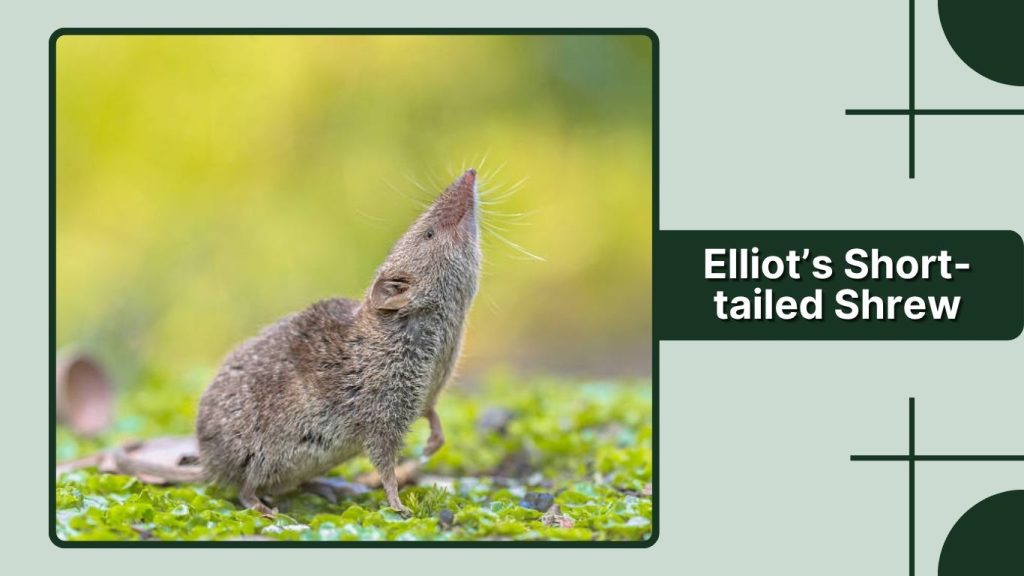
The Elliot’s Short-tailed Shrew is a small shrew found in parts of North America. Its scientific name is Blarina hylophaga. It has a compact body, short tail, and soft greyish fur. Like other short-tailed shrews, it is an active hunter that spends much of its time close to the ground. This species is usually hidden under leaves, grass, logs, and loose soil.
Identification
- Small, stocky body
- Very short tail
- Grey to brownish-grey fur
- Long, pointed snout
- Tiny eyes with poor vision
- Small ears hidden in fur
- Strong feet for moving through soil and litter
Habitat
Elliot’s Short-tailed Shrew lives in prairies, grasslands, woodland edges, fields, and moist low areas. It prefers places with thick ground cover, soft soil, and plenty of insects.
Diet
This shrew feeds on insects, worms, spiders, snails, centipedes, and other small animals. It may also eat carrion when available. Its venomous saliva helps it capture and weaken prey.
Behavior
Elliot’s Short-tailed Shrew is secretive and usually solitary. It moves through hidden paths under grass and leaves. It is active during both day and night, depending on food availability and safety.
10. Water Shrew
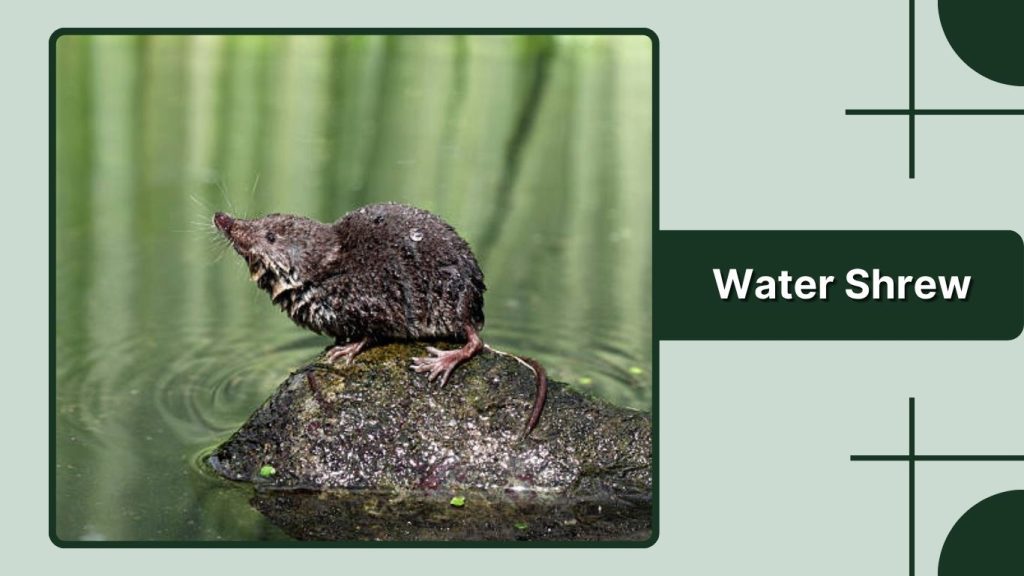
The Water Shrew is a small semi-aquatic shrew that lives near clean streams, ponds, marshes, and wetland edges. Its scientific name is often linked with Neomys fodiens in Europe, though “water shrew” can also describe similar species in other regions. This shrew is specially adapted for moving through water while hunting tiny aquatic animals.
Identification
- Small body with a long, pointed snout
- Dark fur on the back and pale underside
- Stiff hairs on feet that help with swimming
- Long tail with a fringe of hairs
- Tiny eyes and small ears
- Fast movement on land and in water
- Often found close to streams or wet habitats
Habitat
The Water Shrew prefers wet places with plenty of cover. It lives beside rivers, streams, ponds, ditches, marshes, and damp woodlands. Clean water and dense bank vegetation are important for shelter and hunting.
Diet
This shrew eats aquatic insects, larvae, worms, small crustaceans, snails, and sometimes tiny fish or amphibians. It hunts both in shallow water and along muddy banks.
Behavior
The Water Shrew is active, secretive, and a strong swimmer. It dives underwater to catch prey and then returns to land to eat. It usually lives alone and hides among roots, grass, stones, and streamside plants.
11. Eurasian Water Shrew
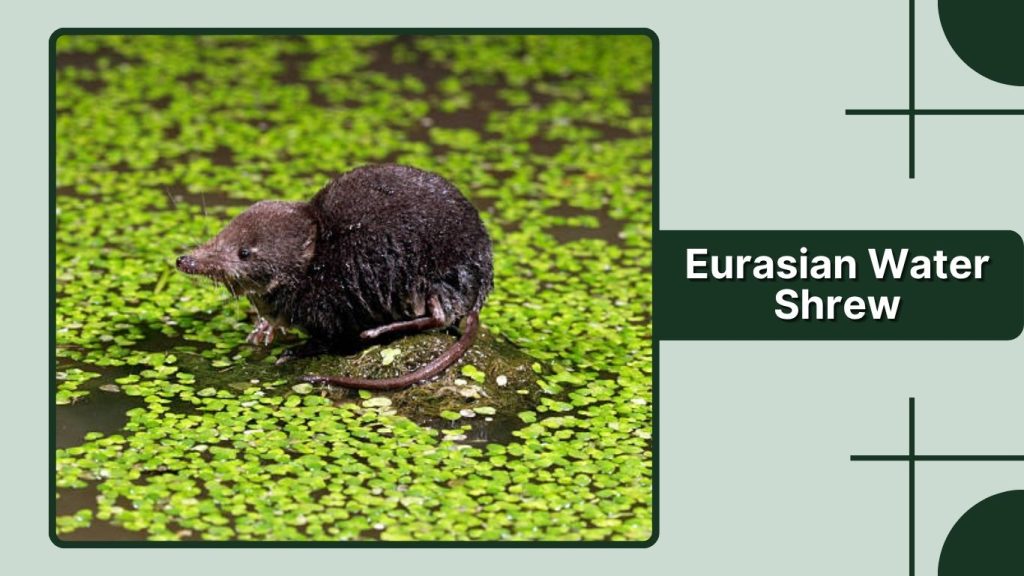
The Eurasian Water Shrew is a small semi-aquatic mammal found across Europe and parts of Asia. Its scientific name is Neomys fodiens. This shrew is well adapted for life near water and is one of the largest shrews in its range. It has dark upper fur, a pale underside, and special hairs on its feet and tail that help it swim efficiently.
Identification
- Dark brown to blackish fur on the back
- White or pale grey underside
- Long, pointed snout
- Stiff hairs on feet for swimming
- Tail has a fringe of hairs underneath
- Tiny eyes and small ears
- Usually found near freshwater habitats
Habitat
The Eurasian Water Shrew lives beside streams, rivers, ponds, marshes, ditches, and wet woodlands. It prefers clean water with thick vegetation, roots, stones, and bankside cover where it can hide and hunt.
Diet
This shrew feeds on aquatic insects, larvae, worms, snails, small crustaceans, and sometimes tiny fish or amphibians. It hunts in shallow water and along muddy edges.
Behavior
The Eurasian Water Shrew is active, secretive, and a skilled swimmer. It dives underwater to catch prey and often returns to land to eat. It usually lives alone and defends its feeding area.
12. Mediterranean Water Shrew
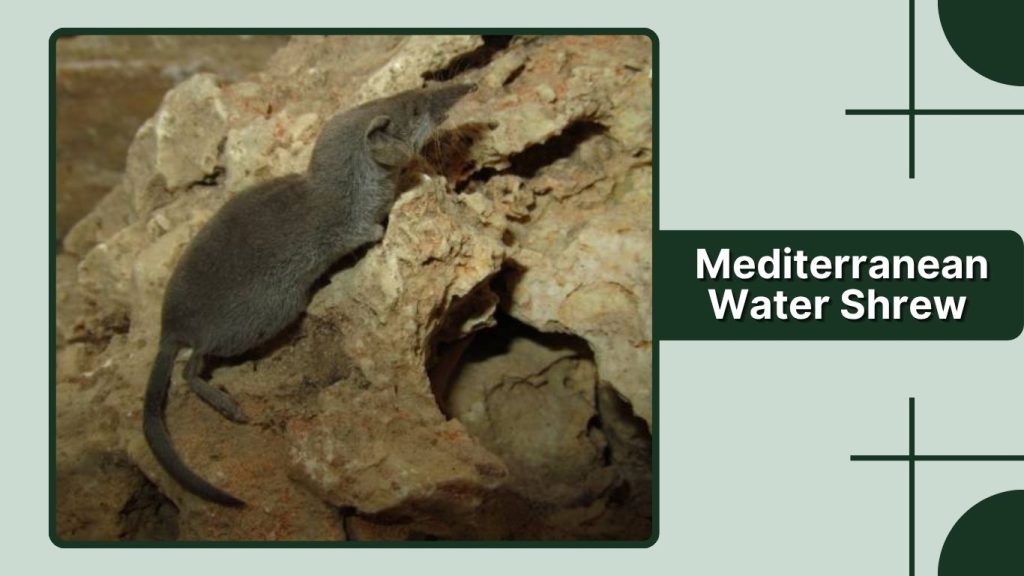
The Mediterranean Water Shrew is a small semi-aquatic mammal found in parts of southwestern Europe and nearby Mediterranean regions. Its scientific name is Neomys anomalus. It is similar to the Eurasian Water Shrew but is usually smaller and less strongly adapted to swimming. This shrew often lives near damp habitats, streams, marshes, and wet grassy places where it can find enough small prey.
Identification
- Small body with a long, pointed snout
- Dark brown to grey-brown fur on the back
- Lighter grey or whitish underside
- Small eyes and ears mostly hidden by fur
- Tail is fairly long but less fringed than larger water shrews
- Feet may have short stiff hairs for swimming
- Usually found near wet or damp habitats
Habitat
The Mediterranean Water Shrew lives around streams, springs, marshes, wet meadows, ditches, and damp woodland edges. It prefers places with moist soil, vegetation, stones, and roots that provide cover.
Diet
This shrew feeds on insects, larvae, worms, spiders, snails, and other small invertebrates. It may hunt near water and sometimes enter shallow water for food.
Behavior
The Mediterranean Water Shrew is secretive and usually solitary. It moves through grass, roots, and wet ground cover while searching for prey. It is active during both day and night.
13. Elephant Shrew
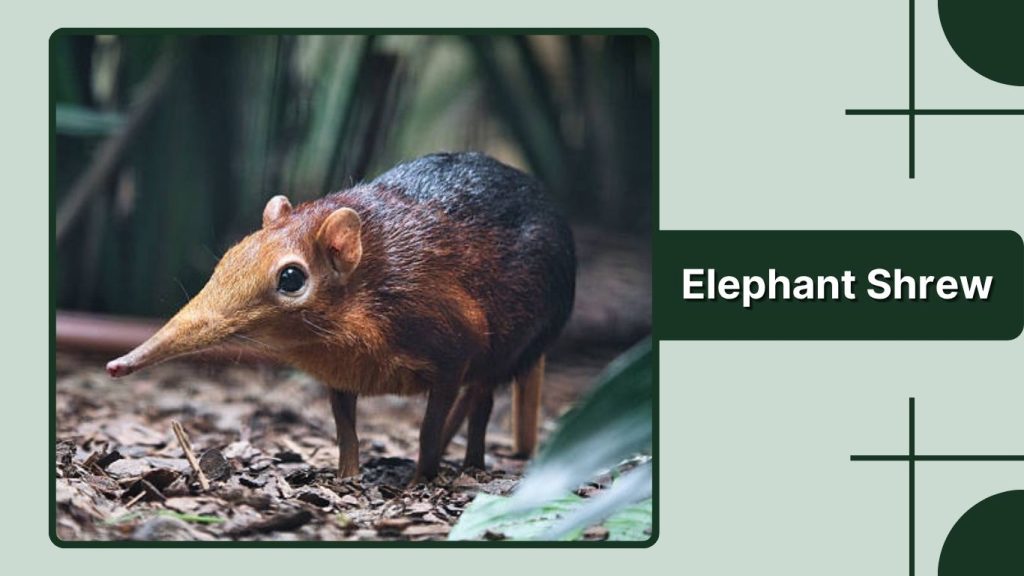
The Elephant Shrew is a small, fast-moving mammal found mainly in Africa. It is also called a sengi. Although its name includes “shrew,” it is not a true shrew. Elephant shrews are known for their long, flexible noses, which look somewhat like a tiny elephant trunk. They live in dry forests, grasslands, rocky areas, and bushy habitats.
Identification
- Small body with long, slender legs
- Long, flexible nose like a tiny trunk
- Large eyes and rounded ears
- Brown, grey, or reddish-brown fur
- Long tail, often nearly as long as the body
- Fast running movement
- More rabbit-like or mouse-like than true shrews
Habitat
Elephant shrews live in many African habitats, including savannas, forests, scrublands, rocky hills, and dry grasslands. They prefer areas with hiding places such as bushes, rocks, roots, and leaf litter.
Diet
Elephant shrews mainly eat insects, ants, termites, beetles, spiders, and other small invertebrates. Some species may also eat seeds, fruits, or plant material when available.
Behavior
Elephant shrews are alert, quick, and mostly active during the day. They often create small pathways through vegetation and use them to escape predators. Many species live alone or in pairs and depend on speed to survive.
14. Asian House Shrew
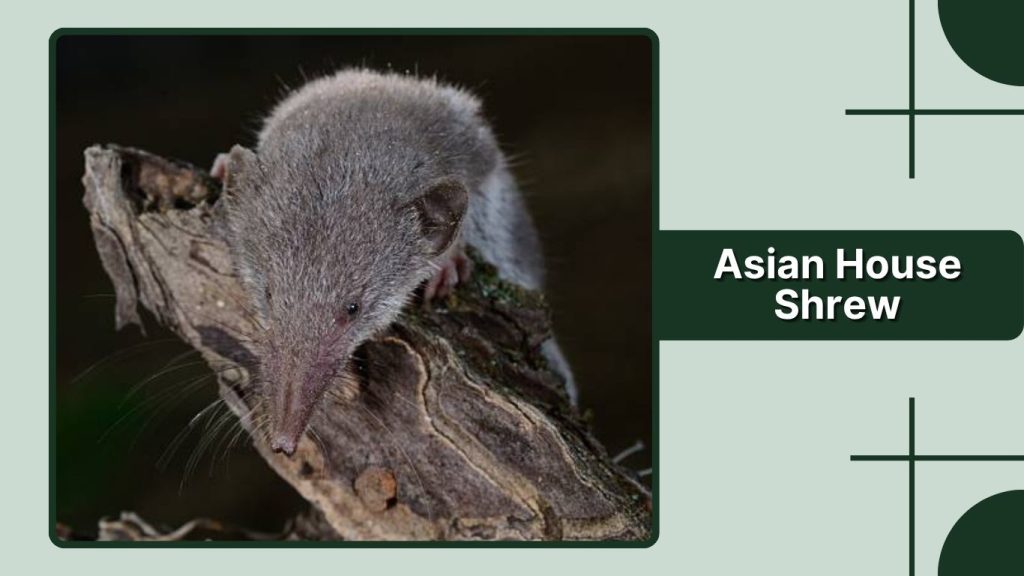
The Asian House Shrew is a small mammal commonly found near human homes, farms, gardens, and storage areas. Its scientific name is Suncus murinus. It is also called the house musk shrew because it can produce a strong musky smell. This shrew is larger than many other shrews and is often mistaken for a mouse or young rat.
Identification
- Small to medium-sized shrew body
- Long, pointed snout
- Grey-brown to dark grey fur
- Pale underside
- Small eyes and rounded ears
- Long tail with sparse hair
- Strong musky smell when disturbed
Habitat
The Asian House Shrew lives close to people in villages, towns, farms, gardens, markets, and houses. It also occurs in fields, grasslands, scrublands, and forest edges where food and shelter are available.
Diet
This shrew eats insects, cockroaches, beetles, worms, spiders, small lizards, and food scraps. Its diet makes it useful for controlling pests around homes and farms.
Behavior
The Asian House Shrew is mostly active at night. It moves quickly along walls, drains, bushes, and hidden corners while searching for food. It is usually solitary and may make sharp squeaking sounds when threatened.
15. Etruscan Shrew
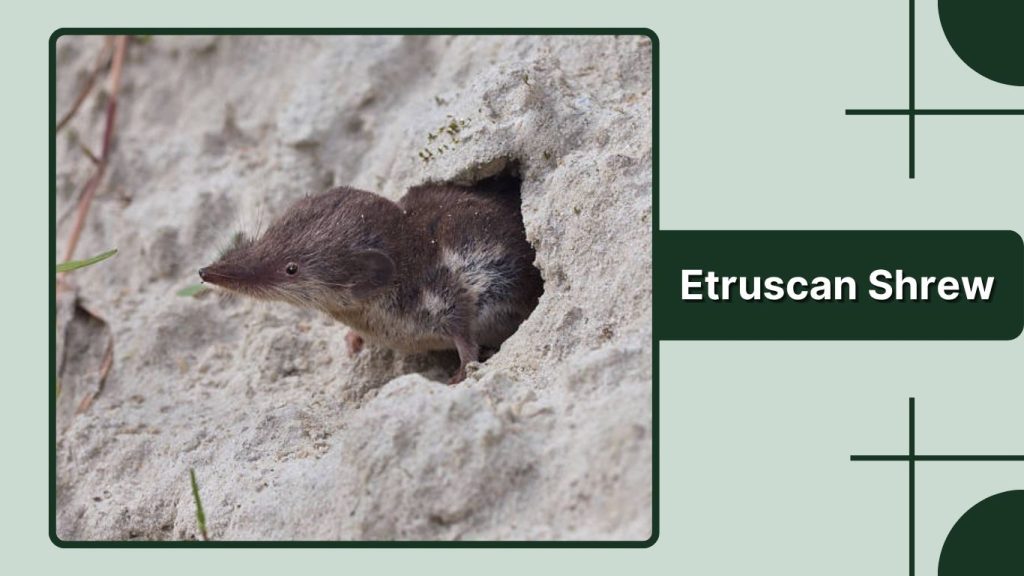
The Etruscan Shrew is one of the smallest mammals in the world. Its scientific name is Suncus etruscus. This tiny animal has a very light body, a pointed snout, and quick movements. Despite its size, it is an active hunter with a very fast heartbeat and high energy needs. It is usually found in warm regions with grass, shrubs, rocks, and dry ground cover.
Identification
- Extremely tiny body size
- Long, pointed snout
- Grey-brown to pale brown fur
- Lighter underside
- Very small eyes and ears
- Thin tail with fine hair
- Quick, restless movement
Habitat
The Etruscan Shrew lives in warm, dry places such as grasslands, shrublands, gardens, rocky slopes, and field edges. It prefers areas with low vegetation, stones, roots, and leaf litter for shelter.
Diet
This shrew feeds mainly on insects, spiders, larvae, worms, and other tiny invertebrates. Because of its rapid metabolism, it must eat often and hunt actively throughout the day and night.
Behavior
The Etruscan Shrew is secretive, fast, and usually solitary. It moves through small spaces under plants and stones while searching for prey. Its tiny size helps it hide easily from predators.
16. Desert Shrew
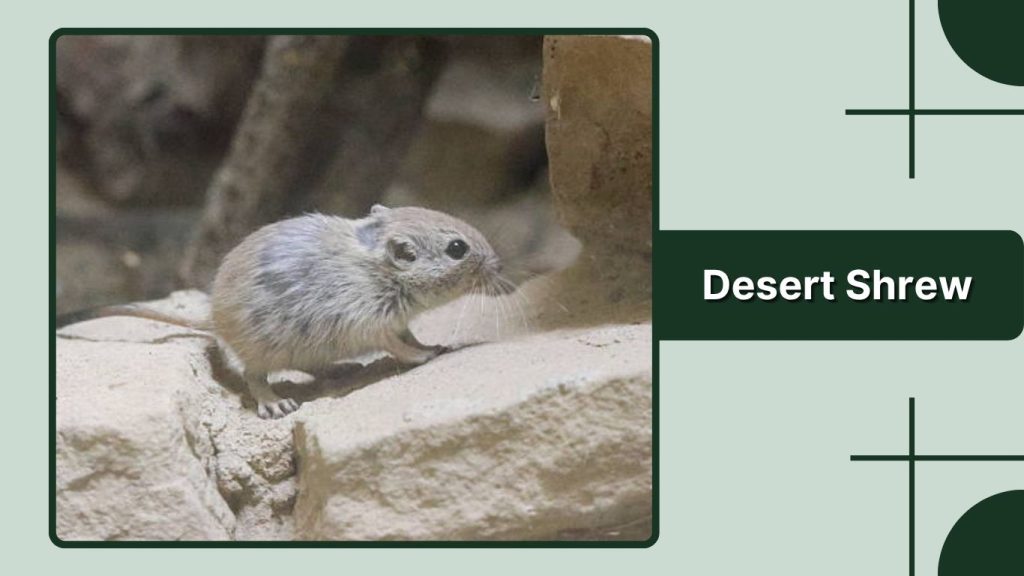
The Desert Shrew is a small mammal adapted to dry and harsh environments. It is usually found in desert scrub, sandy areas, rocky ground, and dry grasslands. Like other shrews, it has a pointed snout and an active hunting lifestyle. Its small body allows it to hide under stones, plants, and loose soil while searching for insects and other tiny prey.
Identification
- Small body with a pointed snout
- Pale grey, brown, or sandy-colored fur
- Lighter underside
- Tiny eyes and small ears
- Thin tail with fine hair
- Quick movement close to the ground
- Often found in dry, open habitats
Habitat
The Desert Shrew lives in arid regions with sparse vegetation. It may be found in desert edges, scrublands, rocky slopes, dry fields, and sandy ground. It depends on hidden shelters such as roots, stones, burrows, and plant cover.
Diet
This shrew feeds on insects, spiders, worms, larvae, and other small invertebrates. In dry habitats, it searches carefully under rocks, leaves, and soil where small prey can survive.
Behavior
The Desert Shrew is secretive and usually active during cooler hours. It avoids heat and open spaces by staying under cover. Its fast movement helps it escape predators and find food efficiently.
17. Arctic Shrew
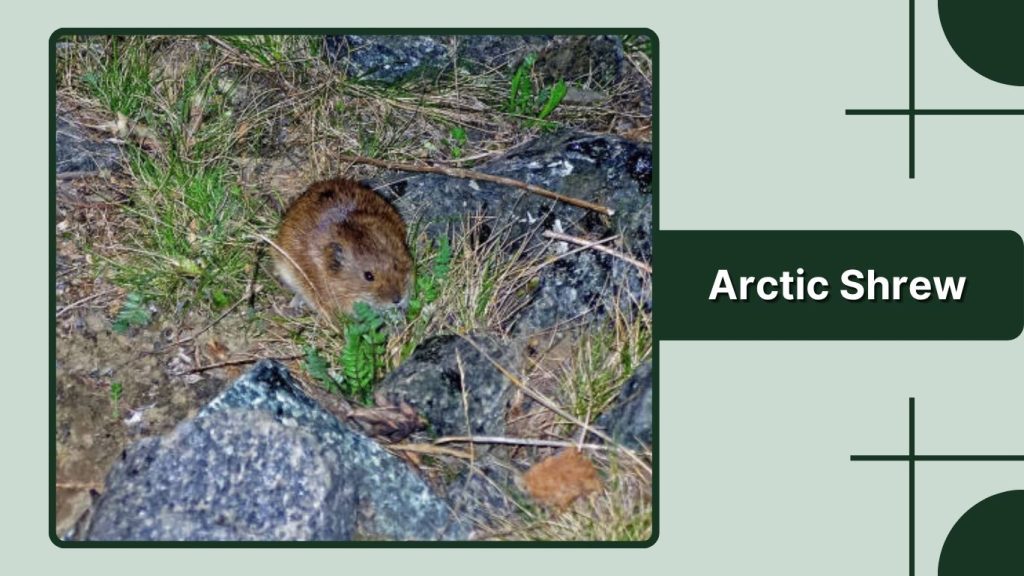
The Arctic Shrew is a small insect-eating mammal found in northern parts of North America. Its scientific name is Sorex arcticus. This shrew is known for living in cool, damp habitats such as wetlands, marshes, grassy fields, and forest edges. It has a pointed snout, small eyes, and soft fur that helps it survive in chilly environments.
Identification
- Small body with a long, pointed snout
- Dark brown to reddish-brown fur on the back
- Paler grey or brownish underside
- Tiny eyes and small ears
- Slender tail covered with fine hair
- Quick movement through grass and leaf litter
- Often found in moist northern habitats
Habitat
The Arctic Shrew prefers wet and cool places with dense ground cover. It commonly lives in marshes, bogs, wet meadows, grassy fields, and edges of forests. Thick vegetation helps protect it from predators and provides good hunting areas.
Diet
This shrew mainly eats insects, spiders, worms, larvae, snails, and other small invertebrates. Because it has a high metabolism, it must search for food often during the day and night.
Behavior
The Arctic Shrew is secretive and usually solitary. It moves through hidden pathways under grass, moss, and leaves. It avoids open spaces and depends on thick cover for safety.
18. Merriam’s Shrew
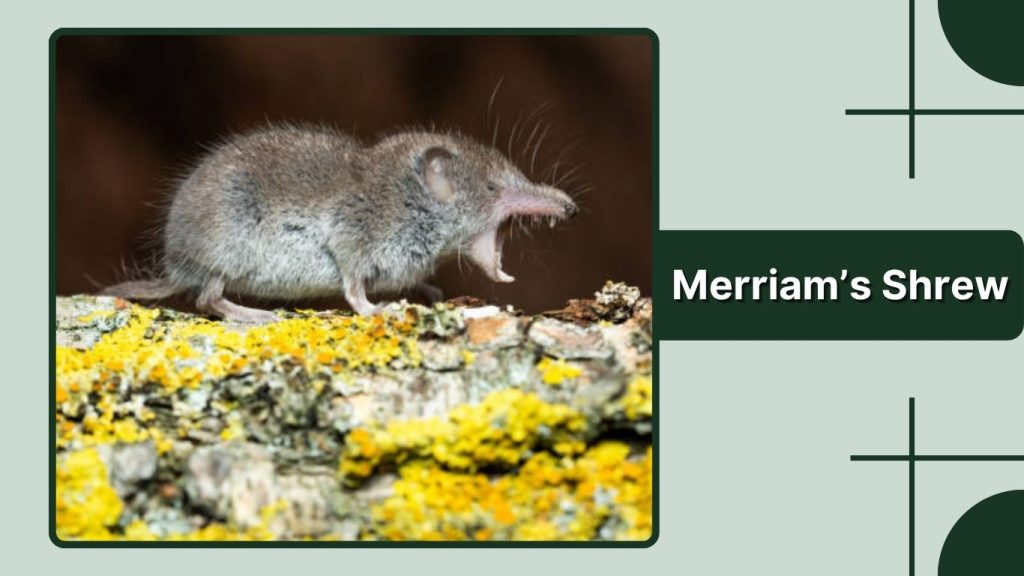
The Merriam’s Shrew is a small insect-eating mammal found in parts of western North America. Its scientific name is Sorex merriami. This shrew is often linked with dry grasslands, sagebrush areas, and open shrub habitats. It is tiny, secretive, and difficult to see because it moves close to the ground under plants, soil gaps, and dry vegetation.
Identification
- Small, slender body
- Long, pointed snout
- Grey-brown to pale brown fur
- Lighter underside
- Tiny eyes and small ears
- Thin tail with fine hair
- Quick movement through dry ground cover
Habitat
Merriam’s Shrew usually lives in dry open areas such as sagebrush plains, grasslands, shrublands, and rocky slopes. It prefers places with enough ground cover to hide from predators.
Diet
This shrew mainly eats insects, spiders, larvae, worms, and other small invertebrates. It searches under plants, stones, leaf litter, and loose soil to find food.
Behavior
Merriam’s Shrew is secretive, fast, and mostly solitary. It avoids open spaces and uses grass, shrubs, and soil cover for protection while hunting.
19. Smoky Shrew
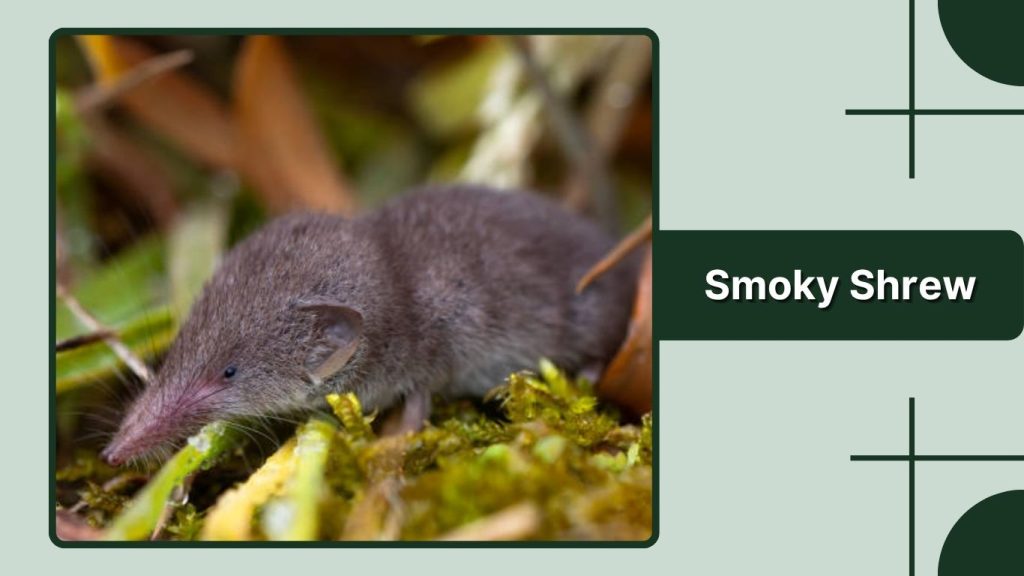
The Smoky Shrew is a small insect-eating mammal found in parts of eastern North America. Its scientific name is Sorex fumeus. This shrew gets its name from its smoky grey-brown fur. It is usually found in cool, moist places with plenty of leaf litter, moss, logs, and dense ground cover. Like other shrews, it is active, secretive, and spends much of its time searching for tiny prey.
Identification
- Small, slender body
- Long, pointed snout
- Smoky grey-brown fur on the back
- Lighter grey underside
- Tiny eyes and small ears
- Thin tail covered with fine hair
- Quick movement through leaf litter and moss
Habitat
The Smoky Shrew prefers cool, damp habitats. It commonly lives in forests, wooded slopes, wetlands, mossy areas, and stream edges. Fallen logs, roots, and thick leaves provide shelter and hunting space.
Diet
This shrew feeds on insects, spiders, worms, larvae, snails, and other small invertebrates. Because it has a fast metabolism, it must eat frequently and search for food throughout the day and night.
Behavior
The Smoky Shrew is usually solitary and hidden from view. It moves through narrow paths under leaves, moss, and grass. It avoids open areas and depends on dense cover for protection from predators.
20. Long-tailed Shrew
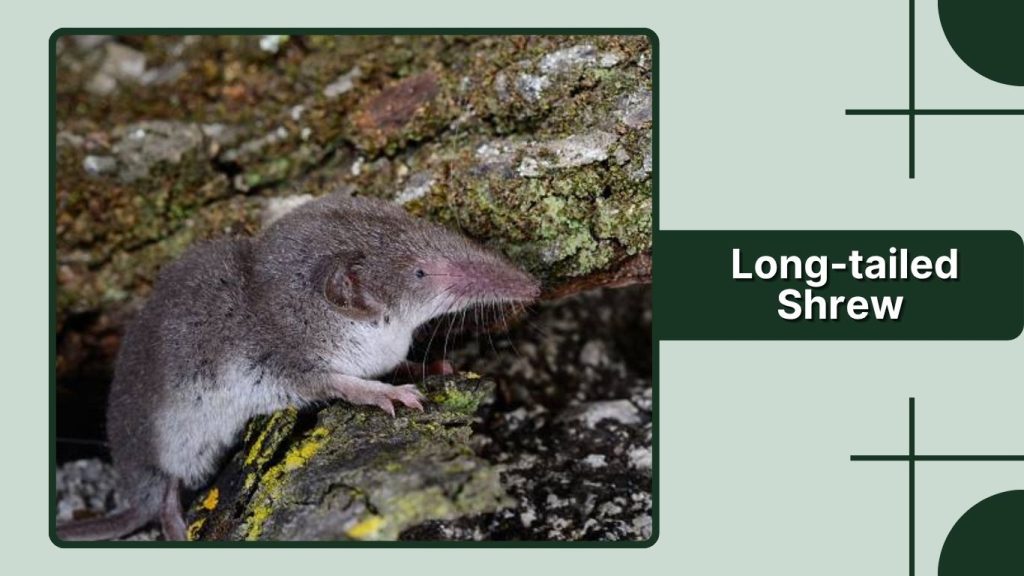
The Long-tailed Shrew is a small mammal found in parts of eastern North America. Its scientific name is Sorex dispar. It is named for its long tail, which is usually longer than the tails of many other shrews. This species often lives in cool, rocky habitats where it can hide between stones, moss, roots, and leaf litter.
Identification
- Small, slender body
- Long tail compared with body size
- Long, pointed snout
- Grey-brown to dark brown fur
- Paler underside
- Tiny eyes and small ears
- Often found in rocky, cool habitats
Habitat
The Long-tailed Shrew prefers rocky forests, mountain slopes, talus fields, cliffs, and damp woodland areas. It uses cracks between rocks, moss, roots, and fallen leaves for shelter and movement.
Diet
This shrew eats insects, spiders, worms, centipedes, larvae, and other small invertebrates. It searches for prey under rocks, leaves, and damp ground cover.
Behavior
The Long-tailed Shrew is secretive and usually solitary. It moves quickly through narrow spaces between stones and vegetation. Its long tail may help with balance while traveling over rocky ground.
21. Marsh Shrew
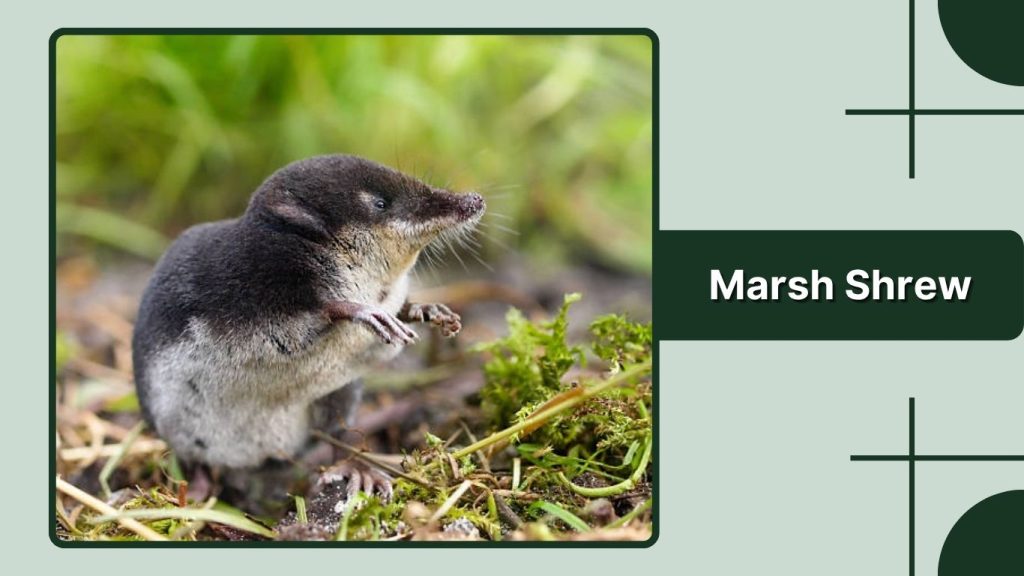
The Marsh Shrew is a small semi-aquatic mammal found in western North America. Its scientific name is Sorex bendirii. This shrew is larger than many other long-tailed shrews and is well adapted to wet habitats. It usually lives near streams, marshes, wetlands, and damp forests where it can hunt both on land and in shallow water.
Identification
- Small but fairly large for a shrew
- Long, pointed snout
- Dark brown to blackish fur
- Paler underside
- Long tail with fine hair
- Stiff hairs on feet for swimming
- Usually found near water or wet ground
Habitat
The Marsh Shrew lives in marshes, wet meadows, stream banks, bogs, and damp forests. It prefers thick vegetation, moss, roots, and muddy edges that provide shelter and food.
Diet
This shrew eats insects, worms, spiders, snails, aquatic larvae, and other small invertebrates. It may hunt in shallow water and along wet banks.
Behavior
The Marsh Shrew is secretive, active, and a good swimmer. It moves through wet grass, moss, and streamside cover while searching for prey. It usually stays hidden to avoid predators.
22. Alpine Shrew
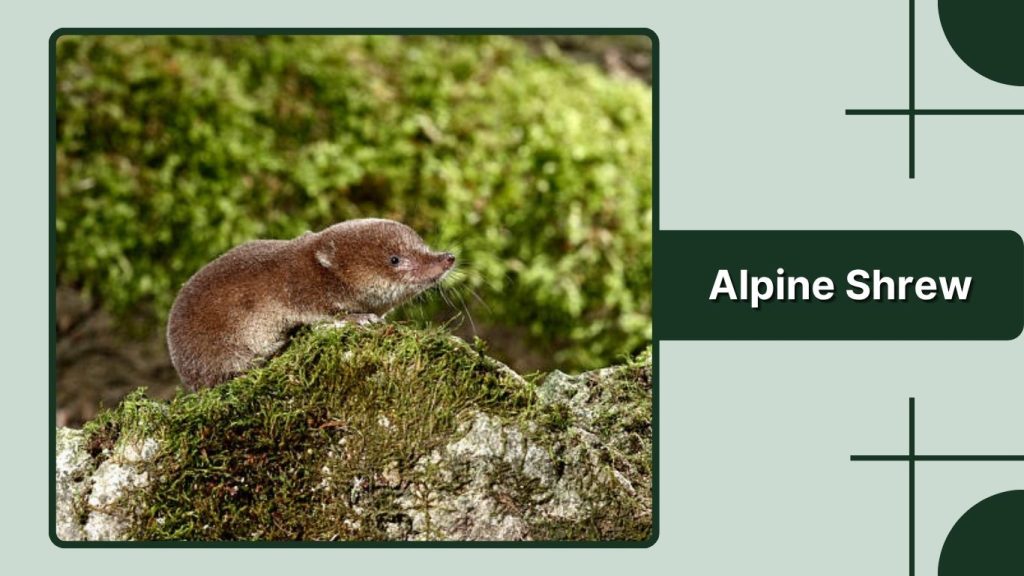
The Alpine Shrew is a small insect-eating mammal found in mountainous areas of Europe. Its scientific name is Sorex alpinus. This shrew is adapted to cool, moist habitats and is usually found near mountain forests, streams, rocky slopes, and damp meadows. It has a slender body, pointed snout, and dark fur that helps it blend into shaded ground cover.
Identification
- Small, slender body
- Long, pointed snout
- Dark grey to blackish-brown fur
- Slightly lighter underside
- Tiny eyes and small ears
- Long tail compared with body size
- Often found in cool mountain habitats
Habitat
The Alpine Shrew lives in mountain forests, alpine meadows, rocky areas, stream edges, and damp valleys. It prefers cool places with moss, leaf litter, stones, roots, and thick vegetation for shelter.
Diet
This shrew mainly eats insects, spiders, worms, larvae, snails, and other small invertebrates. It hunts close to the ground, searching under stones, moss, leaves, and damp soil.
Behavior
The Alpine Shrew is secretive and usually solitary. It moves quickly through hidden paths in moss, rocks, and vegetation. It avoids open spaces and depends on dense cover for protection from predators.
23. Bicolored Shrew
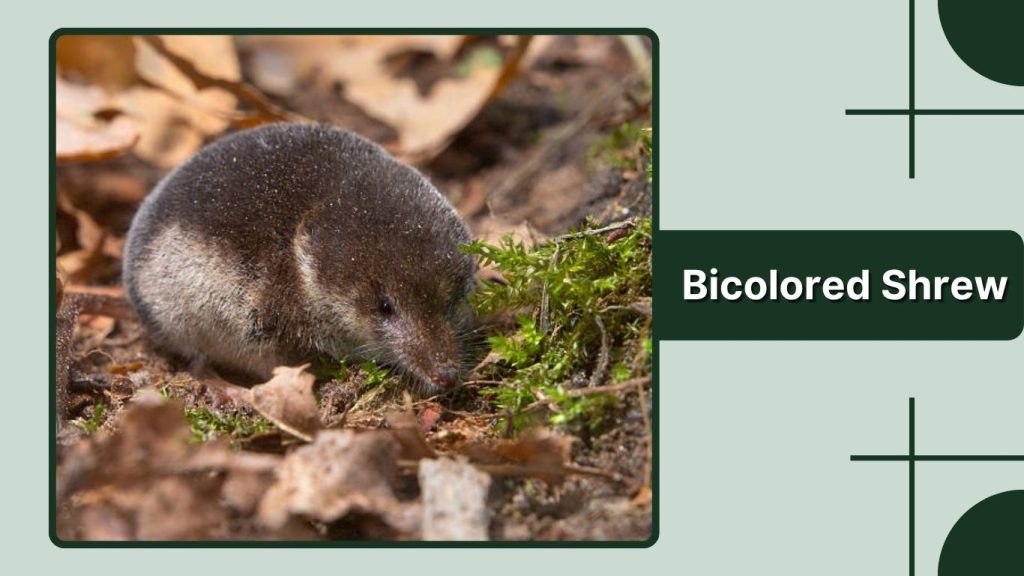
The Bicolored Shrew is a small insect-eating mammal found in Europe and parts of western Asia. Its scientific name is Crocidura leucodon. It gets its name from the clear color difference between its darker upper body and lighter underside. This shrew is active, secretive, and often lives close to fields, gardens, grasslands, and woodland edges.
Identification
- Small body with a pointed snout
- Dark grey-brown fur on the back
- White or pale grey underside
- Clear color contrast between upper and lower body
- Small eyes and rounded ears
- Tail covered with fine hairs
- Quick movement close to the ground
Habitat
The Bicolored Shrew lives in grasslands, farmlands, gardens, hedgerows, scrublands, and woodland edges. It prefers places with thick vegetation, stones, roots, and leaf litter where it can hide safely.
Diet
This shrew mainly eats insects, spiders, worms, larvae, snails, and other small invertebrates. It hunts near the ground and searches under leaves, grass, and soil for food.
Behavior
The Bicolored Shrew is usually solitary and active during both day and night. It moves through hidden paths in grass and leaf litter, avoiding open spaces to stay safe from predators.