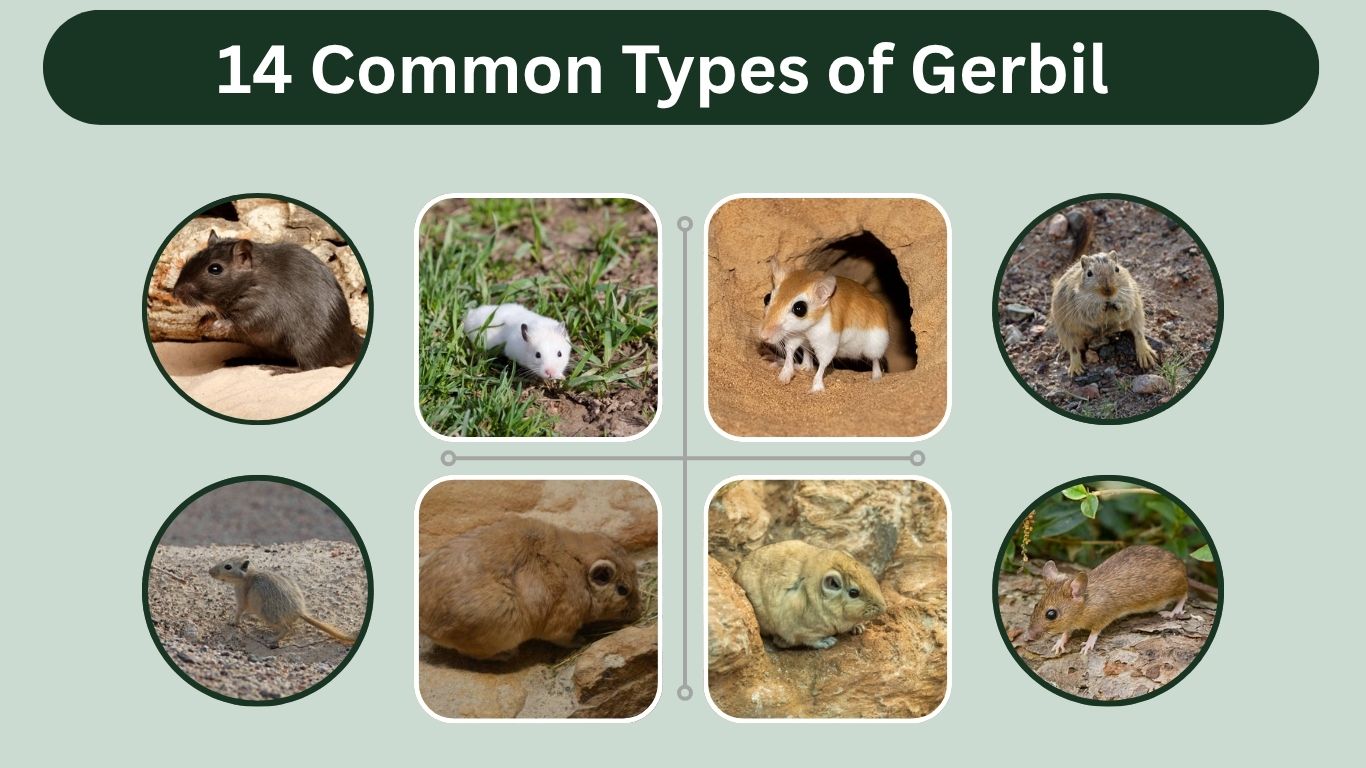
Gerbils are small, active rodents known for their curious behavior, digging habits, and desert-adapted bodies. While the Mongolian gerbil is the most familiar pet species, many other gerbils and close relatives live across Asia, Africa, and the Middle East. Each type has its own appearance, habitat, and behavior, making gerbils a diverse and interesting group of animals.
1. Mongolian Gerbil
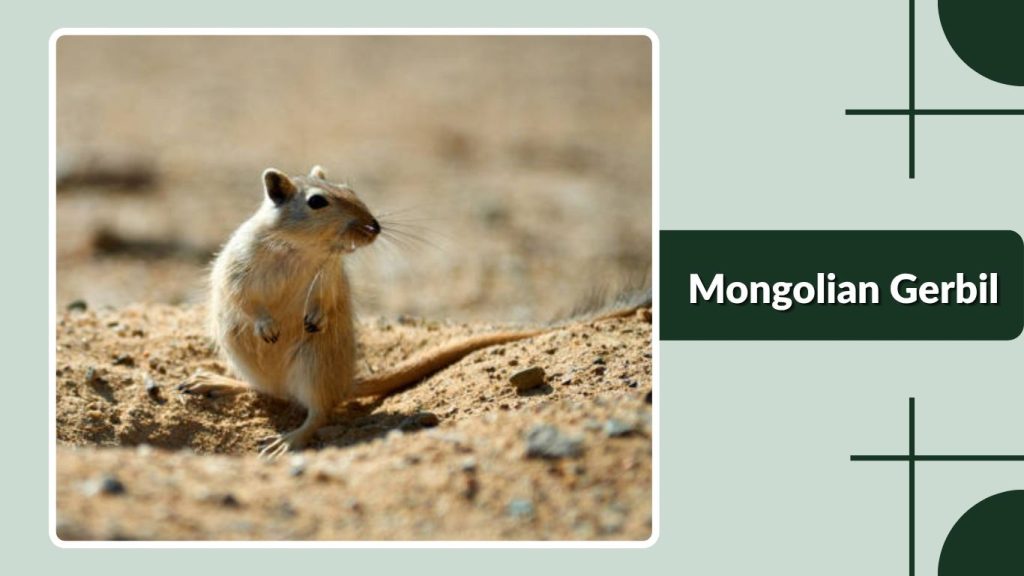
The Mongolian gerbil is one of the most common and popular gerbil species kept as a pet. It is small, active, social, and easy to care for, making it a favorite choice for beginners and experienced pet owners alike.
Identification
- Small body with a long, furry tail
- Usually grows around 4 to 5 inches long
- Natural coat color is sandy brown or agouti
- Large black eyes and rounded ears
- Strong back legs for jumping and digging
- Slim body with soft, smooth fur
Origin and Natural Habitat
The Mongolian gerbil comes from the dry grasslands, deserts, and semi-desert regions of Mongolia and northern China. In the wild, it lives in underground burrows that protect it from heat, cold, and predators. These burrows also help gerbils store food and raise their young safely.
Behavior and Temperament
Mongolian gerbils are active, curious, and social animals. They enjoy digging, chewing, running, and exploring their surroundings. They usually do best when kept in pairs or small same-sex groups because they can become lonely if kept alone. With gentle handling, they can become friendly and comfortable around people.
Care and Suitability as a Pet
This gerbil is considered one of the easiest small pets to care for. It needs a secure cage, deep bedding for digging, chew toys, fresh water, and a balanced gerbil food mix. Since Mongolian gerbils are clean and have little odor, they are suitable for many homes. They are best for owners who can provide regular care and a safe environment.
2. Fat-Tailed Gerbil
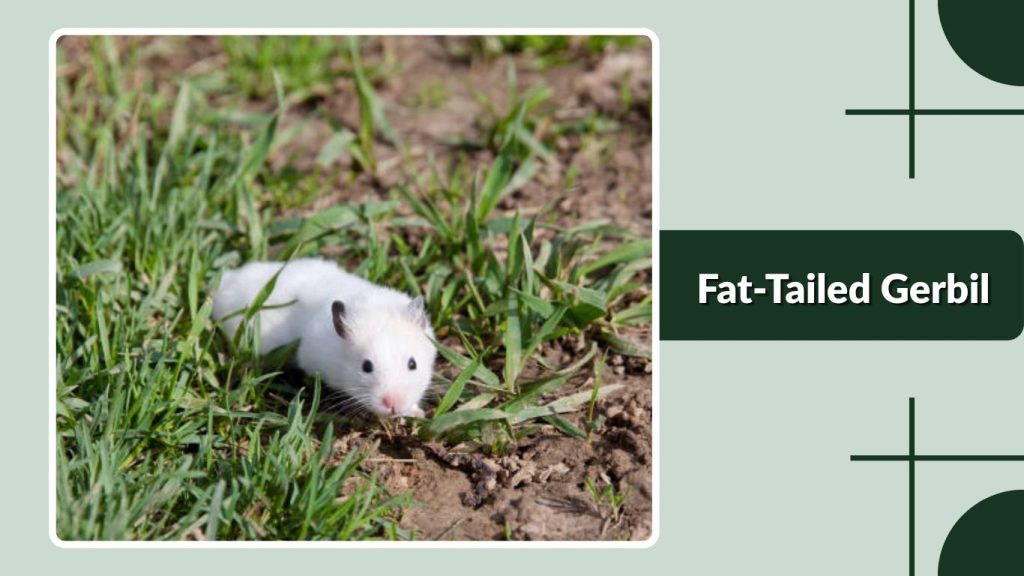
The fat-tailed gerbil is a unique and interesting gerbil species known for its thick, club-shaped tail. It is smaller and calmer than many other gerbils, making it a fascinating animal for people who enjoy unusual small pets.
Identification
- Short, round body with soft fur
- Thick, fat tail used for storing energy
- Usually has pale sandy or grayish fur
- Large dark eyes and small rounded ears
- Shorter tail than the Mongolian gerbil
- Calm appearance with a compact body shape
Origin and Natural Habitat
The fat-tailed gerbil is native to dry desert and semi-desert areas of North Africa, especially regions such as Egypt and Libya. In the wild, it lives in sandy environments where it hides in burrows during the day. These burrows help protect it from extreme heat and predators.
Behavior and Temperament
Fat-tailed gerbils are generally calm, gentle, and less active than Mongolian gerbils. They may enjoy exploring, but they are not usually as fast or jumpy. They can become comfortable with careful handling, although they still need a quiet and safe environment.
Care and Suitability as a Pet
This gerbil needs a secure enclosure with soft bedding, hiding places, chew items, and a proper gerbil diet. Because it comes from dry areas, the cage should be kept clean and dry. Fat-tailed gerbils can be suitable pets for owners who want a quieter and more unusual gerbil species.
3. Great Gerbil
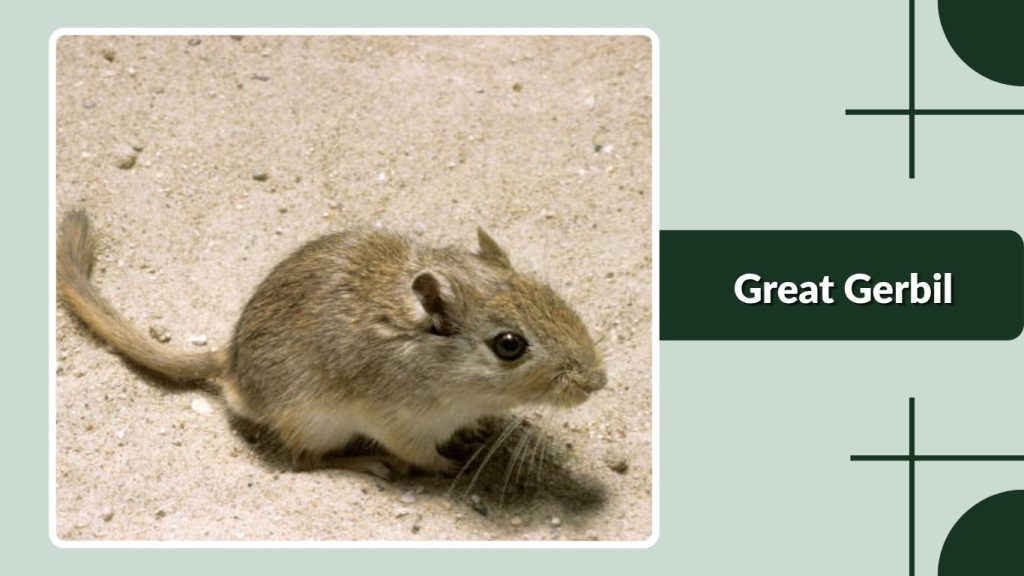
The great gerbil is one of the largest gerbil species. Unlike the common pet gerbil, it is more often known as a wild desert rodent. It has a strong body, powerful digging ability, and a lifestyle closely connected to dry open habitats.
Identification
- Larger body than most common gerbils
- Long tail with a slightly darker tip
- Sandy or yellowish-brown coat
- Strong claws for digging burrows
- Large eyes and alert facial features
- Sturdy body built for desert survival
Origin and Natural Habitat
The great gerbil is found in parts of Central Asia, including deserts, semi-deserts, and dry grasslands. It usually lives in complex burrow systems underground. These burrows may have several entrances and chambers for nesting, hiding, and storing food.
Behavior and Temperament
Great gerbils are active diggers and spend much of their time building or maintaining burrows. In the wild, they may live in groups and communicate through movement, scent, and sound. They are alert animals and depend on quick reactions to avoid predators.
Care and Suitability as a Pet
The great gerbil is not commonly kept as a household pet. It has stronger wild instincts and needs more space than smaller pet gerbils. It is better known for wildlife study than pet ownership. Anyone interested in this species should learn about local laws and proper care needs first.
4. Libyan Gerbil
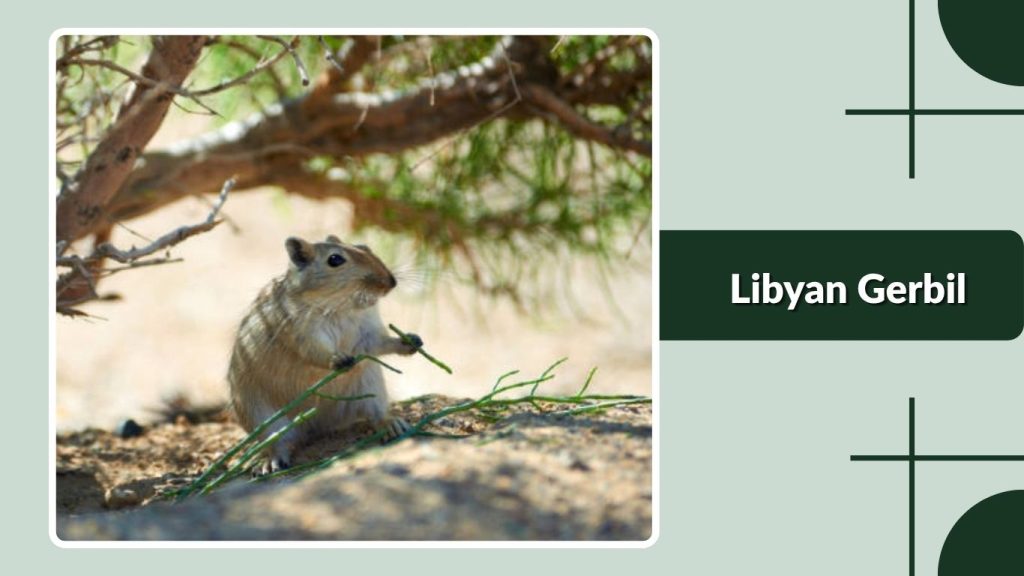
The Libyan gerbil is a desert-dwelling gerbil species known for its sandy color and active nature. It is well adapted to dry regions and can survive in harsh environments where food and water may be limited.
Identification
- Sandy brown or pale yellowish coat
- Medium-sized body with a long tail
- Tail may have a darker tuft at the end
- Large eyes for good awareness
- Strong back legs for quick movement
- Light body color that blends with desert sand
Origin and Natural Habitat
The Libyan gerbil is found across North Africa and parts of the Middle East. It usually lives in deserts, dry plains, and semi-arid areas. Like many gerbils, it creates burrows underground to escape heat, store food, and stay safe from predators.
Behavior and Temperament
Libyan gerbils are active, fast, and alert animals. They spend much of their time digging, searching for seeds, and moving through dry habitats. In the wild, they may be seen around farms or open land where food is available.
Care and Suitability as a Pet
The Libyan gerbil is not as common in the pet trade as the Mongolian gerbil. It may need more space, deeper bedding, and careful handling due to its active nature. It is best suited for experienced keepers who understand desert rodents and can provide a safe, enriched setup.
5. Shaw’s Jird
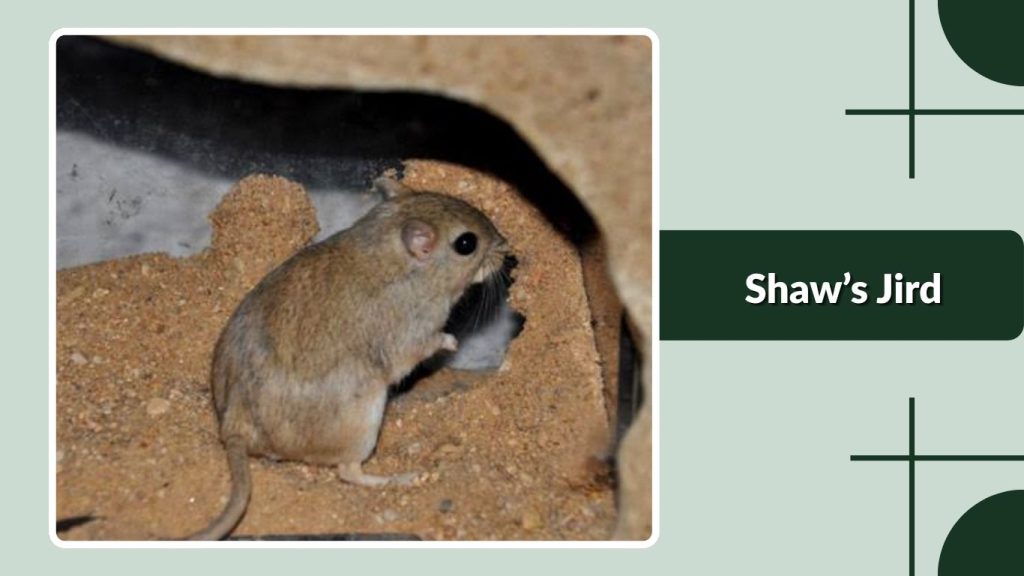
Shaw’s jird is a medium-sized gerbil relative known for its sturdy body, sandy coat, and strong digging habits. It is usually found in dry regions and is sometimes kept by experienced small-pet owners.
Identification
- Medium-sized body with a strong build
- Sandy brown or grayish-brown fur
- Long tail with a darker tip
- Large eyes and rounded ears
- Strong claws for digging
- Alert posture and quick movement
Origin and Natural Habitat
Shaw’s jird is native to North Africa, including countries such as Egypt, Libya, Tunisia, and Algeria. It usually lives in deserts, dry grasslands, and rocky areas. In the wild, it builds burrows underground to avoid heat, hide from predators, and store food.
Behavior and Temperament
Shaw’s jirds are active, curious, and powerful diggers. They spend much of their time exploring, chewing, and making tunnels. They can be social, but they may also show territorial behavior if they do not have enough space. Careful handling from a young age can help them become calmer around people.
Care and Suitability as a Pet
This species needs a spacious enclosure with deep bedding, hiding places, chew toys, and a balanced diet. Because Shaw’s jirds are larger and stronger than common gerbils, they need more room and secure housing. They are usually better for experienced owners than beginners.
6. Persian Jird
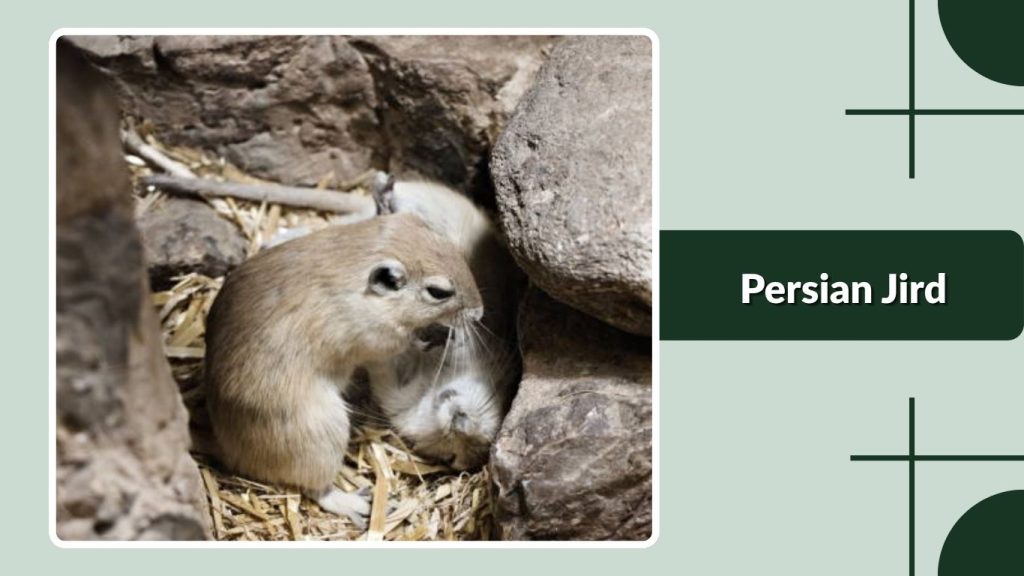
The Persian jird is a large and attractive gerbil relative known for its long tail, soft coat, and active personality. It is less common than the Mongolian gerbil but can be interesting for people who enjoy unusual rodents.
Identification
- Larger body than many pet gerbils
- Long, furry tail with a tufted end
- Soft grayish-brown or sandy coat
- Large dark eyes and noticeable ears
- Strong legs for climbing and jumping
- Slender body with an alert expression
Origin and Natural Habitat
The Persian jird is found in parts of the Middle East and Central Asia. It often lives in rocky hillsides, dry grasslands, and semi-desert areas. Unlike some gerbils that mostly stay on flat sandy ground, Persian jirds may climb rocks and use natural spaces for shelter.
Behavior and Temperament
Persian jirds are active, curious, and energetic animals. They enjoy climbing, exploring, and chewing. They may become used to gentle handling, but they often remain more lively than calm. Their active nature means they need an enriched environment to stay healthy and comfortable.
Care and Suitability as a Pet
This species needs a large, secure cage with deep bedding, climbing areas, chew items, and hiding places. Because Persian jirds are active and need more space, they are usually better for experienced keepers. A proper diet, clean water, and regular cage maintenance are also important.
7. Bushy-Tailed Jird
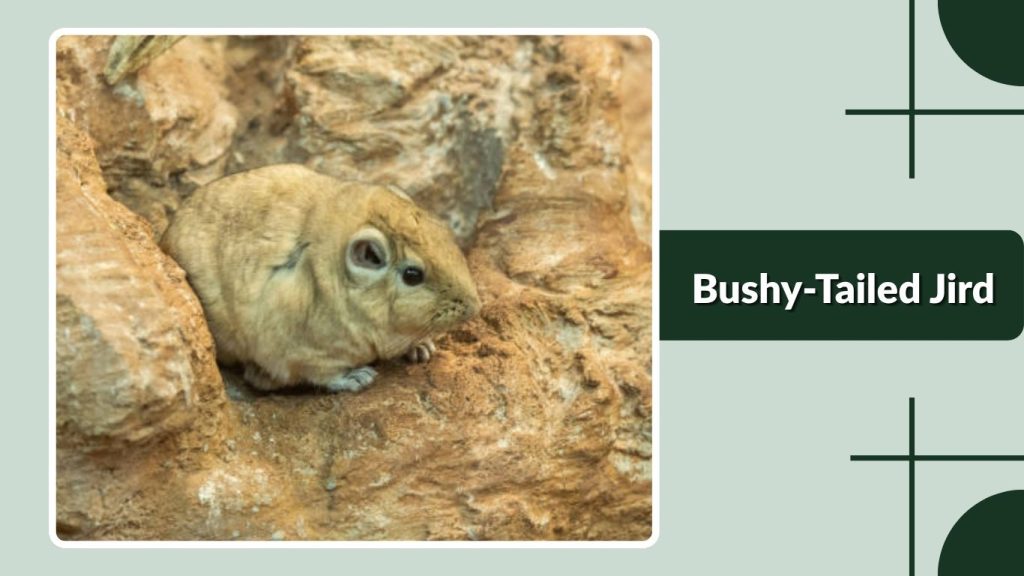
The bushy-tailed jird is a striking gerbil relative known for its fluffy tail and desert-adapted body. Its unusual appearance makes it one of the more recognizable jird species.
Identification
- Noticeably bushy tail with thick fur
- Sandy or grayish-brown body color
- Medium-sized body with a slim shape
- Large eyes suited for alertness
- Rounded ears and pointed face
- Strong feet for moving over dry ground
Origin and Natural Habitat
The bushy-tailed jird is native to dry regions of the Middle East, especially rocky deserts and arid hillsides. It often shelters in crevices, burrows, or protected spaces among rocks. Its body color helps it blend into sandy and stony surroundings.
Behavior and Temperament
Bushy-tailed jirds are active and alert animals. They spend much of their time searching for food, hiding from predators, and moving through rocky habitats. Their fluffy tail may help with balance and communication. They are not as commonly kept as household pets as Mongolian gerbils.
Care and Suitability as a Pet
Because this species is uncommon in the pet trade, it is best suited for knowledgeable keepers or specialist care. It would need a secure enclosure, dry bedding, hiding areas, chew materials, and enough space for movement. Proper research is important before keeping this animal.
8. Sundevall’s Jird
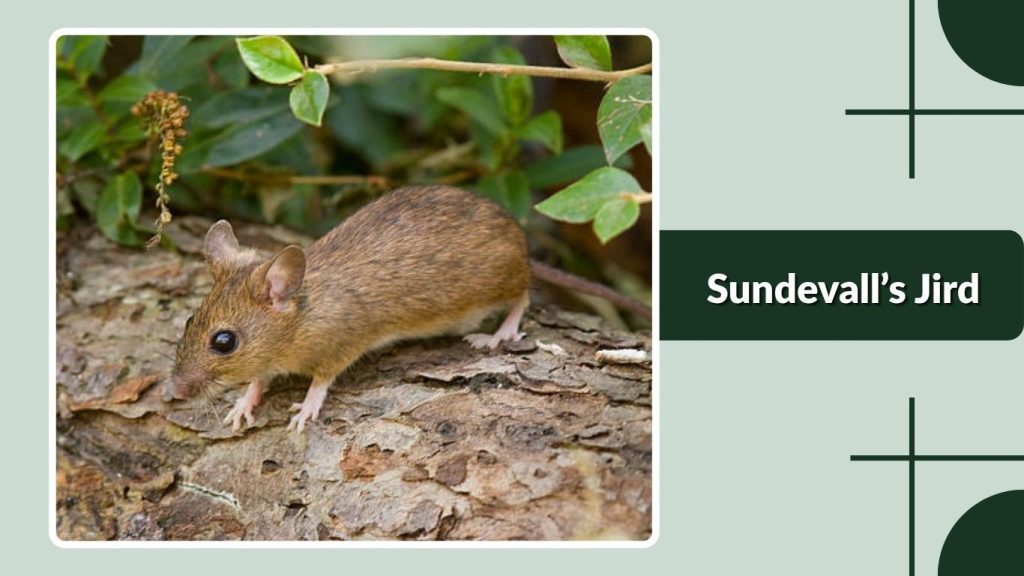
Sundevall’s jird is a desert rodent known for its pale coat, active habits, and ability to survive in dry environments. It is closely related to gerbils and shares many desert-living features.
Identification
- Pale sandy or light brown fur
- Medium-sized body with a long tail
- Dark eyes and rounded ears
- Tail may have a darker end
- Slim body with quick movement
- Fur color blends well with desert ground
Origin and Natural Habitat
Sundevall’s jird is found in North Africa and parts of the Middle East. It lives in deserts, semi-deserts, and dry open areas. Like many desert rodents, it uses burrows to escape daytime heat and protect itself from predators.
Behavior and Temperament
This jird is active, alert, and well adapted to dry habitats. It usually searches for seeds, grasses, and plant material. It may be most active during cooler parts of the day or night. In the wild, it relies on quick movement and underground shelter for safety.
Care and Suitability as a Pet
Sundevall’s jird is not a common beginner pet. It may require more specialized care than a Mongolian gerbil, including a dry enclosure, deep bedding, and space for natural digging behavior. It is better suited for experienced rodent keepers.
9. Indian Gerbil
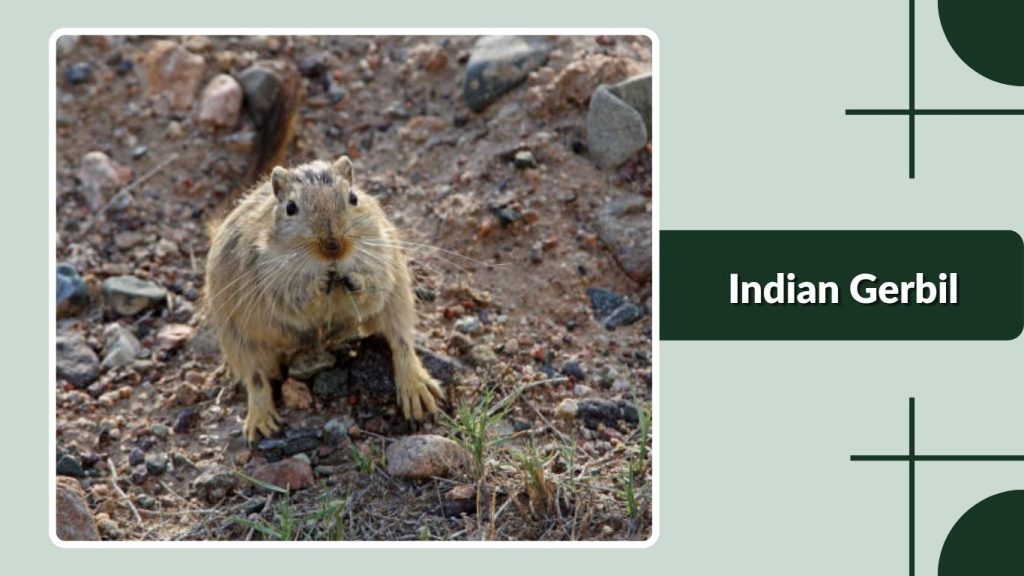
The Indian gerbil is a hardy species known for living in dry fields, scrublands, and open areas. It is active, adaptable, and well suited to warm climates.
Identification
- Brownish or sandy-gray coat
- Medium-sized body with a long tail
- Tail often has a darker tip
- Large eyes and rounded ears
- Strong feet for running and digging
- Slim, alert body shape
Origin and Natural Habitat
The Indian gerbil is native to South Asia, especially India, Pakistan, and nearby regions. It commonly lives in dry fields, grasslands, scrublands, and agricultural areas. It digs burrows in the ground for nesting, food storage, and protection.
Behavior and Temperament
Indian gerbils are active and cautious animals. In the wild, they spend time foraging for seeds, grains, roots, and plant material. They are quick movers and often stay close to burrow entrances so they can escape danger quickly. Their behavior is strongly shaped by survival in open habitats.
Care and Suitability as a Pet
This species is not commonly kept as a pet compared with the Mongolian gerbil. It may need a large enclosure, deep bedding, and a warm, dry setup. Because of its active nature and less common care needs, it is more suitable for experienced keepers than first-time owners.
10. Baluchistan Gerbil
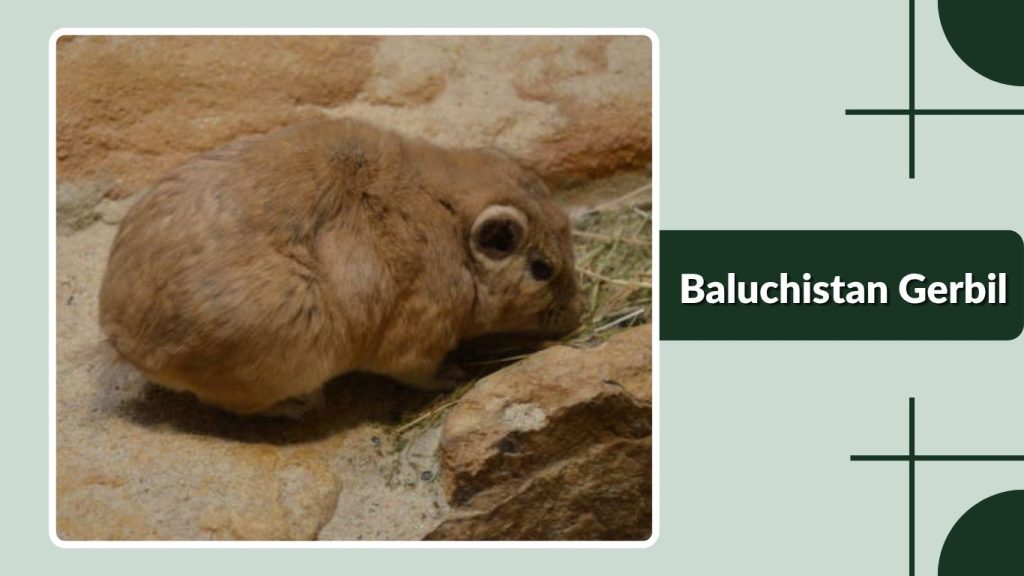
The Baluchistan gerbil is a lesser-known gerbil species found in dry and rocky regions. It is adapted to harsh environments and has the typical alert, quick-moving nature seen in many desert rodents.
Identification
- Small to medium-sized body
- Sandy brown or grayish coat
- Long tail with a darker end
- Large eyes for spotting danger
- Rounded ears and pointed face
- Strong feet for digging and running
Origin and Natural Habitat
The Baluchistan gerbil is native to parts of Pakistan, Iran, and nearby dry regions. It usually lives in deserts, semi-deserts, scrublands, and rocky plains. Its natural habitat provides dry soil and open ground where it can dig burrows for shelter.
Behavior and Temperament
This gerbil is active, cautious, and well adapted to survival in open areas. It spends time searching for seeds, grasses, and other plant materials. Like many wild gerbils, it depends on speed, alertness, and underground burrows to avoid predators and extreme weather.
Care and Suitability as a Pet
The Baluchistan gerbil is not commonly kept as a household pet. Because it is less common in captivity, its care needs may be more specialized than those of Mongolian gerbils. It would need a dry enclosure, deep bedding, hiding places, and careful handling from an experienced keeper.
11. Cheesman’s Gerbil
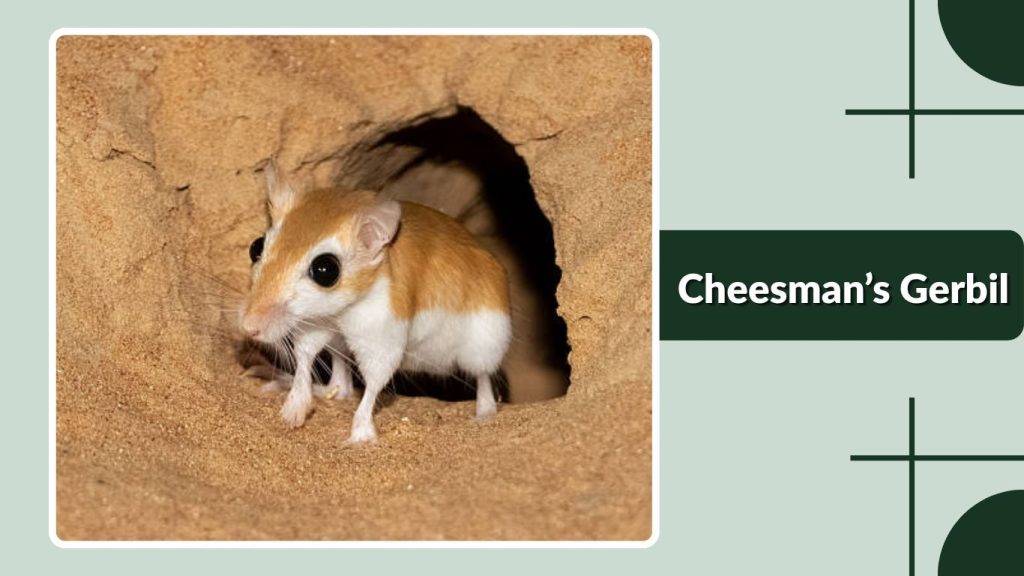
Cheesman’s gerbil is a desert-living species known for its pale sandy color and active lifestyle. It is well suited to hot, dry regions and is more often recognized as a wild gerbil than a common pet.
Identification
- Pale sandy or yellowish fur
- Slim body with a long tail
- Tail may have a darker tip
- Large black eyes
- Small rounded ears
- Light coat that blends with desert sand
Origin and Natural Habitat
Cheesman’s gerbil is found in parts of the Arabian Peninsula and nearby desert regions. It usually lives in sandy deserts, dry plains, and open areas with sparse vegetation. Its pale coat helps it stay camouflaged in sandy surroundings.
Behavior and Temperament
Cheesman’s gerbils are active and alert animals. They often search for seeds and plant material during cooler hours. In the wild, they use burrows for resting, hiding, and escaping extreme desert temperatures. Their quick movement helps them avoid predators.
Care and Suitability as a Pet
This species is not widely kept as a pet. It may require special desert-style care, including dry bedding, warm conditions, hiding areas, and enough space for movement. Because it is less common in captivity, it is better suited for experienced rodent keepers or specialist care.
12. Wagner’s Gerbil
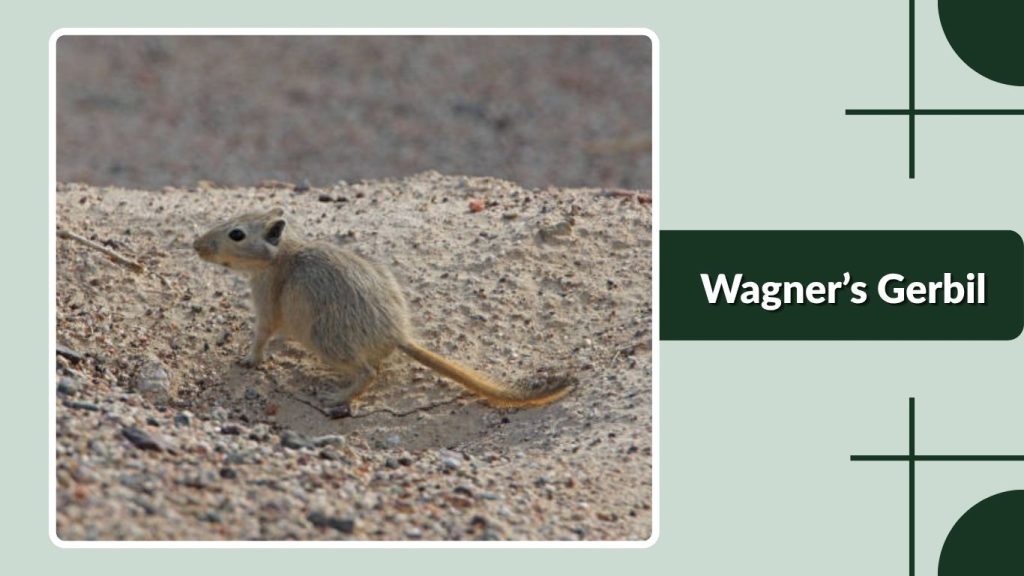
Wagner’s gerbil is a small desert rodent with a light-colored body and active nature. It is adapted to dry landscapes and depends on burrows for shelter and protection.
Identification
- Small body with sandy or pale brown fur
- Long tail with a darker tip
- Large eyes and rounded ears
- Slim shape with quick movement
- Soft fur suited to dry climates
- Light coloring for desert camouflage
Origin and Natural Habitat
Wagner’s gerbil is found in parts of the Middle East and surrounding dry regions. It usually lives in deserts, semi-deserts, and dry open land. The species makes use of underground burrows to avoid heat, cold nights, and predators.
Behavior and Temperament
Wagner’s gerbils are active, cautious, and fast-moving. They spend much of their time foraging for seeds, roots, and other plant matter. They are naturally alert and may quickly retreat into burrows when disturbed. Their behavior is shaped by life in exposed desert habitats.
Care and Suitability as a Pet
Wagner’s gerbil is not a common pet species. It may need a dry, secure enclosure with deep bedding and hiding places. Since it is less familiar in the pet trade, it is best suited for keepers who have experience with desert rodents and can meet its specific needs.
13. North African Gerbil
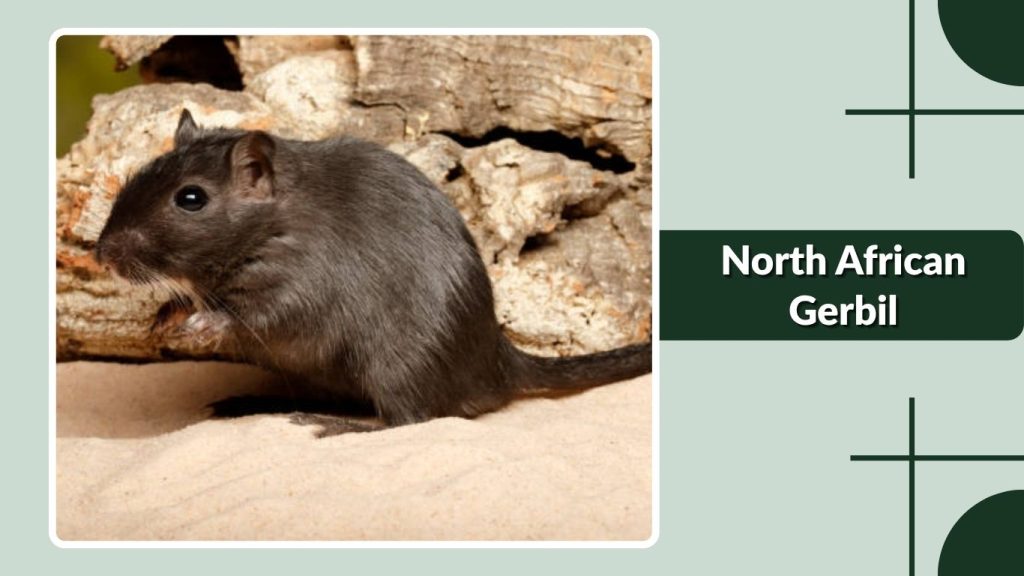
The North African gerbil is a desert-adapted species found in dry parts of northern Africa. It has a sandy coat, quick movements, and strong digging behavior that help it survive in harsh environments.
Identification
- Sandy or light brown coat
- Small to medium-sized body
- Long tail, often with a darker tip
- Large eyes and rounded ears
- Strong back legs for running
- Body color blends with dry ground
Origin and Natural Habitat
The North African gerbil lives in desert and semi-desert regions of northern Africa. It can be found in sandy plains, dry scrublands, and open habitats. Like other gerbils, it builds burrows underground for nesting, resting, and protection from predators.
Behavior and Temperament
This gerbil is active, alert, and cautious. It searches for seeds, grasses, and plant material in its natural habitat. It may be more active during cooler times of the day or night. Its survival depends on fast movement, good hearing, and access to safe burrows.
Care and Suitability as a Pet
The North African gerbil is not as common as the Mongolian gerbil in the pet trade. It may require a warm, dry setup with deep bedding and secure housing. Because it is less domesticated, it is usually better for experienced owners than beginners.
14. Lesser Egyptian Gerbil
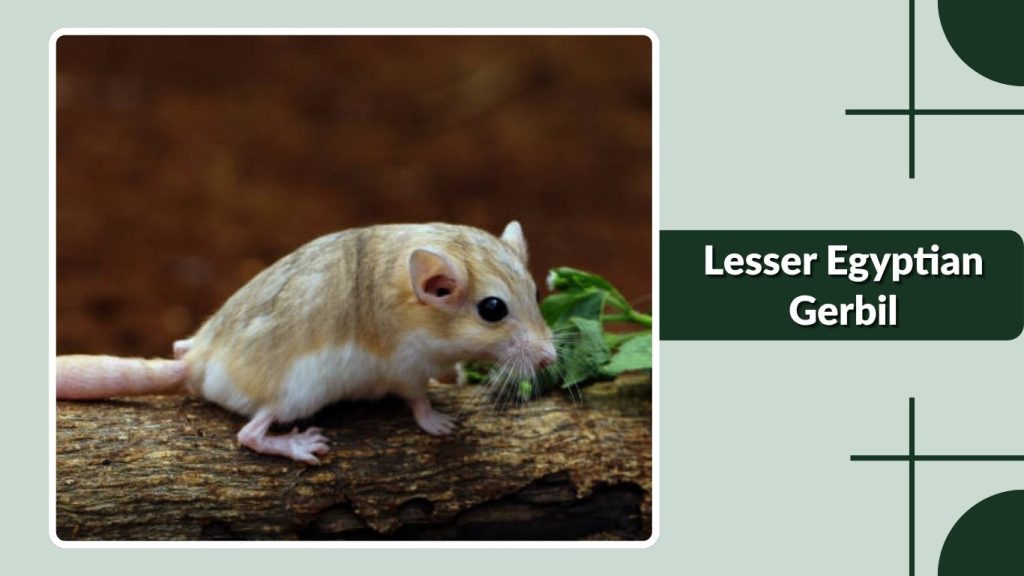
The lesser Egyptian gerbil is a small desert species known for its pale coat and active behavior. It is adapted to sandy environments and uses burrows to survive hot days and cooler nights.
Identification
- Small, slim body
- Pale sandy or beige fur
- Long tail with a darker tip
- Large black eyes
- Rounded ears and pointed nose
- Quick movement and alert posture
Origin and Natural Habitat
The lesser Egyptian gerbil is native to Egypt and nearby North African regions. It usually lives in sandy deserts, dry plains, and semi-arid areas. Its natural habitat offers loose soil where it can dig burrows and stay hidden from predators.
Behavior and Temperament
This gerbil is active, fast, and naturally cautious. In the wild, it forages for seeds, grasses, and small plant materials. It often depends on underground shelters to escape daytime heat. Its pale body color helps it stay less visible in sandy surroundings.
Care and Suitability as a Pet
The lesser Egyptian gerbil is not commonly kept as a beginner pet. It may need a dry enclosure, deep bedding, hiding places, and a quiet environment. Because it is less common in captivity, it is best suited for experienced keepers who understand the needs of desert rodents.
FAQs
What is the most common type of gerbil?
The Mongolian gerbil is the most common type of gerbil kept as a pet. It is popular because it is social, active, easy to care for, and usually friendly with gentle handling. Many pet stores and breeders offer Mongolian gerbils more often than other species.
Are all gerbil types suitable as pets?
No, not all gerbil types are suitable as pets. Some species are wild, less common in captivity, or need specialized care. The Mongolian gerbil is the best-known pet species, while types like the great gerbil or wild jirds are usually better suited for experienced keepers or wildlife study.
What is the difference between a gerbil and a jird?
Gerbils and jirds are closely related desert rodents, but jirds are often larger and may have different body shapes, tails, and behaviors. Many jirds look similar to gerbils, which is why they are often included in lists of gerbil types or gerbil relatives.
Which gerbil is best for beginners?
The Mongolian gerbil is usually the best choice for beginners. It is easier to find, simple to care for, and more commonly bred as a pet. It also tends to be social and active, making it enjoyable for owners who want a small, lively companion.
Do different gerbil species need different care?
Yes, different gerbil species may need different care depending on their size, activity level, and natural habitat. Some need more space, deeper bedding, warmer conditions, or more specialized handling. Before keeping any uncommon gerbil species, it is important to research its specific care needs.